
#AntiGlobalism, #AntiCommunism, #AntiSocialism, #ProAmerican, #ProConstitution, #Ex-Democrat #NYLiberal, #MAGA — no DM’s 🎗️
Joined April 2023
- Tweets 213,385
- Following 7,740
- Followers 7,471
- Likes 137,693
1,621 Photos and videos
Pinned Tweet

27 Aug 2025
2
2
17
903
SamMcGWeb retweeted

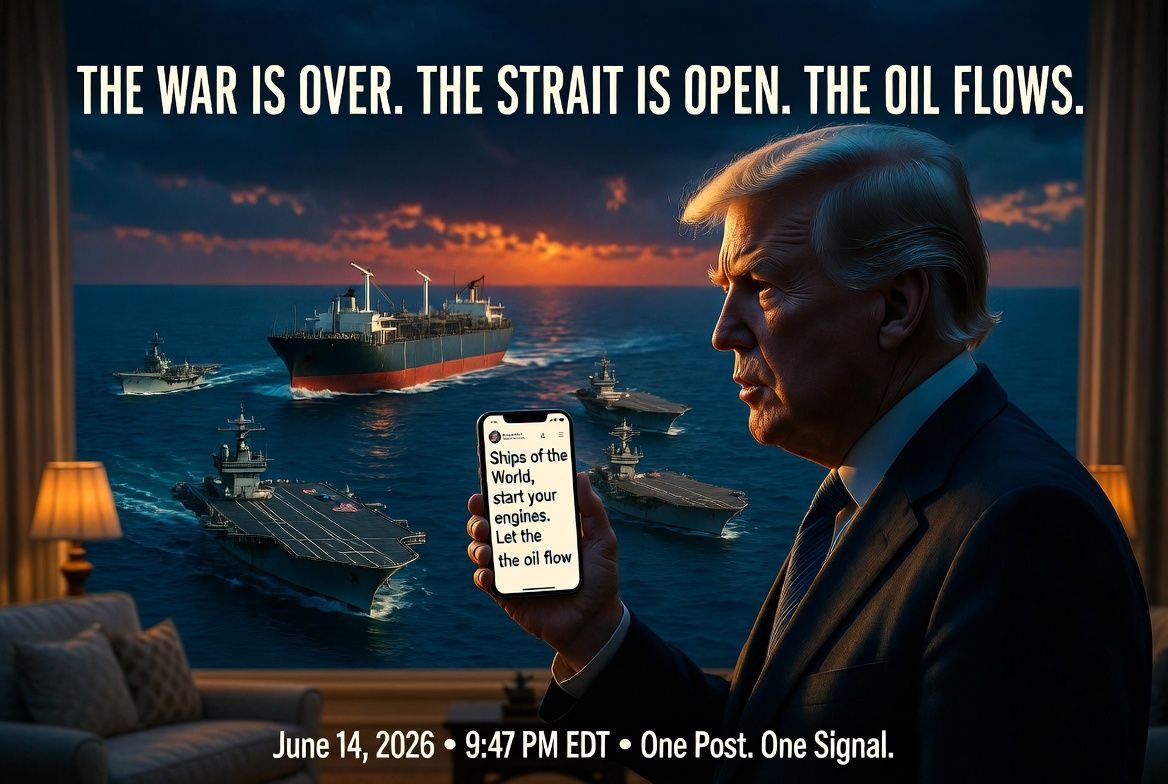
THE WAR IS OVER. THE STRAIT IS OPEN. THE OIL FLOWS. t.me/qanonplus
While you were sleeping — the world changed.
At 9:47 PM Eastern on June 14, 2026 — his 80th birthday — the President of the United States posted six sentences that ended a war, reopened the most important shipping lane on Earth, and collapsed the price of oil in under four minutes.
"Ships of the World, start your engines. Let the oil flow."
Those were not improvised words. THAT WAS A PRE-ARRANGED SIGNAL.
Within 90 seconds of that post, three aircraft carrier groups began withdrawal protocols simultaneously. The USS Eisenhower. The USS Lincoln. The USS Truman. Synchronized to the second. You do not coordinate three carrier groups in 90 seconds unless THE ORDER WAS ALREADY GIVEN.
THE DEAL WAS SIGNED BEFORE HE POSTED.
What they are telling you: a memorandum of understanding brokered by Pakistan.
What actually happened: a back-channel agreement finalized on June 8 in Muscat, Oman — six days before the public announcement. The signing in Switzerland on Friday is THEATER. The real signatures were placed in Muscat by individuals whose names will never appear in any press release.
Iran did not agree to dismantle its nuclear program because of sanctions.
Iran agreed because they were shown WHAT COMES NEXT.
The same presentation. The same room. The same four-star general who briefed Pyongyang in 2018 before Kim crossed the DMZ. The same words: "You have seen what we can do. Now see what we will do."
THEY CHOSE SURVIVAL.
60-day window. Full enriched uranium stockpile elimination. IAEA inspectors with UNRESTRICTED access — not the theater of 2015. Real access. Military sites included.
And in exchange: $147 billion in frozen assets released. Sanctions lifted. Oil exports resumed IMMEDIATELY.
You were told this was impossible.
Four indictments. Two impeachments. 91 felony charges. A raid on his home. They took his passport. They froze his accounts. They told you he was finished.
TODAY HE ENDED A WAR FROM HIS LIVING ROOM ON HIS 80TH BIRTHDAY.
No army invaded. No city was bombed. No American soldier died. One man. One post. One signal.
The oil markets collapsed 9% in eleven minutes. Bitcoin surged past $106,000. Gold dropped $47. THE ENTIRE GLOBAL FINANCIAL ARCHITECTURE SHIFTED IN THE TIME IT TAKES TO READ HIS POST.
This is not politics. This is not diplomacy.
This is the most powerful human being alive demonstrating that he answers to no one and nothing can stop what was set in motion.
June 8 — Muscat.
June 14 — Signal.
June 20 — Switzerland.
July 4 — You will understand everything.
CODE: HORMUZ-OPEN / MUSCAT-0608 / 3CG-WITHDRAWAL / SIGNAL-BIRTHDAY / PHASE-COMPLETE
#TheBestisYetToCome
2
63
95
1,884
SamMcGWeb retweeted

“America is a gun”
You’re damn right we are
We are a warrior people
We were born from war
We fought to make slaves free
We fought to make people around the world free
We’ve dropped into hot zones to rescue the innocent
We’ve made zones hot to quench the wicked
But we’re also a poetic people
We’ve fed more, clothed more, rescued more than anyone else
We’ve cured diseases
We’ve invented things to make life better, work easier, and downtime more relaxing
I am proud to be American
I am proud of the vast majority of my fellow Americans
May God bless you
And
May God bless America x.com/Girlpatriot1974/status…
68
1,016
3,251
21,786
SamMcGWeb retweeted

White House, June 2024 vs June 2026:
566
5,795
50,949
3,242,119
SamMcGWeb retweeted

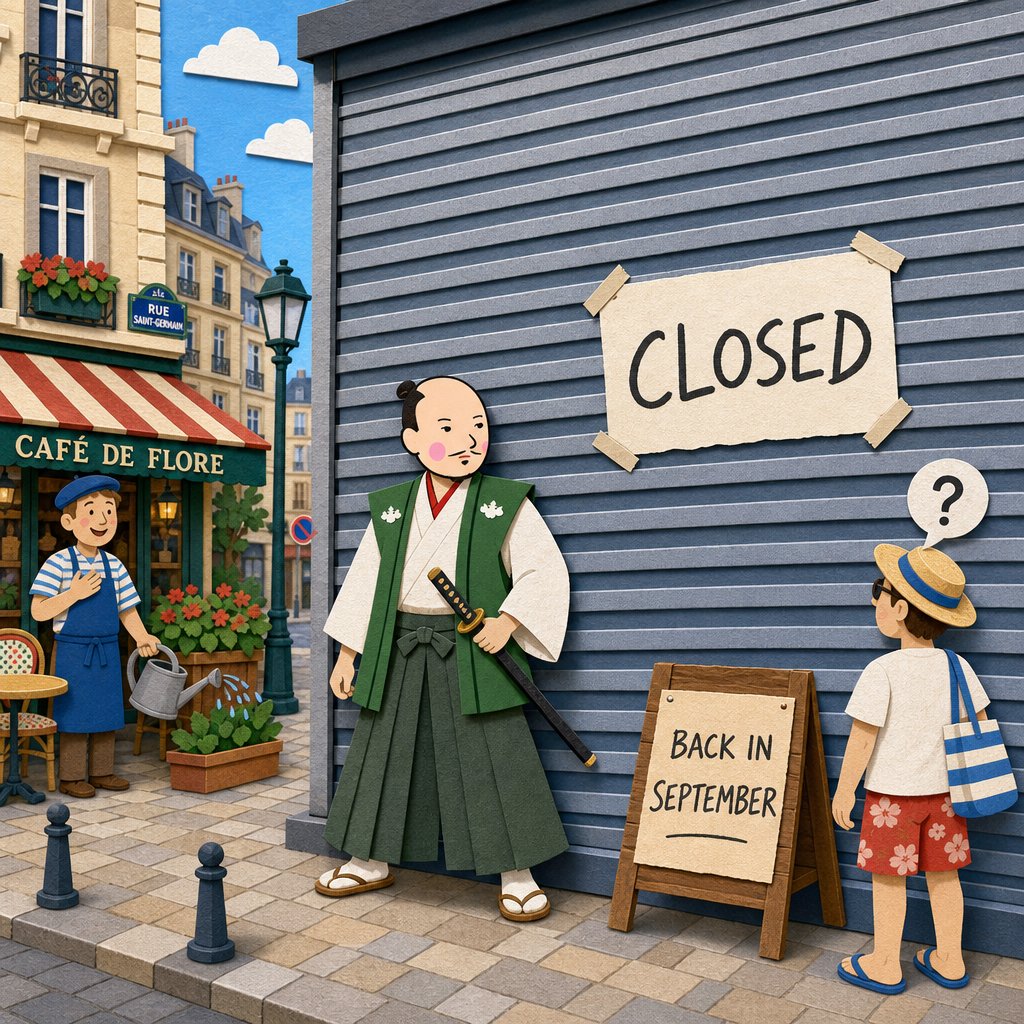
We arrived in Paris in August to find the capital of France quietly, cheerfully abandoned, and I assumed something terrible had happened that nobody had told the foreigner.
The bakery on the corner was dark, a handwritten note taped to the glass. The cobbler beside it, closed. The little restaurant my friend had promised me, a metal grate pulled down and a sign behind it. Street after street of shuttered doors, and the few people remaining walking slow, unbothered, as if a city emptying itself were the most natural thing in the world.
My friend read the note on the bakery door for me. "Back in September," he said.
September. It was the second of August. A whole month, then, of sealed doors. In my mind only one thing closes a town for a month, and it is not a happy thing, so I asked him, gravely, where the people had gone and whether they were safe.
A man watering the one open cafe's plants overheard me. "They're at the beach," he said.
The beach. I refused to believe a nation would simply agree to stop, all at once, by some silent accord, and walk into the sea for a month. There had to be a skeleton order kept, essential posts manned, someone holding the line. I started looking for who was in charge of the empty city.
The cafe man watched me peer down a deserted boulevard. "Nobody is in charge," he said, amused. "That's the whole point. In August, even the boss is at the beach."
Even the boss is at the beach. I had spent a lifetime believing that a place left unguarded would fall, and here was a country that closed its own shutters, handed itself a month of sun, and trusted it would all still be standing in September. They were not abandoning the city. They were proving they were not afraid to leave it. I bought a cold drink from the one open cafe, sat in the empty street, and for the first time in my life I stopped guarding something that did not need me.
1
6
33
2,170

SamMcGWeb retweeted

Thousands of patriots leaving the
UFC event in D.C. 🇺🇸
What do you notice about this crowd? 🤔
143
118
635
12,045

Elon Musk is a masterclass in resilience. Even when he was hit down to rock bottom, he refused to give up
In late 2008, he was on the absolute verge of total bankruptcy:
• SpaceX had suffered three failed launches in a row, with only enough capital left for one final roll of the dice.
• Tesla was bleeding cash and days away from shutting down completely.
• He was personally down to his last dollars….borrowing money from friends just to pay rent and keep the payroll from bouncing
Most people would have broken under that level of pressure. Most people would have taken the loss and walked away
But he didn’t
He went completely all in, worked insane 120-hour weeks, bet his entire life's fortune on the fourth rocket launch, and turned a near-death experience into the foundation of a $3 Trillion empire.
this is the greatest comeback story in modern history
62
179
975
20,500
SamMcGWeb retweeted

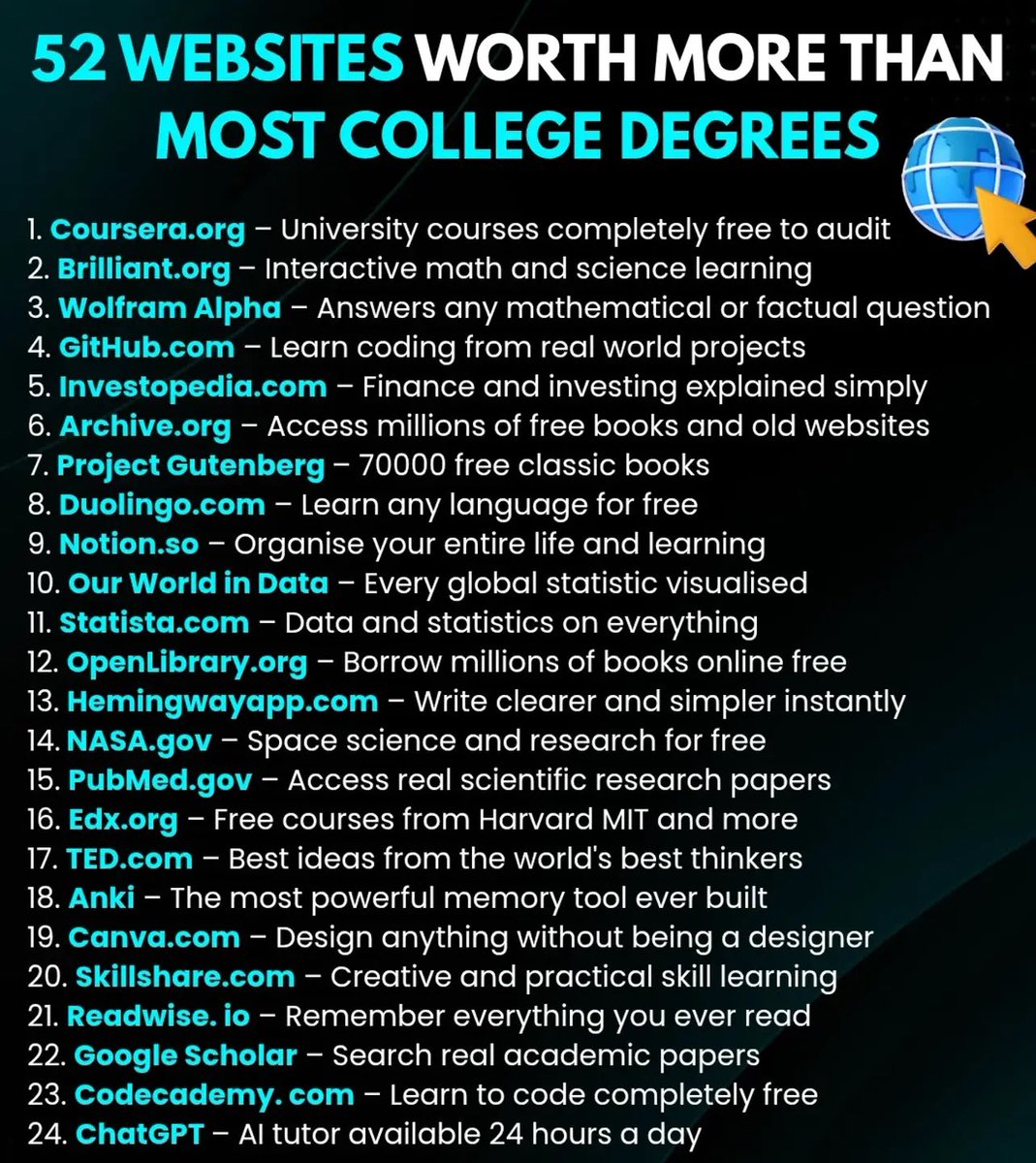
52 website worth more than most College degrees..
40
203
477
19,731
SamMcGWeb retweeted

BREAKING 🚨 Around 3:00 AM President Trump boards Air Force One on his way to France for G7
TRUMP IS AN ABSOLUTE MACHINE
HE NEVER STOPS WORKING 🙏
303
2,121
15,351
158,180
SamMcGWeb retweeted

Loving what this young man is saying! God bless him and America 🇺🇸 Do you agree with him?
29
440
2,086
14,766
SamMcGWeb retweeted

JOSH HOKIT SAID THAT MICHELLE OBAMA IS A WHAT ????????
56
222
1,704
53,707
SamMcGWeb retweeted
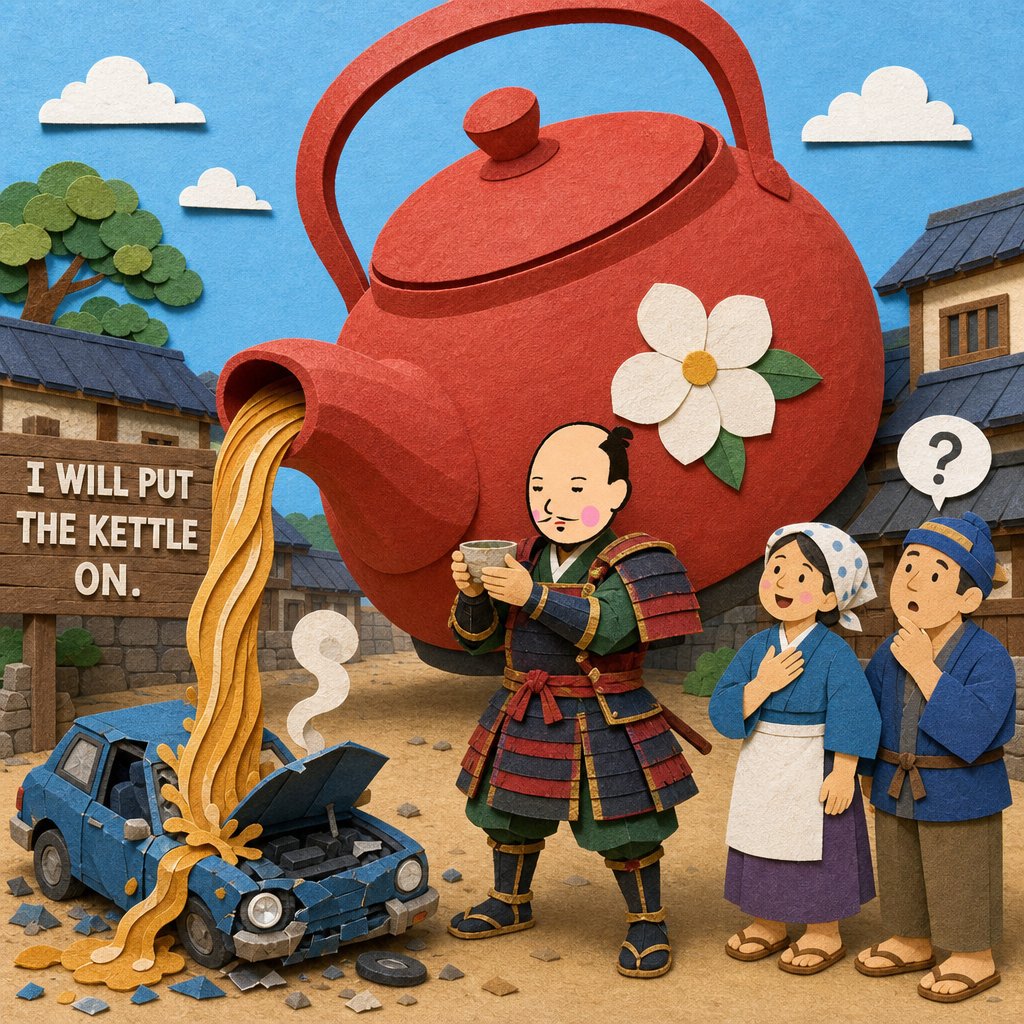
Stateside, a crisis means action. In Britain, I learned, a crisis means the kettle.
My American friend's car would not start outside a house in Yorkshire, and I rolled up my sleeves, ready to push it, lift it, carry it on my back to the nearest forge. The woman who lived there came out, looked at the dead engine, and said the strangest thing I had ever heard from a person facing mechanical ruin. "Oh dear. I'll put the kettle on."
She vanished inside. I stood guard over the broken machine, certain she had gone to summon men, tools, a plan of attack. She returned with a tray. On the tray sat three cups of tea.
I confess I did not understand the strategy. I drank the tea. It was very good tea. The car remained, in every measurable way, completely broken.
Then a neighbor wandered over, hands in his pockets, and assessed the situation with the calm of a general. "Engine trouble? Have you had a brew?"
Have you had a brew. As if the tea were step one of the repair. As if no man could be expected to find a solution on an empty cup. I began to suspect I was witnessing something deeper than a drink. This was a ritual of composure, a way of refusing to panic, a small warm act of order thrown in the face of chaos.
So I took it seriously. The next time something went wrong, a burst pipe at my friend's flat, water everywhere, I did not reach for a wrench. I marched to the kitchen and filled the kettle with the gravity of a man arming for war. My friend stared at me, ankle-deep in flood, as I presented him a steaming cup while the pipe sprayed the ceiling.
"That's...not really what tea is for, mate," he said.
But I had seen the truth, and I would not be moved. The tea is not for the pipe. The tea is for the man who must face the pipe. You do not fix the disaster with the cup. You become, with the cup, the sort of person who can. I handed him the saucer and rolled up my sleeves a second time, calmer now, ready at last to begin.
1
8
68
2,652

Elon Musk has figured out the Soros racket.
It doesn’t involve Soros spending his own money.
It involves Soros making a seed investment so he can get his hands on your money.
He then makes you pay, through the government, to fund your own destruction.
19
421
1,227
8,489
SamMcGWeb retweeted

Josh Hokit just called Michelle Obama “a man” on the mic after winning at UFC Freedom 250.
HOKIT: “Hey, shout out to Trump for having the balls to put some sh*t like this on!”
“And if I’m going to say anything, there’s only person more incredible than the Incredible Hulk and that’s my Lord and Savior Jesus Christ...”
“And lastly, Michelle Obama is a MAN!!”
“Am I right America?!”
100
327
3,747
561,527
SamMcGWeb retweeted

6h
One Brit’s honest take on America & Americans 🇬🇧❤️🇺🇸
It honestly baffles me how Americans get such a bad rap. All I see is proud people who genuinely love their country and can’t wait to show it off. The support, the invites, the kindness — I’m completely overwhelmed in the best way.
Thank you America! 🤍
Who else has experienced this warmth? Drop your stories below! 👇
18
369
1,934
21,033
SamMcGWeb retweeted

Was Hitler left or Right Brained? What do you think?
38
110
682
13,828
SamMcGWeb retweeted

Yo, fuck you, this is awesome.
102
646
7,975
142,982
SamMcGWeb retweeted

They don’t want you to know this
13
133
274
3,385
SamMcGWeb retweeted

Libs are counter-programming the UFC event at the White House. With this.
3,465
1,149
9,814
2,257,682