Joined June 2021
- Tweets 120
- Following 6
- Followers 28
- Likes 1
108 Photos and videos
Pinned Tweet

30 Mar 2023
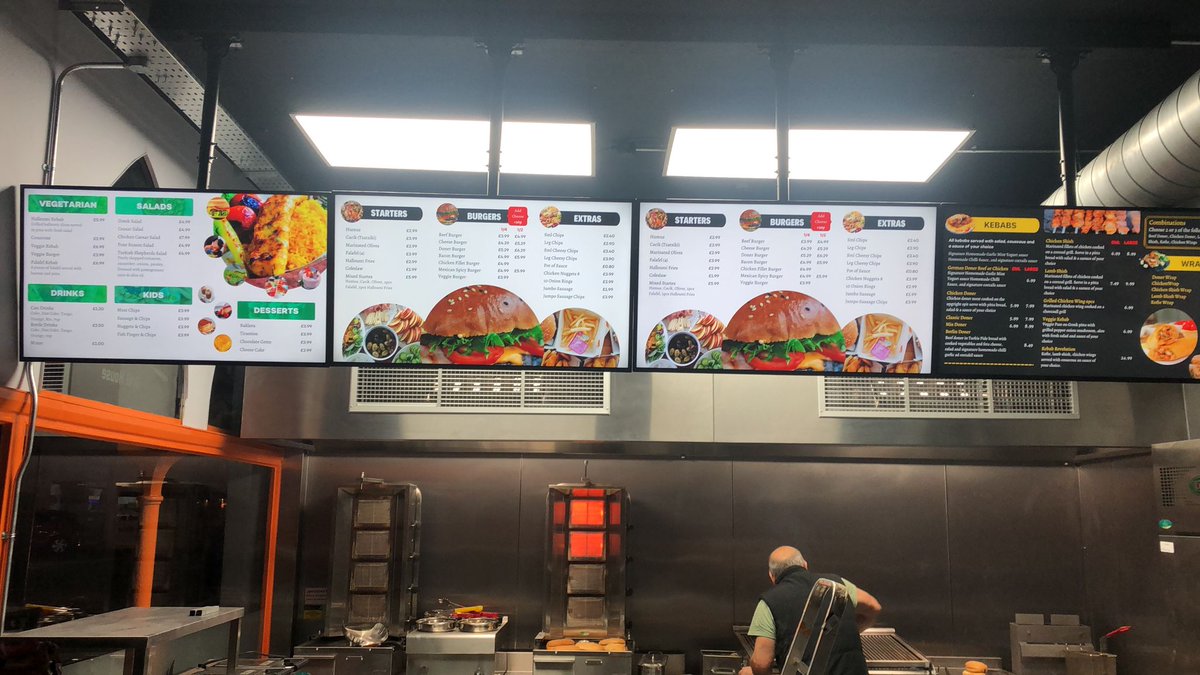
Upgrade your restaurant's customer experience with ScreenMoove's Digital Menu Boards! Drive sales and impress customers with sleek, dynamic displays that showcase your menu items in style. 🍔🍟
Order now: tinyurl.com/digital-menu-uk
#DigitalMenuBoards #ScreenMoove #RestaurantTech
2
196
Jun 12
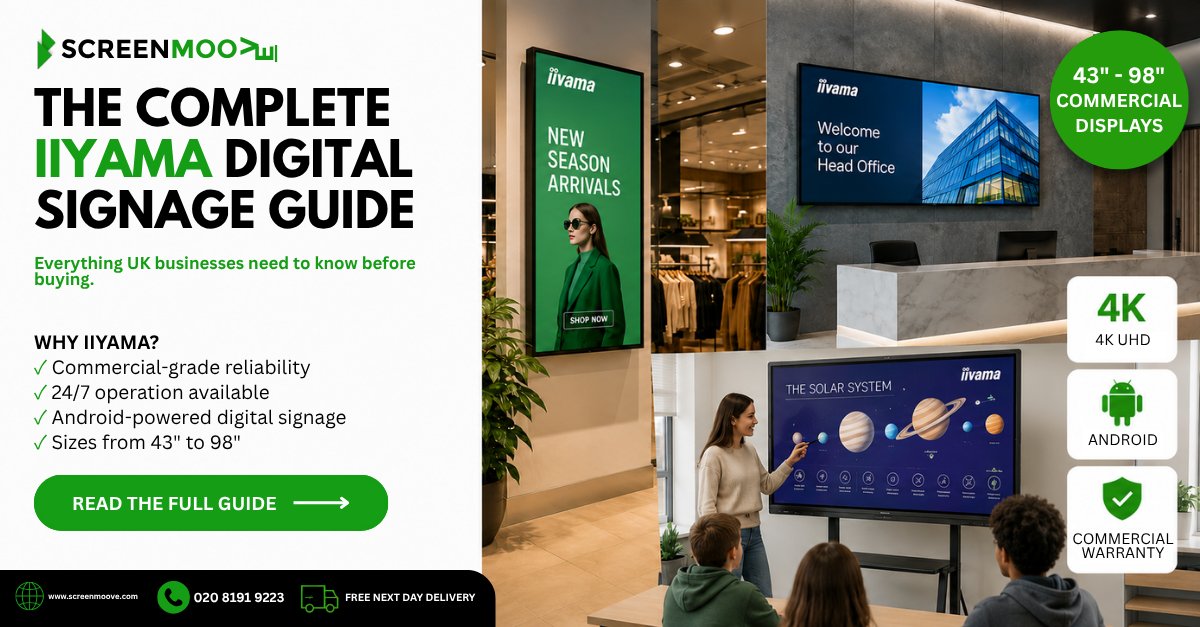
The complete iiyama Digital Signage Guide is now live.
From retail environments and corporate reception areas to classrooms and collaborative spaces, iiyama commercial displays offer a reliable, flexible solution for UK businesses looking to upgrade their visual communication.
In the guide, we cover:
✓ Commercial-grade reliability
✓ 24/7 operation options
✓ Android-powered digital signage
✓ 4K UHD display quality
✓ Screen sizes from 43" to 98"
✓ Key use cases across retail, corporate, and education sectors
Read the full guide here:
screenmoove.com/blogs/digita…
#iiyama #DigitalSignage #CommercialDisplays #BusinessDisplays #AVSolutions #RetailTechnology #CorporateDisplays #EducationTechnology #InteractiveDisplays #4KDisplay #AndroidSignage #UKBusiness #ScreenMoove
7
Jun 9
Get ready for the biggest football event of 2026 ⚽
Whether you’re planning a home cinema setup, upgrading a pub or bar, creating an outdoor viewing area, or preparing a venue for match-day crowds, the right projector can make all the difference.
We’ve put together a complete UK guide to the best projectors for watching the World Cup 2026, covering homes, pubs, bars, gardens, venues and clubs.
Read the full guide here:
screenmoove.com/blogs/digita…
#WorldCup2026 #Projectors #AVSolutions #DigitalSignage #HomeCinema #PubScreens #SportsViewing #Football #ScreenMoove #VenueTechnology
10
Jun 8
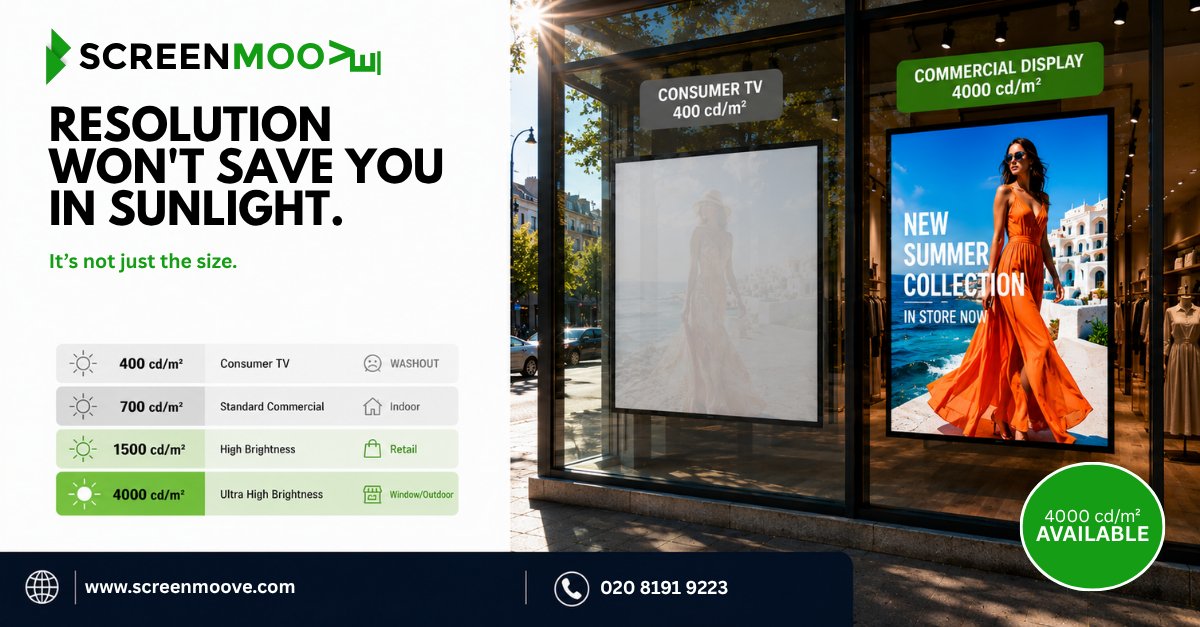
The AV industry has a resolution obsession that's costing businesses money.
8K. 4K. QHD. The spec sheets lead with resolution because it's easy to market. But for most commercial display applications, resolution is not the performance variable that matters most.
Brightness is.
Here's why. Resolution only matters when the viewer is close enough to distinguish individual pixels. For a 55" display viewed from 2.5 metres — which covers the vast majority of retail, hospitality and office environments — 4K and 1080p are visually identical. The human eye cannot detect the difference at that distance.
Brightness, on the other hand, determines whether your content is visible at all.
A 400 cd/m² screen in a sunlit retail window is invisible. A 1,500 cd/m² screen in the same position is clearly visible. A 3,000 cd/m² screen is impossible to miss.
If you're speccing commercial displays for any environment with natural light, overhead fluorescent lighting, or windows — your primary specification should be brightness measured in cd/m², not resolution.
And if a supplier is leading with resolution in their pitch without asking about your lighting environment first, ask them why.
What specification do you find is most misunderstood when businesses are buying commercial displays?
See our ultra high brightness display range: screenmoove.com/collections/…
#CommercialDisplays #DigitalSignage #AVSolutions #DisplayTech #ScreenMoove #RetailTech
214
Jun 5
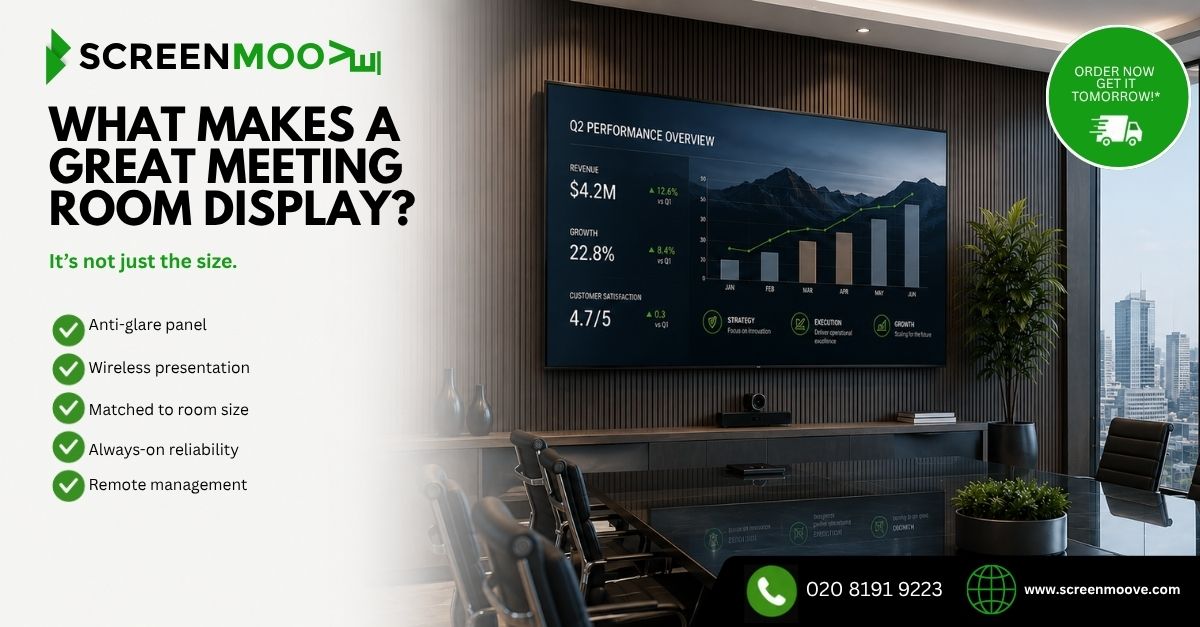
Meeting rooms have become the most visible expression of how seriously a business takes its own operations.
An outdated projector, a consumer TV awkwardly mounted on a wall, a screen with no wireless connection — these aren't minor inconveniences. They're signals to clients and staff about whether the business is run professionally.
The best meeting room display setups share a few consistent characteristics.
Size is matched to the room. For a 6-person boardroom, a 55" display is fine. For a 10-person training room, you need 75" at minimum — or the people at the back can't read the content.
Anti-glare is non-negotiable. Meeting room windows are the enemy of visibility. Commercial displays designed for boardrooms have anti-glare coatings and viewing-angle-optimised panels. Consumer TVs don't.
The connection is seamless. The friction of spending two minutes finding the right cable before every meeting is invisible but damaging. Wireless presentation capability removes that entirely.
The display is always on and ready. Commercial displays power on to a default input. Consumer TVs boot to a home screen menu. It's a small thing that reveals a lot.
And when it all works — when a presentation flows without technical interruption, when remote participants can see clearly, when the room feels like a professional environment — that's when clients notice.
What does your current meeting room setup say about your business?
Explore meeting room displays: screenmoove.com/collections/…
#MeetingRoomTech #AVSolutions #WorkplaceTech #InteractiveDisplays #ScreenMoove
13
Jun 4
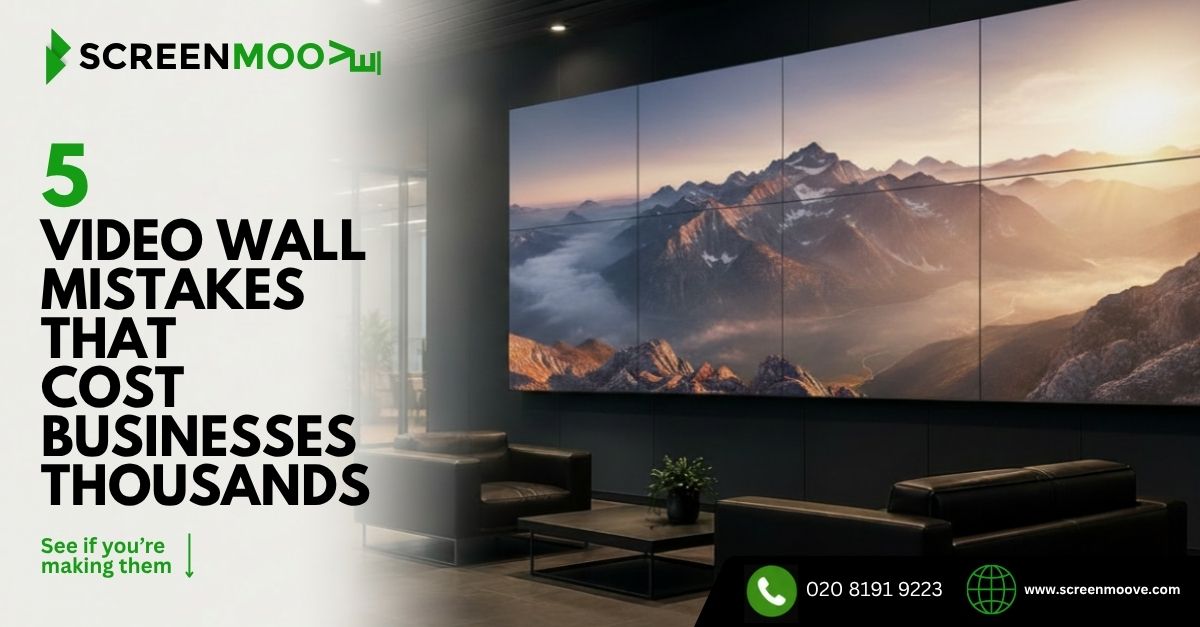
Most video wall failures are decided before a single screen is installed.
Here are the 5 most expensive mistakes — and how to avoid them.
Mistake 1: Wrong pixel pitch for the viewing distance
If your audience is more than 3 metres away, you don't need fine pixel pitch. Buying P1.2 when P2.5 would have worked costs 30-40% more for no visible difference. Pixel pitch = viewing distance in metres / 1,000.
Mistake 2: Ignoring ambient light
A video wall that looks incredible in a dark showroom can look washed out in a brightly lit atrium. Brightness specs need to match the environment, not the spec sheet.
Mistake 3: Undersizing the processing unit
The display is only as good as the processor driving it. Many installations fail not because of the screens, but because the video processor can't handle the resolution or refresh rate required.
Mistake 4: No plan for content
A video wall without a content strategy is expensive wallpaper. Before you buy the hardware, define what content will run, how it will be updated, and who is responsible for it.
Mistake 5: Forgetting maintenance access
Video walls need servicing. Screens can fail. If the installation doesn't allow for front or rear access to individual modules, a repair becomes a full removal.
Save this if you're planning a video wall installation. What would you add to the list?
Plan your video wall properly: screenmoove.com/collections/…
#VideoWall #LEDDisplay #AVIndustry #CommercialDisplays #ScreenMoove #AVInstall
1
28
Jun 3
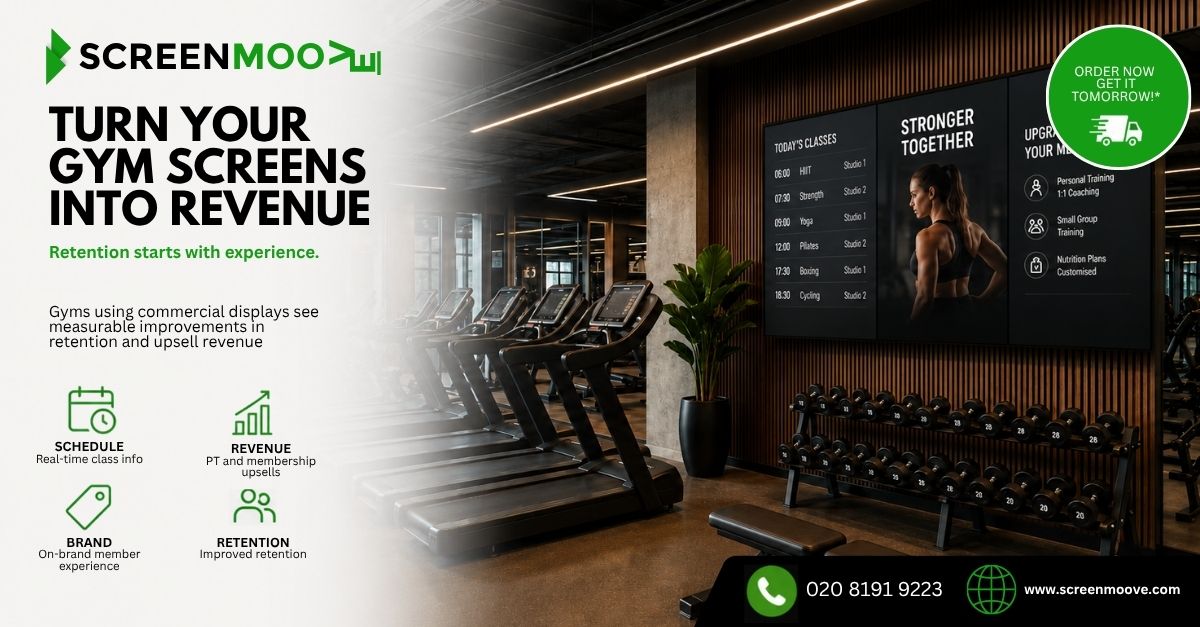
The gym industry has a retention problem that most operators try to solve with better equipment.
The answer is often in the walls.
Member retention in commercial fitness is tightly linked to perceived experience — how professional the space feels, how well-informed members are, and how engaged they feel with the brand. Screens address all three.
A gym using commercial displays well is running class schedules in real time, promoting PT sessions and memberships at the exact moment someone finishes a workout, showing motivational content that reinforces brand identity, and managing wayfinding so first-time visitors don't feel lost.
The gyms doing this properly aren't spending significantly more on technology. They're just using the technology they have more deliberately.
The ROI case stacks up quickly. A single PT upsell driven by screen promotion — say, one extra £100 session per week per screen — covers the hardware cost in under a year. Class bookings driven by schedule screens reduce no-shows. Brand consistency from professional displays reduces churn.
In 2026, a gym that looks like it was fitted out in 2012 is losing members to a competitor that looks like it was fitted out this year.
Gym owners and operators — what's the biggest commercial challenge you're trying to solve in your space right now?
Explore gym digital signage solutions: screenmoove.com/pages/gyms-d…
#GymDesign #FitnessBusiness #DigitalSignage #AVTech #ScreenMoove #GymOwner #FitnessTech
15
Jun 2
Most businesses buy digital signage screens the same way they buy a TV for their living room.
Price. Size. Brand name.
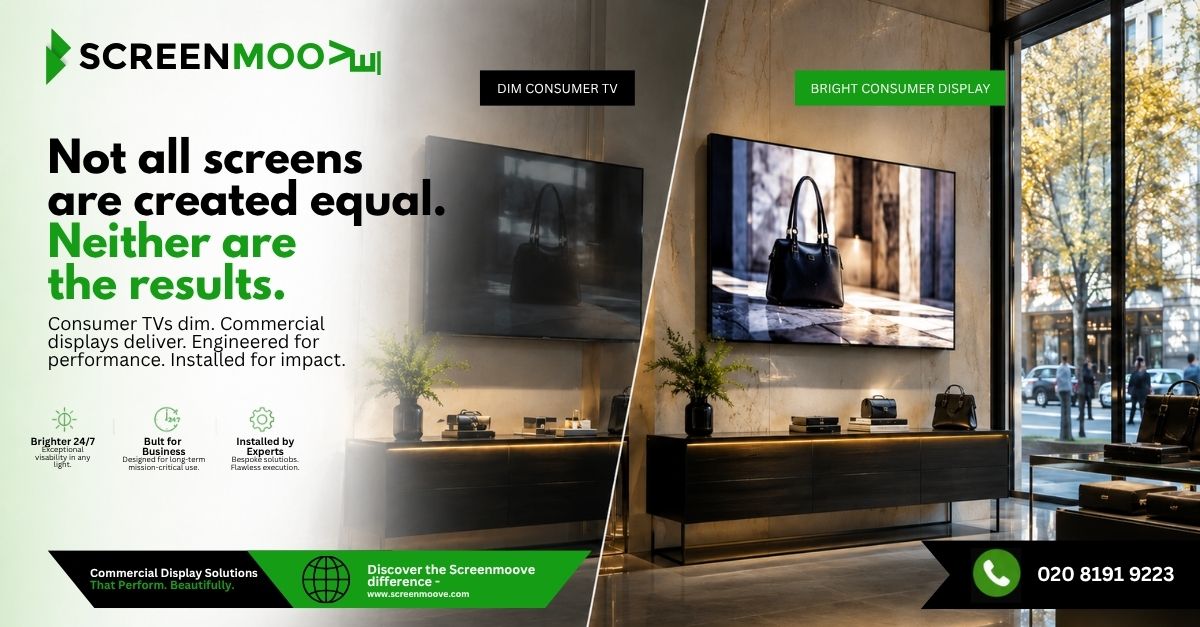
The problem is that commercial displays and consumer TVs are completely different products — engineered for entirely different use cases.
A consumer TV is rated for around 4-6 hours of daily use. Run it in a shop window for 12 hours a day and you'll be replacing it within a year. A commercial display is rated for continuous 24/7 operation — 100,000 hours of life versus 30,000.
The brightness difference is even more stark. Most consumer TVs sit around 250-400 cd/m². In a sunlit retail window or brightly lit restaurant, that screen will wash out completely. Commercial displays start at 700 cd/m² and go up to 4,000 cd/m² for direct sunlight environments.
Then there's the duty cycle, the panel construction, the mounting compatibility, the warranty terms, the remote management capabilities.
Businesses that buy cheap end up buying twice. The display fails, the customer experience suffers, and they spend more fixing it than they'd have paid for the right product in the first place.
The most expensive display decision a business can make is the wrong cheap one.
What's the biggest screen spec mistake you see in commercial environments?
Explore commercial displays built for business use: screenmoove.com/collections/…
#DigitalSignage #CommercialDisplays #AVSolutions #RetailTech #ScreenMoove
1
5
Jun 1
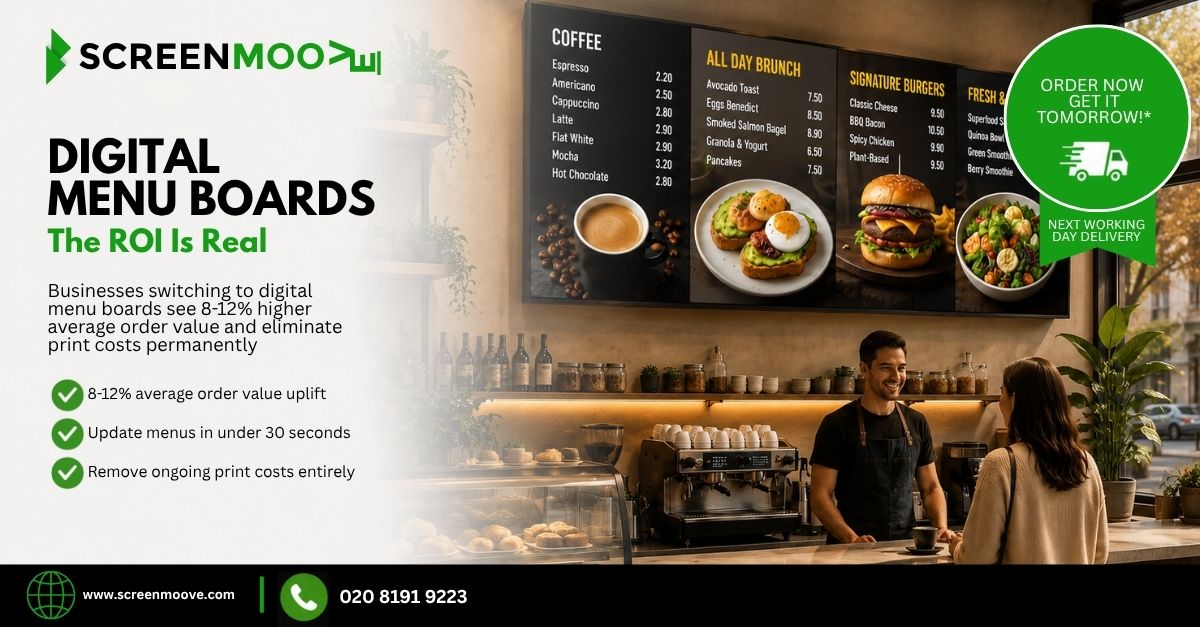
Digital menu boards don't just look better than printed menus. They perform better.
The numbers are consistent across QSR, hospitality and casual dining:
Operators switching from static printed menus to digital boards typically see 8-12% uplift in average order value. The reason is straightforward — digital menus make it easier to highlight high-margin items, run time-sensitive promotions, and surface upsells at the exact moment of decision.
That's before you account for the removal of ongoing print costs. A mid-size restaurant group spending £800 a year on menu reprints, special boards and promotional signage will cover most of the hardware cost in the first two years — and the screens will last a decade.
The flexibility argument is the one most businesses don't fully price in. Changing a printed menu takes time, budget, and a reprint cycle. Changing a digital menu board takes about 30 seconds from a phone or laptop. For businesses with seasonal menus, daily specials, or time-based pricing, that flexibility has real commercial value.
The businesses still using printed menus in 2026 aren't being traditional. They're leaving revenue on the table.
If you run a restaurant, takeaway, café or bar — what's stopped you switching to digital menu boards?
See ScreenMoove digital menu boards: screenmoove.com/products/dig…
#HospitalityTech #DigitalMenuBoards #RestaurantMarketing #DigitalSignage #ScreenMoove
1
Jun 1
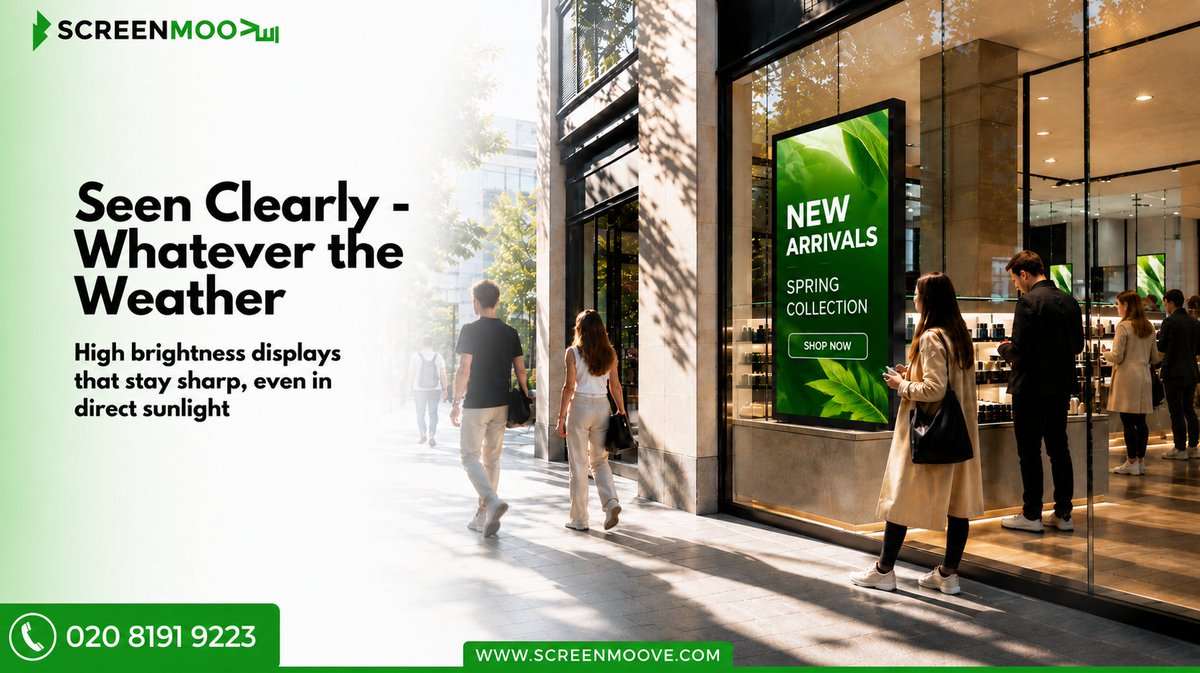
Seen clearly - even in full sunlight.
High brightness displays cut through glare, keeping your message sharp, vibrant and impossible to miss from the street.
Because visibility shouldn’t depend on the weather.
Explore high brightness displays:
screenmoove.com/collections/…
📞 020 8191 9223
#HighBrightness #DigitalSignage #RetailDisplay #WindowDisplay #OutdoorDisplays #RetailMarketing #VisualImpact #ScreenMoove
2
May 29
One thing we’ve noticed this month?
Businesses are thinking far more seriously about:
- brightness
- immersive retail
- workplace communication
- premium environments
- interactive experiences
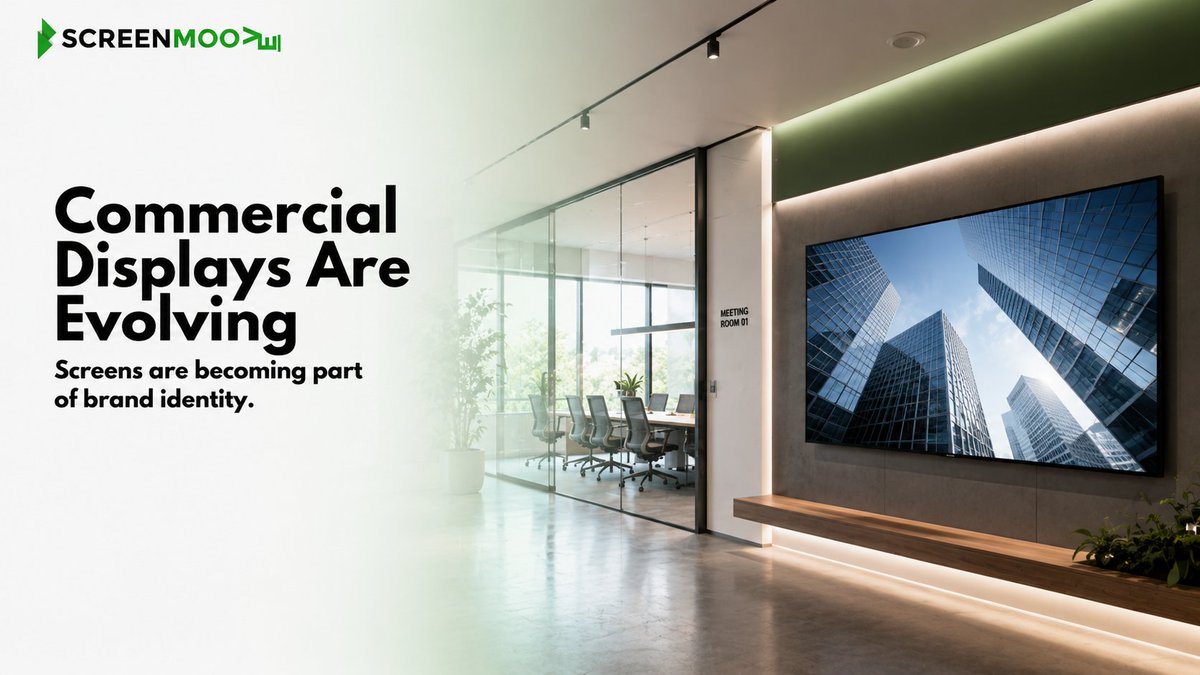
Commercial displays are becoming part of brand identity - not just infrastructure.
What trends are you seeing right now?
🌐 screenmoove.com
#DigitalSignage #RetailTechnology #CommercialDisplays #AVTechnology #RetailDesign #ScreenMoove
1
May 28
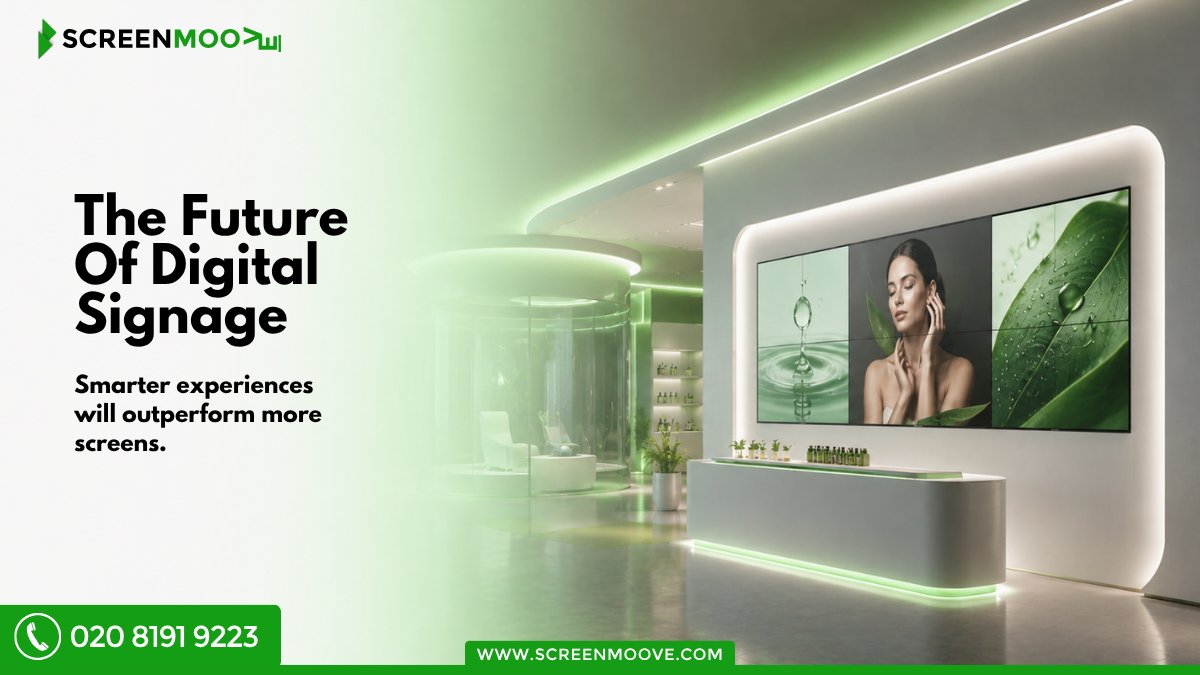
The future of digital signage isn’t more screens.
It’s smarter experiences.
- Better placement.
- Better content.
- Better integration.
- Better storytelling.
Commercial displays are shifting from hardware to experience design.
🌐 screenmoove.com
#FutureOfRetail #DigitalSignage #CommercialAV #RetailTechnology #ScreenMoove
7
May 27
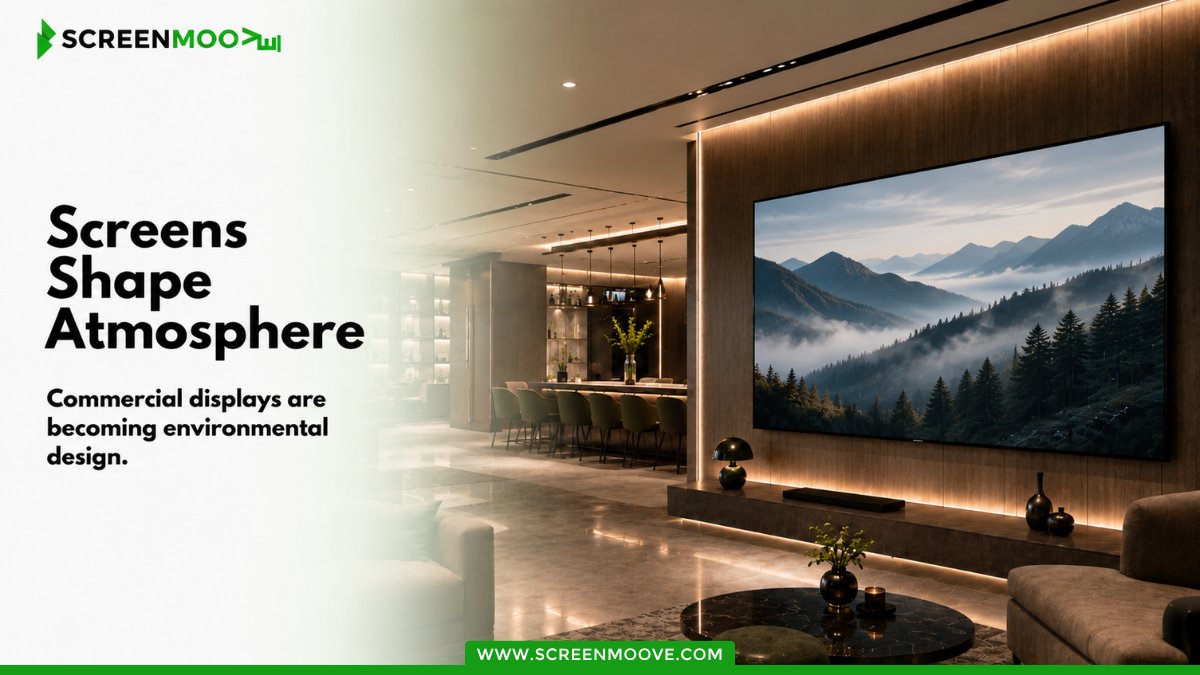
Commercial displays don’t just communicate information anymore.
They shape atmosphere.
The right setup can make environments feel:
- more premium
- more modern
- more immersive
- more connected
Commercial displays are becoming environmental design.
#InteriorDesign #DigitalSignage #CommercialDisplays #RetailDesign #HospitalityDesign #ScreenMoove
2
May 26
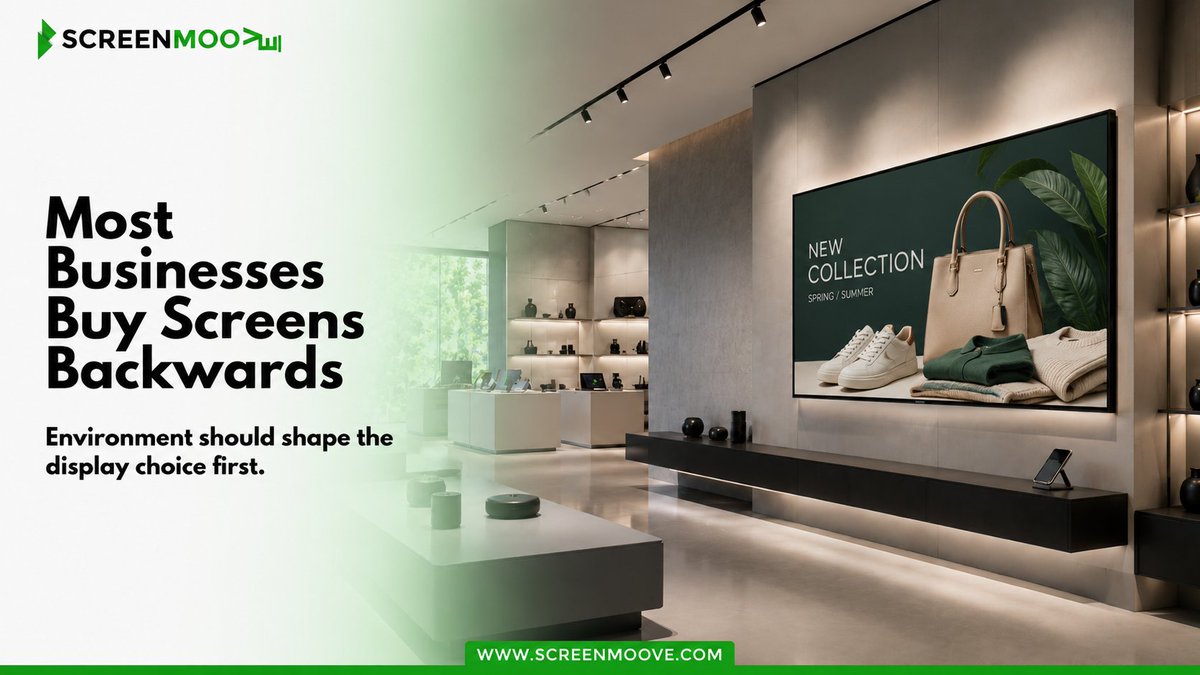
Most businesses buy screens backwards.
They start with:
“What size do we need?”
Instead of:
- environment
- viewing distance
- brightness
- audience behaviour
- content type
The right display is contextual.
Commercial display strategy matters far more than most businesses realise.
🌐 screenmoove.com/collections/…
#CommercialDisplays #DigitalSignage #RetailTechnology #AVTechnology #ScreenMoove
2
May 25
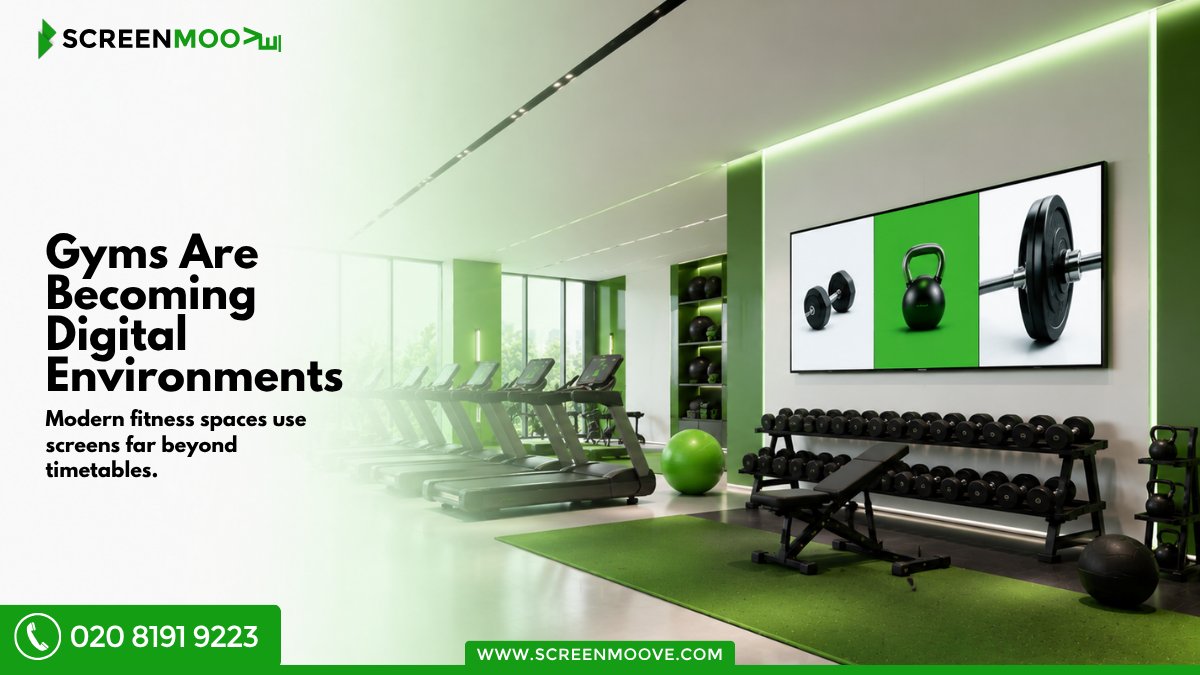
Gyms are using screens for far more than timetables now.
The best fitness spaces use displays to:
- create atmosphere
- reinforce branding
- motivate members
- improve communication
- modernise environments
The modern gym experience is becoming increasingly digital.
🌐 screenmoove.com/pages/gyms-d…
#GymDesign #FitnessTechnology #DigitalSignage #CommercialDisplays #ScreenMoove
1
May 22
What’s the best commercial screen installation you’ve ever seen?
Could be:
- retail
- hospitality
- gyms
- airports
- offices
- public spaces
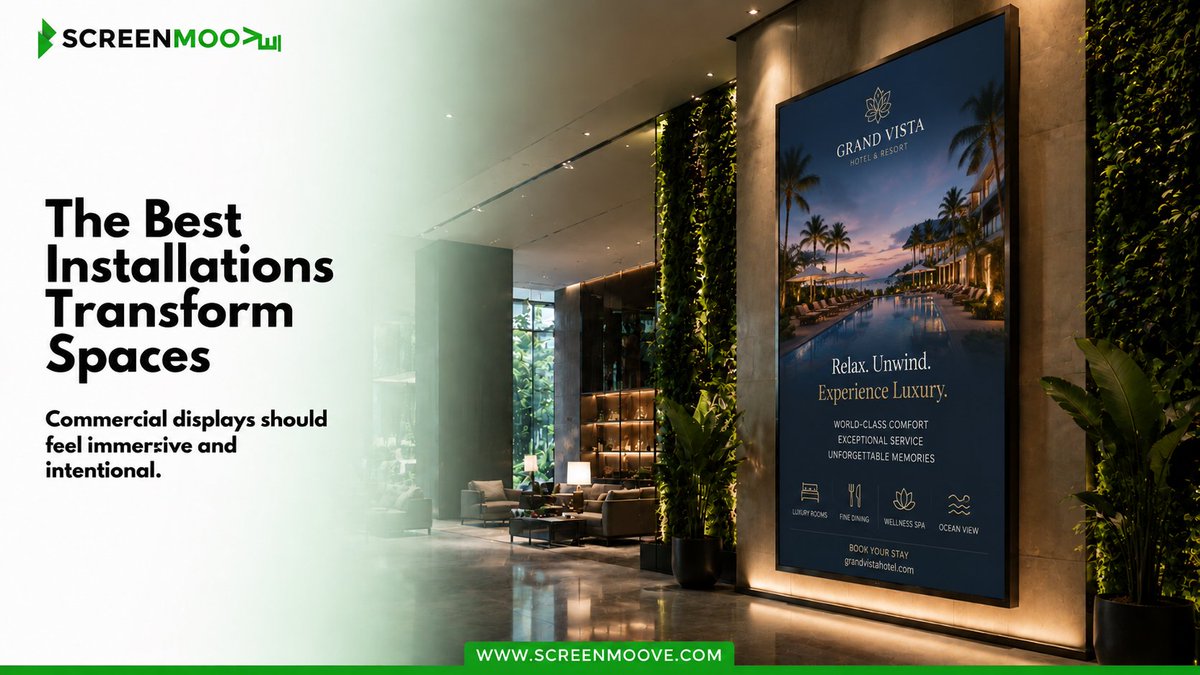
The best display environments don’t just use screens.
They completely transform how a space feels.
Drop examples below 👇
#DigitalSignage #CommercialDisplays #RetailDesign #AVTechnology #ScreenMoove
2
May 21
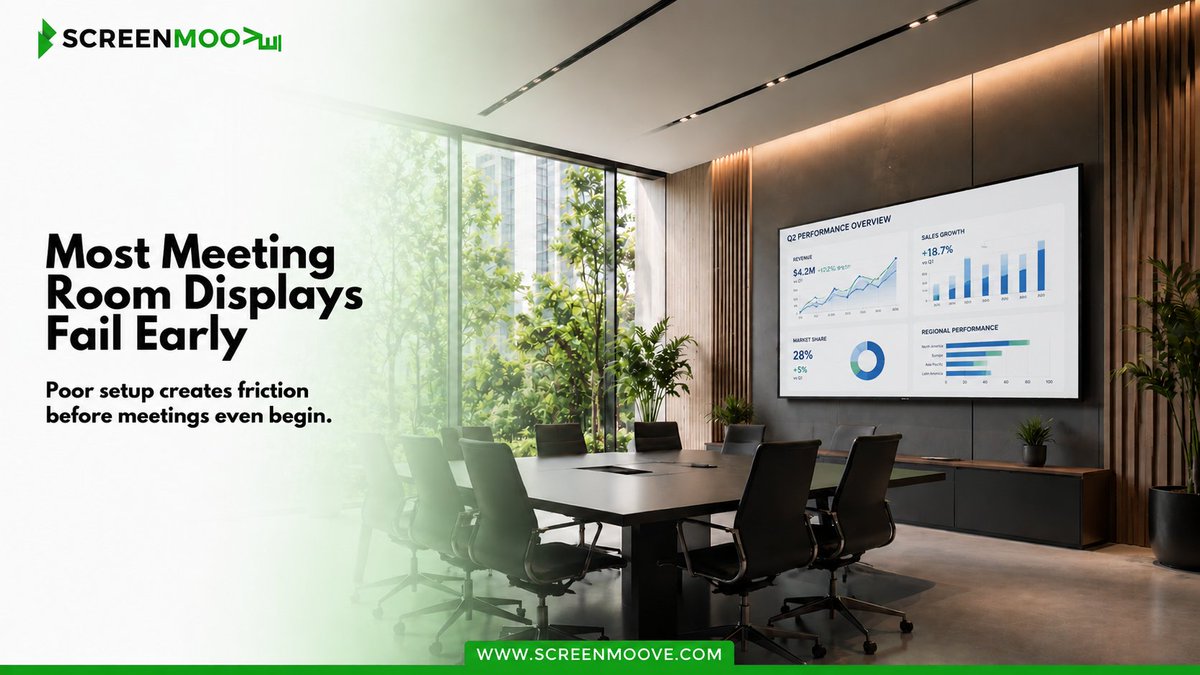
3 mistakes businesses constantly make with meeting room displays:
Choosing consumer TVs instead of commercial displays
Ignoring room brightness and reflection
Installing screens too small for the room size
Meeting room technology should reduce friction - not create it.
The best setups feel invisible. Clean. Reliable.
🌐 ow.ly/nAbX50YWvpg
#MeetingRooms #CommercialAV #VideoConferencing #OfficeTechnology #ScreenMoove
1
May 20
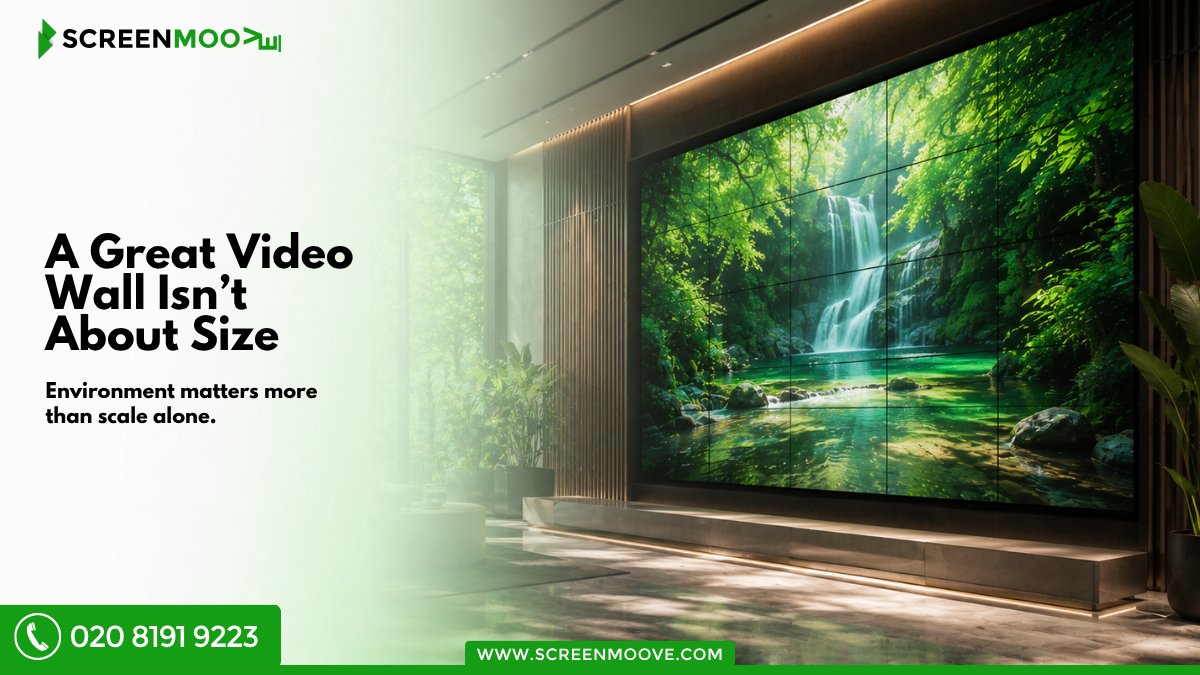
A good video wall isn’t about having the biggest screen possible.
It’s about getting the environment right.
The best video walls consider:
- viewing distance
- brightness
- content quality
- bezel size
- positioning
- ambient lighting
Done properly, a video wall becomes a focal point.
Done badly, it becomes visual noise.
Explore video wall solutions:
screenmoove.com/collections/…
📞 020 8191 9223
#VideoWall #CommercialDisplays #DigitalSignage #CorporateAV #ScreenMoove
May 19
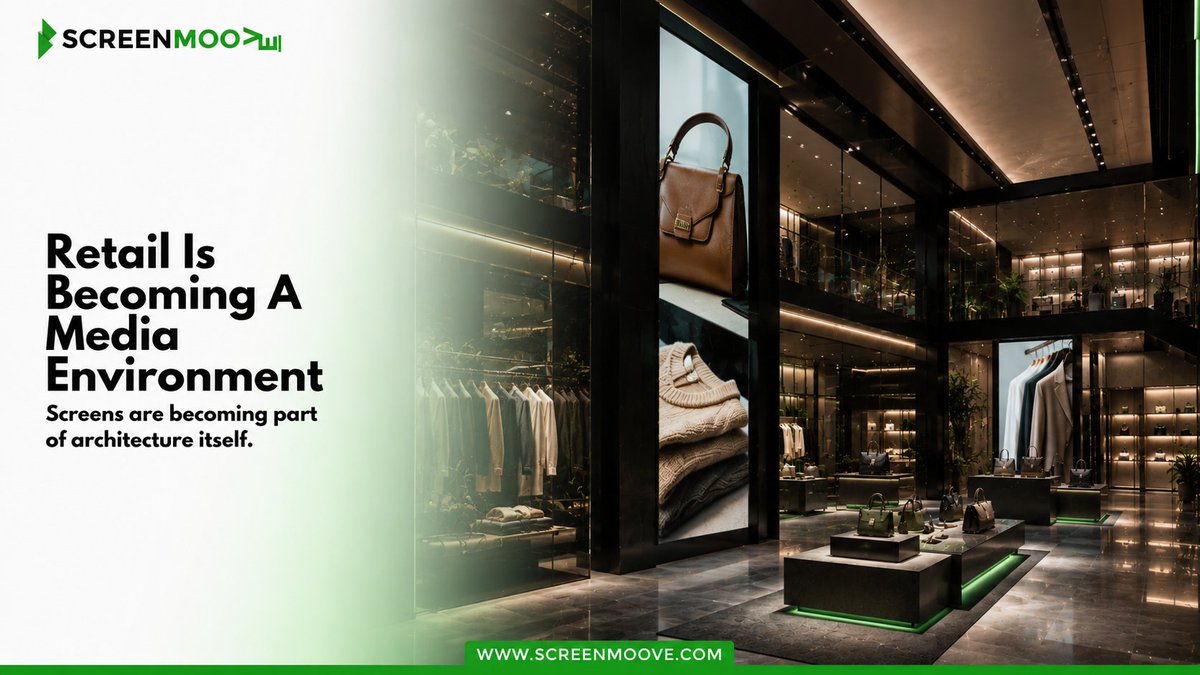
Retail spaces are becoming media environments.
The best stores no longer just display products.
They create:
* atmosphere
* immersion
* movement
* emotion
* experience
Commercial displays are becoming part of architecture itself.
The gap between physical retail and digital experience is disappearing very quickly.
🌐 screenmoove.com/pages/retail
#RetailTechnology #ExperientialRetail #DigitalSignage #RetailDesign #ScreenMoove
1
May 18
Most digital signage doesn’t fail because of the screen.
It fails because of the experience around it.
Too much information.
Bad placement.
Weak brightness.
No visual hierarchy.
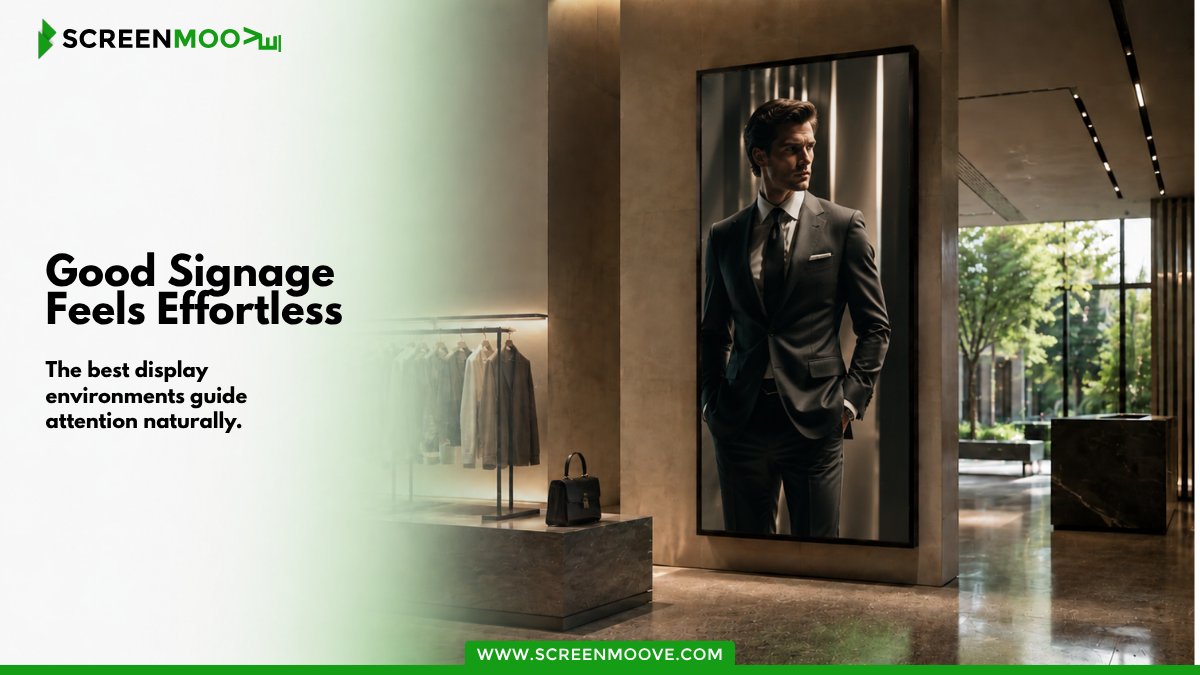
Good signage feels effortless.
The best display environments guide attention naturally instead of fighting for it.
Explore commercial display solutions:
screenmoove.com/collections/…
📞 020 8191 9223
#DigitalSignage #RetailDesign #CustomerExperience #CommercialDisplays #ScreenMoove
4
May 15
One thing businesses massively underestimate when choosing displays?
Brightness.
Not resolution.
Not size.
Not smart features.
If customers can’t clearly see the content, nothing else matters.
Environment should always shape the display choice.
🌐 screenmoove.com/collections/…
#CommercialDisplays #DigitalSignage #RetailExperience #AVTechnology #ScreenMoove