
Brother, Son, Independent Thinker/Voter; Political Scientist; Penn State Harrisburg Alum; Pi Sigma Alpha National Political Science Honor Society
Joined December 2016
- Tweets 362
- Following 87
- Followers 27
- Likes 799
10 Photos and videos








Sean Gatten retweeted

3 Aug 2025
The Golden Rule, commonly stated as “Do unto others as you would have them do unto you,” has roots in various cultures and philosophical traditions, reflecting a universal principle of reciprocity and empathy. Its origins can be traced across religious, ethical, and philosophical systems worldwide, with similar concepts appearing independently in different times and places. Here’s a concise overview of its origins:
• Ancient Egypt (circa 1800 BCE): One of the earliest known expressions appears in the Tale of the Eloquent Peasant (Middle Kingdom), which includes the maxim, “Do to the doer to make him do,” suggesting reciprocity in actions.
• Ancient Mesopotamia (circa 1780 BCE): The Code of Hammurabi, while not explicitly stating the Golden Rule, emphasizes reciprocal justice, laying a foundation for mutual treatment in legal contexts.
• Ancient India:
• Hinduism (circa 1500–500 BCE): The Mahabharata includes, “This is the sum of duty: do not do to others what would cause pain if done to you” (Anushasana Parva, 113.8).
• Jainism (circa 6th century BCE): The principle of Ahimsa (non-violence) implies treating others with the same respect one desires.
• Buddhism (circa 5th century BCE): The Dhammapada (verse 183) and other texts emphasize compassion and avoiding harm to others, aligning with the Golden Rule’s spirit.
• Ancient China:
• Confucianism (circa 500 BCE): Confucius articulated a version in the Analects (15:24): “Do not impose on others what you do not wish for yourself.”
• Taoism: The T’ai Shang Kan Ying P’ien (circa 200 BCE) advises treating others with kindness as one would wish to be treated.
• Ancient Greece (circa 6th–4th century BCE): Philosophers like Thales, Pittacus, and later Plato and Aristotle discussed reciprocity. Isocrates (circa 375 BCE) stated, “Do not do to others what angers you if done to you by others.”
• Judaism (circa 500 BCE): The Hebrew Bible’s Leviticus 19:18 commands, “You shall love your neighbor as yourself,” a principle Rabbi Hillel (1st century BCE) summarized as, “What is hateful to you, do not do to your fellow.”
• Christianity (1st century CE): Jesus of Nazareth explicitly taught the Golden Rule in Matthew 7:12 and Luke 6:31: “Do to others as you would have them do to you,” framing it as a core ethical teaching.
• Islam (7th century CE): A hadith in Sahih Muslim (Book 32, Hadith 55) states, “None of you truly believes until he wishes for his brother what he wishes for himself,” echoing the principle.
• Other Traditions: Similar ideas appear in Zoroastrianism, Sikhism, and indigenous ethical systems, such as the African concept of ubuntu, which emphasizes communal harmony and mutual respect.
The Golden Rule’s near-universal presence suggests it emerges from fundamental human social instincts, codified differently across cultures. No single origin point exists; rather, it reflects a shared human insight into fairness and empathy, adapted to each tradition’s context.
1
6
1,118
Sean Gatten retweeted

17 Sep 2024
No

Can noncitizens vote in Pennsylvania elections?
buff.ly/3B4JUAp
1
3
237

Can noncitizens vote in Pennsylvania elections?
buff.ly/3B4JUAp
1
4
412
Sean Gatten retweeted

6 Sep 2024
Congratulations Sean, canvassing with Sara Agerton (HD-88) for winning our Majority Maker Mug in honor of our 500,000th door!
To all of our volunteers across PA, thank you for donating your valuable time and energy to our campaigns every week – we’re in this together.

5
13
46
2,319

Guaranteed income helps with financial flexibility: Study trib.al/NZGQnDs
20
5
16
15,466

8 May 2024
You know what else is newsworthy? The fact that @RepScottPerry thinks the KKK is the “military wing of the Democratic party” 🤦♂️
I seem to remember Confederate flags being part of the MAGA movement on Jan 6.
You are a disgrace!
cnn.com/2024/05/08/politics/…
8 May 2024

The media doesn't bat an eye when the Biden admin floods your communities with millions of potentially dangerous illegal aliens. But question the merits of Biden's open border regime? The media will ambush you.
You know what's newsworthy? The carnage at our southern border and every American town wrecked by it.
1
91
Sean Gatten retweeted

17 Feb 2024
Thank you to DCDC for endorsing me in the Senate District 15 primary!

6
29
1,255
Sean Gatten retweeted
12 Feb 2024
It took so many folks to make this happen! Thank you!
1
8
60
2,777
18 Jan 2024
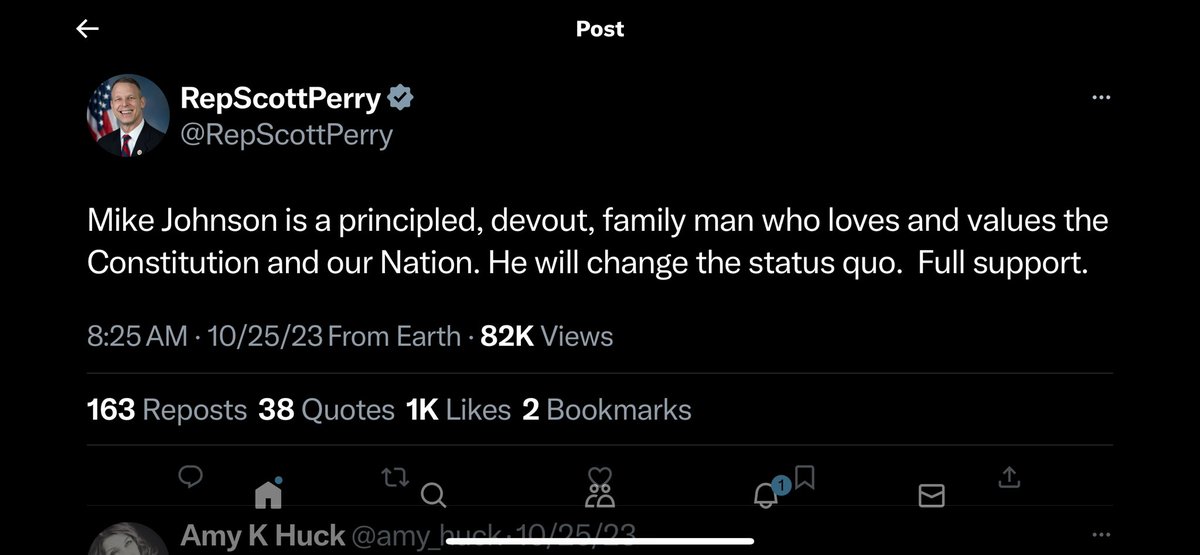
This post isn’t aging well for you, is it @RepScottPerry?
You and your freedom caucus members are nothing but obstructionists who have no desire to govern responsibly. #VoteHimOut2024
18 Jan 2024
This is worse than the status quo.
Republicans were not elected by our constituents to spend with reckless abandon, nor to vote for more federal spending without policy changes.
perry.house.gov/news/documen…
63
Sean Gatten retweeted
8 Dec 2023
Governor @JoshShapiroPA and I have fought hard together for working families, and if you elect me to the PA Senate, we can finish the work we started. I'm honored to have his support, and I hope to earn yours as well.
10
17
141
16,490
27 Oct 2023
Came across this podcast b/c my BIL, who is a SANE Republican, suggested @WalshFreedom’s podcast #WhiteFlag. I lean more toward @ememess’s point of view, but this kind of civil debate is EXACTLY the type that SHOULD be happening in Congress! We need to elect better leaders!
This tweet is unavailable
3
63
21 Oct 2023
By the time the next Speaker vote is taken, @RepScottPerry and the clown caucus will have wasted half of the 45 day CR fighting over who will lead the House. How is this effective governing? Voters need to remember this next year and vote him out of office!
5
39
Sean Gatten retweeted

20 Oct 2023
Truly terrifying. They had SCOTUS set to stop the certification of the 2020 results. According to her -- it was "either Scalise or McCarthy" who helped Pelosi move forward with the vote, thwarting their plan. No wonder the MAGA caucus ousted McCarthy & won't vote for Scalise.
19 Oct 2023

In Sept 2021, Sidney Powell went on an obscure right-wing podcast and explained exactly why Trump didn’t want to stop the insurrection on J6. They had a plan. This interview has been ignored but is extremely important now that she is cooperating. Story …meidastouch.com/news/sidney-…
1
4
3
757
Sean Gatten retweeted

20 Oct 2023
Election Preview 2023: A look at polling places in Cumberland County | Tap on the picture to learn more 🔽 cumberlink.com/election-prev…
1
1
242
Sean Gatten retweeted

10 Dec 2018
“Stray Bullets” is a song I wrote with Ryan Harvey for our friend Tomas Young. Tomas was a soldier paralyzed in the Iraq War, became a staunch anti-war activist with Iraq Veterans Against The War, and was a great dude.
5
9
104
3 Oct 2023
Apparently @RepScottPerry couldn’t wait 45 days.
After Dems bailed out our country and prevented a shutdown, first order of business for @RepScottPerry and @GOP wasn’t funding the gov’t but having an intra-party fight over their leader. This shows how unserious they are.
3 Oct 2023
The American People desperately need us to undo the continuing destruction and willful neglect of Bidenomics. With regard to the Speaker? Talk to me in 45 days. We need to finish the mission and secure some wins for the American People – they are my only priority. #MotionToVacate
44
25 Aug 2023
#Twitter and followed @realDonaldTrump was b/c he was elected Pres and I thought that would be the best way to find out the US launched a nuke. Never unfollowed b/c he was kicked off before I could…now unfollowing
23
15 Aug 2023
Just finished the @BulwarkOnline podcast by @saletan “The #Corruption of @LindseyGrahamSC” - Amazing look at his transformation into a Trump sycophant! Great work, thank you!
1
2
277
7 Jul 2023
If the schools are so bad that kids aren’t learning to read, why is #SchoolChoice the solution rather than improving the schools? Fixing the problem for all is more beneficial than fixing it for some.
2
42

"Snark is the idiot's version of wit and we're being polluted by it." - Will @Jeff_Daniels #Newsroom
10
76
41