
Joined January 2021
- Tweets 15,494
- Following 679
- Followers 738
- Likes 58,084
1,146 Photos and videos












Pinned Tweet

Jan 28
At 21, I was tasked with recreating the Lion King stampede at Disney.
The original team had 2 years and a trip to Kenya. I had the public library.
I've never told this story publicly before. How a self-taught kid from Detroit with no high school diploma helped shift Disney from pencils to pixels.
x.com/SeedsForbidden/status/…


1
12
961
Forbidden Seeds retweeted

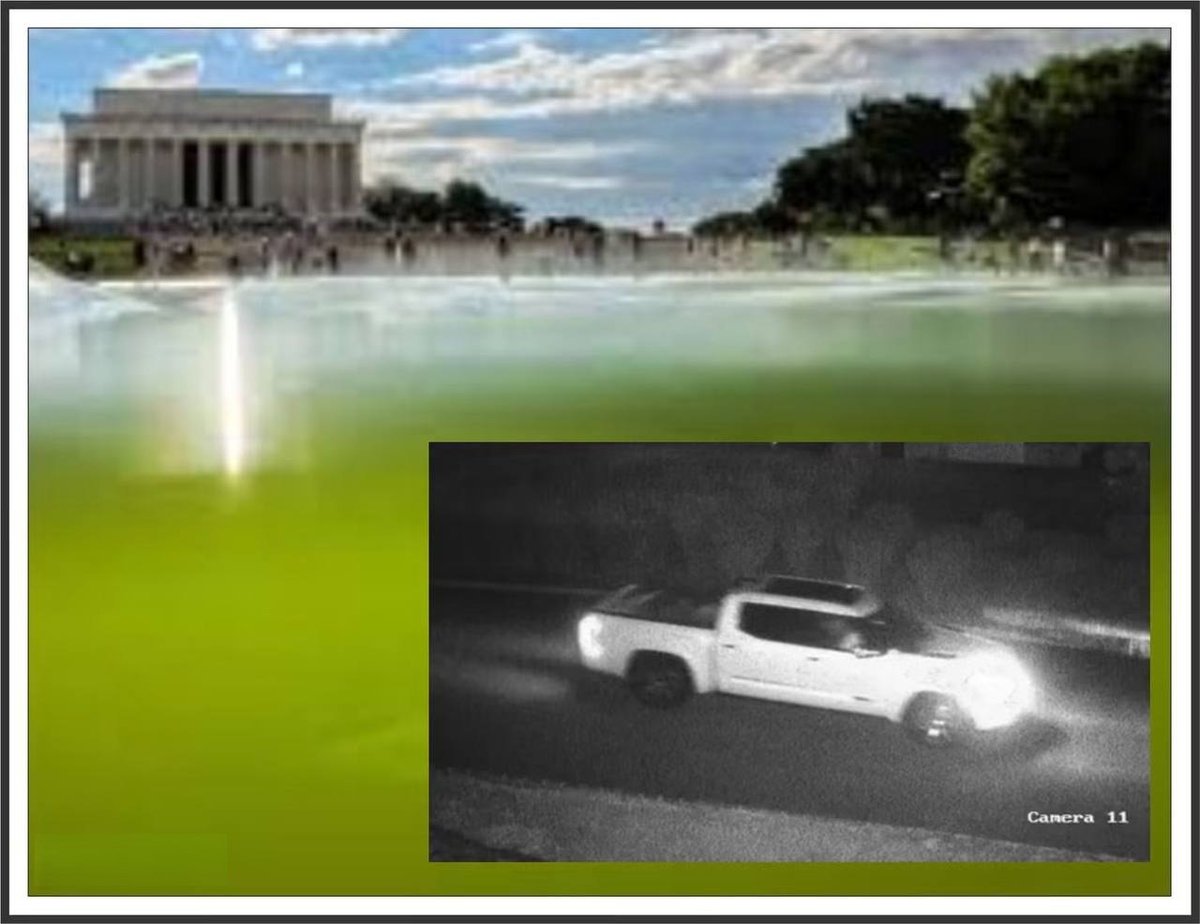
🚨ANTIFA TERRORIST SCUM CAUGHT ON CAMERA DUMPING BUCKETS OF TOXIC GEORGIA ALGAE INTO THE LINCOLN MEMORIAL REFLECTING POOL AT 3 AM — CAUSING MILLIONS IN DAMAGE AND NOW FACING TEN YEARS IN PRISON IF THEY DON’T RAT OUT WHO FUNDED THIS DISGUSTING ATTACK!
These radical left pieces of shit just hit a new low.
US Parks Police caught two Antifa operatives on camera driving a pickup truck onto the National Mall in the middle of the night and dumping multiple buckets of an extremely aggressive form of algae into the Reflecting Pool.
The pool is now a disgusting green mess, and the damage is already in the millions.USPP Captain Joseph Barron has them in custody. They’re not cooperating yet, but he’s got them dead to rights on film.
“It’s that or ten years in prison,” Barron said. “They’ve caused millions in damage.”
These domestic terrorists thought they could vandalize one of America’s most sacred sites and get away with it. Wrong.
This is what Antifa really is — not “mostly peaceful protesters,” but actual criminals who hate this country so much they’ll poison the Reflecting Pool in the dark.
Share this everywhere and let every patriot see exactly what these Antifa scum are still doing to our monuments!
Follow @UnmaskTheSys for more drops.
1,170
9,525
14,745
307,690
Forbidden Seeds retweeted

14h
We're excited to join forces with @SpaceX to advance the frontier of useful AI. Expect significant improvements to Cursor soon.

SpaceX has exercised the option to acquire @cursor_ai in an all-stock transaction with the goal of building the world’s most useful AI models.
For the past few months, SpaceXAI has been jointly training a model with Cursor, which will be released in Cursor and Grok Build soon.
We look forward to working closely with the Cursor team to advance our frontier AI capabilities
1,028
2,659
26,435
2,725,950
Forbidden Seeds retweeted
Jun 15
If I had Elon's money I'd pay for trans surgeries in Africa. Oh, wait, as a U.S. taxpayer, I already AM paying for trans surgeries in Africa.
2
1
47
Forbidden Seeds retweeted

JUST IN: Elon Musk is now worth more than Bitcoin's entire market cap.
Elon Musk: $1.4 trillion
Bitcoin: $1.3 trillion

951
1,458
14,280
731,879

Forbidden Seeds retweeted

Europeans and American patriots!
Tomorrow, the courts of my country, France, may decide to send me to prison for daring to say on television that “the main danger to women in France is Black African and Arab immigrant men.”
Meanwhile, my own attacker, a Tunisian migrant, is still at large.
I need your help to generate media pressure and hope to be acquitted.
They cannot silence the truth!
Thank you for your support 💪🏻🇫🇷
2,475
30,843
81,626
1,361,464
Forbidden Seeds retweeted

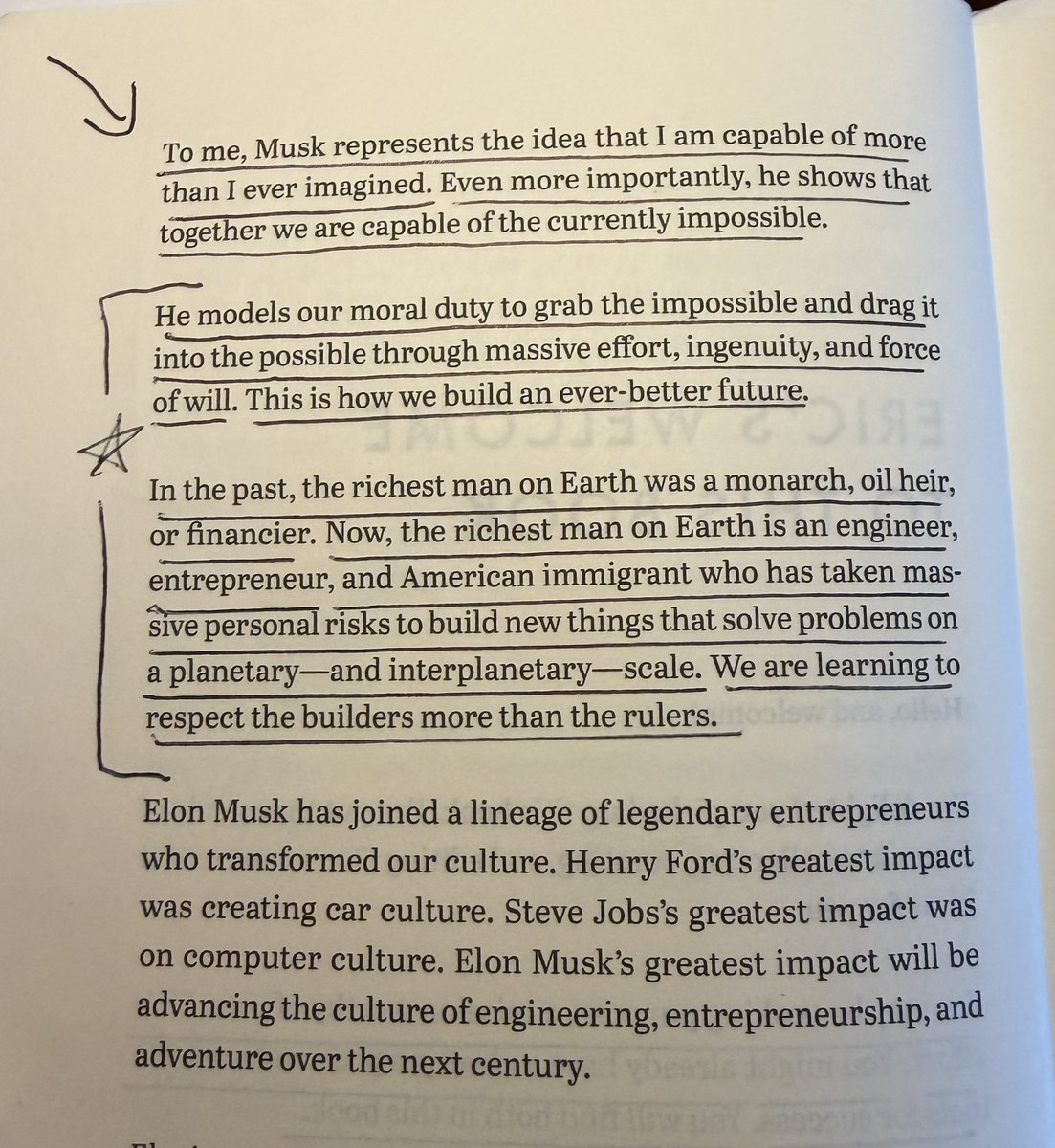
This is why the supporters of @elonmusk work hard to "defend him."
Because it's not about Elon.
He's a symbol of progress.
82
459
2,686
64,109

Elon Musk explains his 5-step algorithm for solving any problem:
"The most common mistake of smart engineers is to optimize a thing that should not exist."
"I have this very basic first principles algorithm that I run as a mantra."
Elon breaks it down:
Step 1: Question the requirements.
"Make the requirements less dumb. The requirements are always dumb to some degree, no matter how smart the person who gave you those requirements. You have to start there, because otherwise you could get the perfect answer to the wrong question."
Step 2: Try to delete it.
"Try to delete the part or the process step entirely. If you're not forced to put back at least 10% of what you delete, you're not deleting enough. Most people feel like they've succeeded if they haven't been forced to put things back in. But actually they haven't, they've been overly conservative and left things in that shouldn't be there."
Step 3: Optimize or simplify.
"The most common mistake of smart engineers is to optimize a thing that should not exist. So you don't optimize until after you've tried to delete."
Step 4: Speed it up.
"Any given thing can be done faster than you think. But you shouldn't speed things up until you've tried to delete it and optimize it otherwise, you're speeding up something that shouldn't exist."
Step 5: Automate.
"And then the fifth thing is to automate it."
Elon explains why the order matters:
"I've gone backwards so many times where I've automated something, sped it up, simplified it, and then deleted it. I got tired of doing that. So that's why I have this mantra."

88
1,200
5,624
930,075
Forbidden Seeds retweeted

🚨 LMFAO! Scott Bessent just TORCHED the New York Times right to their faces for inventing garbage about President Trump’s health. Pure domination.
“I don’t read the New York Times anymore! People send me articles, but there’s this feverish swamp!”
Then he nukes them:
“The NYT is no longer the paper of record. ‘President Trump is slowing down, mental capacity’ — it’s 100% FAKE! I mean, he only called me twice at 3AM instead of three times?”
The room LOST IT.
And then the kill shot:
“You had one of the greatest scandals of all time — Biden’s diminished capacity and the COVER-UP. Where was the New York Times?”
Scott Bessent is doing what every Republican SHOULD be doing: exposing media fraud right to their faces.
168
3,886
19,923
328,935
Forbidden Seeds retweeted

🔥 JD Vance is NOT allowing the The View liberals to use children of illegals for PROPAGANDA
"Do you know that during the last administration we had TENS OF THOUSANDS of children who were SEX TRAFFICKED by cartels, brought into our country in PROFOUNDLY dangerous and predatory condition?!"
"Unless you enforce the border, you INVITE that conduct.
"You think it's 'inhumane' based on the reporting of one person with a POLITICAL BIAS. What I'm telling you is that it's inhumane to allow cartels to SEX TRAFFIC people across the border!"
312
3,780
22,985
368,015


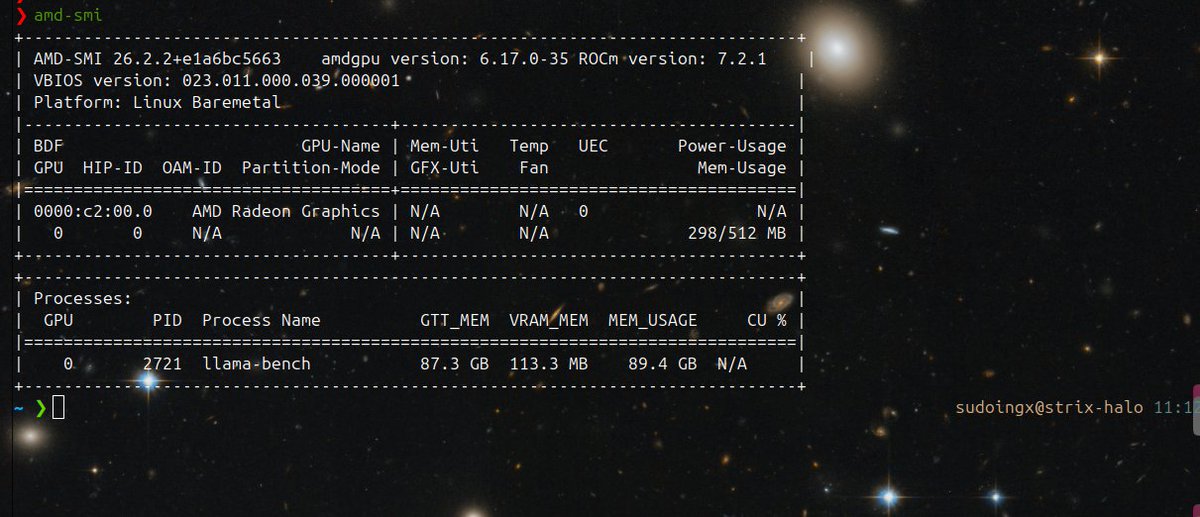
i'm running a 397 billion parameter model on a amd ai max box that sits on my desk and pulls less power than a gaming laptop.
the model is Nex-N2-Pro, 397B-A17B, the open weight release people are putting next to gpt-5.5 on coding. i have it quantized to IQ1_M, 1.75 bits per weight, 90gb of weights loaded into the 128gb of unified memory on amd's strix halo igpu.
watch the gpu in this recording. it spikes, it sustains, it does not fall over. that is the part the spec sheets never show you, not just that a 400b model loads, but that an integrated graphics chip holds the load and generates token after token, stable, no crash, no thermal cliff.
and it is not a slideshow. roughly 18 tokens a second, faster than you can read. a frontier scale model producing usable output, fully local. no datacenter, no rented h100s, no api key, no permission.
three years ago a model this size meant a server room and a budget to match. tonight it is a quiet box on my desk.
this is the accessible tier almost nobody benchmarks honestly, and it is further along than the timeline thinks.
the full breakdown is coming, rocm vs vulkan on this chip, and this little amd box head to head against the nvidia equivalent.
stay tuned.

the framework strix halo i posted yesterday is fully alive now. ubuntu, rocm 7.2.1, llama.cpp built against both rocm and vulkan, the entire local ai stack running on amd's gfx1151 igpu with 128gb of unified memory.
and it's already loaded with three models:
>Qwen3.6-35B-A3B at Q8, the new moe, 37gb
>Nex-N2-mini at Q8, 37gb
>Nex-N2-Pro, the 397 billion parameter one, at IQ1_M, 91gb across five shards
that last one still doesn't feel real. a 397b model sitting on my desk in a box that sips power off a normal wall socket.
i've already run the first benchmarks and the numbers genuinely caught me off guard, both rocm vs vulkan on this chip and this little amd box against the nvidia equivalent. holding the full breakdown for its own post.
stay tuned. the accessible tier is way further along than the timeline thinks.
28
12
258
30,853


nvidia vs amd
two boxes on my desk, both 128gb of unified memory. one is the nvidia dgx spark ($4,699). the other is the amd strix halo ($1,999), amd at roughly half the price.
i'm running the exact same models on both, from a 3b all the way up to a 397b, same quants, same llama.cpp, and i'm posting every single number.
here is why it actually matters. if the amd box just keeps pace, that's a nice story. but if it matches or beats a box that costs twice as much, the entire calculus for buying local ai hardware changes overnight.
i already have the first numbers and they made me sit up. holding them for the full breakdown.
stay tuned anon. this matchup is going to shake some ground.

91
64
1,335
136,728
Forbidden Seeds retweeted

Jun 15
🚨 BREAKING: Acting AG Blanche and FBI Director Patel announce a grand jury has INDICTED leftist NGO Southern Poverty Law Center on 11 COUNTS
This is MASSIVE!
SPLC said they were "fighting white supremacy," but they were "MANUFACTURING the extremism it purports to expose" by PAYING sources to "stoke racial hatred," per Acting AG Blanche
Best part? They've been charged in the Middle District of Alabama!
They're SCREWED! 🔥
SPLC has been hit with SIX counts of wirefraud, four counts of bank fraud, and one count of conspiracy to commit money laundering.
920
11,763
48,554
1,078,448
Forbidden Seeds retweeted

Jun 15
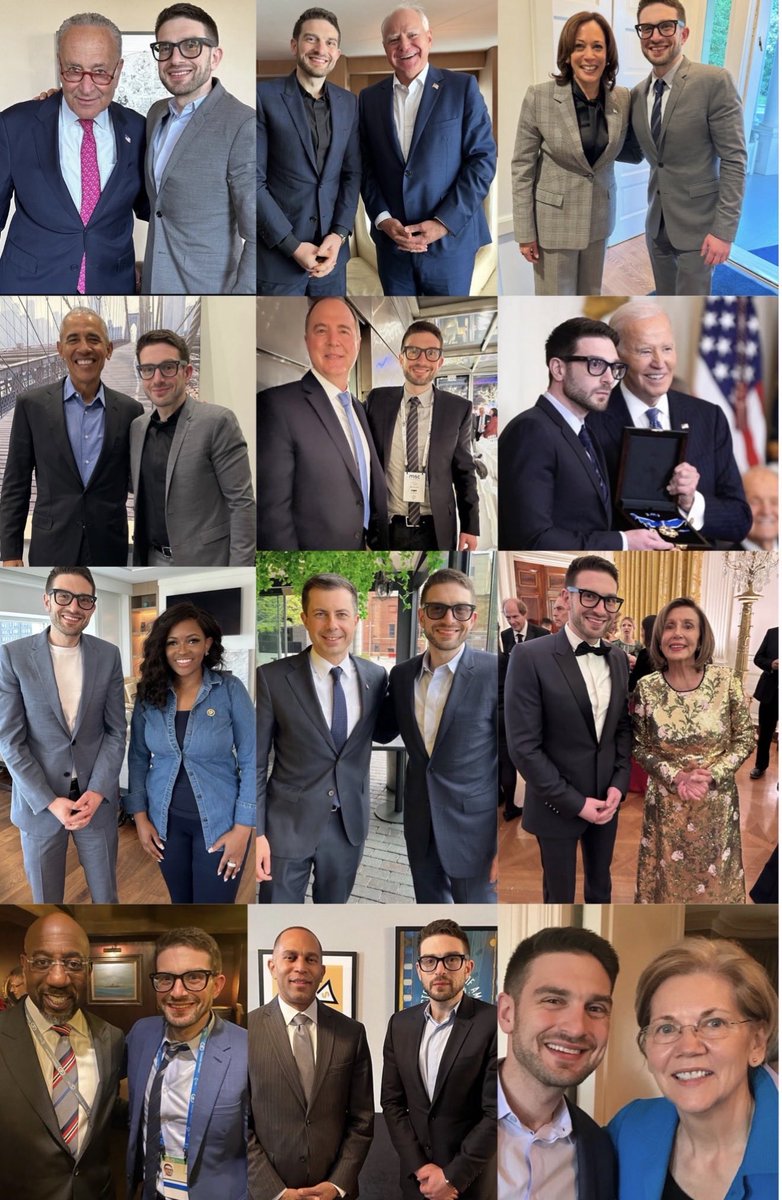
When the Dems are screaming about Elon @elonmusk influence on American politics….. remind them of this 👇🏻👇🏻
389
11,324
20,906
119,290
Forbidden Seeds retweeted

Jun 14
Hello friends, I am from Belgium. I am visiting America for the first time to see the World Cup. I love your country. I am in Times Square after the basketball game and I see men of all races starting fires and destroying cars. This is amazing. In Europe, only Muslims do this

1,190
3,069
56,093
1,765,549
Forbidden Seeds retweeted

Jun 14
If I had Elon's money I would solve world hunger instantly.😡
Sent from a device purchased with with a sum of money that could have been used to feed an Ethiopian family for a year, but wasn't, because my generosity is purely hypothetical.
236
1,542
18,822
235,819
Forbidden Seeds retweeted

Jun 14
I have many more issues with Ilhan Omar being worth $30 million than Elon being worth a trillion.
862
5,661
67,970
746,011
Forbidden Seeds retweeted

Jun 14
They chose that headline and photo on purpose.
It’s clear they are hoping to inspire the next Luigi Mangione.
We still don’t hate journalists enough.

369
836
10,891
209,921