
Joined May 2024
- Tweets 62
- Following 93
- Followers 14
- Likes 21
Photos and videos

May 18
Hey @zebpaysupport / @zebpay , I’ve been trying to resolve a critical limit issue on my account for nearly a week (Ticket #1607686).Despite multiple follow-ups, I haven't received a substantive update. This is urgent as I need to complete a time-sensitive transfer. Please provide a status immediately.#ZebPay #CryptoSupport #CustomerService
3
116
Mar 29
Big product is a trap in the beginning.
Build small tools → get users → earn trust → learn what matters
Then pivot to something bigger.
13
Mar 29
Building solo teaches you one brutal truth:
No one is coming to save your product.
14
Mar 29
If you check PnL more than your setup quality, you’re gambling.
11
Mar 28
Hi @X algo,
I am looking to connect with people interested in:
- Builders
- AI Tech
- Full Stack
- Indie Hackers
- Building in Public
Say hi & let's grow together 👋
3
2
48
Mar 26
Builders only.
Drop your product.
Pitches also allowed.
Link preferred.
1 or 2 builders might watch now, but atleast 10k builder would watch in a month.
29
Played a 2-player cricket simulation with @_kVishwa assuming 🇮🇳(ind) vs 🇳🇿(nz) in the WC 2026 Final.
We played 3 sets, alternating teams:
Set 1: India lost 6–3
Set 2: India lost 5–0 (rage quit mode activated 😅)
Set 3: India lost 3–1 (Best of 5)
Conclusion (based on highly scientific computer simulation 🧠💻):
India losing to New Zealand in WC 2026 Final confirmed. 😂
Bookmark this.
#Cricket #INDvsNZ #WC2026
1
1
52
Feb 20
I’ve noticed a recurring pattern in the markets: whenever there’s positive news, the market often falls beforehand. Then, once the news actually becomes official, prices rally back to their earlier levels. People call it a “rally,” but in reality, it’s often just a recovery to where the market already was.
A good example was the US–India trade deal that happened around two weeks back. Before the announcement, the market had already corrected due to uncertainty and speculation. Once the deal was finalized and the news became public, the market bounced back — not necessarily because of new strength, but because uncertainty had been removed.
The same pattern is visible now. The US Supreme Court judgment against Trump’s tariffs came out tonight. Earlier, the Indian market had already fallen in anticipation of this development. Now, Gift Nifty is showing positive signals, which suggests that Monday’s market is likely to open positively.
In both cases, fear and uncertainty were priced in first. Once clarity emerged, short covering and relief buying pushed prices higher. It appears to be a bullish rally, but in many cases, it’s simply the market normalizing after uncertainty gets resolved.
So what people perceive as a strong upward move is often just the unwinding of prior pessimism rather than fresh bullish momentum.
#nifty #nse #sensex #GIFTNIFTY #tarrif #trump
1
703
Feb 19
I’ve observed that in elections, a regime change usually happens when the ruling party has accumulated enough public dissatisfaction due to its actions or performance. Voters then choose to remove them from power, bringing a new party into government — and over time, the cycle tends to repeat itself.
26
Jan 28
Mock vs Fake: what test doubles say about how you think.
While going through the @grafana backend architecture, I noticed something subtle but important. Test doubles aren’t treated as a testing detail. They’re treated as a design signal.
Most discussions around test doubles stay superficial. Mocks vs fakes. Coverage numbers. Tooling.
But the deeper question is this:
What does your code assume about the world?
If your business logic assumes:
- a database must exist
- a network must respond
- another service must behave
then your system isn’t just hard to test. It’s tightly coupled to reality.
Test doubles challenge that assumption.
They ask:
- can this logic exist without infrastructure?
- can behavior be reasoned about in isolation?
- can intent survive implementation changes?
Mocks and fakes answer different philosophical questions.
Mocks ask:
- did the conversation happen the way I expected?
Fakes ask:
- what does the system actually do?
That’s why architectures like @grafana's quietly favor fakes. They model a small, controlled reality and reveal design flaws early.
Here’s the uncomfortable truth.
If test doubles feel painful to introduce, it’s rarely a testing problem. It’s a boundary problem.
Good test doubles don’t just enable tests.
- they expose assumptions
- they enforce contracts
- they keep complexity at the edges
In the end, test doubles are less about testing correctness and more about preserving meaning as systems grow, change, and outlive their original context.
That’s a design choice, not a testing one.
32
Jan 23
This is really cool 👏
@grafana’s take on ChatOps that actually works is a great example of how observability collaboration should feel in 2026.
Instead of bouncing between Grafana dashboards, logs, alert UIs, and Slack, you do most of the investigation and coordination in the same space where your team is already chatting. That alone saves huge cognitive load and precious time during incidents.
AI-powered observability inside Slack feels less like a gimmick and more like a natural evolution of on-call workflows — faster context, fewer tabs, better decisions.
Worth a read if you care about incident response, SRE workflows, or reducing operational friction 👇
grafana.com/blog/chatops-tha…
#ChatOps #Observability #SRE #DevOps #Grafana #IncidentManagement #AIinEngineering
1
2
1,710
Jan 21
I’ve been heavily using Cursor for my projects and absolutely love it.
There’s a lot of hype around Claude Code lately, so I’m planning to give it a try and see the difference myself.
Meanwhile, would love to hear insights from folks who’ve used both. 👀
What stood out for you?
Jan 3

here's my explanation for why people use Claude Code instead of Cursor
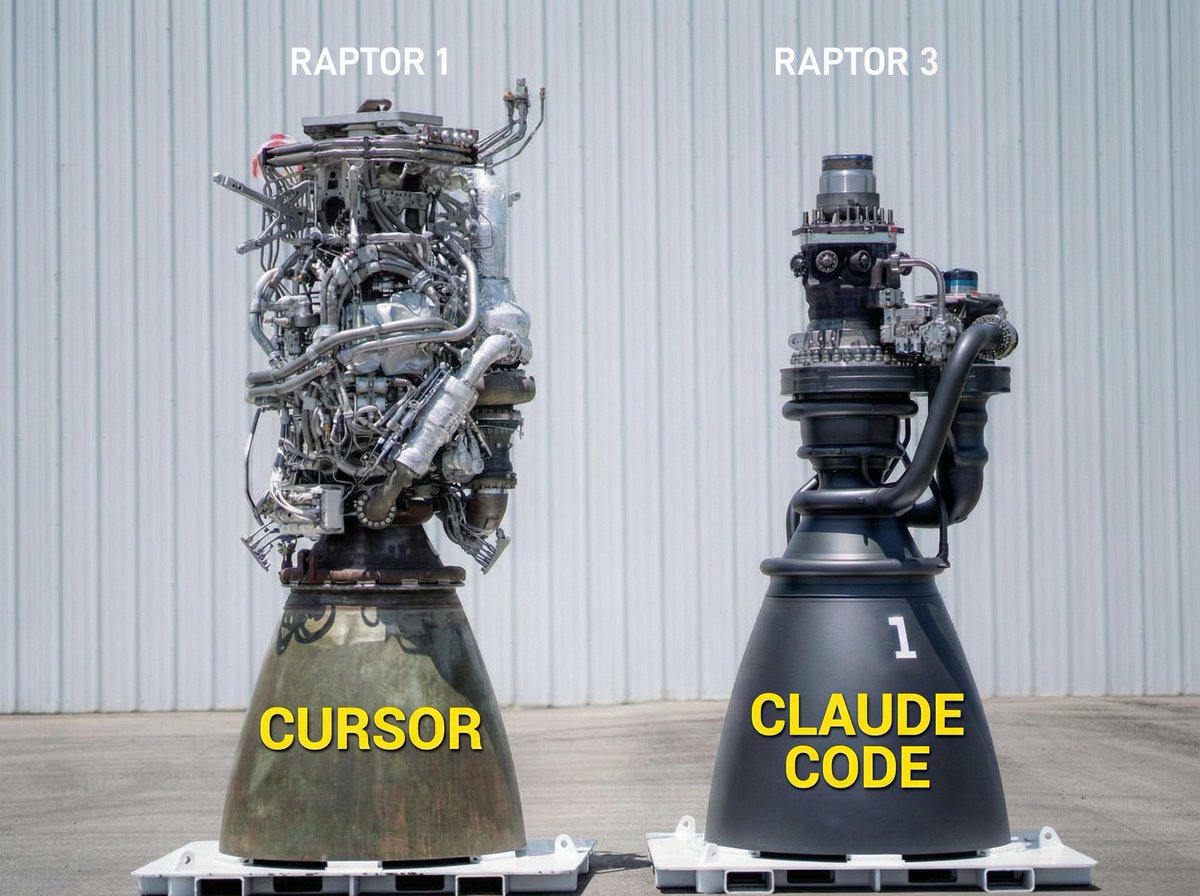
ALT Raptor 1 vs raptor 3 with cursor and Claude code
55
Jan 21
Full-time trader ≠ always trading.
Budget global geopolitics = high uncertainty & volatility.
I’m sitting out for now and will reassess after a few sessions post-Budget.
Do what fits your system. Don’t trade just because some XYZ says they’re minting money.
#TradingPsychology
27
16 Dec 2025
@zerodha I recently opened HUF demat accnt with Groww and the entire process was 100% online- account was active within 3 days.With Zerodha,the HUF process is still offline and courier-based.Hope this feedback can be considered by the team for a smoother digital experience
2
1
158