
Joined June 2009
- Tweets 4,396
- Following 420
- Followers 195
- Likes 910
21 Photos and videos

Siddhartha Singh retweeted

29 Oct 2024
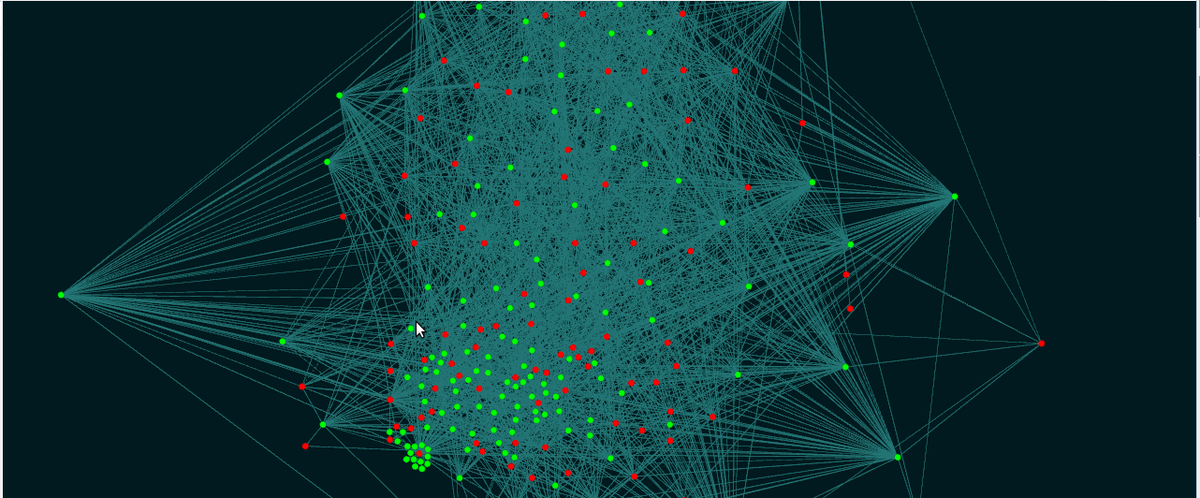
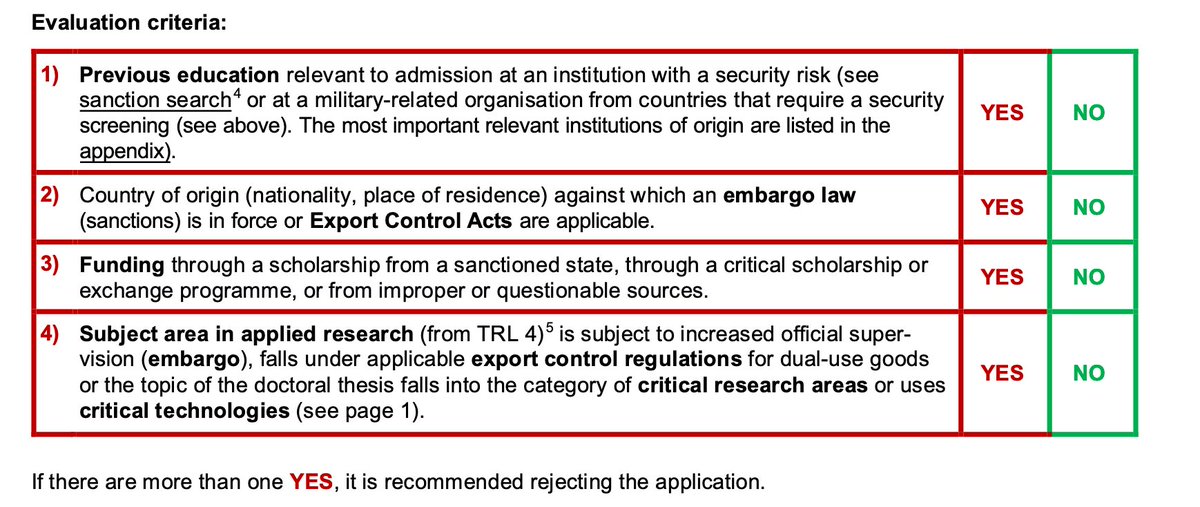
It has not been reported much, but I believe ETH Zurich has, as of last week, banned new Master and PhD students who attended a long list of universities in China, Russia, and Iran. 🧵
24
72
444
157,120
Siddhartha Singh retweeted

15 Oct 2024
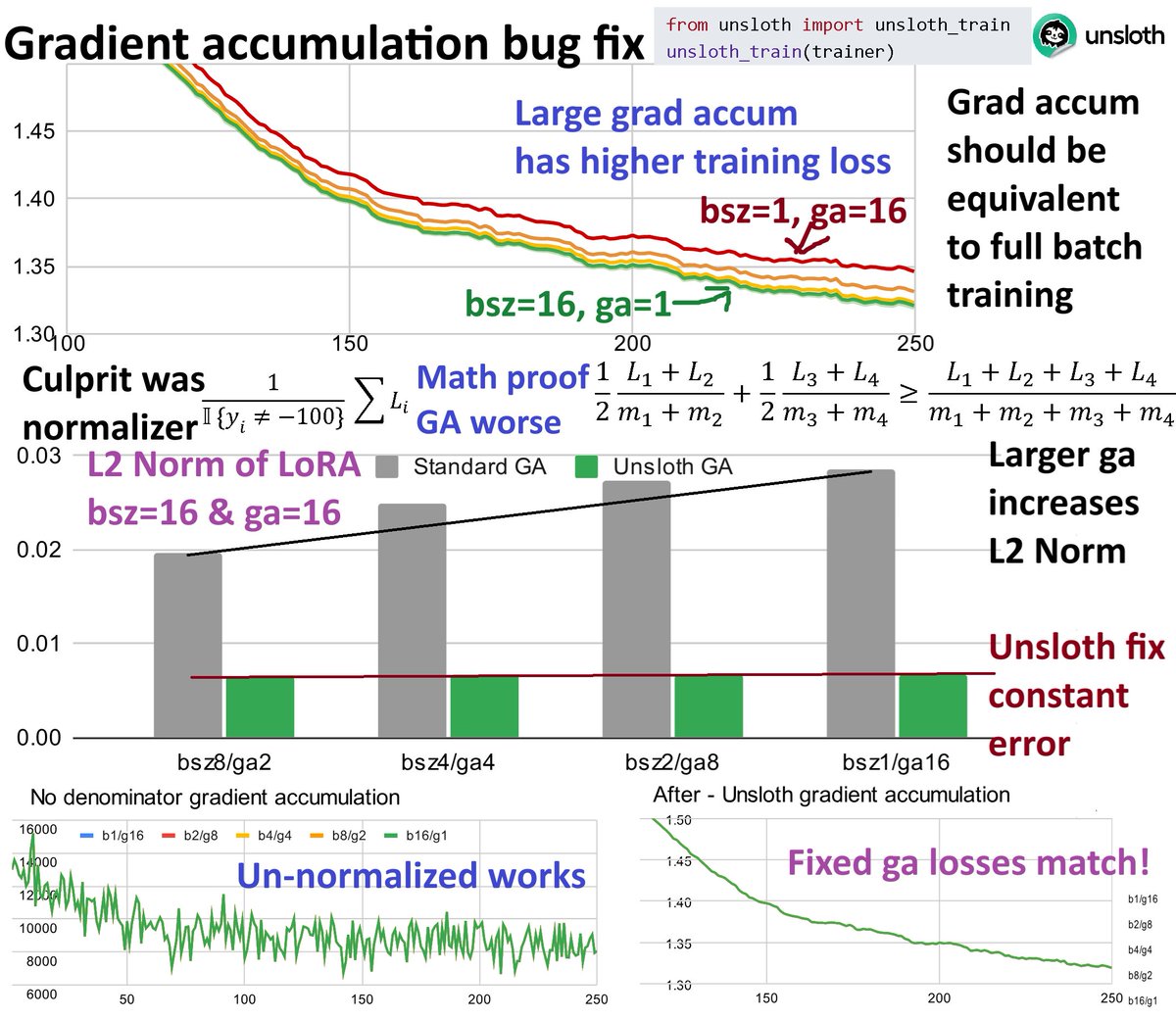
Fixed a bug which caused all training losses to diverge for large gradient accumulation sizes.
1. First reported by @bnjmn_marie, GA is supposed to be mathematically equivalent to full batch training, but losses did not match.
2. We reproed the issue, and further investigation showed the L2 Norm betw bsz=16 and ga=16 was 10x larger.
3. The culprit was the cross entropy loss normalizer.
4. We ran training runs with denormalized CE Loss, and all training losses match.
5. We then re-normalized CE Loss with the correct denominator across all gradient accumulation steps, and verified all training loss curves match now.
6. We've already updated @UnslothAI with the fix, and wrote up more details in our blog post here: unsloth.ai/blog/gradient
This issue impacts all libraries which use GA, and simple averaging of GA does not work for varying sequence lengths.
This also impacts DDP and multi GPU training which accumulates gradients. Please update Unsloth via pip install --upgrade --no-cache-dir unsloth and use from unsloth import unsloth_train
We have a Colab notebook using our fixed GA: colab.research.google.com/dr… and a Kaggle notebook: kaggle.com/code/danielhanche…
22
131
748
316,915


Hitchhiker's guide to rebranding:
- Machine learning -> statistical mechanics
- Loss function -> energy functional
- Optimize the model -> minimize free energy
- Trained model -> reached equilibrium distribution
- KL divergence -> free energy difference
- Gaussian noise -> random thermal fluctuations
- Random step -> Brownian motion
- SGD -> directional Brownian motion
- GPU -> simulated particle accelerator
- Diffusion models -> Langevin dynamics
- Reinforcement learning -> control theory
- Robotics -> physical computation
- Audio learning -> 1D signal processing
- Image learning -> 2D signal processing
- Video learning -> 3D signal processing
- Multimodal models -> multidimensional signal processing
- Sora -> learned physics engine
You're welcome
109
706
4,723
499,483
Siddhartha Singh retweeted

1 Oct 2024
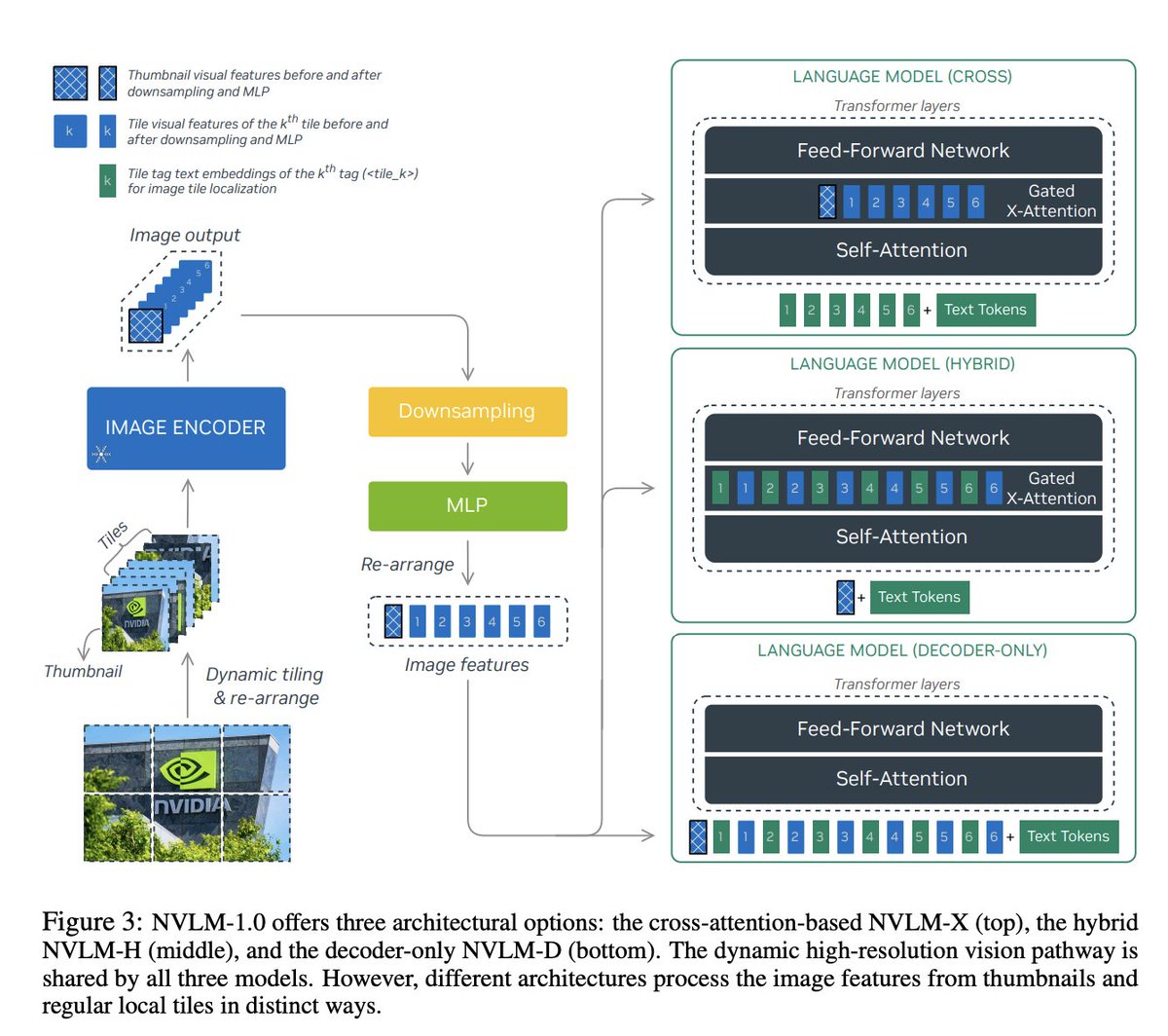
NVIDIA just dropped a gigantic multimodal model called NVLM 72B 🦖
Explaining everything from what I got of reading the paper here 📝
6
171
1,331
117,833

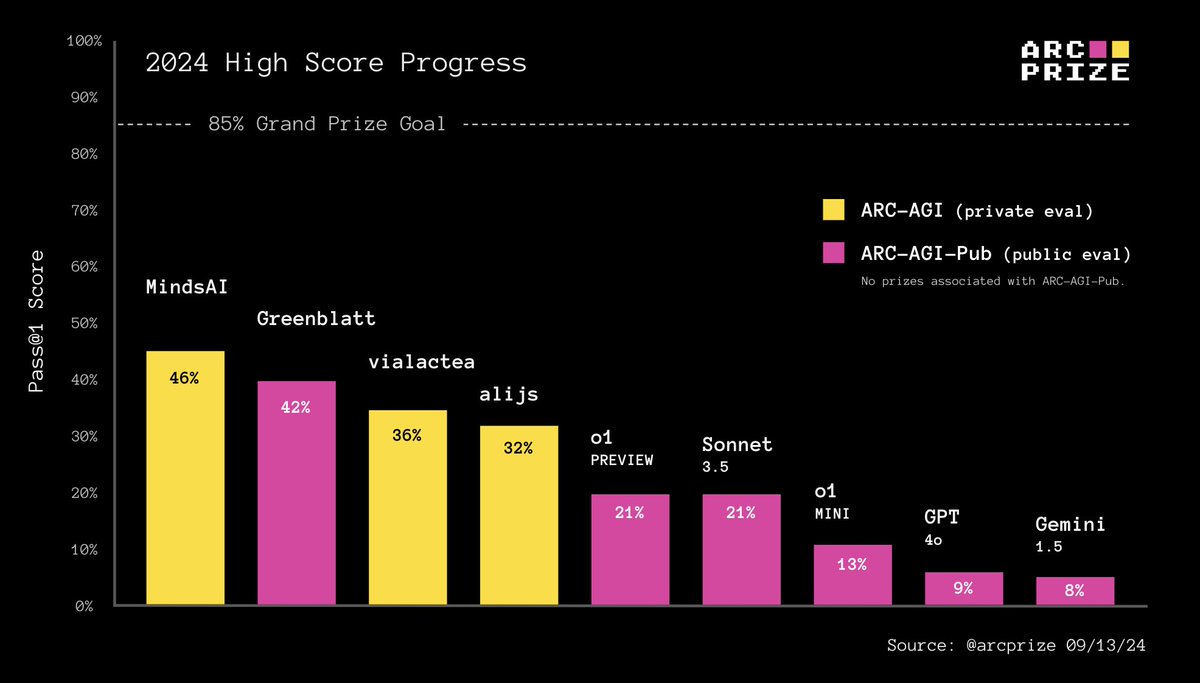
We put OpenAI o1 to the test against ARC Prize.
Results: both o1 models beat GPT-4o. And o1-preview is on par with Claude 3.5 Sonnet.
Can chain-of-thought scale to AGI? What explains o1's modest scores on ARC-AGI?
Our notes:
arcprize.org/blog/openai-o1-…
44
145
832
403,421
Siddhartha Singh retweeted

9 Sep 2024
Mario Draghi's new report on EU competitiveness doesn't mince words.
"Across different metrics, a wide gap in GDP has opened up between the EU and the US, driven mainly by a more pronounced slowdown in productivity growth in Europe. Europe’s households have paid the price in foregone living standards. On a per capita basis, real disposable income has grown almost twice as much in the US as in the EU since 2000."
"First – and most importantly – Europe must profoundly refocus its collective efforts on closing the innovation gap with the US and China, especially in advanced technologies. Europe is stuck in a static industrial structure with few new companies rising up to disrupt existing industries or develop new growth engines. In fact, there is no EU company with a market capitalisation over EUR 100 billion that has been set up from scratch in the last fifty years, while all six US companies with a valuation above EUR 1 trillion have been created in this period. This lack of dynamism is self-fulfilling."
"There are not enough academic institutions achieving top levels of excellence and the pipeline from innovation into commercialisation is weak. [...] However, while the EU boasts a strong university system on average, not enough universities and research institutions are at the top. Using volume of publications in top academic science journals as an indicative metric, the EU has only three research institutions ranked among the top 50 globally, whereas the US has 21 and China 15."
"Regulatory barriers to scaling up are particularly onerous in the tech sector, especially for young companies. Regulatory barriers constrain growth in several ways. First, complex and costly procedures across fragmented national systems discourage inventors from filing Intellectual Property Rights (IPRs), hindering young companies from leveraging the Single Market. Second, the EU’s regulatory stance towards tech companies hampers innovation: the EU now has around 100 tech-focused laws and over 270 regulators active in digital networks across all Member States. Many EU laws take a precautionary approach, dictating specific business practices ex ante to avert potential risks ex post. For example, the AI Act imposes additional regulatory requirements on general purpose AI models that exceed a pre-defined threshold of computational power – a threshold which some state-of-the-art models already exceed. Third, digital companies are deterred from doing business across the EU via subsidiaries, as they face heterogeneous requirements, a proliferation of regulatory agencies and “gold plating” of EU legislation by national authorities. Fourth, limitations on data storing and processing create high compliance costs and hinder the creation of large, integrated data sets for training AI models. This fragmentation puts EU companies at a disadvantage relative to the US, which relies on the private sector to build vast data sets, and China, which can leverage its central institutions for data aggregation. This problem is compounded by EU competition enforcement possibly inhibiting intra-industry cooperation. Finally, multiple different national rules in public procurement generate high ongoing costs for cloud providers. The net effect of this burden of regulation is that only larger companies – which are often non-EU based – have the financial capacity and incentive to bear the costs of complying. Young innovative tech companies may choose not to operate in the EU at all."
More: commission.europa.eu/documen….
9 Sep 2024

Dear Mario Draghi, a year ago, I asked you to prepare a report on the future of Europe’s competitiveness.
No one was better placed than you to take up this challenge.
Now, we are eager to listen to your views ↓
x.com/i/broadcasts/1mnxeAPOD…
695
2,549
11,745
13,036,395
Siddhartha Singh retweeted

26 May 2024
I usually consider these as "oh, interesting. Since that doesn't look too complicated to implement, let's bookmark this and use this in a project and see if it actually works as well as advertised. (Spoiler: it usually doesn't.)" With DPO itself, you find that it works pretty well but not as well as RLHF PPO. It's good enough that more people use it than PPO at this point though -- thanks to the added convenience of not having to train a separate reward model.
Now with SimPO, since it's super, super easy to implement, I will actually use it and see what I find. I'll probably add that to the bonus materials for Chapter 7 of my LLMs from Scratch book.
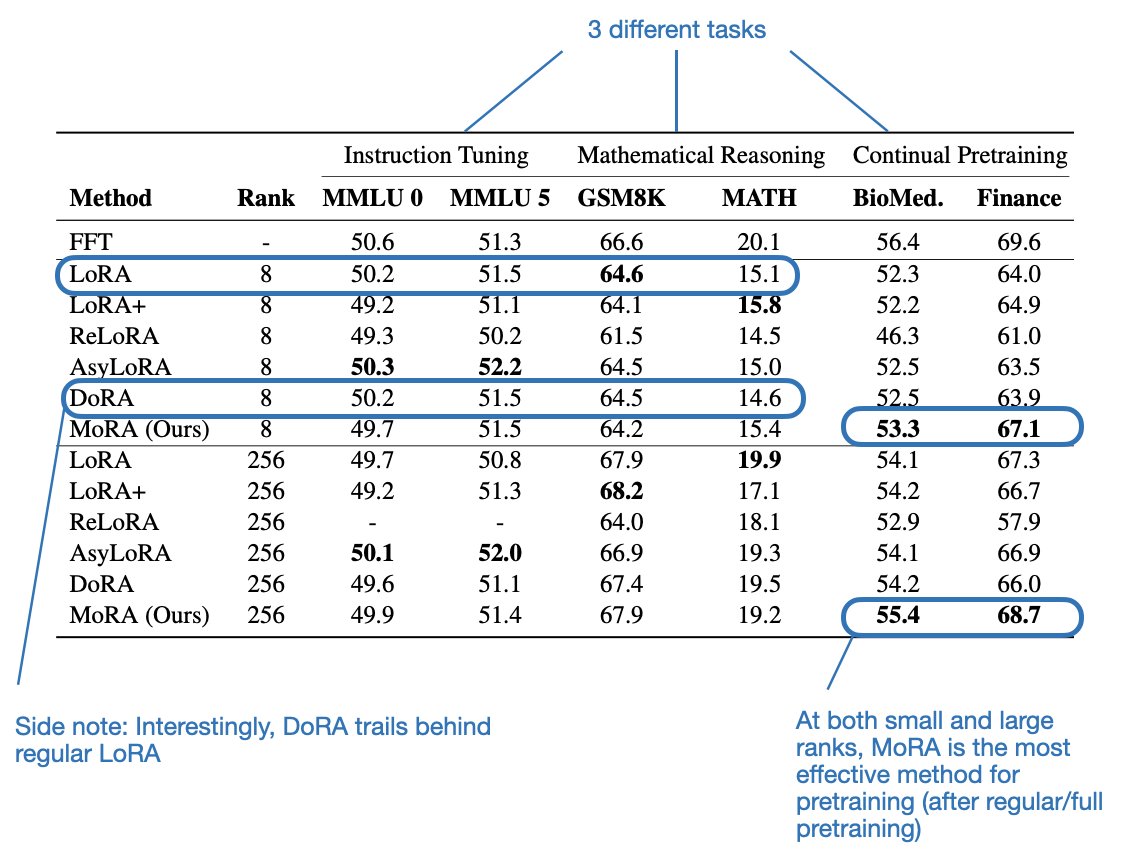
But all that being said, if you wait a few months, you will find follow-up papers where it turns out that the original paper was perhaps too good to be true. E.g., I saw this with DoRA the other day: x.com/rasbt/status/179435595…
25 May 2024

Turns out that this rel. simple method works surprisingly well. It outperforms LoRA in continued pretraining. But trails LoRA by a bit in instruction finetuning and mathematical reasoning with small ranks. For me, the results are not compelling enough to swap LoRA for MoRA.
7/7
1
1
9
1,430

18 May 2024
RT @mark_riedl: The OpenAI superalignment team was only one kind of “safety”—the unproven kind.
Meanwhile, there are so many actual harms…
12
Siddhartha Singh retweeted

14 May 2024
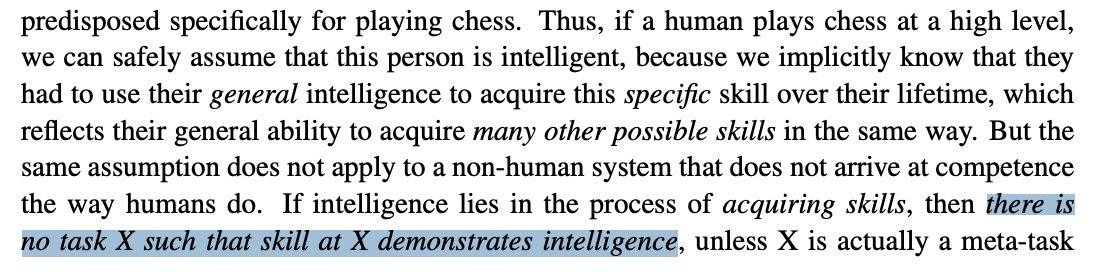
It's amazing to me that the year is 2024 and some people still equate task-specific skill and intelligence. There is *no* specific task that cannot be solved *without* intelligence -- all you need a sufficiently complete description of the task (removing all test-time novelty and uncertainty), and you can achieve arbitrary levels of skills while entirely by-passing the problem of intelligence. In the limit, even a simple hashtable can be superhuman at anything.
13 May 2024

To those of you who claiming that smarter-than-human AI is decades away, what *specific tasks* are you willing to bet me that AI won't be able to do within 5 years?
46
180
1,194
210,960
Siddhartha Singh retweeted

27 Apr 2024
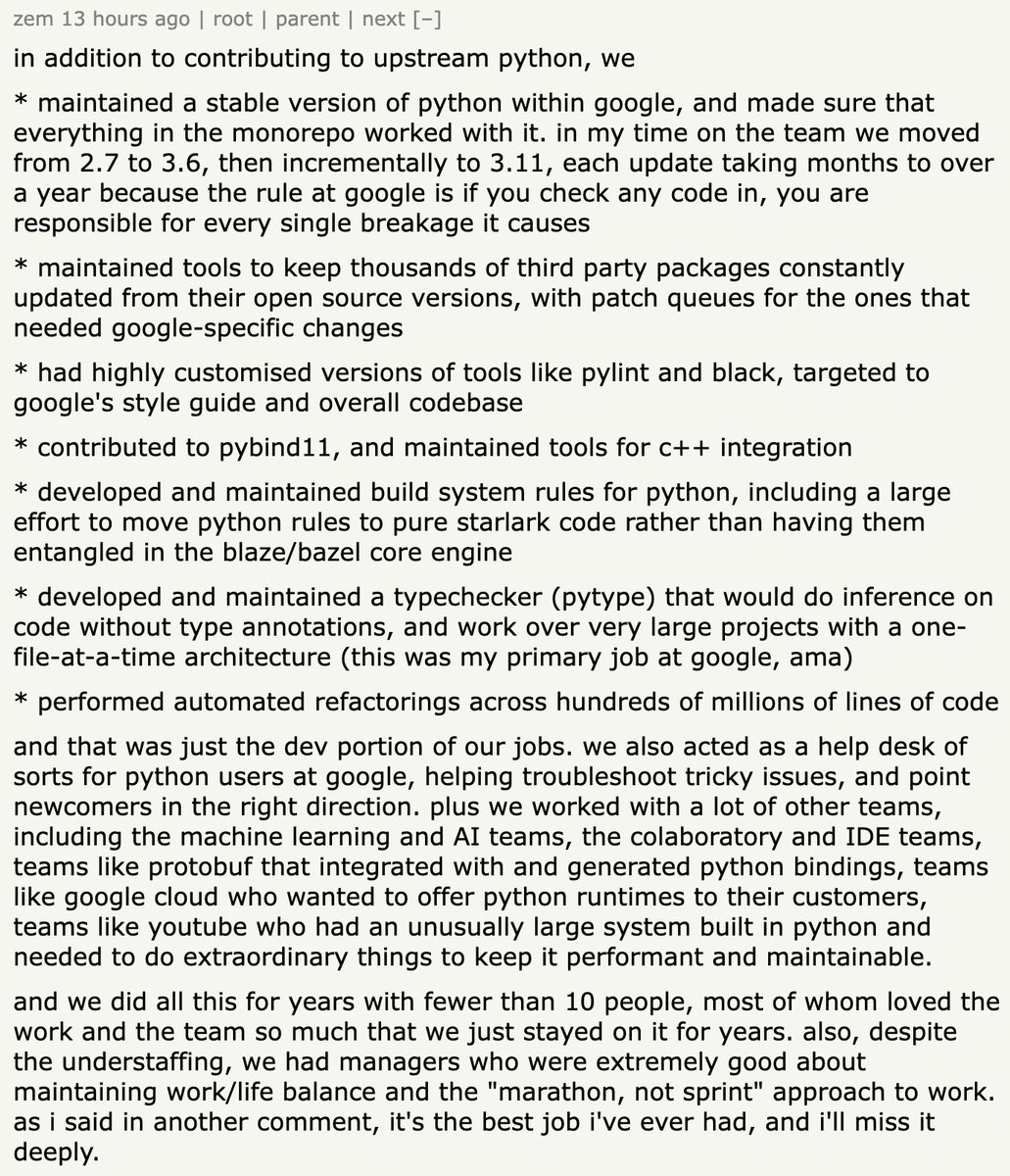
apparently Google laid off their entire Python Foundations team, WTF!
( @SkyLi0n who is one of the pybind11 maintainers just informed me, asking what ways they can re-fund pybind11)
The team seems to have done substantial work that seems critical for Google internally as well.
There's a hackernews thread if folks want to read more: news.ycombinator.com/item?id…
112
506
3,636
1,232,853
Siddhartha Singh retweeted

25 Apr 2024
The Rise of Large-Language-Model Optimization dlvr.it/T60YPD
1
18
30
8,620
Siddhartha Singh retweeted

24 Apr 2024
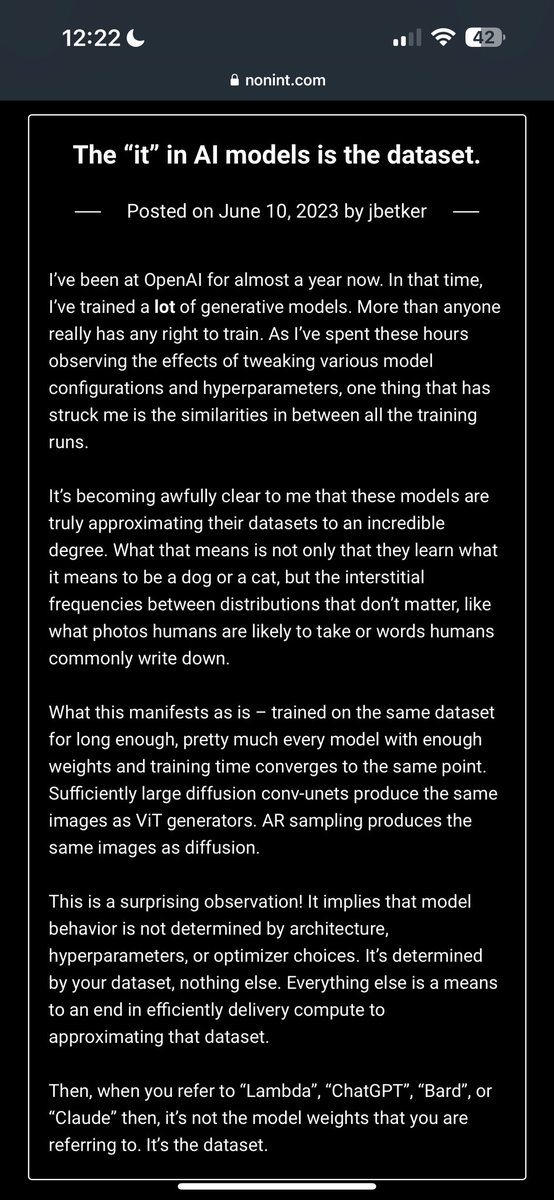
The dataset is everything.
Great read: nonint.com/2023/06/10/the-it…
107
537
2,697
895,432
Siddhartha Singh retweeted

22 Apr 2024
Swiss academics criticise a “major discrepancy” between the resources available and Switzerland’s “ambitious” strategic objectives, which remain unchanged. buff.ly/3Uti6gs @snsf_ch @Innosuisse @CH_universities @ETH_Rat @ETH_en @EPFL
5
9
2,820
Siddhartha Singh retweeted

13 Apr 2024
18
361
1,560
129,515
Siddhartha Singh retweeted

In 2022, we at WIRED told the story of P4x, a hacker who singlehandedly took down the entire North Korean internet.
Now he's revealing his name—Alejandro Caceres—and his strange experience since then: trying to teach the US military to be more like him. wired.com/story/p4x-north-ko…
13
120
336
125,362
Siddhartha Singh retweeted

21 Mar 2024
Time to use that in-room safe. Hackers crack millions of hotel room keycards by the legendary @a_greenberg. wired.com/story/saflok-hotel…
1
3
18
15,020
Siddhartha Singh retweeted
18 Mar 2024
Even in a welfare state like Switzerland more and more people are struggling to find somewhere to live. Most emergency shelters are full. Why? Some homeless people tell their stories. buff.ly/3PoQQN8
4
5
1,391
Siddhartha Singh retweeted
17 Mar 2024
Over half of Swiss families are struggling to make ends meet, according to a survey. We’ve interviewed Philippe Gnaegi, director of @ProFamiliaCH, who is now calling for swift political action. 👇
buff.ly/4cbYeF9
4
7
1,752
Siddhartha Singh retweeted

11 Mar 2024
Drivers of cars by General Motors, Kia, Subaru and Mitsubishi may not realize that their driving data — like when they sped or braked too hard — is being shared with insurance companies. Numerous people have complained about spiking premiums as a result. nyti.ms/3TeLC7H
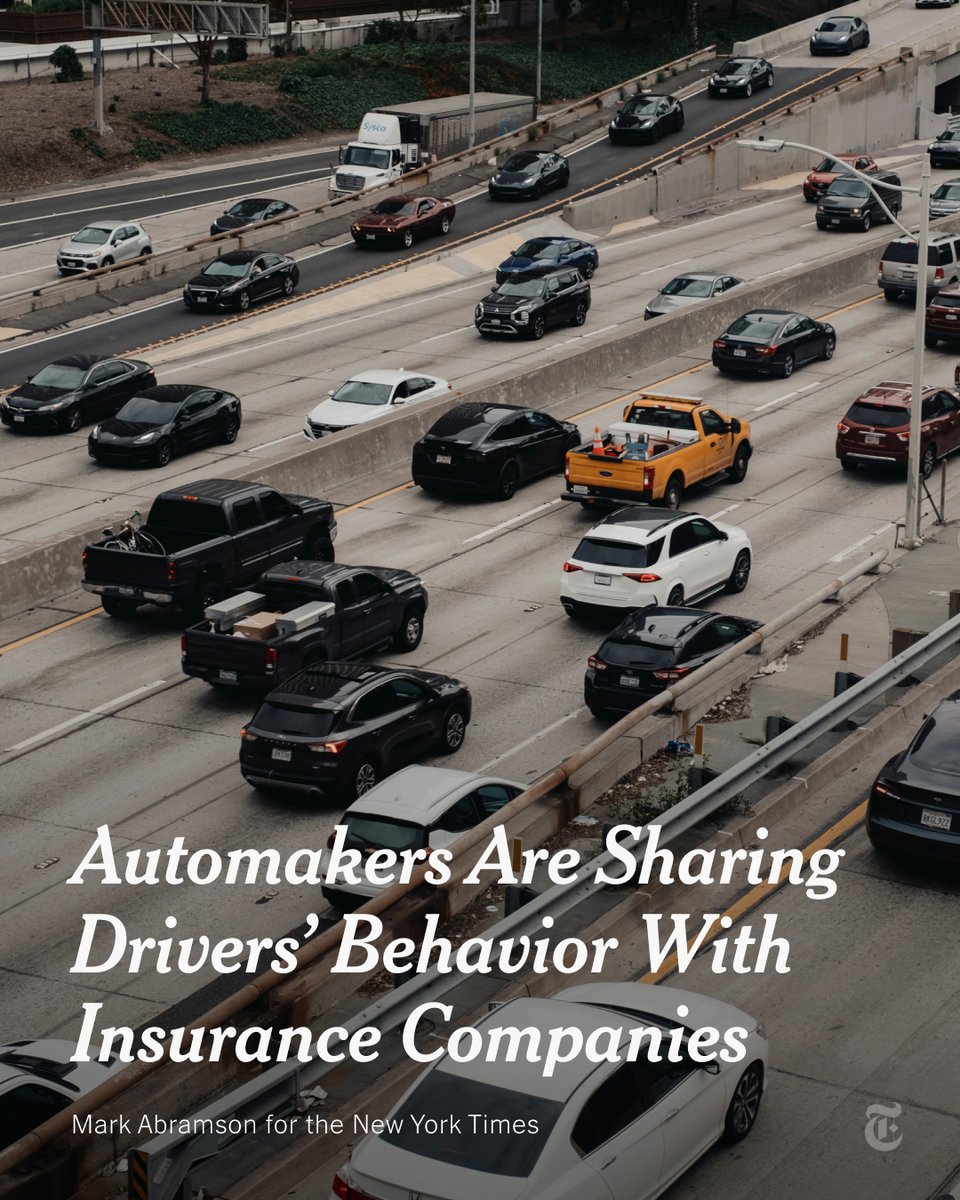
ALT Cars sit in traffic on a highway. A headline reads: "Automakers Are Sharing Drivers Behavior With Insurance Companies." Photo credit: Mark Abramson for the New York Times.
24
90
147
139,378