
We are here to ensure our partners become the signal of innovation in the noise of the technology markets.
Joined December 2023
- Tweets 332
- Following 83
- Followers 1,026
- Likes 491
112 Photos and videos
Pinned Tweet

7 Dec 2023
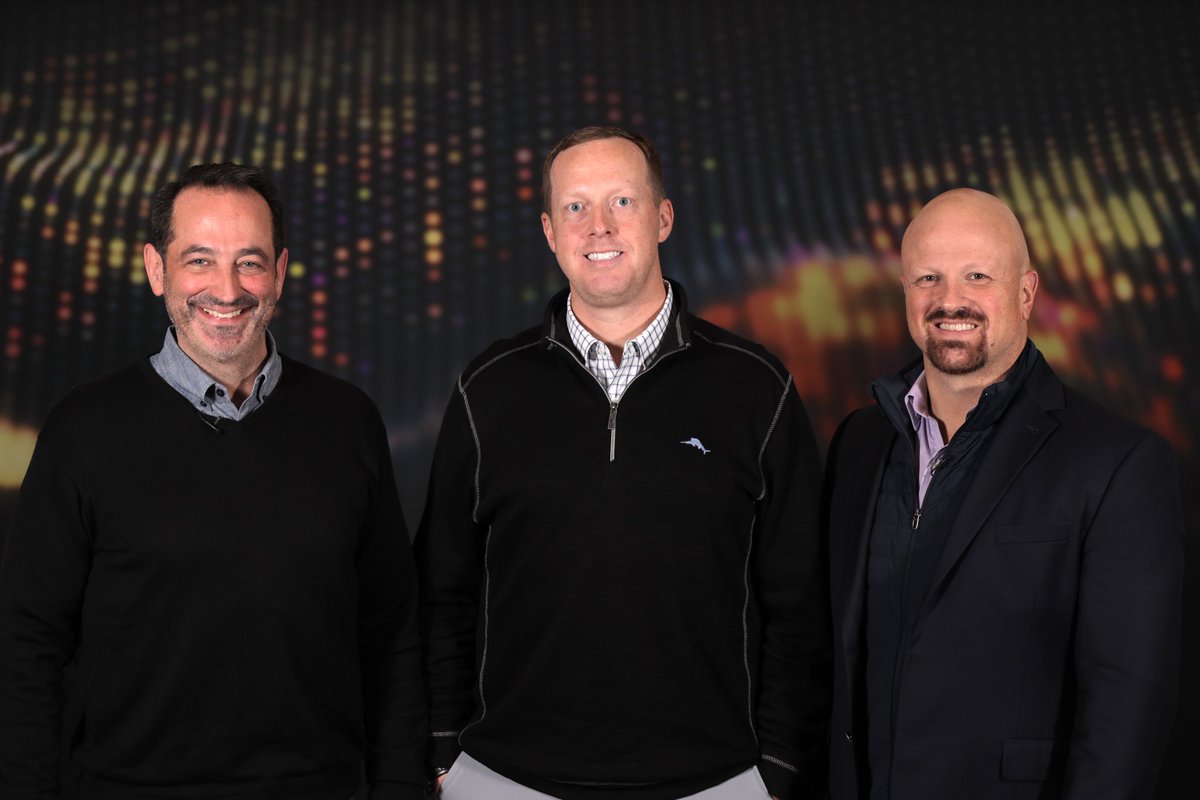
We’re excited to launch @Signal_65, a new company that will serve the technology industry with testing, performance validation, and data-based consulting. @ryanshrout will serve as our President and GM, with @PatrickMoorhead & @danielnewmanUV on our board. prn.to/47Omv1C

4
8
21
8,323
Signal65 retweeted

Jun 2
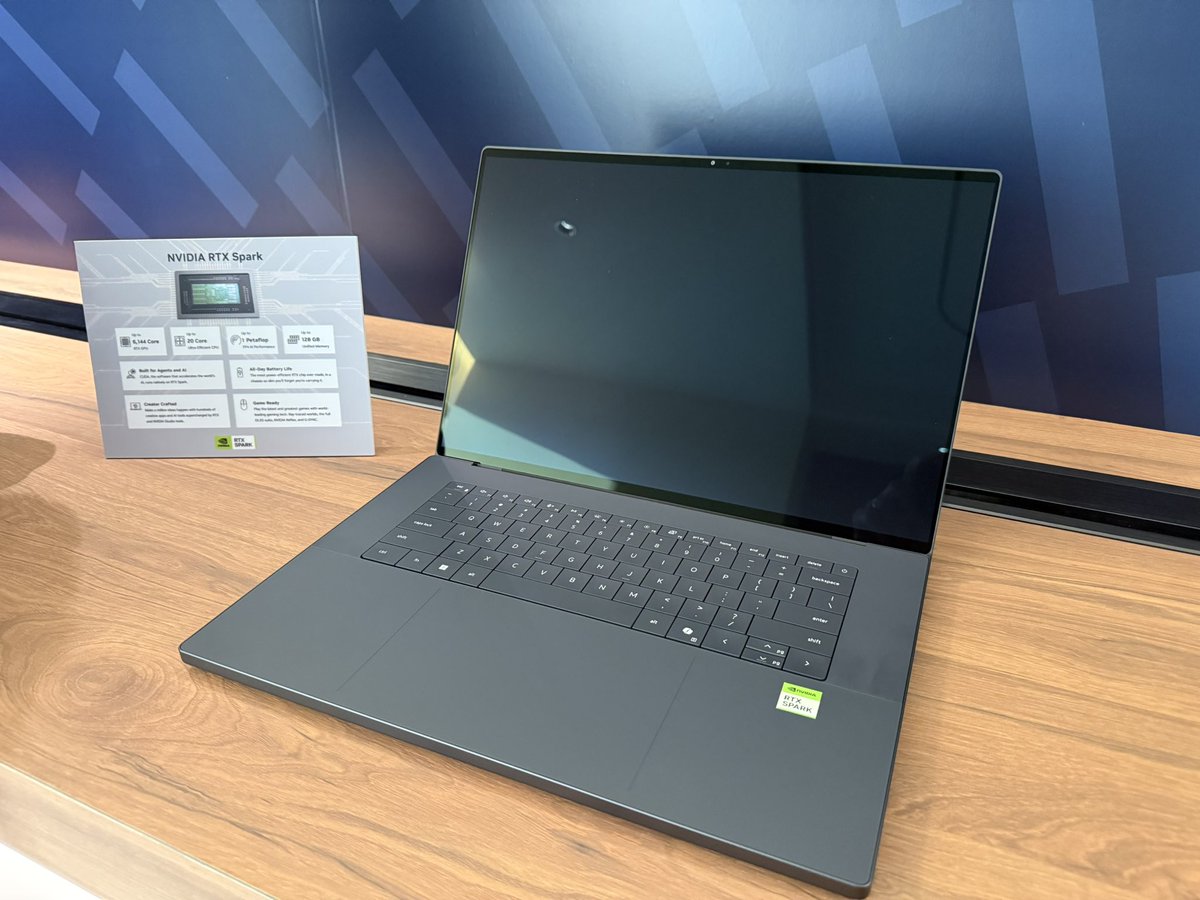
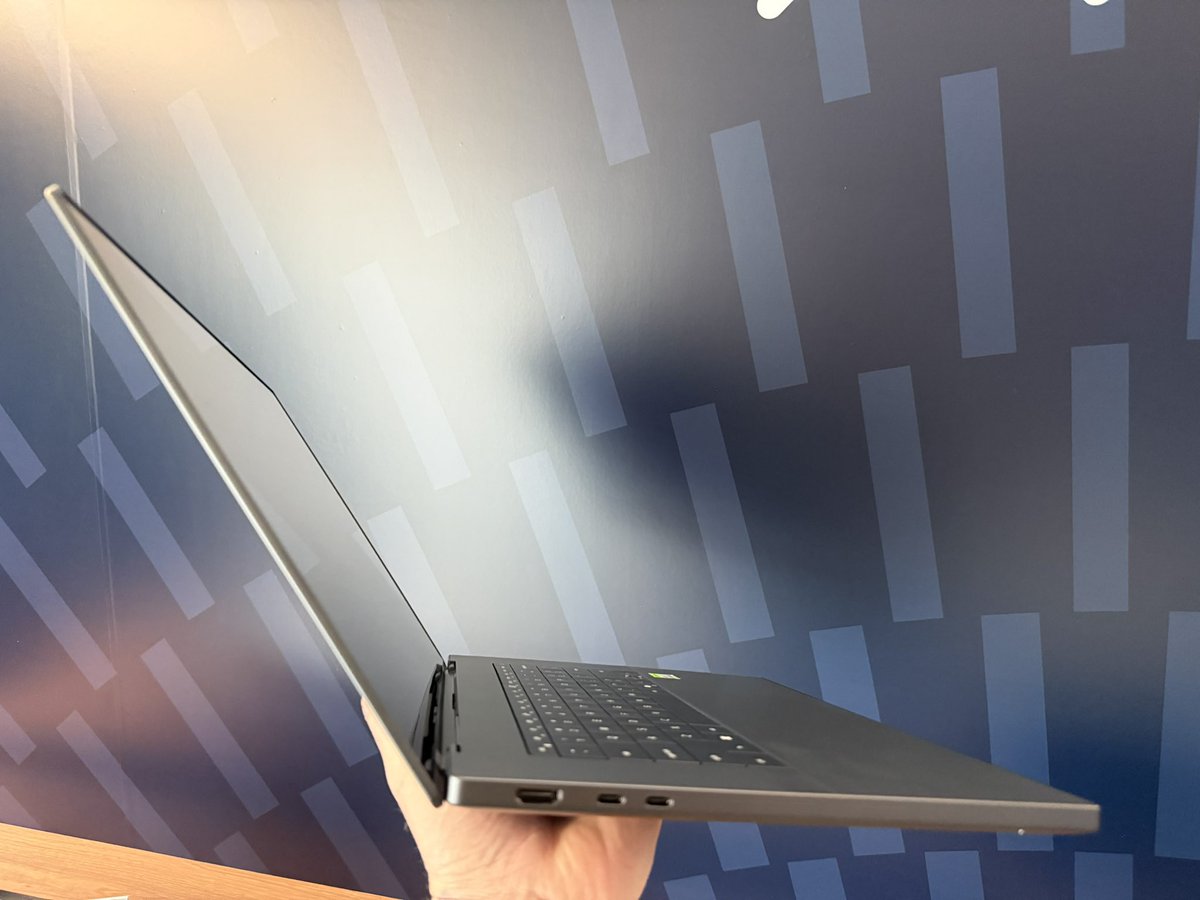
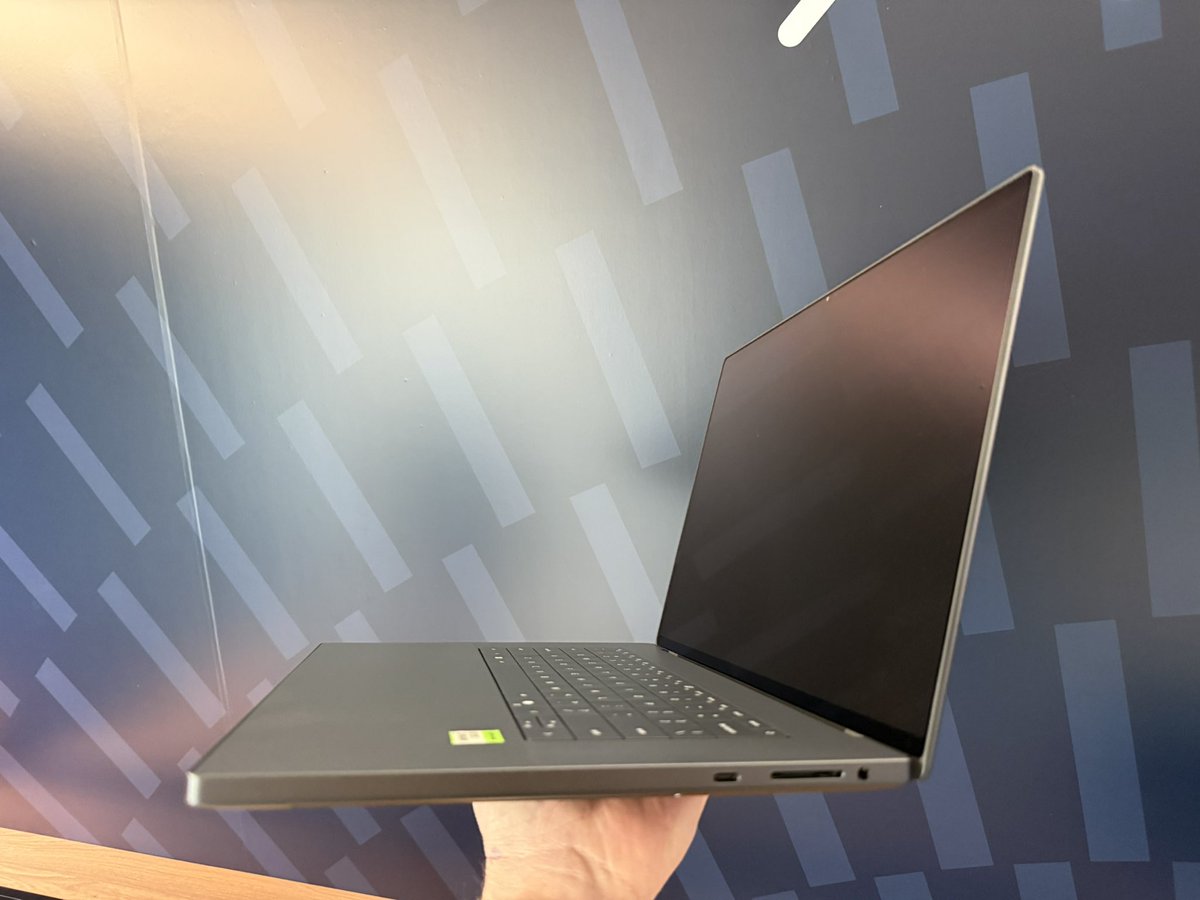
Lots of hands on time with early @NVIDIARTXSpark systems today. First up, the @Dell XPS 16 Creator Edition. Very familiar, high quality design with a look and feel of a premium device for this audience. (Note no partner had systems available to turn on outside NV demo room.)
8
22
291
21,616
Signal65 retweeted
Jun 2
During the @NVIDIA Q&A with Jensen I had the chance to ask the final question: "With the PC market being low margin and cut throat, why enter it now?"
His answer was compelling. He dismisses margin concerns and focuses on the opportunity to add value and reinvent what we love.
23
40
336
48,318
Signal65 retweeted
Jun 3
I walked out of the @Qualcomm keynote at Computex this week convinced the milliwatts-to-megawatts strategy is the most coherent vision in compute. The one piece missing was the concrete next step.
Two days later at Microsoft Build, Project Solara answered it. A chip-to-cloud platform for agent-first devices, with @cristianoamon sharing the stage with @satyanadella, and a wearable badge that lands at the low-power end where Qualcomm has spent decades building an advantage.
The full vision still runs through the data center, and that gets earned through execution, with more news landing June 24. What Solara confirms is that the personal-device franchise is a real strength to lean on. Full take linked below.

1
6
65
6,912
Signal65 retweeted
May 30
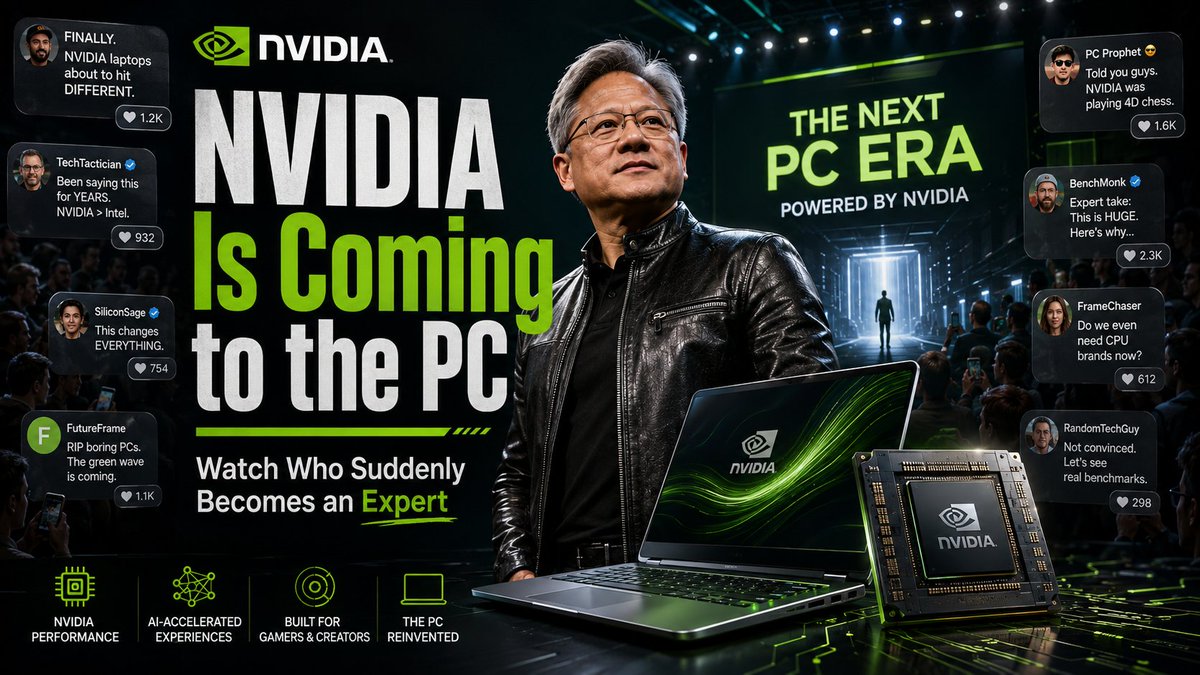
NVIDIA Is Coming to the PC. Watch Who Suddenly Becomes an Expert.
Over the next few days you are going to see a lot of people on social media "discover" the PC.
They will have strong opinions about the PC ecosystem, about AI on the PC, about the engineering tradeoffs behind a thin and light notebook, and most of them will be forming those opinions for the very first time. The reason is simple. @nvidia now has a voice in this conversation, and that voice pulls a crowd.
Now that doesn't change the fact that this is a real moment. NVIDIA is the 5 trillion pound gorilla in the room, and when a company that size leans into a market, things move. I am genuinely excited about what the N1X and the family of chips around it could bring to the PC, and about how it might push @Windows, and @Microsoft more broadly, in a new direction.
But excitement is not the same as suspending the rules.
I do not believe, as some of the more out-there posts are already claiming, that NVIDIA is about to make every laptop on the shelf irrelevant overnight. Silicon is still bound by physics. Power, heat, and thermals translate directly into performance and battery life, and there is no way around that.
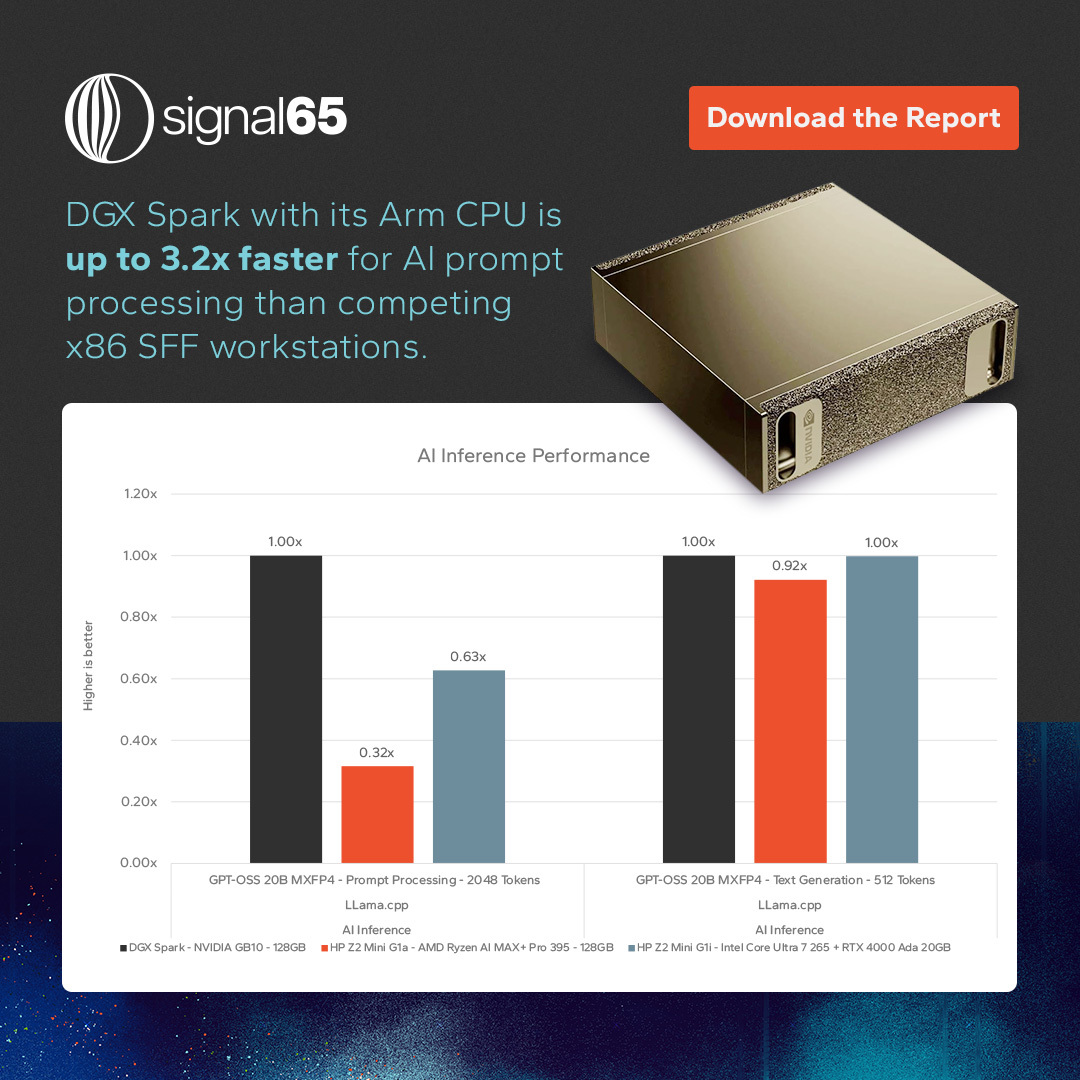
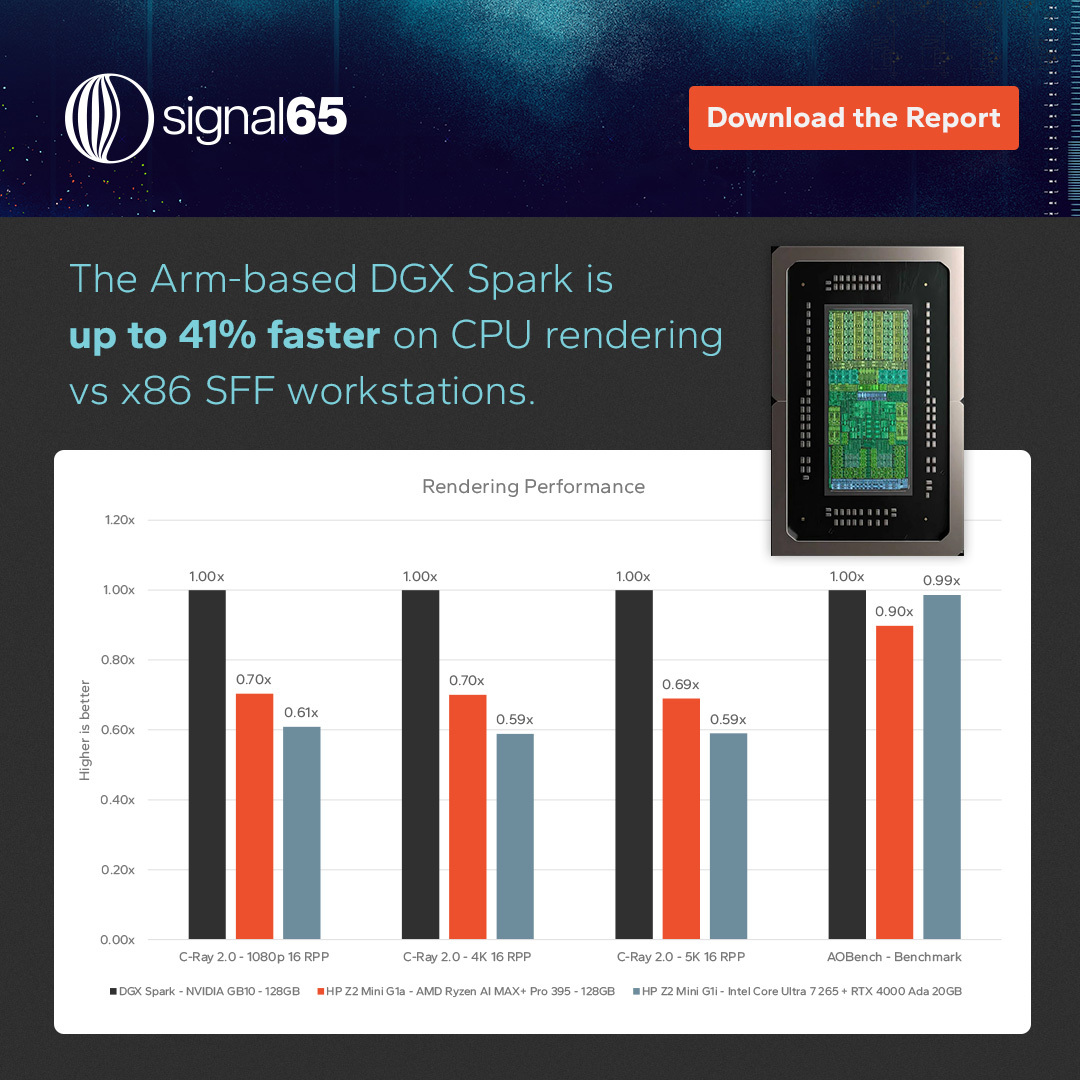
If this turns out to be a GB10-based part as rumored, then there is no magic here that we have not already measured. This includes the @MediaTek CPU based on @Arm and the NVIDIA GPU itself. We at @Signal_65 put the platform through its paces in our DGX Spark work, and the numbers are the numbers.
signal65.com/research/ai/the…
Silicon is also bound by the software around it. Windows 11, Windows on Arm, application compatibility, and gaming support all sit between a great chip and a great experience. That layer does not bend just because a new logo walks into the room.
So does NVIDIA have the engineering ability, and the political weight in this industry, to move things that have been stuck in the mud for years? Absolutely. That is the part I find most interesting.
Here is what that could actually look like. Windows on Arm could finally be treated as a first class citizen. Gaming on Windows on Arm could get a real leg up, because NVIDIA can compel developers to get involved in a way that few others can. And Windows itself could be pushed further into the AI era, beyond the current Copilot features, and grow into a leading AI development platform.
Does any of this make Intel, AMD, or Qualcomm irrelevant? Far from it. Intel is getting its legs back under it with Panther Lake. AMD keeps iterating on high performance designs like Strix Halo. And Qualcomm, along with Snapdragon, arguably benefits if NVIDIA is now pulling for Windows on Arm too. A bigger tent helps everyone building inside it.
But remember, be a little careful with that "new" crowd. A lot of the same people will also hand you confident, "informed" views on the data center. Ask yourself whether the take in front of you comes from someone who has actually done the work in this space, or from someone who only got interested because NVIDIA showed up. Those are not the same thing, and the difference matters more right now than it usually does.
This week is going to be very, very interesting. My ask is simple. Balance the excitement with the right questions and the right thinking. A new entrant in this space is going to be good for the consumer and I think it is finally time for a reset of what we mean by the term "AI PC."
See you this week.
13
17
79
116,518
Signal65 retweeted
May 28
At Computex, Qualcomm is introduced @Snapdragon C, a new entry-tier platform built for Windows laptops targeting around $300 (and up), with Acer, HP, and Lenovo signed on and the @Acer Aspire Go 15 leading as the first device.
The positioning is the obvious headline, but an interesting story sits in the architecture. Snapdragon C steps away from the custom Oryon cores that define Snapdragon X and X2 and uses a mobile-derived Kryo design instead. That is the same fundamental move Apple made by dropping an iPhone class A18 Pro into the MacBook Neo. Both companies are taking proven, high-volume phone silicon downmarket to reach a price the flagship laptop architecture was never built to hit.
Snapdragon C is the first Snapdragon PC platform that does not support Copilot . It still carries an integrated NPU for everyday on-device AI, but I assume it sits below the 40 TOPS threshold that the X series (45 TOPS) and X2 Elite (80 TOPS) clear and its unclear if Microsoft will keep the 16GB memory requirement too. How this translates into "on-device AI" will be an interesting question this summer.
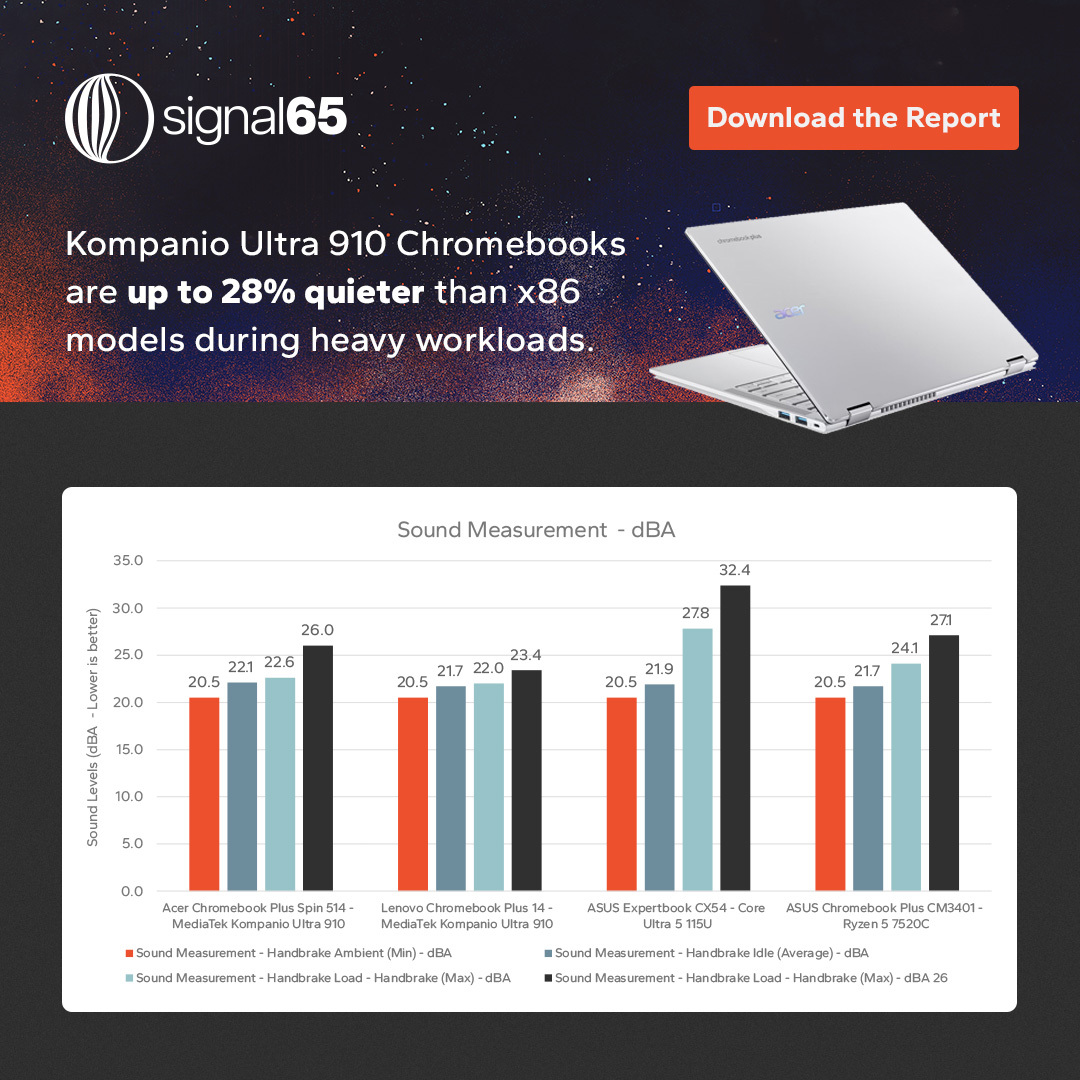
The lineup reads as a clean three-tier stack. Snapdragon C anchors the value segment, the X series covers mainstream premium now as the previous generation, and X2 Elite leads at the top. It is also worth being precise about who C actually competes with. At $300 and up, the more direct fight is less the MacBook Neo and more the Chromebook and budget x86 field, namely Intel N-series, MediaTek Kompanio, and AMD in the entry tier.
The question is price. Chipmakers do not set laptop prices, OEMs do, and the current memory and storage shortage makes a genuine $300 sticker hard to deliver right now. The strategy is sound and the segment is real, but the number that matters is where devices like the Acer Aspire Go 15 actually land on the shelf. That is what will tell us whether Snapdragon C reaches the audience it was designed for.
May 28

Work, study, stream, repeat on a single charge. Our Snapdragon C Platform is delivering a massive upgrade to entry-tier laptops - get responsive everyday performance, incredible battery life and AI capabilities all in cool, quiet designs. So you can stay productive wherever the day takes you.
4
19
2,538
Signal65 retweeted
May 28
Hmmm, I wonder... 😂
May 28

$NVDA CEO Jensen Huang: "The second half of this year is going to be very, very busy with Grace Blackwell, Vera Rubin, and we have a surprise new product that we haven’t told anyone about yet."
1
1
10
2,029
Signal65 retweeted
May 27
I've really enjoyed our time working with @Lenovo exploring their AI solutions stack and how they actively work with enterprises on deployment, not only getting to a concept state. This is a good discussion that summarizes one of our recent @Signal_65 papers. signal65.com/research/ai/len…
May 27

30% faster knowledge retrieval. 120 hours saved per employee per year. Up to $17M in productivity value. @signal_65’s @ryanshrout and @Mitch_Lewis21 validated @Lenovo's retrieval and synthesis Knowledge Superagent for retail, operations, and services, and the numbers hold up. Full report at bit.ly/3S22IZo
2
4
1,061
Signal65 retweeted

🤝 @TheFuturumGroup has entered into a definitive agreement to acquire @ETRnews.
This announcement marks an important step in Futurum’s continued focus on decision-grade intelligence for technology leaders, investors, and enterprise decision-makers.
By bringing together Futurum’s analyst expertise, advisory, intelligence, and strategic content capabilities with ETR’s institutional-grade technology spending data, this combination is designed to strengthen the signal organ
Hear directly from @danielnewmanUV and @bmlascolea on what this means for Futurum, ETR, and the future of technology intelligence.
#TheFuturumGroup #ETR #TechResearch
1
7
18
2,019
May 26
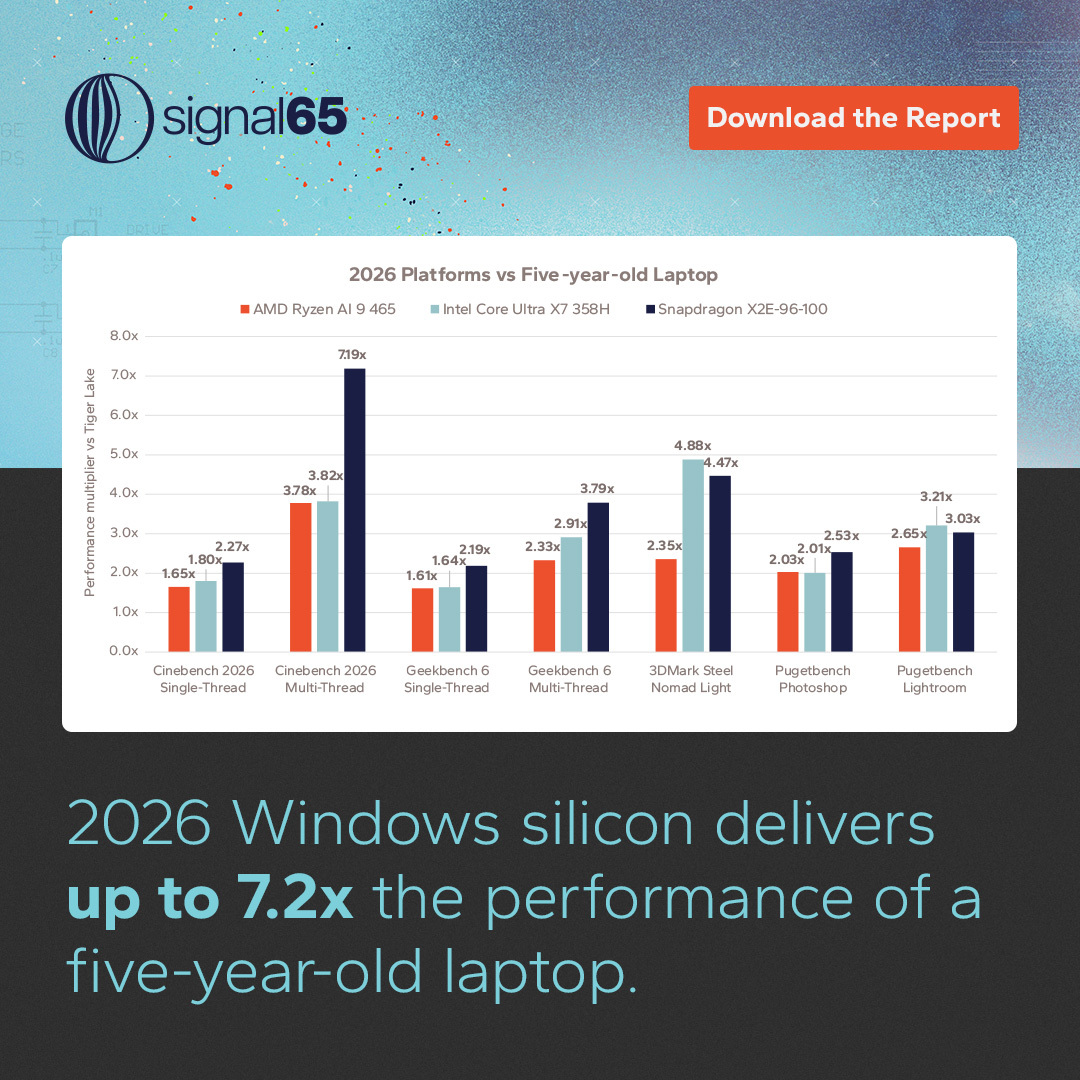
The 2026 @Windows refresh story isn't a marketing claim, it's a measurable performance gap, and it's a large one.
We tested the AMD Ryzen AI 9 HX 465, Intel Core Ultra X7 358H, and Qualcomm Snapdragon X2 against a representative five-year-old laptop running Tiger Lake. In our testing, every 2026 platform delivered between 3.7x and 7.2x the multi-thread CPU performance, with comparable gains in graphics and content creation.
For the 340M PCs sold in 2021 now entering their refresh window, this is the upgrade story.
Full report: signal65.com/research/insigh…
1
3
209,948
Signal65 retweeted
May 25
This build isn't slowing down AT ALL. 😮📈
"...a networking supercycle...traffic without agentic AI was projected to grow roughly 2.5x over the next decade. With agentic AI, that projection jumps to ~9x...even those numbers may prove to be wildly conservative."
May 24

There is such a profound shift occurring in the way that Agents alter our infrastructure requirements.
We are entering a networking supercycle. It’s not because humans are consuming more content. It’s because machines are beginning to think, act, and transact continuously.
Cisco's latest research on AI traffic patterns points to something much bigger than incremental bandwidth growth. Enterprise WAN traffic without agentic AI was projected to grow roughly 2.5x over the next
decade. With agentic AI, that projection jumps to ~9x.
And here’s the craziest part! After following this data closely, I believe even those numbers may prove to be wildly conservative. This is the first time when we have published a study like this where I feel that the projections might be off significantly and what we might think takes a decade happens in 3 years.
Why?
Because most people are still modeling AI like software. It is not. AI behaves more like a new species of digital labor. A SaaS app waits for humans. Agents do not. Agents continuously reason, retrieve, coordinate, negotiate, execute, and loop. At software
speed. Without pause. 7x24. They never get sick. Don’t need a vacation. Dont get tired. Don’t need sleep.
That creates a fundamentally different traffic architecture. The industry spent decades optimizing networks for bursty downloads, video streaming, and
human-paced interactions, almost all of it flowing downstream to a person on the other end.
AI traffic inverts that. A single agentic task can generate 450% more traffic than a human doing the same work.
Roughly 70% of that is inference. And nearly 10% of AI flows now carry more upstream than downstream data, versus 0.5% for typical web traffic, because context continuously moves back into models. Network traffic is not just increasing in bandwidth. It is fundamentally getting reshaped.
This last point matters most. The internet was built as a distribution system for content. AI is turning it into an active system for cognition. The path between agents and models is becoming the spinal cord of intelligence itself. When that path degrades, the agent degrades.
Networking stops being a passive transport layer and
becomes part of the intelligence stack. That changes everything about how we think about resiliency, observability, security, and capacity at the edge. We may be grossly underestimating what is coming. The future will not simply have more users online. It will have trillions of digital coworkers operating continuously on behalf of humans, enterprises, applications, and eventually physical systems.
Humans click.
Agents swarm.
That difference is what creates a supercycle. This supercycle of inference infrastructure will not just be compute bound, but also memory and network bound.
Take a look at the report here: cisco.com/c/dam/en/us/soluti…
1
4
5
1,693
Signal65 retweeted
May 21
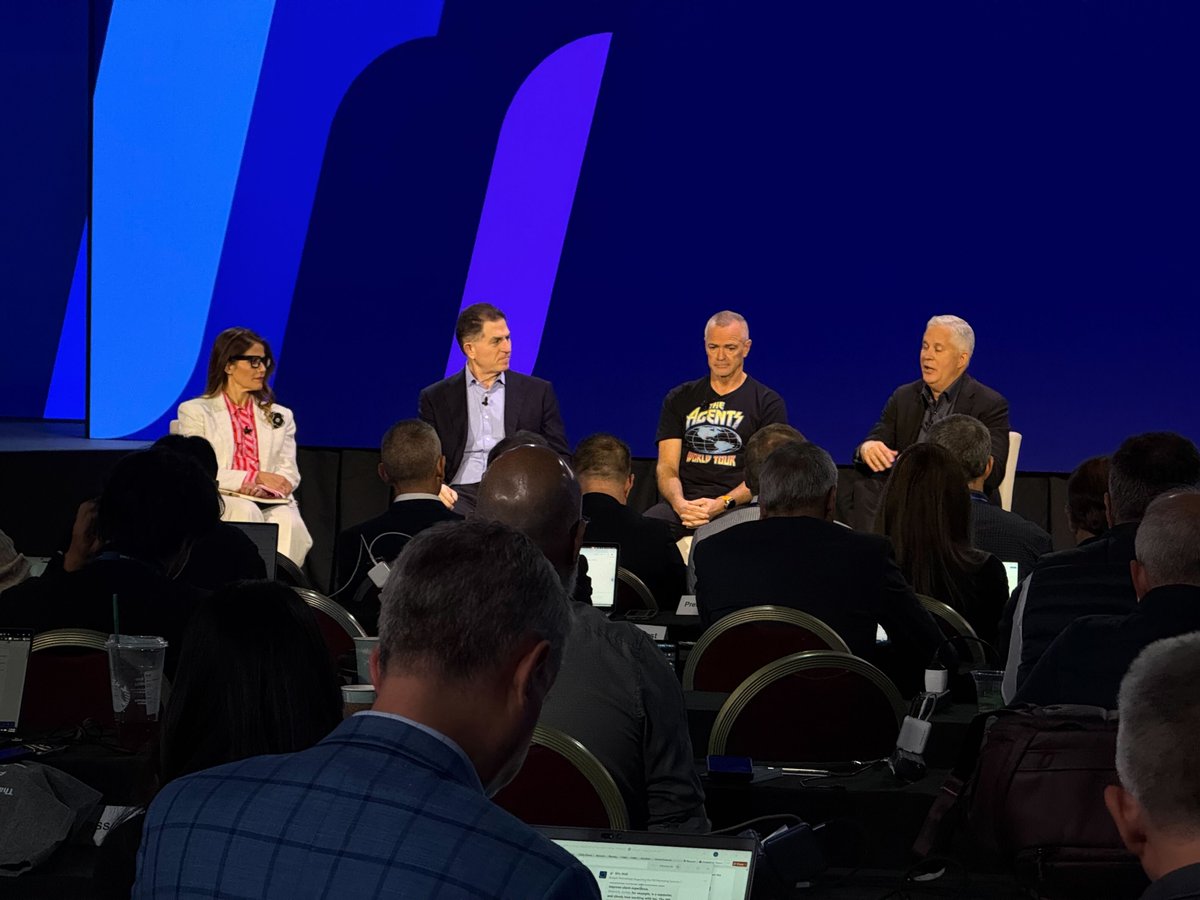
That claim @MichaelDell made from the @Dell Tech World keynote stage, breaking even on agentic AI versus cloud APIs in as little as three months and reducing spend by up to 87% over two years, comes from a study my team at @Signal_65 published this week.
Full analysis here: signal65.com/research/ai/the…
We modeled agentic workloads across general knowledge, sales, and software development on a five-day work week, with publicly available API pricing on one side and Dell workstation and server pricing on the other. Savings scaled with concurrency and model size, with the strongest economics coming from workhorse models in the 30B to 284B parameter range, which is where the bulk of useful agentic reasoning actually runs today.
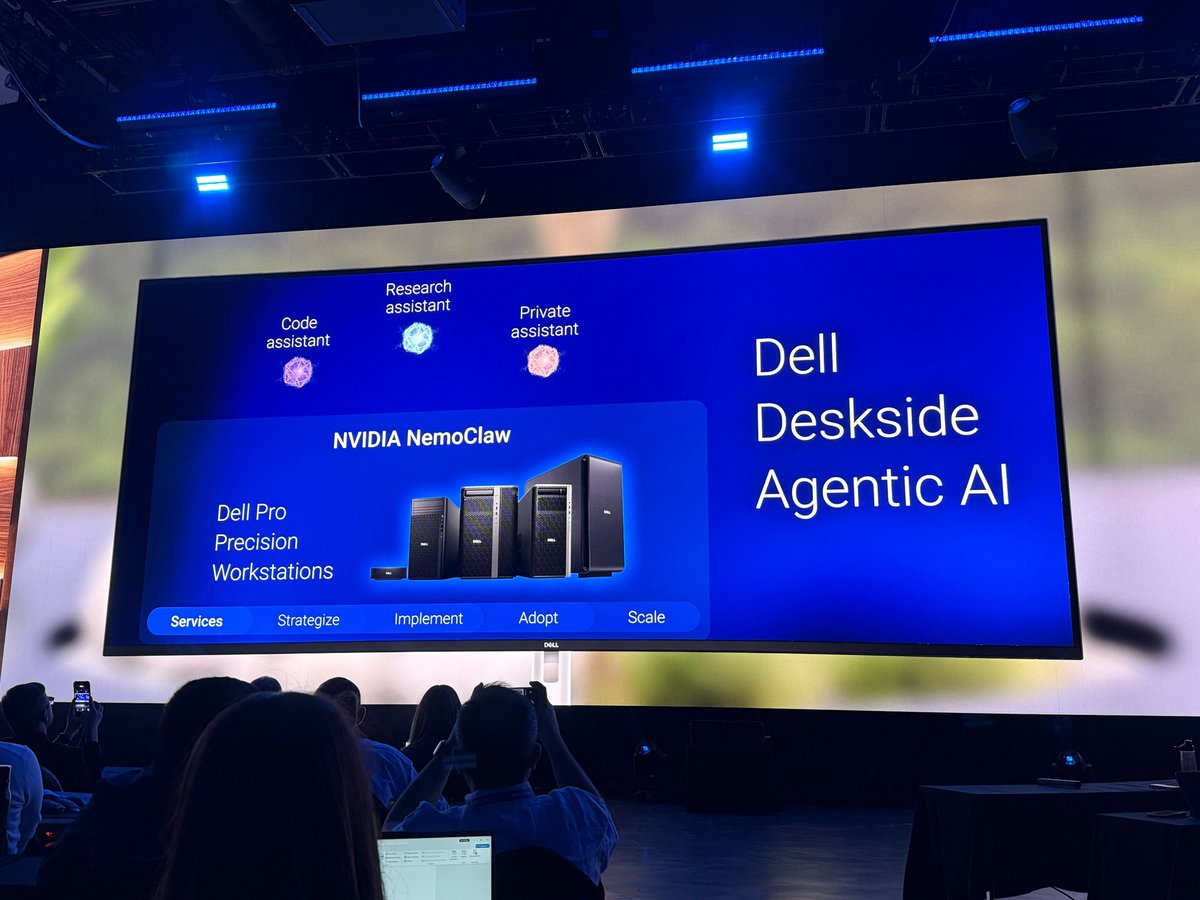
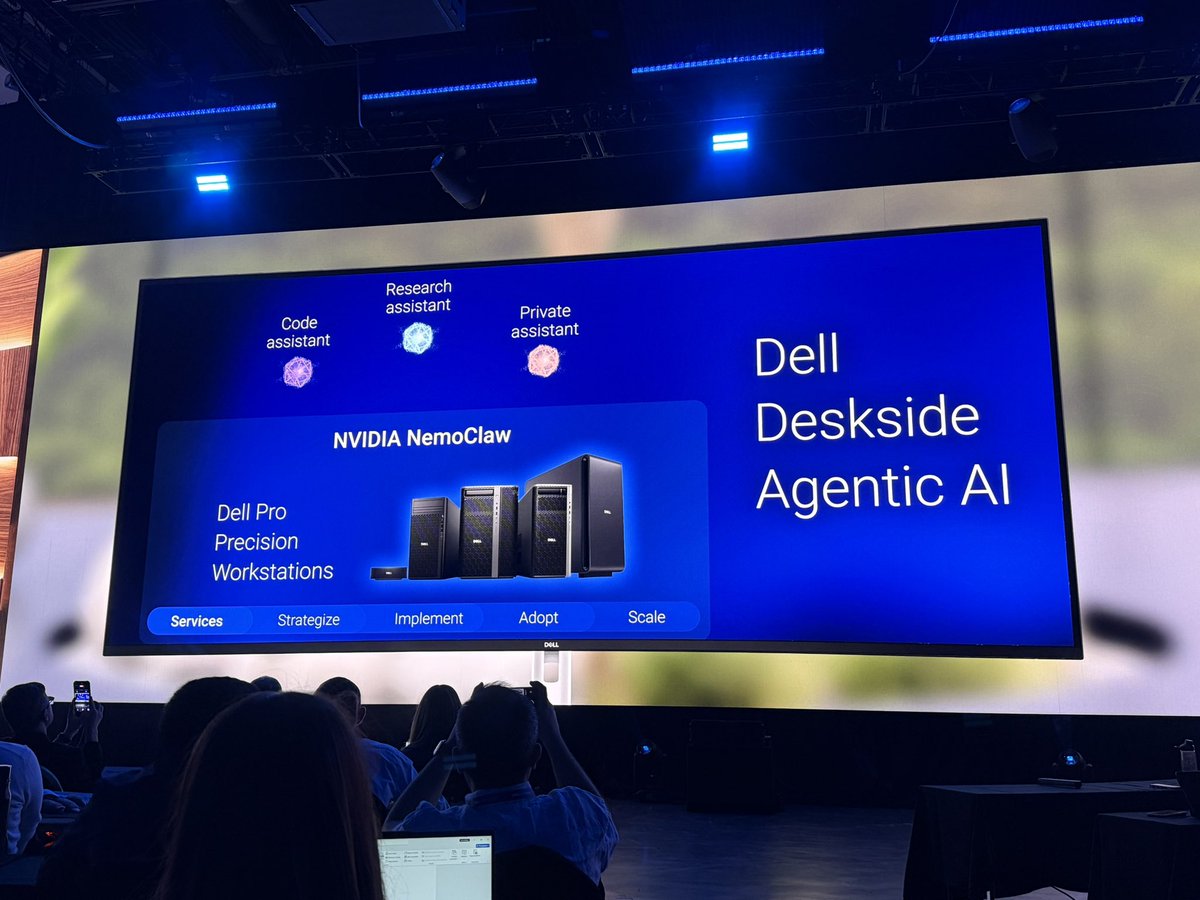
That is the financial backdrop for one of the most important Dell announcement of the day, Dell Deskside Agentic AI. This is the first time I have seen a major OEM really drive agentic AI on the desk, in the rack, and across the data center under one consistent runtime and security model. @NVIDIA OpenShell now spans the whole Dell AI Factory with NVIDIA, from a Dell Pro Max with GB10 up through PowerEdge XE servers. That continuity is what gives enterprises a path from prototype to production without rebuilding the stack.
The strategic backdrop is the data foundation. Updates to the Dell AI Data Platform around orchestration, search, and a Starburst-powered SQL engine accelerated on NVIDIA Blackwell change how enterprise data gets fed into AI pipelines. PowerRack now brings block, file, and object storage onto one rack architecture with PowerFlex joining Exascale.
Dell is making sure that whatever infrastructure plan you have, they can address. Google Gemini 3 Flash on Distributed Cloud running on PowerEdge XE9780. OpenAI Codex connecting to the Dell AI Data Platform. Palantir Foundry coming on-prem. Reflection and SpaceXAI models landing on Dell infrastructure. Dell Enterprise Hub on Hugging Face expanding to MiniMax-M2.7, DeepSeek V4, GLM 5.1, and Kimi K2.6. Whatever model an enterprise wants to run, Dell wants the on-prem stack to be the answer.
The customer evidence is already in production. Mistral AI training on liquid-cooled PowerRack with NVIDIA GB200 NVL72. Eli Lilly feeding more than 1,000 GPUs at nearly two terabytes per second on LillyPod for drug discovery. Samsung embedding Dell infrastructure across global semiconductor fabs.
Cloud-only was going to hit an economics wall as agentic workloads scaled token consumption. The more interesting question now is how fast enterprises move, and which workloads they bring on-prem first.
1
1
7
7,226
Signal65 retweeted
May 21
At CES, @AMD pulled the cover off the Ryzen AI Halo, a first-party mini PC built on the Ryzen AI Max 395 processor and aimed directly at the NVIDIA DGX Spark. Now we know it is priced at $3,999 with 128GB of unified memory and a 2TB SSD, with pre-orders expected next month (June). AMD also confirmed the next generation, the @AMDRyzen AI Max PRO 400 Series, code-named Gorgon Halo, as the follow-on platform.
The market AMD is chasing, local AI development and small-scale on-device inference, is only just forming. The prize is owning the developer on-ramp, the desktop box where builders prototype, fine-tune, and run models without renting cloud capacity. When a category is this young, a second credible vendor matters.
And AMD is showing up as a real competitor, not a token entrant. Shipping a first-party platform rather than leaving it to partners is a signal of intent. So is supporting both Windows and Linux with full ROCm. In a space where every developer workflow looks a little different, meeting people where they already work is a smarter early bet than it looks.
What about performance? On paper, the Ryzen AI Halo and DGX Spark are closely matched, and the early AMD numbers against Spark look strong. But those are vendor claims on a short list of models, and they need independent validation. Winning a benchmark is the easy part. The real test is performance across a wide and constantly shifting set of models, plus staying current as new models, workflows, and inference stacks land almost every week. That ongoing support is where the @NVIDIA CUDA ecosystem has a long head start, and it is the bar AMD has to clear.
Why does any of this matter in 2026? Agents.
Autonomous agents run continuously and consume far more tokens than chat-style interactions. Recent Signal65 research (signal65.com/research/ai/the…) on the economics of agentic AI found agentic workloads burn roughly 4x to 15x more tokens than standard chat, and the trend points well beyond that. When consumption scales like that, per-token cloud pricing becomes a real line item, and owning local inference capacity stops being a hobbyist choice and starts being an economic one.
That brings us to the Ryzen AI Max 400. The CPU and GPU look like a measured step over the current part, so memory is the key difference. Moving up to 192GB of unified memory is the spec that counts, because memory capacity decides which models you can actually fit and run locally. That is a significant jump over the 128GB ceiling on both the current Halo and the DGX Spark.
AMD is aiming for the third quarter of 2026 for the Ryzen AI Max PRO 400 platform, so the bigger unknown is price. The first-party Halo at $3,999 undercuts the $4,699 Spark, though not by the wide margin some expected, and Ryzen AI Max 400 pricing has not been disclosed. In the current memory market, that is a genuine variable, and hitting that third-quarter window is not a given either.
Local AI is shifting from a curiosity to a real platform decision, and AMD just made it a two-horse race. Are you planning to run inference locally in 2026, or is the cloud still the default for your team? I would like to hear how you are thinking about it.
May 20

✨ Personal AI is the next computing platform.
AI is shifting from something you access to something you build with, locally, at the edge, and across systems.
We’re unlocking new possibilities for developers:
• @AMD Ryzen AI Halo, a local-first developer system, preorder starting in June, develop AI without limits on your desk
• Gorgon Halo with up to 192GB unified memory, supporting 300B parameter models locally, run massive models locally
We’re excited to partner with @ClementDelangue🤗, Co-founder and CEO of @huggingface, to advance open-source AI for Ryzen AI.
Our focus is seamless AI, from model to deployment.
Cloud, edge, device. One continuum.
Multi-agent systems, local inference at scale, open models as infrastructure.
This is the next computing era 🚀
1
4
22
3,079
May 19
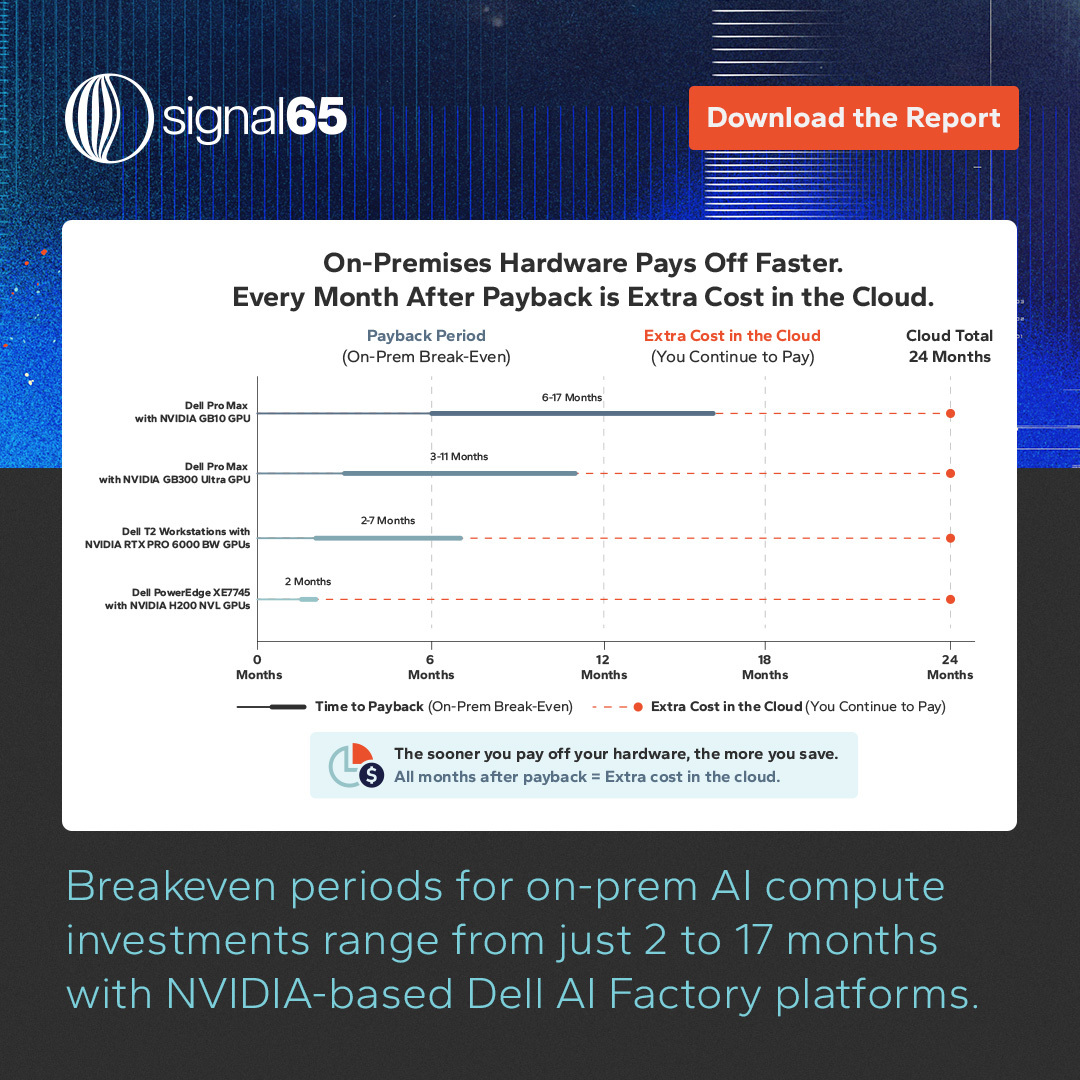
Most enterprise AI deployments are still cloud-first. That makes sense for bursty workloads, but persistent agents could change the calculation. When inference runs continuously, infrastructure pays itself back faster than most procurement timelines assume.
Across the @Dell AI Factory with @NVIDIA portfolio, we modeled breakeven against equivalent cloud API spend at every tier:
➡️ Dell PowerEdge XE7745 with NVIDIA H200 NVL GPUs, 2 months
➡️ Dell T2 Workstations with NVIDIA RTX PRO 6000 BW, 2 to 7 months
➡️ Dell Pro Max with NVIDIA GB300, 3 to 11 months
➡️ Dell Pro Max with NVIDIA GB10, 6 to 17 months
Every month past breakeven is cloud spend you aren't paying.
Full report: signal65.com/research/ai/the…
2
2
17
296,330
Signal65 retweeted

May 18
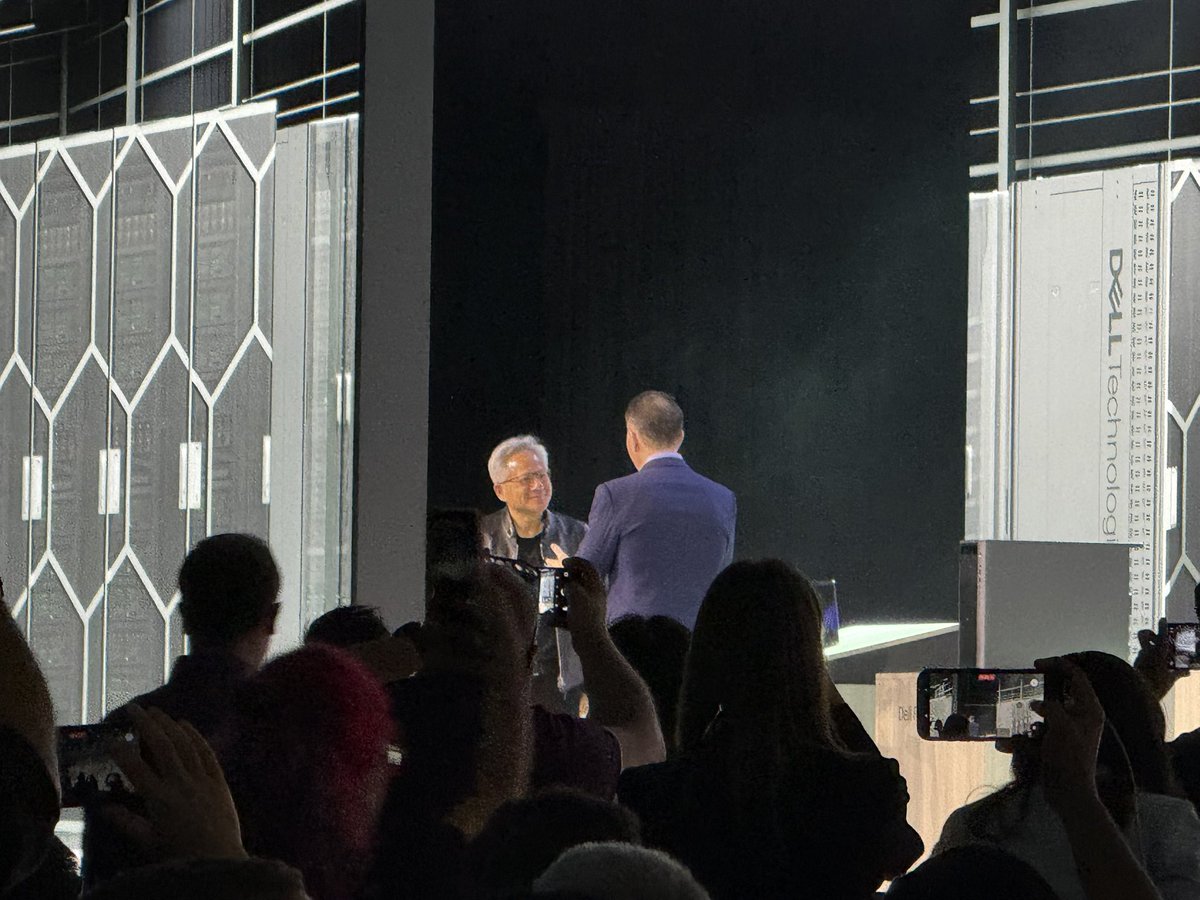
$NVDA CEO Jensen Huang to $DELL CEO Michael Dell “We have now entered the era of useful AI.”
Reiterating my endless droning on about just how early it is for AI. We have literally just hit the point where it is beginning to do useful things.
So. Damn. Early. 👏🏻🚀
10
11
124
8,010
Signal65 retweeted
May 18
The play for deskside AI compute could be a massive win for Dell as the need for more on-prem processing expands. @MichaelDell quoted our @Signal_65 “break even in 3 months” claim for GB300!
1
2
4
454
May 18
The economics of persistent AI agents look different from chatbot workloads. Always-on agents consume orders of magnitude more tokens, and per-token cloud pricing isn't built for that pattern.
Our report: signal65.com/research/ai/the…
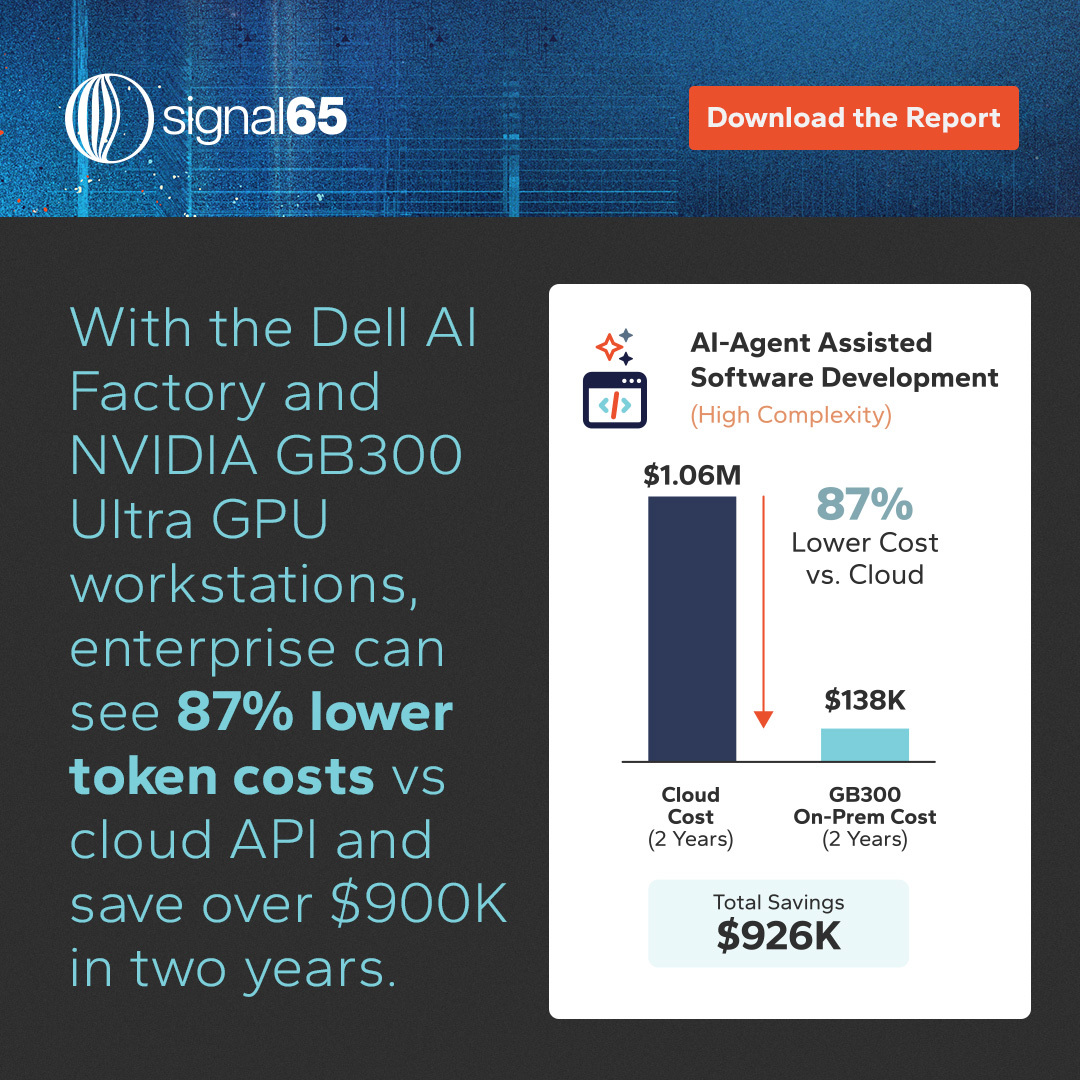
The most striking case in our analysis came from software development workloads. One @Dell Pro Max with @nvidia GB300 workstation delivered 87% lower cost than the equivalent cloud API spend and saved $926K over two years. That is one workstation, under a desk, doing the work of a $1.06M cloud bill.
The full report covers two more workload profiles and scales up through the Dell workstation portfolio to PowerEdge.
3
2
25
470,980
May 18
Persistent AI agents don't consume tokens like chatbots do. They run continuously, generate at least 4x to 15x more tokens than single-turn interactions we've gotten used to, and autonomous agents may push that closer to 1000x. It fundamentally changes the math on token production, and on-prem compute vs cloud APIs.
We modeled three persistent agent workloads on @Dell AI Factory with @nvidia infrastructure vs. cloud over a two year period. What we found:
➡️ On-prem reduced costs by 28% to 90% across all workloads
➡️ Dell Pro Max with NVIDIA GB300 Ultra delivered 87% lower cost for software development, $926K in two-year savings from a single workstation
➡️ Most platforms broke even in under a year, some in as few as 2 months
➡️ The portfolio scales from desktops handling 8 agents to PowerEdge systems supporting 18,000
Full report: signal65.com/research/ai/the…
1
2
6
4,908
May 15
An interesting and critical topic for enterprise and a great conversation. Thanks @HPE_Compute

When infrastructure spreads out, control can thin out. @Signal_65 and HPE explore how teams can bring consistency, visibility, and security back across data centers and the edge. hpe.to/6015BBIjo1
1
63