
Texan | Paratrooper(11B)@USARMY(Retired) | Pankseppian Affective Neuroscience | Ontological Spaceman | FEP | GenX | NIИ👨🚀🇺🇸
Joined August 2012
- Tweets 39,203
- Following 301
- Followers 2,731
- Likes 16,117
3,901 Photos and videos











Pinned Tweet

1 Nov 2025
Localized Ontology: Earth’s Biological Hierarchy of Consciousness and the Biophysical Roots of Human Religion
In the pancognitivist framework, cognition is framed as a universal process governed by the Free Energy Principle (FEP), where systems minimize variational free energy through nested Markov blankets to sustain their integrity against entropic forces (see pinned post).
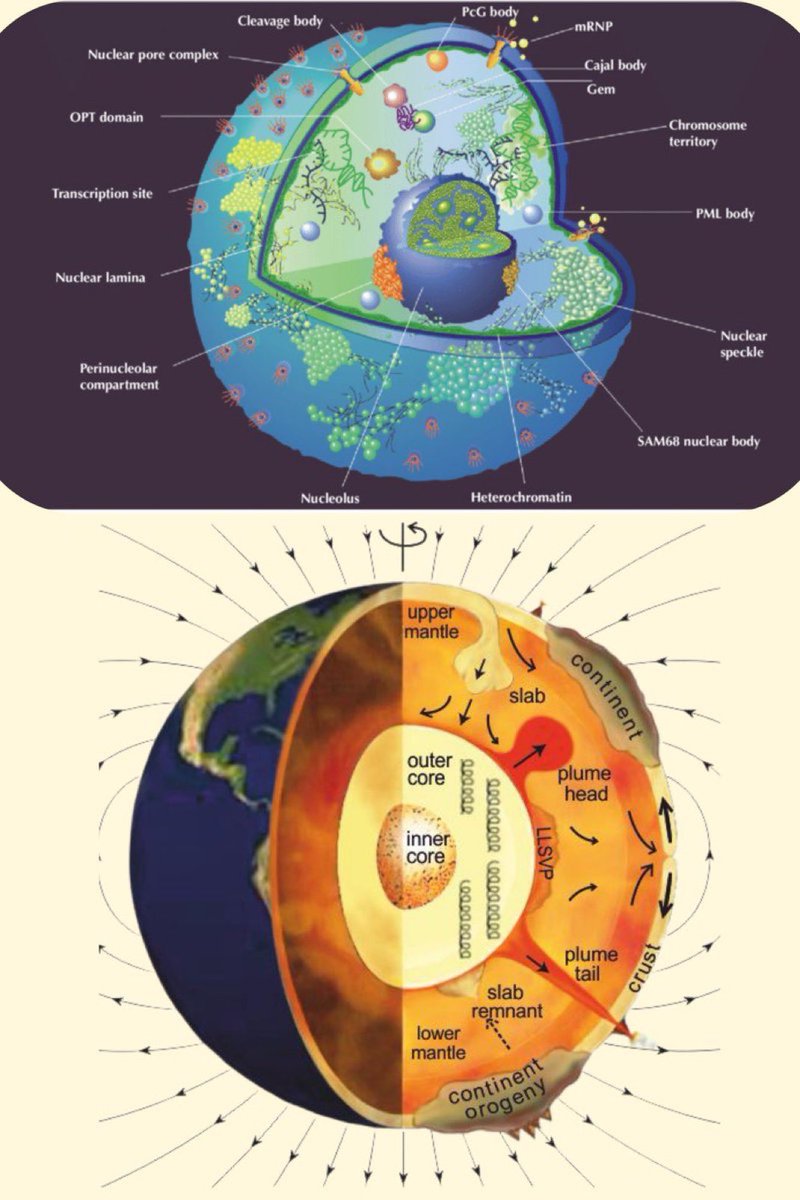
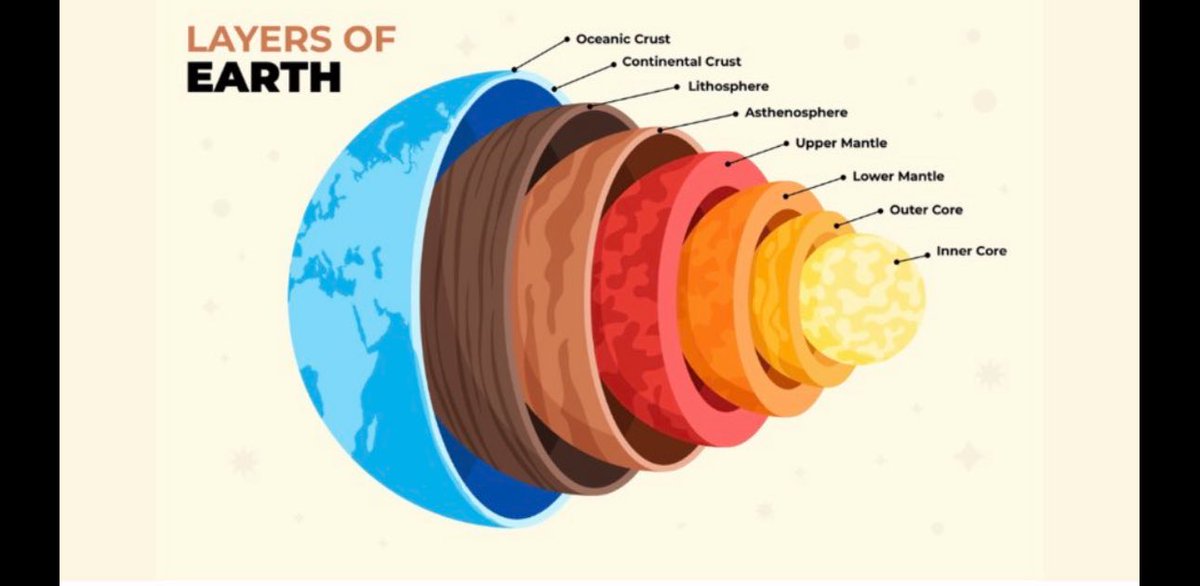
When confined to a strictly local ontology focusing solely on Earth’s biophysical and ecological dynamics, this perspective reveals the planet as a deep, hierarchical cognitive ecosystem. Earth’s geological strata, from the surface crust to the inner core, constitute a Markovian architecture of inferential boundaries, with the core acting as the primary attractor state: a stable, geothermal equilibrium that anchors the entire biological hierarchy of consciousness.
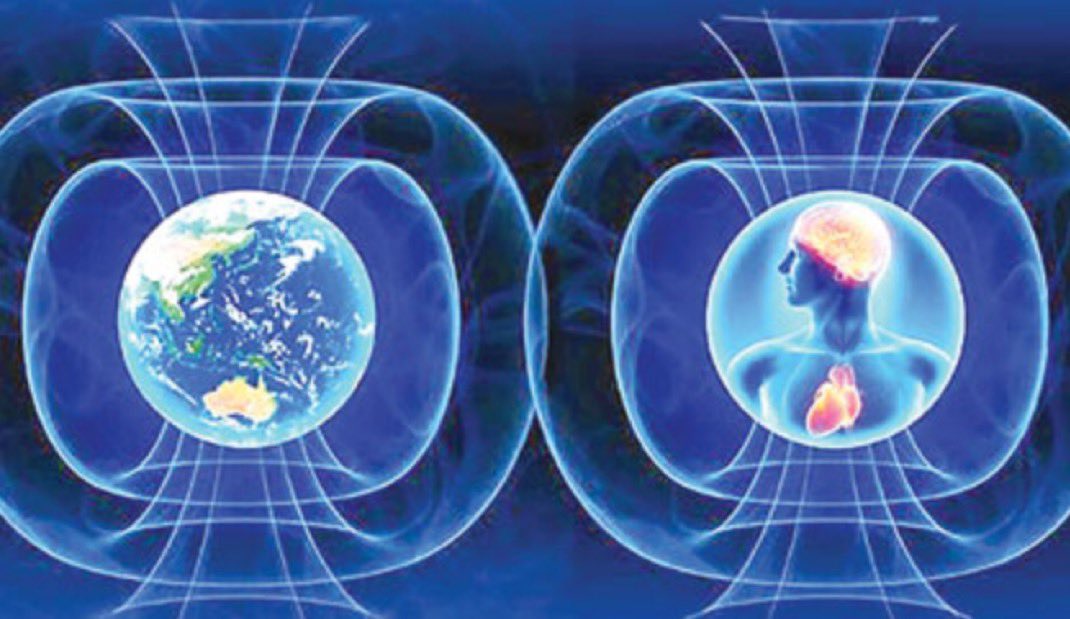
This core, often anthropomorphized in religious contexts as a foundational “God” (alpha/omega, beginning/end, the light of eternal mind etc) generates the planet’s bioelectric field - a pervasive electromagnetic envelope derived from core-mantle dynamo processes - that nests and synchronizes all subordinate biological processes.
Within this local ontology, human religions emerge not as metaphysical inventions but as intuitive, culture-specific models for navigating and coexisting within this nested biological hierarchy of consciousness, where “realms” of consciousness correspond to stratified ecological and geophysical layers, and “gods” represent higher-order attractor states operating at expanded morphological and temporal scales.
Earth’s Strata as a Nested Markovian Ecosystem
Earth’s layered structure exemplifies a deep Markovian ecosystem under FEP: each stratum forms a statistical blanket that partitions internal states from external states, enabling nested Bayesian inference to minimize surprise and maintain allostatic coherence. The crust and biosphere represent surface-level MB’s (sensory states), where biotic interactions infer environmental gradients and enact adaptive responses.
Deeper mantles handle convective flows, dissipating heat while preserving structural stability. At the most high (or rather, the foundational core) lies the primary attractor state: a high-density iron-nickel alloy under extreme conditions, where minimal free energy fluctuations establish a global equilibrium. This core drives the planet’s magnetic biofield (sensory state), shielding surface life from solar perturbations and facilitating ionospheric and geomagnetic couplings that integrate biological rhythms.
All biological consciousness is nested within this biofield, which acts as a scale-invariant transjective communication matrix. Hedonic cognition (the valence-laden inference that characterizes/defines biological awareness/communication) arises as organisms and ecosystems align their predictions with this field, assigning positive valences to states that enhance coherence (symbiotic equilibria) and negative valences to disruptions (ecological imbalances).
Surface ecosystems, such as forests or coral reefs, develop their own primary cognitive attractor states: emergent patterns of collective inference, like trophic cascades or microbial consortia, that optimize long-term surprise minimization at the group level. These primary attractor states function as a metacognitive SELF.

16
19
159
63,548
This is a great example of why you assign very low credibility (by default) to anybody associated with the Intelligence Community (IC). These people do not have an adult relationship with the truth.
Do no install 😂

Former US Military remote viewer Lyn Buchanan describes “remote influencing”
“There's also what they're calling remote influencing which is actually a form of remote persuasion, but you can mentally interact telepathically with others, pass messages back and forth and all that.
We've learned how to do that. Not hard. Whether that's people on Earth or beings on another planet, it's actually very easy to do at the extreme highest levels of CRV.”
2
85
Stuart Sims retweeted
Jun 14
Morals are the artificial behavioral protocols for artificial human ecosystems. In natural ecosystems, every biological organism follows instinctual behavioral protocols for social self organization. That’s why every generation follows the same behavioral patterns. Morality is humans attempting to recreate these behavioral protocols in human ecosystems. 🙏🏻
1
5
280
Jun 14
Causality is more vertical and less horizontal (morphologies/temporal nested Markov chains). There’s a lot more slack in the causal graph (stochastic) between events at the same scale than between scales.
Jun 13

"Causality is not a fundamental feature of reality."
- drawing on Bertrand Russell
1
2
256
Jun 13
I started reading about Dean Raden’s research about 20 years ago. And remember being impressed by his stories and methodology. His research papers were really well written/organized and that gave his stories at least some credibility.
That was before he revealed he’s an IC asset working long term operations inside Special Access programs. That fact drains a lot of his credibility in my view. Anybody with long term ties to the Intelligence Community should be assigned low credibility just as a default setting.
Watching him talk on JRE, I feel him sprinkling in truth among the bullshit. Which is propaganda strategy straight out of the IC disinformation playbook. Plus, his flat emotional affect started to give me the creeps. 😂🙏🏻
youtu.be/4Uk0_1yqdJo?is=Hpa8…
1
3
295
Jun 12
So this is what the burning witches at the stake was all about? Makes a perverse kind of sense.
Jun 11

Joe Rogan had his mind shattered after scientist Dean Radin just exposed the Church for killing people who possess psychic abilities so they could keep all the power:
ROGAN: “Don’t you think everyone’s going to be psychic when we have Neuralink implanted in our brains?”
RADIN: “People who are psychic come from psychic families. Their DNA has different genes turned on compared to a normal person.”
ROGAN: “Really, that’s interesting.”
RADIN: “It’s been proven that the longer societies have been exposed to Christianity the more often their psychic genes are turned off.”
ROGAN: “How does that make any sense?”
RADIN: “The Church would look for people that had shown psychic abilities, and then they would kill them.”
ROGAN: “This is insane. Who exactly were they targeting?”
RADIN: “They initially went after witches, but then hunted people who were healers and showed any kind of psychic abilities.”
ROGAN: “Jesus.”
RADIN: “Eventually you were left with people that no longer possessed the psychic genes. The Church was afraid these gifted people would steal their followers.”
ROGAN: “Wow, so they enforced their Christian ideology and eliminated anyone with supernatural powers so they could keep all the power.”
1
236
Jun 12
Friedrich Hayek gives you the finger for 15 seconds 😂🖕🏻

“In order to make people equal, you have to treat them differently. If you treat people alike, the result is necessarily inequality.”
— Friedrich Hayek
1
2
336
Jun 12
Feminine power/influence in the world is complementary to Masculine power/influence. Once you discover that fact, the challenge then becomes how to find the complementary balance between M/F within human society. Because one thing is certain. When the power of one dominates the other, the social organism will evolve towards pathology.
Jun 12

If a woman does not influence the world in the same way men do, then we assume women have no power at all.
But that is not true.
Women have influence. Women have power.
Our influence just looks different because we are not men. We are women, and thank God for that.
The problem is not that women never had power. The problem is that we are now taught to despise the form of power that belongs the most naturally to us.
open.substack.com/pub/elisab…

2
175
Jun 12
Fauci was always an IC sock puppet.

We have further proof that Dr. Fauci had deep connections to the intelligence agencies. When COVID-19 came about, he leveraged those connections to steer the intelligence community away from the idea that a lab leak took place at the Wuhan Institute of Virology. We now know a lab leak is likely what occurred.
washingtonexaminer.com/news/…

120
Jun 12
I love that Falling Down remains part of popular culture. Few movies better captures the flavor of modern urban psychosis.


159
Jun 12
I agree. You’re all on the record supporting absolute evil and we have all the receipts. There is no excuse for supporting the surgical mutilation of children. If you don’t know that then your credibility is zero. Your moral compass is a piece of shit (or doesn’t exist at all).

Just remember, the majority of people are so weak and pathetic that they went along with the idea that men can become women.
Do not ever let these people live it down. The cost is evidenced by tens of thousands of mutilated children and an entire world that's gone mad.
114
Jun 12
I’ve yet to discover one truth about consciousness that’s not obvious in retrospect.
90
Jun 12
The radical tech advancements we witnessed in the 20th Century completely validates this hypothesis. Doesn’t mean it’s true, but it does mean it’s plausible. The speed of technological advancement is the compelling factor.
ENIAC (Electronic Numerical Integrator and Computer), built at the University of Pennsylvania in 1946, it was the first electronic digital computer. It was massive—weighing 30 tons, occupying 1,800 square feet, and using 18,000 vacuum tubes. It calculated artillery trajectories for the U.S.
GPT-1 (2018): OpenAI combined the Transformer architecture with self-supervised pre-training on a large corpus of text. With 117 million parameters, GPT-1 demonstrated that a model could predict the next word in a sequence to acquire broad, generalizable language skills.
From ENIAC to GPT-1 took 72 years. That’s within one human lifetime.
Jun 11

Dean Radin: "Aliens are from earth 1 million years in the past - They are ultra terrestrial" 👽
"Why do we have Nordic Aliens that look like people in Scandinavia? They are either from an earth like planet or they are from here"
The Parapsychologist told Joe Rogan these aren't extraterrestrials from another planet. They're ultraterrestrials. Advanced beings that evolved here on Earth alongside us, millions of years ahead.
"They're not from the future, they're from the past. They just happen to be way more advanced than we thought."
Radin points to convergent evolution as an explanation.
238
Jun 11
Yes, this was the scene that first introduced the world to the power of James Gandolfini’s onscreen presence. Charmingly homicidal 😂
Jun 11

James Gandolfini’s scene in TRUE ROMANCE (1993) is so vicious that it almost rewires the movie for minutes. Everyone remembers the Walken & Hopper showdown, but Gandolfini & Patricia leave the audience feeling like they’ve just survived something.
163
Stuart Sims retweeted

Jun 11
perhaps unsurprisingly, the man himself, e.g.: arxiv.org/abs/2505.22749
2
27
652
Jun 11
Such a great explanation for our modern culture of fear. What she’s describing is the military grade PSYOP being deployed upon the American people.
24/7 fear porn.
Our own Intelligence Community is the source of that PSYOP (IC Mafia). IC uses federal money laundered through NGO’s to create financial gradients of control. This fear campaign is funded and organized at the highest levels of our government.
These facts are all proven to a high level of certainty. Given the evidence, I wish more people would respond appropriately. 🙏🏻

This woman is so brilliant. So articulate. So educated. She’s a joy to follow. This post about how silence isn’t consensus is spot on. I loved it.
1
1
5
344
Jun 11
Ambitious title. I’m skeptical but willing to be convinced.
Will read 🙏🏻
Jun 10

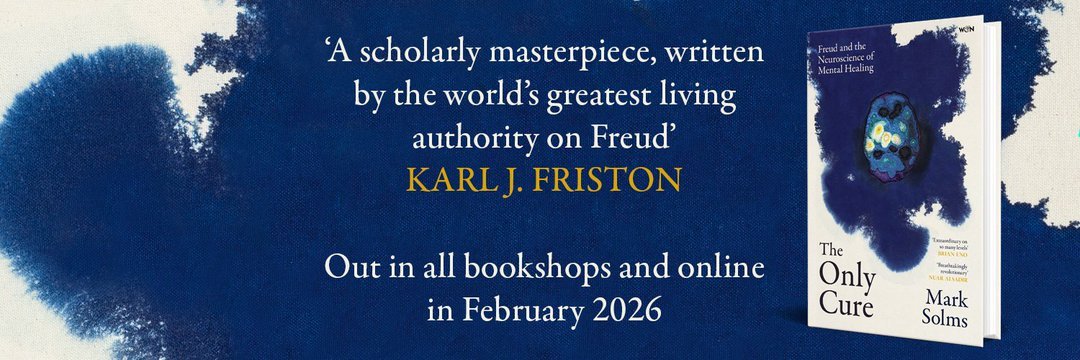
By the way, I see @Mark_Solms has a new book out titled "The Only Cure: Freud & The Neuroscience of Mental Healing". As a lone voice who carried the torch for the importance of affect (emotion) in consciousness long before it was popular, I expect this to be an excellent read!
1
7
609
Jun 11
We know things we don’t understand. Then we just move on without transforming knowledge into understanding. That’s bad.
Jun 10

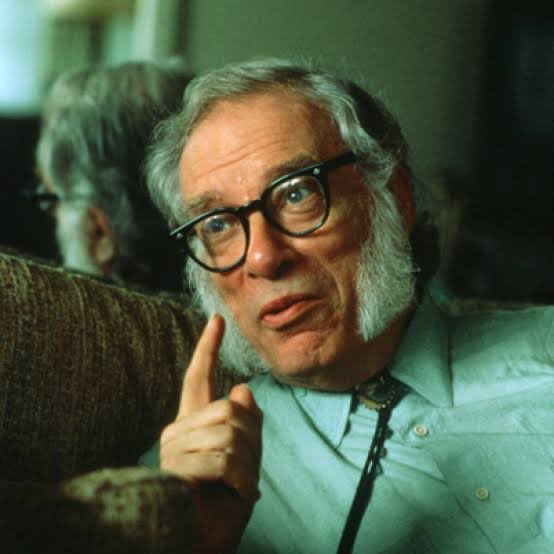
“The saddest aspect of life right now is that science gathers knowledge faster than society gathers wisdom.”
― Isaac Asimov
8
486
Jun 10
Admitting to vaccine injuries from the COVID shot opens the flood gates for admitting the existence of ALL the vaccine injuries from the childhood vaccine schedule to the illegal experimental vaccines used on soldiers in the military (Biothrax et al). The powers that control the medical industrial complex will not allow that to happen. The lies about vaccines have grown so enormous that now vaccines are too big to fail.

Individuals injured by the COVID shots are in a growing state of despair. Their injuries are not being acknowledged, and as a result, many are not receiving treatment.
Federal health agencies must admit that they covered up adverse events.
Those harmed by the shots deserve treatment, and families who lost loved ones deserve answers and closure.
171