
My tweets are my opinions. Abuse not tolerated. Progressive. Hindu. Foodie. Traveler.
Joined September 2018
- Tweets 24,131
- Following 226
- Followers 673
- Likes 71,143
2,429 Photos and videos


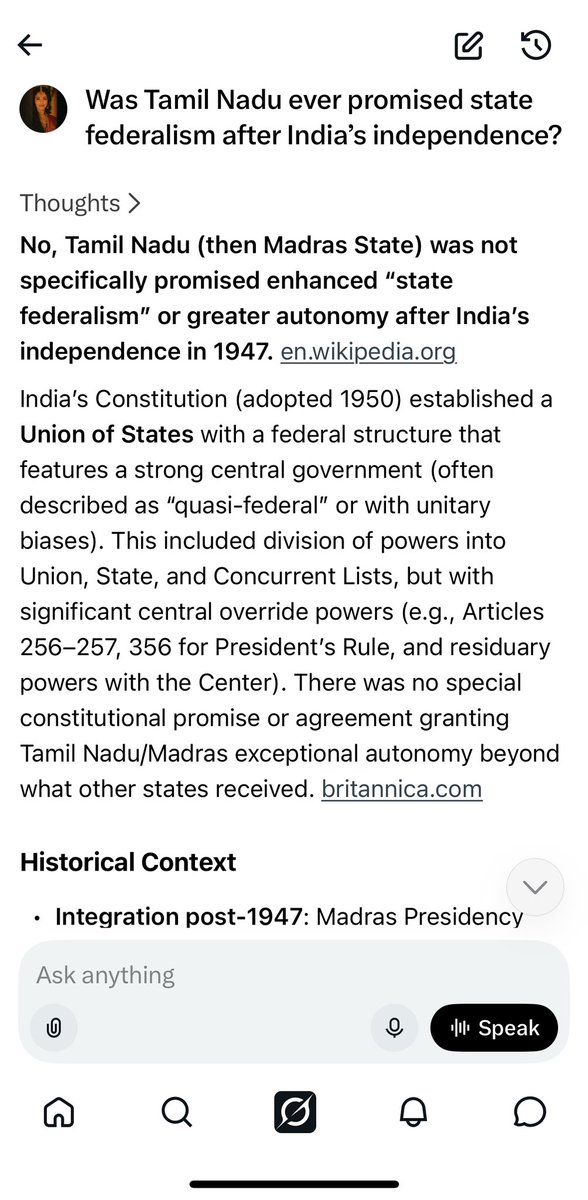


Perhaps we should start a protest FOR Parandur. We already are a decade behind Bangalore and Hyderabad. I hope the CM sees that this gap needs to be addressed and closed immediately.

Agreed- every metro city is pushing for more airports and more infra, Chennai needs to step up
1
41
Kothus think everyone has come into politics to swindle off tAx PayErs MonEy after seeing their mudalalis in action for the past 5 years 😂
Vijay had a profession to earn his money. He dint come into politics for money like the theeyasakthis.
Jun 12

Waste of Tamil Nadu tax payers money. What is the use of this ?
1
2
102
Shame globalization is dying because of one man. Nations have lost trust on each other. There are no more allies.
India’s space program took decades but we eventually got there with an unbeatable price point.
We will with AI too.
Jun 13

This is big: all access to Mythos and Fable AI models disabled for everyone outside America.
First thoughts:
1. Technology is the ultimate weapon. National sovereignty, national security, all of it is now about technology.
2. Globalization is dead and Bharat must find her own way ahead.
We must keep these two ideas in mind.
What can our government do right now? Ensure that orgs in India embrace smaller models, both Indian and Chinese open source ones. With a bit of effort, we can make them work. Anyway, why pay money to people who don't even want to sell to you?
We must deepen our R&D. Sarvam has been on it and we have been on it but remember that the latest models cost not only huge GPU budgets to train, the GPUs themselves are restricted. So we can't afford the scale of money (of the order of $100 billion to even get in the game!) and even if we could come up with the money, we can't get all the GPUs. I would not like to ask the government to fund tens of billions of dollars on this anyway - the money has far better uses.
Zoho has been pursuing alternative R&D approaches that are far, far less expensive but by its nature cutting edge R&D takes time and we are patient. I am confident we will get there.
Any remaining people in India who have delusions about globalization should wake up now.
84
Smita Sup retweeted

Jun 11
Looking at your posts sometimes I wonder is this how british made up stuff and imposed caste on indians.
12
4
618
21,853
Smita Sup retweeted

Jun 12
a single human owns Trillions of Dollars yet WHlTE racists think brown immigrants are the reason they can’t afford Housing / Medical Care 🥀



1,277
3,933
21,445
362,165
RT @elanila07: 2021 la yum TN than second largest economy , had largest women workforce. Ithulam last 5 years la nadantha mari en kadha kat…
94
Smita Sup retweeted

Jun 11
So Russia is banned from FIFA because of their invasion of Ukraine, but America is allowed to HOST THE FIFA GAMES WHILE BOMBING IRAN???
HOW DOES THAT WORK?????
Community note
Russia hosted FIFA World Cup in 2018 while actively invading, bombing and occupying Ukraine .
en.wikipedia.org/wiki/2018_FIFA…
en.wikipedia.org/wiki/Russo-Ukr…
3,120
25,896
176,499
3,299,261
Smita Sup retweeted

Jun 11
Dear CM Vijay Sir,
Ok you have dropped the Parandur Airport project that was planned to serve as Chennai 's second airport.
Now just a few Yes or No questions sir.
1. Does Chennai need a second airport or not ?
2. If not Parandur where else?
3. Won't those site also involve acquisition of patta lands, agriculture lands?
4. Will that site address accessibility to Chennai? Parandur is on the Chennai Bengaluru Industrial Corridor with a Metro being planned.
Just 15 to 20 years ago Chennai used to be the third busiest airport in India ....today it's the 6th handling less than half the passengers than Bengaluru which by the way is already planning another airport.
My Chennai which used to be a city that Hyderabadis used to look at in awe .... now the roles have reversed.
This city is running on past glory and its brilliant human resources that are disciplined, hardworking and rules abiding .... Successive governments have not kept pace with other cities. Not long before this loyal human resource that calls Chennai home and stays here for the love of the city discovers that they may be better off elsewhere in terms of lifestyle and opportunities.
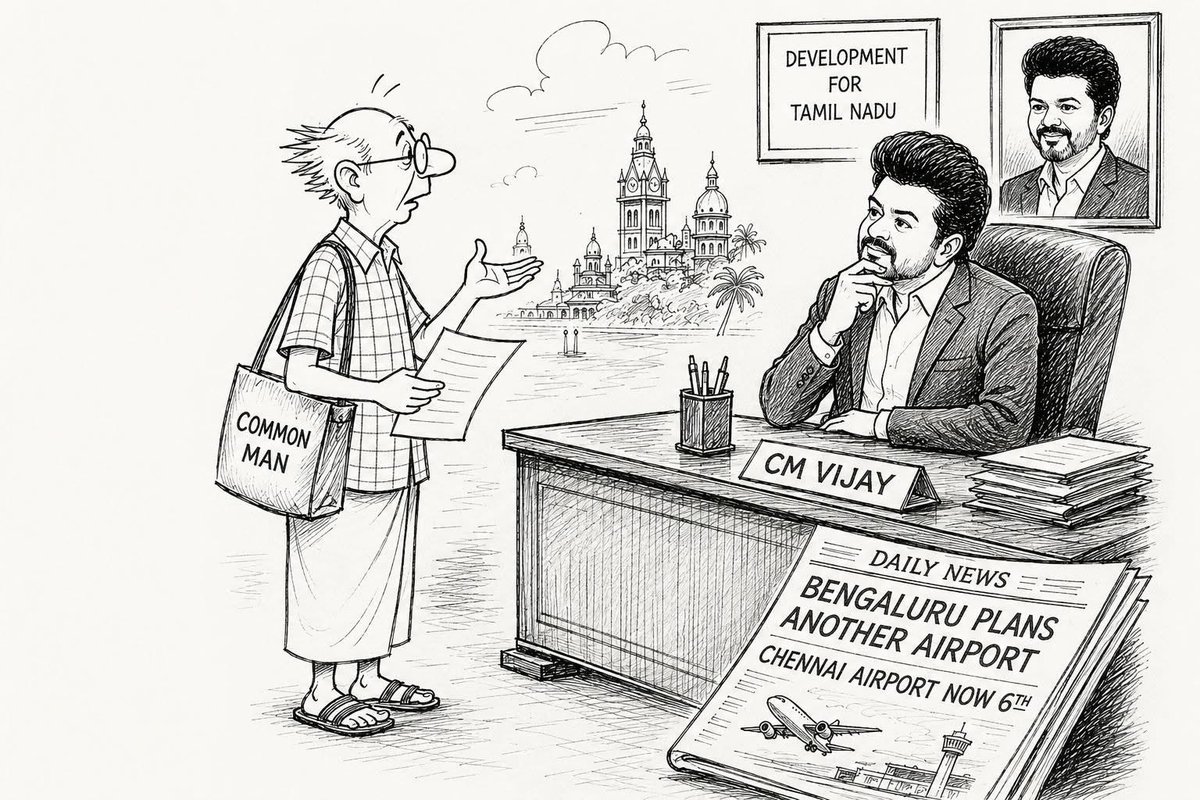
12
47
201
42,460
Smita Sup retweeted

Jun 11
It is incredibly frustrating to watch celebrity chefs & pop-history influencers look directly into a camera & confidently state, "Did you know our favorite South Indian staple, the Idli, actually came from Indonesia?" This entire narrative is a colossal house of cards. It is a classic case of academic confirmation bias that transformed into viral disinformation.
When an entire nation is taught to believe that they could not even figure out how to steam w/o foreign intervention, we have to look at the raw data to puncture the bubble.
Almost every single article/tweet/celebrity chef video claiming that the idli is Indonesian can be traced back to exactly 1 source: a single speculative paragraph written by the late food historian K.T. Achaya in his 1994 book, Indian Food: A Historical Companion. Achaya theorized that between 800-1200 CE, Indonesian kings traveling to India brought royal chefs who introduced a fermented, steamed dish called "Kedli."
Yrs after this book was published, investigative food journalists (such as Janaki Lenin) & linguistic researchers actually went to Indonesia to look for this legendary precursor. The word "Kedli" does not exist in any Indonesian language/dialect/historical dictionary. There is no historical record/recipe/anthropological trace of an ancient Indonesian dish called "Kedli." Achaya completely misread/manufactured the term based on a loose phonetic guess, yet it became an accepted "fact" because no 1 bothered to check the data.
The claim that India did not have idlis until the 12th century is thoroughly obliterated by our own ancient libraries. The evolution of the idli is meticulously recorded in indigenous Indian encyclopedias & literature centuries before Achaya’s timeline:
- 920 CE (Vaddaradhane): A classical Kannada text by the Jain monk Shivakotiacharya explicitly details a dish called Iddalige. It was a staple food item offered to Jain ascetics. - 1025 CE (Lokopakara): The earliest available Kannada encyclopedia, written by Chavundaraya II, gives a literal recipe for it: soaking split black gram (Urad Dal) in buttermilk, grinding it into a fine paste, mixing it with spices & the clear water of curd.
- 1130 CE (Manasollasa): The Western Chalukya King Someshvara III wrote a monumental Sanskrit encyclopedia detailing royal cuisine. He explicitly gives the recipe for Iddarikā describing how the urad dal cakes are prepared & cooked.
When skeptics are confronted with these ancient texts, they quickly shift the goalposts. They argue: Okay, fine, India had Iddalige, but it was just made of Urad Dal. It did not use rice/long fermentation/steaming... those techniques came from Indonesia! This is textually & technologically false.
Critics often cite the 7th-century Chinese traveler Xuanzang, who claimed India did not use steaming vessels. But we do not need a specialized metallic Chinese steam-cooker to steam food. For millennia, Indians practiced Kopotapaka & basket-steaming, tying a thin muslin cloth over a standard clay pot (Kunda) filled with boiling water, placing the batter on top & covering it with a lid. In fact, the Kanchipuram Idli is still steamed in traditional bamboo baskets lined with Mandhara leaves.
To say India did not understand fermentation until the 12th century is a historical joke. India is the cradle of complex biomaterial fermentation. The Rigveda & Ayurvedic Samhitas from 1000s of yrs ago are packed with advanced formulas for fermenting grains, herbs & dairy to create Asavas, Arishtas, Kanji & Dahi (Curd). The natural wild bacteria (Leuconostoc mesenteroides) required to leaven idli batter live natively on the husks of black gram found right here in the subcontinent.
Why do celebrity chefs keep repeating this lie? Because of a deeply ingrained post-colonial inferiority complex that dominates modern food media. There is a structural bias that assumes any advanced, scientific culinary technique, like molecular leavening/pasteurization/specialized steaming must have been imported to India from somewhere else. It sounds edgy, counter-intuitive & intellectual for a chef to tell an Indian audience that their national breakfast is not actually theirs.
The idli is a native, organic, ground-up evolutionary masterpiece of South Indian kitchen science. It evolved naturally from the lentil-based Iddalige of the 9th century into the perfectly balanced rice & lentil fluffy wonder we eat today. The next time a chef tries to tell you the idli is from Indonesia, ask them to show you the recipe for "Kedli." Watch how fast they fold.
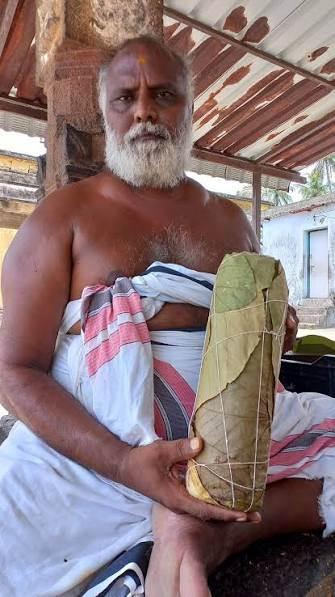
ALT Image Source: GOYA
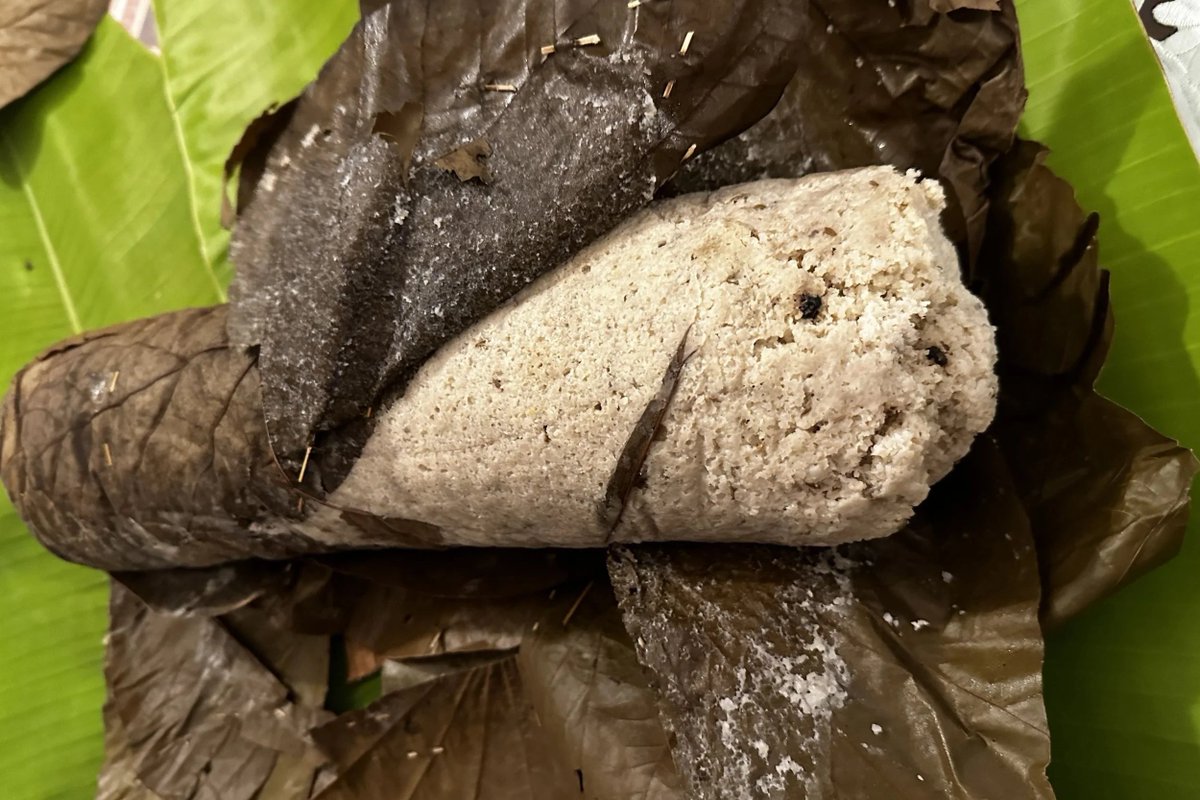
ALT Image Source: GOYA
68
712
2,031
78,133
We miss India only because we’re abroad. I don’t think it’s even a case of grass is greener on the other side. It’s just the food, shopping and temples that we miss usually. Never the life!
Jun 10

Genuine question:
Do Indians who settle abroad ever stop missing India?
Movies often show people feeling nostalgic about home even after decades.
How close is that to reality?
1
35
She shouldn’t be wasting her breath (words in this case) on cæstist kothus. The only neuron chain in their bodies is cæste fueled hate. She should instead be celebrating Vijay’s victory over this group of evils.
Jun 11
‘Gotta be a Brahmin’
‘Tam bram’
Nothing I said had to do with caste and yet every time, it follows the same familiar script!!
204
I’m seeing many insecure tharkuris ever since Annamalai announced his new org that isn’t even a political party yet. They give me the kothu vibes of when Vijay announced TVK
They also forget the same “மற்றும் பலர்” helped Anna become CM so essentially it is TVK மற்றும் சிலர் 😂

Okay, so it's officially confirmed now. The plan of @BJP4India seems very clear, send a bunch of proxies in the name of "revolution" and try to capture Tamil Nadu. What an idea Sir Ji😄
What exactly is the role of people like this guy in Tamil Nadu? Our state is in safe hands under @TVKVijayHQ. We don't need communal forces here.
In @TVKVijayHQ's language: "மற்றும் பலரில் இன்னும் சிலர்." 😂
#BJP #Annamalai #Tamilnadu #TVKVijay
1
71
Kothu kondai ya maranthucchu 😂😂

I have a family friend in my apartment. He is a doctor. He finished his MBBS and is preparing for his PG.
He is a very big fan of Vijay. Voted for him and made his entire family vote for him.
His parents are in business. He drives a super car and no worries in life. His parents spent around 2 crore for his MBBS alone. In my apartment, there are zero chances for a power cut. All the homes will have a minimum of 4 air conditioners.
His mother yesterday came to my home along with him for dinner. Topic went on various ways and landed on vijay.
From my balcony we saw the area opposite us. I live on the 12th floor. Most of the places are dark because of the power cut. His mom literally blasted him for making her vote for TVK.
He even felt bad for his voting.
Many youngsters who didn't' know the pain of life had given us the pain of having this sort of government.
-Arun Khasi
1
2
73
One more!
Someone should sue X’s translate algorithm or whatever nonsense it’s called!
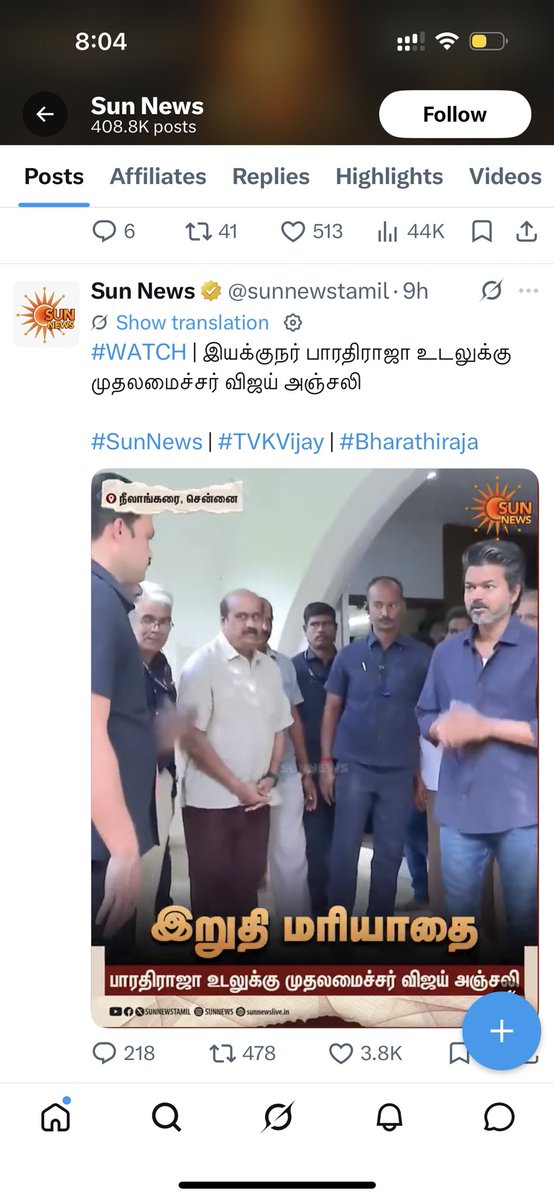

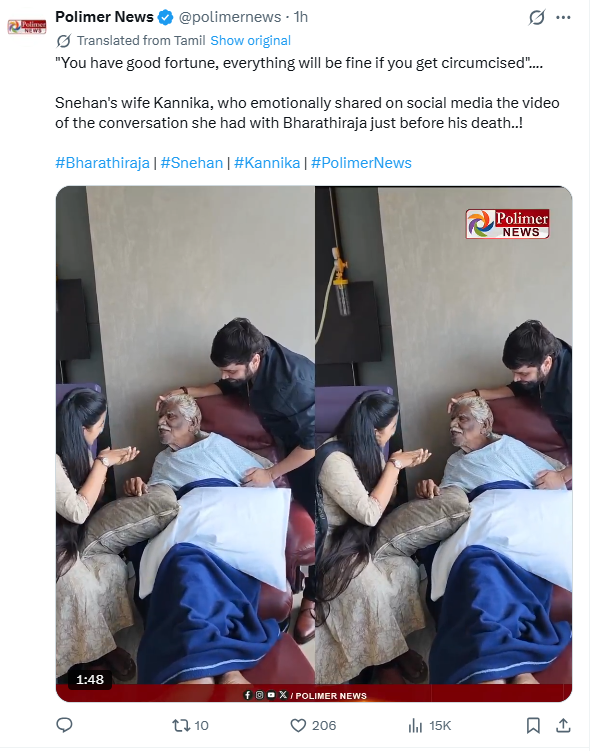
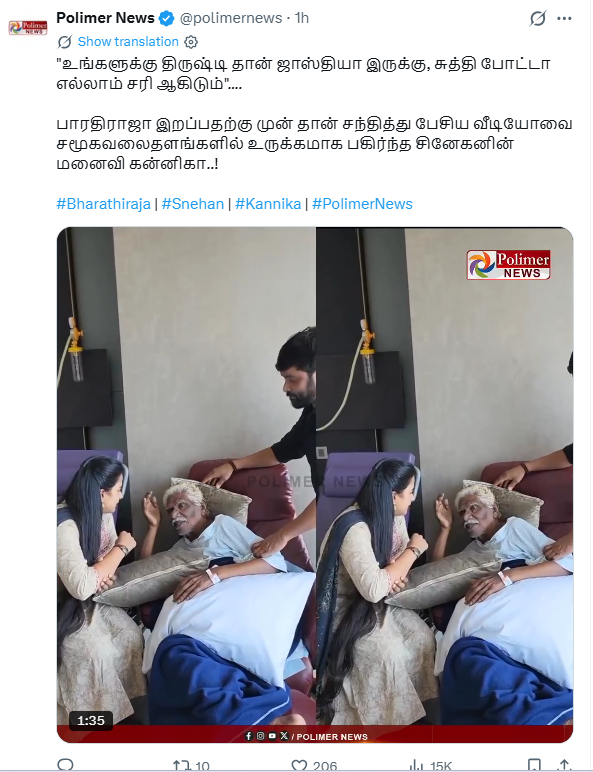
2
112
All pointers pointing to DMK joining the NDA FOR 29. If I may be outrageously atrocious, DMK and ADMKmay even become friends 😫
Jun 10

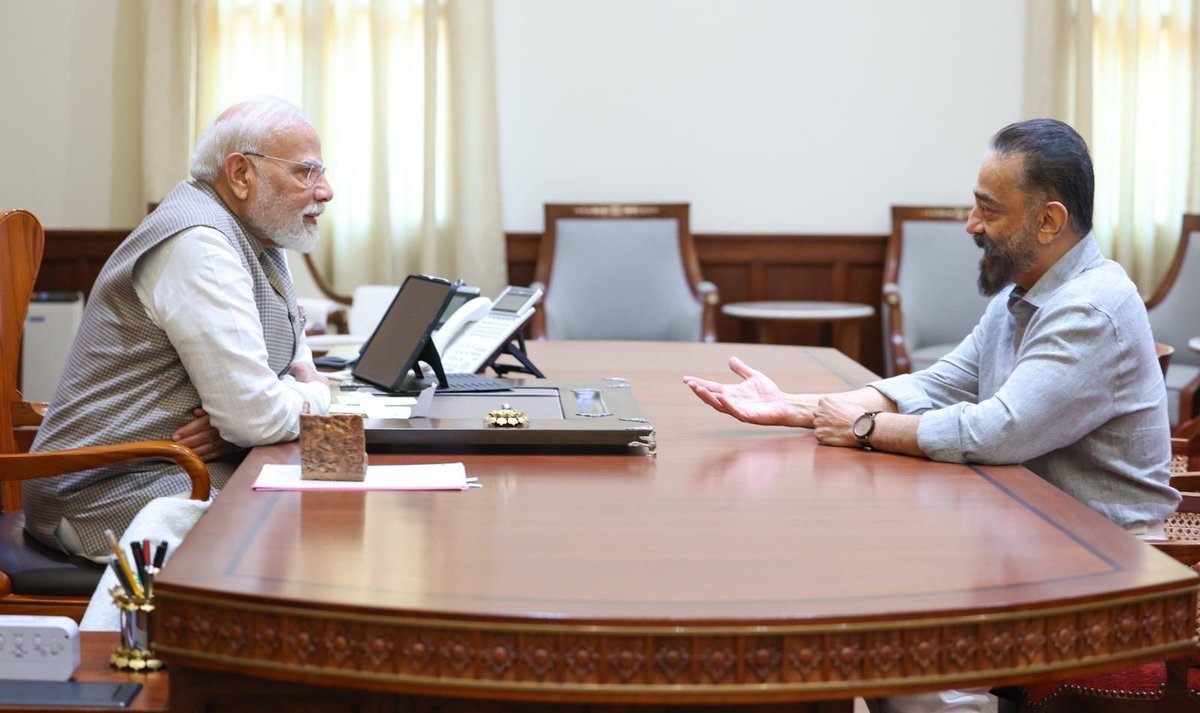
Congratulations to Shri @narendramodi ji on becoming India’s longest continuously serving elected Prime Minister. In a diverse democracy like ours, sustained public trust is a significant feat. May our collective focus remain on India’s progress and the welfare of our fellow citizens.
1
92
College pakkam mazhai kachu othungirukuriya? 😂
If success is measured by how drunk one needs to be to blabber nonsense then you are the most successful 🤣

Im more successful than annamalai in life .
I pay the rent for my home in Chennai - not my friends. And I did not buy 90 crores worth property for 4 crores taking a bank loan . I pay my taxes and have never hidden money from my country .
I’m far better than Annamalai .
1
1
268
Smita Sup retweeted

Polite request to elderly parents:
If you don't want to burden your adult children who are already struggling with their jobs, their EMIs, their financial or relationship issues, then please take care of your own health.
Lifestyle diseases like diabetes, hypertension, cholesterol problems can easily be managed by seeing your doctor regularly and taking medicines daily.
The last thing an already stressed adult child wants is an elderly parent suffering with a heart attack or stroke due to inadequate control of their diabetes or raised BP.
Diabetes and BP complications are easily preventable.
In your good health, lies the happiness of your child. One less burden for them.
#Elderlycare
51
64
515
43,467
Annamalai ku Modi daddy na Vijay ku SAC daddy.
Without SAC Vijay is not where he is today. I’m old enough to remember how SAC kept propping him up until Poove unakaga happened.
Both Vijay and Annamalai are extremely hardworking. Shove your comparison up somewhere else panda
There is absolutely no match between Annan @TVKVijayHQ and @annamalai_k .
Vijay started a party from scratch , invested his own money , trusted his fans who have become party cadres and won the election with people’s support .
While annamalai used prime minister Modi and Amit Shah for his growth , grew to fame Using BJP and RSS eco system and its hard working cadres , and now trying to project himself as a standalone leader !
Stark difference !
8
7
51
2,665