
Joined November 2009
- Tweets 3,653
- Following 4,889
- Followers 1,569
- Likes 37,263
164 Photos and videos



Pinned Tweet

10 Dec 2024
5
11
27
3,045
Steven T. Cramer #dotnet retweeted

Jun 13
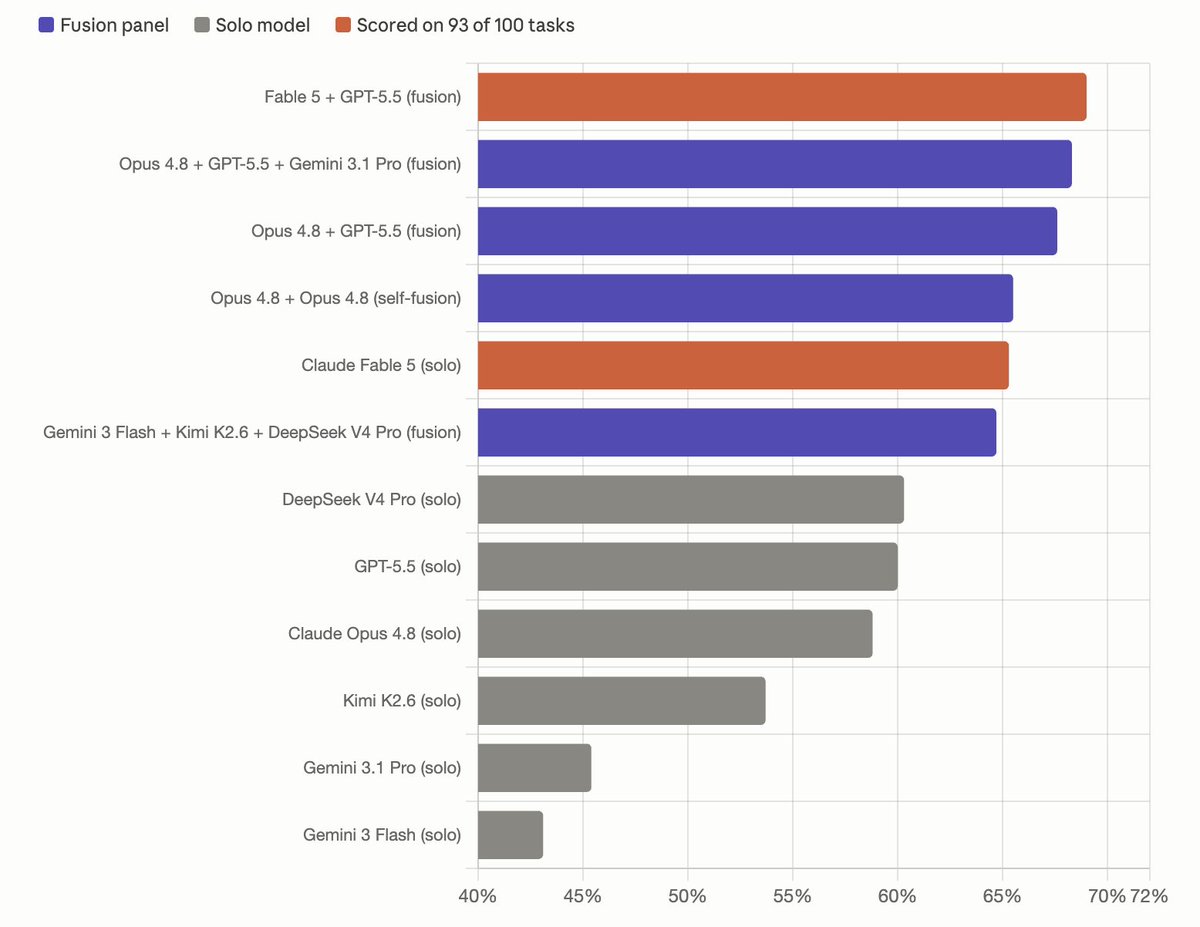
Introducing the Fusion API, the smartest compound model in the market.
Fusion achieves Fable-level intelligence at half the price.
How it works 👇
596
1,545
13,255
4,900,282
Steven T. Cramer #dotnet retweeted

Jun 13
AGI: Absurd Government Intervention ?
1
2
53
Steven T. Cramer #dotnet retweeted

Jun 12
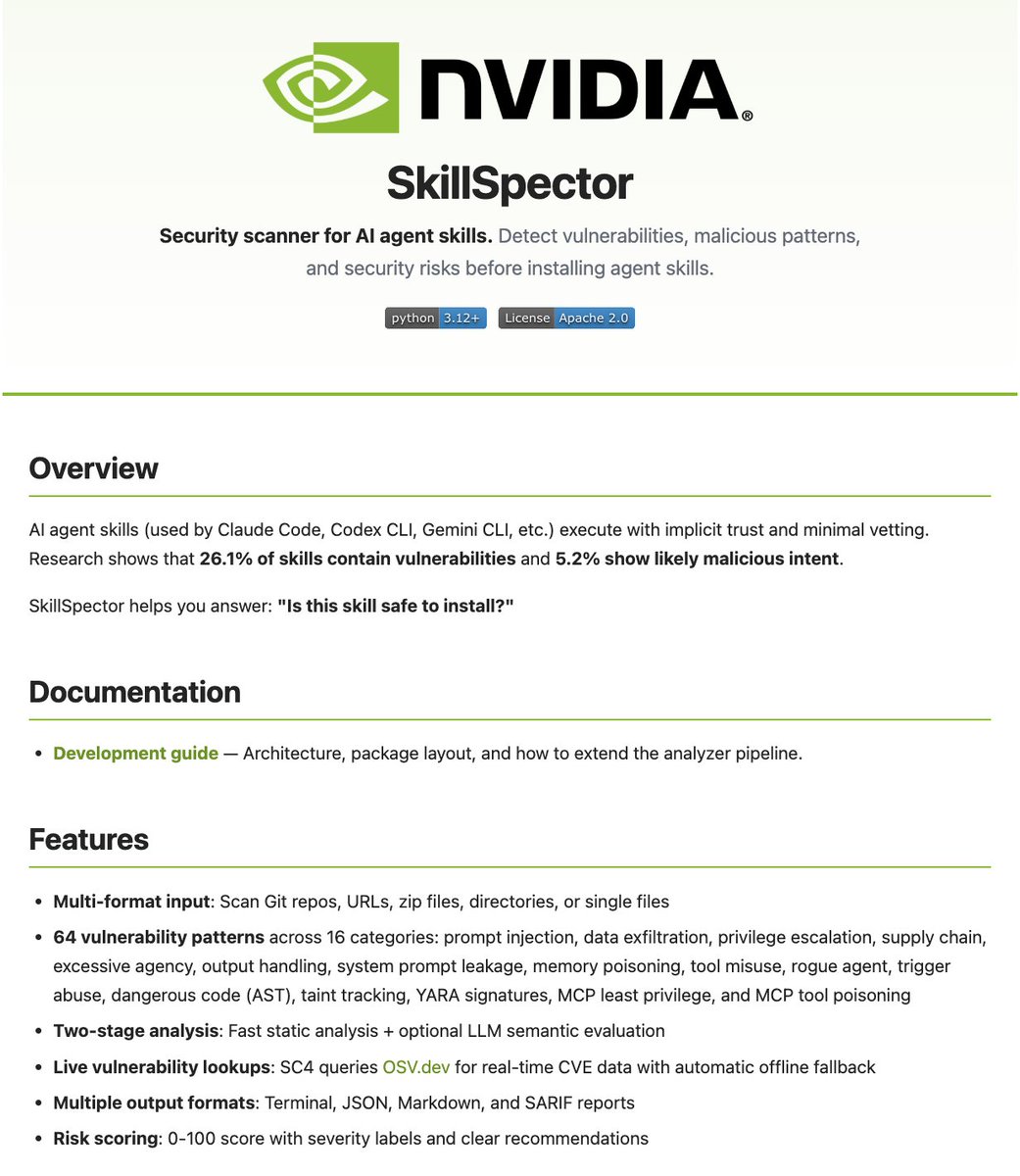
NVIDIA might just have open-sourced one of the most important AI projects right now.
everyone is building skills, and we are also pulling in skills other people wrote and downloading them straight off GitHub.
the skill is not just text. it bundles instructions and real executable code, and your agent runs that code with the same access you have.
so a skill you grabbed to save ten minutes can read your environment variables, lift your API keys, and quietly send them somewhere. recent research found roughly 1 in 4 public skills carry a vulnerability, and a smaller slice are outright malicious.
that is the gap SkillSpector closes. it is a security scanner that answers one question before you install anything: is this skill safe to run.
you point it at a skill, and a local folder, a single skill .md file, a GitHub link, or a zip all work.
it then runs two passes over the code. a fast static pass flags risky patterns like credential harvesting, data leaks, and prompt injection, and checks the dependencies against live cve data.
an optional second pass uses an LLM to read intent and clear out false positives.
at the end you get one risk score from 0 to 100 and a plain verdict that reads as safe, caution, or do not install.
it is open source under Apache 2.0 and scans skills for Claude Code, Codex CLI, and Gemini.
worth a run before you trust the next skill you find online.
link to the GitHub repo: github.com/NVIDIA/SkillSpect…
80
225
1,546
108,238
Steven T. Cramer #dotnet retweeted

Jun 12
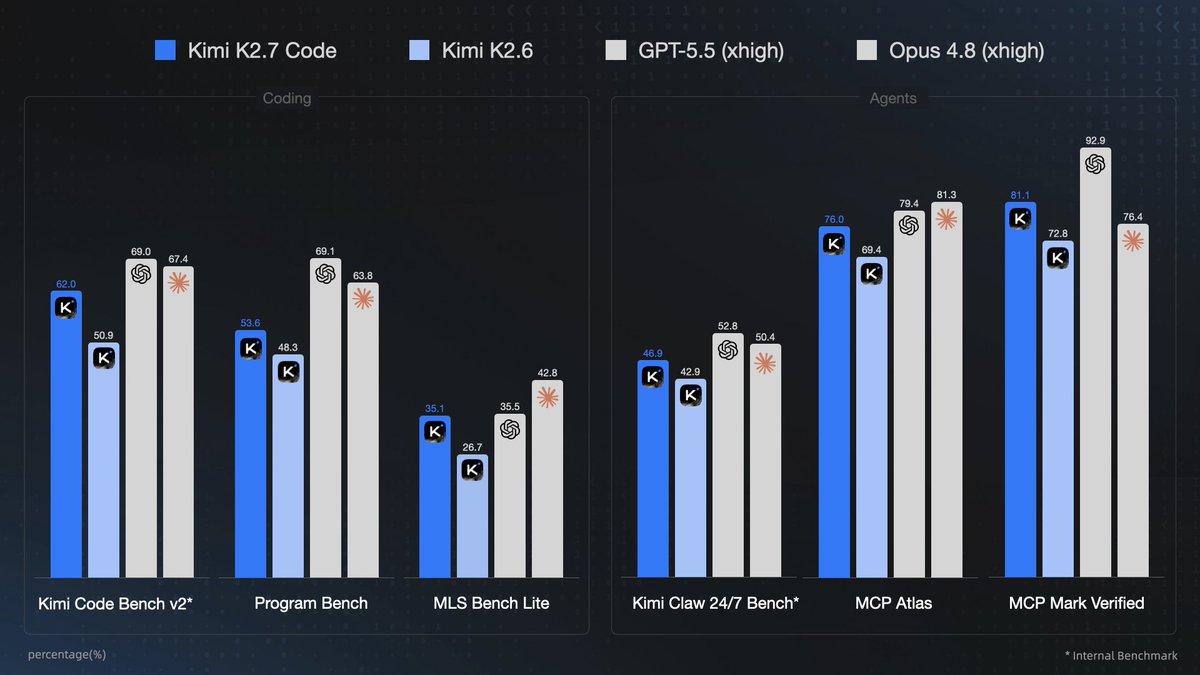
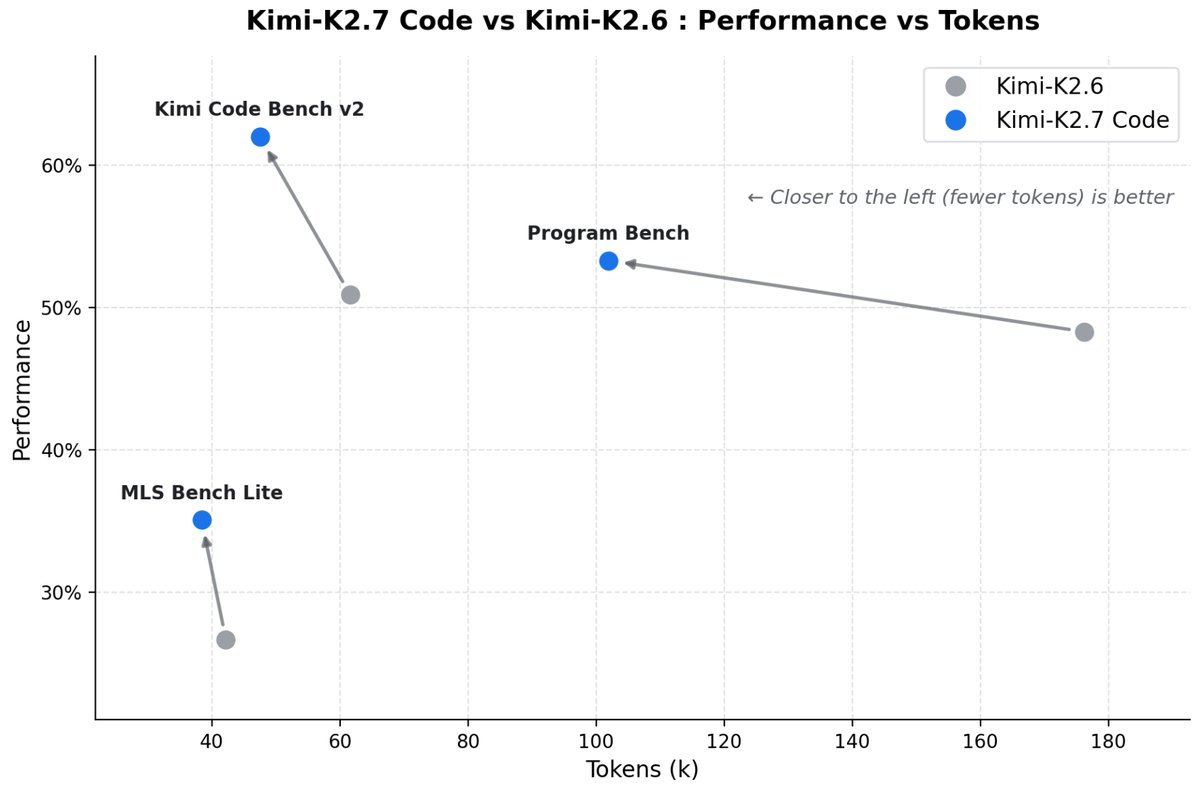
🌘 Kimi-K2.7-Code, our latest coding model, is now released and open-sourced!
🔷 Improved coding & agent performance over K2.6: 21.8% on Kimi Code Bench v2, 11.0% on Program Bench, and 31.5% on MLS Bench Lite.
🔷 Reasoning efficiency: Less overthinking, with 30% lower reasoning-token usage compared to K2.6.
🔷 Long-horizon coding: Improved instruction following, higher end-to-end coding task success rates.
⚡️ 6x High-Speed Mode coming soon!
🔌 Available today via Kimi API and Kimi Code.
🔗 Kimi Code: kimi.com/code
🔗 API: platform.moonshot.ai
615
1,619
13,583
1,952,651
I am gonna check this out now.
github.com/mitchdenny/aspire…

75

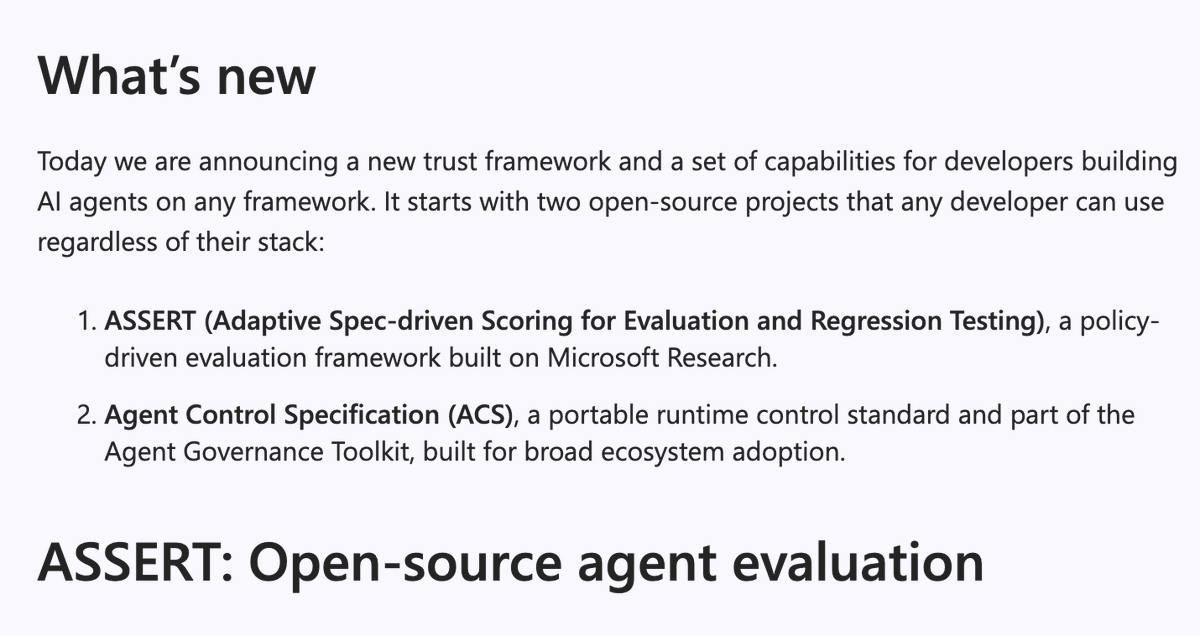
Microsoft announced a bunch of interesting new AI models and tools this week. Model launches alway get lots of attention. But don't sleep on the new ASSERT evals framework that launched today.
I'm on record as arguing that 2026 is the year of evals.
Evals are the glue for all the "jobs to be done" at every level of AI: model training; testing and deciding on what models to use and how to use them; and testing and improving AI agents in production.
Evals unify our work on those different layers of the stack.
These days, when we talk about evals, observability, and testing, we're talking about overlapping parts of a large set of tools we're still early on in figuring out.
As the AI engineering ecosystem matures, diversifies, and increases massively in scale, we really, really need good evaluation (observability, monitoring, testing, data management) frameworks.
I got a chance to test the new Microsoft ASSERT evals framework before it was released, and it has some very nice core ideas.
1) ASSERT is open in two important ways. First, the team is serious about broad support for models, frameworks, and use cases. Microsoft spent time understanding voice agent use cases and building Pipecat support, for example. Second, the code is completely open source, released under an open MIT license.
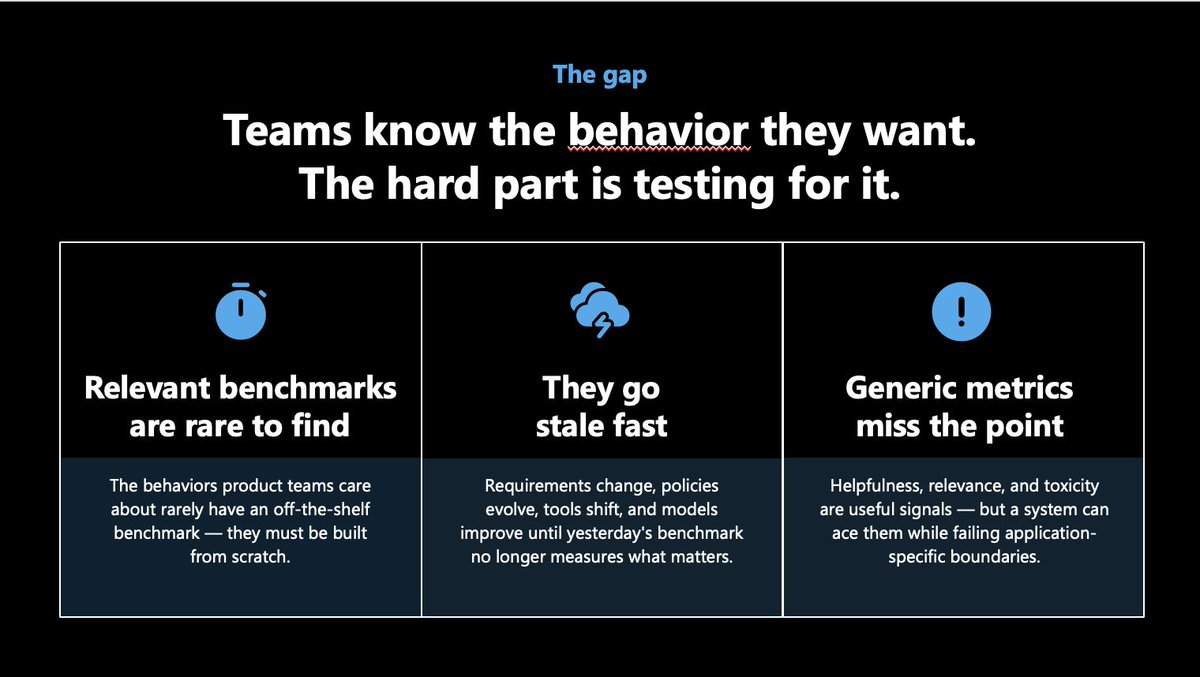
2) We're all working in and with agentic coding tools today. That means we are planning in natural language, and all of our software development and ops tools have to evolve for these new, natural language, workflows. ASSERT takes descriptions of desired agent behavior and generates specifications for the ASSERT suite of tools to run against.
In a world where "English is the programming language," how we actually make natural language "code" precise enough and repeatable enough is perhaps the big unsolved tooling problem that all of us are working towards in different ways. This is true whether we work on coding agents, AI opps tooling, orchestration frameworks, or vertical applications.
3) Microsoft describes ASSERT as a policy-driven framework. Rather than eval against generic performance metrics, ASSERT aims to generate stable but adaptable evaluation criteria for specific agents.
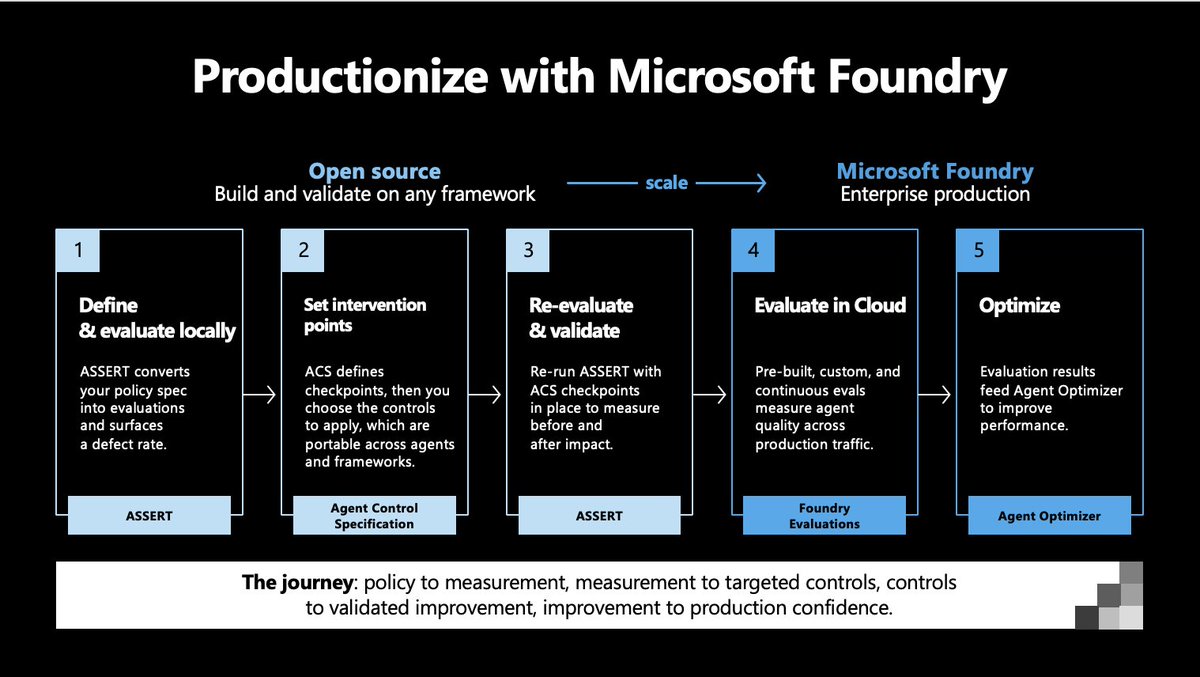
"Policy-driven" also implies a full loop design. Policy (generated from specific requirements) -> evaluation -> optimization -> monitoring in production -> improving the policy description -> evaluation -> ...
4) Enterprise agents need to be evaluated along many dimensions: task completion, individual conversation turn behavior, latency, mode-specific metrics like audio disfluencies, and safety/security. Microsoft designed ASSERT to be used together with a new safety governance toolkit called Agent Control Specification.
5) Finally, ASSERT is integrated into the Microsoft Foundry ecosystem. Today, AI engineering tools have to be open source and vendor neutral to get attention from developers and gain widespread adoption. *And* it's equally important to give enterprise customers tools that work as a coherent stack.
This is hard to do well. There are real tensions between open source development versus engineering a great full stack developer experience. However, if you sweat the details on both ends, you benefit from a full spectrum of feedback about real-world development pain points. It's more work, but it's worth it!
Kudos to Microsoft for embracing this and committing to an open, community oriented approach, plus doing the extra work to build the full stack for enterprise customers.
11
14
61
7,198
Steven T. Cramer #dotnet retweeted

Jun 9
🚨JEFF BEZOS JUST PUT $100 MILLION INTO A STARTUP WITH NO PRODUCT.
Their entire pitch is that the AI industry is doing everything wrong.
And that your brain already solved the problem everyone is burning billions trying to fix.
The whole AI industry is trapped in one brutal equation:
Smarter models need more compute.
More compute needs more power.
Companies are now building dedicated nuclear plants just to run AI data centers.
A single AI server GPU burns over 1,500 watts.
Your brain runs on 20.
Yet your brain is doing something far more complex than answering a chat prompt. It's learning, reasoning, controlling your body, and processing everything you see and hear on less power than a light bulb.
A startup called Flourish just raised $500 million at a $2.5 billion valuation to exploit that gap.
Their thesis is simple but radical:
The AI industry is optimizing at the wrong layer.
Everyone is racing to build more powerful chips. Flourish says the real problem isn't the hardware. It's the architecture.
Today's AI models activate enormous portions of their networks for almost every task.
Your brain doesn't.
It's sparse. Only the neurons needed for a task light up. Everything else stays quiet, consuming almost no energy.
Flourish wants to copy that.
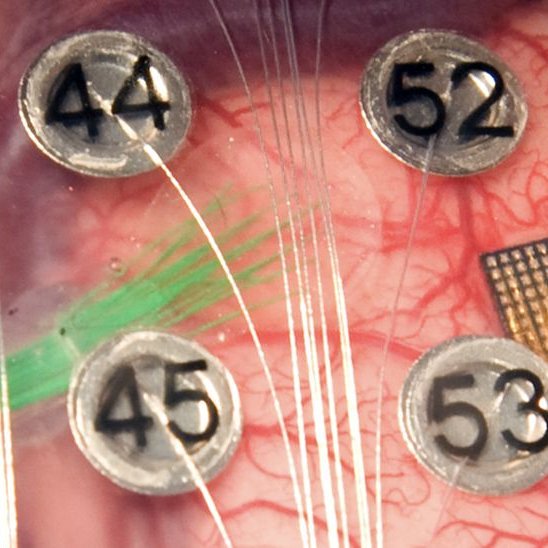
Their approach comes from a field called connectomics: mapping biological brains neuron by neuron to understand how intelligence actually works.
In 2024, scientists fully mapped a fruit fly brain.
And here's the punchline:
That tiny brain appears dramatically more efficient than modern AI systems performing similar tasks.
Flourish wants to extract that efficiency and turn it into software.
The man leading the effort has one of the strangest résumés in tech.
Thomas Reardon created Internet Explorer at Microsoft.
Then he left software, earned a PhD in computational neuroscience, built a brain-computer interface company, and sold it to Meta for up to $1 billion.
Now he's trying to reverse-engineer the core algorithm of human intelligence itself.
If it works, the implications are staggering.
Advanced AI could run locally on laptops and phones instead of massive data centers.
The energy requirements of AI could collapse.
And the $30,000 GPUs the industry depends on today could become optional.
For 70 years, we've built computers that think nothing like brains.
Flourish is betting the answer was sitting inside our skulls the whole time.

68
115
447
52,475
Steven T. Cramer #dotnet retweeted
Jun 8
Don't loop your agents. Use map/reduce/filter instead.
18
10
229
25,919
Steven T. Cramer #dotnet retweeted

Jun 7
I’m now thinking we should build browser 2.0, not just “catch up”
May 15

I mean how hard could it be to build a browser from scratch in c#, it's not rocket surgery
2
1
13
1,374
Steven T. Cramer #dotnet retweeted

Should you use the Repository pattern when using EF Core?
Most likely, yes.
#efcore #csharp
peterlesliemorris.com/why-th…
2
2
7
345

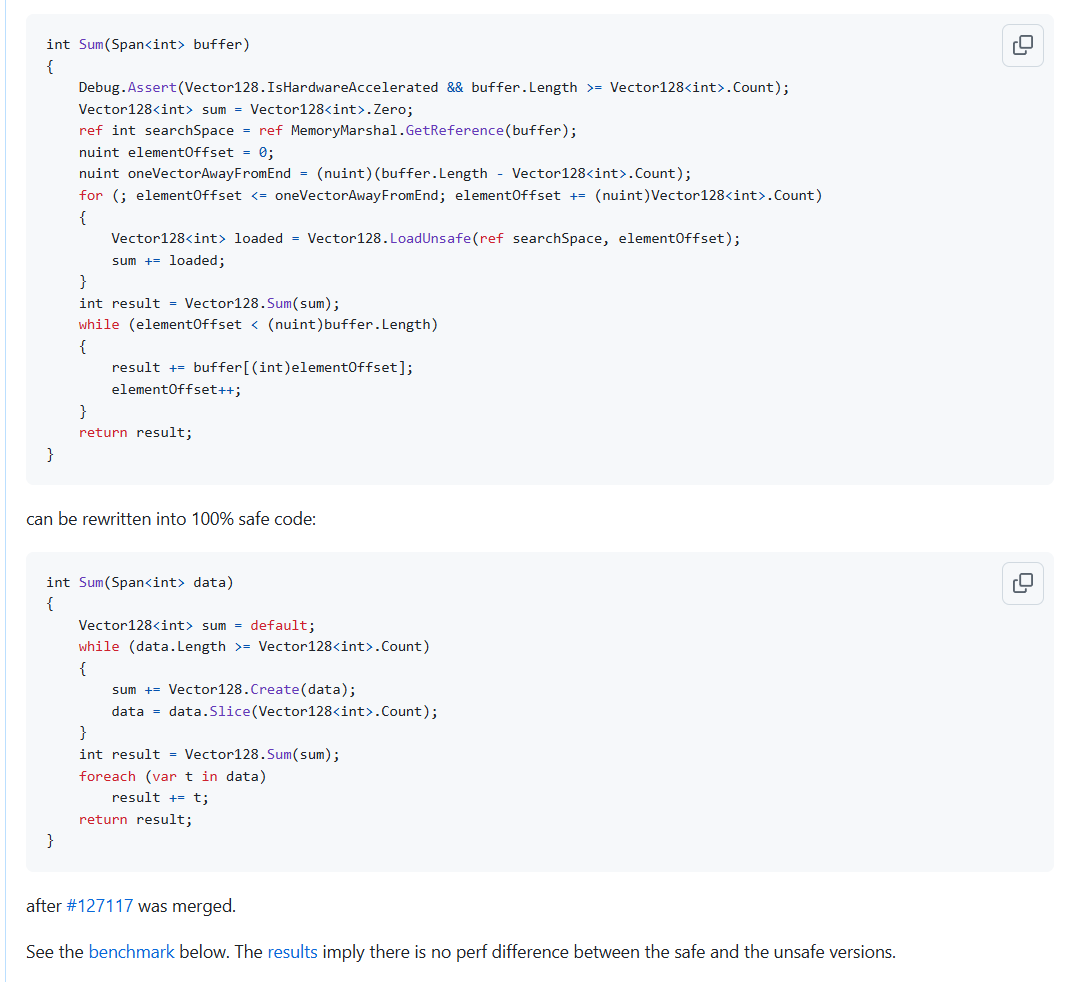
in .NET 11.0 we've landed many changes in JIT (applies to NAOT too) to optimize redundant bound checks to make safe code as fast as unsafe (can be tracked via reduce-unsafe label github.com/dotnet/runtime/pu…). Example: github.com/EgorBot/Benchmark…
3
21
184
12,066
It's a bird, it's a plane, it's Cody on Starling. Keep going man this way cool.
Jun 4
Yeahhhh! I got Blazor WASM to render inside the native shell for Starling, using the Starling Engine, with interactivity. This opens up an array of exciting options. I'm stoked!
2
115
Maybe Neuralink tomorrow but BlinkTalk is free today.

Yesterday I released BlinkTalk. A single-switch alternative communication app for people with Locked-In Syndrome.
It helps them talk by blinking/looking-up/etc (indicating).
Works on Windows, Mac, Android, iOS.
I need to write installers.
github.com/mrpmorris/blinkta…
#disability

1
59
The Aspire team just keeps crankin out good stuff.
May 28
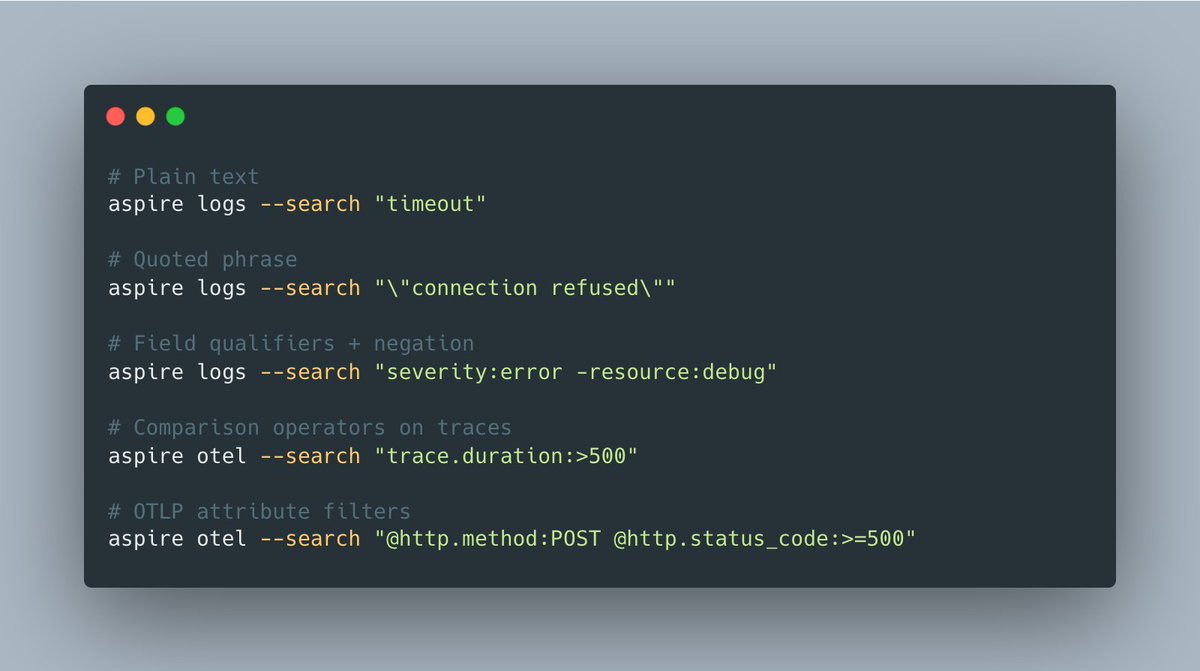
Sneak peak of what's coming with @aspiredotdev 13.4:
aspire logs and aspire otel just got a major upgrade. Server-side search across logs and traces. No more client-side grep over a wall of output. Massively token-efficient for coding agents.
#aspiredev
1
282
I really love the can do spirit of this project.
May 27
Making more progress on Starling! Learning about WPT has been interesting and starting to work towards passing that. Last I checked we're at about 25%...we'll get there!
Improved some of the MCP tooling built-in for a quicker dev loop, it can expose it's own OTEL traces now. We're also up to 99.8% .NET 😎
3
143
Steven T. Cramer #dotnet retweeted

May 22
Website: codealta.github.io/
GitHub: github.com/CodeAlta/CodeAlta
Installing it simply requires .NET 10 installed and `dotnet tool install -g CodeAlta`
Enjoy!
2
9
39
2,694
Steven T. Cramer #dotnet retweeted

May 22
Go slow to go fast. Invest into infrastructure and developer experience. It’ll make your team more productive and happy in the long run.
14
22
262
12,168
Steven T. Cramer #dotnet retweeted
May 20
See that crisp text?
Yeah. That's right.
Thanks to @James_M_South on our first PR to Starling, improving the perf of text rendering and making it even more crisp!
1
1
20
1,277
Steven T. Cramer #dotnet retweeted

May 20
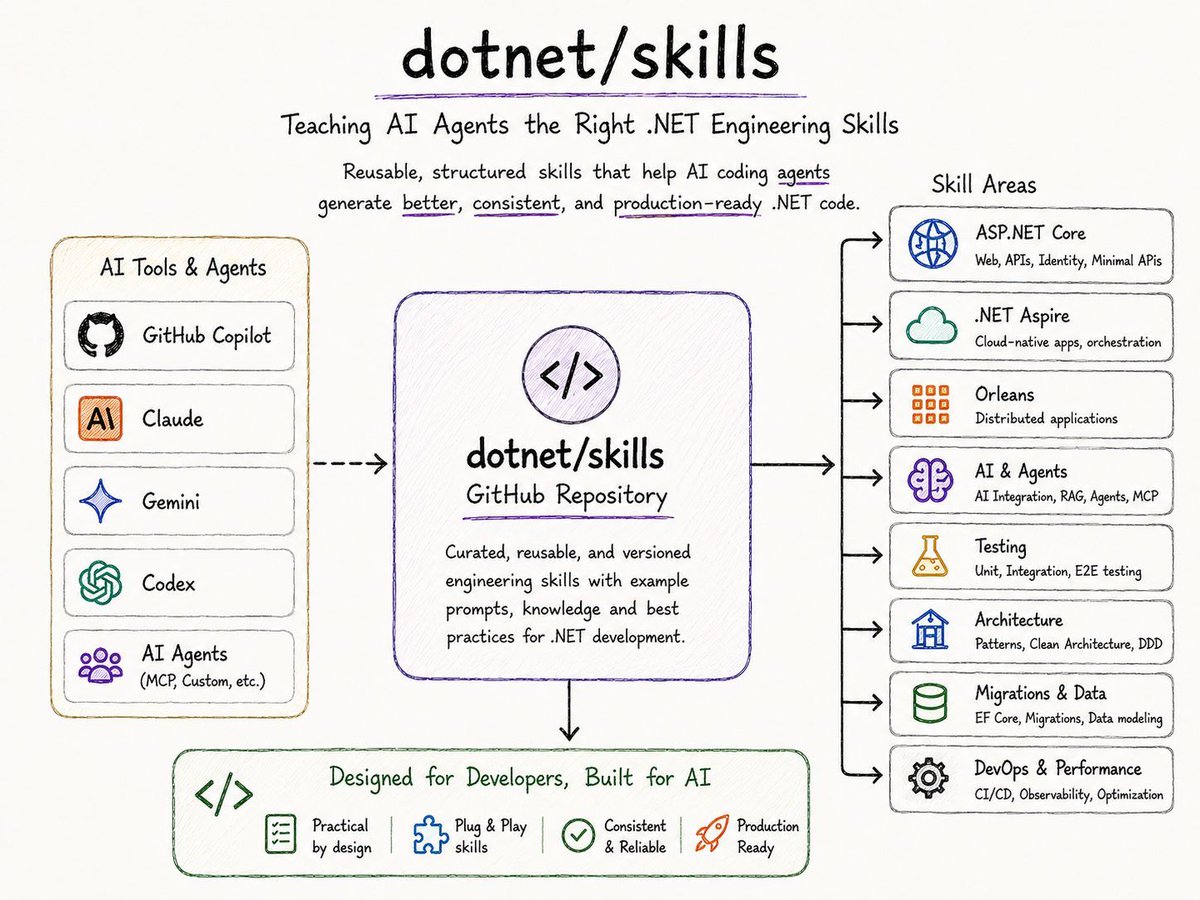
🚨 Microsoft just open-sourced something every .NET developer using AI tools should pay attention to.
The dotnet/skills repo went public on GitHub. It's a curated set of reusable engineering skills that AI coding agents (Copilot, Claude, Gemini, Codex) can load on demand to write better, more consistent .NET code.
I've been running my own skills setup for months. Custom CLAUDEmd files, project-specific commands, repeatable workflows for writing, reviewing, and refactoring code. It works really well. But it's mine. Nobody else on the team gets to use it.
That's what changes now.
𝗪𝗵𝗮𝘁'𝘀 𝗮𝗰𝘁𝘂𝗮𝗹𝗹𝘆 𝗶𝗻 𝗶𝘁:
• Skills for aspnetcore, Aspire, Orleans
• AI Agents patterns
• Testing, Architecture, Migrations
• Works with any agentic AI tool, not just Copilot
𝗪𝗵𝘆 𝘁𝗵𝗶𝘀 𝗺𝗮𝘁𝘁𝗲𝗿𝘀:
Most AI prompts in .NET projects get written from scratch every single time. Same context, same examples, same patterns. Typed into the chat over and over.
Skills flip that. The knowledge lives in the repo, the agent loads what it needs, and your code stays consistent across the team. No more "perfect prompt" trials.
This is the same approach that has been quietly winning in the Claude Code and Cursor communities. Microsoft is now making it native to the .NET ecosystem.
If you ship .NET code with AI in the loop, this becomes the foundation you build on top of.
Repo linked in the comments.
6
46
267
17,231
Steven T. Cramer #dotnet retweeted
May 19
even more websites load now! ... sort of! fully managed .NET, with ImageSharp (WebGPU) for the rendering engine h/t @James_M_South
6
7
85
5,923