
Renowned wearer of interesting Ties and Waistcoats
Joined August 2009
- Tweets 160,459
- Following 4,503
- Followers 1,313
- Likes 122,668
4,023 Photos and videos










Murray Lynes #NHSLove ⚫️ 🍌🧔🏻 🇪🇺 🥄 🐟 retweeted

17 Mar 2025
It's encouraging that a growing number of MPs are waking up to reality. Not only would cutting welfare support for our most vulnerable people be cruel and indefensible, there is a clear alternative: a wealth tax theguardian.com/politics/liv…
350
722
2,064
90,985
Murray Lynes #NHSLove ⚫️ 🍌🧔🏻 🇪🇺 🥄 🐟 retweeted

17 Mar 2025
In Luxembourg the average state pension for 40 years of contributions is nearly 4x higher than in the U.K.
Far from being unaffordable the UK State pension is a joke, what is unaffordable is the tax evasion which leaves us with so little money to spend.
34
687
1,926
38,765
Murray Lynes #NHSLove ⚫️ 🍌🧔🏻 🇪🇺 🥄 🐟 retweeted

17 Mar 2025
Really welcome news! And with 1% population owning half of England, this could be an important step towards distributing land more fairly
12 Mar 2025

'Who owns land is one of our oldest and darkest secrets... so I'm excited that the government have announced plans to open up the Land Registry'
Was great to speak with @mrjamesob yesterday about uncovering who owns England:
youtube.com/watch?v=gqS5OMVC… (1hr 25mins in, 11.50-12noon)
210
434
1,564
125,305
Murray Lynes #NHSLove ⚫️ 🍌🧔🏻 🇪🇺 🥄 🐟 retweeted

17 Mar 2025
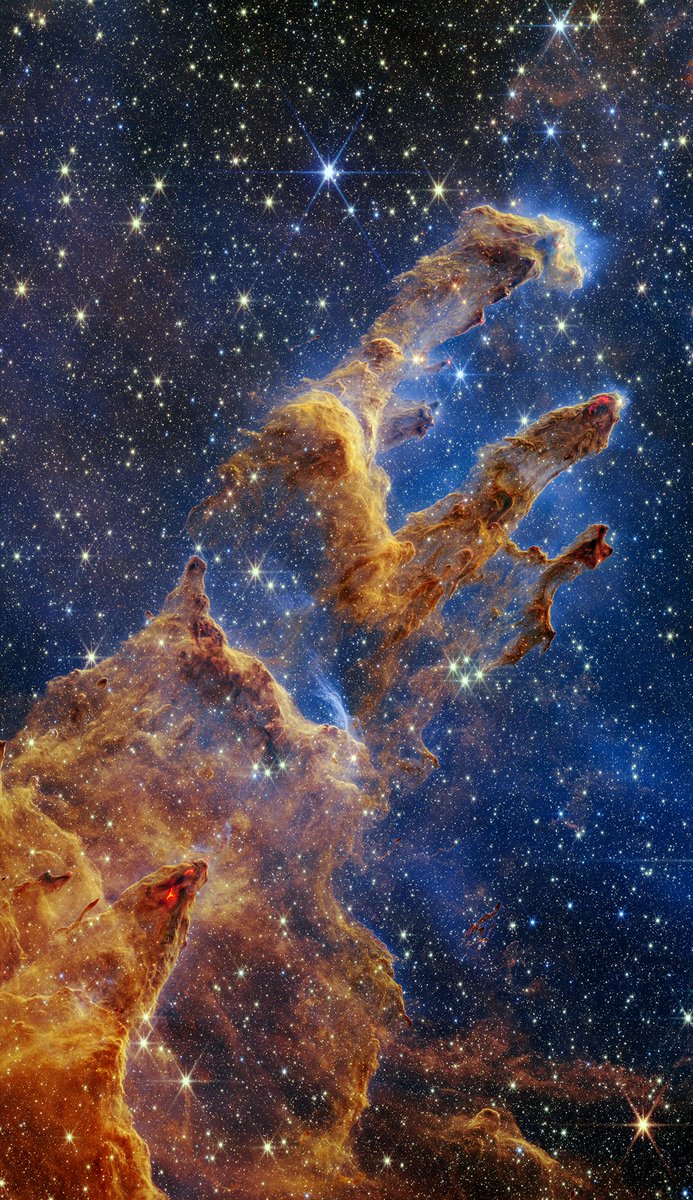
JWST the best image of Pillars of Creation
30
288
2,402
49,552
Murray Lynes #NHSLove ⚫️ 🍌🧔🏻 🇪🇺 🥄 🐟 retweeted

17 Mar 2025
BBC: "Donald Trump says he and Vladimir Putin will discuss "land", "power plants" and "dividing up certain assets".
Whose assets?
395
782
4,781
153,559
Murray Lynes #NHSLove ⚫️ 🍌🧔🏻 🇪🇺 🥄 🐟 retweeted

17 Mar 2025
Doloresaurus is a LED illuminated dinosaur costume equiped with a sound system that was built by Trevor Mead in San Francisco
117
389
2,820
205,053
Murray Lynes #NHSLove ⚫️ 🍌🧔🏻 🇪🇺 🥄 🐟 retweeted

17 Mar 2025
I have a newsfeed saying ‘crackdown’ on disability claimants. Have you ever seen a newsflash on a ‘crackdown’ on super rich tax havens and non-payment?
231
3,057
11,607
189,233
Murray Lynes #NHSLove ⚫️ 🍌🧔🏻 🇪🇺 🥄 🐟 retweeted

17 Mar 2025
The government says it wants to make significant savings on welfare payments to the disabled and help the disabled into work.
The point, say all ministers - led Sir Keir Starmer - is not to harm the disabled, but to free them from a life of dependency.
That, they claim, is why this is a truly “Labour” reform — and not just brutal cuts engineered by Rachel Reeves because she needs billions in savings so as not to breach arbitrary, self-imposed fiscal rules on the assessment date of 26 March.
Is any of this plausible?
The first thing to say is the point of fiscal rules should be to help focus minds in government about how best to share scarce resources between different important resources. They should not set hard deadlines for making decisions with potentially profound consequences for the lives of millions of people.
We’ve already seen an example of the political dangers of trying to rush through changes to personal independence payments (PIP) and the health related elements of universal credit - because one element that was particularly upsetting to Labour MPs has already been dropped, namely a one year freeze on PIP payments.
But as my colleague Anushka Asthana has been exclusively disclosing for the last ten days, this was only one part of the welfare reform package.
The other elements were to restrict entitlement to personal independence payments, while cutting the health-related universal credit payments and recycling those UC savings into an increase in the standard rate of UC.
You can see in this the simple story and perhaps simplistic story about welfare payments to the disabled that the government believes and is trying to tell.
First, that hundreds of thousands of people receive cash to help with their living and mobility costs, but don’t “deserve” it.
Second, that the structure of UC payments provides too great an incentive to disabled people to sign themselves off work to get the health-related benefits top up.
Starmer will doubtless take comfort from the fact that - according to polling by the Good Growth Foundation - 60% believe the system provides too much support to people who don’t want to work and 39% think that it’s too easy for people to get benefits who don’t need them.
But popular belief does not make it true.
And before going further into the nitty gritty, it is worth doing a quick economic reality check.
It is a fact that the proportion of British people in employment has fallen since Covid and, unlike many other rich economies, has not recovered to 2019 levels. But the proportion of British people who are working remains high by international standards.
According to the OECD, in the third quarter of 2023 the UK ranked fifth in the world, with an employment rate of 74.9%, well ahead of the US for example, and behind only Iceland, the Netherlands, Japan and Germany.
Even if it is a laudible ambition to encourage more people into work. The UK’s is not an economy whose failure is that too few people are working.
The grotesque failure of the British economy is hardly a mystery. It is that living standards for those in work have barely increased for more than 15 years and too many of those in work receive too little to pay even for food, energy and other essentials.
Pretty much every competitor country whose employment rate has recovered to pre-covid levels has higher productivity and higher wages than the UK. Which might tell you that Britain’s problem is not that its benefit system is skewiff but that it’s the labour market itself that is broken, that remunerated toil in Britain delivers inadequate incentives.
And by the way, we don’t have a benefit system in the UK that is remotely generous or lavish by international standards. 1/2
241
514
1,300
322,307
Murray Lynes #NHSLove ⚫️ 🍌🧔🏻 🇪🇺 🥄 🐟 retweeted

17 Mar 2025
To everyone losing their shit about #Motability, it's a car leasing scheme. No one gets a free car. We borrow it, with a weekly payment of £75 with a nonrefundable deposit which can be £1000s.
The cars go back to Motability after 3 years & they sell them 2nd hand.
644
1,126
7,083
816,580
Murray Lynes #NHSLove ⚫️ 🍌🧔🏻 🇪🇺 🥄 🐟 retweeted

17 Mar 2025
Well, this is embarrassing.
Marjorie Taylor Greene tries to push Russian propaganda about Ukrainian nazis, and is completely shut down by Holocaust Historian and the Leading Scholar on Ukrainian Nationalism in America, Dr. Snyder.
2,383
17,319
98,185
3,659,035
Murray Lynes #NHSLove ⚫️ 🍌🧔🏻 🇪🇺 🥄 🐟 retweeted

17 Mar 2025
Karoline Leavitt, you delusional Trump-worshipping mouthpiece! “He is now the chairman of the board of the Kennedy Center,” you squeal, as if Donald Trump, that orange-hued huckster of tacky casinos and Big Mac brags, has any business near a cultured institution. “Where he hopes to restore arts and culture that embrace American tradition, don’t disparage it,” you bleat, like he’s some chiseled defender of patriotism instead of a guy who’d slap his name on a velvet Elvis painting and call it class. What’s his big plan? Swap ballet for beauty pageants and declare “Yuge Art” the new American tradition?
“Unfortunately seen over the past several years,” you whine, as if the Kennedy Center’s been pumping out anti-flag manifestos instead of celebrating actual talent. Trump “restoring” culture is like a bull restoring a china shop. One snort and it’s all glitter-dusted rubble. You’re out here simping for a man who thinks art’s a tax write-off, not a legacy. Keep gargling that Kool-Aid, you tone-deaf toady. The only tradition he’s embracing is self-aggrandizement, and you’re too dim to see the curtain’s already dropped!
38
201
1,765
34,629
Murray Lynes #NHSLove ⚫️ 🍌🧔🏻 🇪🇺 🥄 🐟 retweeted

17 Mar 2025
FUCK Labour saying people are being overly diagnosed with mental health issues. Seriously NHS is destroyed, more poverty breaking families, HATRED being forced down our throats, internet isolating and a constant threat to our children. BUT we’re being over diagnosed?? Get FUCKED.
39
28
135
3,436
Murray Lynes #NHSLove ⚫️ 🍌🧔🏻 🇪🇺 🥄 🐟 retweeted

17 Mar 2025
I wrote a comment to the @BigIssue about #DisabilityBenefits and it was published here
Thank you for sharing
So many others are also in the same position which is sad but reassuring in a weird way
We will fight this
bigissue.com/opinion/disable…
3
29
85
2,375
Murray Lynes #NHSLove ⚫️ 🍌🧔🏻 🇪🇺 🥄 🐟 retweeted

17 Mar 2025
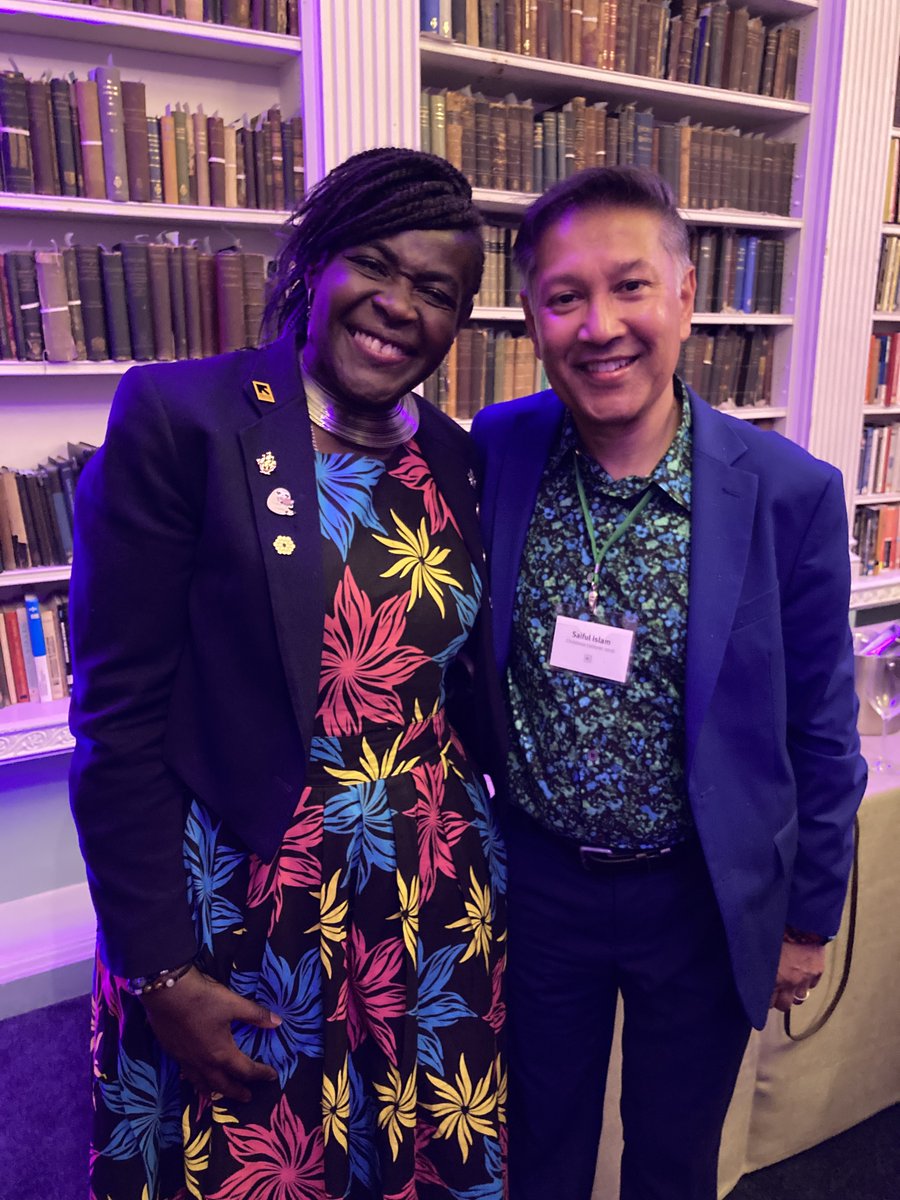
Fantastic news that Dr Maggie Aderin-Pocock will be presenting the 2025 @Ri_Science #XmasLectures about outer space & the scientific wonders beyond planet Earth. (Lovely to meet her before this news.)
Info rigb.org/christmas-lectures
cc @theAliceRoberts @sophiescott @DoctorChrisVT
2
11
71
6,458
Murray Lynes #NHSLove ⚫️ 🍌🧔🏻 🇪🇺 🥄 🐟 retweeted

17 Mar 2025
Great news: we're making Michael Faraday's notebooks available online ✍️
These writings are little known to the public, and shed light on the great natural philosopher's mind. theguardian.com/science/2025…
3
24
89
12,532
Murray Lynes #NHSLove ⚫️ 🍌🧔🏻 🇪🇺 🥄 🐟 retweeted

17 Mar 2025
A smile for your timeline.. 😊
206
3,150
42,324
913,572

Thames Water paid its shareholders £230 for every hour it dumped sewage.
And it dumped sewage for nearly 200,000 hours in 2023.
Every penny that goes to shareholders and creditors is money NOT stopping THIS 👇👇👇
Read more at: weownit.org.uk/privatisation…
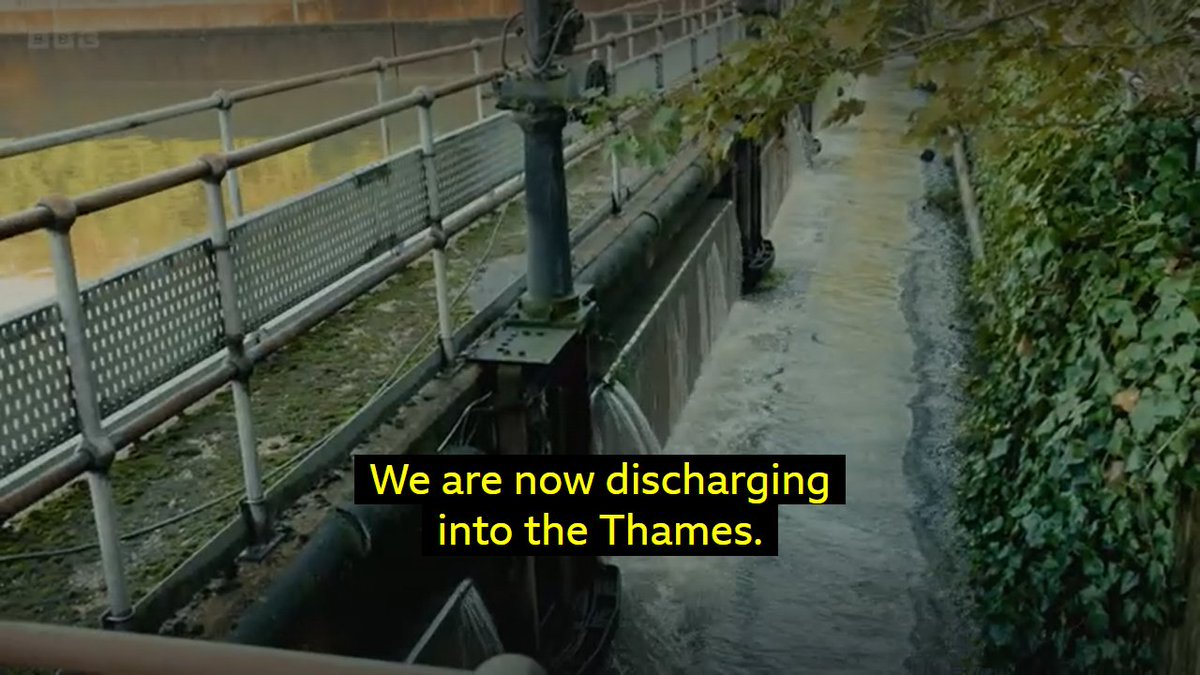
ALT We are now discharing into the Thames.
5
240
358
6,049
Murray Lynes #NHSLove ⚫️ 🍌🧔🏻 🇪🇺 🥄 🐟 retweeted
17 Mar 2025
Very, very easy to introduce a Wealth Tax in the UK, the largest 200 companies get £80bn a year in tax breaks, Amazon gets nearly £3bn by themselves.
Simply make them pay the £80bn, guess who owns more then 90% of them?
The richest 1%.
192
1,419
4,136
100,709
Murray Lynes #NHSLove ⚫️ 🍌🧔🏻 🇪🇺 🥄 🐟 retweeted

17 Mar 2025
Looking to save money from the #benefits system for (#PIP & #LCWRA)? Here's a novel suggestion - stop dragging people with incurable, progressive conditions (& amputees) for reassessments every couple of years. I've got progressive MS, there's no cure, y'know?
47
240
1,175
24,077
Murray Lynes #NHSLove ⚫️ 🍌🧔🏻 🇪🇺 🥄 🐟 retweeted
17 Mar 2025
This is Trump's America!
Canadian ‘American Pie’ actress Jasmine Mooney was literally detained by Donald Trump’s ICE agents at the US-Mexico border and jailed for 12 days. And she's confused as to why.
She was forced to sleep on concrete floors and said that she felt like she was being kidnapped.
ICE Agents simply said that she was treated in accordance with how the Trump administration would like.
She was detained by ICE at the border when she attempted to renew her visa. According to Mooney, after returning home from Los Angeles, she discovered her visa had been revoked, preventing her from boarding a flight. To resolve the issue, she went directly to the border seeking a renewal. However, ICE agents detained her, alleging she lacked proper documentation to legally stay in the U.S. They then put her in jail cells for 12 days.
2,051
7,062
30,119
3,666,274