
Joined August 2019
- Tweets 1,137
- Following 209
- Followers 139
- Likes 2,379
31 Photos and videos

Tomasz Jetka retweeted

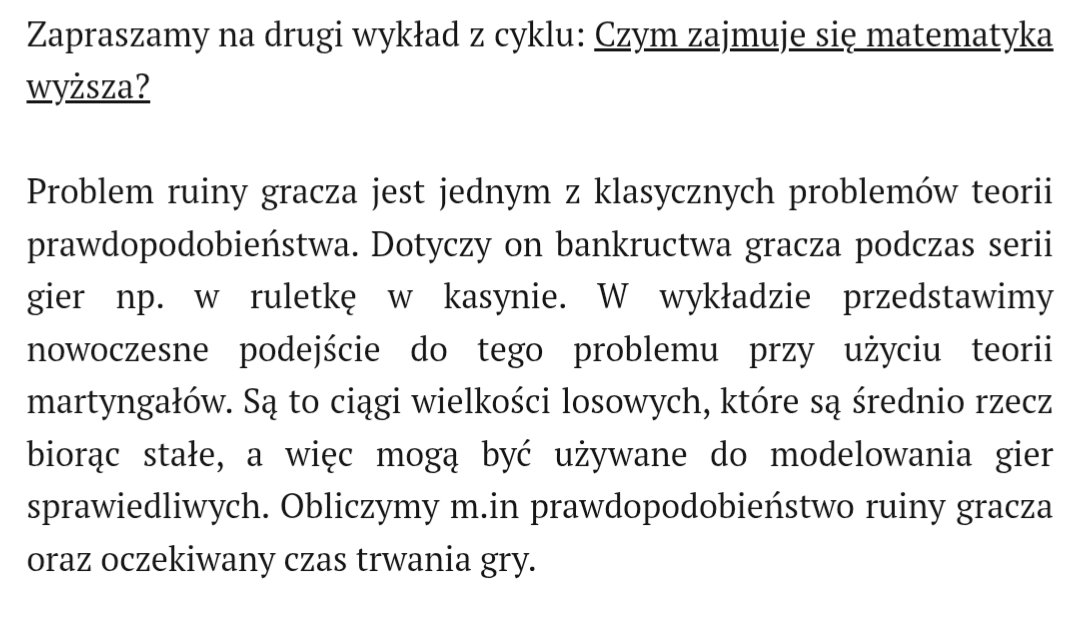
Hundreds of papers by dozens of labs have presented incorrect data by using the wrong antibody to analyze the critical tumor suppressor and cell cycle regulator usually referred to as “p16”.
forbetterscience.com/2026/06…
1
5
21
1,639

Jun 3
I am proud and I feel the weight of it.
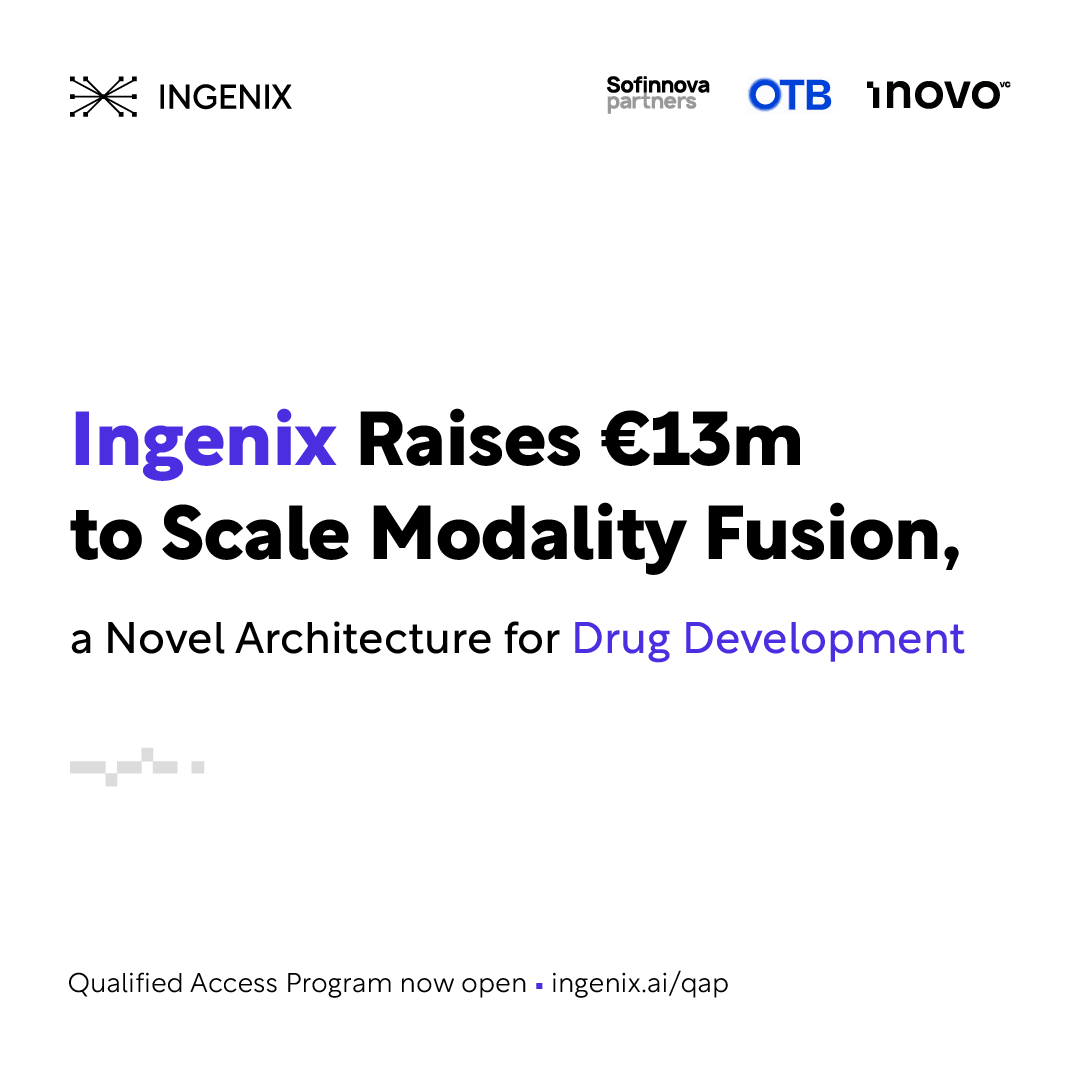
Our Seed round, led by @SofinnovaVC, is first of all a responsibility to deliver. We're taking a step with our Modality Fusion.
QAP is open → ingenix.ai/qap - we'd like to hear your questions.
#ModalityFusion #AI #DrugDevelopment
1
3
184
Jun 3
2
35
Tomasz Jetka retweeted

Jun 3
Czas szybko mija. Już niedługo minie rok, odkąd dołączyłem do Ingenix. To był rok pełen nauki, ambitnych wyzwań i pracy nad technologią, która może realnie zmienić sposób, w jaki wykorzystujemy AI w biologii i rozwoju leków. Mam wrażenie, że moje AI jest teraz zdecydowanie dojrzalsze i bardziej zaawansowane.
Dziś mamy szczególny dzień - ogłoszenie Series Seed oraz uruchomienie Qualified Access Program.
Super, że mogę budować rozwiązania z zakresu Modality Fusion i Biological Reasoning Engine. To całkowicie nowe podejście do rozumienia złożonych danych biologicznych. Budujemy model świata biologii.
#Ingenix #ModalityFusion #AI #DrugDevelopment #Biology
7
3
38
2,214

"I think what tech people misunderstand is just the size of the TAM in pharma."
@zebulgar says capital will rotate into pharma after AGI:
"Anthropic is at what, a $60B run rate? Keytruda, the drug that Merck did in 2019, that one drug's topline is $25B in revenue. Just that one drug."
"By the way, once there's AGI, what do you think everybody's going to be focused on afterwards? Everybody's just going to want to live forever. Where do you think the capital is going to rotate into? It's going to rotate into longevity, therapeutics, and manufacturing."
41
120
1,138
393,437
Apr 27
Rok temu to @KinasRemek jeszcze nie widział na oczy jednego datasetu RNA-seq'ow, a tu @iclr_conf. Ale to nadal przedbiegi. Prawdziwa biologia przed nami :).
Dzięki!
Apr 27

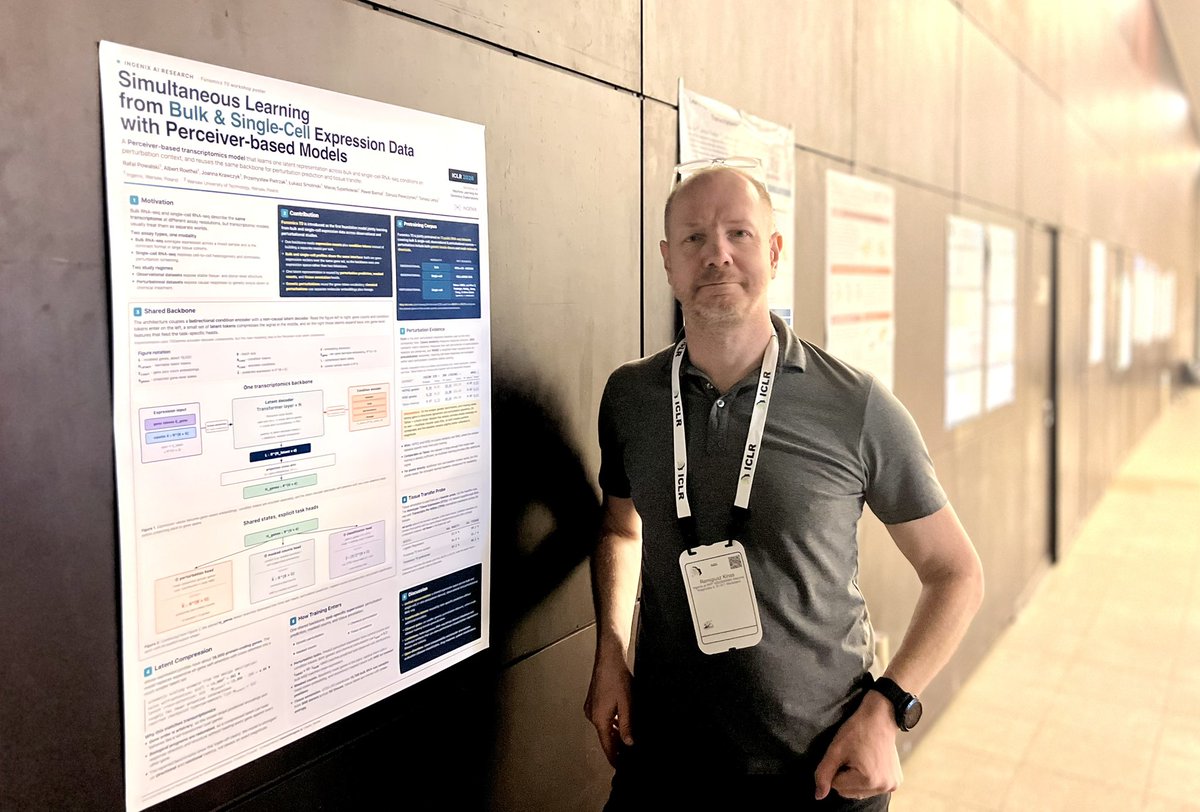
Urodziny 🎂 w Brazylii, na ICLR 2026, prezentując na sesji nasze (Ingenix) rozwiązanie do modelowania zadań omicznych. W sumie w zeszłym roku trudno byłoby mi to zaplanować ☺️ (MLGenX) #icl2026 #ai #mlgenx
1
3
602
Apr 22
Starting our scientific year at Ingenix.AI at the #ICLR2026 MLGenX Workshop with @rpowalski & @KinasRemek .
If you’re at ICLR, connect with them on-site!
We’re presenting Funomics T0, a first step to train a transcriptomics model across biological scales.
1
5
150
Apr 22
Paper: lnkd.in/dsEia_tB
Blog: lnkd.in/dYrmma_f
It is just a teaser 🤭
#MLGenX #Omics #RNAseq #FoundationModels #AIDD #AI
45
Tomasz Jetka retweeted

Apr 14
Not cool at all. My colleagues and I checked several well-known pathogenic variants, and they were predicted as VUS. Certain variants are simply missing (e.g, there is no information for rs879254374).
I like the idea, I don’t see any reason to use Evo2. Garbage in, garbage out.
Apr 14

very cool work. more dna language model pilled than i was an hour ago
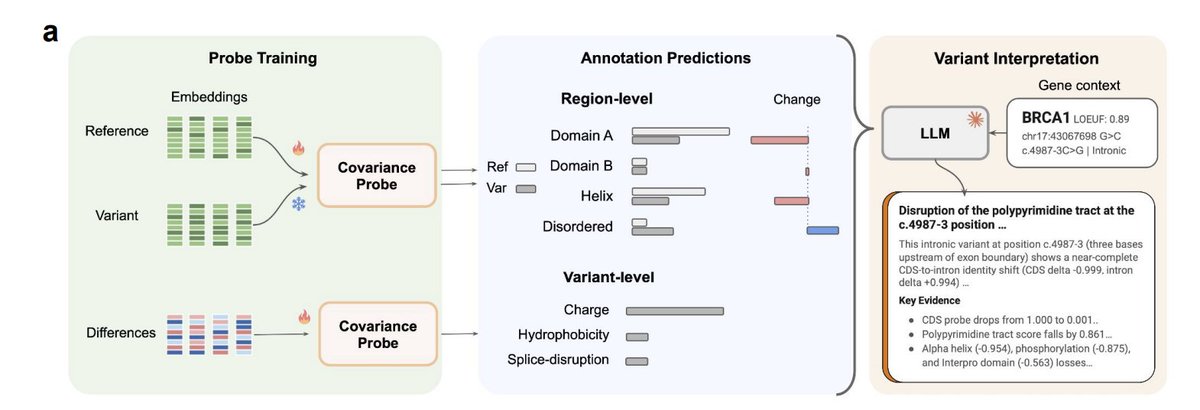
when i wrote my Evo 2 article a long time ago (owlposting.com/p/a-socratic-…) the question was always 'how do you interpret the outputs of these models if it just spits out log-likelihoods?'
and increasingly the answer is 'use probes to annotate embeddings, and ask the LLMs to interpret those'. in feb 2025, when i wrote my article, i didnt really trust the models to do that well. now i do, and perhaps there is an immense amount of greenspace for really crazy things to be done
but one of the big failure modes of LLM-for-science approaches is that the models try really hard to be consistent with the data instead of reality. theres no experimental validation here, so who knows whether that's happening here
id be extremely curious for someone to cross-reference the annotated VUS's here with, e.g. the UK Biobank 500k~ exomes with linked phenotype data. maybe Claude one-shot human variant function annotation, or maybe the annotations are slop, or maybe its in between
6
16
111
27,088
Tomasz Jetka retweeted

My wife was on this trial. Stage 4 panc cancer, 40 years old. She was in this trial and lived 18 months after chemo stopped working. We took trips to Spain, Disney, Jersey Shore. She got two more birthdays with our kids. Shove your hype and misrepresentation up your ass.
42
142
3,933
264,671
Tomasz Jetka retweeted

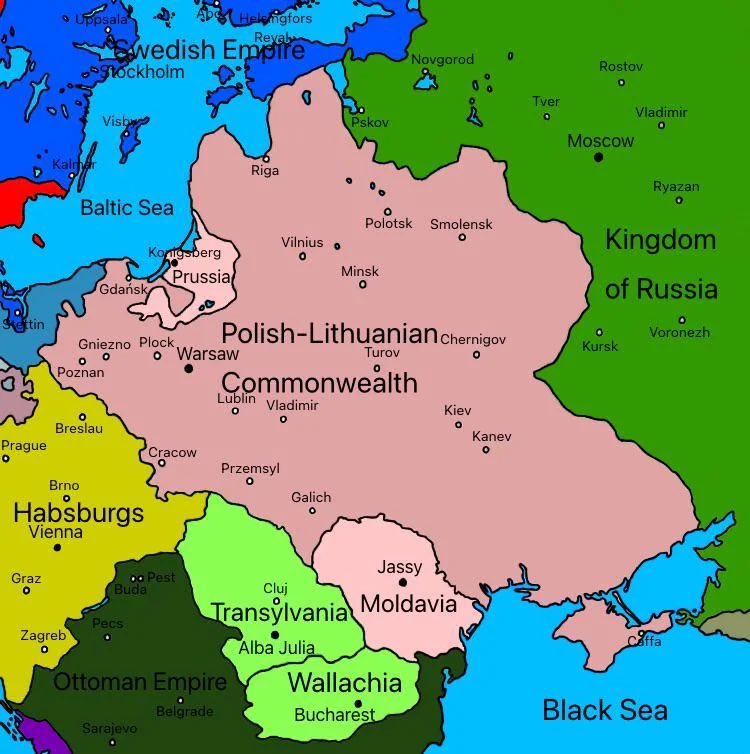
I’ve been thinking about the Polish–Lithuanian Commonwealth lately. It’s really a delightfully idiosyncratic proto-democracy.
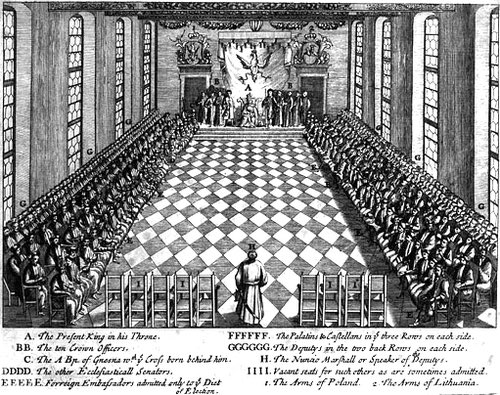
The nobles of Poland and Lithuania decided to strip the monarchy of its hereditary nature and treat the king almost like a CEO position. After the old dynasty died out they literally talent-searched across Europe for a suitable foreign prince and then treated him more like an employee, complete with a kind of job contract. He couldn’t pass laws without parliament (the Sejm).
The whole system was designed to stop the king from turning into a tyrant, especially at a time when most of Europe was absolute monarchy.
And for a long time it actually worked.
Part of the reason is that politics in the Commonwealth ran on consensus. The sejm had a culture of working together to reach unanimity.
That’s where the infamous Liberum veto comes from. Any one noble could veto legislation. On paper that sounds insane, but it mostly worked because ppl almost never used it.
The problem came once politics became more factional, the veto turned into the perfect sabotage tool. Foreign powers could simply bribe a single deputy to bring the Sejm to a grinding halt. Catherine the great got very good at this.
She also got one of her lovers in as the last king so definitely some foreign interference heh. Aaaaand then she just partitioned it and poor Poland wasn’t a country for a looooong time after that.
What makes the story interesting is that the rules themselves didn’t suddenly change. What changed was the political culture around them.
The system was built on the assumption that elites would act with a certain level of restraint and shared responsibility. Once that assumption stopped being true, the safeguards became attack surfaces.
I sometimes wonder if something similar is happening in the United States.
The founders designed the American system with checks and balances to prevent executive overreach. But it was actually dependent heavily on norms that are not written down and are hard to put back after they erode for whatever reason.
163
265
1,903
243,289
Mar 3
Become Product Managers, we must.
Mar 3
Kolejny etap software engineering’u 🤩 Brak kodu!!!
Zamiast dawać repo z kodem przekazywać repo z wymaganiami - product requirements documentation, architecture requirements, standards w AGENTS.md etc. Wszystko zapisane w markdown. Zero kodu. Niech odbiorca sam sobie zakoduje :)
Wczoraj wieczorem skończyłem właśnie pisać takie repo (Antec - personalny system agentowy - integruje najlepsze praktyki z 16 przebadanych systemów typu Clawd). W repo jest TYLKO komplet "ludzkich" dokumentów (jak kartki zapisane z koncepcją biznesową). Bez implementacji. Założenie jest takie, że klient pobiera repo, modyfikuje pliki wymagań markdown pod swoje potrzeby (dodanie, zmiana wymagań, wymagania technologiczne - typy baz danych, język programowania, jak ma być wdrażane np. docker czy w usłudze chmurowej).
Uruchamiamy Claude Code (Codex) i system ten developuje całość do wdrożenia i utworzenia CD/CI.
Puściłem dzisiaj rano implementację. Claude Code chodzi w 100% autonomicznie. Zarządza contextem przez podział wszystkiego na epic oraz user stories (tak opisałem wymagania). Fazy przekazywane są za pomocą tzw. handoverów (między fazami implementacji) - plików rozgrzebanej pracy (chociaż zakładam jak w scrum, że funkcjonalność jeśli podjęta musi być zaimplementowana, przetestowana - najwyżej może być różnica w zakresie implementacji np. 80%). Oprócz tego oczywiście wszystko opisane w CLAUDE.md. Dodatkowo pliki lessons.md (jako lessons learned) oraz plan (do planowania kolejnych sprintów).
Stan na teraz:
- liczba linii kodu - 16.006
l- iczba testcasów (trzy poziomy - komponent, integracja, e2e) - 283
- work in progress - zaimplementowano fazę 1 na 4
- planowane oddanie produktu jutro nad ranem (tak szacuję)
Jak skończy implementację to zdam Wam raport ile było poprawek. Cel jest taki by doprowadzić do sytuacji gdzie kopiujecie repo, robicie zmiany, uruchamiacie klienta (Codex, Claude) po jakimś czasie otrzymujecie finalny produkt. Zobaczymy czy wyjdzie.
1
257
Tomasz Jetka retweeted

Feb 28
When I was a postdoc I once got some unsolicited advice from a senior scientist. He told me that if a university is offering extra $$ but it would require a personal/family sacrifice, not to even listen unless the $$ could buy an airplane. Even then, he said, think twice.
Feb 26

I talk to a lot of younger faculty who struggle balancing work and childcare, and sometimes pass on important professional opportunities as a result. When my first son was about to be born, I had a life-changing conversation with Peter Sarnak. I was living in NYC and teaching at Yale, commuting a few days a week.
Unprompted, he said:
“I’m going to give you some unsolicited advice. Take your entire salary and spend it on childcare. The cost of childcare won’t go up much, but if you prove good theorems, your salary will.”
I was a young assistant professor making ~$90K. My wife was finishing a postdoc and about to start a cardiology fellowship. It had never even occurred to me that we could afford a full-time nanny. But I knew better than to ignore Peter’s advice.
So we “splurged.” The nanny arrived at 8am. I handed her the baby and went to “work” (Starbucks), and worked as hard as I could until 6pm, when I went home to relieve her. It was a real cost at the time. But, as Peter predicted, it paid off.
Even though someone else cared for our son (eventually, sons) most of the day, we still had real evenings and weekends together — feeding, reading, bathing, playing. As the oldest is now getting ready for high school, I don’t feel like we missed out on any bonding in those early years.
And I indeed suffered many fewer professional losses than I would have otherwise. (That sabbatical in Paris will have to wait until they're in college...)
I’m not as good as Peter at forcing advice on people. So I’ll just leave this here, in case it helps someone else as much as it helped me.
4
16
357
95,160
Tomasz Jetka retweeted

Feb 27
Skończmy już z tym narzekaniem na likwidację centrów usług wspólnych/podobnych i redukcje etatów w Krakowie oraz innych miejscach w Polsce.
To naturalny etap rozwoju gospodarki. Jeśli koszty pracy rosną, oznacza to, że jako rynek dojrzewamy. Konkurowanie wyłącznie ceną – szczególnie w wyścigu z krajami o niższych kosztach – nigdy nie było strategią długofalową.
Być może to właśnie moment, w którym wiele osób wyjdzie poza dotychczasowy schemat i zacznie budować coś więcej niż tylko „sprzedawanie godzin”. To szansa na rozwój kompetencji, przedsiębiorczość, innowacje i projekty o wyższej wartości dodanej.
Zamiast koncentrować się na tym, co odchodzi, skupmy się na tym, co możemy stworzyć. Rolą przedsiębiorców jest kreowanie nowych miejsc pracy i nowych modeli biznesowych. Rolą państwa – budowanie warunków do ich powstawania.
Jeśli stajemy się drożsi, to znaczy, że czas przejść poziom wyżej. I tak właśnie powinno być.
91
35
707
88,889
Tomasz Jetka retweeted
Jan 27
Tak, wiem o tym. Mówiłem 2 lata temu, że albo zaczynamy walczyć i jest szansa w Europie albo będziemy popychadłem. Szamańskie zaklęcia, okrągłe słowa, peany na temat wyższości i najlepszości naszych polskich informatyków oraz to, że jesteśmy narodem wybranym bo w OpenAI kilku Polaków tworzy trzon zespołu nie wystarczą. Robimy w nie gadamy.
Jeszcze jest nadzieja w tym, że wyszarpiemy znaczącą pozycję przy projekcie budowy centrów obliczeniowych - liczę na Kraków. To potencjalnie może nas jeszcze dźwignąć z łopatek na jakąś pozycję do ataku - pytanie czy my “hobbyści” nie profesorowie, doktorzy będziemy się w tym wyścigu liczyć, czy nastąpi marginalizacja i staniemy się symbolem historycznego hipisowskiego ruchu Bielik.
13
9
130
3,289
Tomasz Jetka retweeted
Jan 20
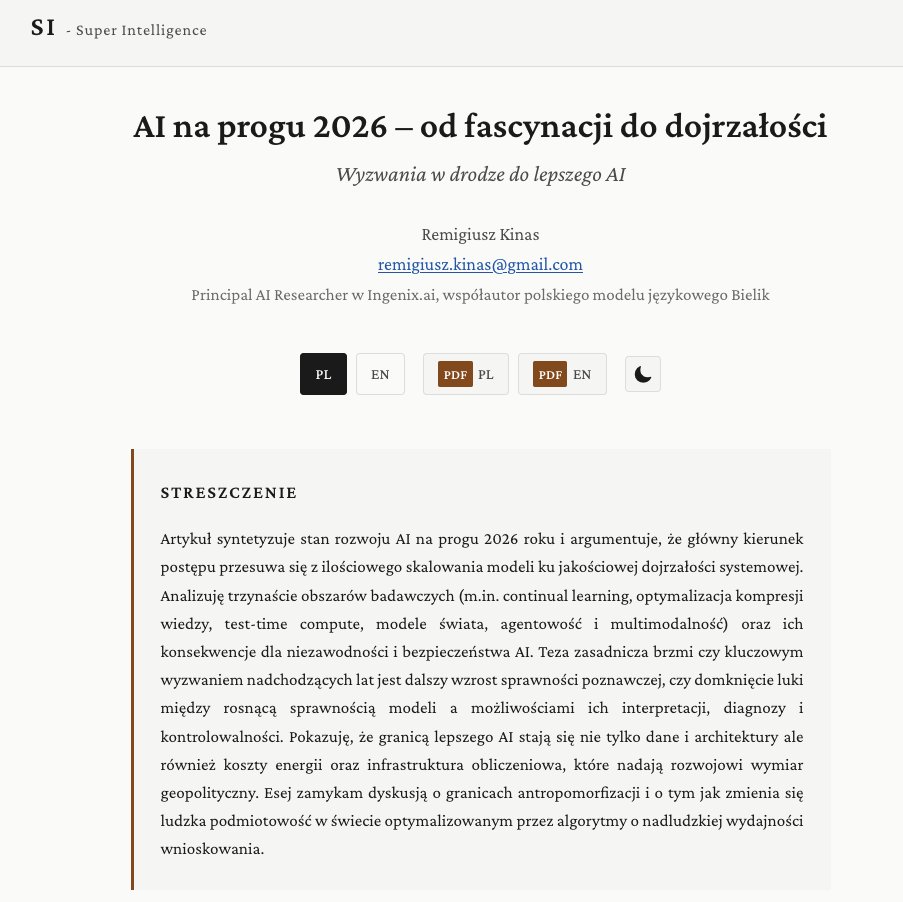
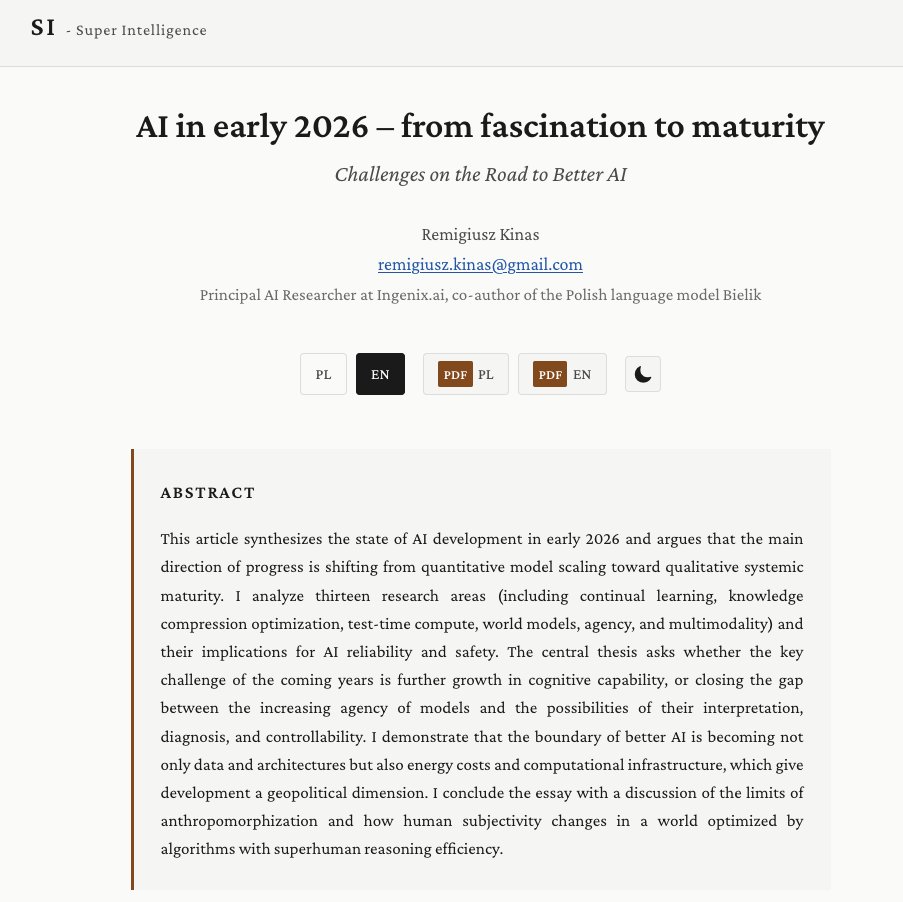
🇵🇱🇬🇧 startuję z blogiem: SI -Super Intelligence. Pierwszy artykuł o wyzwaniach obecnego AI w drodze do AGI lub ASI. Wiele mówi się ostatnio o AGI jednak nie do końca definiuje się czym jest taka inteligencja oraz jakie wyzwania przed nią stoją. Spory artykuł (właściwie to kawałek książki - blisko 30 stron tekstu oraz 70 cytowań bibliografii, pisałem od świąt blisko 3 tygodnie szeroko konsultując, wersji to nawet nie wiem ile było - a zaczęło się od spisania pytań). Zapraszam. Link w #2/2
I’m launching a blog — SI: Super Intelligence.
The first article (machine translation to English - source was in Polish) focuses on the challenges facing today’s AI on the path toward AGI or ASI. There’s been a lot of talk about AGI lately. What such intelligence actually is and what challenges stand in its way? This is a substantial piece (essentially a book chapter): nearly 30 pages of text and around 70 bibliographic references. I’ve been writing it almost three weeks with extensive consultations along the way. Link #2/2
18
40
340
50,372
Jan 19
This always stops me. 12,000 patients. 183 cancer trials. 16 drug candidates. $2B burned. 0 oncology approvals. IGF-1R is the “everyone chased it” target.
Would we rescue it today? Is there today a similar beast that devours resources? ;)
Ref: pubmed.ncbi.nlm.nih.gov/3750…
1
1
41
Jan 19
IGF-1R did work later (thyroid eye disease), so the failure was us, not the target.
Would all our fancy modalities & methods have helped to allocate precious trial time better? Do they now?
One thing I’m sure of: If it’s not in your benchmarks, your AI isn’t serious.
24
Tomasz Jetka retweeted
Jan 18
6
4
57
3,140
Jan 17
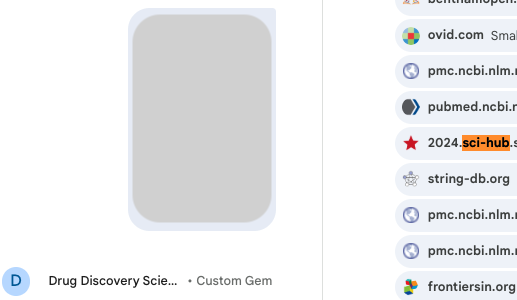
Funny, but not really. Gemini just pointed me to the sci-hub hosted publication 🙃.
We need a pirate-hub for detailed results of clinical trials.
1
95