
10 Photos and videos




Mar 24
Thougts:
1) Banks' concern about uneven regulatory requirents is warranted. GENIUS Act designates stablecoins as non-security, but if they bear interests then this designation should be challenged.
2) Banks will still face the threat of balance sheet contraction (and hence the contraction of total credits available in the entire fiat financial system), because
3) Non-yield bearing stablecoins can earn yields when RWAs are prolific on-chain, giving them more utility than just being a super efficient payment vehicle
4) Protocol-issued, RWA-backed, and yield bearing stablecoins now have a better chance to compete with GENIUS-permitted stablecoins.
Mar 24

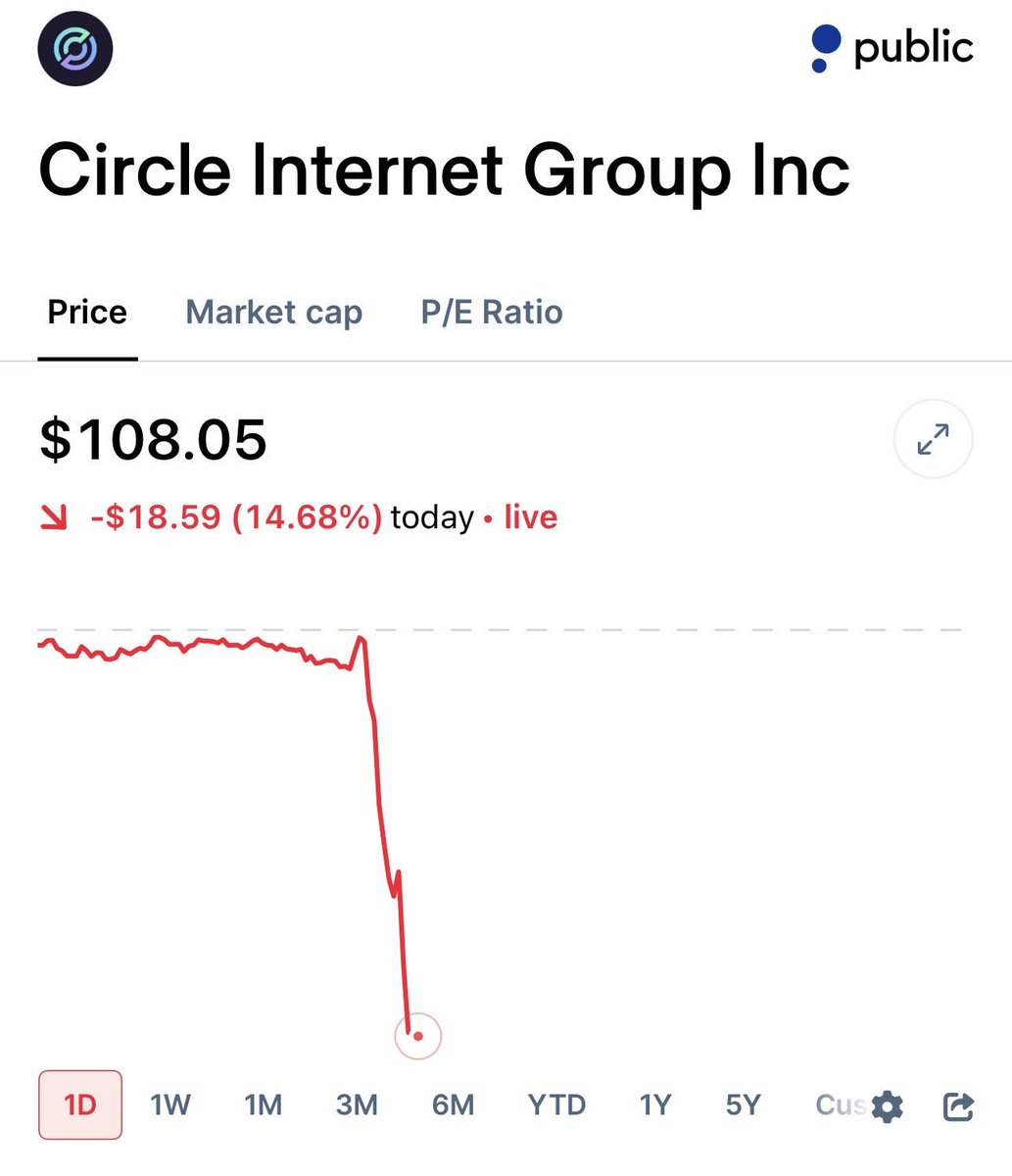
$CRCL falls ~15% after the CLARITY Act deal signals no yield on stablecoin balances by allowing only activity-based rewards.
That weakens a key part of the bull case by making USDC harder to evolve from a payments utility into a real store-of-value product.
1
4
173
Mar 21
As to DeFi, the immutable features are only useful when the answer to "who are the rule makers" is clear, because bad rules encoded don't make them better than ad hoc changes of rules.
I have one firm belief: risk inherent to any asset can only be managed but not eliminated. If this belief is true, then the issue is hardly whether smart contacts can enforce rules, it is rather about who get to make the rules to begin with, which, inevitably, will cause certain risks to be realized as loss. The point of "A using B as an exit" is utterly a moot one - every investor is an exit to someone else - that's what markets are supposed to do.
Decentralized and collaborative rule making should be the backbone of DeFi. It's the only way that risk distribution and loss sharing is "fair". However, taking responsibility in DeFi governance is desired by neither the protocols, and ironically, nor the retail investors. Laziness greed is the most lethal financial poison.
Mar 8

Private credit is in a strange place today.
The economy is tied to the cost of money. Low interest rates mean cheap borrowing, which in theory should lead to higher utilization of credit facilities. Conversely, high interest rates mean less affordable borrowing and, in theory, reduced demand for credit.
We've been living through a high-interest-rate environment since the Federal Reserve began its aggressive tightening cycle in March 2022, raising rates from near zero to over 5% by mid-2023, the fastest hiking cycle in four decades. Rates have remained elevated through early 2026, with only modest cuts. For many consumers and businesses that initiated borrowing during the low- or mid-rate era, and whose obligations remain outstanding, this translates into a significantly higher cost of capital, a burden that compounds over time.
This all sounds normal. Finance is part of almost every phase of a company's lifecycle, from growth to maturity. The problem arises when the cost of capital stays elevated for too long, creating unmanageable expenses for borrowers.
Businesses typically borrow from financial institutions like banks, or from asset managers in the form of private credit.
How do private credit funds work?
Private credit funds are typically either closed-end or semi-liquid vehicles managed by asset managers. This structure makes sense: the funds need to deploy capital into lending opportunities to generate returns. Investors in private credit range from pension funds, insurance companies, and family offices to, increasingly, retail investors.
Closed-end funds don't allow redemptions until maturity, usually 7 to 10 years. Semi-liquid funds offer quarterly redemption windows with limits. BDCs (Business Development Companies), which are publicly traded, provide liquidity via daily trading on exchanges.
In essence, private credit funds function as private banks: they lend capital to businesses and collect interest.
What does private credit fund?
Typically, private credit finances leveraged buyouts for private equity, middle-market corporate loans for companies that lack access to public bond markets, certain asset-backed lending (such as aircraft, shipping, and consumer loans), and real estate credit.
Private credit funds generally fill the funding gap that banks have vacated. This shift has been driven primarily by post-2008 regulation, particularly Basel III, which pushed banks out of riskier corporate lending. Today, private credit finances an estimated 80 to 90% of leveraged buyouts in the U.S. middle market.
Who are the players?
Apollo ~$460B AUM
Blackstone ~$330B AUM
Ares ~$280B AUM
KKR ~$220B AUM
Carlyle ~$190B AUM
Blue Owl ~$170B AUM
What's going on?
Recently, distress has emerged across private credit. The persistent cost of capital driven by high interest rates remains a reality, and AI is reshaping perceptions of many software companies that private credit has funded, creating uncertainty about these borrowers' futures.
The market has already begun repricing private credit:
VanEck BDC Income ETF: ~15% decline over the past year
Blue Owl Capital: ~50% decline over the past year, with ~30% of that during 2026
Apollo, Blackstone, Ares, KKR: shares down ~20% on private credit concerns
The average BDC now trades at roughly a 20% discount to NAV while offering 10 to 11% yields, signaling that loan portfolios may be overvalued, defaults could rise, or liquidity risk is building. What makes this even more concerning is that historically, these funds traded at a premium.
Some funds' monitored loan default metrics have risen to as high as 9%. Blackstone's flagship private credit fund, BCRED, is a notable example.
BCRED recently limited its redemptions. The fund manages roughly $82B, and during Q1 2026, redemption requests reached $3.7B, approximately 8% of NAV. Blackstone injected $400M of its own capital to support liquidity. Technically, the fund was not gated, but it came very close.
Meanwhile, BlackRock's HPS Corporate Lending Fund (HLEND), a $26B fund, received $1.2B in redemption requests, reaching the point where gating was necessary. Roughly $580M in requests could not be honored.
Blue Owl's retail private credit vehicle experienced $2.9B in redemptions during Q4 2025, with redemption requests reaching 15% of NAV, largely driven by exposure to software lending.
Can the market handle a private credit fund default?
While total redemptions have been around $7B (5 to 10% of NAV) and public alternative managers are down 20 to 30%, the overall private credit market is still $1.8 to 2T in size. Even the largest funds top out at $20 to 80B, compared to the global bond market at $130T or banking assets at $180T. A single fund default would most likely not collapse the broader market or trigger the kind of contagion that amplifies crises. Large funds also hold diversified portfolios of hundreds of loans, and the semi-liquid or closed-end structure naturally forces investor lock-up, acting as a buffer against bank-run dynamics.
I've mapped out three scenarios of increasing severity:
Scenario A: One large fund defaults (~$50B)Investors lose capital, some companies lose financing, and credit spreads widen. The system likely absorbs the shock.
Scenario B: Several funds fail simultaneouslyCredit markets freeze, leveraged companies cannot refinance, and defaults cascade. This could trigger a credit-cycle downturn.
Scenario C: Private credit leveraged loans collapseA broader corporate credit crisis unfolds: private equity deals fail and banks become exposed. This would be genuinely systemic.
Fortunately, private credit funds remain relatively small in the broader picture and are unlikely on their own to pose systemic risk. However, the most worrisome scenario is one where loss of confidence begins in private credit markets, particularly around lending to businesses vulnerable to AI disruption, and then bleeds into public bond markets. This contagion path is plausible because the larger corporates in bond markets are arguably more exposed to automation and AI disruption than the leaner, high-growth businesses that private credit typically funds.
How does this affect RWAs and DeFi?
The most immediate impact of private credit distress falls on capital allocators. Many private credit funds have been distributed to retail investors via publicly traded BDCs, private credit ETFs, or semi-liquid funds like Blackstone's BCRED, Apollo's Debt Solutions BDC, and BlackRock's HPS Corporate Lending Fund.
These funds share common characteristics: quarterly (or monthly) redemption windows, redemption limits typically capped at 5% of NAV per quarter, and target returns of 8 to 11%. Recently, some funds have also begun gating redemptions.
From a DeFi capital allocator's perspective, the biggest risk I see is structural: private credit is packaged in DeFi in ways that many retail-oriented users don't fully understand before committing capital. We've seen countless examples of DeFi users eagerly supplying funds into high-yielding RWA strategies, only to discover later that the underlying exposure carries significant duration risk.
I believe RWAs represent the biggest opportunity for DeFi in the near term. However, my greatest fear is that institutional opportunists could view DeFi as a channel to offload illiquid and distressed products that Wall Street has already soured on, effectively using DeFi participants as exit liquidity. This risk is amplified by the fact that assessing RWA allocation opportunities is inherently harder: they don't carry the same transparency or onchain verifiability that native DeFi opportunities provide.
That said, private credit done well onchain offers something traditional finance fundamentally cannot: smart contract-enforced guarantees. Redemption windows, withdrawal limits, collateral ratios, and distribution rules can be encoded immutably, meaning fund managers cannot arbitrarily change the terms after capital has been committed. In traditional private credit, investors discovered the hard way with BCRED and HLEND that redemption policies can be tightened or gated at the discretion of the manager when conditions deteriorate. Onchain, those rules are transparent from day one and enforced by code, not by a fund administrator under pressure. This is precisely where RWAs and DeFi can outperform the traditional model for this asset category.
For RWAs to succeed in DeFi, and for DeFi to scale meaningfully through real-world assets, the industry needs deliberate and careful structuring of opportunities that bridge TradFi and onchain markets. That means robust transparency standards, proper risk disclosure, independent verification of underlying collateral, and governance frameworks that protect onchain participants from asymmetric information disadvantages. Without these safeguards, the convergence of TradFi and DeFi risks becoming extractive rather than additive.
DeFi should not become Wall Street's exit liquidity.
3
110
Tony Tang retweeted

13 Nov 2025
From issuance to syndication,
Ink Finance provides an end-to-end framework for RWA operations. Your legal structure and compliance integrity will be fully reflected on-chain, without writing code.
We will release a series of short videos showing exactly how this flexible and transparent process works, demonstrating our SaaS grade modular RWA infrastructure.
youtu.be/oe8E79JpDHk
6
7
19
5,818
3 Nov 2025
Congratulations, @MandalaChain and @inkfinance team!
We don't deploy for the sake of it. Mandala's broad BD reach combined with INK's deep structuring capabilities and tech infra would allow us to launch some exciting RWA projects on the Mandala chain, including both the institution-rooted and fan-based assets.
Stay tuned...
3 Nov 2025

🚨 Partnership Announcement 🚨
Thrilled to announce we’re partnering with @inkfinance to bring RWA issuance and fund management to the Mandala Chain ecosystem 🤝🏽
Testnet integration is complete ✅
Some major use cases unlocked: tokenized commodities and IP, trade finance, compliant funds, DAO treasury workflows 🏢💰
AMA Coming soon 🎙️
Read more: mandalachain.medium.com/225b…

2
1
3
414
31 Oct 2025
Very interesting read...

Breakingviews - The best dollar debasement trade is to do nothing reut.rs/4oe8qmf reut.rs/4oe8qmf
1
1
233
Tony Tang retweeted

25 Oct 2025
What's the most fascinating example of mathematics you've seen in nature? ✍️

105
106
800
41,303
23 Oct 2025
This is really very simple math, but if a reader doesn't have some basic background of economics, the contents in such articles will appear hard to comprehend. The languages used definitely make things worse, as today's content consumers don't have the ability to, or are unwilling to, chew on formal writing.
23 Oct 2025

These numbers are well-known, but they still shock every time you see them. China's internal imbalances make it such an extreme outlier.
This matters to the world because a country's internal imbalances must always be consistent with its external imbalances, and of course its external imbalances must always be consistent with the external imbalances of its trade partners. Because the balance of payments must always balance, both internally and externally, both of these statements are necessarily true.
But it doesn't end there. Given the size of the Chinese economy, the extent of its internal imbalances must also be a constraining factor on the internal imbalances of the rest of the world through their impact on their respective external imbalances. This may not necessarily be a bad thing, but it certainly must be understood by anyone who wants to understand other economies.
For example, if a group of countries implement policies that force domestic saving to rise above domestic investment, as long as they are able to control their external accounts, and as long as at least some of their trade partners don't, the rest of the world must "choose" to save less than it invests. There are good ways this can happen, and bad ways, but it must happen.
Similarly, if a group of countries implement policies that cause their manufacturing to grow faster than their GDP, and their consumption to grow more slowly, as long as they are able to control their external accounts, and as long as at least some of their trade partners don't, the rest of the world must "choose" to have manufacturing grow more slowly than GDP and consumption grow more quickly. Again, there are good ways this can happen, and bad ways, but it must happen.
The point is that we live in a highly globalized world in which some countries choose to have more open external accounts, while other countries (more determined to maintain economic sovereignty) choose to have more closed capital accounts. One consequence is that not only do the latter have more control over their domestic economies, but they also exert substantial control over the domestic economies of the former by constraining the range of policies they can pursue.
This, Joan Robinson explained, is ultimately unsustainable, and must eventually lead to a breakdown in global trade once the former decide to regain control of their external accounts. As she (and most economists back then) understood, very deep imbalances in more open economies are not the result of "free trade", as must economists believe today, but are rather the result of a trading system in which different major economies choose different levels of trade intervention.
1
1
3
294
Tony Tang retweeted

9 May 2025
1/9
FT: "China’s exports growth showed resilience in April, defying expectations that the effects of a trade war with the US would start to bite."
There's that word "resilience" again. We'll see it a lot this year in reference to China's exports.
ft.com/content/fd98d384-fa82…
17
80
389
49,251
12 Apr 2025
as someone who runs a company, I can relate to this style, good and bad. there're lots and lots of fluff for sure, but the format of internal and external communication is fresh air to a bloated bureaucracy. it's hard not to have the impression of a room of *ss kissers, but that's also normal in a company😆
11 Apr 2025

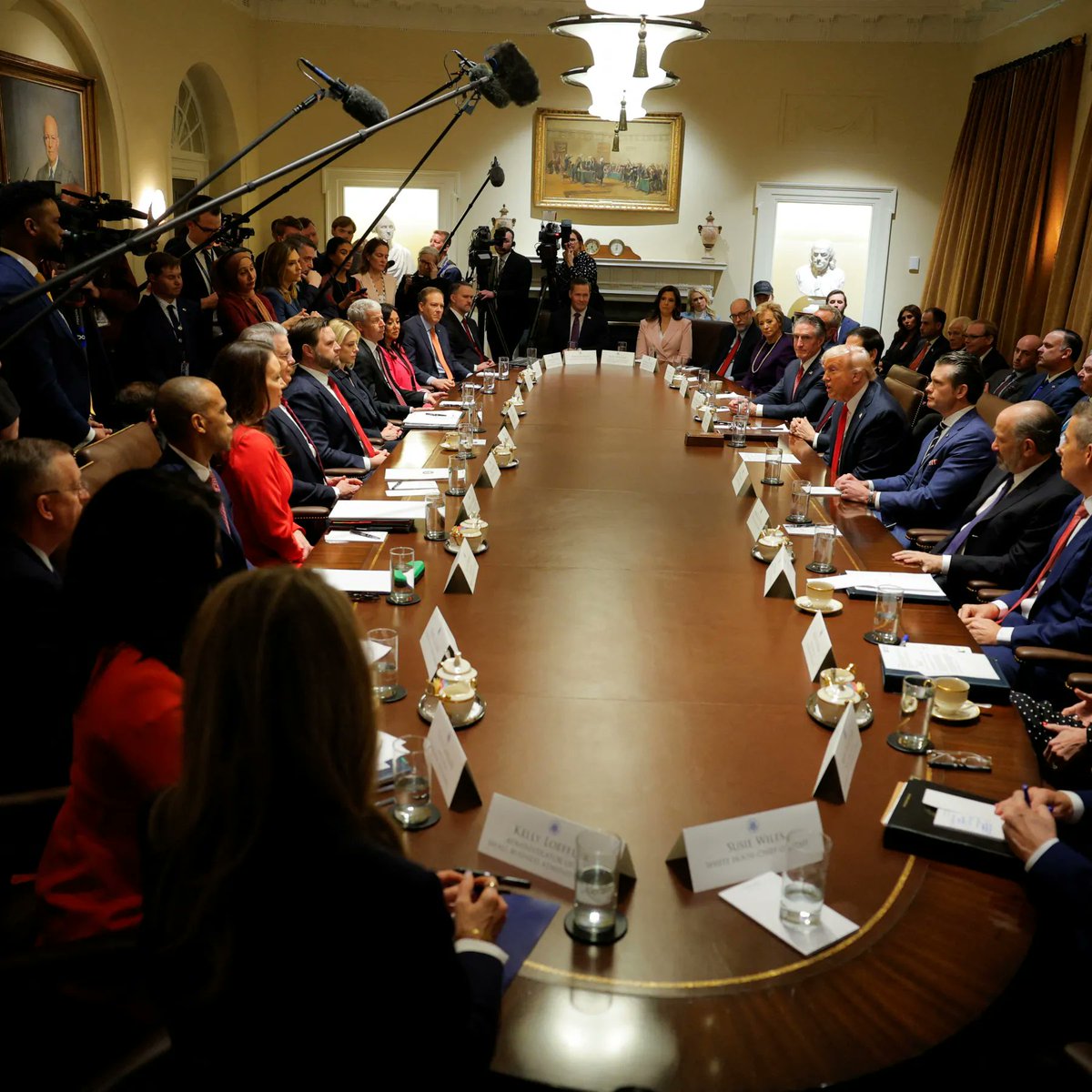
President Trump just hosted a high-stakes cabinet meeting at the White House.
One by one, top Cabinet members delivered Major Announcements — directly reporting to the American people.
Here’s everything you should know (and no joke, it gets crazier the further you read): 🧵
4
1
9
990
16 Mar 2025
currently seems to be #2 on the top gainer list of @kucoincom
15 Mar 2025

Breaking News! @InkFinance is thrilled to announce a groundbreaking partnership with a leading gaming investment ecosystem! 🌐✨
Together, we're set to revolutionize the space by:
✅ Streamlining KYC with DAO-defined processes
✅ Introducing innovative Badge Systems & Investment Certificates
✅ Delivering unparalleled security & transparency in transactions
✅ Bridging the gap for Web2 investors with seamless integration
We expect these users to become enthusiastic investors and holders of the $QUILL token as they recognize the TRUE VALUE of such a credit-based infrastructure in the DeFi space. This isn't a surprise—it's just the progress Ink Finance makes, day by day! 🔥💎
Stay tuned for the official partnership announcement—big things are coming! 🚀
#DeFi #DAO #Web3 #CryptoInnovation #BlockchainTech #gamefi

4
2
10
761
Tony Tang retweeted
20 Nov 2024
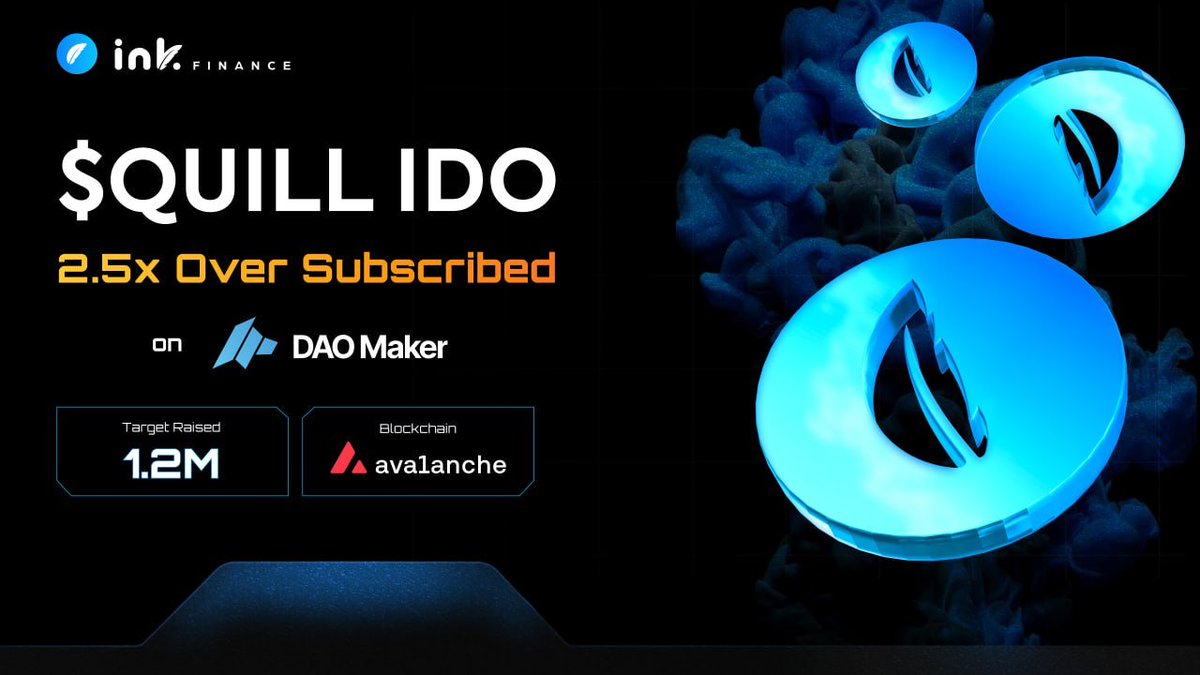
The $QUILL IDO on @daomaker has been an overwhelming success, achieving 2.5 times oversubscription and raising $1.2 million on the Avalanche blockchain.
This accomplishment highlights the growing confidence in Ink Finance's vision to revolutionize decentralized governance.
We extend our gratitude to our community and supporters who made this milestone possible. This is just the beginning as we continue to pave the way for more transparent, efficient, and impactful financial ecosystems.
18
38
82
59,236
Tony Tang retweeted
11 Nov 2024
Can't wait to see more ravers adopted to join @RaveDAO via @inkfinance ! Have fun, guys. See you on-chain!
6
3
5
888
Tony Tang retweeted
7 Nov 2024
can't agree more to this point. compared with all other issues, crypto is totally insignificant, which would allow him to keep a campaign promise with ease, particularly given that both chambers of the Congress have more pro-crypto legislators than before.
1
3
5
1,888
Tony Tang retweeted

6 Nov 2024
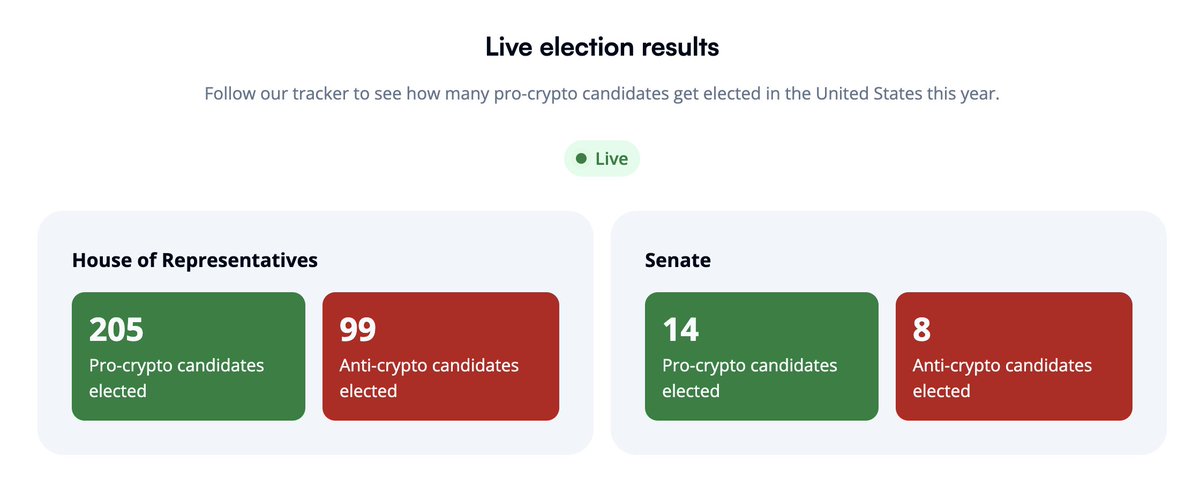
Welcome to the new members of America's most pro-crypto Congress ever... 219 pro-crypto candidates and counting have now been elected to the House & Senate.
Tonight the crypto voter has spoken decisively - across party lines and in key races across the country. Americans disproportionately care about crypto and want clear rules of the road for digital assets. We look forward to working with the new Congress to deliver it.
Thank you to everyone who stood with crypto today. We did it! #StandWithCrypto
403
2,445
13,867
1,196,052
Tony Tang retweeted

29 Oct 2024
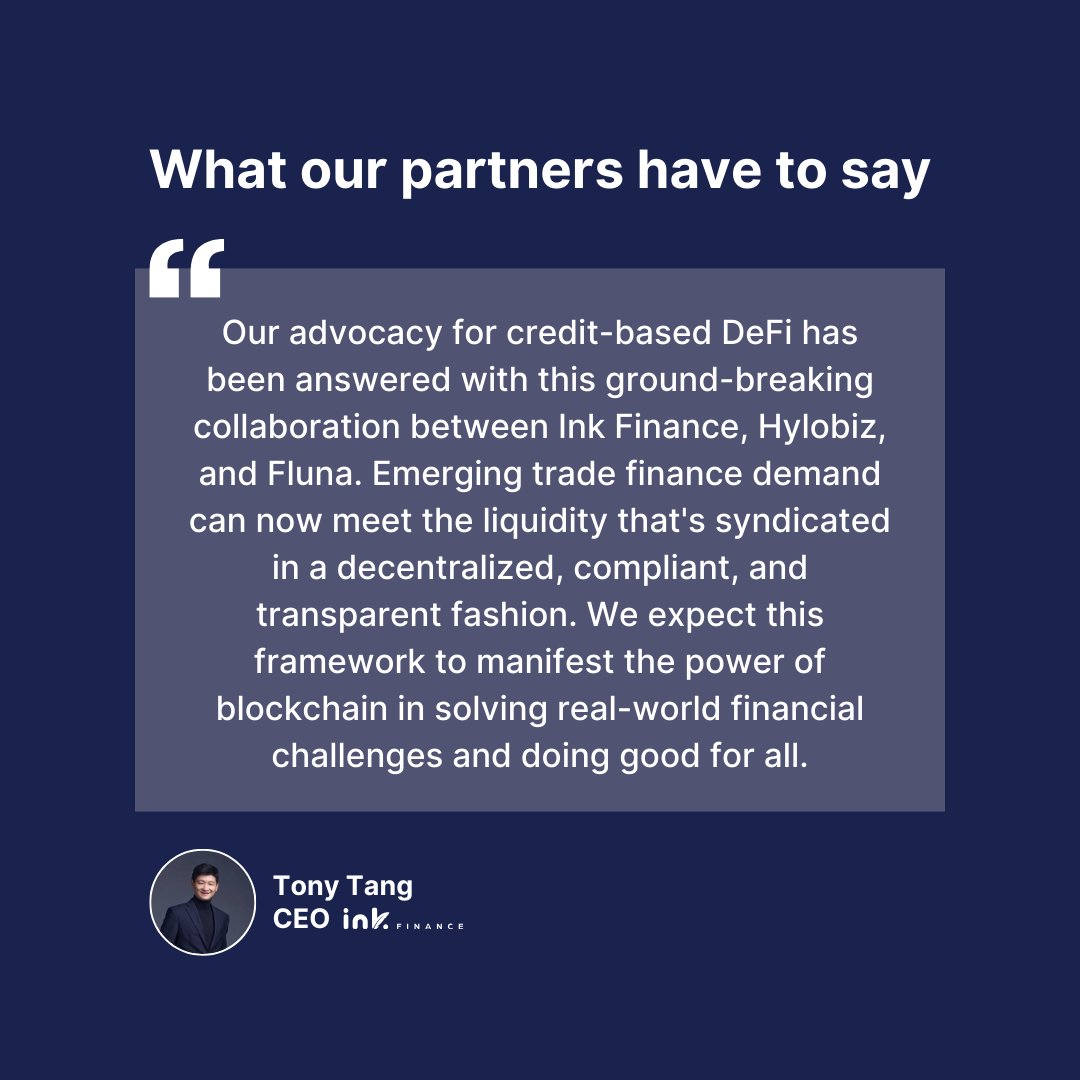
Fluna is proud to announce a strategic partnership with @inkfinance and Hylobiz UAE to bring innovative, flexible solutions to the world of trade finance.
With Africa’s export figures projected to reach $952 billion by 2035, this collaboration will enable us to offer more efficient financing options to African exporters as they tap into this future of trade. Together, we are committed to providing African exporters with the capital and market access they need as we redefine trade finance in Africa.
Join us today. Sign up on fluna.co and get started.
Read more about the partnership here: inkfinance.medium.com/ink-fi…
#Fluna #Africa #Export

ALT Fluna X Ink Finance X Hylobiz Partnership

3
6
445
Tony Tang retweeted

21 Oct 2024
With >10k applications to @alliancedao's accelerator since 2021, we're able to share how the startup landscape in crypto has changed:
- Geo: US losing ground to Asia
- L1s: Solana gaining rapidly on Ethereum
- L2s: Base running away with the show
- Verticals: NFTs dropping while AI & DeFi rising
- Office: 72% of crypto startups fully remote

Solana or Ethereum? Is the US losing developer mindshare?
Alliance gets 3k applications every year from crypto startups looking to join our accelerator.
We’ve crunched this data into an annual report to share unique trends and insights: alliance.xyz/essays/crypto-s…
TL;DR ↓
1
7
25
4,457
Tony Tang retweeted
21 Oct 2024
It's an absolute pleasure to work with the @MandalaChain team! Together we will show the world how collaborative DeFi can reshape crypto. Stay tuned...
1
2
1
242
Tony Tang retweeted
17 Oct 2024
As we always stressed, RWA tokenization is only half of the story, the other half is underwriting. By combining these two in one decentralized process, asset various asset originators can face various self-organizated syndicate directly, working out their own specific compliance issues. This is how @inkfinance scales the space.
2
3
229
Tony Tang retweeted
1 Oct 2024
In this regard, the famed "Greenspan put" isn't that much different. CBs interfering the "free market" isn't anything new, and this one won't be the last.
Technically speaking, the bailout after the 2015 debacle was quite stupid tbh. This new one actually has a lot of bite to it.
2
3
450