
Tamarind is a web app and API for the leading molecular design tools, trusted by tens of thousands of industry scientists including many global top 20 biopharma
Joined December 2023
- Tweets 41
- Following 1
- Followers 1,352
- Likes 78
Photos and videos
Tamarind Bio retweeted

Jun 10
We’re proud to share that @TamarindBio has been selected to build, host, and operate the inference infrastructure layer for TuneLab2.0, the next evolution of the platform. @EliLillyandCo TuneLab is a first-of-its-kind, collaborative AI/ML drug discovery platform, bringing models trained on over $1B worth of Lilly proprietary data to the biotech ecosystem.
Tamarind will power TuneLab’s scalable drug discovery workflows and model inference.
16
25
257
41,091
Tamarind Bio retweeted
May 27
ESMFold2 and the ESM-C family, now available for use!
We’ve partnered with @biohub (the ESM team’s new home), to provide day 1 access to their newly open-sourced series of models. The family of models show best-in-class results for structure prediction, de novo design, and protein-language model tasks.
7
19
149
15,503
Tamarind Bio retweeted
Apr 24
We've launched 300 molecular AI models on Tamarind.
Today, we're giving you the system we use to do it.
Introducing Custom Tools 🧵
1
17
141
14,026
Tamarind Bio retweeted
Apr 8
A new best-in-class structure predictor AND de novo design protocol
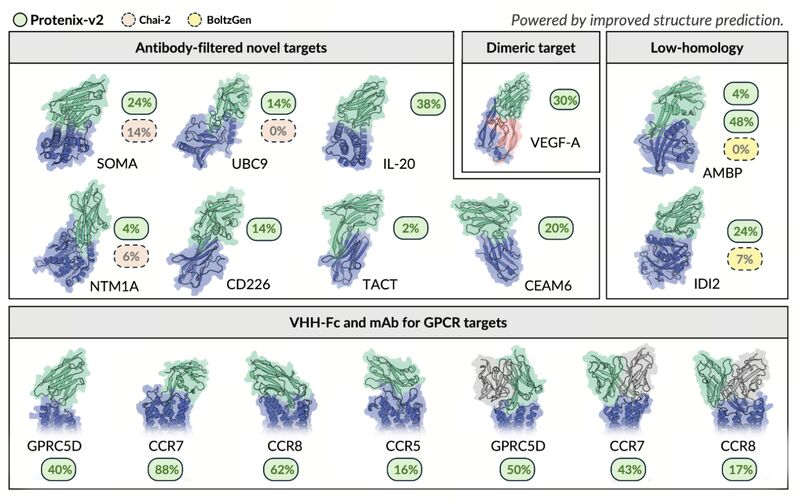
Protenix-v2 claims to outperform AlphaFold3 in antibody-antigen structure prediction tasks, showing a 13% increase over its previous generation in DockQ scores.
Available on @tamarindbio today.
Protenix-v2 with only 5 seeds beats Protenix-v1 with 1000 seeds on antibody–antigen prediction. This implies a technical improvement, while not needing to massively scale inference of a given model like other providers previously showed.
In addition, the authors use Protenix-v2 as a scoring and ranking mechanism for de novo antibody design. They report a 100% target-level success rate on the current soluble-target panel, meaning at least one confirmed binder for every tested target, with BLI-confirmed VHH-Fc hit rates from 2% to 48%. They also show that epitope choice matters a lot: on AMBP, one epitope gave 4% hit rate and another 48%.
The GPCR result is probably the most impressive experimental result in the paper. With only 16–30 tested designs per target, the protocol shows VHH-Fc hit rates of 16%, 62%, 40%, and 88% across four GPCRs, and corresponding mAb hit rates of 0%, 17%, 50%, and 44%. They also report a best GPRC5D VHH-Fc binder of 112 pM under avidity conditions.
Congratulations to the @ai4s_protenix team on the release!
1
8
60
4,034
Tamarind Bio retweeted
Apr 1
Today we announce the Tamarind Bio assay portal: The wet lab, now driven by software
We’ve partnered with @AAlphaBio, @adaptyvbio, and @Ginkgo to bring protein and antibody assays directly into Tamarind, making it much easier to move from computational design to real experimental feedback.
Protein design is not bottlenecked by generating candidates, but by validating them quickly enough to learn from them. We’re starting with the workhorse experiments: protein-protein binding affinity characterization, developability, expression, and stability.
The Assay Portal helps scientists:
Get fast, low-friction, cost-effective validation of designed proteins and antibodies, transparent pricing without needing separate MSAs
Specialize models on their own experimental data for affinity maturation, developability, and property optimization
Run lab-in-the-loop campaigns where each assay result improves the next design cycle
Turn wet lab data into model training infrastructure, including RL environments and large-scale datasets for pretraining
As computational molecular design matures, we believe integration between wet lab feedback and continuous learning will yield the highest quality results. That’s why we’re excited to bring the unique, differentiated capabilities of our partners to the leading biopharma R&D organizations.
8
31
173
21,772
Tamarind Bio retweeted
Mar 27
Molecular design for AI agents: announcing the Tamarind MCP Server.
Today, scientists can use the @tamarindbio library of 250 molecular design tools(Boltz, AlphaFold, RFdiffusion...) in any AI chat interface.
We serve not just open-source models, but the internal protocols your team has onboarded to Tamarind. Any tool added to Tamarind is then available across the MCP server, Tamarind web app, and API, so it can be used in chat-based agents, multi-step pipelines, ELNs, and LIMS-connected workflows.
Our goal is simple: make Tamarind the place where scientists can access the BioAI tools they need, wherever they want to work, while we handle the infrastructure.
Many users have already incorporated our MCP into their internal AI agents, along with community efforts like Blatant-Why building apps on top of Tamarind. Try out our tooling for antibody design, small molecule virtual screening, developability/ADMET scoring and more!
8
41
254
14,442
Tamarind Bio retweeted
Mar 24
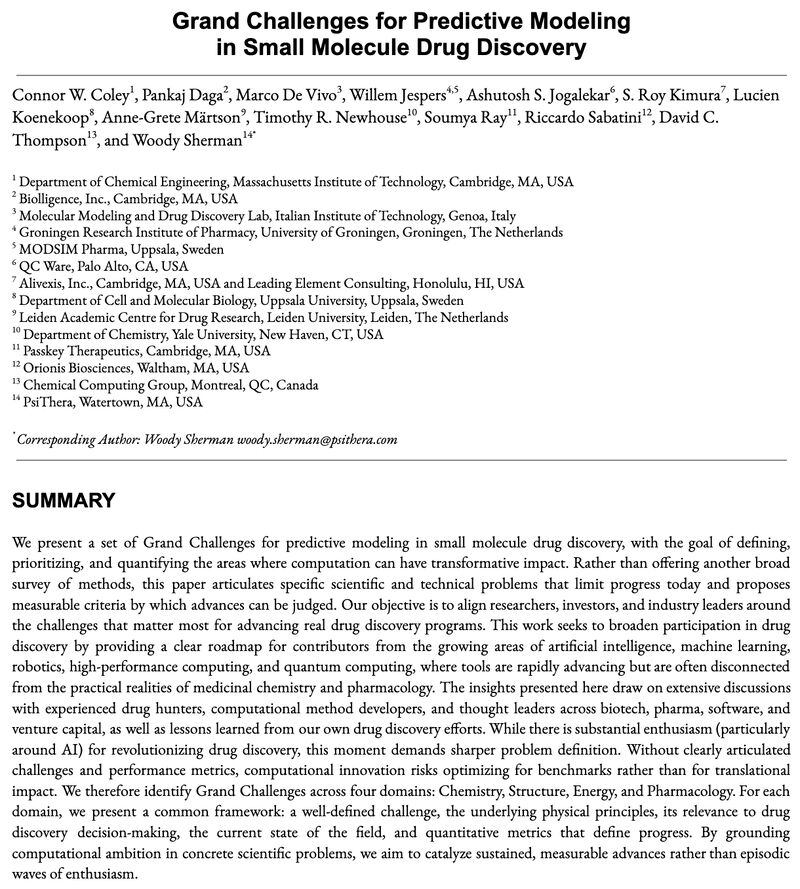
Grand Challenges in Computational Small Molecule Drug Discovery
This work, a massive undertaking two years in the making, surveys scientific and technical problems where better prediction would materially improve drug discovery outcomes.
Benchmarks of methods or models are certainly useful, but we've still not agreed which problem spaces AI can be applied to actually mean "better" drug discovery.
Chemistry: synthesis planning, process chemistry, covalent inhibitor design, chemical stability/degradation
Structure: crystal packing/polymorphism, protein structure, protein dynamics, protein–ligand pose prediction, cryptic pocket discovery
Energy: binding affinity, selectivity, kinetics, allostery/agonism
Pharmacology: pKa, solubility/aggregation/permeability, plasma protein binding and volume of distribution, clearance, oral bioavailability, metabolism, toxicity, dose prediction, PK/PD
The authors propose that the AI-led transformation will come from solving specific, measurable problems as opposed to fully end-to-end black box solutions. Even in the world where the latter comes true, these challenges are highly valuable evaluations for the efficacy of future protocols.
For each challenge the authors outline:
• the underlying physical problem
• why it matters
• the current state of the field
• inputs, outputs, and data types
• metrics that would define meaningful progress
Congratulations on the preprint Woody Sherman, Connor W. Coley, and co-authors.
-----
@tamarindbio is a collection of 250 molecular design tools such as AlphaFold and most of current best solutions to the grand challenges discussed in the paper, accessible via web interface and API.
2
12
113
8,195
Tamarind Bio retweeted
Mar 13
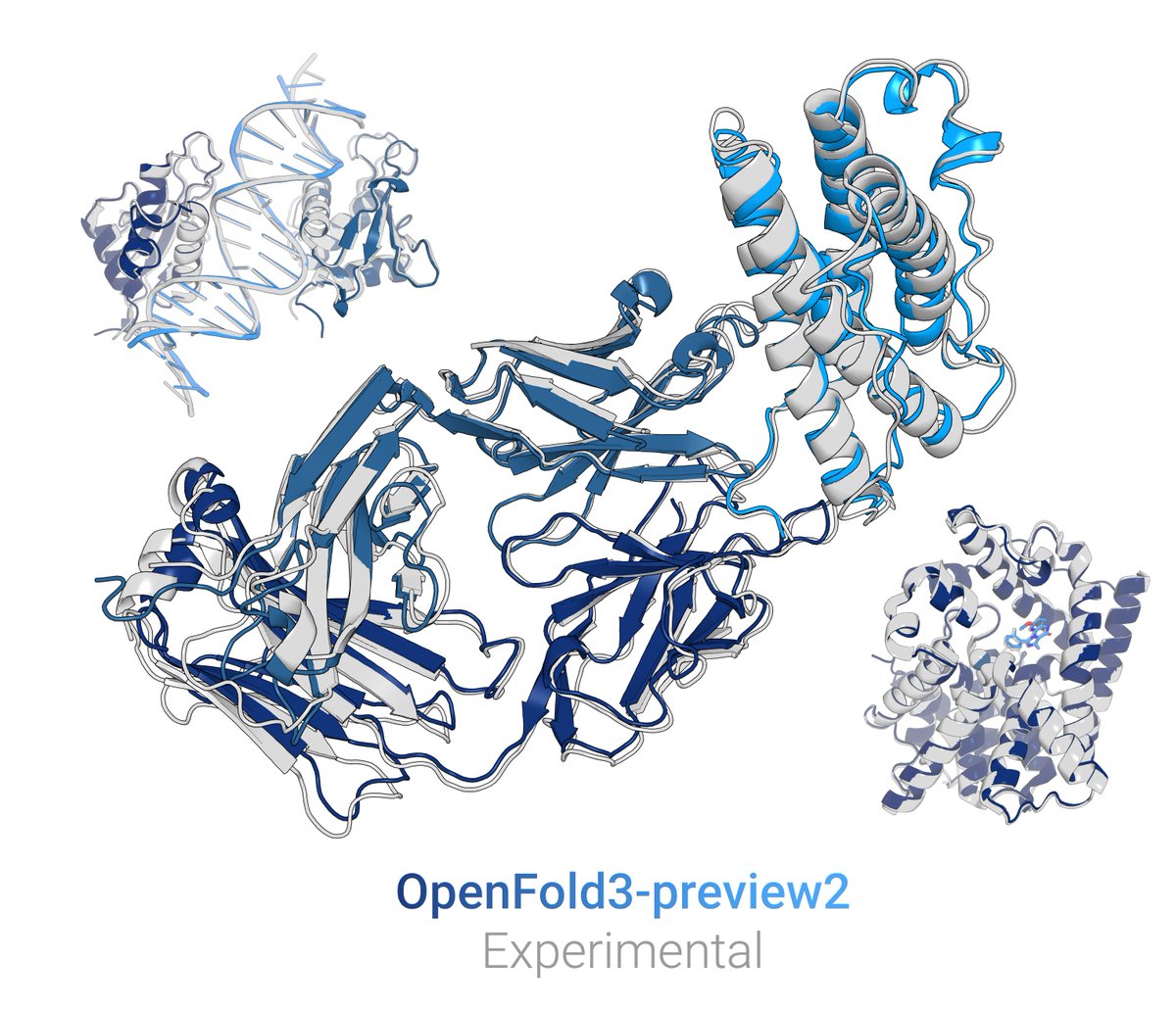
AlphaFold3 performance, are we there yet?
Protenix-v1, IntelliFold, and more claim AF3-level accuracy on a diverse tasks. While they've shown some meaningful improvements, our findings (especially AbAg complexes) show they aren't fully there yet. Let's look at the benchmarks!
OpenFold3 preview 2 is out today, available on @tamarindbio along with every other protocol mentioned here.
2
14
73
4,311
Tamarind Bio retweeted

Feb 28
Super excited that YC will be hosting a Bio AI hackathon in March, organized by two awesome companies @BioRender and @tamarindbio. Come to the YC office in SF and hack on the next AI scientist, drug discovery method, or bio data infrastructure. One of the prizes is a guaranteed YC interview 👀
link below!

27
72
707
62,759
Tamarind Bio retweeted
Feb 26
Today, we announce Tamarind Bio’s $13.6M Series A, led by @_DimensionCap, with participation from @ycombinator.
Tamarind has now become the trusted platform for molecular AI inference, serving tens of thousands of scientists, including 8 of the top 20 pharma, dozens of biotechs and research organizations.
Since last year, we’ve grown revenue 7x and are grateful to work with world-class biopharma R&D organizations like @Bayer, @Boehringer, and Adimab.
—
When we started two years ago, a few brave biotechs took a chance with us. Hoping this new company, providing easy access to computational drug discovery tools, would enable their scientists to apply foundation models to real therapeutic applications.
Since then, our library of AI models has grown to hundreds, not just open-source tools, but also our users’ internal protocols, proprietary models trained on users’ own data, pipelines of multiple models together and more!
Now, we are doubling down on our commitment to building the core AI and data infrastructure to power the next generation of medicines. We will continue to support open models, strengthening them with proprietary data, and prioritize access to all scientists.
Join us as we build the infrastructure for all AI-powered drug discovery.
24
26
270
44,139
Tamarind Bio retweeted
Jan 22
Newest @adaptyvbio Competition results are out!
The task was to design a protein to neutralize Nipah virus (PDB: 2VSM), let's see how the state of the art AI protein design tools faired.
The Baker Lab's RFdiffusion/RFantibody remains a contender, with 4 of the top 10 using the structure-based design method along with rational design and other models including ESMFold and Sapiens.
Nick Boyd and the team at Escalante's Mosaic de novo design model shows promise as well. Nick originally got the highest in silico result, and this seems to have correlated well with the wet lab validation as well. He got number 8 and 17 of the top hits!
𝘗𝘳𝘰𝘵𝘰𝘤𝘰𝘭𝘴 𝘰𝘷𝘦𝘳𝘷𝘪𝘦𝘸
BoltzGen has a lot of entries (n=163) but a low hit rate around 1.23 percent in this dataset.
BindCraft has moderate volume (n=88) with a hit rate around 5.68 percent.
RFdiffusion (n=42) shows the highest hit rate among the main buckets shown here around 21.4 percent
ProteinMPNN (n=29) is close around 20.7 percent.
Escalante's Mosaic (n=9) has the highest hit rate at 88.8 percent.
I actually would not necessarily use these datapoints as limitations of the tools themselves, as the quality of the binders would meaningfully differ depending on the team submitting.
𝘔𝘦𝘵𝘳𝘪𝘤𝘴
Boltz IPSAE seems to reasonably predictive of binding, although primarily as a filter and not a predictor:
Selecting top 1% by min_ipsae: 63.6% binders (7/11)
Top 0.5%: 83.3% binders (5/6)
Top 10%: 18.4% binders (19/103)
Among already-binding designs, these scores don’t strongly correlate with KD (it's better at “binder vs not” than “best binder”).
𝘗𝘳𝘢𝘤𝘵𝘪𝘤𝘢𝘭 𝘵𝘢𝘬𝘦𝘢𝘸𝘢𝘺𝘴
Boltz2 min_ipsae can be a legitimate hard filter for evaluating designs. I would suspect this is true of AF2 min_ipsae as well.
Want ~25 designs? pick very top tail (this dataset suggests you can get >30% hit rate). Want ~100 designs? top ~10% is ~2× baseline hit rate.
Binding does not mean function. Only 19 designs have neutralization annotations, and while the full neutralizers trend tighter, epitope/geometry is the primary factor.
Congrats to @julian_englert and the team at @adaptyvbio on their hard work organizing and running the experiments. Stay tuned for deeper analysis of the results in the coming days!
I'm excited to see what new methods will be published alongside the competition, the top three protocols have not been released yet.
————
@tamarindbio is the leading provider of the cutting edge molecular design tools like AlphaFold, ProteinMPNN, BindCraft, Germinal, and most of the protocols applied to this Adaptyv challenge! Use them at large scale through our web interface or programmatic API.
6
40
171
9,803
Tamarind Bio retweeted
22 Dec 2025
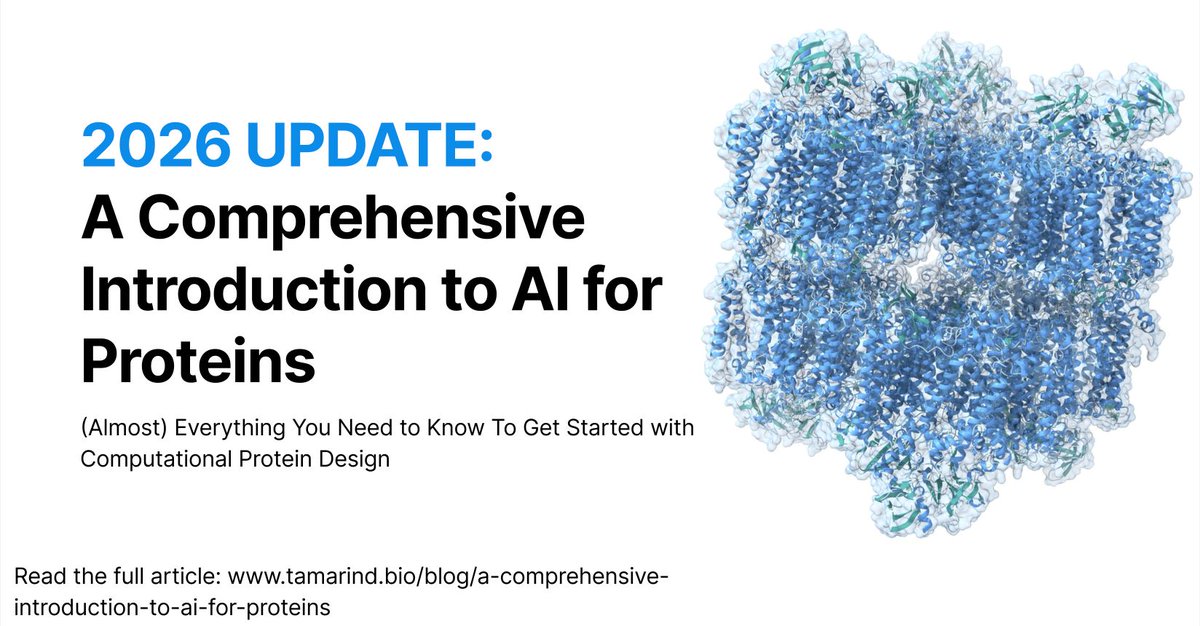
Everything you need for AI in Proteins, updated for 2025!
1/🧵
We've expanded our comprehensive AI protein design guide to include all the cutting edge tools on the rise this year. Some highlights:
7
82
471
30,143
Tamarind Bio retweeted
3 Dec 2025
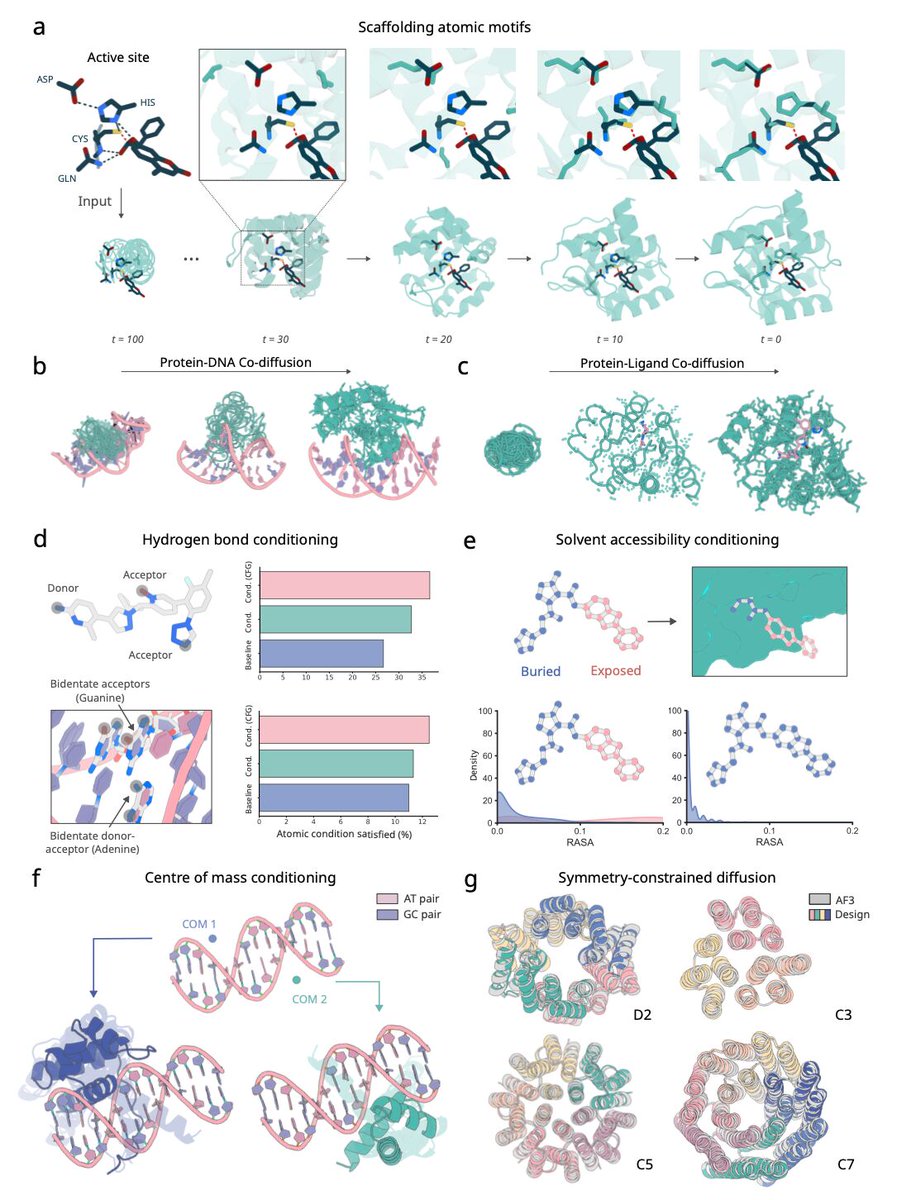
RFdiffusion3 now available! De novo protein design against any molecule
Try it on @tamarindbio today
RF3 shows success in designing de novo proteins against all-atom targets, including proteins, DNA and small molecules with diverse applications.
5
60
268
15,095
Tamarind Bio retweeted

28 Oct 2025
So, if you want to try it out:
Download on @huggingface.
Play with the interactive version with @tamarindbio.
Study the code on @github.
Links to follow.
1
1
14
2,074
Tamarind Bio retweeted
28 Oct 2025
OpenFold3 is finally out! New fully open-source AF3 reproduction from @open_fold Consortium
Try it out on @tamarindbio now!
The model is released with training code, similar performance to AlphaFold3 on protein-ligand complexes, best performance ever for RNA structure prediction, and the same functionalities of other AlphaFold3 reproductions.
4
96
387
20,331
Tamarind Bio retweeted
26 Oct 2025
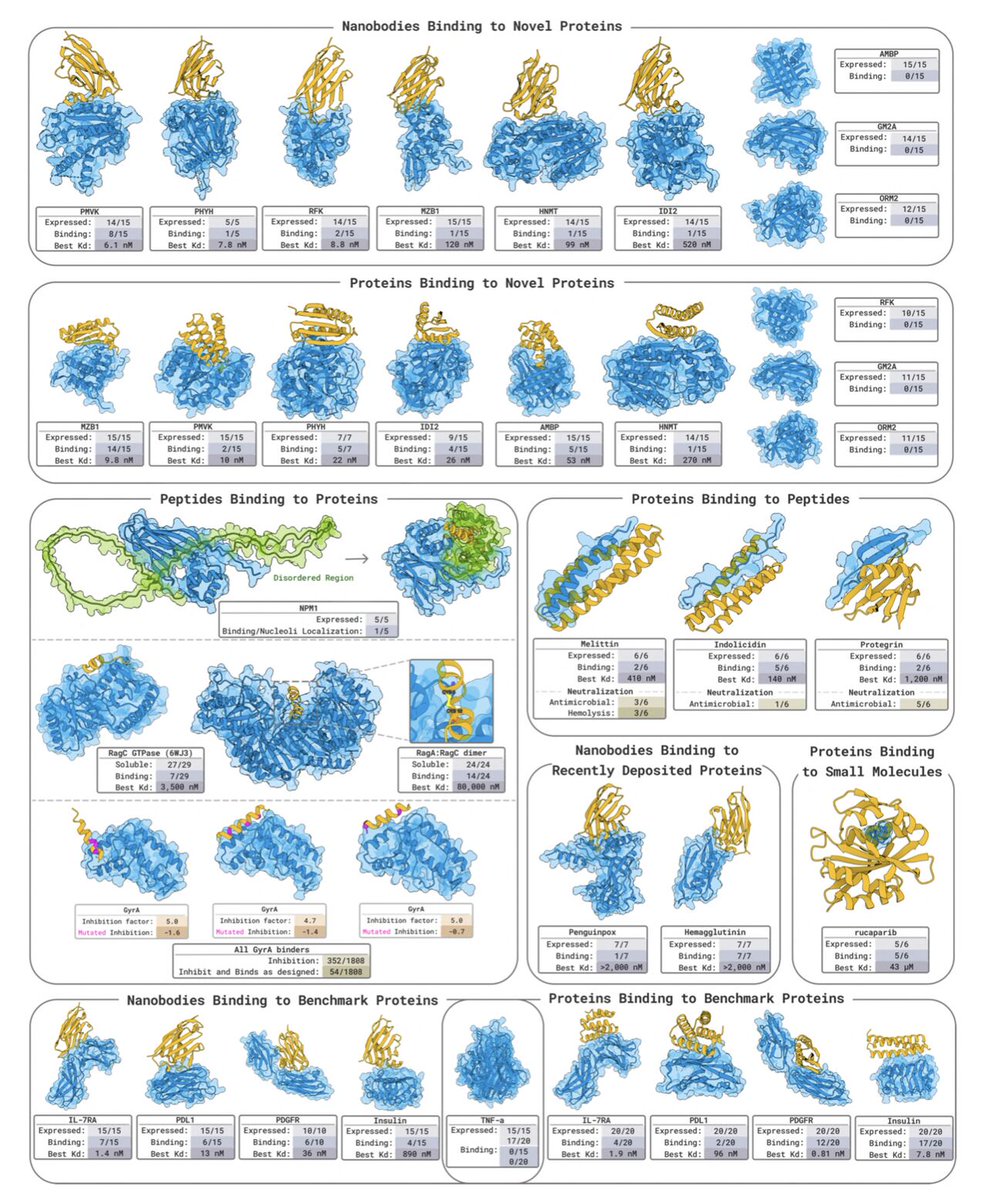
BoltzGen: New generalized binder design protocol, with wet lab validation on diverse targets! (From Boltz team collaborators)
On @tamarindbio right now!
The authors test only 15 nanobody designs against each of 9 targets. These targets are selected for their high dissimilarity from any protein with an existing bound structure. With 6 of the 9 finding nanomolar binders. This 67% success rate holds for protein designs.
1
49
257
13,826
Tamarind Bio retweeted
13 Oct 2025
The Baker Lab designs protein on/off switches
1/🧵
Instead of optimizing for how tightly a given protein binds to a target, Adam and team develop a method to control the duration of binding.
3
89
620
32,341
Tamarind Bio retweeted
24 Sep 2025
Even better at de novo nanobody design! Germinal from @Stanford and the @arcinstitute finds 4-22% hit rates for AI-designed VHHs against many targets.
4 diverse protein targets (PD-L1, IL-3, IL-20, BHRF1). Screening libraries were 43–101 designs using a split-luciferase triage, BLI validation. BLI-verified hit rates: 4–22%, i.e., hits from tens, not thousands, of designs.
3
16
141
12,417
Tamarind Bio retweeted
18 Sep 2025
🚨New de novo antibody design protocol! 7/60 hit rate against PD-L1 (IgGM)
IgGM is a generative functional antibody design model, supporting de novo design, affinity maturation, inverse folding and more!
From 10k candidates over 24 CDR-length grids, 60 were tested; 7 hits showed nanomolar to picomolar affinity (KD 0.084–2.89 nM). 6/7 block PD-1/PD-L1 in competition ELISA.
Affinity maturation: Two iterative rounds deliver a ~5.3× affinity boost (KD 52.0 to 9.75 nM on IL-33 Ab “I7”)
IgGM shows strong end-to-end demonstrations with credible, validated de novo PD-L1 binders, practical humanization and maturation results, and competitive structure prediction/docking. All from a single generative framework! Exciting results for the next generation of antibody design models.
Video credit: IgGM authors
2
25
139
7,399
Tamarind Bio retweeted
16 Sep 2025
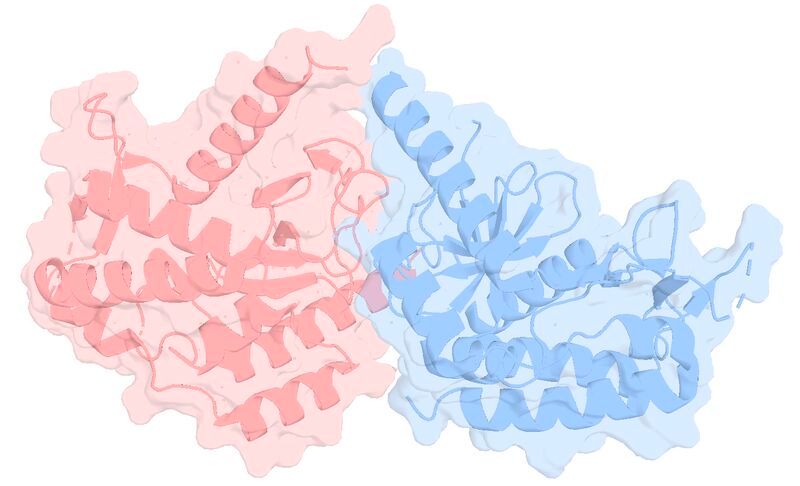
De novo protein binders against undruggable targets? Here's how Institute of Protein Design scientists target Intrinsically Disordered Regions using RFdiffusion
1/🧵
The authors design binders for 43 targets (18 synthetic peptides 21 diverse native IDRs a few others, including polar targets) yielded binders for 39/43 while testing ~22 designs per target. 34 binders reached 100 pM–100 nM Kd, with most other being in the nanomolar range.
Unlike most de novo design publications, we have specificity data! All-by-all binding showed each design strongly binds only its intended target.
3
31
183
10,457