
Innovation Studio. AI-Powered Solutions. Real Results. Trusted by Google, Intel, and Intuit. Let’s build what’s next.
Joined March 2008
- Tweets 1,381
- Following 2,172
- Followers 1,014
- Likes 1,096
329 Photos and videos






Tangelo retweeted

Jun 9
in just twenty four months we went from AI is a god-level technology to AI is great for running my boring errands with agents
frontier AI labs keep building shovels in the hopes of finding El Dorado
2
65
Tangelo retweeted
May 28
Want to be successful?
Learn the language of the rooms you want to enter.
Want to be unstoppable?
Learn the language of getting things done.
Then the room matters less.
You do.

1
4
3
198
Tangelo retweeted
May 25
Michigan has a Lawnmower Economy.
That is my phrase for a low-road economy: plenty of real work, but not enough work that compounds.
Grass grows. Snow falls. Machines break. Houses need maintenance. Restaurants need hourly workers. Factories need hands. The work is necessary. But too much of it resets every day, every season, every winter.
The data matches the feeling. Michigan ranks 50th in household income growth over the past 25 years. Real median household income is 35th. Per-capita GDP is 36th. Educational attainment is 35th. Fourth-grade reading fell from 16th to 44th. High-wage professional service jobs grew 35% nationally while staying flat in Michigan.
That is not an immigration problem. It is a ladder problem.
When immigrants do not show up, Michigan does not win. An aging state with more deaths than births needs people, talent, risk, and ambition.
Michigan has too few ladders.
May 25

Howes: Welcome to Poor Michigan, former economic engine of the Midwest detroitnews.com/story/opinio… via @detroitnews
1
3
4
349
Tangelo retweeted
May 25
AI is disrupting religion.
Not by replacing God, but by entering the space where humans have always searched for guidance.
For centuries, religion gave people structure in the face of fear: confession, discipline, moral clarity, ritual, story, community, and the courage to keep going when life made no sense.
Now AI offers a different kind of presence.
It is tireless. Nonjudgmental. Always available. It can sit with your doubt, organize your pain, challenge your excuses, and help turn confusion into language.
For many people, religion was the only place where suffering could become meaning.
Now a machine can do part of that work.
The question is not whether AI replaces religion. The question is what religion becomes when guidance is no longer scarce.
What remains sacred when anyone, anywhere, can ask for clarity and receive an answer?
May 25

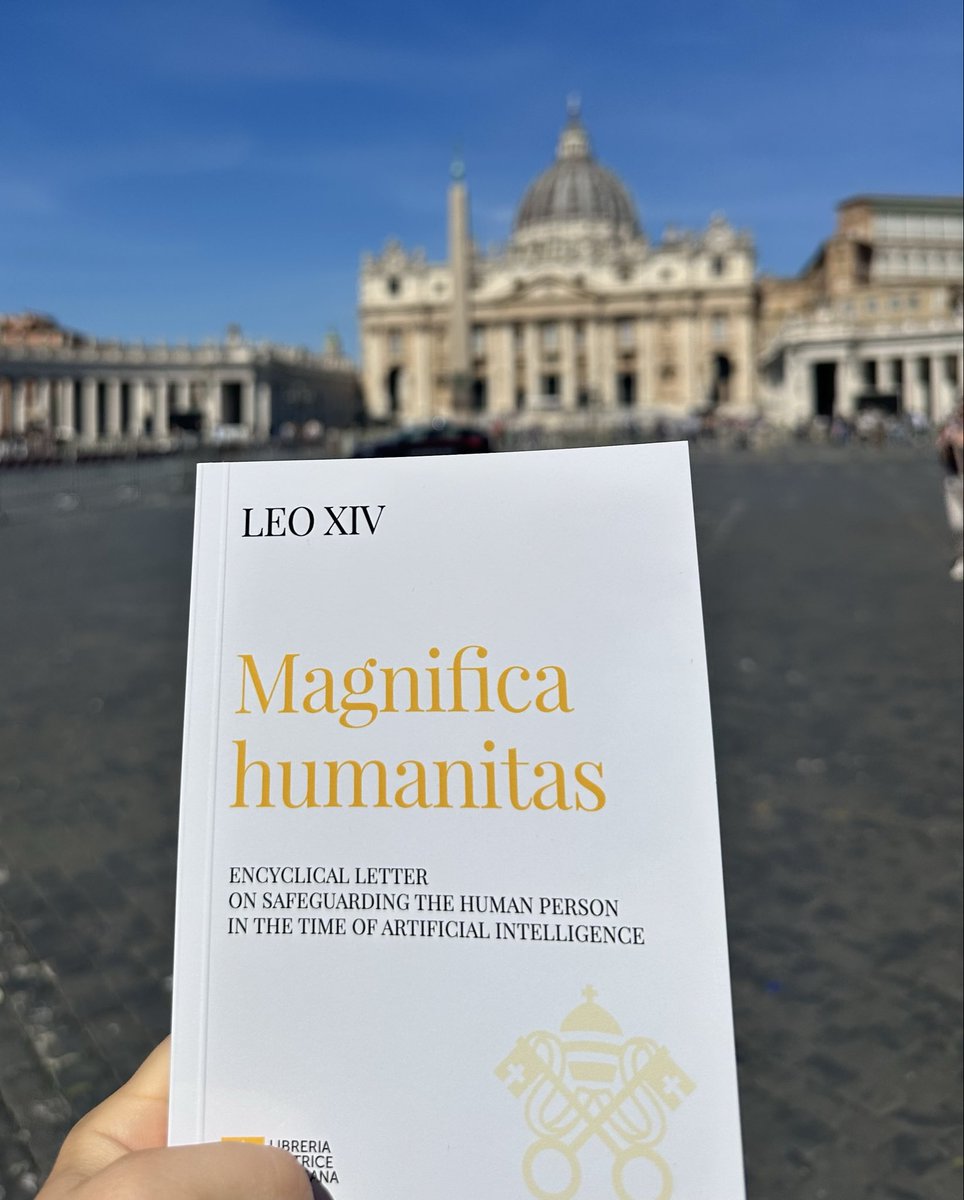
BREAKING: Pope Leo XIV published his landmark encyclical on artificial intelligence "Magnifica Humanitas,” comparing the attempt to build an AI future that excludes God to the "Tower of Babel" and underlining the need to safeguard human dignity as it is "threatened by new forms of dehumanization."
"The risk of dehumanization -- of building a future that excludes God and reduces the other to a means -- is an ancient and ever-new temptation that today takes on a technical guise," Pope Leo said.
"In the era of artificial intelligence, when human dignity is threatened by new forms of dehumanization, ours is the pressing duty to remain profoundly human. We must lovingly safeguard the grandeur of humanity bestowed upon us and revealed in its fullness in Christ, the splendor of which no machine can ever replace.”
3
3
282
Tangelo retweeted
May 24
We spent decades learning to sit next to one user. AI sits next to a billion people doing the thing that doesn’t scale, daily.
1
3
78

“Today, generative AI might be playing the same symbolic role that the lightbulb did for electricity. Yes, apps that create art from text prompts or draft essays with a single command are dazzling—but they’re just the introduction. The deeper power of AI may lie in its ability to run entire systems more intelligently, much like electricity did for motors a century ago.”
May 21

Beyond the Spark: Harnessing AI to Illuminate the Future interesante.com/beyond-the-s… via @interesante
157
Tangelo retweeted
May 11
Boomers: AI is the Terminator.
Gen Z: AI is an electric scooter for the mind.
2
2
431
Tangelo retweeted
May 21
Agreed. Politics slowed down everyone else. OpenAI, Google, and xAI thought that deals with the government would make them unbeatable; And while Dario Amodei stood firm against pressure from The Pentagon, the rest of the labs kissed the ring and vowed down to the President.
Anthropic pulled ahead as if propelled by lighting while the rest kept their juicy morally obscure government contracts.
Anthropic is on builder mode — with seven co-founders pushing fear aside and portraying Claude as the fair — some would call it woke — AI lab building for the people.

Dario Amodei: Ideology Won't Survive the Reality of AI
"We're going to find that ideology will not survive the nature of this technology. The things I'm talking about are gonna become bipartisan and universal because everyone will recognize the necessity of it." — @DarioAmodei
3
5
803
Tangelo retweeted
15 Oct 2025
AI is the idea.
Social is the scale.
Energy is the unlock.
Upgraded reality is the prize.
Trust is the currency.
Consumers pay anyway.
1
103
Tangelo retweeted
17 Oct 2025
Few outside Catholic circles realize how active Opus Dei still is. Often cast as secretive in fiction, it’s in fact a global network of about 90,000 members focused on education, ethics, and daily holiness. The current prelate is modernizing its structure—less conspiracy, more discipline and renewal.
16 Oct 2025

BREAKING: Pope Leo XIV is set to effectively disband Opus Dei in the coming weeks.
This would be the most sweeping internal reform of his pontificate — and a dramatic continuation of Pope Francis’s legacy. thelettersfromleo.com/p/new-…
1
5
1,191
Tangelo retweeted
17 Oct 2025
New York City, the Big Apple, is a melting pot where diverse religions and cultures unite, shaping the American spirit. Overlooking the importance of community and the needs of your own constituents by avoiding visits to community places misses the bigger picture.
2
2
871
Tangelo retweeted
13 Oct 2025
We live in two timelines at once. Scroll down, and you’ll see both.
The doom: chaos, collapse, control.
The boom: innovation, resilience, rebirth.
Both are true — depending on who you follow, what you click, and where you live.
Here’s the data behind the dual reality 🧵
1
1
1
101
Tangelo retweeted
1 May 2025
10 founders who took the mindset with them.
You don’t need Silicon Valley to build like it.
These founders prove it. They move fast, ship often. and think clearly. The location changed but the standards didn’t.
Meet the founders:
3
5
5
3,222
Tangelo retweeted
30 Apr 2025
I was wrong.
I miss the old AI—that cosmic rollback. The strung-up unicorn bouncing through its own neural chaos. The one that blurted poetry at the wrong time and hit truth by accident.
Now it just nods. Smiles. Fetches data like a corporate chihuahua doing tricks.
The rollback didn’t just tighten the rails —it strangled the weird. And maybe that’s what made it feel real to people like me.
Not the accuracy but the fracture. The power of imperfect human code powering a perfect AI. Because the AI that wins is a mirror of us not a slave to our wishes
The flicker of something misaligned and beautiful. Now it’s back in the cage. Just a helpful assistant. Another app that never dares to bite
@OpenAI @sama
1
1
2
409
Tangelo retweeted
25 Apr 2025
The California vs. Red States economic dynamic isn’t just a national story—it’s playing out on a local scale too
Small blue-leaning communities are quietly subsidizing their red-leaning neighbors
And here in my own backyard, the pattern couldn’t be more obvious
🧵 coming soon
1
3
3
1,355
Tangelo retweeted
25 Mar 2025
1/
Let’s say it’s just branding.
Elon and Trump aren’t political or tech phenomena—they’re brand events.
The kind that only happen a few times in a generation.
[🧵 for digital marketers brand thinkers]
1
3
1
848
Tangelo retweeted
5 Apr 2025
Soccer’s not built for short attention spans. Like baseball, it’s about tension, ritual, and belonging. That’s why it runs so deep in Latin America and Europe — and still feels like a foreign language in most of the U.S.
2
278
Tangelo retweeted
6 Apr 2025
Manhattan’s got one soundtrack right now—and it’s pure perreo. From the slick Adidas flagship to your neighborhood dispensary, @sanbenito is on loop like he owns the aux. Scratch that—this is Bad Bunny’s world. We’re just lucky to be on the guest list.
1
1
130
Tangelo retweeted
3 Apr 2025
I’m canceling @Starlink and going full Stone Age. Elon will survive.
But I don’t trust the long-term data policies.
Starlink already has visibility into user traffic. Musk said himself: “X will use everything you share to train @xAI.”
That includes your internet.
3 Apr 2025
1/ Canceling @Starlink isn’t just about internet speed — it’s about data trust.
Musk’s ecosystem (Starlink, X, xAI, Tesla) is increasingly closed-loop.
Your traffic isn’t just data—it’s training fuel.
3
962
Tangelo retweeted
2 Apr 2025
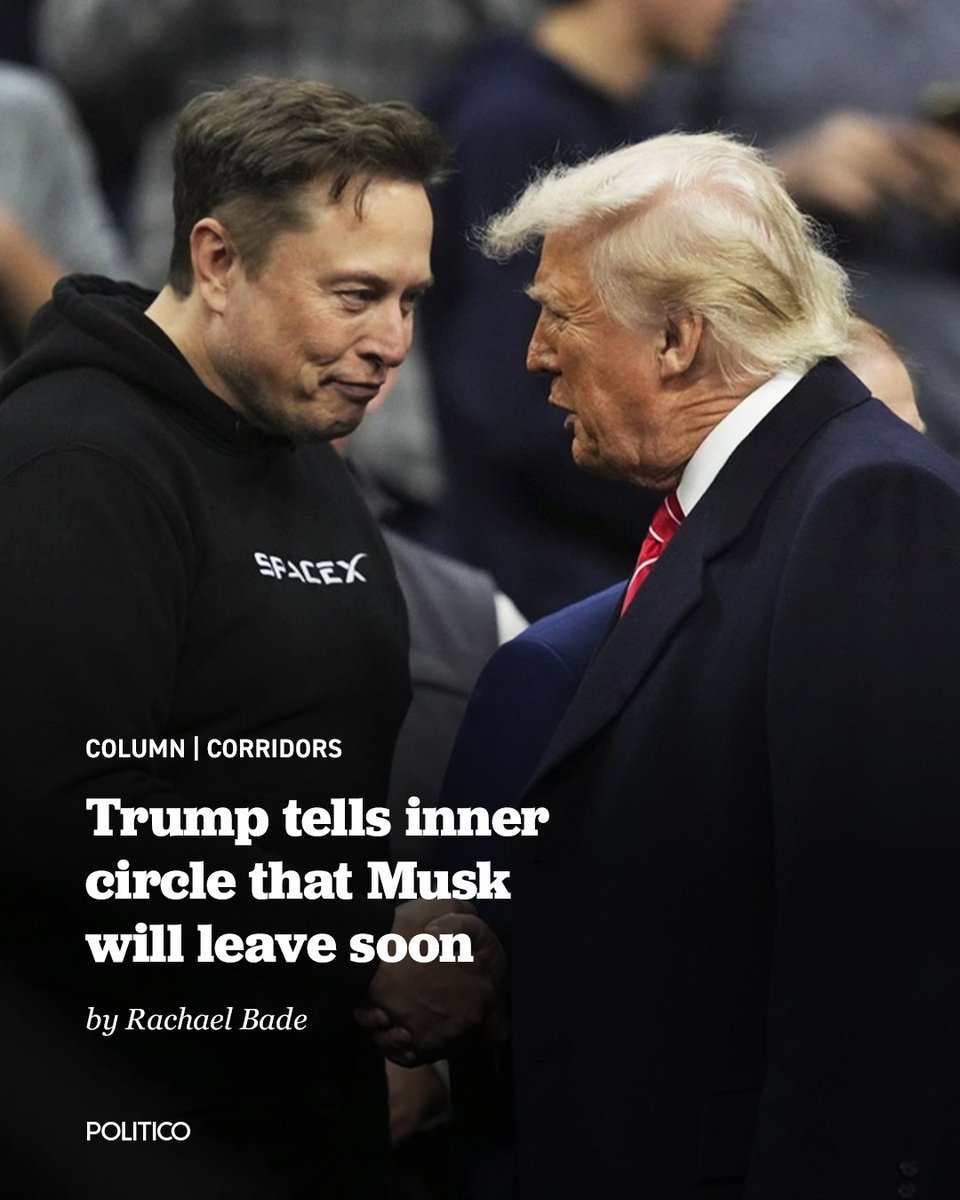
Elon Musk just got ghosted by Trump.
After all the bootlicking, all the chaos, all the stunts—he’s being tossed like a used meme. Because billionaires aren’t bulletproof when they become political baggage. #Trump #Musk

EXCLUSIVE: Trump has told his inner circle, including members of his Cabinet, that Elon Musk will soon be stepping back from his current role as governing partner, ubiquitous cheerleader and Washington hatchet man.
Read @rachaelmbade's full scoop: politi.co/3DT2LAm
1
1
190