That Love Podcast is a Rom-Com fiction podcast. Girls Like Girls Out June 8th. We create romantic comedies. We have 38 series on thatlovepodcast.com
Joined January 2021
- Tweets 33,393
- Following 2,776
- Followers 1,863
- Likes 5,203
22,178 Photos and videos
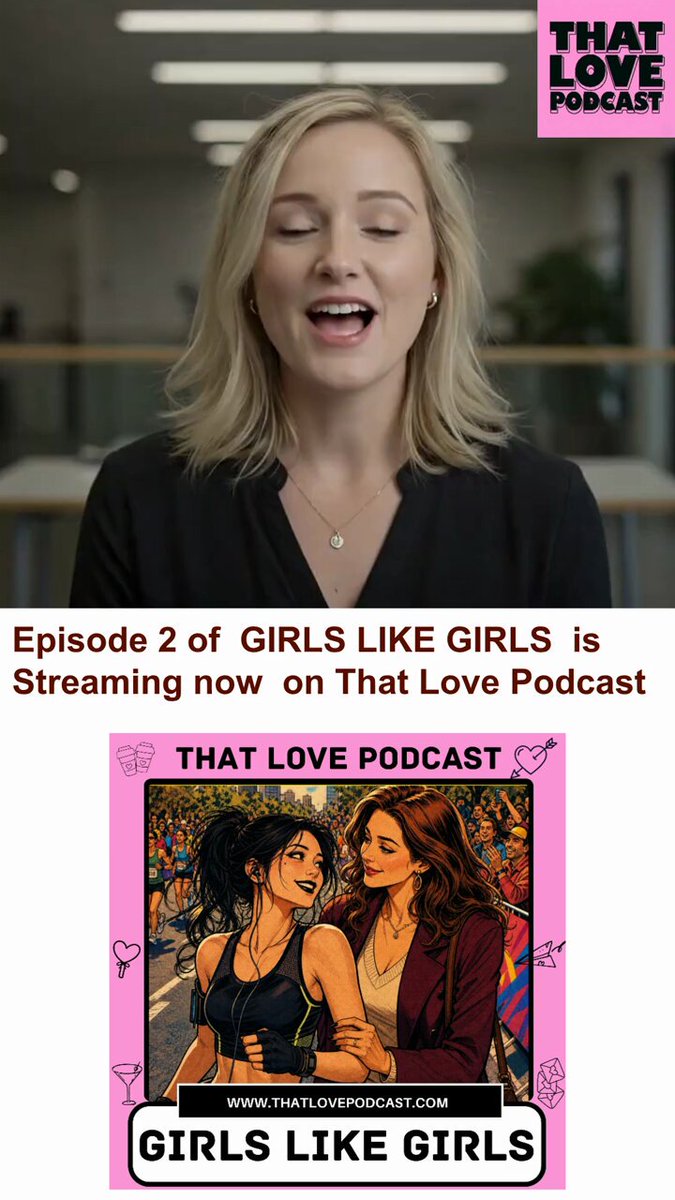
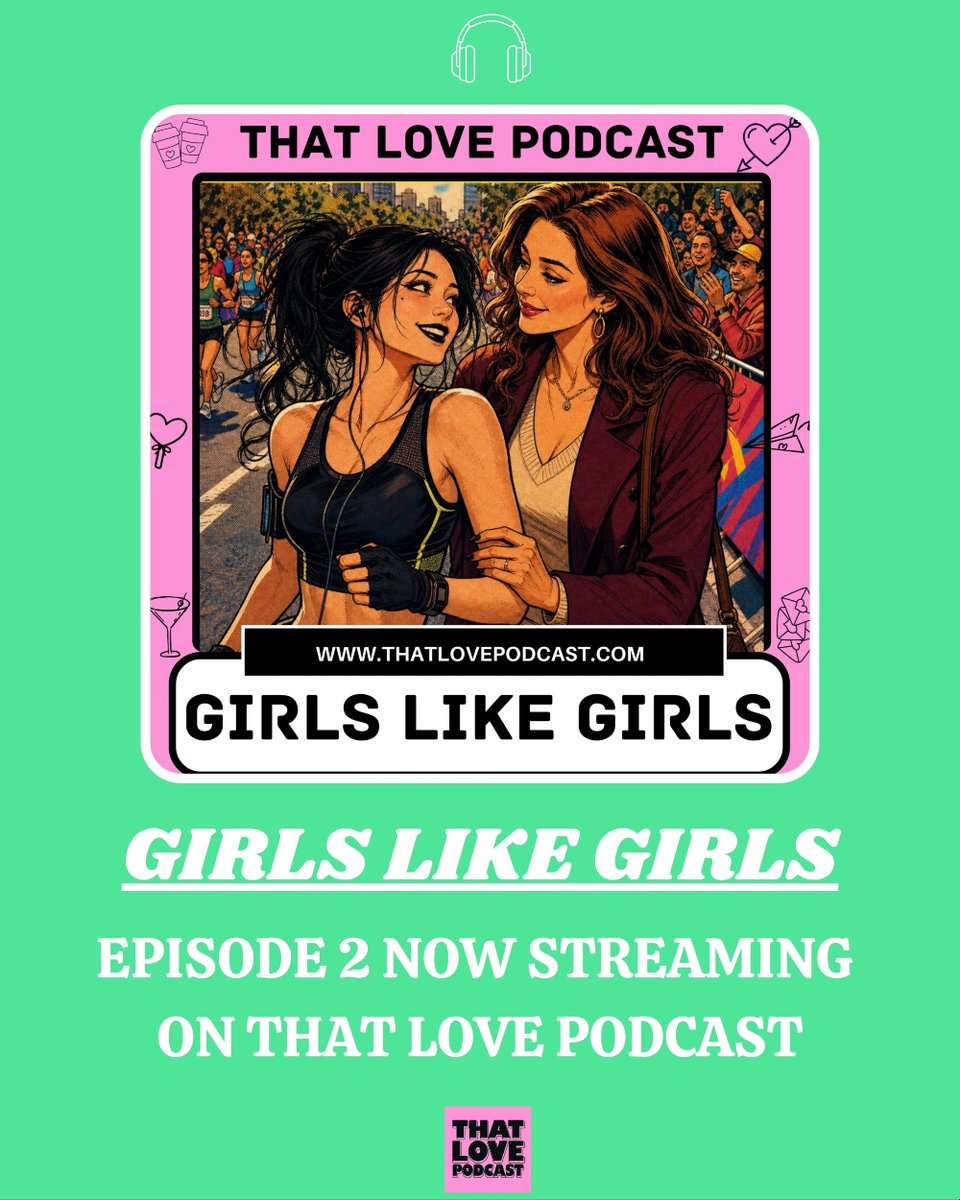
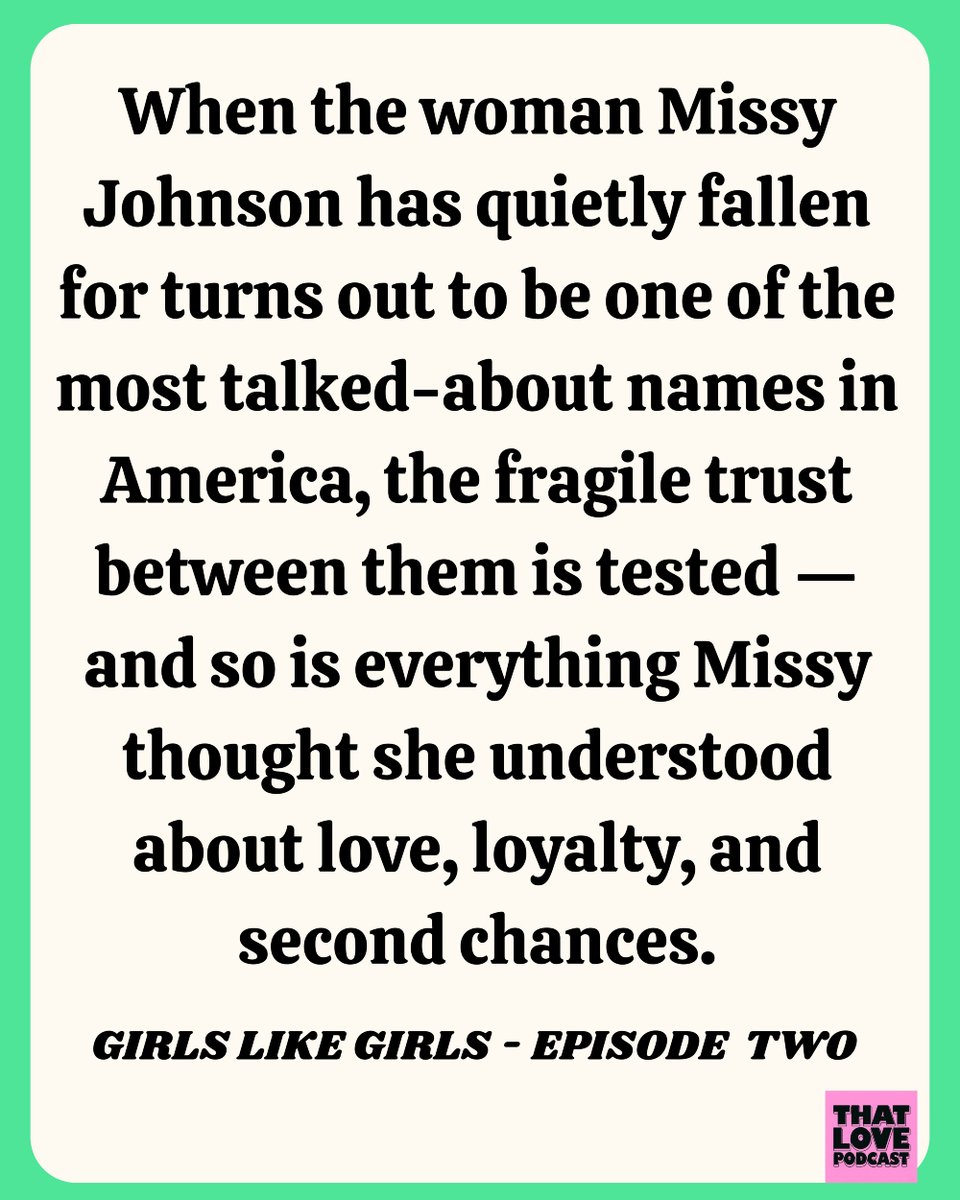

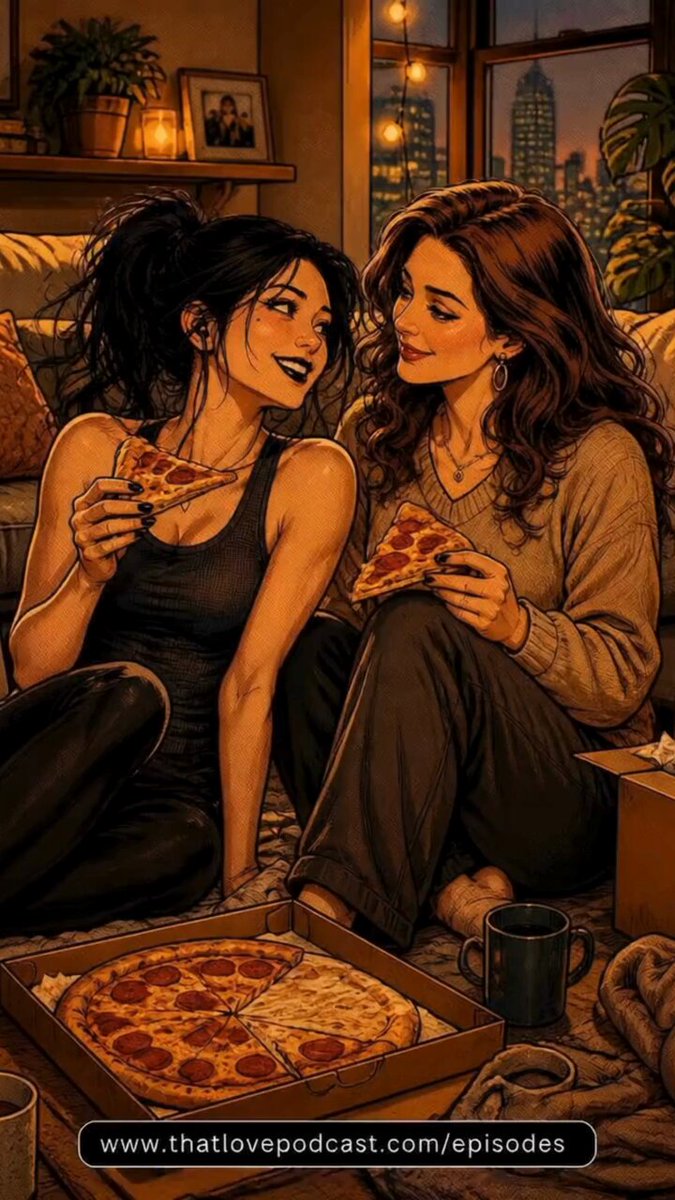
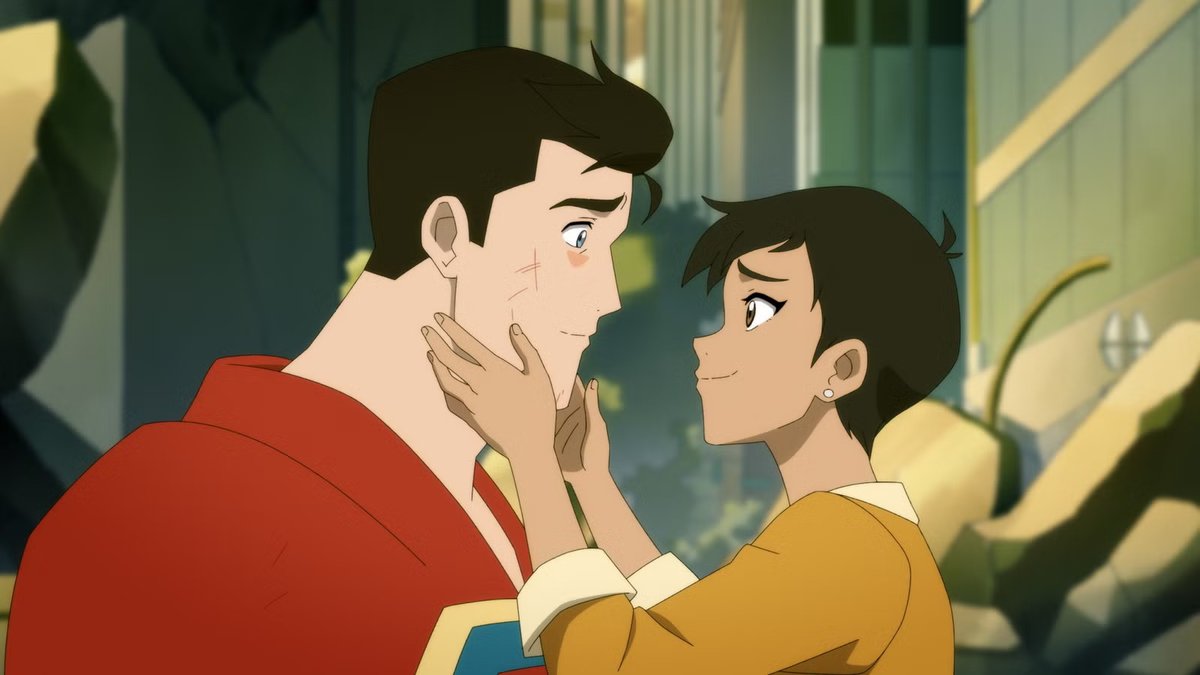

Quinn Matlock has never felt at home anywhere in her entire life. Not in her father's house. Not in Washington. Not in the world that knew her name and none of the rest of her. 💔
And then a warm, sharp, quietly fearless woman in her mid-thirties offered her a couch and a clean slate and didn't ask too many questions. 🥺
She told Missy she felt like a waterfall in the desert. She meant every word of it. 💜
Girls Like Girls Episode 2 is streaming now on That Love Podcast. Sometimes the safest place you've ever been is the one you almost didn't walk into. 💙
🎧 thatlovepodcast.com #GirlsLikeGirls #ThatLovePodcast #AudioDrama #WLW #Pride2026 #romcom #romanticcomedy #Bookstagram #romance #audiobook #audiofiction #audiobookrecs #BookWorm #Bookstagrammer
4
She is mid-thirties, bisexual, and quietly falling for her new roommate. Her ex-husband just found out that roommate is one of the most talked-about names in America. 👊✨
Quinn Matlock is not just a girl running from a bad situation. She is a tech heiress at the centre of a political scandal — and the woman Missy has been trying very hard not to think about is all over every news channel in the country. 😬
And then Quinn's ex showed up at the front door and kissed her on the mouth. Missy watched the whole thing from the window. 💔
Girls Like Girls Episode 2 is streaming now on That Love Podcast.
🎧 thatlovepodcast.com #GirlsLikeGirls #ThatLovePodcast #AudioDrama #WLW #PrideMonth #romcom #romanticcomedy #Bookstagram #romance #audiobook #audiofiction #audiobookrecs #BookWorm #Bookstagrammer
18
That Love Podcast retweeted

DENZEL WASHINGTON telling a hilarious story about SEAN CONNERY. You will laugh as hard as JAMIE FOXX does.
5
52
588
41,683

Jun 12
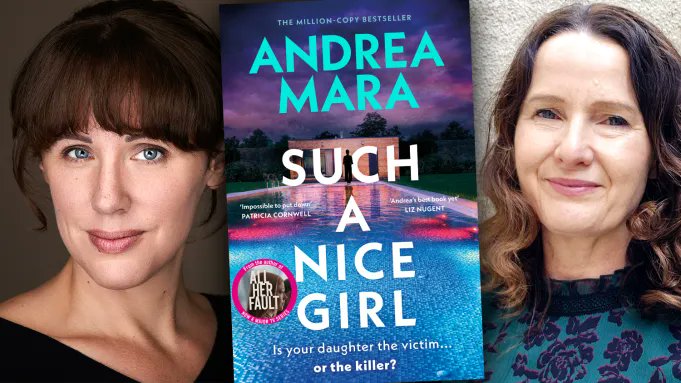
The announcement that Peacock is developing Such a Nice Girl, based on the bestselling novel by author Ruth Ware, is another sign that psychological thrillers continue to dominate television. The adaptation comes on the heels of the success of book-to-screen projects like All Her Fault, proving that audiences still have a huge appetite for suspense-driven storytelling.
What's fascinating is how much the television industry has changed over the past decade.
Not long ago, studios primarily looked for the next big superhero franchise or fantasy epic.
Today, many of the most successful streaming shows are built around something much simpler:
A great mystery.
A compelling protagonist.
And a story audiences can't stop talking about.
Shows like Big Little Lies, Mare of Easttown, The Night Agent, The Perfect Couple, and All Her Fault demonstrated that viewers love stories where every episode leaves them with another question to solve.
The reason these adaptations work is that they already have one thing every studio wants:
An audience.
The book has proven demand.
Readers are emotionally invested.
Word-of-mouth already exists.
The challenge then becomes translating those emotions to the screen without losing what made the story special in the first place.
That's where many adaptations succeed or fail.
The best adaptations don't simply recreate the book.
They capture the feeling readers experienced when they first turned the page.
For Peacock, Such a Nice Girl represents another opportunity to build a premium thriller brand around character-driven mysteries.
And for creators, there's a bigger lesson.
Great stories remain the most valuable intellectual property in entertainment.
Technology changes.
Platforms change.
Viewing habits change.
But audiences will always show up for a story that keeps them guessing.
That's why books continue to be one of Hollywood's richest sources of inspiration.
And why psychological thrillers aren't going away anytime soon.
#Television #Storytelling #EntertainmentIndustry #Streaming #Leadership #ContentStrategy
📖 For more business, entertainment, and creator economy analysis, visit:
joaonsita.substack.com/
17
Jun 12
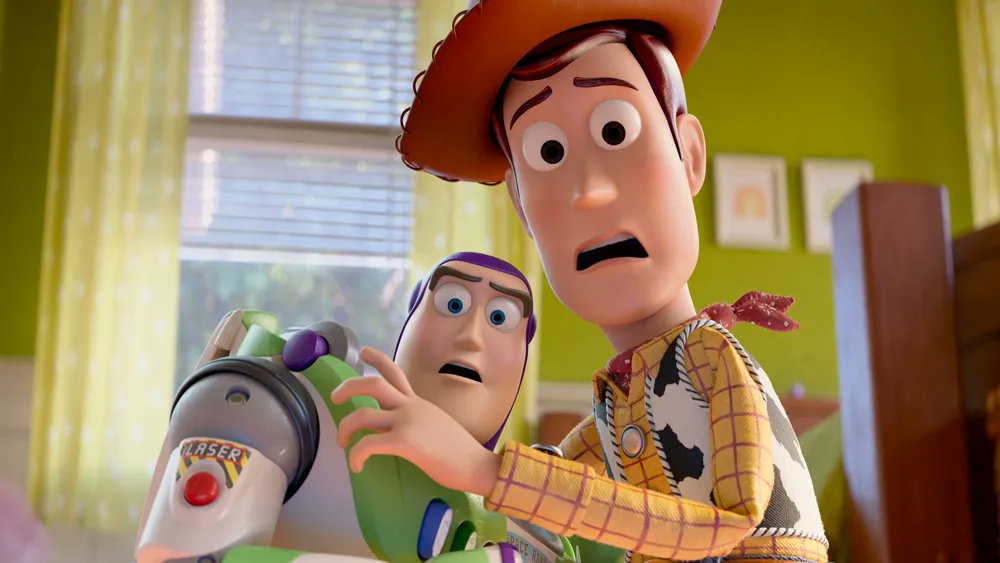
The most valuable toy company in Disney's history isn't a toy company at all.
It's Toy Story.
According to a new economic study shared by Disney, the Toy Story franchise has generated an astonishing $16 billion in revenue over the past 30 years. Nearly half of that came from the United States, with the rest generated internationally.
Think about that for a moment.
The original Toy Story wasn't designed to become a multi-billion-dollar empire.
It was a risky experiment.
The first fully computer-animated feature film.
An unproven technology.
A new studio called Pixar.
And a story about toys that come to life when nobody is watching.
Thirty years later, that experiment has become one of the most successful entertainment franchises ever created.
What's fascinating is that the success isn't just about box office revenue.
It's about longevity.
Most franchises struggle to remain relevant for a decade.
Toy Story has connected with multiple generations.
Parents who watched Woody and Buzz in 1995 are now introducing those same characters to their children.
That's incredibly rare.
The business lesson is simple:
The strongest brands aren't built around products.
They're built around emotional connections.
People don't remember Toy Story because of its animation technology.
They remember friendship.
Loyalty.
Growing up.
Purpose.
Letting go.
Those themes remain timeless.
That's why Disney continues investing in the franchise, with Toy Story 5 expected to be one of the company's biggest releases of 2026. Early projections suggest a record-setting opening for the series.
For creators, entrepreneurs, and business leaders, there's an important lesson here.
Technology changes.
Platforms change.
Consumer habits change.
But if you create something people genuinely care about, its value can last for decades.
That's what Pixar accomplished.
They didn't just create a movie.
They created a relationship with audiences that has lasted for 30 years and generated $16 billion in the process.
#ToyStory #Pixar #Leadership #BrandBuilding #EntertainmentIndustry #BusinessStrategy
📖 For more business, entertainment, and creator economy analysis, visit:
joaonsita.substack.com/
1
65
Jun 11
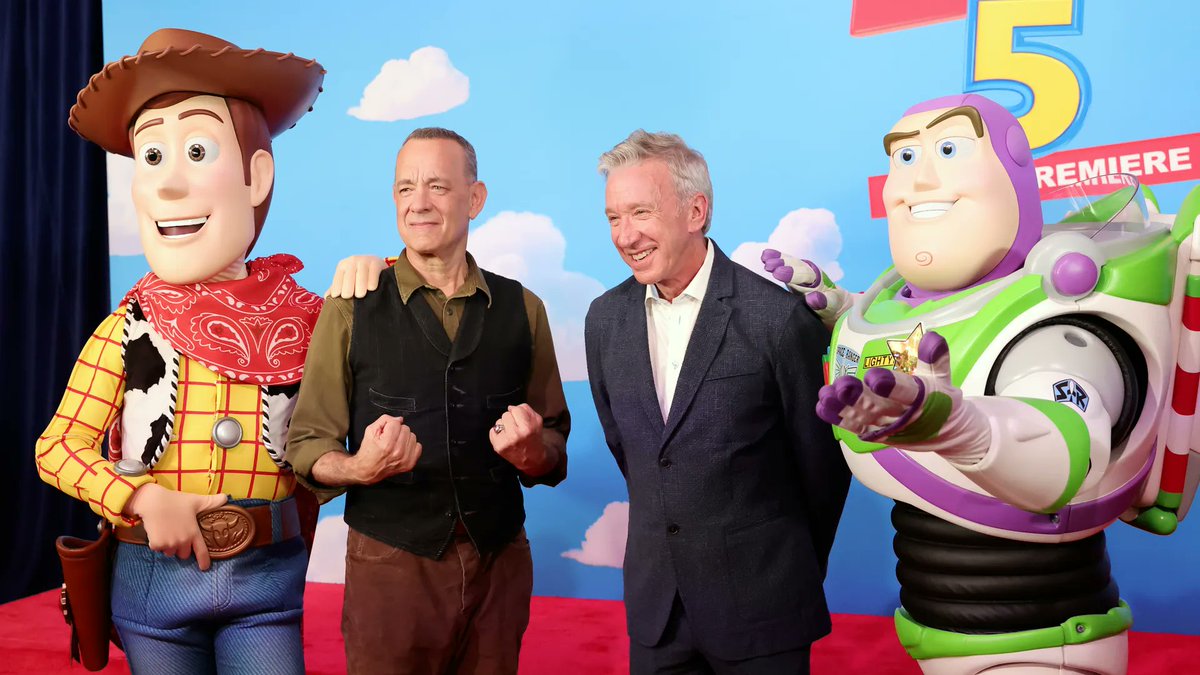
The first reactions to Toy Story 5 are arriving, and they tell a fascinating story.
When Pixar announced a fifth film, many fans were skeptical.
After all, we've been here before.
People questioned Toy Story 3.
They questioned Toy Story 4.
And many wondered whether Pixar was pushing the franchise too far.
Yet early reactions suggest Pixar may have done it again.
Critics and early viewers are praising the film's emotional storytelling, humor, and its willingness to tackle modern themes. Some reactions have described it as deeply moving, while others have highlighted the balance between heart and comedy that made the franchise famous.
What's particularly interesting is the film's central idea.
For the first time, the toys aren't simply competing with each other for attention.
They're competing with technology.
The story reportedly explores what happens when children increasingly choose tablets, screens, and digital entertainment over traditional toys.
That's not just a Toy Story problem.
It's a modern-life problem.
And that's one reason the franchise has endured for more than 30 years.
Each film reflects a different stage of life.
The original explored friendship and jealousy.
Toy Story 2 explored identity and purpose.
Toy Story 3 explored growing up and letting go.
Toy Story 4 explored change and self-discovery.
Now Toy Story 5 appears ready to explore relevance in a digital world.
The business lesson is equally interesting.
Great franchises don't survive because they repeat themselves.
They survive because they evolve.
Pixar has consistently found new ways to make these characters feel meaningful to a new generation of viewers.
Whether Toy Story 5 becomes another classic remains to be seen.
But if the early reactions are any indication, Pixar may once again be proving that audiences don't return for nostalgia alone.
They return for stories that still have something meaningful to say.
#ToyStory5 #Pixar #Storytelling #Leadership #EntertainmentIndustry #Innovation
📖 For more business, entertainment, and creator economy analysis, visit:
joaonsita.substack.com/
49
Jun 11
Quinn Matlock has never felt at home anywhere in her entire life. Not in her father's house. Not in Washington. Not in the world that knew her name and none of the rest of her. 💔
And then a warm, sharp, quietly fearless woman in her mid-thirties offered her a couch and a clean slate and didn't ask too many questions. 🥺
She told Missy she felt like a waterfall in the desert. She meant every word of it. 💜
Girls Like Girls Episode 2 is streaming now on That Love Podcast. Sometimes the safest place you've ever been is the one you almost didn't walk into. 💙
🎧 thatlovepodcast.com #GirlsLikeGirls #ThatLovePodcast #AudioDrama #WLW #Pride2026 #romcom #romanticcomedy #Bookstagram #romance #audiobook #audiofiction #audiobookrecs #BookWorm #Bookstagrammer
13
Jun 11
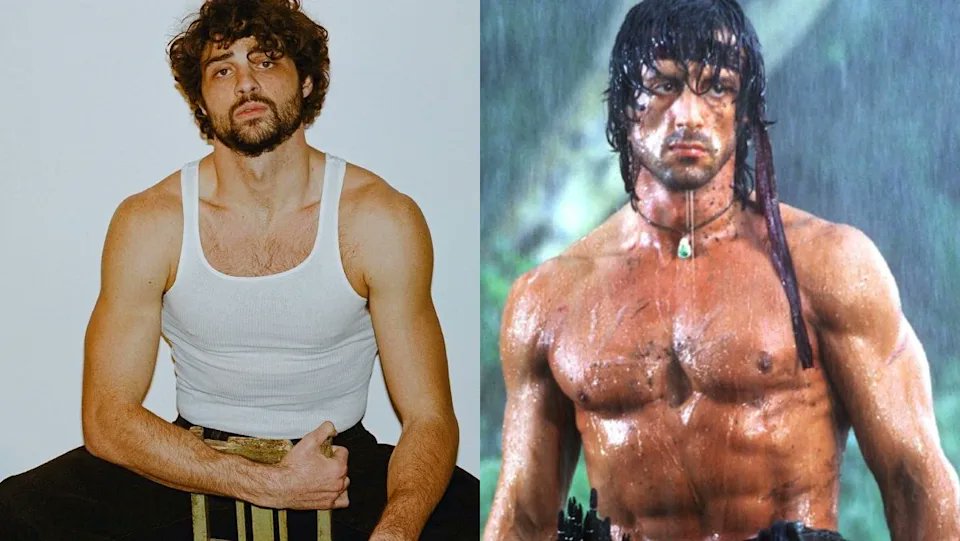
The upcoming Rambo prequel may completely change how audiences view one of action cinema's most iconic characters.
For decades, John Rambo has been known as a warrior.
A survivor.
A one-man army.
But if the new prequel delivers on its promise, audiences may finally see the person Rambo was before the trauma, the battles, and the scars. The film is set during the Vietnam War and will explore the origins of a young John Rambo before the events of First Blood.
What's fascinating is that this shifts the franchise's focus.
Most audiences remember Rambo as the unstoppable action hero from the sequels.
Yet the original First Blood was never really about action.
It was about trauma.
Isolation.
The psychological cost of war.
And a veteran struggling to find his place in a society that no longer understood him.
A prequel gives filmmakers an opportunity to explore the transformation.
How does a talented young soldier become the broken man audiences first meet in 1982?
What experiences shape him?
What does he lose along the way?
Those questions could make this one of the most emotionally ambitious entries in the franchise.
There's also a broader storytelling lesson here.
The most successful prequels don't simply explain events.
They deepen characters.
Better Call Saul changed how audiences viewed Saul Goodman.
Andor changed how audiences viewed the rebellion in Star Wars.
The best prequels add meaning to stories we already know.
That's the challenge facing John Rambo.
Not just delivering action.
But helping audiences understand the man behind the legend.
If it succeeds, viewers may never watch First Blood in quite the same way again.
#Rambo #Storytelling #Leadership #EntertainmentIndustry #Filmmaking #Movies
📖 For more business, entertainment, and creator economy analysis, visit:
joaonsita.substack.com/
44
Jun 11
She is mid-thirties, bisexual, and quietly falling for her new roommate. Her ex-husband just found out that roommate is one of the most talked-about names in America. 👊✨
Quinn Matlock is not just a girl running from a bad situation. She is a tech heiress at the centre of a political scandal — and the woman Missy has been trying very hard not to think about is all over every news channel in the country. 😬
And then Quinn's ex showed up at the front door and kissed her on the mouth. Missy watched the whole thing from the window. 💔
Girls Like Girls Episode 2 is streaming now on That Love Podcast.
🎧 thatlovepodcast.com #GirlsLikeGirls #ThatLovePodcast #AudioDrama #WLW #PrideMonth #romcom #romanticcomedy #Bookstagram #romance #audiobook #audiofiction #audiobookrecs #BookWorm #Bookstagrammer
1
1
79
Jun 10
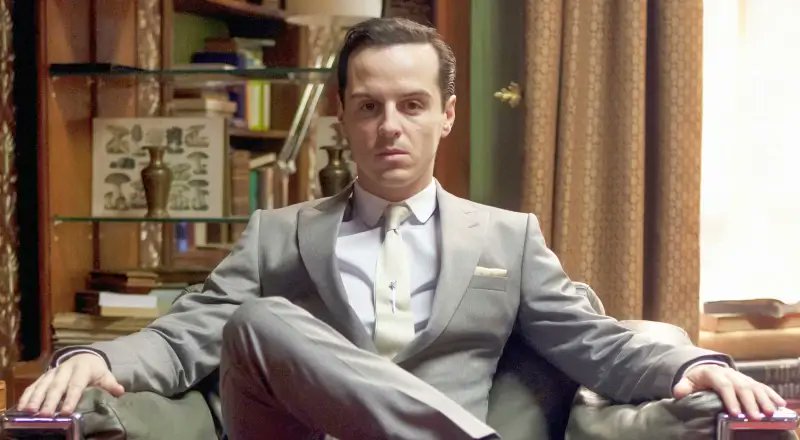
One of the greatest villain quotes in television history didn't come from a superhero.
It came from Jim Moriarty in Sherlock.
"In a world of locked rooms, the man with the key is king."
It's a brilliant line because it reveals everything about the character.
Moriarty isn't driven by money.
He isn't motivated by power in the traditional sense.
He's obsessed with control.
Information.
Manipulation.
The ability to stay one step ahead of everyone else.
That's what made Andrew Scott's portrayal so memorable.
Unlike many television villains, Moriarty wasn't physically intimidating.
He was intellectually dangerous.
Unpredictable.
Chaotic.
And completely fascinated by the game he was playing with Sherlock Holmes. Critics and audiences alike praised this version of Moriarty for being a fresh and unsettling interpretation of the character.
What's fascinating is that great villains often teach us something about great storytelling.
The best heroes need equally compelling opponents.
Batman has the Joker.
Professor X has Magneto.
Harry Potter has Voldemort.
And Sherlock Holmes has Moriarty.
The villain isn't there simply to create obstacles.
They're there to challenge the hero's worldview.
To expose weaknesses.
To force growth.
That's exactly what Moriarty did.
He wasn't just Sherlock's enemy.
He was Sherlock's mirror.
A reminder of what extraordinary intelligence might look like without morality or restraint.
More than a decade after Sherlock premiered, Moriarty remains one of television's most memorable antagonists because he understood something many villains don't:
The most dangerous person in the room isn't always the strongest.
Sometimes it's the one holding the key.
#Sherlock #Storytelling #Leadership #Television #EntertainmentIndustry #CharacterDevelopment
📖 For more business, entertainment, and creator economy analysis, visit:
joaonsita.substack.com/
1
43
Jun 10
Few television shows have survived for more than 60 years.
Doctor Who is one of them.
That's why the recent update about the show's future is so interesting.
Over the past year, fans have speculated about everything from Disney's departure as a production partner to the identity of the next Doctor and the future direction of the franchise. The uncertainty led some people to wonder whether the series was entering one of the most challenging periods in its history.
But the BBC has made one thing clear:
Doctor Who isn't going anywhere.
The BBC has reaffirmed its commitment to the franchise and confirmed that new adventures are still planned, even after Disney ended its involvement following the Ncuti Gatwa era.
What's fascinating is that this isn't the first time people have questioned the future of Doctor Who.
The show has survived cancellations.
Budget limitations.
Changing audiences.
Major cast departures.
And dramatic shifts in television itself.
Yet somehow, it continues to regenerate—both literally and creatively.
That's the real lesson behind Doctor Who's longevity.
Great brands evolve.
The Doctor changes.
The companions change.
The villains change.
The storytelling changes.
But the core idea remains the same:
Adventure.
Hope.
Curiosity.
And the belief that one person can make a difference.
Very few entertainment properties have demonstrated that level of adaptability.
Whether the next Doctor is a familiar face or a complete surprise, the franchise's greatest strength has never been a single actor.
It's the ability to reinvent itself for each new generation.
In business, entertainment, and leadership, that's often the difference between surviving and thriving.
The companies, creators, and franchises that last the longest aren't the ones that resist change.
They're the ones that learn how to evolve without losing their identity.
For more than six decades, Doctor Who has been proving that lesson again and again.
#DoctorWho #Leadership #Storytelling #EntertainmentIndustry #Innovation #BrandBuilding
📖 For more business, entertainment, and creator economy analysis, visit:
joaonsita.substack.com/
63
Jun 10
Girls Like Girls Episode 1 – A New Beginning 💕🏡
After being kicked out by her family and struggling to survive on her own, Quinn desperately searches for a fresh start. When Missy opens her home to a stranger in need, neither woman realizes how much this decision will change their lives. A moving story about kindness, healing, and finding a place to belong.
✔️ LGBTQ Romance
✔️ Found Family
✔️ Emotional Healing
✔️ Slow Burn Romance
✔️ Strong Women
✔️ Second Chances
Episode 1 introduces the unforgettable journey of Quinn and Missy as two lonely souls begin building a connection that could transform both their futures.
#podcast #lgbtqromance #audiodrama
30
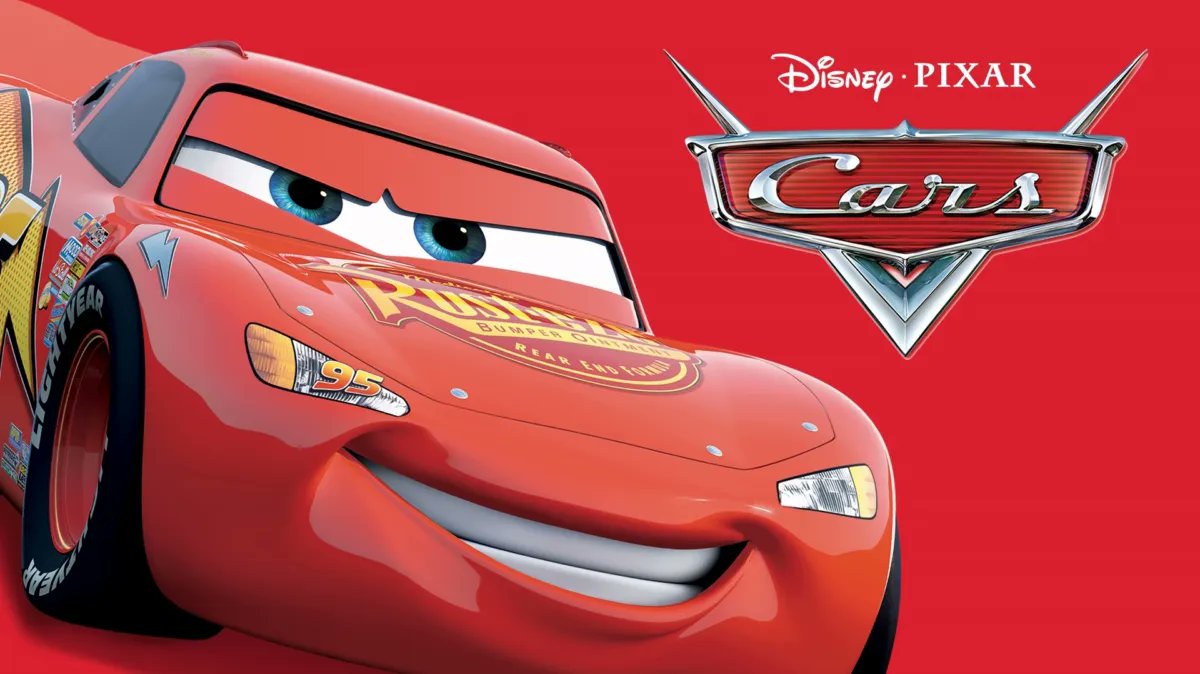
20 years ago today, Pixar released Cars.
At the time, it wasn't viewed as Pixar's most groundbreaking film.
It didn't receive the same level of critical acclaim as Toy Story, Finding Nemo, or The Incredibles.
Yet two decades later, Cars may be one of the most important franchises Pixar has ever created.
Why?
Because Cars understood something many stories forget.
Life isn't always about moving faster.
Sometimes it's about slowing down.
Lightning McQueen begins the film obsessed with winning.
Success is everything.
The next race.
The next trophy.
The next achievement.
Then Radiator Springs forces him to stop.
To listen.
To build relationships.
To appreciate the people around him.
And ultimately to discover that success means very little if you have nobody to share it with.
That's a lesson that resonates even more today than it did in 2006.
We're living in a world that constantly encourages speed.
More content.
More work.
More growth.
More achievement.
Yet one of Pixar's most enduring stories reminds us that purpose often comes from connection, community, and friendship.
The impact of Cars extends far beyond the movie itself.
It launched a franchise worth billions in merchandise.
Created theme park attractions around the world.
Introduced beloved characters like Mater, Doc Hudson, Sally, and Cruz Ramirez.
And became a childhood favorite for an entire generation.
Perhaps most importantly, it proved that not every hero's journey is about saving the world.
Sometimes it's about becoming a better person.
Twenty years later, that's a message still worth remembering.
#CarsMovie #Pixar #Storytelling #Leadership #EntertainmentIndustry #PersonalGrowth
📖 For more business, entertainment, and creator economy analysis, visit:
joaonsita.substack.com/
73
One of the most encouraging developments for DC over the past few years hasn't been a movie.
It's been My Adventures with Superman.
While many superhero franchises have become darker, more cynical, and increasingly focused on universe-building, this animated series reminded audiences why Superman became one of the most beloved heroes in history in the first place.
Hope.
Optimism.
Kindness.
According to early reviews, Season 3 continues that momentum, introducing new developments for Clark Kent, Supergirl, Superboy, and several iconic Superman characters while maintaining the show's strong focus on character-driven storytelling. Critics have praised the season's emotional arcs, expanding mythology, and commitment to making Superman feel inspirational rather than outdated.
What's fascinating is that the show's success offers a lesson for every entertainment company.
Sometimes innovation doesn't mean reinventing a character.
Sometimes it means understanding why people loved that character in the first place.
For years, many creators struggled with Superman because they viewed his optimism as a weakness.
My Adventures with Superman treats it as his greatest strength.
The result is a version of Clark Kent that feels modern while remaining true to the core values that made him a cultural icon for nearly 90 years.
The show also proves something important about franchise building.
Audiences don't simply want bigger stories.
They want better characters.
The strongest franchises aren't built on spectacle alone.
They're built on emotional investment.
People care about Clark.
They care about Lois.
They care about Jimmy.
And that's why the show continues to resonate.
As DC continues building its future across film, television, and animation, My Adventures with Superman may end up being one of the clearest examples of how to modernize a legacy character without losing what made them special in the first place.
#Superman #DCComics #Storytelling #Leadership #EntertainmentIndustry #Animation
📖 For more business, entertainment, and creator economy analysis, visit:
joaonsita.substack.com/
154
Xbox Game Pass reportedly lost "millions of subscribers" after Microsoft increased prices by 50% in late 2025.
That's a fascinating business lesson.
For years, Game Pass was viewed as one of the best deals in entertainment.
Hundreds of games.
Day-one releases.
Cloud gaming.
A growing ecosystem.
The value proposition felt obvious.
Then came the price increase.
According to Xbox executives, the jump from $19.99 to $29.99 per month led to millions of subscribers leaving the service before Microsoft eventually reduced the price again in 2026.
What's interesting isn't that people canceled.
It's why they canceled.
Many businesses assume loyal customers will absorb price increases indefinitely.
But customers don't buy products.
They buy value.
The moment people feel the value no longer matches the price, loyalty gets tested.
We've seen this across industries.
Streaming services.
Software subscriptions.
Gyms.
Media companies.
Gaming.
Every subscription business eventually reaches the same question:
"How much is too much?"
The challenge becomes even greater when consumers have more alternatives than ever before.
Today Xbox isn't just competing against PlayStation.
It's competing against Netflix.
Disney .
YouTube.
TikTok.
Steam.
Mobile games.
And countless other ways people can spend their time and money.
Attention has become the most competitive market in the world.
What makes this story particularly interesting is that Microsoft responded.
The company later reduced Game Pass pricing and adjusted its strategy, acknowledging that the previous pricing model wasn't working as intended.
That's an important leadership lesson.
Sometimes the smartest move isn't defending a decision.
It's recognizing when the market is giving you feedback.
The businesses that survive long-term aren't always the ones that make perfect decisions.
They're the ones willing to adapt when the data tells them something isn't working.
In business, pricing is never just a financial decision.
It's a trust decision.
And trust remains one of the most valuable assets any company can own.
#Xbox #GamePass #BusinessStrategy #Leadership #Marketing #CreatorEconomy
📖 For more business, entertainment, and creator economy analysis, visit:
joaonsita.substack.com/
63
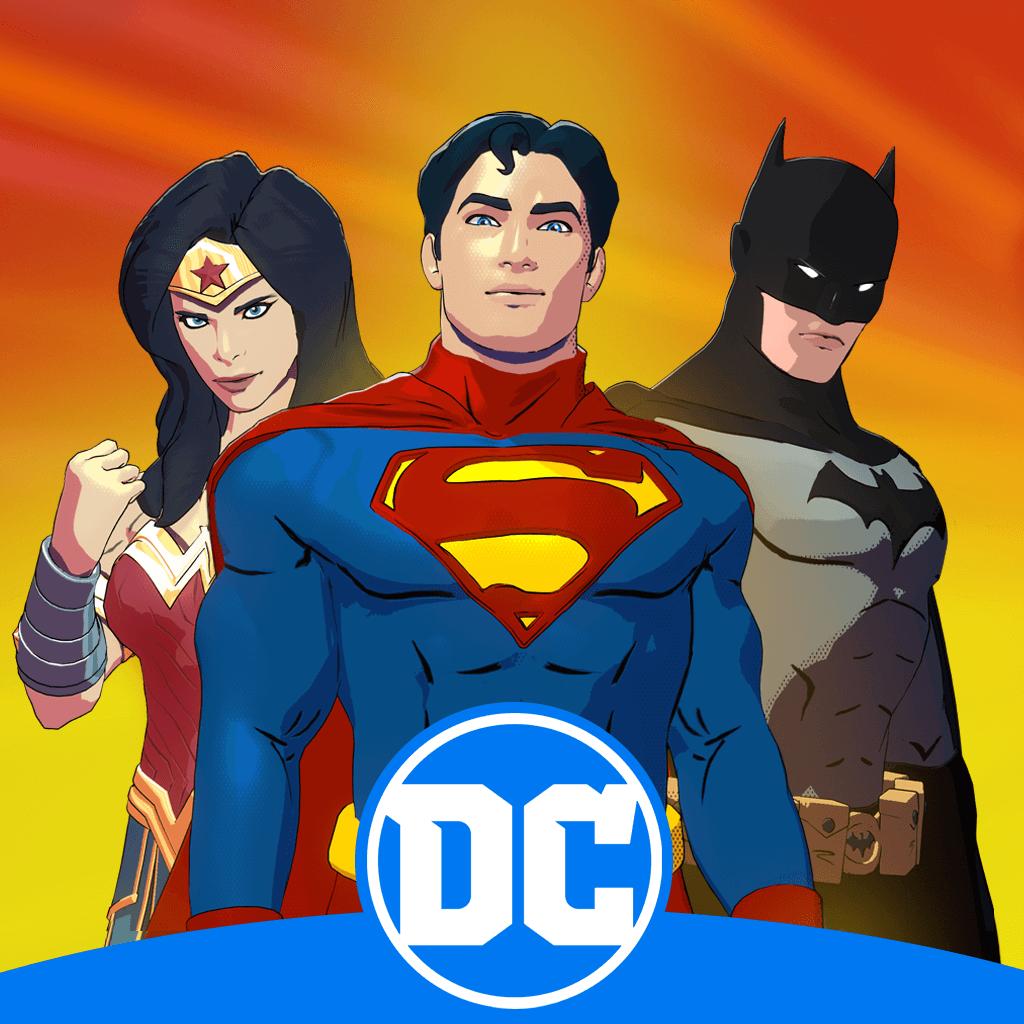
One of the most interesting periods in Justice League history happened during the 1980s.
Not because Superman, Batman, or Wonder Woman were leading the team.
But because DC Comics started taking risks on lesser-known heroes.
Characters like Booster Gold, Mister Miracle, Fire, Ice, Vixen, and Animal Man joined the Justice League during a decade that completely reshaped the team's identity.
At the time, it was a bold move.
Most companies would have relied exclusively on their biggest stars.
Instead, DC gave opportunities to characters who weren't household names.
Some of those heroes would go on to become fan favorites and major parts of the DC Universe for decades.
There's an important business lesson here.
Strong organizations don't just rely on established stars.
They develop new talent.
They create opportunities.
They take calculated risks.
The Justice League of the 1980s wasn't always the most commercially obvious version of the team, but it helped expand the DC Universe and introduced readers to characters who may never have received attention otherwise.
Modern entertainment companies face a similar challenge.
It's easy to keep investing in proven brands.
It's much harder to build the next generation of stars.
Yet every major franchise eventually needs fresh characters, fresh ideas, and fresh voices.
That's true in comics.
It's true in Hollywood.
And it's true in business.
Today's unknown talent could become tomorrow's biggest success story.
Sometimes the smartest investment isn't doubling down on what's already popular.
It's giving new people a chance to surprise you.
#DCComics #JusticeLeague #Leadership #Innovation #Storytelling #BusinessStrategy
📖 For more business, entertainment, and creator economy analysis, visit:
joaonsita.substack.com/
83
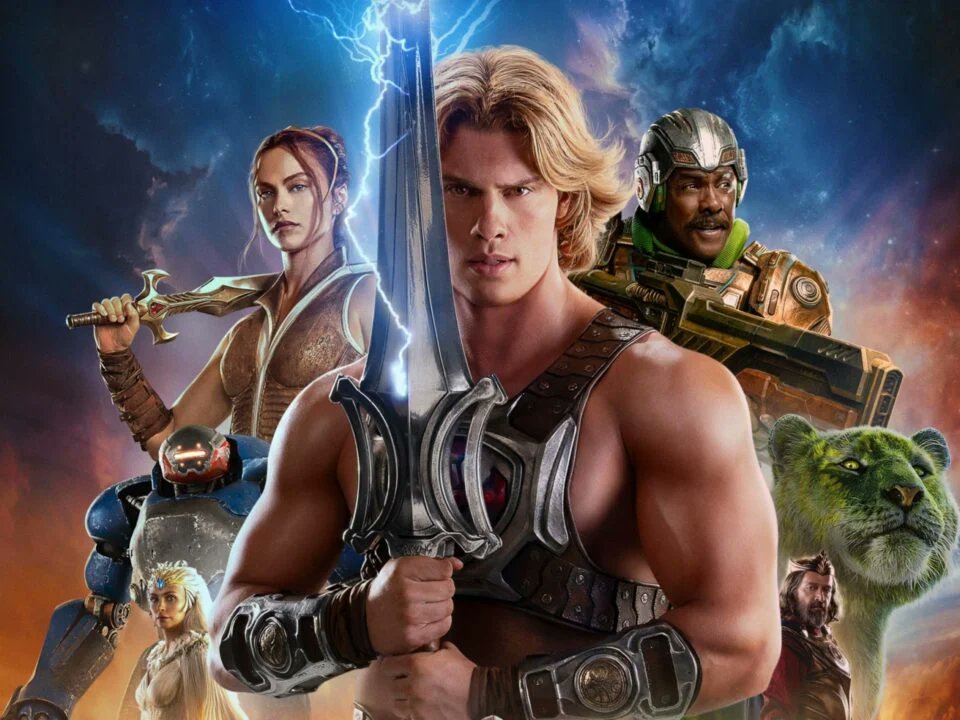
The struggles of Masters of the Universe at the box office offer an interesting lesson about nostalgia, branding, and changing audience tastes.
On paper, the film had many ingredients Hollywood usually loves:
✔ A recognizable brand
✔ A built-in fanbase
✔ A large budget
✔ Spectacle
✔ Franchise potential
Yet early box office results have been disappointing compared to its reported production budget of $170–200 million. Several analysts have pointed to stiff competition from breakout hits like Backrooms and Scary Movie, mixed word-of-mouth, and the challenge of convincing modern audiences that He-Man is essential viewing in 2026.
What's fascinating is that this isn't the first time the franchise has faced this problem.
The original 1987 Masters of the Universe movie also struggled commercially despite the popularity of the toy line and animated series.
The bigger lesson is that nostalgia alone isn't enough.
For years, Hollywood operated under the assumption that recognizable intellectual property could guarantee success.
Today, audiences seem to be demanding something more.
They want a reason to care.
A compelling story.
Characters worth investing in.
A cultural conversation.
Look at what has worked recently.
Barbie wasn't simply a movie about a toy.
It became a cultural event.
Top Gun: Maverick wasn't simply nostalgia.
It delivered an experience audiences felt they needed to see in theaters.
Even Backrooms, based on a relatively niche internet phenomenon, succeeded because it generated curiosity and built momentum through audience enthusiasm.
The challenge facing many legacy franchises is relevance.
A brand can open the door.
But it can't force audiences to walk through it.
That's why modern franchise building is becoming harder.
Studios aren't just competing against other movies anymore.
They're competing against streaming, gaming, social media, YouTube, TikTok, and countless other forms of entertainment.
Attention has become the most valuable currency in media.
The lesson for creators and businesses is simple:
Recognition helps.
But relevance wins.
The brands that survive are the ones that continually give audiences a reason to care today—not simply remember yesterday.
#MastersOfTheUniverse #Leadership #Marketing #EntertainmentIndustry #Storytelling #BusinessStrategy
📖 For more business, entertainment, and creator economy analysis, visit:
joaonsita.substack.com/
1
143
She is mid-thirties, bisexual, newly empty-nested, and absolutely not looking for anything complicated. And then Quinn Matlock walked through her door. 👊✨
Missy Johnson had been through a medieval knight, three profane parrots, and a man wrapped in tinfoil before the most beautiful, guarded, complicated woman she had ever seen sat down across from her and asked for a chance. 🖤
She said yes before she even knew why. And neither of them has been the same since. 😅
Girls Like Girls Episode 1 is streaming now on That Love Podcast. 🎙️
🎧 thatlovepodcast.com #GirlsLikeGirls #ThatLovePodcast #AudioDrama #WLW #PrideMonth #romcom #romanticcomedy #Bookstagram #romance #audiobook #audiofiction #audiobookrecs #BookWorm #Bookstagrammer
34