
We provide free, open-source software to simulate public policy. Follow our country accounts too: @PolicyEngineUS and @PolicyEngineUK
Joined August 2021
- Tweets 732
- Following 161
- Followers 1,764
- Likes 856
108 Photos and videos





PolicyEngine retweeted

May 27
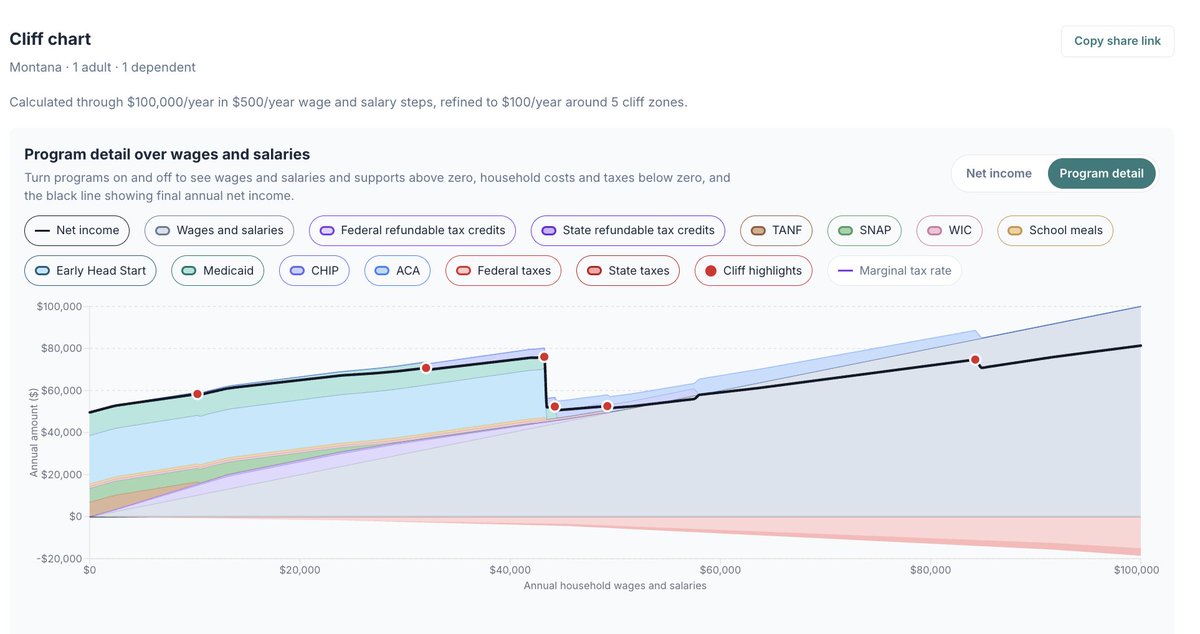
Earn a dollar more, take home less. Benefit cliffs happen when a household loses more in benefits than it gains in earnings.
CliffWatch shows where, when, and how — across earnings levels and US states.
Live demo Fri May 29, 1pm ET → us06web.zoom.us/meeting/regi…
1
2
139
PolicyEngine retweeted
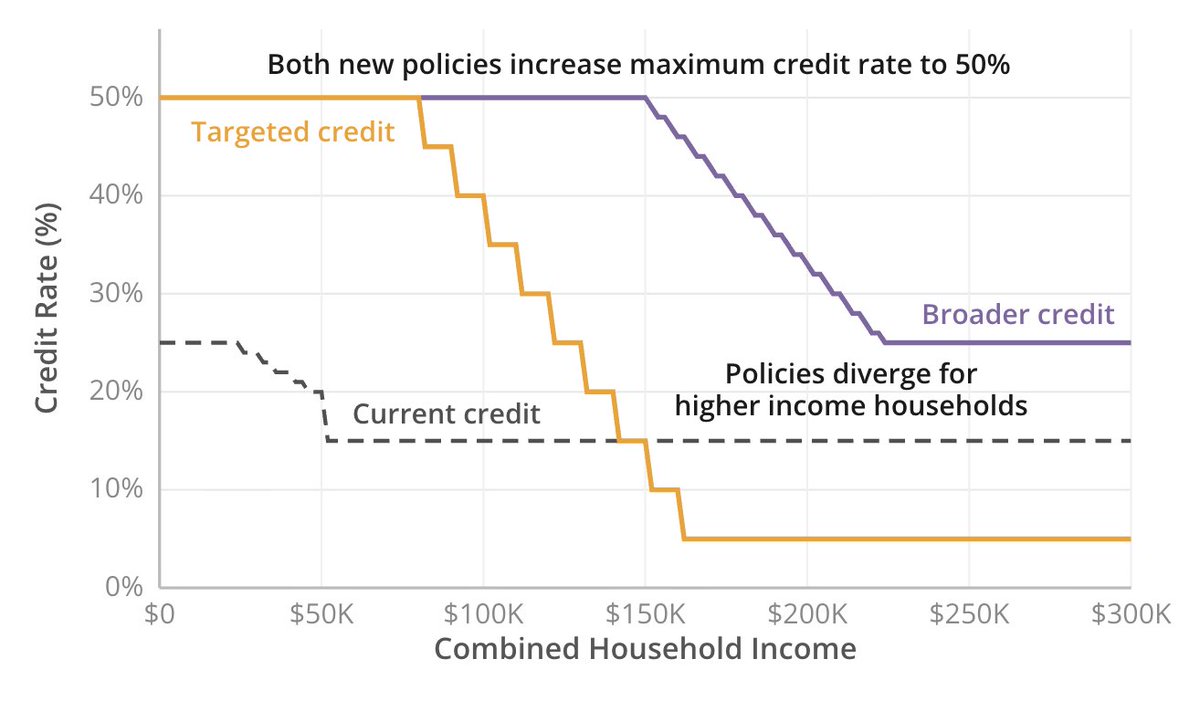
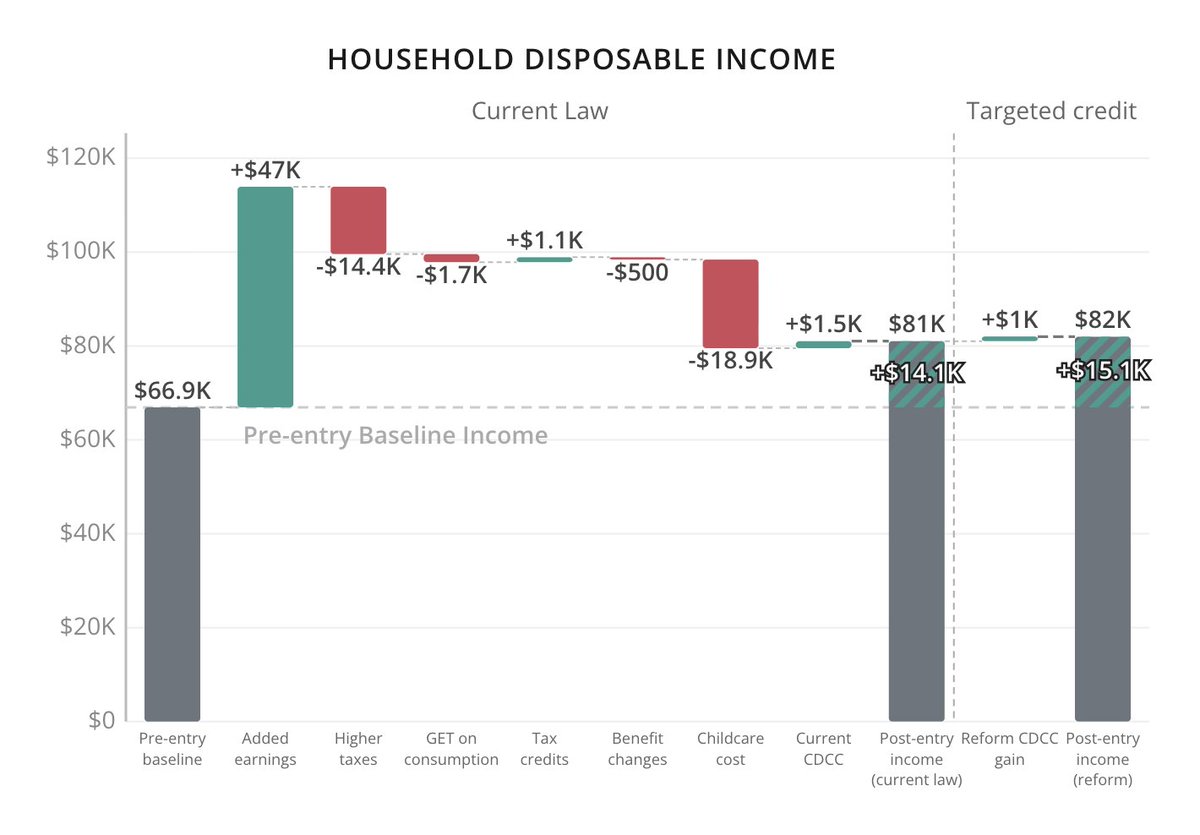
New @UHEROnews analysis uses PolicyEngine to simulate Hawaii's childcare credit bills — first the direct household effect of the expanded CDCC, then the integrated CDCC, EITC, SNAP, WIC, and state income tax impact when a second earner enters the workforce in response.
2
1
2
144

May 3
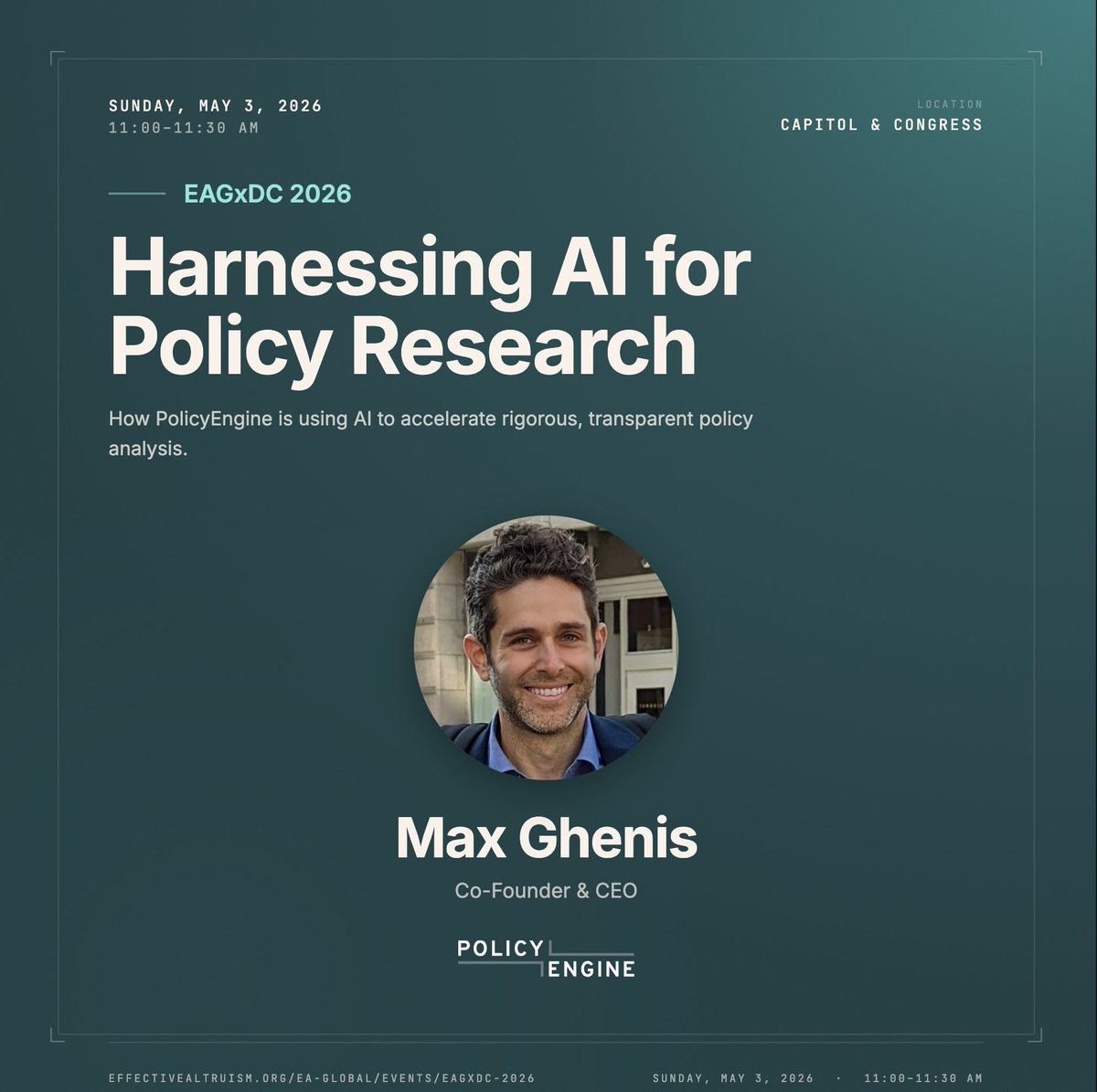
Today at 11 AM at EAGxDC: why frontier LLMs miss basic tax and benefit math, what changes when AI agents call an open simulator, and where our new initiatives like PolicyBench and the Economic Parameter Atlas come in.
1
5
873
PolicyEngine retweeted

May 1
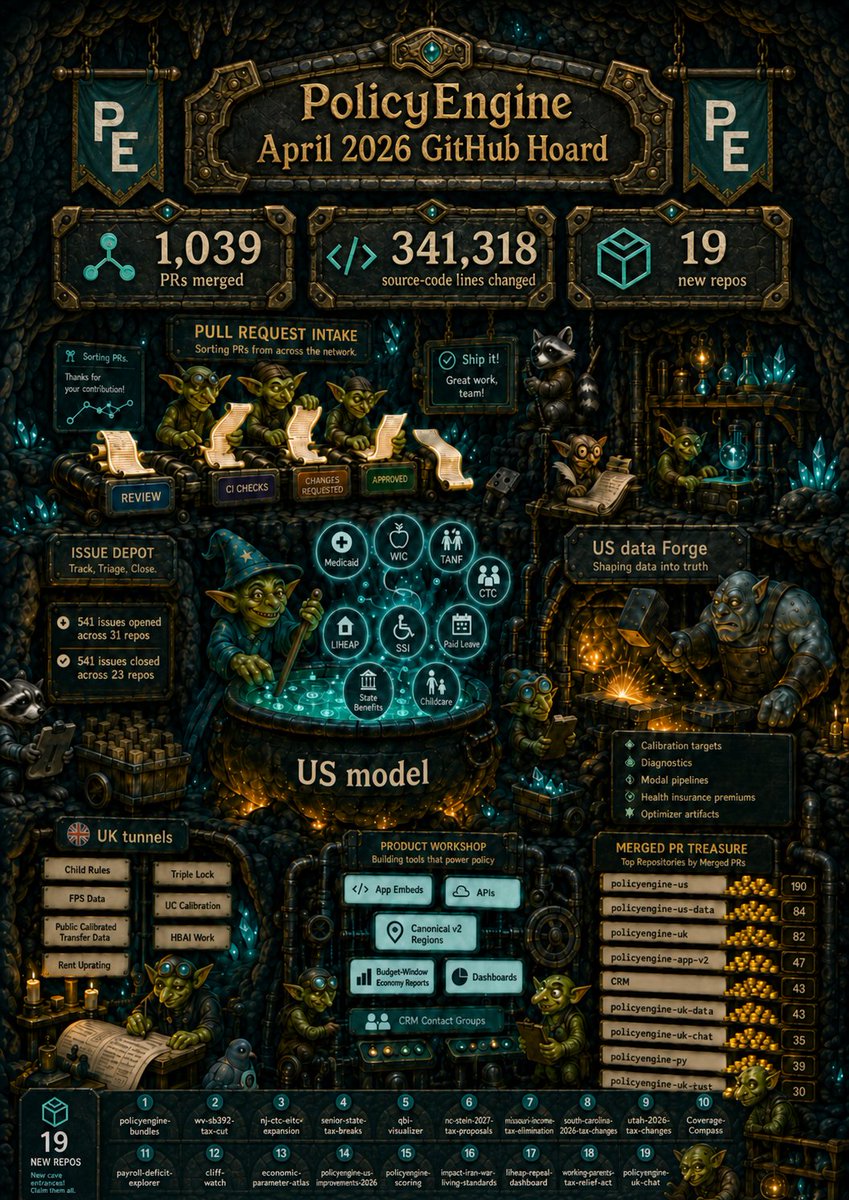
We added a ton of ingredients to @ThePolicyEngine cauldron last month:
- 1,039 PRs merged (7× April 2025, 2× March 2026)
- 341,318 source-code lines changed
- 19 new repos
Childcare subsidy rules, Forbes 400, better reproducibility - all make our models more accurate & useful.
2
2
7
356
PolicyEngine retweeted
Apr 15
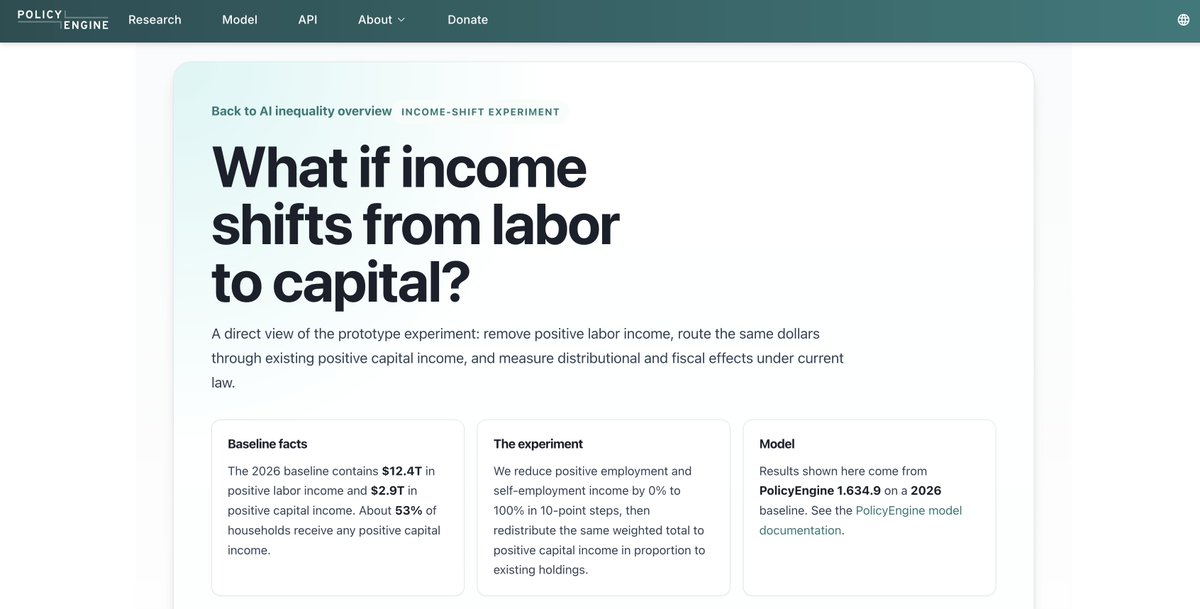
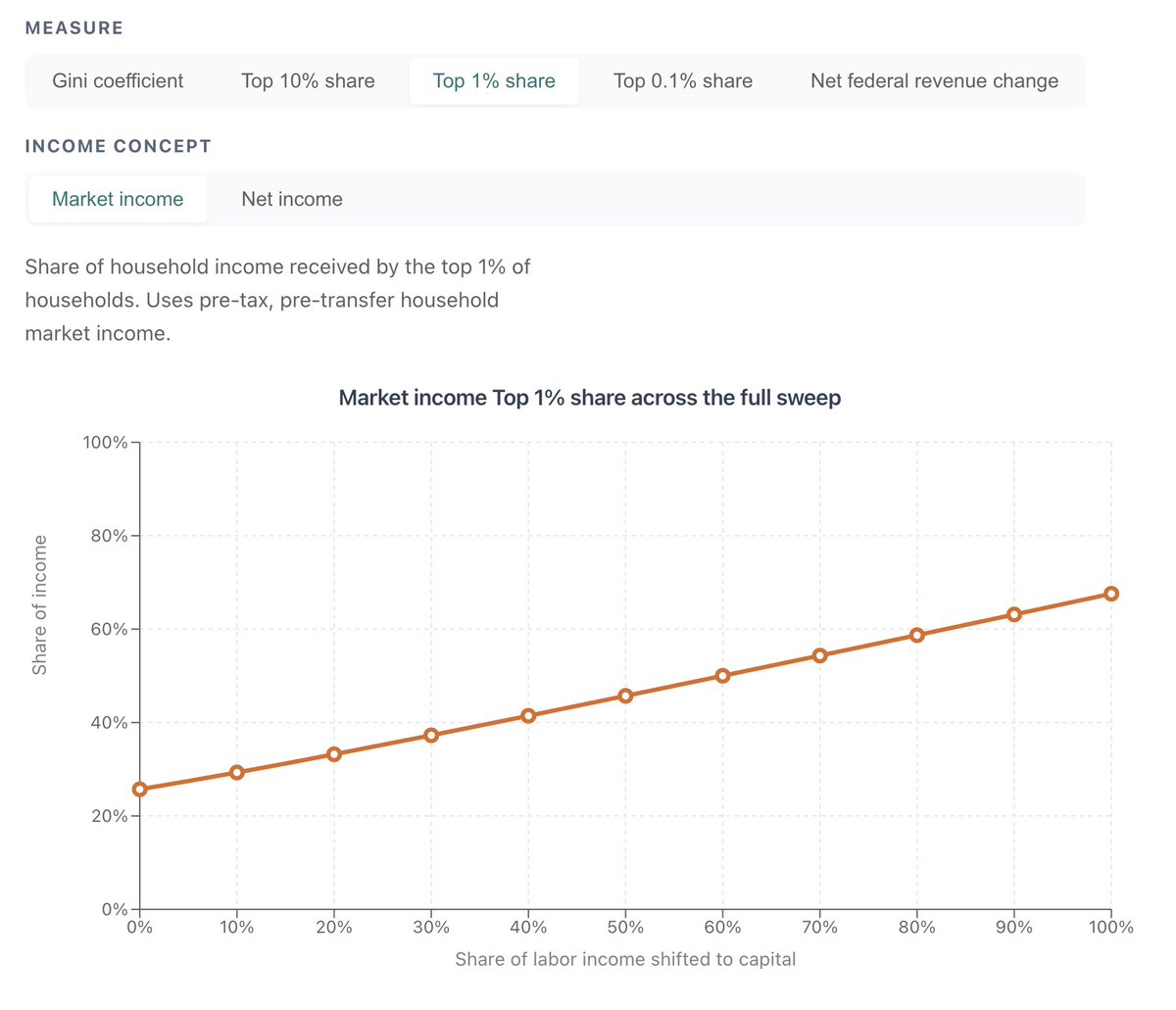
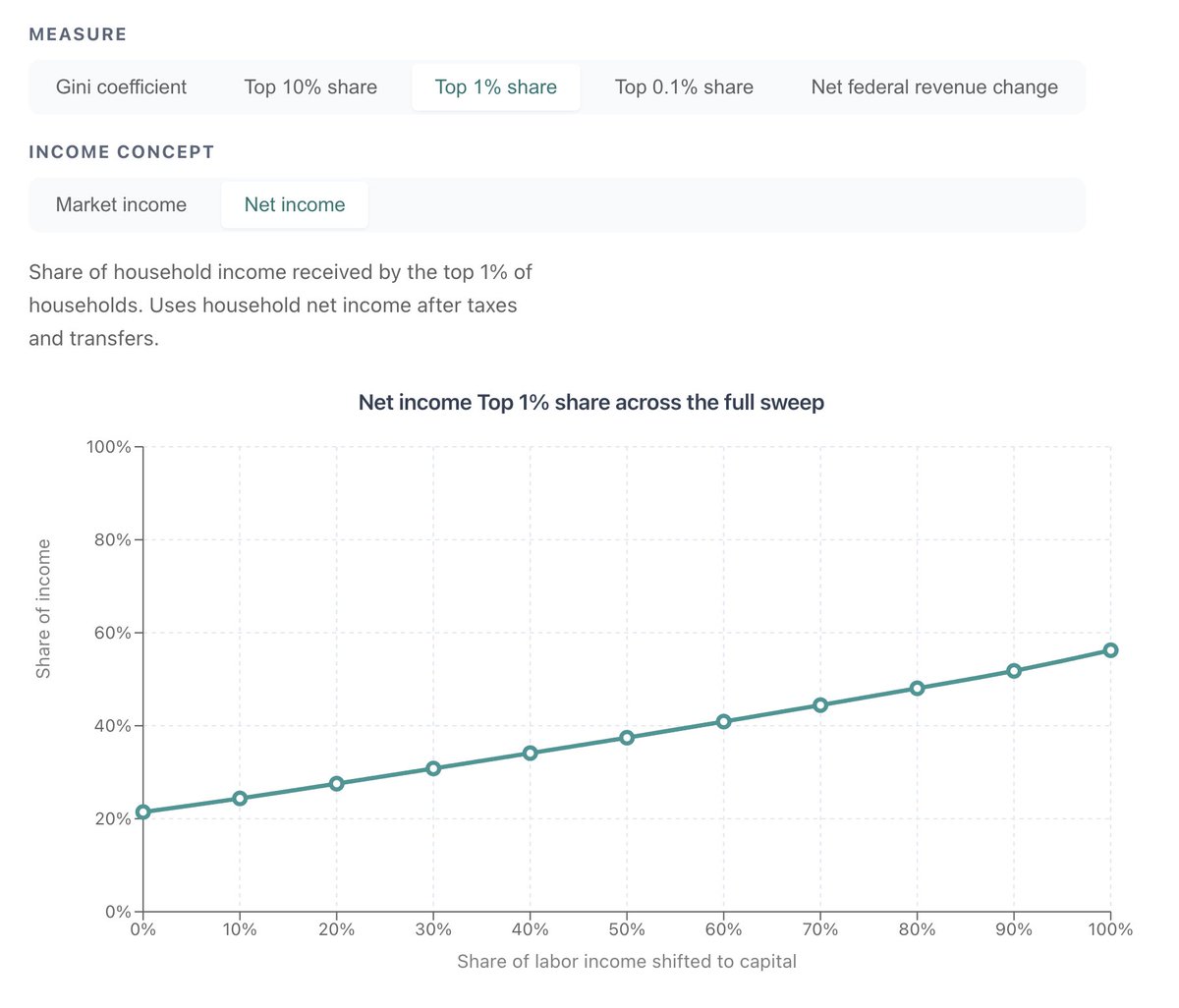
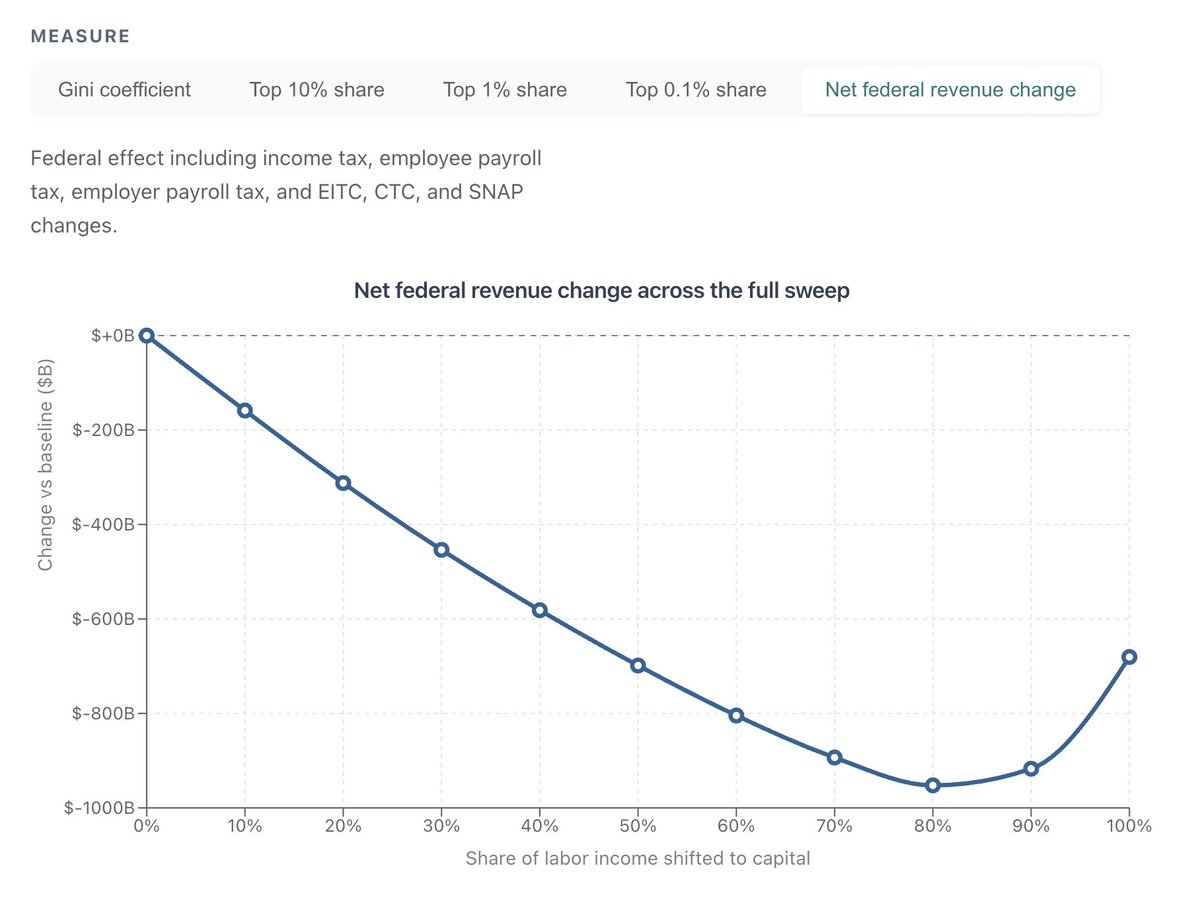
The first analysis from our AI and economics research initiative answers the question: What happens if income shifts from labor to capital?
We find a 10% shift raises the top 1%'s market income share from 25.7% to 29.3%. After taxes and transfers: 21.4% to 24.4%. Policy absorbs about 19% of the increase.
policyengine.org/us/ai-inequ…
1
10
55
34,380
PolicyEngine retweeted
Apr 15
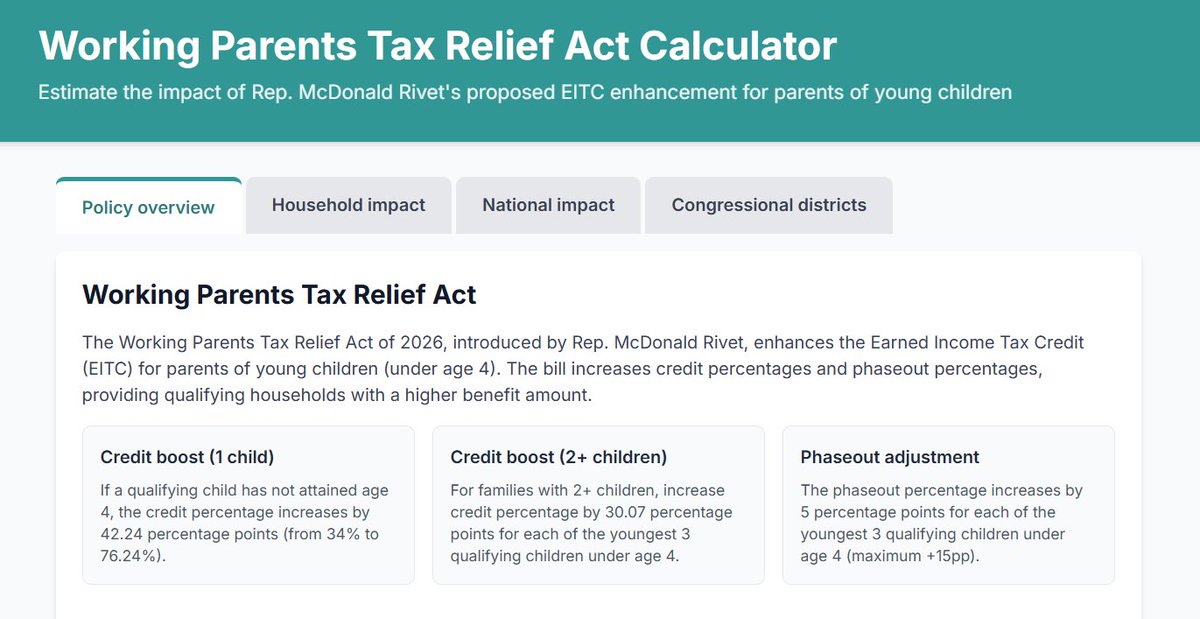
NEW INTERACTIVE: @repkmr has released the Working Parents Tax Relief Act (WPTRA), which increases the maximum EITC benefit by $5,500 for each child under 4 in a tax unit.
We project the bill would:
- Lower federal revenues by $184.1B over 10 years
- Benefit 2.9% of households and reduce child poverty by 1.4% in 2026
1
1
5
518
PolicyEngine retweeted

Apr 5
See
- @PSLmodels: pslmodels.org/
- OG-Core: pslmodels.github.io/OG-Core
- @ThePolicyEngine: policyengine.org/
- Tax Calculator: taxcalc.pslmodels.org/
- Cost of Capital Calculator: ccc.pslmodels.org/
- @PSLFoundation: psl-foundation.org/
Apr 4

Something I've been thinking about - I am bullish on people (empowered by AI) increasing the visibility, legibility and accountability of their governments.
Historically, it is the governments that act to make society legible (e.g. "Seeing like a state" is the common reference), but with AI, society can dramatically improve its ability to do this in reverse. Government accountability has not been constrained by access (the various branches of government publish an enormous amount of data), it has been constrained by intelligence - the ability to process a lot of raw data, combine it with domain expertise and derive insights. As an example, the 4000-page omnibus bill is "transparent" in principle and in a legal sense, but certainly not in a practical sense for most people. There's a lot more like it: laws, spending bills, federal budgets, freedom of information act responses, lobbying disclosures... Only a few highly trained professionals (investigative journalists) could historically process this information. This bottleneck might dissolve - not only are the professionals further empowered, but a lot more people can participate.
Some examples to be precise: Detailed accounting of spending and budgets, diff tracking of legislation, individual voting trends w.r.t. stated positions or speeches, lobbying and influence (e.g. graph of lobbyist -> firm -> client -> legislator -> committee -> vote -> regulation), procurement and contracting, regulatory capture warning lights, judicial and legal patterns, campaign finance... Local governments might be even more interesting because the governed population is smaller so there is less national coverage: city council meetings, decisions around zoning, policing, schools, utilities...
Certainly, the same tools can easily cut the other way and it's worth being very mindful of that, but I lean optimistic overall that added participation, transparency and accountability will improve democratic, free societies.
(the quoted tweet is half-ish related, but inspired me to post some recent thoughts)
2
3
6
808
PolicyEngine retweeted
How much would California's billionaire wealth tax actually raise? It depends on your assumptions about avoidance, departures, and income tax loss.
We built an interactive calculator that lets you explore the tradeoffs — with presets calibrated to existing papers.
1
2
3
650
PolicyEngine retweeted
Apr 1
We looked at every general-purpose chip on the market, and none of them could compute a marginal tax rate fast enough. So we made our own.
Apr 1

Introducing the PE-84. The world's first graphing microsimulator.
Pre-order now: policyengine.org/pe84
4
16
1,044
Apr 1
Introducing the PE-84. The world's first graphing microsimulator.
Pre-order now: policyengine.org/pe84
4
6
1,298
PolicyEngine retweeted
Mar 31
@MaxGhenis and @ThePolicyEngine team have integrated frontier agentic AI into the most expansive open source microsimulation model of US fiscal policy. AI allows easier use and access as well as automates much of the model creation and maintenance.
youtu.be/Ke_J3pOdL8k?si=in6Q…
6
14
2,533
PolicyEngine retweeted
Mar 26
The @JECRepublicans just released an Immigration Fiscal Impact Calculator powered by PolicyEngine's tax and SNAP calculations.
Try it here: jec.senate.gov/public/index.…
3
12
1,739
PolicyEngine retweeted
Mar 25
We updated the State Legislative Tracker: You can now track tax bills across all 50 states, see each bill's legislative stage, follow real-time activity, and jump to full PolicyEngine analysis.
Try it at policyengine.org/us/state-le…
3
7
616
PolicyEngine retweeted
Mar 24
With our new calculator for the Temporary Assistance for Needy Families (TANF) cash assistance program, you can estimate TANF eligibility and benefit amounts for any household across all 50 states and DC.
1
4
10
387
PolicyEngine retweeted
Mar 20
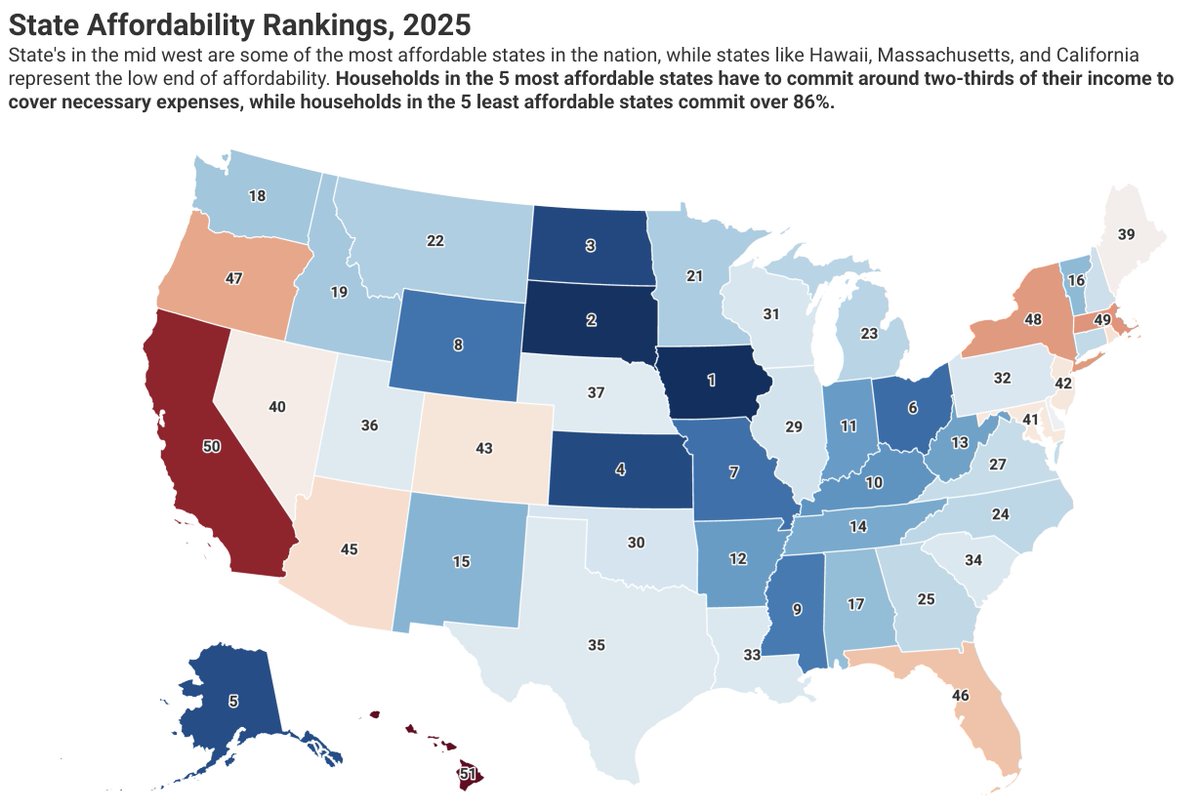
The Common Sense Institute @CSInstituteOR's new affordability report calculates state and federal income tax using PolicyEngine as part of its cross-state analysis of household costs.
commonsenseinstituteus.org/o…
2
4
200
Mar 19
PolicyEngine received an honourable mention in @impact_innovEN's G7 GovAI Grand Challenge. We’re encouraged to see open-source infrastructure for tax and benefit analysis recognized as a promising public-sector AI application. impact.canada.ca/en/challeng…
1
102
PolicyEngine retweeted
NEW INTERACTIVE: PolicyEngine has built a calculator analyzing Senator @ChrisVanHollen's Working Americans' Tax Cut Act.
policyengine.org/us/watca
Here's what's in it 🧵
2
5
24
6,089
PolicyEngine retweeted
Mar 13
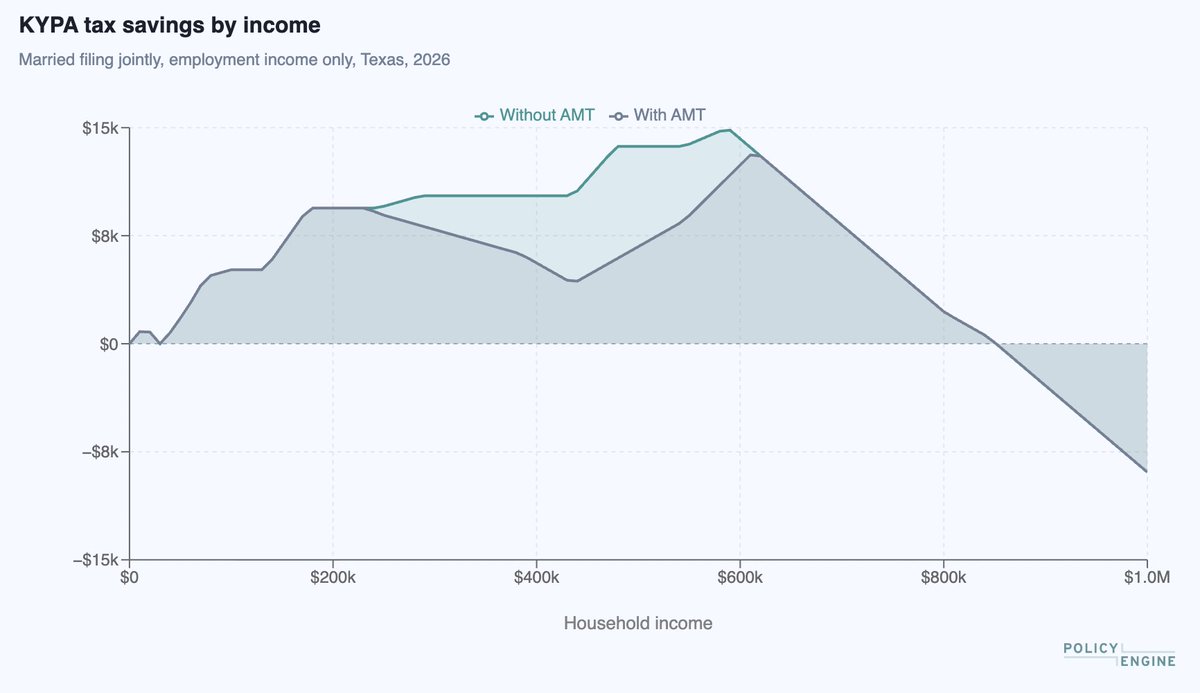
New analysis: The Alternative Minimum Tax claws back up to 59% of @SenBooker's Keep Your Pay Act tax benefits.
Read it: policyengine.org/us/research…
While Senator Booker's calculator does not capture the AMT interaction, ours does. Try it here: policyengine.org/us/keep-you…
1
2
150
PolicyEngine retweeted
Mar 17
In a new Break Glass report, @BudgetHawks cites PolicyEngine modeling as part of its surtax analysis. We estimate that a 1% surtax on AGI between $100K and $1M, plus a 2% surtax above $1M, would raise about $900 billion over a decade.
crfb.org/papers/break-glass-…
1
2
110
PolicyEngine retweeted
Mar 10
NEW ANALYSIS: @SenBooker's Keep Your Pay Act - higher standard deduction, expanded CTC & EITC, higher top tax rates.
Static model finds:
- $5.2T 10-year cost
- 73% of households gain, 1.6% lose in 2026
- Poverty falls 10% in 2026
We also provide a personalized calculator.
2
3
20
71,144