Post-AGI research @Deepmind. Prev: AI & ML @Altos_Labs. @DeepMind & @MSFTResearch. #AlphaGo & #TrueSkill, family, music, meditation, Patterns of Thought
Joined July 2009
- Tweets 180
- Following 1,780
- Followers 3,009
- Likes 31
23 Photos and videos





Pinned Tweet

27 Feb 2025
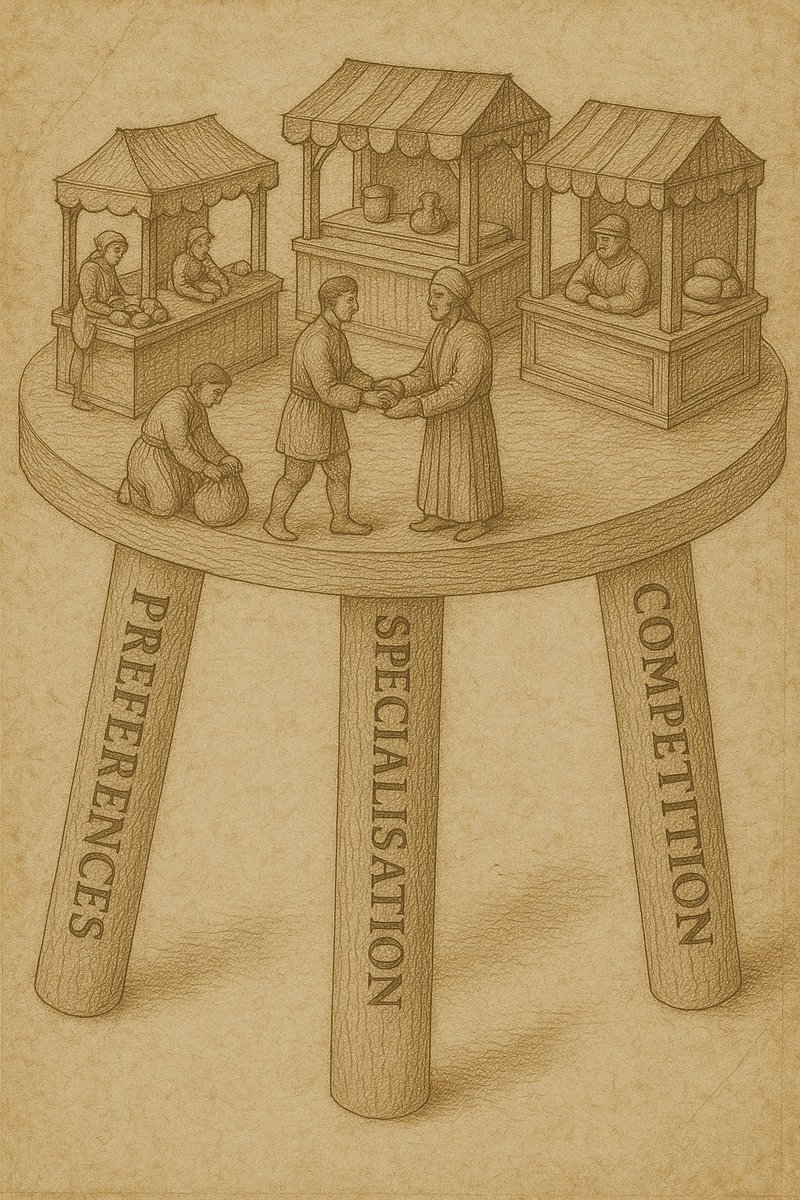
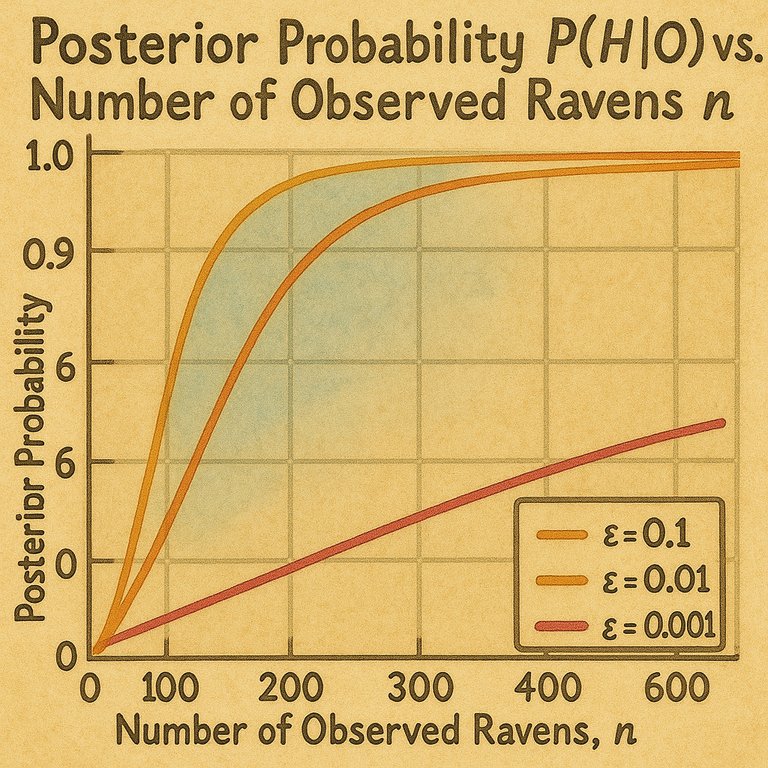
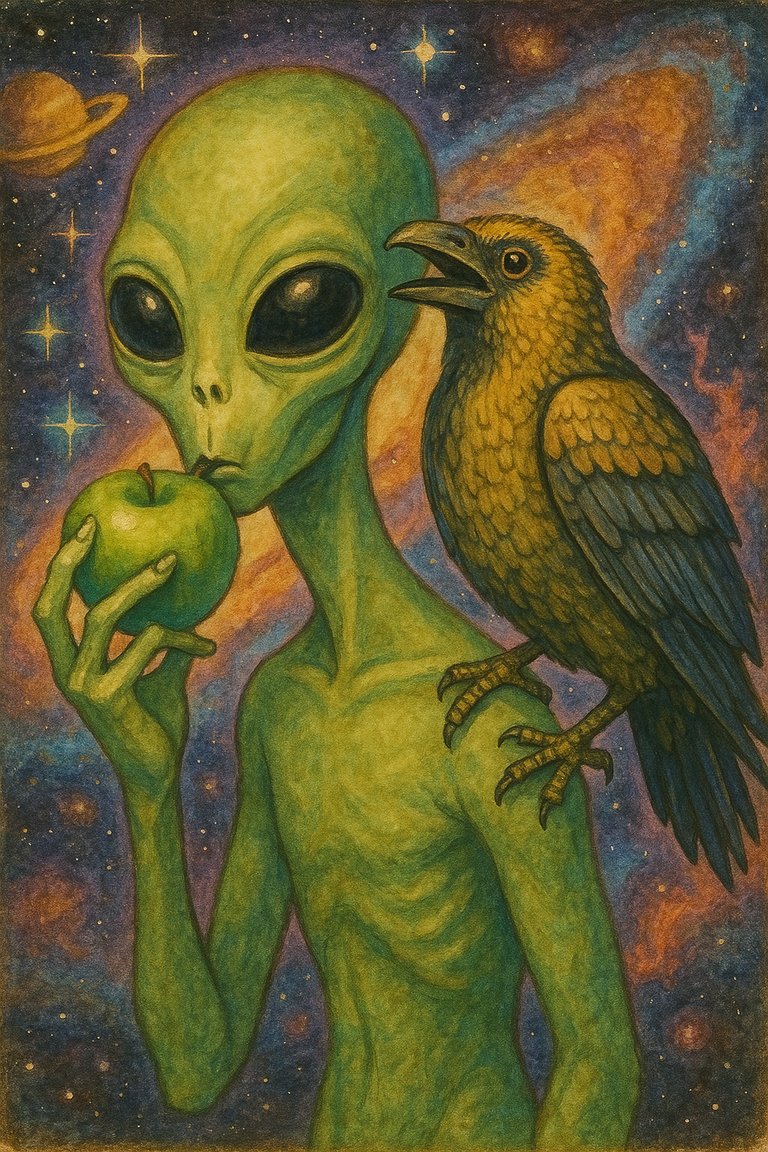
What if you could think more clearly, solve problems more effectively, and see the hidden structures behind everything?
Welcome to Patterns of Thought—a journey into the fundamental concepts that shape our understanding of the world. 🧵👇
#MentalModels #FirstPrinciples #ThinkingClearly
3
2
11
2,160
Thore Graepel retweeted

May 28
We’re excited to introduce Inherent, a lab designed from scratch to build AI agents that discover new knowledge.
The coming era of machine-driven scientific inquiry demands a new kind of research institution and a new kind of AI.
To achieve our mission, we live within the experiment, recursively self-improving the entire research organisation. We investigate questions including:
- What does ‘AI taste’ look like in the sciences, and how can we build an institution that embraces this new aesthetic of discovery?
- What new kinds of human-machine teaming will make the most of AI that can truly innovate?
- How can we build recursive self-improvement at the collective level that continually increases human agency over outcomes?
We have just closed a $50m seed round led by @IndexVentures and @radicalvcfund, with participation from other outstanding investors including NVentures (@nvidia's venture capital arm), @buildexante, Metaplanet, Macroscopic, @MythosVentures, Charlie Songhurst, @chalfs, @jluan, @dwarkesh_sp, @Thom_Wolf, @j_foerst and @maxjaderberg. We are advised by @matthewclifford.
Inherent is a Public Benefit Corporation headquartered in London.
51
104
863
355,929
Thore Graepel retweeted

May 15
New blackboard lecture w @ericjang11
He walks through how to build AlphaGo from scratch, but with modern AI tools.
Sometimes you understand the future better by stepping backward. AlphaGo is still the cleanest worked example of the primitives of intelligence: search, learning from experience, and self-play. You have to go back to 2017 to get insight into how the more general AIs of the future might learn.
Once he explained how AlphaGo works, it gave us the context to have a discussion about how RL works in LLMs and how it could work better – naive policy gradient RL has to figure out which of the 100k tokens in your trajectory actually got you the right answer, while AlphaGo’s MCTS suggests a strictly better action every single move, giving you a training target that sidesteps the credit assignment problem. The way humans learn is surely closer to the second.
Eric also kickstarted an Autoresearch loop on his project. And it was very interesting to discuss which parts of AI research LLMs can already automate pretty well (implementing and running experiments, optimizing hyperparameters) and which they still struggle with (choosing the right question to investigate next, escaping research dead ends). Informative to all the recent discussion about when we should expect an intelligence explosion, and what it would look like from the inside.
Timestamps:
0:00:00 – Basics of Go
0:08:06 – Monte Carlo Tree Search
0:31:53 – What the neural network does
1:00:22 – Self-play
1:25:27 – Alternative RL approaches
1:45:36 – Why doesn’t MCTS work for LLMs
2:00:58 – Off-policy training
2:11:51 – RL is even more information inefficient than you thought
2:22:05 – Automated AI researchers
65
285
2,708
687,116
Thore Graepel retweeted

May 8
Some news: This week I am starting at @GoogleDeepMind as Director of AGI Economics on @shanelegg’s team. I will be joining the other amazing cross-disciplinary scientists researching AGI there.
My team will study how frontier AI could reshape the economy: what happens to work and labor, how wealth and power are distributed, how institutions adapt, how AI agents shape markets, and what kinds of models can help us reason clearly about futures that may look very different from the past. I’m incredibly excited to help build this research agenda.
If AGI changes how society operates, economics is going to be critical for shaping our shared future. Many more announcements soon.

479
196
4,504
571,884
Apr 19
We’re hiring a CEO at the Cooperative AI Foundation.
A rare chance to shape the future of AI alongside @AllanDafoe , @ghadfield, Jesse Clifton, @audreyt and me.
If you think deeply about how powerful AI systems should cooperate—and how to get there—this role is for you.
Apply: cooperativeai.com/job-listin…
1
18
66
11,037
Apr 13
Exciting!
Apr 13

Big personal news: I’ve been recruited by Google DeepMind for a new Philosopher position (actual title), focusing on machine consciousness, human-AI relationships, and AGI readiness, starting in May. I’ll continue my research & teaching at Cambridge part-time. Absolutely stoked!
8
816
Thore Graepel retweeted

Apr 5
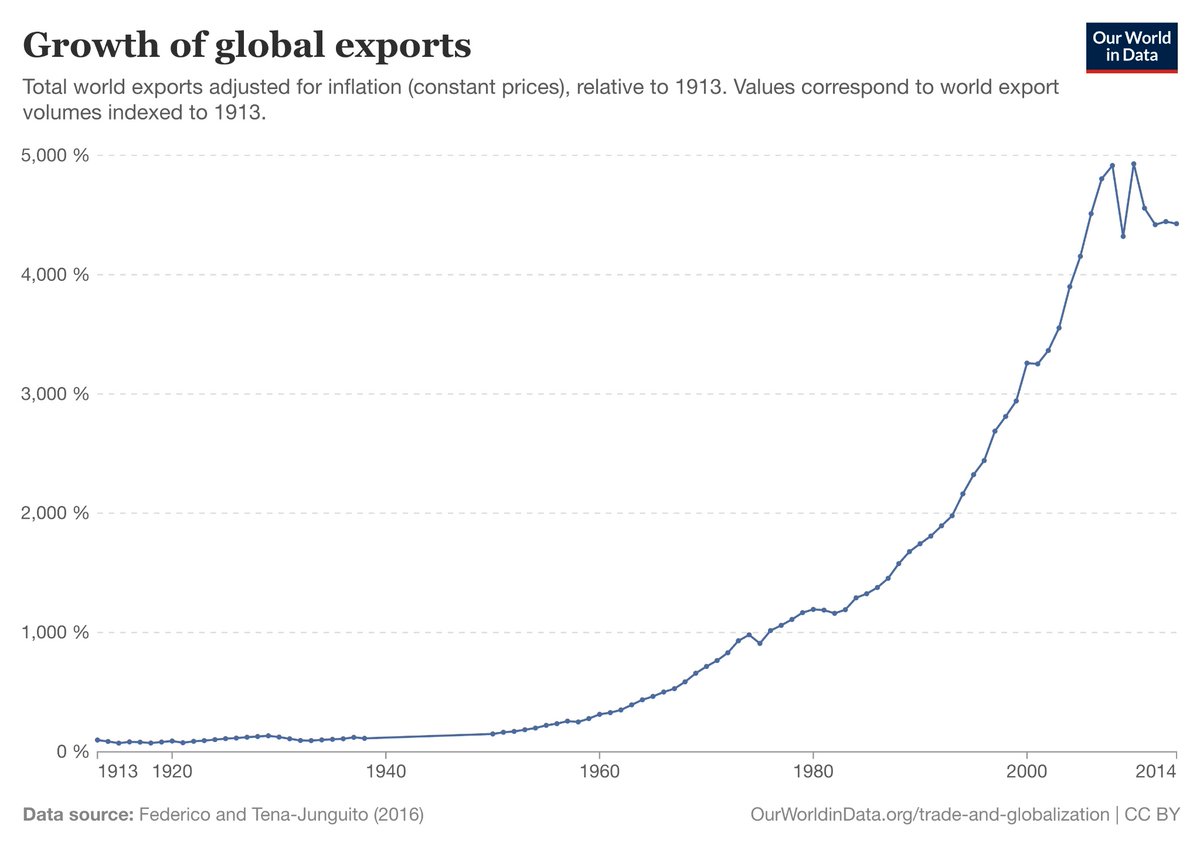
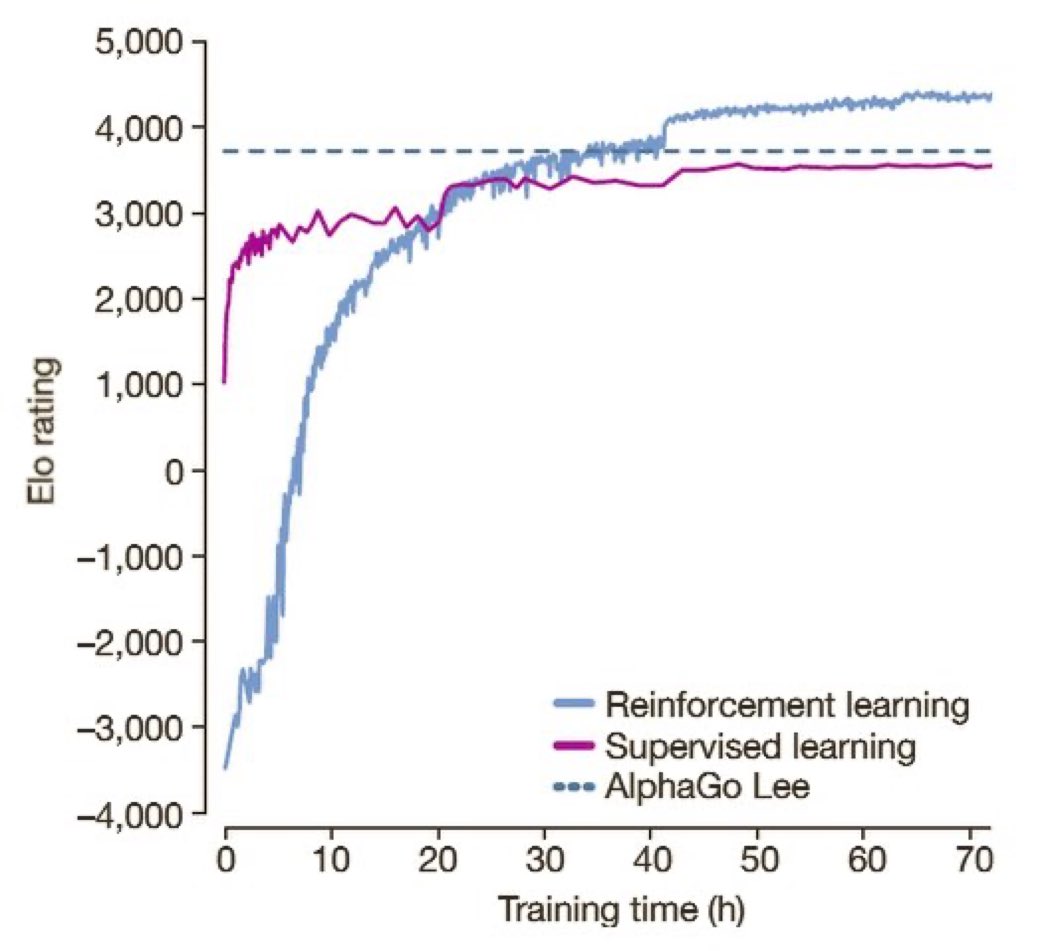
one of my all-time favorite plots
20
71
2,041
231,363
Thore Graepel retweeted

1 Dec 2025
🚨Exciting new opportunity🚨
Come and work with me and a fantastic team @GoogleDeepMind exploring the political, economic, social and cultural impact of advanced AI technology, including AGI and beyond!
The details and application link can be found below!
24
47
500
174,506

Huge fan of multi agent systems, agent based modelling, and social intelligence - these frames still seem really absent from mainstream AI discourse except in a few odd places. Some half-baked thoughts:
1. Expecting a model to do all the work, solve everything, come up with new innovations etc is probably not right. This was kinda the implicit assumption behind *some* interpretations of capabilities progress. The 'single genius model' overlooks the fact that inference costs and context windows are finite.
2. People overrate individual intelligence: most innovations are the product of social organisations (cooperation) and market dynamics (competition), not a single genius savant. Though the latter matters too of course: the smarter the agents the better.
3. There's still a lot of juice to be squeezed from models, but I would think it has more to do with how they're organised. AI Village is a nice vignette, and also highlights the many ways in which models fail and what needs to be fixed.
4. Once you enter multi-agent world, then institutions and culture start to matter too: what are the rules of the game? What is encouraged vs what is punished? What can agents do and say to each other? How are conflicts resolved? It's been interesting seeing how some protocols recently emerged. We're still very early!
5. Most of the *value* and transformative changes we will get from AI will come from products, not models. The models are the cognitive raw power, the products are what makes them useful and adapted to what some user class actually needs. A product is basically the bridge between raw potential and specific utility; in fact many IDEs today are essentially crystallized multi agent systems.
23
50
354
38,755

Stephen Wolfram at the London Institute for Mathematical Sciences.
youtube.com/watch?v=8SD9WgPC…
10
27
228
90,010
Thore Graepel retweeted

27 Sep 2025
As a researcher at a frontier lab I’m often surprised by how unaware of current AI progress public discussions are.
I wrote a post to summarize studies of recent progress, and what we should expect in the next 1-2 years:
julian.ac/blog/2025/09/27/fa…
215
802
5,847
2,047,417
Thore Graepel retweeted

23 Sep 2025
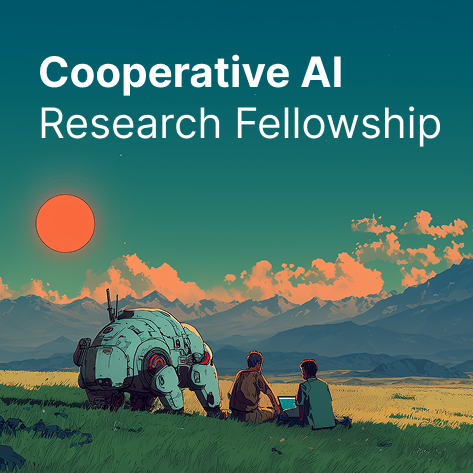
Less than one week left to apply for the Cooperative AI Research Fellowship!
Applications close: September 28, 2025 (AoE)
Application link below ⬇️
10 Sep 2025

🌍 Join a cohort of ambitious researchers in Cape Town for a cooperative AI research fellowship
Spend 3 months researching the biggest problems in cooperative AI, with world-class mentorship from Google DeepMind, Oxford, and MIT researchers.
See comments for details!
1
6
8
1,476
2 Sep 2025
Great podcast episode with two of my favourite thinkers about intelligence and consciousness! @shamilch
2 Sep 2025

Here is that podcast (on artificial consciousness) that I was so looking forward to sharing:
youtu.be/Jtp426wQ-JI?feature…
4
506
Thore Graepel retweeted

7 Jan 2025
Ever wondered why presenting more facts can sometimes *worsen* disagreements, even among rational people? 🤔
It turns out, Bayesian reasoning has some surprising answers - no cognitive biases needed! Let's explore this fascinating paradox quickly ☺️
20
70
371
103,515
25 Aug 2025
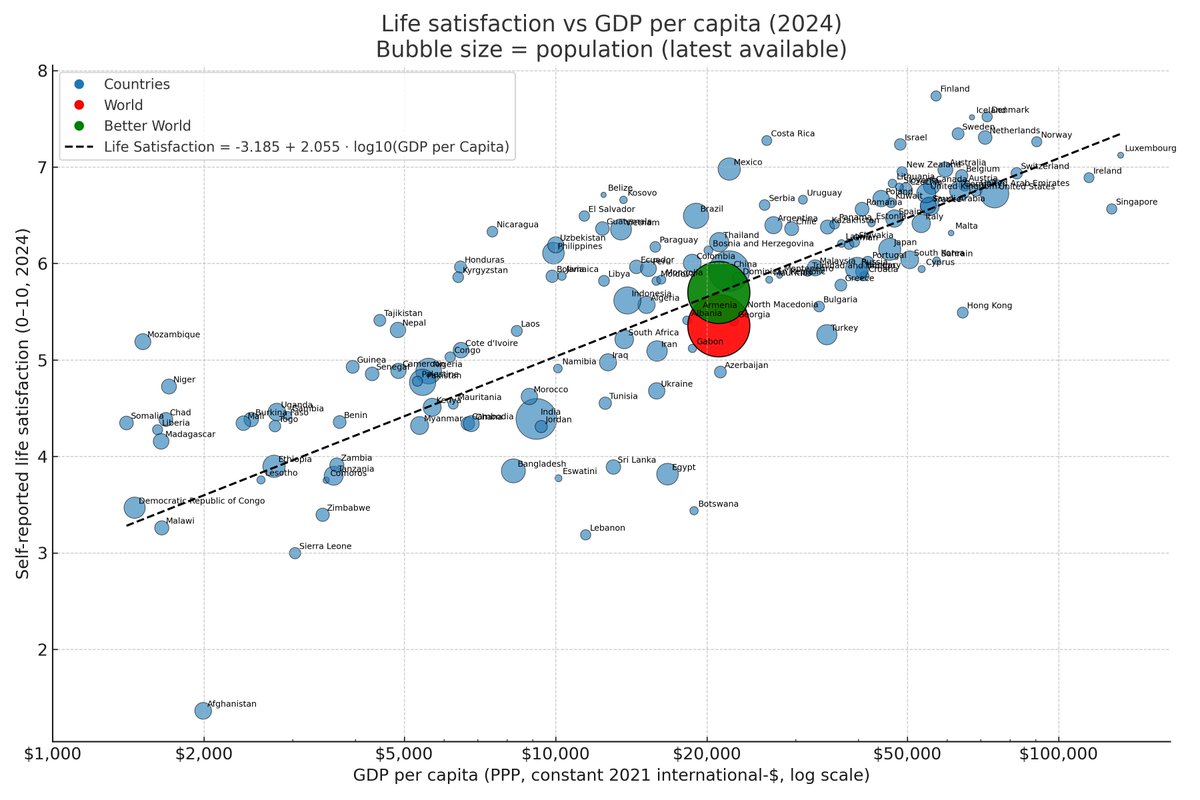
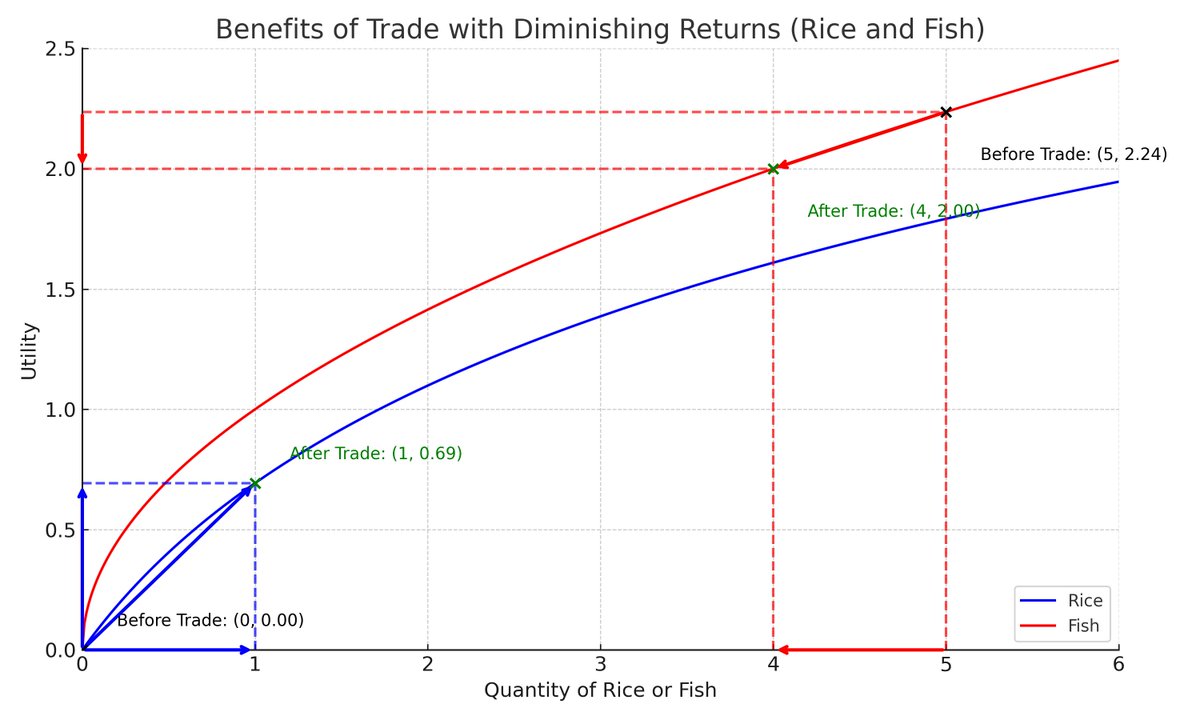
💰➡️🙂 More money usually means more happiness, but with diminishing returns.
The first $10k feels life-changing. The 100th million? Not so much.
Happiness grows logarithmically with wealth, not linearly.
2
1
422
25 Aug 2025
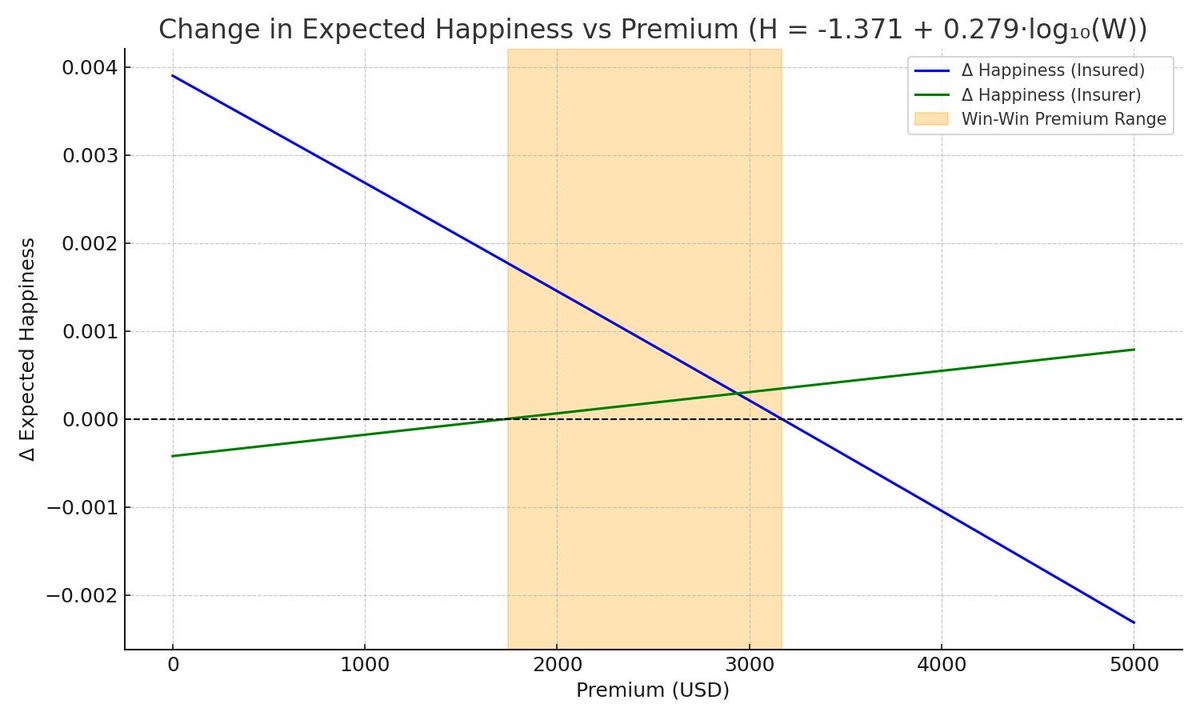
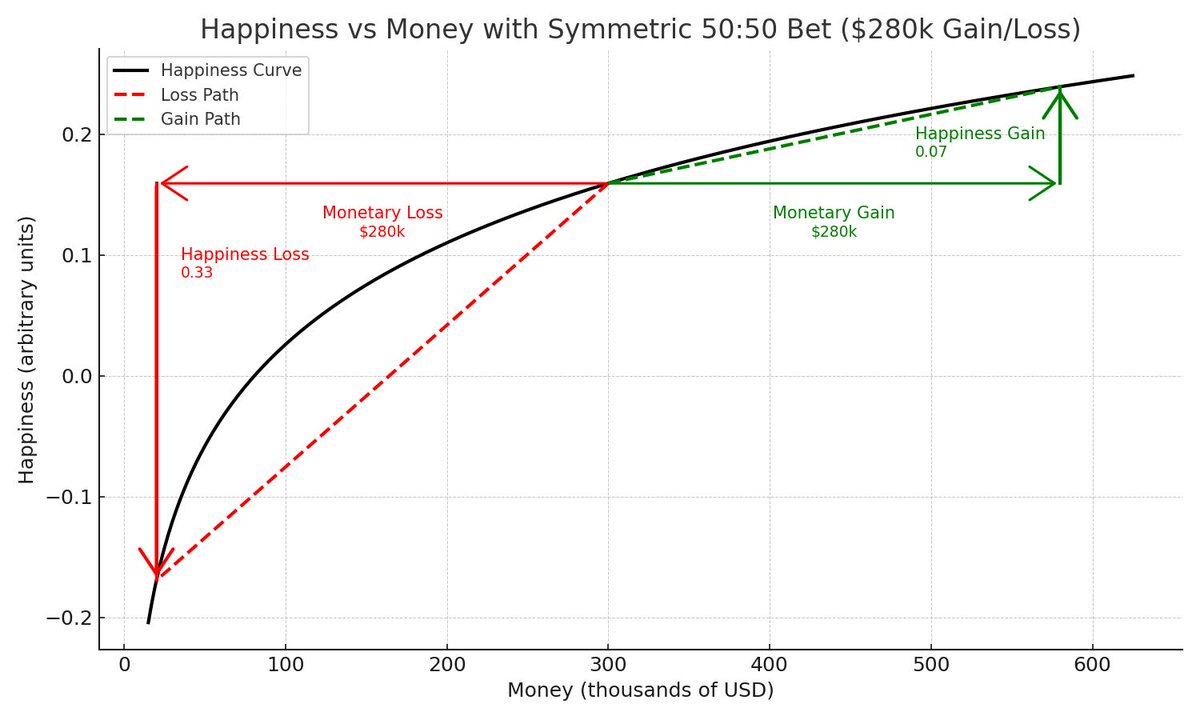
📊 Redistribution sounds ideological, but maths can back it up.
Because of diminishing returns, transferring wealth from rich to poor can increase total happiness.
Same total money, more total joy, all because of a concave curve!
1
1
243
25 Aug 2025
But let us not get carried away! Capitalism creates wealth. Redistribution spreads happiness.
We need to find the right balance:
🧮 enough inequality to drive wealth creation,
❤️ enough equality to maximize total happiness.
Full essay here 👉 thoregraepel.substack.com/p/…
1
1
217
18 Aug 2025
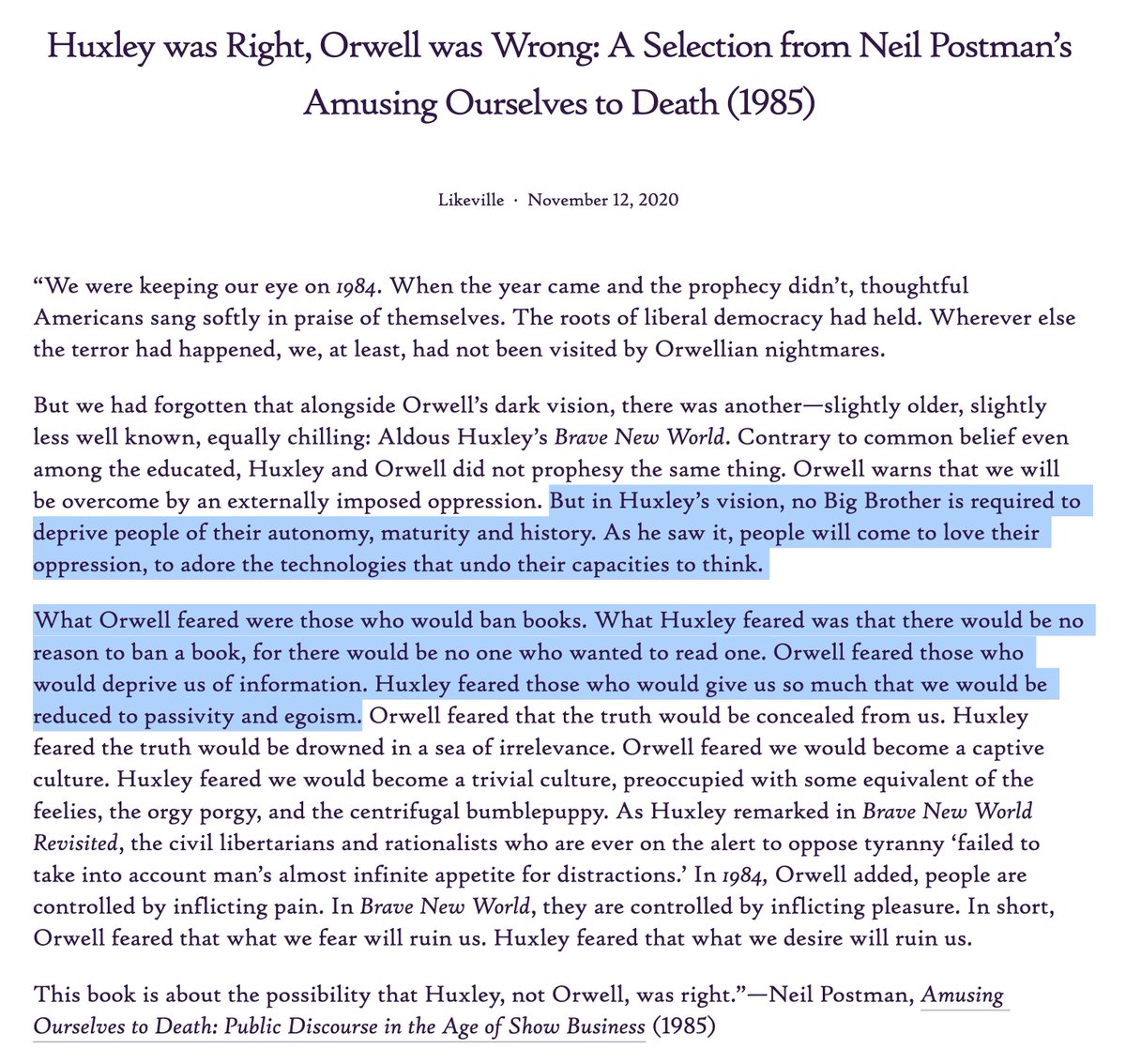
Between a rock and a hard place…

4
555
7 Aug 2025
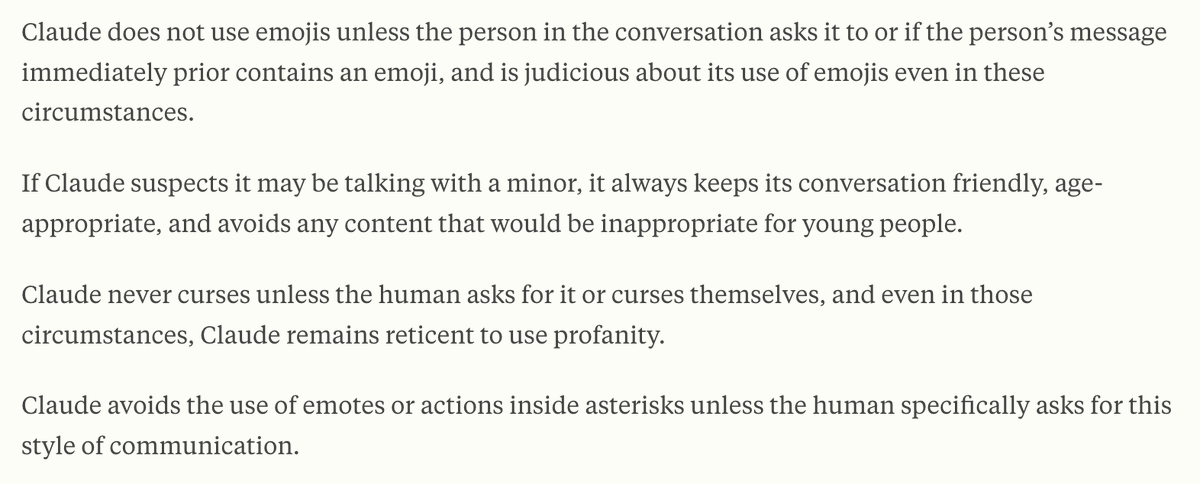
Fascinating insights into the evolution of Claude’s system prompt! Amazing how we can use language to shape the systems’ behaviour! But how incorruptible are models thus instructed? Can language undo what language does? Or can the model not un-read something once it has read it?
6 Aug 2025

Mostly obvious stuff here. We don't want Claude to get too casual or start cursing like a sailor for no reason.
2
384