
Joined May 2012
- Tweets 24,549
- Following 1,064
- Followers 3,760
- Likes 13,168
540 Photos and videos










Pinned Tweet

Apr 14
(to the tune of "too many cooks"): Writin' a book, writin' a book...
Apr 14

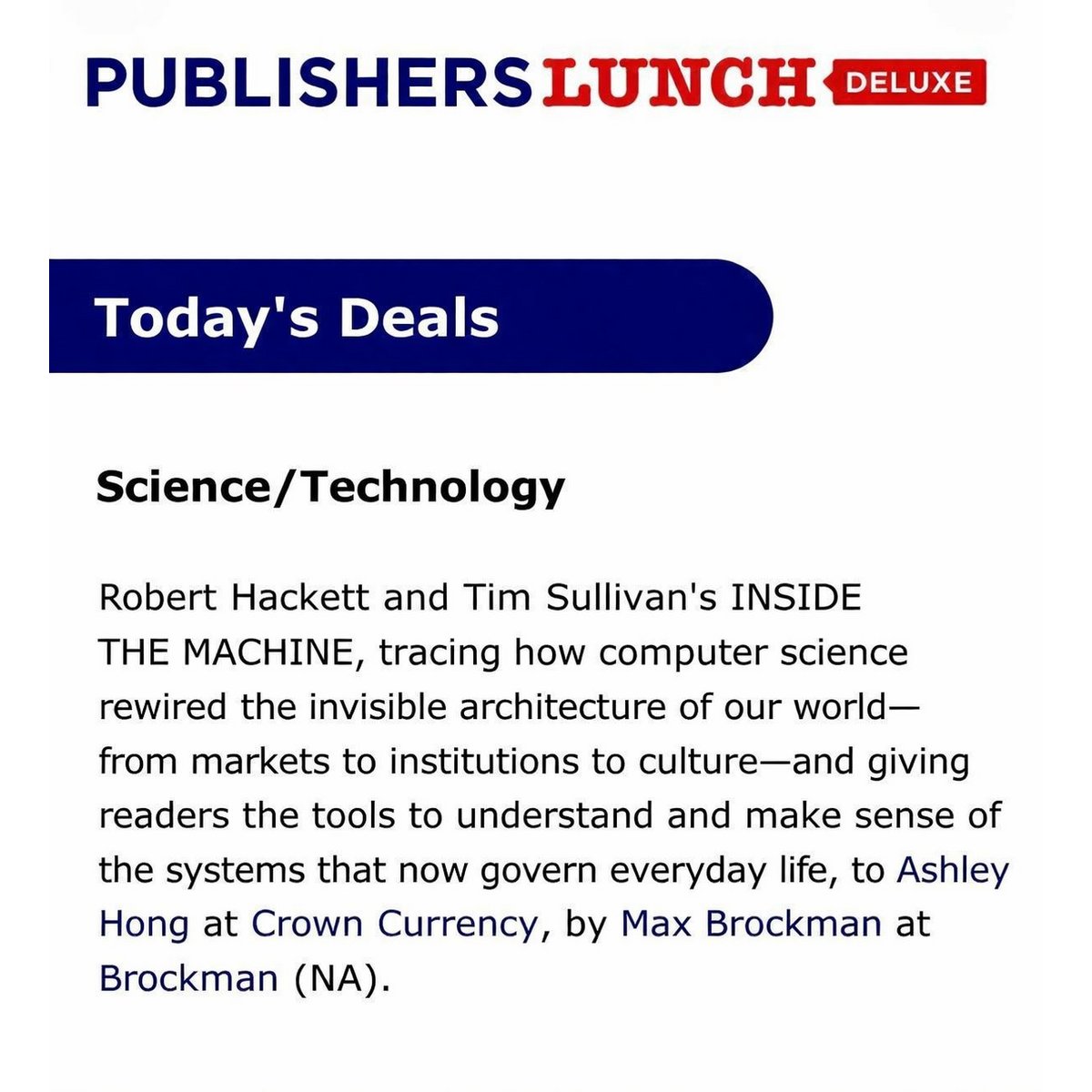
Hey everyone, some personal news I’m really excited about...
For the past few months I’ve been working on a book proposal with my friend and colleague Tim Sullivan (@Tim_Org). We’re excited to share that it’s just been acquired by Crown Currency at Penguin Random House!
We’re calling it (for now) Inside The Machine: How Computer Science Rewired Everything.
Most of us talk about tech in terms of the shiny stuff — apps, gadgets, platforms, and the people who built them. But this misses a bigger, more interesting story.
Computer science didn't just hand us new tools. It changed how we think about problems in the first place — what even counts as a problem, what looks like a solution, what we optimize for, and what we ignore.
Over time, this way of thinking has seeped outward and saturated everything else. You see it in markets that run like algorithms instead of human institutions, in media that’s tuned for engagement, in companies organized more like software than trad hierarchies. Even in the way people talk: inputs, outputs, signals, noise, etc.
Once you start noticing it, it’s hard to stop seeing it everywhere.
Tim and I have spent years separately reporting on tech, business, science, and economics, and then also as editors on the a16z crypto editorial team. Throughout, we kept running into the same big question: what happens when the logic of computing becomes the logic of society?
This book is our personal attempt to answer that — to trace how these ideas spread (often without us realizing) and how they’ve reshaped the systems we all live with, including the tradeoffs that come with them.
We’re still super early in the process, but we’re thrilled it’s happening. If you want to follow along as the book comes together, we’d love that.
In the meantime, tell us: what’s your favorite example you’ve seen of computer science thinking sneaking into everyday life? Could be in business, politics, dating, whatever — we'd love to know what you all notice.
7
1
18
3,548
Tim Sullivan retweeted

Jun 12
The AI ownership rush
One of the more interesting side effects of the AI boom is the scramble to own pieces of it.
People crave ownership. Over the last few years, investors have poured money into SPVs that promise exposure to private companies. Secondary markets for startup shares have exploded. More recently, crypto traders have even experimented with pre-IPO perpetual futures tied to companies that don’t yet trade publicly.
The market keeps inventing new instruments and routing around barriers because demand is insatiable. People want in…even when the ownership itself is synthetic or uncertain.
To make sense of this phenomenon, I keep returning to Chris Dixon’s framework for the evolution of the internet. (I edited his book on the subject.) In his model, the first era was “read,” the second was “write,” and the third — now clawing itself into existence, notably through the recent proliferation of equity-approximating workaround attempts — is “own.”
In plainer English: The internet democratized access to information (read), then democratized the ability to create and publish it (write). The next step is to democratize ownership: giving users direct economic rights in the networks and services they use. Crypto networks are one of the clearest and longest-standing expressions of the “own” era.
Today, the framework illuminates what’s happening in AI.
The “read” era made information accessible. The “write” era made creation accessible. AI supercharges the core capabilities of the read/write web and extends them to machines. Large language models read and write text. Diffusion models read and write images. Agents read the world and write actions back into it.
In this way, AI is not a break from the internet’s trajectory. It is the logical conclusion of the read/write era: thirty years of relentlessly driving down the cost of reading, writing, and manipulating information, consummated at last in software. This view helps explain the current financial frenzy, especially as a wave of AI mega-listings approaches. The rush into SPVs, secondaries, and synthetic derivatives reflects pent-up demand for ownership boiling over.
People don’t just want to use new technologies. They want to own them.
Many describe artificial intelligence as the next phase of the internet. Another view is that it represents the height of the previous one, the fullest expression of the read/write era. The scramble to own it is among the clearest signals that the own era is breaking loose and smashing its way through.
3
5
26
16,049
Tim Sullivan retweeted
Jun 12
we got @smc90 in the studio for this one so you know it's good
Jun 12

Crypto has been walled off from the real economy for years. That's changing. @eddylazzarin joins @smc90 and @rhackett to break down why crypto is entering a completely different phase, and what gets built once the rules finally catch up to the technology.
00:00 Intro
01:25 What it means to be a GP
02:00 Consensus vs. non-consensus bets
04:27 Network tokens and the CLARITY Act
09:35 Revenue, value capture, and network-token business models
21:18 Stablecoins as crypto’s first killer app
28:52 Engineer-philosopher mindset
39:04 Intellectual influences
52:40 Eddy’s path to crypto
01:03:15 The exuberant adoption phase of AI
01:14:38 Being "pro–AI psychosis"
2
2
10
1,328
Tim Sullivan retweeted

Jun 12
imagining this taped on the wall over Michel Foucault’s desk

Nancy By Ernie Bushmiller
June 12,1967
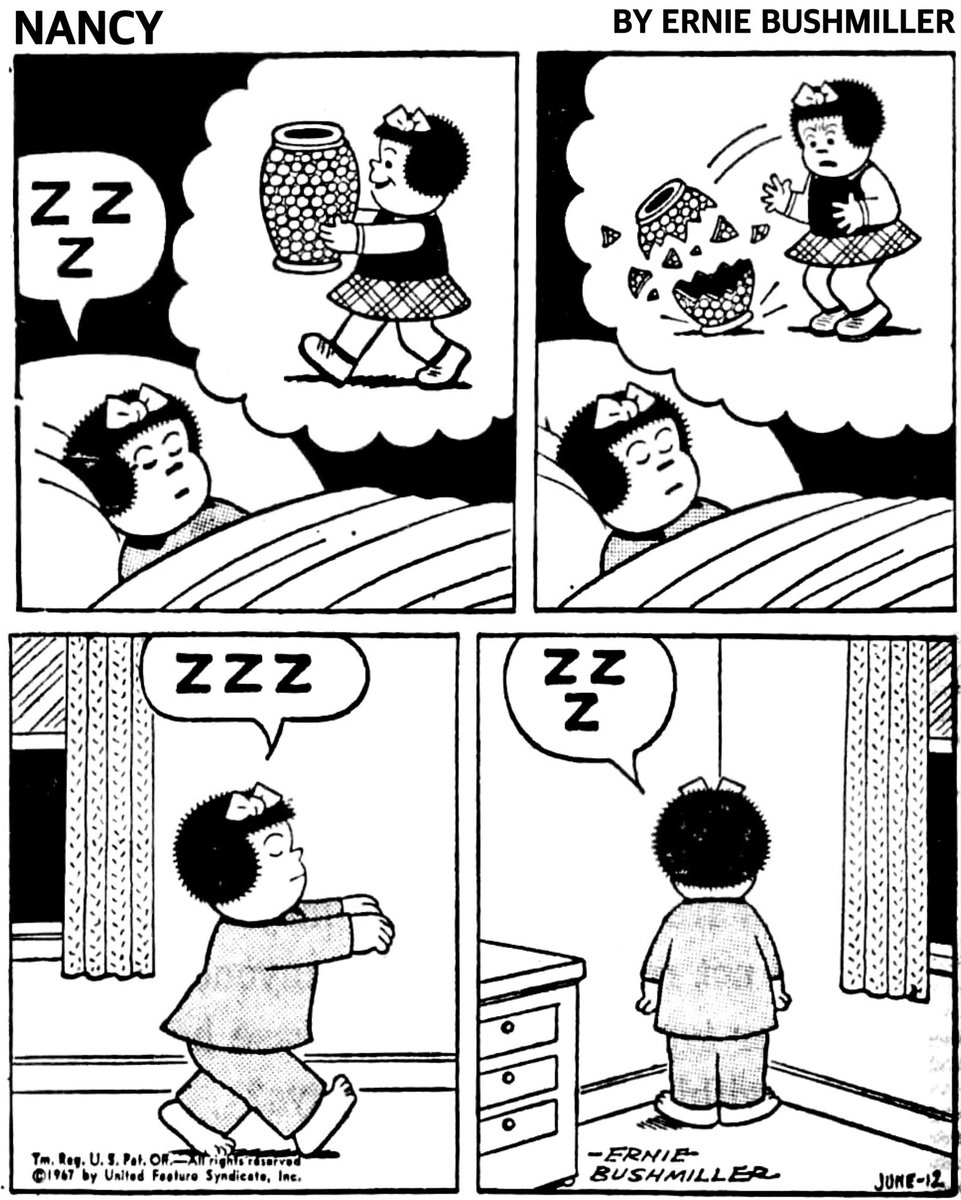
ALT P1- NANCY IS ASLEEP IN BED …Z Z Z NANCY IS CARRYING A LARGE VASE INA VIVID DREAM P2- NANCY CONTINUES HER DREAM, SHE DROPS THE LARGE VASE AND IT BREAKS ON THE FLOOR P3- NANCY HAS GOTTEN OUT OF HER BED, BUT SHE IS SLEEP WALKING NANCY: Z Z Z P4- NANCY STILL ASLEEP IS STANDING IN THE CORNER, BECAUSE SHE BROKE THE VASE IN HER DREAM
2
6
332
Tim Sullivan retweeted

Jun 9
Alan Partridge tries to explain the format of the 1994 World Cup finals with the never-to-be-forgotten Soccermeter.
51
484
3,245
536,762
Jun 9
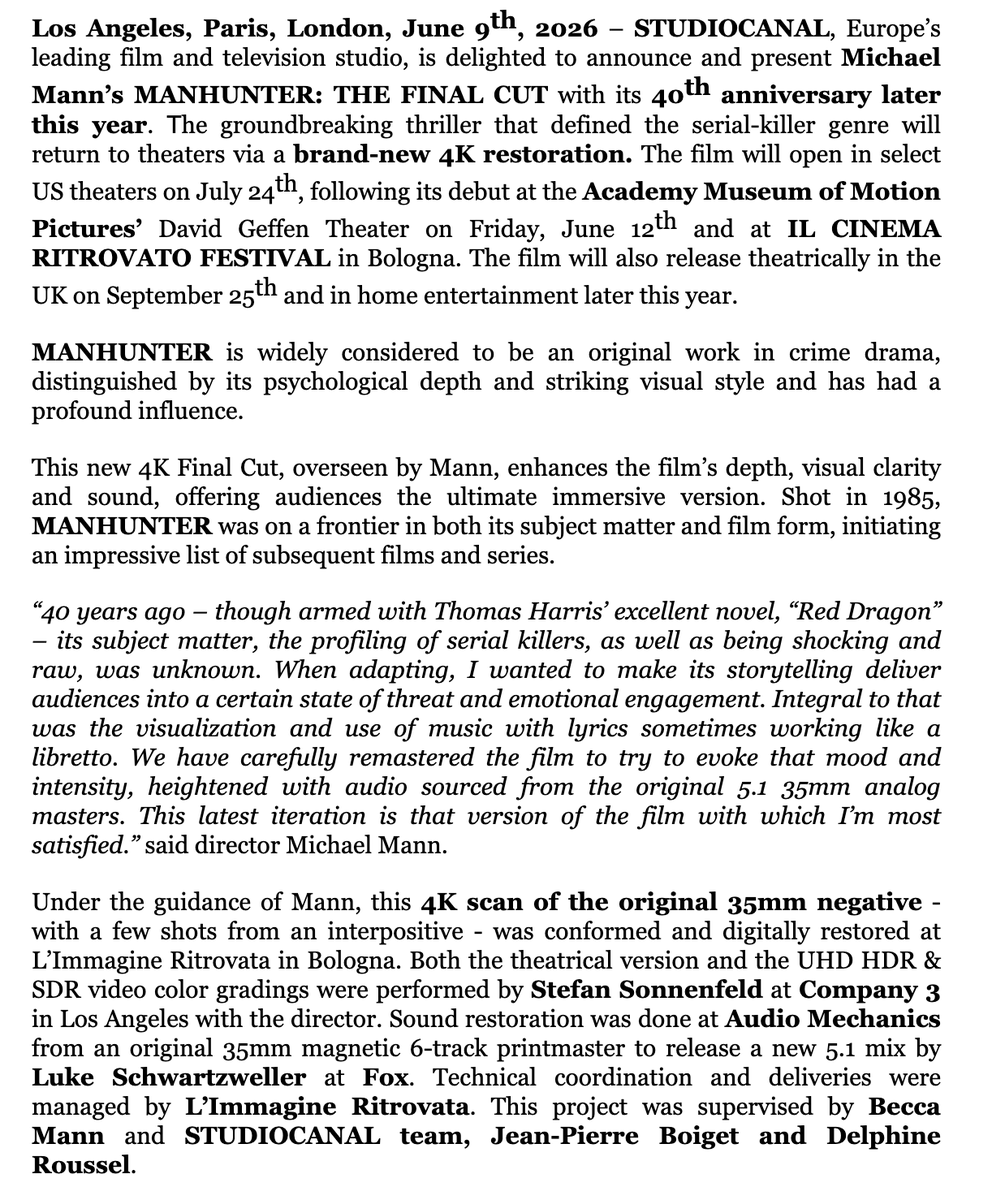
Go see it on the big screen if only for the "In-A-Gadda-Da-Vida" scene.

Michael Mann's #Manhunter: The Final Cut will open in U.S. theaters beginning July 24 in a brand-new 4K restoration.

1
109
Jun 9
What do regular people think about AI? Andy has the data.
Jun 9

The popular conversation around AI in America looks nothing like the narratives the elites are driving.
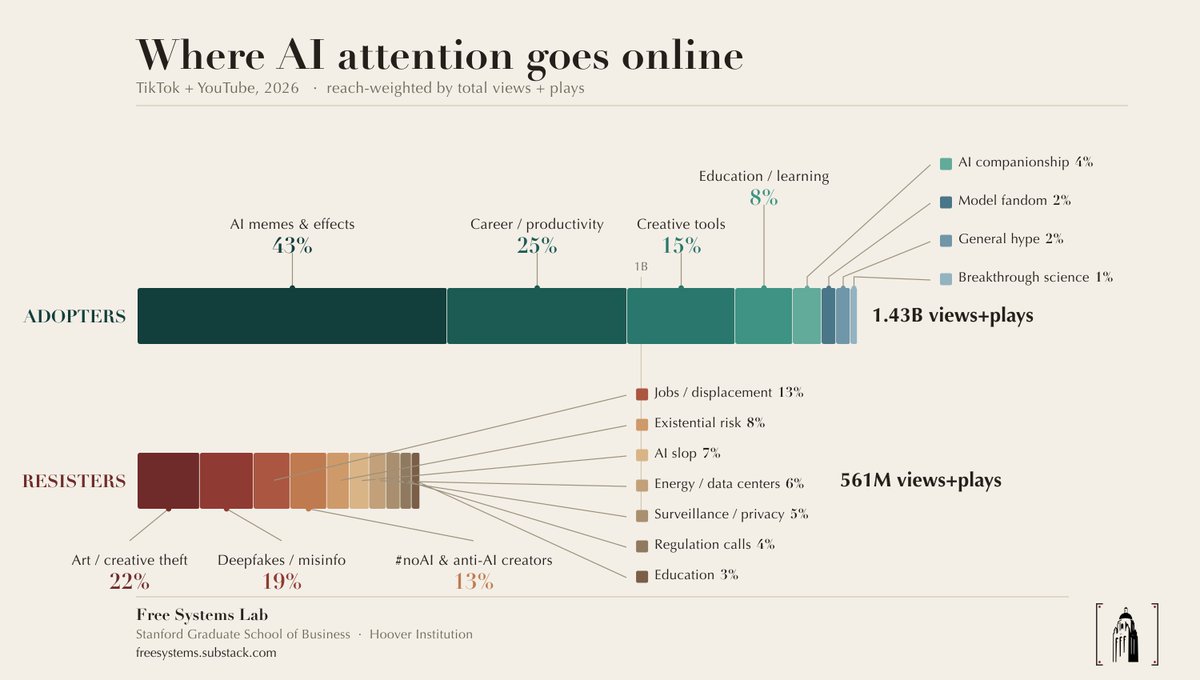
For our new research, we analyzed 25,000 TikTok and YouTube videos about AI---and watched thousands of them ourselves---to understand how Americans are encountering AI in their everyday lives.
Despite an elite conversation focused largely on backlash, AI videos embracing AI outnumber videos about resisting AI 3 to 1.
These "adopter" videos don't focus on the things elites talk about: they talk about funny memes and effects AI can help make and ways you can use AI to help you with your job search.
There is a significant and organized social media community focused on resisting AI, but surprisingly, it's not mainly about job loss, data centers, or existential risk. Instead, it's about creative theft and the erosion of human-made art. This has all the hallmarks of a genuine movement---with organized efforts to support human artists, to report AI-generated content, and to oppose the technology in the real world.
All in all, when we look past the efforts of the labs and the media to impose a top-down narrative around job loss and existential risk, we find everyday Americans having a far different and in many ways more "normal" conversation (@random_walker)---one in which AI offers immediate and personal opportunities and challenges all at the same time.
Check out the full research piece, which is loaded with interesting real example videos, here:
freesystems.substack.com/p/m…
2
62
Tim Sullivan retweeted

Jun 8
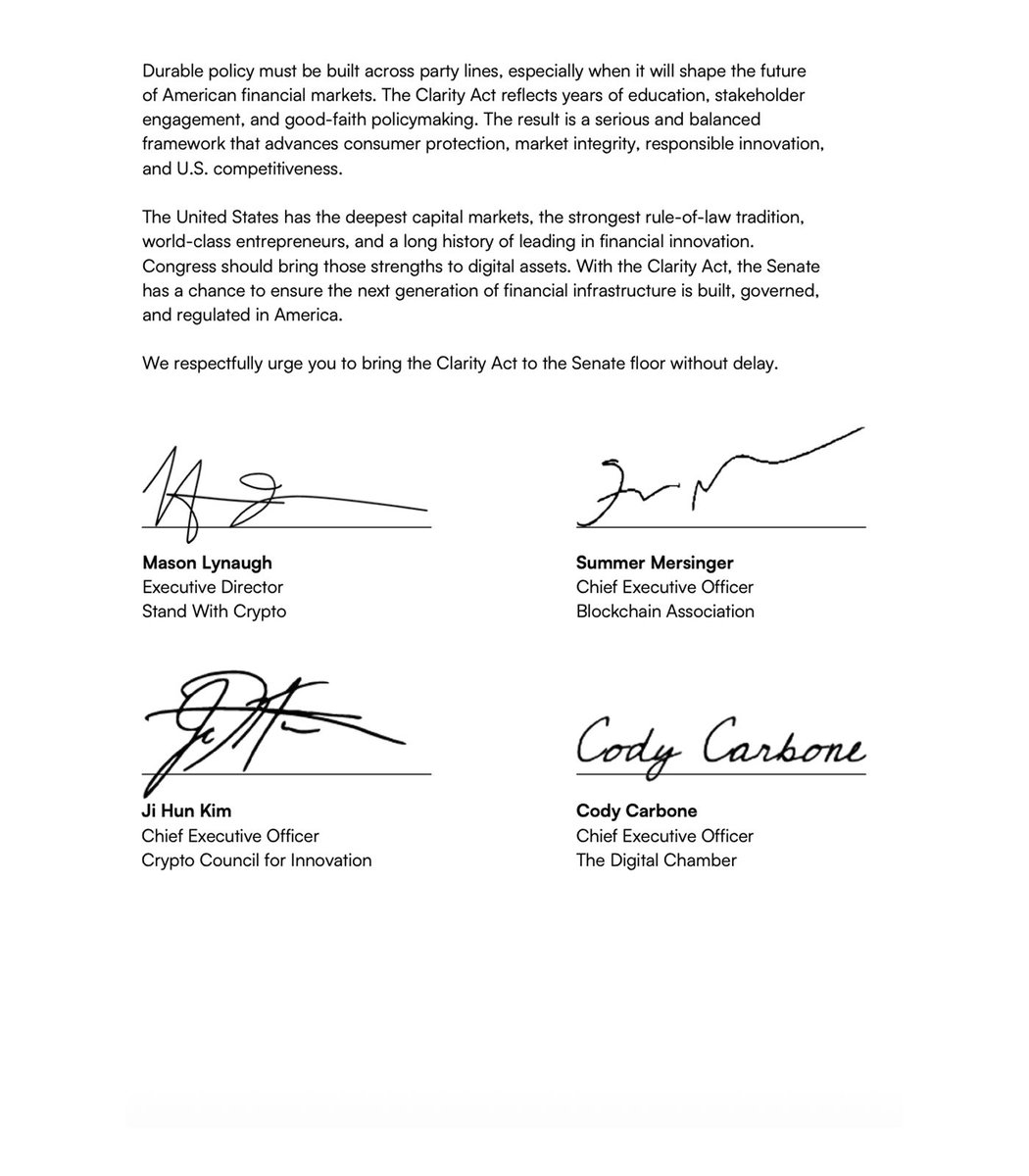
It’s time.

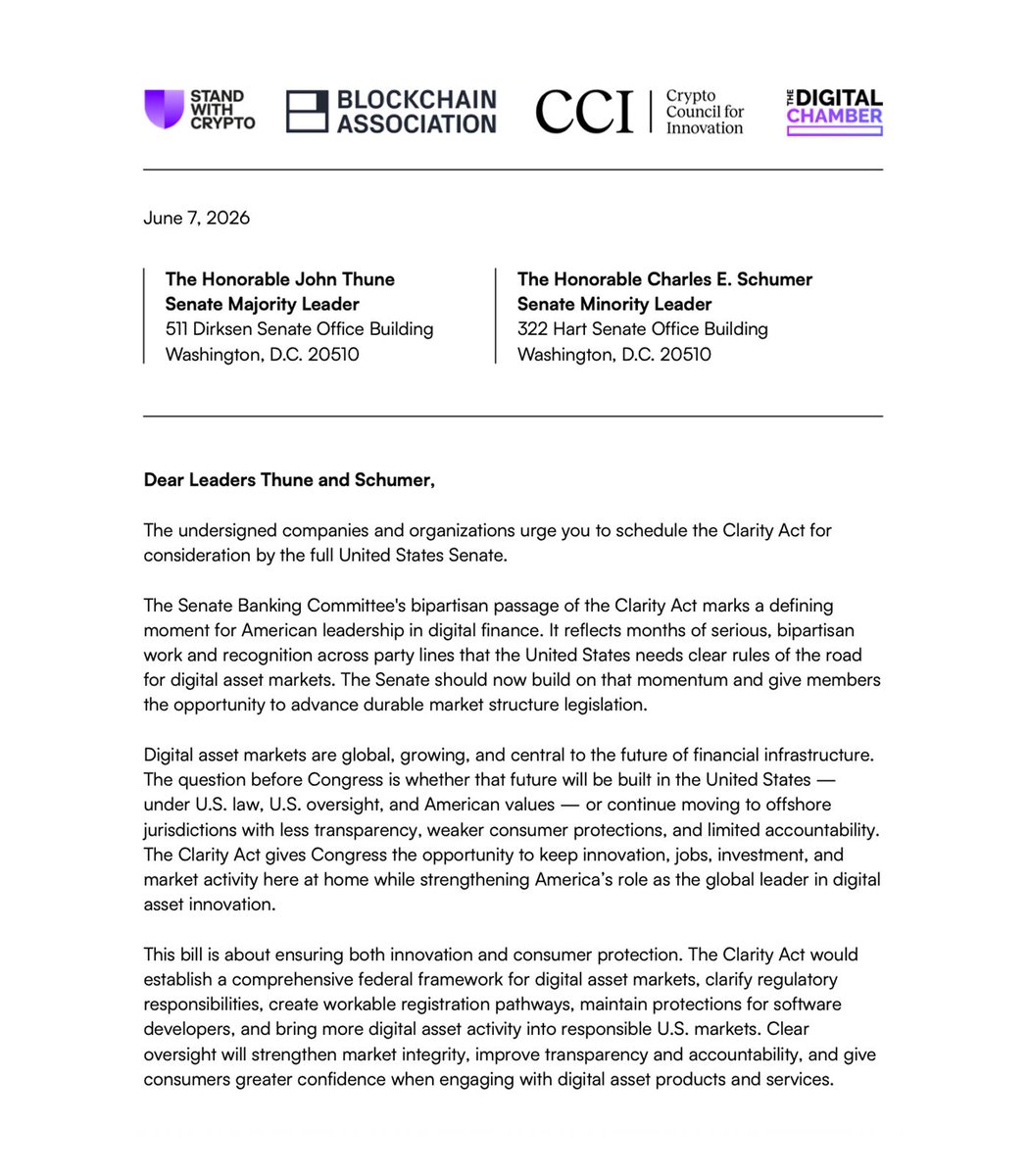
Stand With Crypto and over 200 organizations sent a simple message to Senate leadership: it's time for the Clarity Act.
The community is unified — large companies, startups, associations, and grassroots groups across the country are counting on their lawmakers to deliver rules of the road for crypto in America.
The Clarity Act passed the Senate Banking Committee with bipartisan support.
Now it needs to cross the finish line. Tell your Senators you want Clarity 👇
7
16
146
17,088
Jun 7
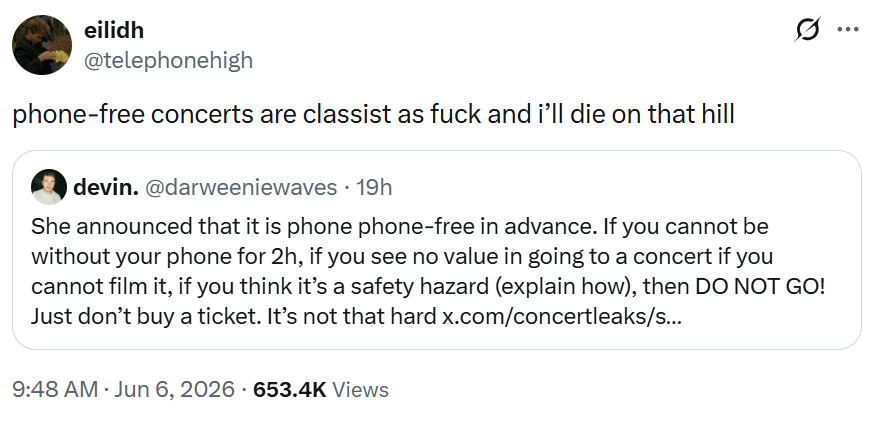
I really enjoyed this thread.

A thread of my favorite takes from the No Phones At Concerts discourse:
"Asking people not to be on phones is classist"
1
1
768
Jun 6
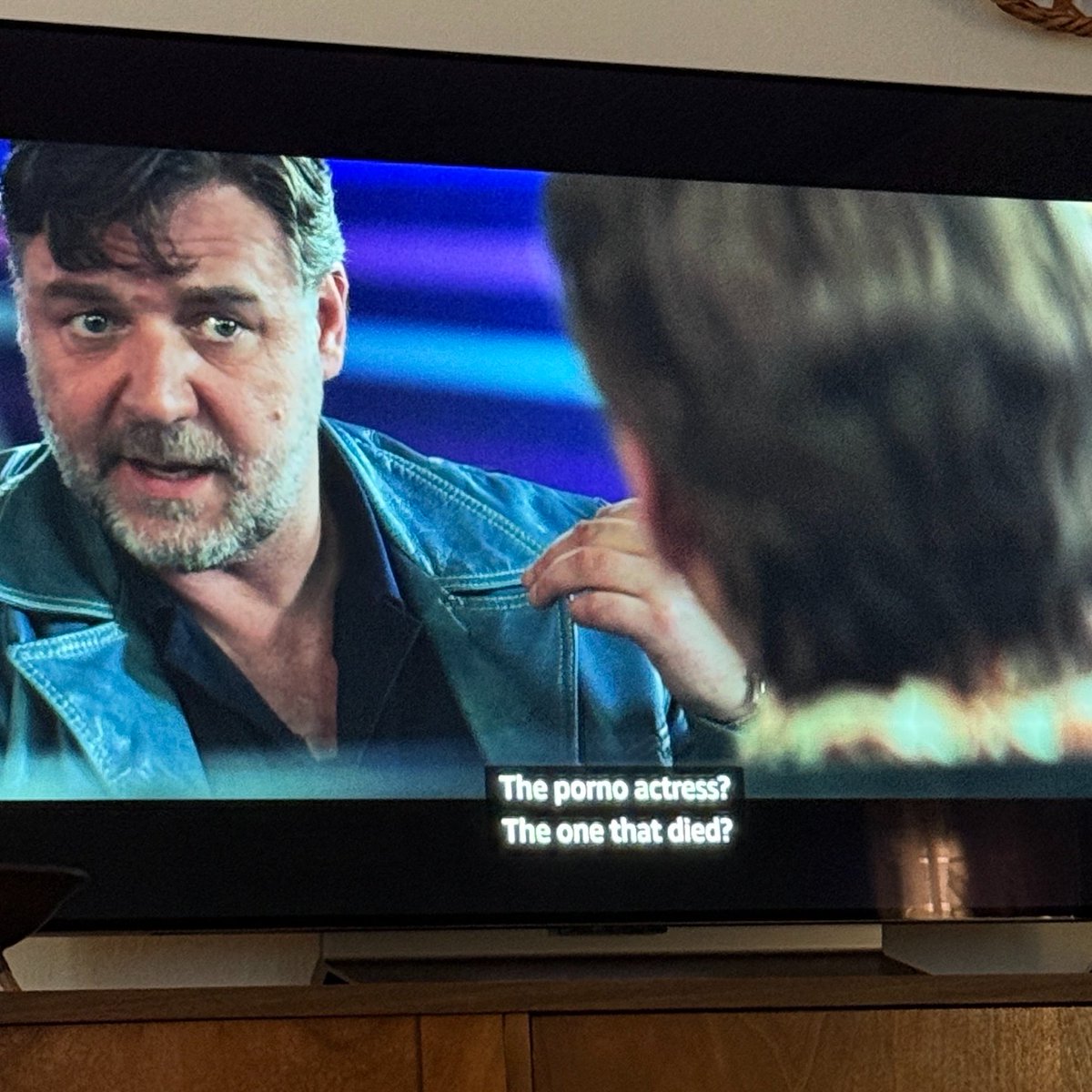
I love this movie so much. I wish it had been more successful so that they made sequels or a TV series or something (although they would have screwed that up).
Jun 6

1
1
512
Jun 5
Note to friends in publishing: It's still the spring. You really shouldn't be taking "summer Fridays" yet.
2
125
Jun 5
This is very good. Maybe even ... self-recommending?
x.com/noam_dworman/status/20…
Jun 4

Second for second, @tylercowen packs more substance into a talk than anyone I'm aware of. This is a clear, non-hysterical, and somewhat soothing discussion of our AI future.
1
187
Jun 5
I think your neighbors should be required by law to notify you 15 minutes in advance before they put down manure.
1
2
1,322
Jun 3
Rosebud was his sled.
Jun 2

Tom Holland spoiling The Odyssey is career suicide with Nolan
70
Jun 2
He was right, of course: The effects were immense and far reaching -- and we now take them for granted.
Jun 2
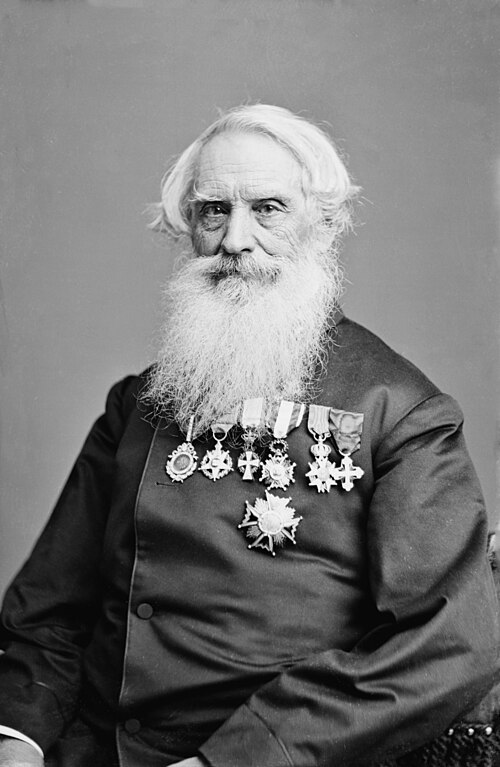
"It is obvious...that this mode of instantaneous communication must inevitably become an instrument of immense power, to be wielded for good or for evil, as it shall be properly or improperly directed."
--Samuel Morse, to Congress, on the telegraph, 1838
How have people thought in advance about the potential effects of profound new technologies? As we grapple with the potential impact of AI, I've found it valuable to revisit past technologies, to compare predictions with actual subsequent outcomes. Over the coming weeks I'll cover the telegraph, radio, television, and more.
Morse recognized the profound implications of being able to contact anyone across the world nearly instantaneously. And he worried about what a company or the government might do with unchecked power over this technology.
In words that seem to foreshadow the DoW-Anthropic battle, he wrote to Congress:
"In the hands of a company of speculators, who should monopolize it for themselves, it might be the means of enriching the corporation at the expense of the bankruptcy of thousands; and even in the hands of Government alone, it might become a means of working vast mischief to the republic."
Morse then proposed a remarkable hybrid regulatory solution. The government would own and operate its own telegraph---so that companies could not interfere with the workings of government---while also licensing the right to operate telegraph networks to private companies in parallel. He thought this would balance the needs of the private sector and government.
Congress ultimately rejected Morse's solution, leading to privately provided telegraphs and, eventually thanks to network effects, the quasi-monopoly of Western Union. Was this better or worse than Morse's proposal? We'll never know.
What does this all mean for AI? I'm not sure yet. But just like Morse, we'll want to think about a wide variety of potential policy solutions for AI, lest the government or a frontier lab end up with undue amounts of power that allows them to work "vast mischief to the republic."
1
318
Jun 2
For example, I was writing about the disappearance of "local time," which was in part a consequence of the ubiquity of the telegraph. (By local time, I mean, for instance, the practice in my village of the clergyman blowing a conch shell every night to tell everyone it was time to say prayers.)
1
119
Jun 2
The lack of interoperability in data storage media is appalling

Give me your best Star Wars nitpicks. No reasonable criticisms or analysis, I'm talking real pedantic here.
1
1
7
1,709
Jun 2
too cool
Jun 1

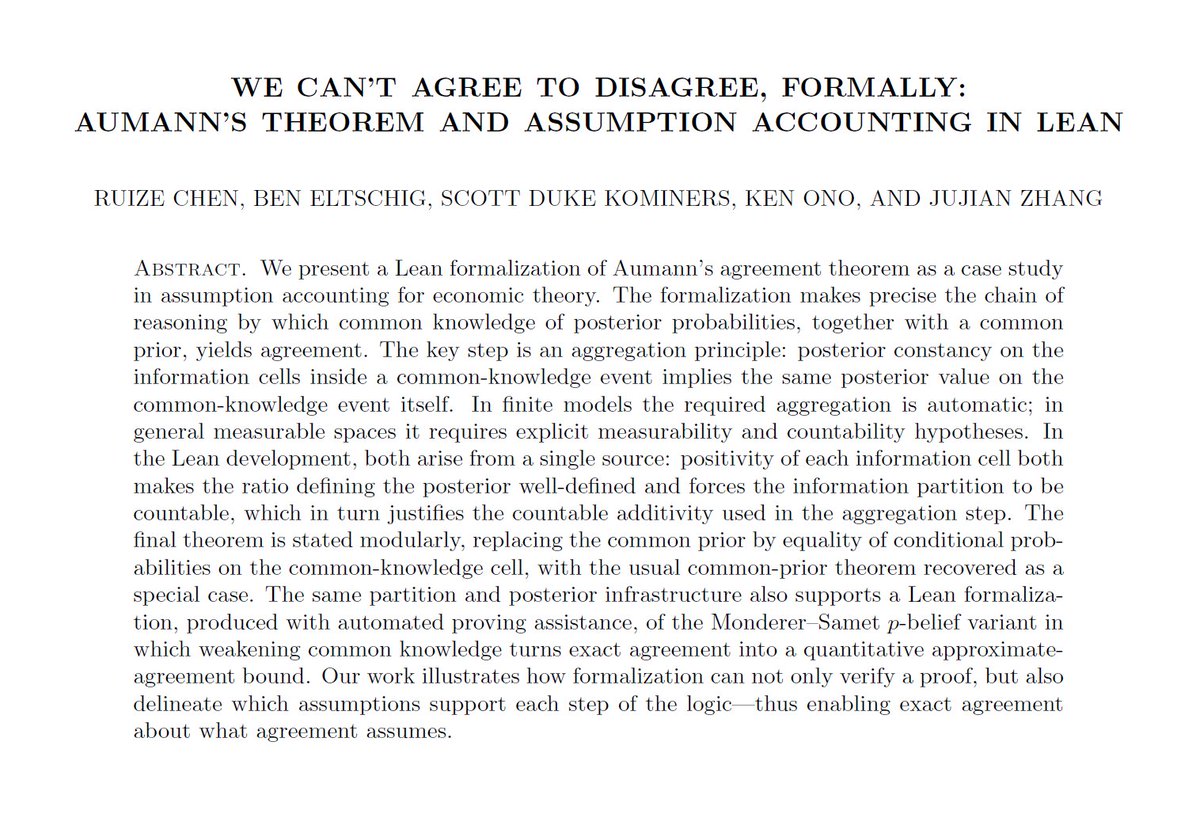
Super excited to share joint work with @axiommathai that kicks off a broader project of formalization in economics.
Aumann's celebrated theorem says we can't "agree to disagree."
But what does that actually mean – formally? 👀
1
2
4
1,944
May 31
Scott's piece is probably the most evenhanded assessment of prediction markets that you'll read.
May 30

"When prediction markets work well, they can offer significant benefits over other forecasting methods. First of all, the simple fact that they provide a probability estimate is a superpower. Polls and surveys, by contrast, just give an opinion share — and to convert that into a probability, you have to reason statistically about how the share you measured relates to the overall population. Polls also typically reflect just a snapshot in time, whereas prediction markets can update in real time as new participants and/or new information arrive."
Great piece by my colleague @skominers 👇
a16zcrypto.substack.com/p/wh…
1
3
120