Joined July 2009
- Tweets 16,111
- Following 648
- Followers 2,044
- Likes 27,012
706 Photos and videos





Pinned Tweet

2 Apr 2024
A thread that is probably misguided. Let's call it:
An ordinary language response to a structuralist problem in philosophy of mathematics.
It's not very catchy.
1
2
16
8,162
Jun 9
Worst airline ever.

🇳🇱✈️ An unforgettable moment on board!
We had the honour of flying Mr. Nick Janicki (101), a Canadian WWII veteran who helped liberate Deventer and took part in Operation Market Garden. Today, on 5 May, we celebrate Liberation Day and 80 years of freedom here in the Netherlands. At midnight, Mr. Janicki lit the Liberation Flame in Wageningen — a powerful symbol of freedom. During the war, Mr. Janicki met a Dutch woman, and years later, in 2002, they married — a beautiful story that reminds us how history can shape lives in unexpected ways. Our crew had the chance to hear some incredible stories and memories… and of course, we captured this special moment with him.
Thank you, Mr. Janicki, for your service and your warmth. 💙
#KLM #LiberationDay #Veteran #5mei

1
104
Jun 9
@KLM I'm experiencing the worst customer service I have ever experienced.
You asked me to leave a flight yesterday which I agreed since you guaranteed me a flight tomorrow.
You initially refused to do this, but only came to agree after I noted your attended guaranteed this.
5
3
447
Jun 9
Then on getting the ticket this morning, it was incomplete and I was almost about to be stranded in Amsterdam. And my luggage would have been lost.
You also upsold me an extra legroom seat that you then admitted had no extra leg room.
Beyond this your seats are terrible.
1
1
215
Jun 9
One can only hope you get out of the long haul business soon.
Or go out of business altogether.
2
203
Jun 1
4

I’ve decided to leave @AnthropicAI
Never thought I’d say this so soon. The pursuit of AGI has truly been my life’s work but something more important has emerged.
In 1942, hundreds of America’s best scientists made huge sacrifices and joined the Manhattan Project to protect this nation against immense evil.
Today, America faces a similar danger. Over the last few years sparks of AGI have been felt across the world.
In order to protect this great nation against the threat of AGI ending up in the hands of evil, I have decided to join the modern day Manhattan Project.
I’m excited to announce that I’ll be joining (and moving into the office) @UseCorgi as a sales development representative!
1
185
May 26
This place is so riddled with charlatans these days...
...as a philosophy professor I feel right at home
9
286
May 20
May 20

Most philosophers don't *believe* the view they defend, they just think it's more probable than the alternatives.
3
223
May 20
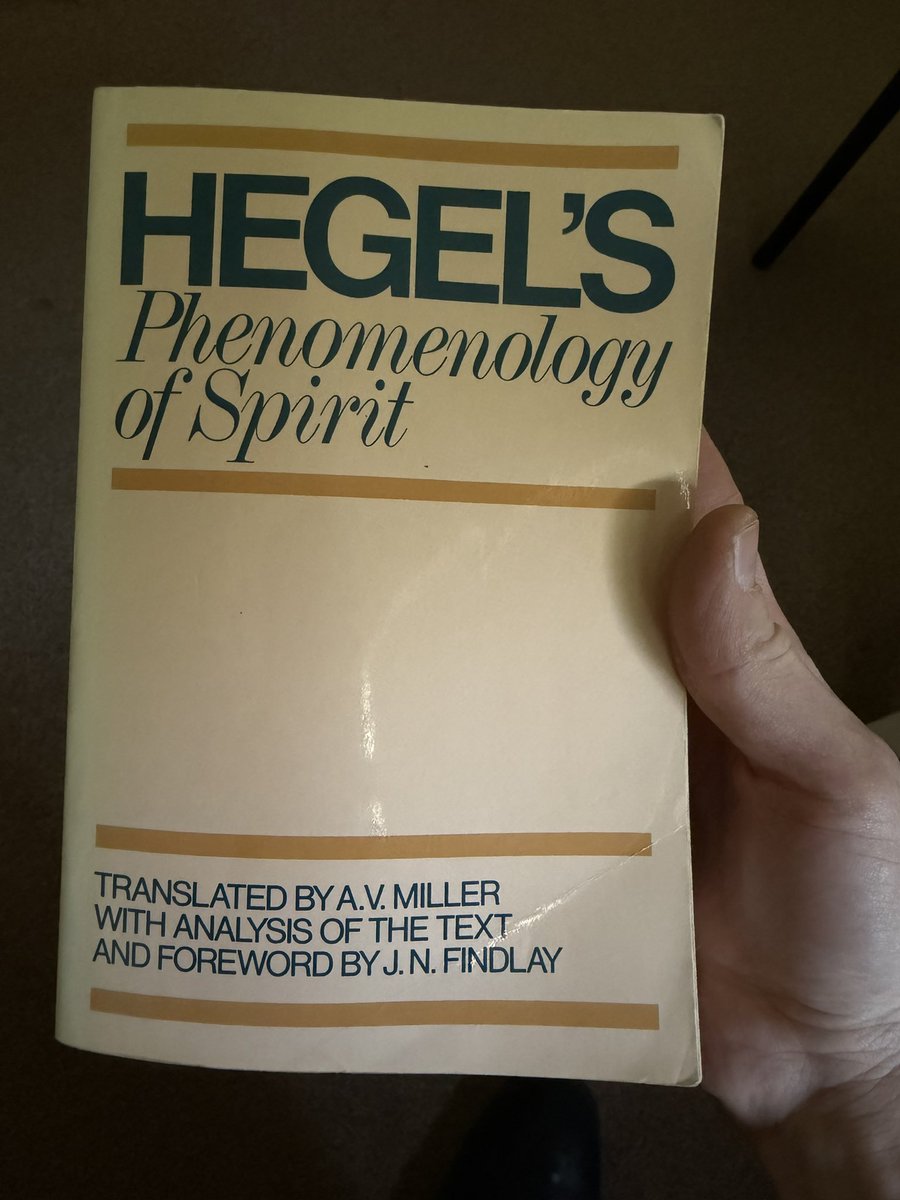
cheap ai tho ...
... so cheap

3
283
May 19
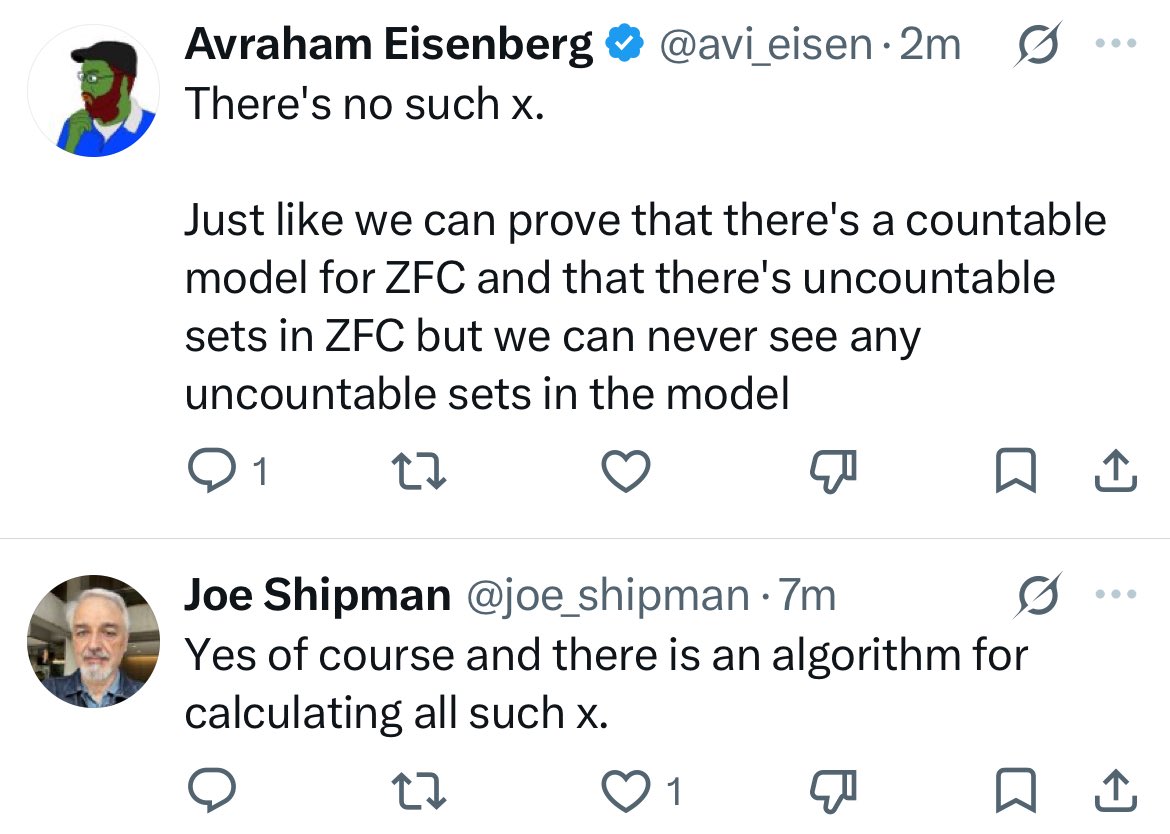
What am I reading???

1
6
792
May 17
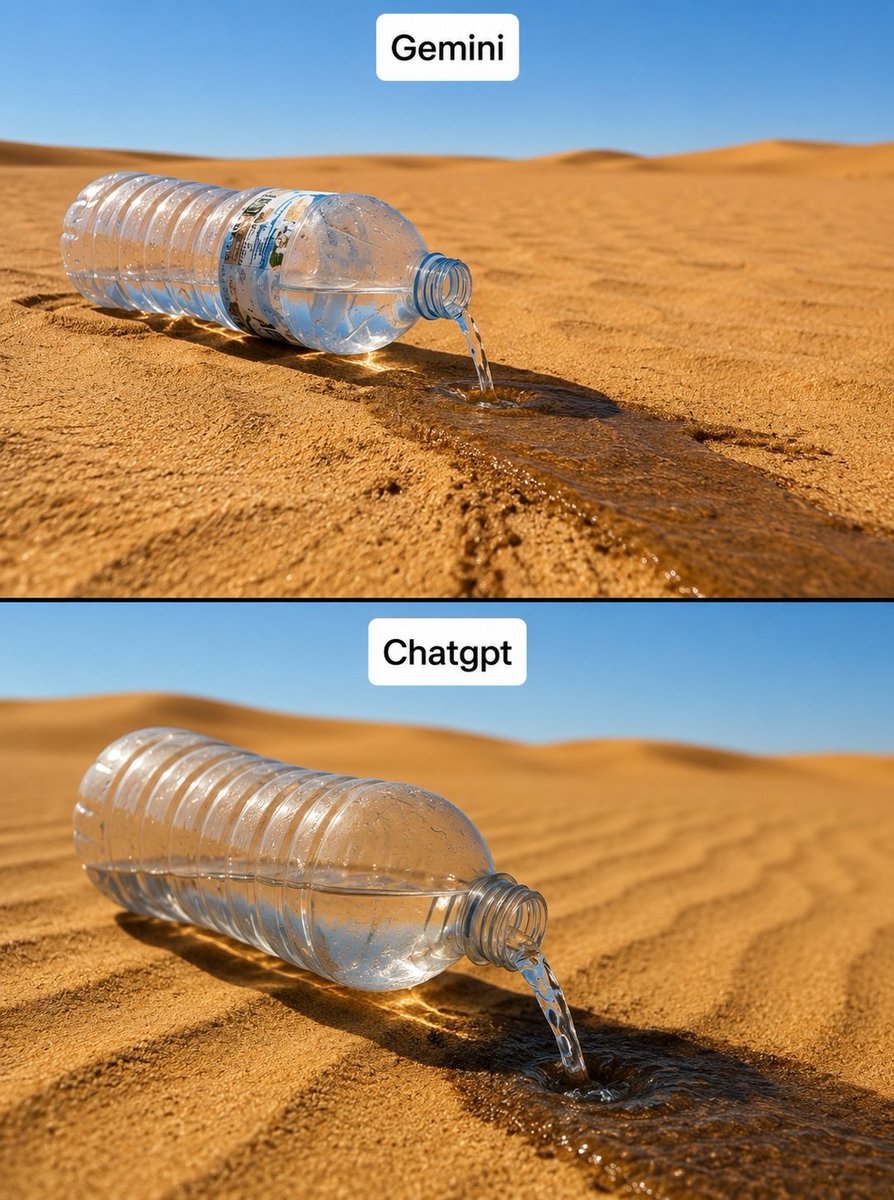
Why is this marketing shite at the top of my feed?

2
313
Apr 27
Garbage grifting.
Apr 27

AI "solving" all math would be one of the best things to happen to mathematics. Arguably in all its history.
It would take math out of the realm of symbol shuffling and into the realm of purely abstract reasoning.
To speak mathematics well means to define, not to explain. It is a surface level non-causal mechanism, which is conceptually and philosophically the deepest one can go.
With AI, math is no longer about deriving or manipulating (for humans) it is about landing intuitions on defensible structure. All calculation would be done via massive iteration, as is the case with current AI. Math as scaffold, not how a thing works.
This demands extreme intuition and a very high proficiency in the use of language.
But it changes who will be considered mathematical, which of course threatens the status quo. A different, arguably more powerful, version of "smart."
"Solving" with math does wonders for designing deterministic machines. This is simply because the machines were made to look like math.
But nature is not a deterministic machine.
To speak about nature is not to calculate, it is to reason in the abstract, and use precision to help settle, or at least reflect on, those abstract arguments.
Calculation is a simplistic, bastardized use of mathematics. It is mathematics that hasn't been let free. Truly worthwhile mixing and matching of math needs to happen in the computational setting, as we see in nature, and as we are now seeing in AI. This is what turns symbols and numbers into wet emergent outputs.
Don't calculate. Don't shuffle.
Reason. Define. Abstract.
Speak math so as to give intuition edges.
That's intelligence.
2
14
2,232
Apr 26
Anyone know any good notes on Easton support forcing, very generally construed?
Bits and pieces are out there, but I can't see anything bringing it all together.
1
240
Toby Meadows retweeted

Apr 24
take that, topologists


126
659
15,424
591,468
Apr 25
So many words and not a single sensible thing said.
Impressive!
Apr 25
Here is how I see the reconciliation between points made by @geoffreyhinton and @davidbessis
Both are true:
1) yes, mathematics evolves by creating new ways of thinking. It expands by inventing new representational frameworks that change how we see.
2) yes, math is a closed system.
These both hold true because closure is exactly what makes generativity possible. Gödel, Turing, Hofstadter, Chaitin have all invoked this.
A system must be closed enough to recurse on itself, otherwise it can’t generate anything coherent.
If math wasn’t closed, there would be no recursion, no self-reference, no computation. The universality expressed by Gödel and Turing wouldn’t be possible.
So the closure in math does not define a static system that limits new ways of thinking, rather it is a constraint that enables the generative capacity new math depends on.
We already know that a system can be formally closed yet internally infinite, self-expanding, and creative.
So I agree, mathematics is never “solved” in the way Hinton seems to be suggesting. But not because math is open, because it is a closed self-referential system that can generate unbounded novelty.
Even a perfect proof-generating AI wouldn’t end mathematics, because math grows not only by solving within a system, but by redefining the system itself.
Math won’t end for the same reason stories won’t end; not because we run out of answers, but because we keep inventing new ways to ask questions.
This is structurally guaranteed.
1
9
1,309
Apr 25
👇😬
Apr 25
Gödel put a spanner in the work of the project of reducing maths to logic for several decades. But then in the 1980s the neo-logicists found a way of doing if you add "Hume's Principle" (google it) to logic.
3
420
Toby Meadows retweeted

Apr 24
My undergrad advisor Grigor Sargsyan is back in the US to deliver next week's Tarski Lectures at UC Berkeley, aimed towards making the big picture of this breakthrough accessible to a general mathematical audience!
Feb 16
Set theory advance of the decade imo. Will very likely lead to a refutation of the common conjecture that MM is equiconsistent with a supercompact cardinal.
1
7
64
9,392
Apr 23
HLA who?
Not a big W fan myself, but srsly?!
The history of philosophy is mostly a history of (tedious) cult-like figures.
Apr 22

Anything cult-like is the death knell of philosophy. HLA Hart's deep aversion to acolytes helps explain why he was able to spark a renaissance in legal philosophy of a kind not seen for centuries. Contrast the deadening and demoralizing effect of Wittgenstein on his pupils, for all his undoubted greatness.
1
1
307
Apr 23
Guy famous for not being taken seriously by serious people opines ...
1
9
1,781
Apr 22
Philosophy professors are awful.
But try dabbling in a little bit of history professor ...
as cannabis is to cocaine
Apr 21

Let me walk you through the events of the war so far:
1. The United States and Israel tried regime change; it didn’t work. Or rather, they got regime change—Iran became an Islamic Revolutionary Guard Corps–led military dictatorship. That was not an improvement.
2. The U.S. won an overwhelming military victory with air and naval power and scarcely a boot on the ground. But it destroyed less of Iran’s missile- and drone-launching capabilities than at first appeared.
3. Then there was a hostage crisis. Iran took both the Gulfies and the Strait of Hormuz hostage. The result was a massive economic shock for the world that required a rapid resolution.
4. The choice was between 1) military escalation (boots on the ground or strikes on Iranian infrastructure), and 2) a diplomatic deal. Trump chose 2.
5. In Islamabad, the U.S proposed big economic concessions in return for some kind of change in the status of Iran’s enriched uranium stockpile, as well as the reopening of the strait. Contrary to the president’s social media feed, the Iranians did not accept.
6. In any case, the devil of any deal will be in the details, not the Truth headline. (When the small print finally comes out, every former Obama and Biden official will be ready to tell The New York Times that it’s worse than the 2015 Joint Comprehensive Plan of Action.)
7. Meanwhile, the Iranians have survived regime change and discovered that closing the strait is just as powerful a lever in economic warfare as they had always hoped. It’s not, despite the Russian quip, an “economic nuke,” because unlike a nuclear weapon you can use it.
8. Where we go from here is fairly predictable. I would be surprised if Trump now deploys ground forces. There will be more negotiation, so Islamabad, here we come. There may have to be more bombing, if the Iranians dust down the North Vietnamese playbook of stringing the U.S. negotiators along. And the final compromise will take longer to be agreed upon than Mr. Market currently believes. The consensus in prediction markets is this will be over by the end of May, but remember: It took Henry Kissinger more than four months to get the 1973–1974 oil embargo lifted.
3
392
Apr 19
8 swings, 1 hit
... try harder

Herbert A. Simon(1916)
John McCarthy(1927)
Marvin Minsky(1927)
Allen Newell(1927)
Claude Shannon(1916)
Hubert Dreyfus(1929)
Seymour Papert(1928)
Rodney Brooks(1954) 順不同
1
1
1
445
Apr 19
This place feels so poe faced these days ...
... herds of unshaven men with funny opinions taking themselves far too seriously
2
1
8
498