Bitcoin native hedge fund with @lashercorson @tylev @utxomgmt @domodata @isabelfoxenduke. Trading inscriptions, Bitcoin tokens, and special satoshis.
Joined October 2023
- Tweets 220
- Following 64
- Followers 1,660
- Likes 568
31 Photos and videos


Unbroken Chain retweeted

8 Oct 2025
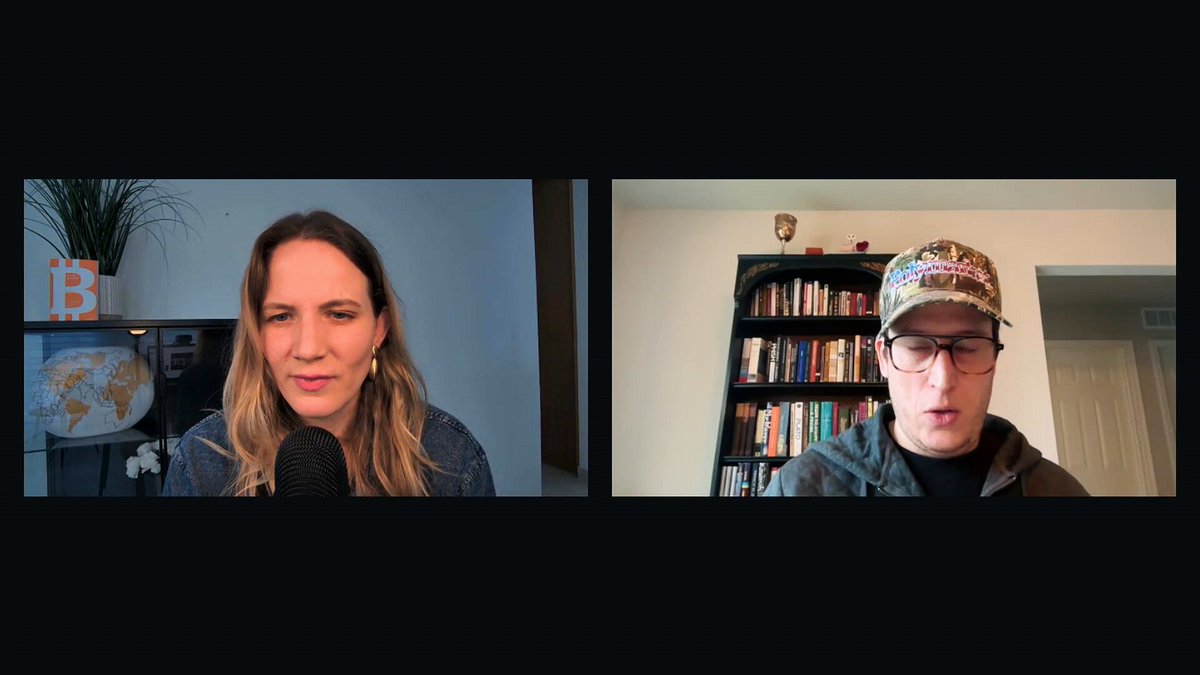
Using Ethereum as a benchmark, Bitcoin-native assets are a potential 100X opportunity.
BRC2.0 co-creator @0xBinari ( CEO of @bestinslot) shares key stats with Bitcoin Rails host @isabelfoxenduke
7
4
24
1,469
Unbroken Chain retweeted

1 Sep 2025
BRC2.0 is officially live on Bitcoin mainnet.
Bitcoin L1 now has smart contracts, programmability, and 6-byte tickers. ⚡️
The road ahead is full of new products, features, and airdrops. Stay tuned! 🪂✨
162
144
497
183,325
Unbroken Chain retweeted

27 Jun 2025
44
34
284
55,289
Unbroken Chain retweeted
20 May 2025
What if there is no alt season? What if the crypto cycle is defined by attention & capital focusing on Bitcoin: Bitcoin treasury companies, Bitcoin ETFs, Bitcoin tokens, and Bitcoin-based digital art?
8
4
37
2,466
Unbroken Chain retweeted
2 Apr 2025
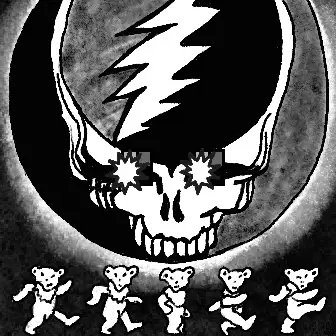
Ladies and gentlemen, allow me to present a truly remarkable piece from the "Black Eyes Edition" of the Ordinal Maxi Biz (OMB) collection, a pioneering ordinals project inscribed on the Bitcoin blockchain. This artwork serves as a profound bridge between the vibrant counterculture of the 1960s and the digital art revolution of the 2020s, masterfully marrying the iconic imagery of the Grateful Dead with the innovative spirit of Bitcoin ordinals. Here, we see the Grateful Dead’s "Lightning Skull"—also known as "Steal Your Face"—and the beloved "Dancing Bears," reimagined through OMB’s distinctive hand-drawn, one-of-a-kind profile picture style, a testament to the enduring power of art across mediums and eras.
The artwork draws deeply from the rich legacy of the Grateful Dead, a band formed in San Francisco in 1965, whose imagery has long symbolized the freedom and rebellion of the countercultural movement. The "Lightning Skull" was first conceptualized in 1969 by Owsley "Bear" Stanley, the Grateful Dead’s visionary sound engineer and a pivotal figure in the psychedelic era, in collaboration with artist Bob Thomas. Stanley’s inspiration emerged from an unexpected source—a freeway sign he glimpsed through the rain, a circle divided by a white bar with orange and blue halves. He reimagined this as a striking red and blue circle pierced by a 13-point lightning bolt, a design initially created for a practical purpose: to mark the band’s equipment during the chaotic festival tours of the era, ensuring their gear stood out amidst a sea of black road cases. Thomas later added a skull beneath the circle, and this emblem made its debut on the 1973 album *History of the Grateful Dead, Volume One (Bear’s Choice)*, a heartfelt tribute to the late Ron "Pigpen" McKernan, featuring recordings from February 13-14, 1970, at the Fillmore East in New York City. The name "Steal Your Face" emerged later, tied to the 1976 album of the same name, inspired by a poignant lyric from the song "He’s Gone," reflecting on loss and betrayal.
Complementing this electrifying symbol are the "Dancing Bears," also designed by Bob Thomas for *Bear’s Choice*. These whimsical figures were a nod to Stanley himself, affectionately nicknamed "Bear," and his deep ties to the psychedelic movement as a pioneering LSD producer. Stanley, ever the purist, insisted that the bears were not dancing but marching, their high-stepping poses inspired by a lead sort from an unknown font—a subtle nod to the era’s typographic artistry. Over time, these bears became an enduring symbol of the communal joy and unity of the Grateful Dead’s devoted fanbase, the Deadheads, who followed the band through over 2,300 live performances from 1965 to 1995. These shows included iconic moments in music history, from the Monterey Pop Festival in 1967 to Woodstock in 1969, and even a transcendent performance at the Great Pyramid of Giza in 1978, where the band played under a lunar eclipse, blending their music with the ancient energies of the site.
In this "Black Eyes Edition" piece, the fusion of these historic symbols with the cutting-edge medium of Bitcoin ordinals invites us to reflect on the evolution of art, community, and freedom itself. The Grateful Dead’s ethos of openness and resistance to centralized control finds a direct descendant in the digital age through John Perry Barlow, the band’s lyricist, who co-founded the Electronic Frontier Foundation in 1990. The EFF’s 1996 victory in establishing code as protected speech under the First Amendment laid the philosophical groundwork for Bitcoin’s decentralized, censorship-resistant architecture—a legacy of liberty that the Ordinal Maxi Biz collection proudly inherits. Thus, this artwork stands as a fitting tribute to the Grateful Dead’s timeless spirit of creativity and connection, now reimagined in the boundless frontier of the internet.
17
8
70
5,115
Unbroken Chain retweeted
27 Mar 2025
BITCOIN RAILS EPISODE #17: DOMO’S SIDE OF THE STORY & the HISTORY OF BRC20
A particularly special episode—@domodata sits down with me for his first video interview ever—to recount the unique history of the BRC20 protocol.
The first Bitcoin-native token standard ever created, BRC20 came into existence almost overnight and quickly emerged as a multibillion dollar asset class in 2024.
This episode covers the influences leading up to the birth of $ORDI, the roles of different players involved along the way, and how core maintainers are preparing for their next major update—affectionately dubbed “BRC 2.0” by Bitcoin educator @bobbodily
Additionally, Domo shares his memory of key moments in BRC20 history—including:
—the development of BRC20's canonical indexer and details of Domo's working relationship with @unisat_wallet
—Ordi's listing on OKX and Binance ( what he believes triggered listing decisions by those exchanges)
—the creation of the Layer 1 Foundation and the responsibilities of its member organizations in maintaining the core protocol
—why Domo has never accepted funding (including advisory fees) from either of his lead maintainer companies @unisat_wallet or @bestinslotxyz
We also go into depth about what sparked the “BRC20 indexer wars” and how stakeholders are ensuring the integrity of its consensus going forward.
This episode includes special mentions of major influences in the evolution of BRC20—including @redphone @robertjfclarke @Bitcoin_Punks_ @satsnames @bestinslot @unisat_wallet and others.
This episode can be viewed on YouTube or Spotify using the linktree in Isabel’s bio—YouTube episode is also in the comments.
As always, thanks to the show's sponsor @bestinslotxyz for making this episode possible— in addition to being a core maintainer of BRC20, Best In Slot maintains the leading API for Ordinals and BRC20 data aggregation and indexing.
TIMESTAMPS:
01:04 Domo, Ethereum, and how he found Bitcoin
05:04 Why Ordinals clicked for Domo
07:58 Ordinals going from underground to mainstream
11:13 Who helped Domo ideate around Ordinals? 16:21 How did Domo announce ORDI, the “first” BRC20?
20:02 Why did BRC20 blow up so fast?
22:25 How did UniSat get involved with BRC20?
25:12 Catalysts for the BRC20/ fungibles boom
26:35 When did BRC20 get good pricing data?
29:00 Domo’s stresses during the ORDI blowup
31:34 How involved was Domo with UniSat early on?
35:00 Exchanges instantly deciding to list ORDI
37:38 How did Best In Slot start indexing BRC20s?
41:48 Centralization of indexers
44:18 Coordinating indexers around Ordinals forks
47:25 Relaunching the Layer 1 Foundation
49:25 The relationship between Domo, UniSat, and Best In Slot
51:02 Upgrading BRC20: Swap and Programmability Module
54:55 How the programmability module came to be
57:00 “Standard Maxiness” is hurting the industry
59:00 Plugging BRC20 into everything else
01:00:50 Do programmable metaprotocols solve interoperability?
01:02:50 Metaprotocols and L2s: do they compete?
01:05:00 Does BRC20 have an advantage over the metaprotocols?
01:06:20 How should the community approach Bitcoin’s issues?
01:08:50 Competition rising in the BItcoin space
01:10:00 People are underestimating metaprotocols
01:11:55 Single step transfer for BRC20
38
65
215
86,938
Unbroken Chain retweeted

25 Mar 2025
BRC20 PROTOCOL UPDATE ▶️▶️
1. The BRC2.0 Programmable Module, developed by the @bestinslotxyz team, will be available on Bitcoin Signet this Monday, March 31st.
This upgrade introduces a virtual machine and Turing-complete functionality into the BRC20 canonical indexer—enabling BRC20 tokens to become programmable.
Documentation and tooling will be available for developers interested in building DeFi and other applications with the BRC20 standard on Bitcoin L1, without relying on bridges, multi-sig schemes, L2s, or validator networks
For more information about the BRC2.0 Programmable Module, follow the @bestinslotxyz team for updates and Q&A.
2. The @unisat_wallet team has developed three implementations for a BRC20 single-step transfer function—for three indexing service providers, including OKX, UniSat and OPI. The team intends to publish its implementation proposal by the end of this week.
Additionally, UniSat will be facilitating testing of this function in various environments—including on the @fractal_bitcoin network.
For updates on testing of the BRC20 single-step transfer function implementation—follow @unisat_wallet
3. As of today, the @unisat_wallet team is including two additional implementations of the BRC20 swap module on the @fractal_bitcoin network, after its initial implementation was introduced in September 2024.
Over the next 2–4 weeks, these new implementations will be rigorously tested to ensure their stability and reliability—in preparation for activation on Bitcoin mainnet.
For updates on the testing status of the BRC20 swap module upgrade —follow @unisat_wallet
All teams involved with the development of BRC20 appreciate any and all feedback on code, docs, etc. as these updates are implemented. We're thrilled to push the BRC20 core protocol forward throughout 2025!
64
96
272
125,012
Unbroken Chain retweeted

24 Feb 2025
the truth is brc20 was fun
it was clunky and silly, it barely worked, but it was ours
dumb jsons that anyone can understand
full mempools
orange UI
kinda magical
53
21
261
22,077
Unbroken Chain retweeted
20 Feb 2025
Excited to share that L1F President & BRC20 creator @domodata will be speaking at ETHDenver's 1st ever Bitcoin Summit on Feb 26th!
Don't miss it if you're in Denver next week—moderated by @UnbrokenChainGP @lashercorson
13 Feb 2025

GET PUMPED FOR ETHDENVER'S 1st EVER BITCOIN SUMMIT on 2/26! 🎉
We're gathering the biggest names in "Bitcoin Season II," including Ordinals, Bitcoin DeFI, Layer 2s and more.
Come check out the new wave of innovation happening on BTC.
All EthDenver attendees are welcome, this will take place in the main venue at the Paddock Stage.
Invite link below!
6
11
48
15,968
Unbroken Chain retweeted
14 Feb 2025
14 Feb 2025

BITCOIN RAILS #11: Cut Bait On Runes—Save The Art! | with @bitcoinbeezy
Runes was one of the most highly anticipated protocol launches in crypto history—and one of the most disappointing from a trading perspective.
The demise of Runes has arguably smeared the entire Bitcoin-native assets space—not only detracting resources and attention from early winners like BRC20—but arguably devaluing the brand of the Ordinals protocol itself, which was previously understood to be one of the most impactful technical developments in Bitcoin's history.
Former Galaxy researcher @bitcoinbeezy speaks out about what's really happened with Runes and Ordinals this year—and implores listeners to "cut their losses" on Runes and redirect their energy to Ordinals... before it's too late.
In this episode, we chat about:
-Why Runes' launch was ultimately setup for failure from Day 1
-How fragmentation between protocols is affecting the entire Bitcoin native assets space
-Why Runes likely won't be able to beat memecoins on Solana
-How Ordinals, on the other hand, out-compete NFTs on every other chain
-How we can re-bootstrap Ordinals and finally revive the ecosystem
This episode is powered by Best In Slot—the leading API for Ordinals and BRC20 data aggregation and indexing.
As always, YouTube Spotify links in bio linktree.
TIMESTAMPS:
0:00 - Intro
1:20 - What went wrong with Ordinals??
5:40 - Poor Runes design decisions
8:55 - Runes wasn’t meant to be optimal
10:55 - Why did everyone drink the Runes Kool-Aid?
13:20 - Nobody expected BRC-20s; Everyone expected Runes
16:00 - Time for builders to start attacking Runes
19:00 - Can a CEX listing really revive Runes?
22:52 - The catalyst after BRC-20s: Node Monks and Puppets?
24:20 - Runes destroyed the show for Bitcoin tokens
26:10 - Memecoins and tokens are *not* Bitcoin’s strength
27:00 - Forget Runes: It’s time to refocus on Ordinals
31:20 - Reviving Ordinals: Pushing for cold-storage solutions
33:50 - Digital art frames
34:50 - More Ordinals wallet choices
37:20 - Should Ordinals return to focusing on art?
39:00 - “Living art” on Bitcoin
41:30 - Profile pics vs Fine art on Bitcoin
44:18 - Will the early inscriptions meta make a comeback?
46:30 - We need platforms for Bitcoin art
50:15 - How does Ordinals gain institutional adoption?
52:30 - What happened to Casa’s Ordinals support?
56:00 - Bitcoin NFT performance vs other chains
58:00 - Let’s get back to having fun with Ordinals
1:00:00 - What is the role of KOLs in Ordinals?
1:02:00 - There are no unbiased KOLs
1:03:20 - NFT media platforms should cover Ordinals more
1:06:00 - Less copium, less hopium
5
5
37
2,952
Unbroken Chain retweeted
10 Feb 2025
All BRC20 tokens are about to become programmable. BRC2.0 is around the corner and Bitcoin blocks will be painted with smart contracts!
✅ Unlocking stablecoins, BTCfi & more.
✅ No bridges, no L2s, no multisigs.
✅ No gas token, pure Bitcoin. 👌
📜 Full specification:

22
36
108
12,531
Unbroken Chain retweeted
2 Feb 2025
Odin looks solid—worth a deep dive. A few questions:
1️⃣ Who are the 5 non-Odin related signers on the multisig?
2️⃣ Will existing runes be able to be deposited?
3️⃣ Where does BTC go when a token is bonding?
4️⃣ How is BTC secured?
5️⃣ Are deposits/withdrawals manually approved?
Insights welcome. Invite code below. @BobBodily
3
2
4
1,007

29 Jan 2025
Excited to share that GPs @lashercorson and @isabelfoxenduke will both be speaking at EthDenver this year!
A historic moment that EthDenver will be covering Bitcoin content this year 💪
29 Jan 2025
We’re proud to announce we’ll be hosting a Bitcoin Builder’s mini-summit at ETHDenver!
Bitcoin Season 2 takes the stage on February 26th ⚡
Join @robin_linus, @domodata, @T0, @farmerjoe0x, @danheld, @isabelfoxenduke, and many more!
Read more below 🧵
1
2
11
1,054
27 Jan 2025
We’re in the market for medium to large lots of Bitcoin native assets—at a discount. If you’re looking to sell a chunk of assets quickly, let’s talk.
1
3
12
922
Unbroken Chain retweeted
22 Jan 2025
Ordinals were an immaculate conception—a moment of true brilliance. Runes, by contrast, emerged from a desire to challenge and dismantle BRC-20. Far from immaculate.
3
7
23
1,309
2 Jan 2025
What could cause Bitcoin dominance to finally break—and cause a massive bull run in "Alts" and Bitcoin-native assets?
4
4
13
1,023
31 Dec 2024
2024 ORDINALS & RUNES YEAR-IN-REVIEW thoughts on the coming New Year with GPs @lashercorson and @isabelfoxenduke
This year has been a wild ride of upswings, corrections, narrative build-ups and break-downs—with Unbroken Chain GP's Asher Corson and Isabel Foxen Duke on the front lines.
This new year's eve, we're breaking down what happened in Bitcoin-native assets, and possibilities for how these assets might behave in the coming year—both relative to spot and the rest of the digital assets world.
We'd love to hear your thoughts and comments—and what YOU learned about this asset class (and beyond) in 2024. Enjoy!
4
2
21
2,472
Unbroken Chain retweeted
20 Dec 2024
what if max pain is an ordinals run while bitcoin consolidates
80
40
559
65,952
9 Dec 2024
Pumped to check out GP @isabelfoxenduke on her new podcast - out tomorrow! Lookout for special market updates with @lashercorson on the pod too 👀
9 Dec 2024
✨NEW PODCAST DROPS TOMORROW
🚆Bitcoin Rails, hosted by moi
GET READY FOR EPISODE 1: "Exploring the influx of Bitcoin L2s" with @btcplusplus founder core lightning dev @niftynei
3
1
18
927