
Joined November 2021
- Tweets 38
- Following 108
- Followers 262
- Likes 57
6 Photos and videos


23 Jul 2024
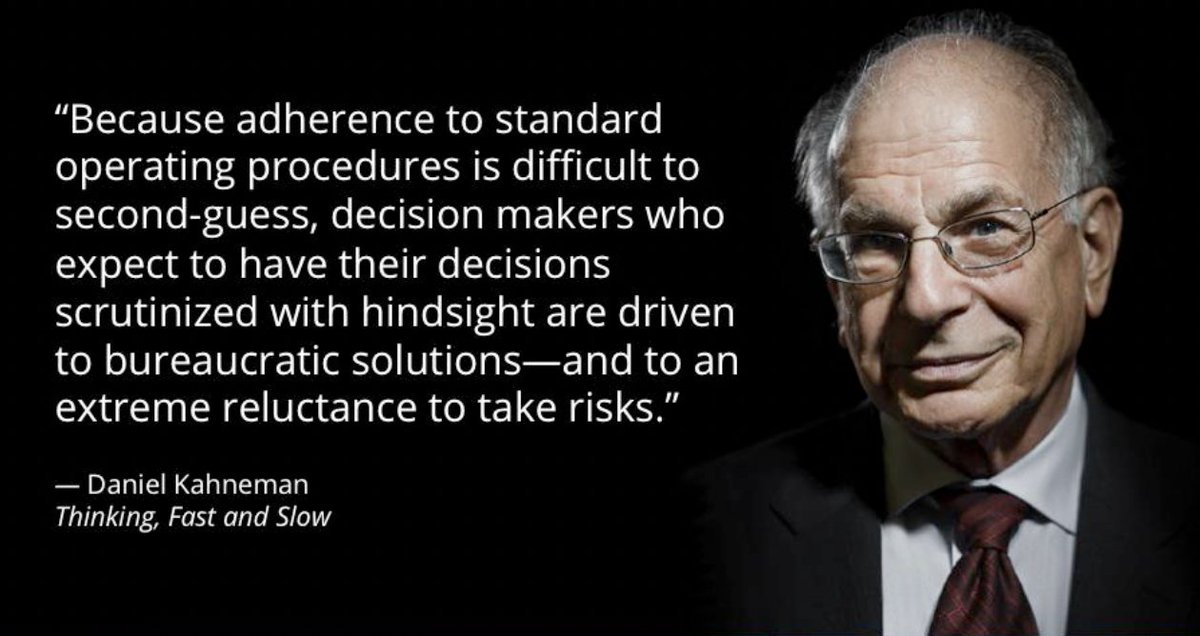
"A wise leader, therefore, does not see herself as someone who simply makes sound decisions; because she realizes she can never, on her own, be an optimal decision maker, she views herself as a decision architect in charge of designing her organization's decision-making processes."
― Olivier Sibony
This quote hits the nail on the head. Leaders need to be decision architects.
Designing the frameworks, processes, principles and guardrails for making good decisions.
Not just making good decisions themselves in a black box.
The world is too complex and uncertain for any one person to consistently make optimal choices.
But we can architect systems and processes to improve decision quality across teams and organizations.
It starts with making the implicit, explicit. Documenting and iterating our 'decision architecture'.
Using techniques to reduce biases and noise. Entertaining dissent. Interrogating data. Exploring alternatives and probabilities.
The quality of our decision making environment determines the quality of our outcomes. Design accordingly.
2
3
284
21 Jul 2024
How can we systematically improve decision quality? Some key questions to ask:
Were dissenting opinions and alternatives entertained?
Were there clear principles and criteria driving the evaluation of options?
Was the information supporting the decision effectively interrogated? (Avoiding base rate neglect and feature-positive effects)
Was there counterfactual thinking exploring probabilities of outcomes?
Were "tripwires" or kill-criteria defined in case new information changes how we think about the decision?
Were steps taken to reduce groupthink and other collaboration biases?
Much like a scientific paper breaks down the methods, the decision process can show and justify the rigor.
It insulates from the worst scenario for outcome bias - when a good decision results in a bad outcome.
Decision making processes in companies, teams, and individuals already exist - they're just implicit.
Making them explicit opens them up to learning and iterating.
124
21 Jul 2024
Is a decision "good" just because it's "data-driven"? Not necessarily.
While data and analysis are important, process and dialog may have a more significant role than you think according to research Olivier Sibony spearheaded at McKinsey.
They looked at 1,048 major decisions made over 5 years and found that process mattered more than analysis by a factor of 6.
This doesn't mean analysis is unimportant. In fact, almost no decisions made through a very strong process were backed by poor analysis.
A good decision-making process will ferret out bad analysis. The reverse is not true.
"Dialog and process" in this context means deploying techniques to reduce the impact of cognitive biases.
These are the systemic variations in judgment that Daniel Kahneman and Olivier Sibony call "Noise".
To improve decision quality, we need to explicitly design decision making processes that curb biases and noise.
There's value in simply making the process explicit.
1
107
17 Jul 2024
The quality of a decision is measured by its process, not its outcome.
Measuring decisions by observing the outcome is subject to outcome bias.
Even if the best decision was made given the information available at the time, luck is still a meaningful variable.
As Annie Duke says, "Outcomes don't tell us what's our fault and what isn't, what we should take credit for and what we shouldn't. Unlike in chess, we can't simply work backward from the quality of the outcome to determine the quality of our beliefs or decisions. This makes learning from outcomes a pretty haphazard process."
So if decision quality can only be observed from its process, what exactly are we looking for?
The answer seems to be the ratio of process rigor (that comes at a cost - people and time) to risk (how consequential the decision is).
The last thing we'd want is relatively inconsequential decisions going through an overly-thorough decision making process.
There's a bit of an art to deploying the right tactics for the right decisions. Something we explore in the Uncertainty Project.
The key is having a rigorous decision making process, especially for consequential decisions, while avoiding analysis paralysis on the small stuff.
2
93
16 Jul 2024
The Abilene Paradox: When conformity leads to disaster
Imagine a group of people who all secretly want to stay home, but end up going on a long, miserable trip to Abilene, Texas.
Why? Because everyone conforms to what they think others want, even though it's not what anyone actually wants.
This is the Abilene Paradox in action. It happens when we fail to communicate our true desires and beliefs, instead projecting false preferences to avoid conflict.
The result? Decisions that satisfy no one. A collective reality that's completely misaligned with individual preferences.
The solution lies in fostering an environment of psychological safety, where people feel empowered to speak their minds and challenge the status quo.
Don't let the Abilene Paradox lead your team astray. Embrace candor, even when it's uncomfortable.
1
78
12 Jul 2024
Most people think psychological safety is about creating a comfortable, positive environment.
But that's not the case.
True psychological safety is about embracing the uncomfortable. It's about fostering an environment where people can surface hard truths, interrogate information, and handle conflict in a healthy way.
Without this, teams fall into the trap of groupthink and complacency. They make decisions that don't reflect anyone's true preferences.
Psychological safety isn't easy. It's not all sunshine and rainbows. But it's absolutely essential for high-performing teams.
Embrace the discomfort. Foster candor and dissent.
56
The Uncertainty Project retweeted

26 Jan 2024
I got the opportunity to share @Management30's Delegation Poker Cards, @nearfuturelab's Work Kit for Design Fiction, @WorkNOBL's The Decider app, and the @flipper_net.
And I got to shill @UncertaintyProj.
1
2
196

"The leaders in our research who built great companies understood that what happens after a decision—the level of commitment to and ferocity of implementation—counts at least as much as the decision itself."
~ Jim Collins
Amazon has "Disagree and Commit". HubSpot has "Debate, Decide and Unite".
It's often hard, but a lot of leverage to be had in aligning behind decisions.
8
18
132
29,727
The Uncertainty Project retweeted
25 Oct 2023
We have done a lot of writing about decision making models @UncertaintyProj if you want to check out a bunch:
theuncertaintyproject.org/bl…
Using rehearsal and randomness are two very strong techniques that I don't think many people know about (they are in that list too)!
1
1
5
124
The Uncertainty Project retweeted

23 Aug 2023
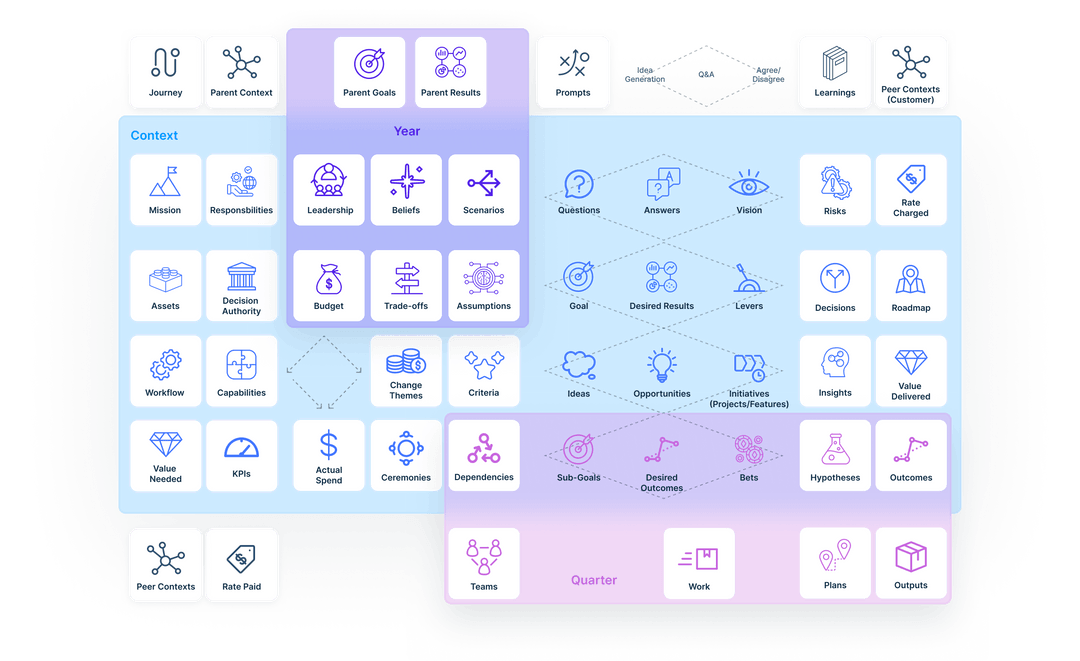
The Uncertainty Project @UncertaintyProj (by @KyleByrd99 and friends) looks to be an incredible resource for navigating complex systems of work (which is all of them):
theuncertaintyproject.org/pl…
All for free. Feel the learn!
1
5
604
30 Jul 2023
We're on Product Hunt today and we'd love your support! 🙏
Head on over to our PH page and give us an upvote 🔮🚀 producthunt.com/posts/the-un…
1
1
213
The Uncertainty Project retweeted

19 Jul 2023
How ‘collective illusions’ influence decision making
buff.ly/3DeN6Y9
@uxdesigncc @KyleByrd99 @UncertaintyProj #business #leaders #leadership #management #CEO #decisionmaking

4
5
134
2 Jul 2023
There seems to be something deeply human about our desire to understand ‘why’, perceive meaning, act with conviction, inspire, and cooperate in groups.
How do we think about strategic decision making in the age of artificial intelligence?
lnkd.in/gTssqbyB
1
4
101
13 Jun 2023
When communication only happens at the decision point, we miss out on opportunities for building buy-in and including diverse perspectives buried in tacit knowledge.
Buy-in does not require consensus and decisiveness is not inherently exclusive.
theuncertaintyproject.org/th…
3
79
12 Jun 2023
"A good framing is rarely whether or not to do something"
There are many more insightful nuggets in this post by @skmurphy
skmurphy.com/blog/2020/04/09…
1
1
83
9 Jun 2023
Great summer reading list by @behscientist. A few, in particular, caught our eye 👀:
- 📘 The Cult of Creativity
- 📙 The Experience Machine
- 📗 Mixed Signals
- 📕 Power and Progress
- 📓 Psych
- 📔 Rethinking Intelligence
buff.ly/3quuqAw
4
139
6 Jun 2023
Seek consensus on how decisions are framed, not the decisions themselves
1
2
91
5 Jun 2023
This week we dug into 'divergent thinking', the biases that keep us from considering broader solutions, and tools to help encourage 'out of the box' thinking!
👉 blueprint.beehiiv.com/p/dive…
1
3
76