
Joined June 2020
- Tweets 3,324
- Following 123
- Followers 137
- Likes 37,272
426 Photos and videos





RT @dsnorthnorth: This is very sad news indeed if true. I can’t think of a more divisive issue within the country, Parliament or the PLP.…
29
James Wilson Undy retweeted

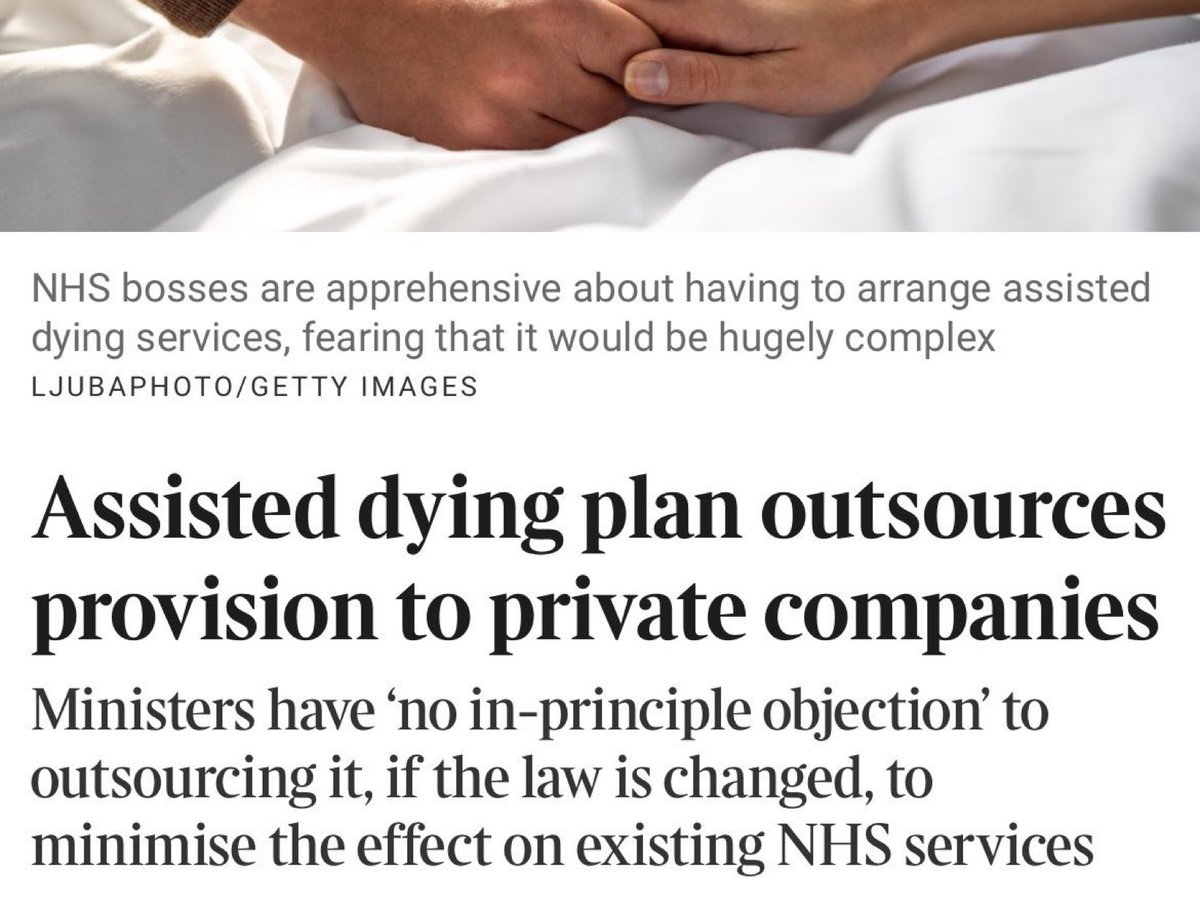
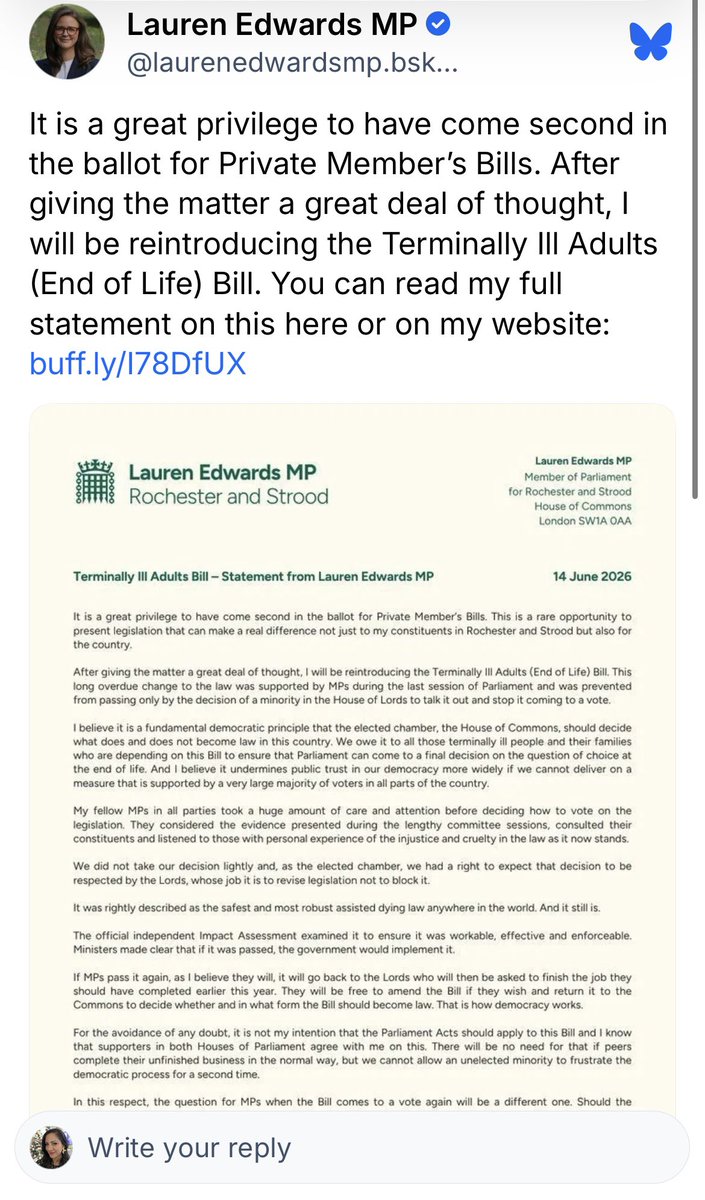
Lauren Edwards MP statement says “[The TIA bill] was rightly described as the safest and most robust assisted dying law anywhere in the world”
No. It was only described this way by the people trying to push it through.
Here is how others described the Bill:
1. The Royal College of Physicians said the Bill is unsafe
2. The Royal College of Psychiatrists said the Bill is unworkable, and unsafe
3. The British Geriatrics Society said the Bill’s safeguards are not adequate
4. Domestic abuse charities said the Bill is unsafe
5. Organisations representing disabled people said the Bill is unsafe
6. Royal College of GPs says the Bill lacks adequate safeguards
7. Lord Stevens, ex NHS CEO, said legislating for assisted dying in the current climate of hospice cuts is “utterly ridiculous”
8. MIND says the safeguards are not adequate
9. The CLADD group at KCL (DOI) have said the Bill is “not fit for purpose”
10. The British Association of Social Workers say the Bill’s is not safe enough
Spot the pattern?
3
105
218
12,182
James Wilson Undy retweeted

Where to even start with this, I mean there is nothing else major going on locally, nationally or internationally for us to deal with.
A big thank you to the ‘Unelected Minority’ in the Lords for doing their job in trying to make the first bill safe for the most vulnerable.
3
36
153
9,042
RT @antoniabance: Absolutely infuriating that one of my colleagues has decided that what Parliament should focus on in the coming months -…
253
James Wilson Undy retweeted

Very sad to see my colleague Lauren Edwards MP bringing the deeply flawed and unsafe Assisted Dying Bill back as a PMB. If it was safe and brilliant why did the Lords sponsor of the bill bring 77 amendments in the Lords? It cannot just be brought back as it is and forced through.
30
136
561
41,217
Of course it was.

1
3
113
James Wilson Undy retweeted

Most of the teenagers harmed by these reckless zealots are lesbian or gay. This is the only Conversion Practice that is happening, at scale, in the UK.
Jun 11

Dozens of children put at risk after gender care failures at GP clinic, inquiry finds bbc.in/4apZy8e
33
211
912
32,638
James Wilson Undy retweeted

Jun 9
In the lead up to the FIFA World Cup 2026, the world should know that the Islamic Republic, one of the participating teams in the tournament, has killed 12 male and female footballers in just the past three months. That is more than an entire football team on the pitch. In this thread, I will name them one by one also will be updated over time.
Rebin Moradi, a Saipa FC player, and Zahra Azadpour, a Mehrgan Pardis player who also previously played for the Iran national team, were among those killed during the protests.


16
710
1,644
36,701
James Wilson Undy retweeted

Jun 10
A Jewish woman posts an innocuous tweet about her job.
The replies show what it's like being a Jew on social media: a sewer of hate.

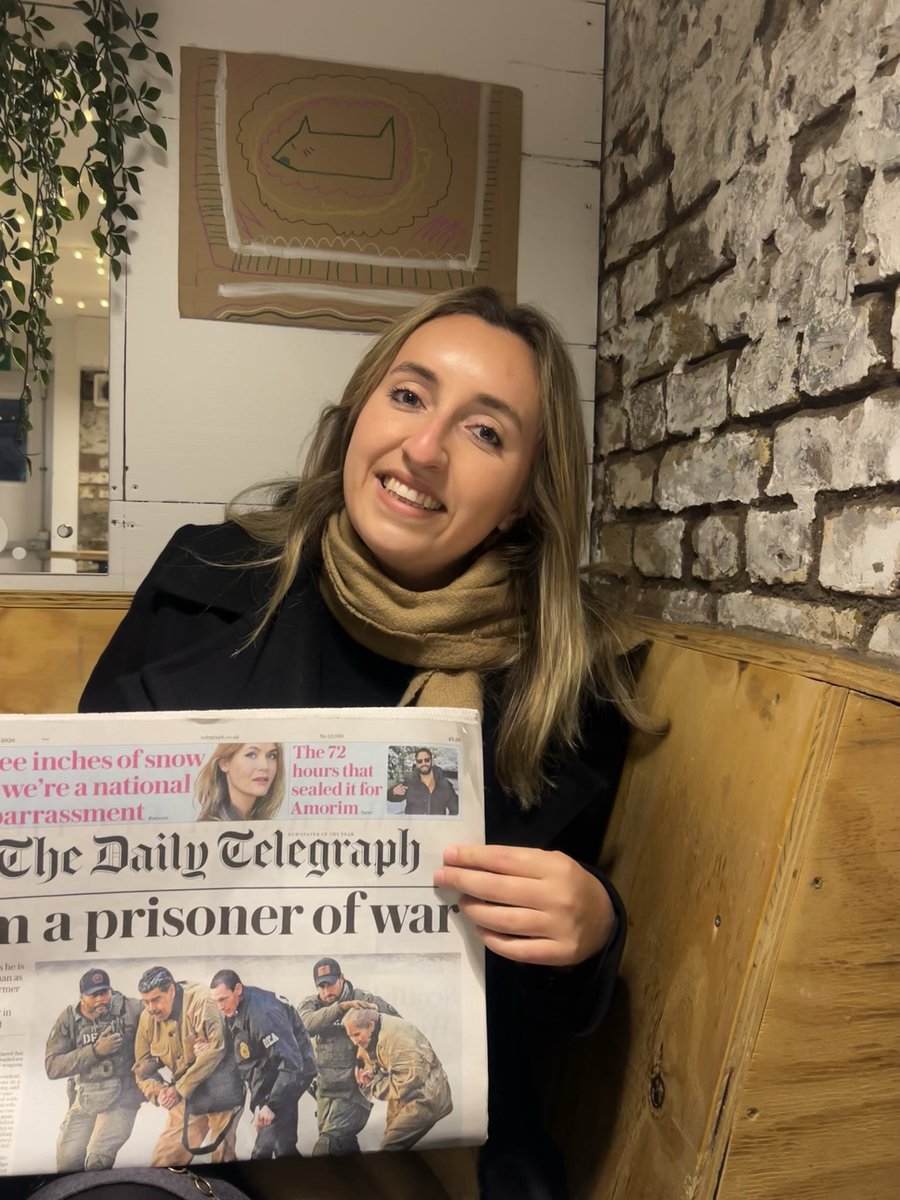
Six months since I joined the 🗞️ Sunday Telegraph 🗞️ (wow time flies) and I am acting Pol Ed this week. Just your friendly reminder that I am always keen for any tips / tidbits as well as ☕️ or 🍻.
43
66
382
32,082
Excellent thread. It will have taken the patience of Job to sit through that.

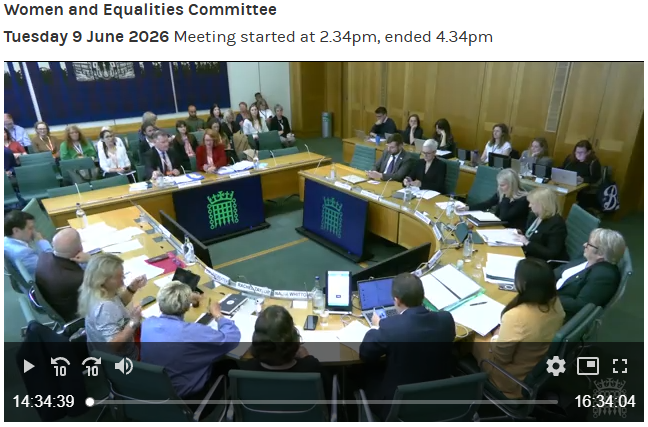
1/ I went to Parliament to watch the Women and Equalities Committee. The chair of the EHRC Mary-Ann Stephenson (MAS) and CEO John Kirkpatrick were giving evidence, the other adults in the room were Rosie Duffield and Rebecca Paul MP. Other than that it was the slow kid's table.
40
James Wilson Undy retweeted

1. Scouts is not about who you shag
2. Not all gay men are fun camp zoo animals for straights
3. This is a kids organisation can we just bloody stop with this let the young gay lads maybe just be lads and forget the gay thing with their mates
4. Im so tired of this

124
540
3,497
44,350
James Wilson Undy retweeted

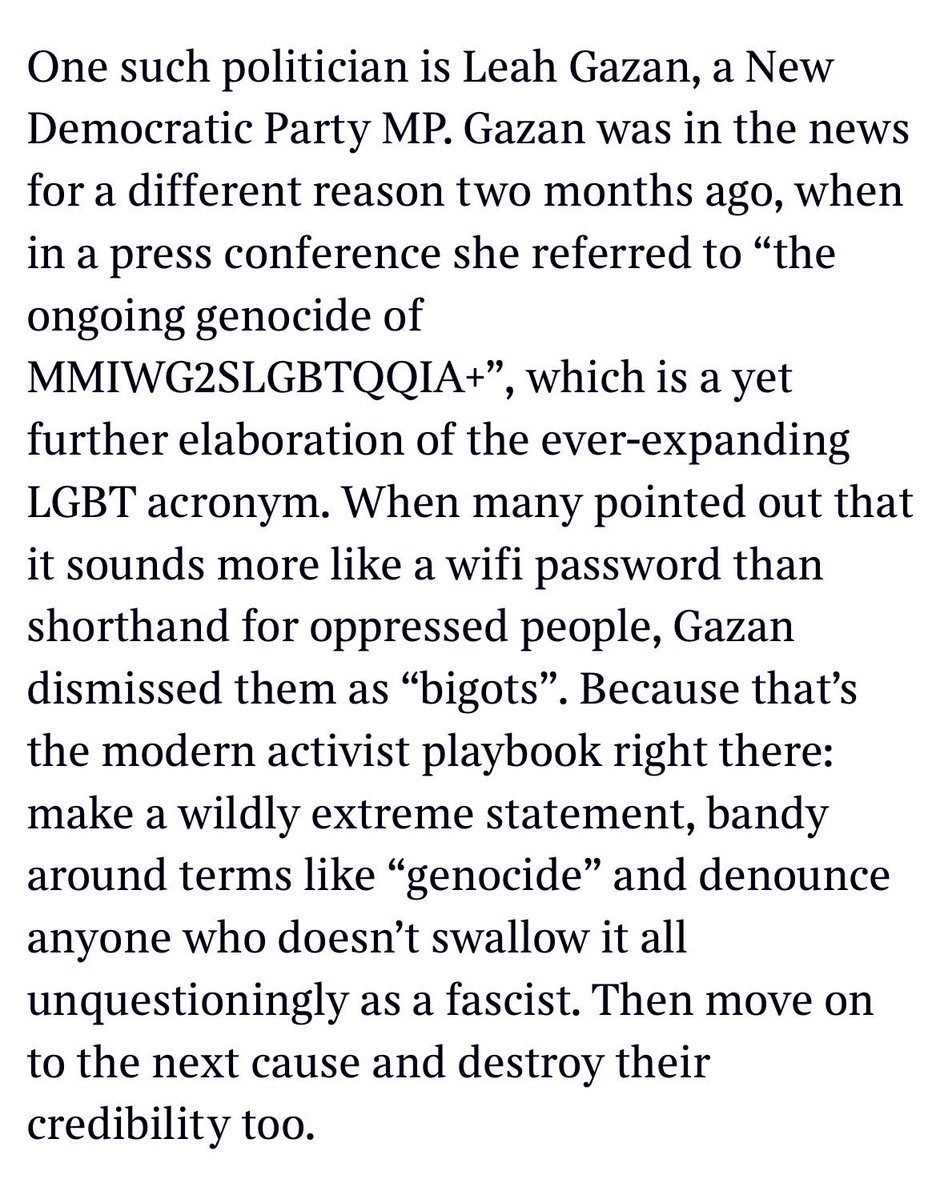
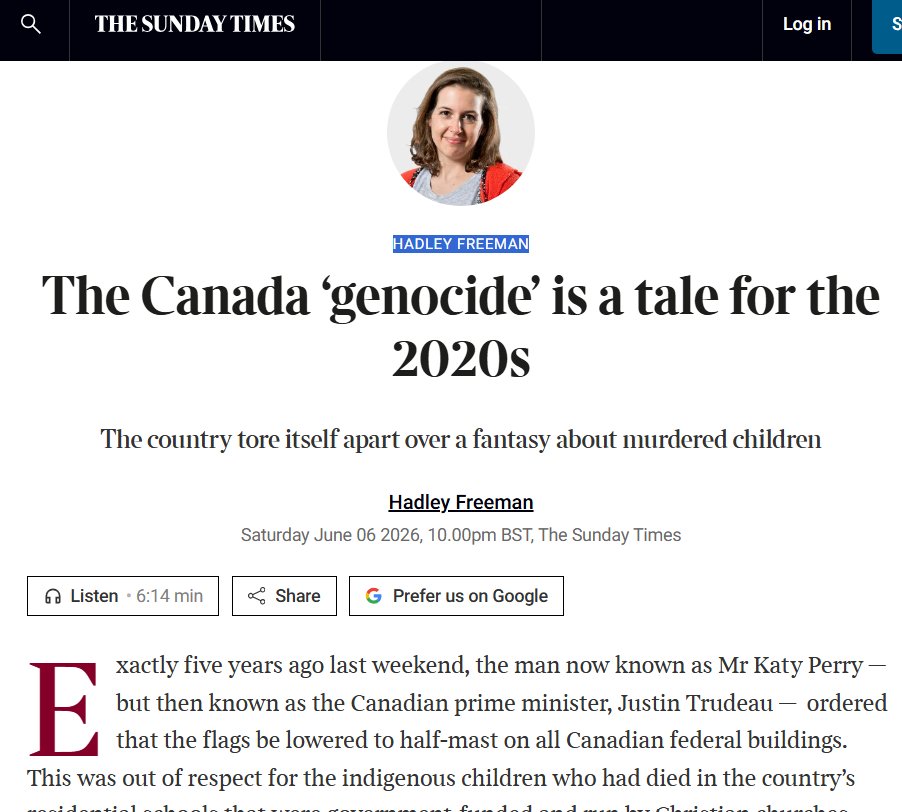
Today’s @thetimes column is about the murdered children who never were
thetimes.com/article/e3548a3…
Jun 7

"Activists and politicians love to talk about accountability, but only in regard to other people. When it emerges that they’re the ones who screwed up, who denounced innocent journalists, exploited the pain of vulnerable people, muddied the facts of a real tragedy, used graves for a photoshoot with a teddy bear, suddenly the past — ie five years ago — is ancient history and we should all get over it." @HadleyFreeman
11
70
227
14,709
James Wilson Undy retweeted

Jun 7
By putting this interview out with a known Islamic regime lobbyist (despite his protestations) - and thus with the full knowledge and blessing of the regime before it’s broadcast to the world - @Channel4News are trying to tell us “hey everyone, news from inside Iran: true, they don’t like the regime but they think the way forward - despite all the massacring, executions and everything they’ve endured - is to wait a few years until the current regime reforms”.
Which is like saying “you know that bloke who slaughtered his family and tens of thousands more? Before stopping him, how about waiting a bit to give him time to see the error of his ways?”
This is where the press are complicit. The vast majority of UK mainstream media outlets lean rabidly anti-Trump. To them that’s who the real enemy is, not the murderous, repressive regime like the Islamic Republic. Which is insane.
Wittingly or unwittingly they are now pushing an Islamic regime clearly stated aim to ride out the war, to wait and stall until Trump is no longer US president, knowing full well that the next one won’t have the courage to get rid of them once and for all. For the good of the planet. Which is utterly insane.
Jun 5

Speaking in Iran, academic and regime critic Sadegh Zibakalam tells Krishnan Guru-Murthy that democracy cannot be imposed overnight, and that lasting reform must come gradually.
Despite being banned from teaching and facing pressure from hardliners, he says he remains hopeful about Iran’s future and can still see “light at the end of the dark tunnel.”
87
710
2,236
84,540
James Wilson Undy retweeted

Jun 6
Natasha Irons, the Labour MP for Croydon East, said she was “proud” that the government was “putting passengers before profit” by bringing railway companies into public ownership.
It was a revealing moment in PMQs this week, because it was so unremarkable. A Labour MP sloganised meaninglessly about “profit” being the enemy of customer service and no one noticed.
Keir Starmer replied that he too was “proud” that her constituents are travelling on rail services that are now “back in public ownership”, and no one batted an eyelid.
The PM assumed that everyone agrees that public ownership is better than a competitive market because that is what the voters think, according to superficial opinion polls.
Worse, he boasted that some of Irons’s constituents were “benefiting from the first freeze in rail fares for 30 years”. If he had said that rail travellers, who tend to be better off, are being subsidised even more by taxpayers, who are on average poorer than they are, the cheers of Labour MPs might have been less noisy.
But no, the surrender to magic money-tree economics is so complete that it passed without comment. No one rose to demand, “Did the old Clause IV die in vain?” No one asked if Tony Blair had gone to all that trouble to expunge the commitment to the “common ownership of the means of production, distribution and exchange” from Labour’s constitution for nothing.
Labour’s reflex hostility to profit is back, and it is one of the underlying causes of the government’s failure. Starmer and Rachel Reeves presented themselves as pro-business, but they didn’t mean it. Not really, deep down. They had not done the hard thinking in opposition that Blair forced the party to do by rewriting Clause IV, setting out the party’s “aims and values” in its constitution, to understand what a “dynamic economy” involved.
So when they had to choose which taxes to put up, they went for taxes that burdened businesses, stifling wealth creation and employment.
Now here comes Andy Burnham, offering to go through the whole sorry cycle all over again. He too says he is pro-business, and the skyscrapers of boomtown central Manchester give us some confidence that he might mean it.
He says Reeves’s rise in employers’ national insurance contributions “wasn’t the right decision” and he wants to “reconsider” it. Yesterday he told the Telegraph that he would “look again” at the inheritance tax rise on farmers.
But this admission of error was not accompanied by a return to economic realism. Far from it. It was part of a cynical vote-buying exercise: a promise of a 20 per cent cut in business rates on pubs. Never mind that it is unusual for a by-election candidate to make a formal announcement of a policy they would implement if they were prime minister, just ask: where is the money coming from?
In the case of the tax cut for pubs, Burnham went through the motions of being a serious candidate for government by saying it would be paid for by higher taxes on online giants such as Amazon and by cracking down on tax evasion. So, he proposes a 20 per cent cut in business rates for pubs instead of the 15 per cent cut announced by Reeves for next April, paid for by a combination of the unworkable and the imaginary.
As for employers’ national insurance and farmers, it is all “look at”, “revisit” and “consider”, with a wave of the hand in the general direction of the money tree. But renationalising Thames Water, also mentioned yesterday, seemed to be a firm promise. For the water industry as a whole, “public ownership is absolutely an option,” he said. But “for Thames Water, that is what should be done”.
As with the railways, public opinion is on his side – at the level of pop-quiz poll questions. But as Blair once explained, there is a difference between a three-second answer, a 30-second answer and a three-minute answer. People tend to say yes to any question about public ownership, but if the question includes the costs of nationalisation, the history of public-sector under-investment and whether ministers’ energy should be devoted to the complex legislation needed, the answers become less certain.
Nationalisation ought to be a pragmatic question – “the market where possible, the state where necessary”, as the German social democrats realised 67 years ago – but for too many in the Labour Party, it remains an article of faith 31 years after Blair’s teachable moment.
For Burnham, it betrays an instinct of hostility to profit, and an attachment to fantasy economics that augurs nothing good. Burnham’s alleged closeness to Ed Miliband, whose economically illiterate energy policy is one of the government’s more serious failings, is the opposite of reassuring.
It means Burnham may be able to put a happier and less sanctimonious face on Starmer and Reeves’s policies, but he is likely to make the actual policies worse.
26
63
208
71,083
James Wilson Undy retweeted

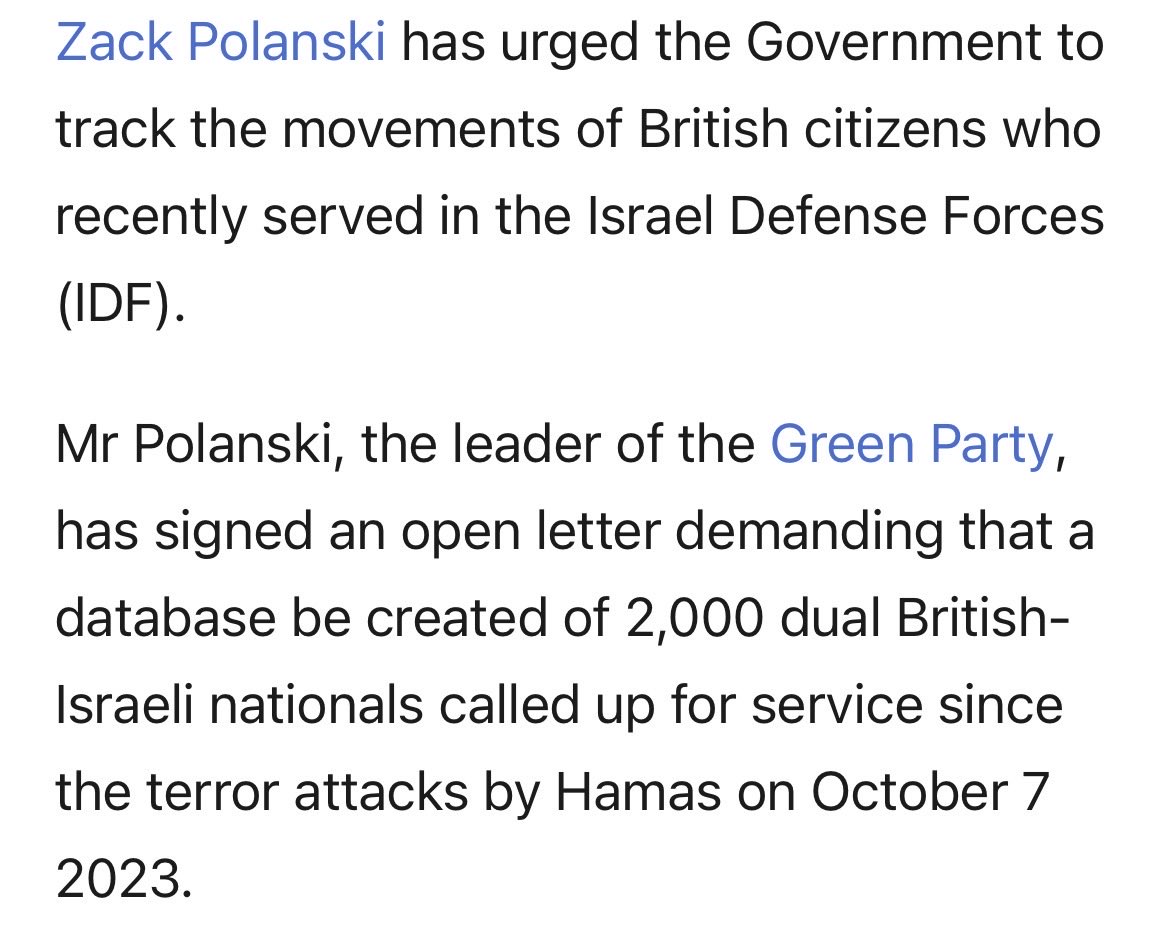
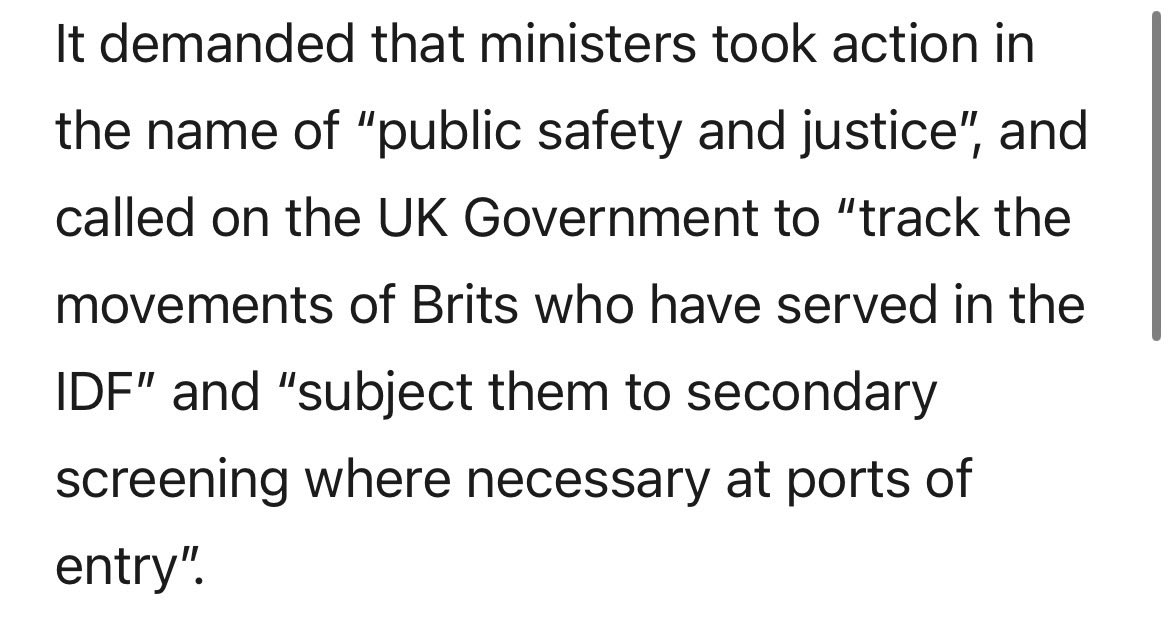
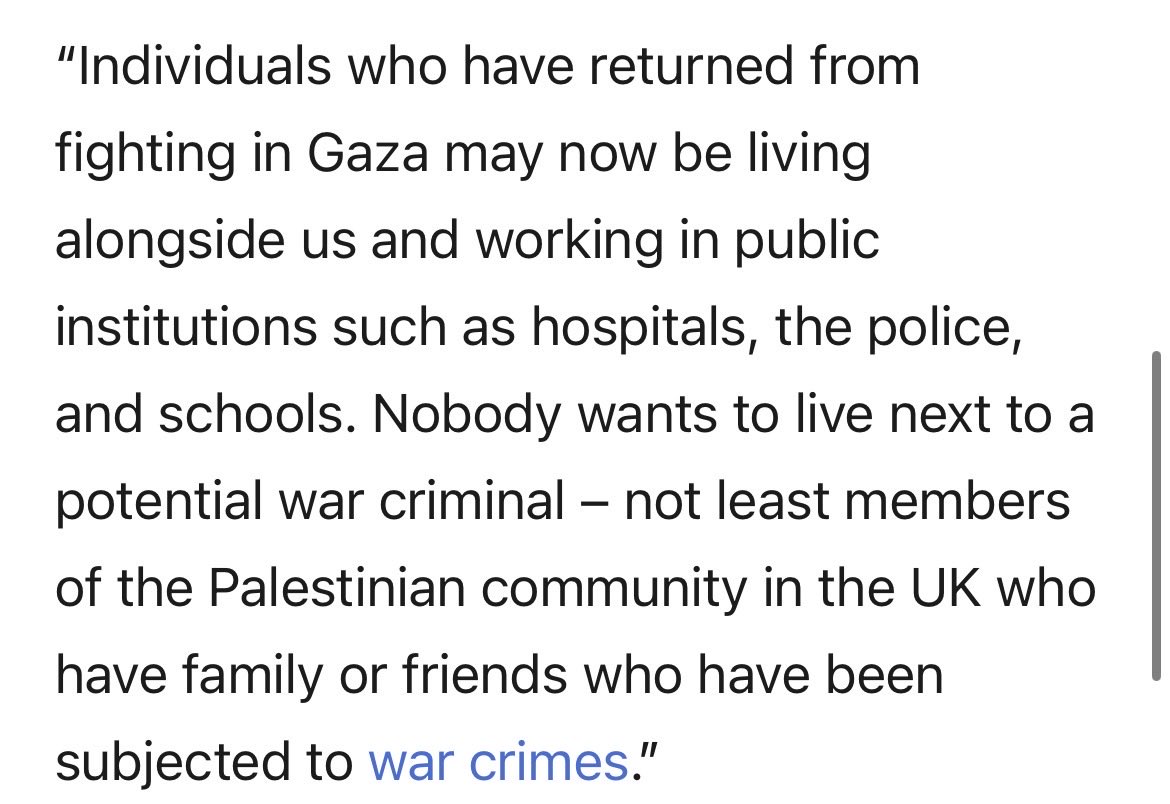
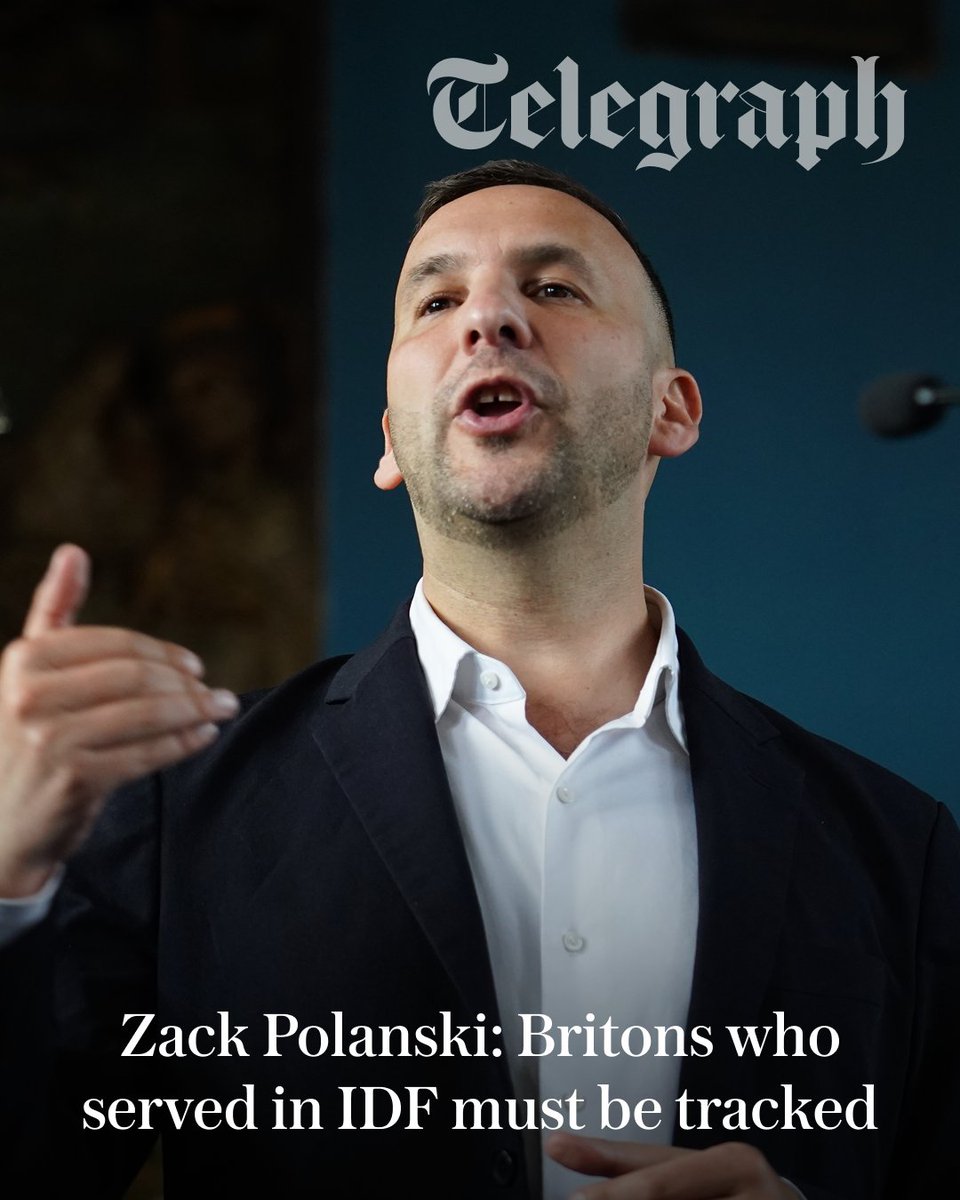
Incredible how quickly Zack becomes enthusiastic for government databases of migrants, border controls and “you wouldn’t want to live next to em’” rhetoric as soon as Israelis are involved
Jun 4

Zack Polanski, the leader of the Green Party, has signed an open letter demanding that a database be created of 2,000 dual British-Israeli nationals called up for service since the terror attacks by Hamas on October 7 2023
🔗: telegraph.co.uk/politics/202…
17
108
854
35,306
James Wilson Undy retweeted
Jun 5
Once again we ask:
Why has the UK STILL NOT designated the IRGC as a terrorist organisation? It was embarrassing before, it’s off the scale now. Great article by @potkazar meforum.org/mef-observer/why…
192
1,243
4,050
43,389
James Wilson Undy retweeted

‘Darren Rigby, who sent hoax death threats to schools is jailed’
All girls’ schools were specifically targeted. Rigby ‘threatened to carry out deadly attacks supposedly in response to the treatment of ‘transwomen’’. None of this features in the coverage across outlets, despite the evidence emerging in email evidence and in court, neither does it feature in the Merseyside Police report.
‘I’m going to kill every girl and woman staff member I come across’
‘I'm going to shoot and stab all your girls’
It’s a crime of extreme misogyny in the cause of ‘fighting trans oppression’ but any mention of ‘trans’ has been erased by the police, PA and all news outlets. In addition the BBC report hides the fact that it was a crime against women and girls.
bbc.co.uk/news/articles/c0e2…
southport.thelead.uk/p/hoax-…
118
1,778
4,667
302,785
James Wilson Undy retweeted

Jun 3
Not a single MP identified anything the Code got wrong about the law in the Commons statement on Monday. There was just lots of whinging about the fact they didn’t like the law. Well, you’re MPs. You’re in a better position than most to campaign to change it. I and other feminists will oppose you every step of the way though.
14
199
1,334
15,659
James Wilson Undy retweeted

I have good news. I'm delighted to share that Judge Campbell refused PCS Union's strike out application rejecting their argument that my indirect discrimination case had no reasonable chance of success. You can read my update here: crowdjustice.com/case/why-i-…
61
508
1,701
41,410
James Wilson Undy retweeted
To all the straight idiots doing the “happy pride month, we’re inclusive the EHRC are awful” schtick
A group of lesbians literally had to intervene in the Supreme Court to stop trans activists destroying the same sex orientation protected characteristic
You idiots
21
551
3,100
37,796