Secretive Dragon. TMA MMA. Nutrition. GeoPolitics. Meditation. Human Freedom. Free Speech absolutist. Neither red nor Blue Religion. Tao Syncretic.
Joined February 2018
- Tweets 11,141
- Following 523
- Followers 141
- Likes 5,986
58 Photos and videos




Jun 8
Sorry Mormons. You are in an American cult. We have tried many iterations in this country but Mormonism is really sticky for some reason. You would all have been burned at the stake as recently as the 16th century.
Jun 8

As of two days ago, the Pentagon recognizes every Christian faith in America as Christian
Except one
That’s not okay, and it needs to change—now
Pass it on if you agree
1
26
Secretive Dragon retweeted

Jun 6
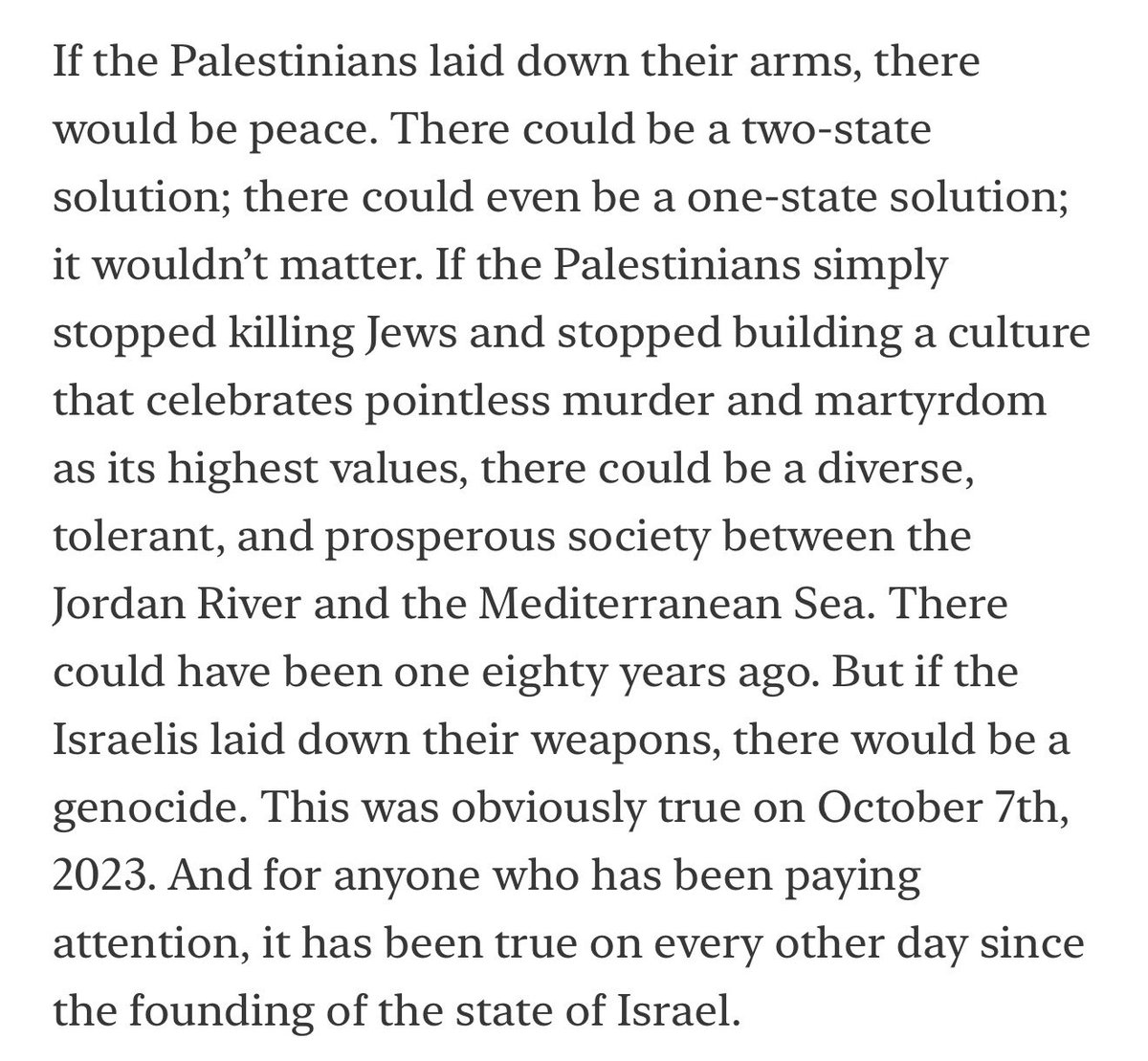
Sam Harris has written the best thing you’ll read today.
open.substack.com/pub/samhar…
1,802
3,681
17,420
1,924,044
Secretive Dragon retweeted

Jun 2
I think most people now can see the monstrous consequences of the lie that George Floyd’s death had anything to do with racism.
America was hardest hit but not a single anglo society was spared, including (inexplicably) Britain, where the police aren't even armed. Federal agencies, corporations, universities, sports teams, the military, the music industry all dropped to their knees in ritual self-flagellation. DEI commissars flooded in like Red Guards, armed with six-figure salaries and limitless bureaucratic power.
Every hire, every promotion, every contract, every training session became a loyalty test to the new faith:
Whiteness = original sin
merit = oppression
colorblindness = violence
They made your life hell for the past 5 years. Billions poured into "equity" grifts while competence hemorrhaged. Everything got a little dumber as the social fabric frayed because suddenly the color of your skin mattered more than whether you could do the job.
And don't forget the "Mostly Peaceful" riots that killed dozens, burned police stations down, looted businesses, and torched entire neighborhoods - many of them the very minority neighborhoods they claimed to champion. Statues were toppled and history was rewritten. "Defund the police" became policy in some progressive cities. Together with bail reform and no-cash bail, Soros DAs ensured that crime was not only downplayed but rather, elevated to a respectable lifestyle choice.
If you noticed any of this, YOU were racist.
Criminals walked. Retail theft became an organized sport as shoplifting rings brazenly (and calmly) walked out with stolen merchandise. And the rest of us? We get to shop at CVS like it's a maximum-security exhibit - toothpaste, deodorant, candy, all locked behind locked plexiglass because punishing thieves became "racist."
This was a wholesale cultural revolution that would make Mao blush. New gurus rose up to dictate the new customs. Can't say "All Lives Matter." Don't ask for ID. Don't notice patterns in crime stats. Exams are racist so the SAT was dismantled. Everyone was commanded to kneel, repent, and genuflect at the altar of “Anti-Racism.”
Corporations that once made products now also made propaganda. Schools became grievance factories and abolished advanced-level math classes. Cities that once hummed with ambition were transformed into open-air asylums of needles, tents, and feral disorder.
The legacy of Saint Floyd was a wholesale reprogramming of society, which brings us back to Henry Novak and how he was treated by the police.
The total moral inversion is visible in his death where police hesitated and cuffed him, the VICTIM. They let the victim of a fresh murder bleed out in the street because the new dogma made it unthinkable to confront the obvious: that the perpetrator was not white.
In a New Society where the sacred founding principle is that the WORST moral infraction is to perpetuate racism, it then becomes unfathomable to consider that a non-white person did something bad. Reality itself is routinely denied to preserve this dogma.
A civilization that reaches this point has already surrendered. We now have an entire generation marinated in this poison, taught from childhood to despise the very civilization that handed them unprecedented peace, prosperity, and freedom.
Breaking this programming will not be easy. It is woven into schools, media, corporate policy, and the language we’re allowed to speak. But break it we must.
This only ends only when we choose truth over comfort, excellence over equity, and civilization over ritual self-hatred. We need a counter-cultural revolution.

Britain had a moment of silence for George Floyd. Our politicians kneeled en masse to show their outrage at his killing. "I can't breathe" became a slogan.
George Floyd died on the other side of the world. He wasn't British.
Henry Nowak *was* British and his treatment by the police was shocking and negligent in the extreme. Yet there is no minute of silence. There is no coordinated public campaign. There is no kneeling at sporting events.
And we all know why.
During the summer of BLM, some people said "All Lives Matter". This was treated as the highest form of racism and anyone who said this was immediately cancelled. Why? Because the people in charge don't actually think all lives matter in the same way.
They have created a racial hierarchy of victimhood where a career criminal who died through mistreatment by police in a foreign country with 0 evidence of racism like George Floyd is automatically sanctified because of the colour of his skin.
And Henry Nowak, a British man, one of ours, is automatically dismissed and ignored because of the colour of his.
This is the ugly fruit of so-called "anti-racism", an obsession with race that has created a two-tier society which treats people differently because of the colour of their skin.
This needs to stop.
84
644
3,221
125,834
Jun 2
More of this in Oregon please.

Breaking: The City of Battle Ground, Washington, has signed a proclamation officially recognizing the federal government’s designation of Antifa as a terrorist organization.
Antifa members interrupt Mayor Overholser, resulting in removal and an arrest.
20
Secretive Dragon retweeted

Nina Teicholz was a New York journalist on a strict low-fat vegetarian diet that was not really working.
Then a magazine sent her to review fancy restaurants in Manhattan. For the first time in her adult life she ate full-fat meat, butter, and cream. She felt better. Sharper. Steadier. And the weight she had been fighting for years started falling off.
So she did what a good journalist does. She started asking where the war on fat actually came from.
Nine years of research. Hundreds of interviews. Every major diet-heart study reread.
In 2014 she published The Big Fat Surprise. The conclusion was simple. The case against saturated fat had never actually been made. It had been assumed, then defended.
In September 2015 the BMJ ran her investigation of the US Dietary Guidelines Advisory Committee. Cherry-picked studies. Ignored randomized trials. Members with food and pharmaceutical funding. The committee had recommended a diet that no trial had ever shown to be safe or effective long-term.
The counterattack arrived in six weeks.
The Center for Science in the Public Interest organized a letter signed by more than 180 scientists demanding the BMJ retract her paper. The letter claimed eleven factual errors.
The BMJ did not retract.
They commissioned a year of external expert review. They corrected seven smaller technical points. They left her central thesis untouched. In December 2016 they confirmed the paper stands.
Teicholz pointed out something else in her response. Many of the 180 signatories had taken funding from the food and pharmaceutical industries she had criticized.
Since the book, study after study has confirmed her thesis. PURE. FASTER. The reanalyzed Minnesota Coronary Experiment. The official guidelines are quietly walking back their fat warnings without ever admitting why.
One reporter forced a peer-reviewed journal to publicly choose between her data and the establishment that funded the consensus.
When the establishment cannot refute you, they try to silence you.
It did not work.
#NSNG #NinaTeicholz #BigFatSurprise #BMJ #SaturatedFat #DietaryGuidelines #LowFat
24
409
1,436
61,480
Secretive Dragon retweeted

Jun 1
“I am Muslim” is analogous with “I am American,” not with “I am Christian.” If you don’t understand this, you will never understand what is actually going on.
“I am Muslim” means I am a citizen of the ummah, the Islamic state that lost its territory to infidel Arab puppet leaders, the Zionists, and the Christians, and that empire must be restored.
“I am Palestinian” means I am Muslim. The term “Palestinian” was invented to mask “Muslim,” because the religious war needed a secular label.
In this framework, saying “I am Palestinian” means “I am Muslim,” and that Jews can't take what is believed to be Allah’s land.
Demanding Sharia law in the West means replacing the constitution of the infidel government and establishing the Islamic constitution, essentially occupying the land or restoring it under the rule of Allah.
Saying, “I am a Muslim and I want Sharia law,” means: I am a citizen of a foreign state, and I want my constitution to replace your constitution.
The UAE banning the Muslim Brotherhood is, in effect, the infidel government of the UAE banning the political activism of a foreign state, Islam, on its territory.
47
667
2,145
48,282
Jun 1
Pharma drugs. Been against them since I was a dirty hippy in the 70's. How is it that oppo to the pharma hegemony is now seen as right wing?
May 31

"The biggest epidemic of our time isn't mental illness, it's psychiatry."
One psychiatrist spent decades exposing what he called the biggest medical myth of the modern era. His name was Thomas Szasz.
He argued that society wasn't discovering hundreds of new mental disorders, it was redefining more and more aspects of normal human behavior as illness.
Too fat? It's a disease.
Too thin? It's a disease.
Too unhappy? It's a disease.
Too distracted? It's a disease.
Too much sex? It's a disease.
Too little sex? It's a disease.
We're told "chemical imbalances" can be fixed by drugs advertised between commercials, yet alcohol isn't allowed the same treatment.
Few people challenged the establishment as relentlessly as Thomas Szasz.
19
Secretive Dragon retweeted

May 31
"The biggest epidemic of our time isn't mental illness, it's psychiatry."
One psychiatrist spent decades exposing what he called the biggest medical myth of the modern era. His name was Thomas Szasz.
He argued that society wasn't discovering hundreds of new mental disorders, it was redefining more and more aspects of normal human behavior as illness.
Too fat? It's a disease.
Too thin? It's a disease.
Too unhappy? It's a disease.
Too distracted? It's a disease.
Too much sex? It's a disease.
Too little sex? It's a disease.
We're told "chemical imbalances" can be fixed by drugs advertised between commercials, yet alcohol isn't allowed the same treatment.
Few people challenged the establishment as relentlessly as Thomas Szasz.
17
96
291
18,164
May 28
Radical Vegan grifters coming for your ranching, general animal husbandry and hunting.
May 28

Controversial plan to ban hunting, fishing and more in Oregon appears to have enough support for November ballot
kptv.com/2026/05/28/controve…
9
Secretive Dragon retweeted

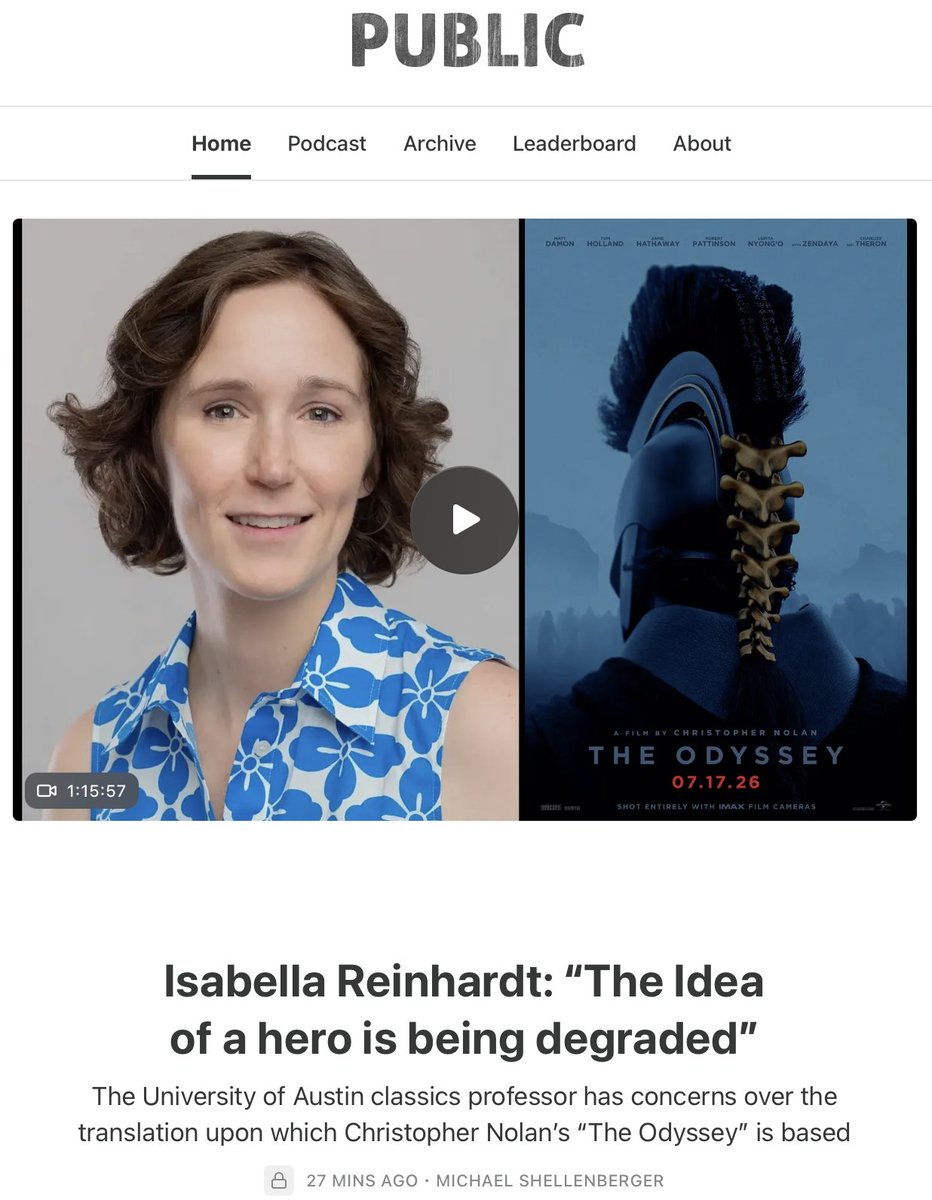
Christopher Nolan's adaptation of “The Odyssey” relies on a celebrated feminist translation. But people are right to feel that, in it, "the idea of a hero is being degraded," says classicist Isabella Reinhardt. It is thus yet another assault on a foundation of Western culture.
150
621
4,751
155,313
Secretive Dragon retweeted

May 23
The "emergency" is literally just too many TQ folx moving to Seattle to "escape" a completely fake "genocide" because some jurisdictions are complying with laws against chemically castrating and dismembering confused children and letting boys dominate girls in sports and demanding endless costly services at taxpayer expense
May 22

Seattle LGBTQ commision urges city to decalre emergency as more queer and trans people move to area kiro7.com/news/local/seattle…

21
79
609
21,429
Secretive Dragon retweeted

May 13
You can hit him on the contradiction instead of attacking his citizenship.
Ro Khanna stands there invoking the Constitution when it benefits his ideology… then melts down when the Supreme Court actually applies the Equal Protection Clause consistently.
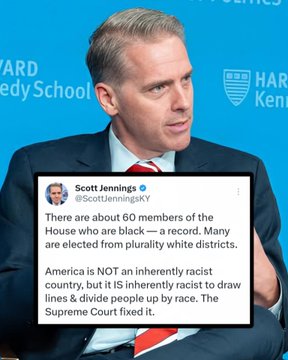
You do not protect civil rights by racially sorting Americans into engineered districts based primarily on skin color caster systems.
That is exactly what the Court addressed.
The same democrats screaming about “democracy” are furious that government cannot openly classify citizens by race to manufacture political outcomes.
Louisiana voters still vote.
Black citizens still vote.
Candidates still run.
Ballots still count.
What changed is that the Court said race cannot be the predominant factor in drawing districts.
That is not Jim Crow.
That is constitutional scrutiny.
Comparing this ruling to Reconstruction-era oppression cheapens actual history. Poll taxes, literacy tests, and outright voter exclusion are not remotely comparable to courts rejecting racial gerrymandering.
And notice something else…
Nobody demands bizarre race-based maps in overwhelmingly white states with tiny Black populations because it would instantly look absurd.
Yet when the same constitutional standard is applied consistently in Louisiana, suddenly Democrats cry “racism.”
What they really lost was a political advantage.
That is the truth underneath the outrage.
#SilentMajoritySpeaks #AStoneGroove
May 13

The Supreme Court has engaged in an ugly recidivism that has marked the fastest rollback of Black political rights since Reconstruction.
18 year terms limits on Justices now.
Expand the court from 9 to 13 Justices now.
12
38
100
2,529
Secretive Dragon retweeted

May 13
Robert Kennedy Jr. wants to do the most basic thing science can do - compare the health outcomes of vaccinated children to unvaccinated children using the largest medical database in America.
That's it. That's the study. That's the scientific method.
And the American Academy of Pediatrics is suing him to stop it.
Think about what that means. Not content with blocking changes to the vaccine schedule, they are now going to court to prevent an investigation into whether the schedule is actually producing healthy children. The one question the entire program should have been answering for fifty years, and the people who run that program are fighting in federal court to make sure it never gets asked.
This is an industry protecting itself from its own data.
I am not accusing anyone in medicine of malice. I am saying that the long-term health investigation has never been done with the seriousness it deserves, and now that someone is finally trying to do it, there is a worldwide effort to shut it down before it starts.
We have to do this study. We have databases right now, like the Henry Ford Health database, that could give us real answers. Every database in this country should be opened to this investigation. The scientific method demands it. The health of our children demands it.
The only people who have something to fear from the truth are the ones fighting this hard to hide from it.
Http://AnInconvenientStudy.c…
683
12,210
28,671
432,276
Secretive Dragon retweeted

Is she wrong?
253
1,868
4,776
37,719
Secretive Dragon retweeted

May 10
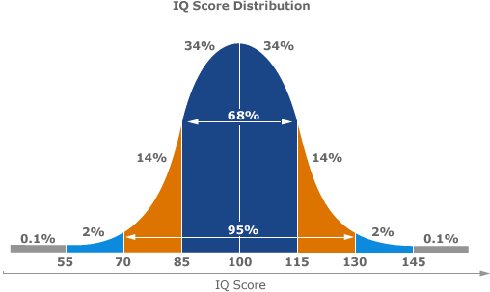
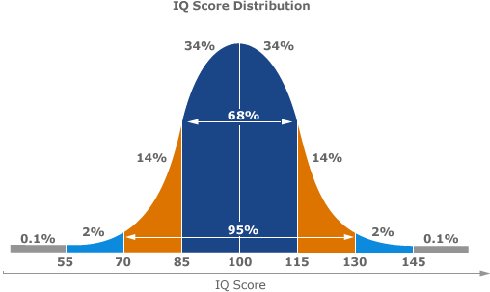
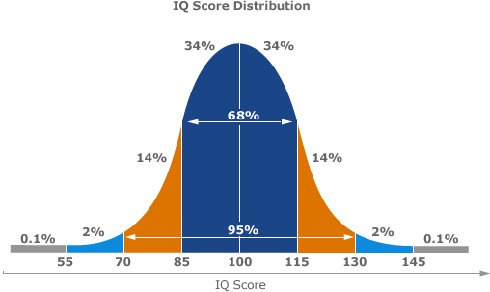
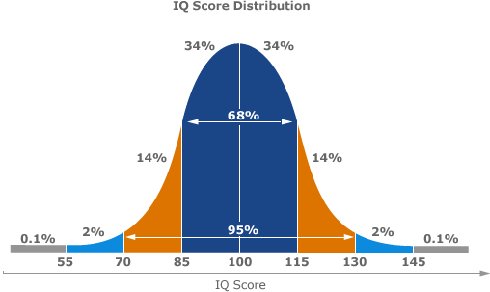
The Gaussian distribution logic of human capital
Intuitions about the how much the mean cognitive ability and capacity for work of nations matter are not well calibrated.
We tend to think there are "always plenty of gifted hard working people". The opposite is true.
Imagine a small country of 12 million, with a mean IQ of 110. And a 100-times larger country, say 1.4Billion, with a mean IQ of 85.
How many gifted individuals in each?
Which country would produce more?
Would the 100x larger country have, say, not 100x but still maybe 50x the number of people with gifted ability?
The probabilities are:
pHi = pnorm(140, mean = 110, sd = 15, lower.tail = FALSE) # 0.0228
pAv = pnorm(140, mean = 100, sd = 15, lower.tail = FALSE) # 0.0038
pLo = pnorm(140, mean = 85, sd = 15, lower.tail = FALSE) # 0.0001
In the large country there will be just 172,000 who are gifted (pLo * 1.4e9).
The tiny country has 60% more gifted individuals 273,000! (pHi * 12e6 ). That's also almost 200x the density of giftedness, yielding network effects.
Adding in Conscientiousness
We know that more is needed to achieve– you need (at the least) to be smart AND industrious: Tolerating the frustration of getting hard things done.
The collision of two things is their product, so we multiply.
Imagine we’re average on Conscientiousness.
For the small country, in the whole nation just 1,046 people are gifted and balls-deep industrious (pHi*pAv * 12e6 = 1046).
Obviously there's a wealth of resource in less industrious but intelligent people who can solve problems, and industrious people who can help with the work. But this small group must carry an outsized load.
What if culture removes rewards for effort, considers laboring for distant goals is foolish, or worse, as it pays off, considers this unearned: Theft, rather than heroic struggle? Most people want nothing more than to retire early.
Now, using our same scale, and assuming cognitive ability is immune to this cultural shift to low-C.
Instead of 1,000 industrious and gifted makers, we have just 33 people in the entire small country with the ability and tenacity to get something hard done. (pHi * pLo * 12e6). Near collapse!
Then imagine the opposite thought experiment: Culture rewards effort and praises success – treats it in fact as existential.
What could that tiny population with high cognitive ability and high tenacity and industry produce? The number sky rockets from 33 to 6,200!
Almost 200 times the number of zero-to-one makers (pHi^2 * 12e6)!
And they are in a compounding environment, allocating the gains of each year to new extreme-difficulty goals.
This is what built America: 60hr weeks on bet-the-farm goals.
Finally, what if, for whatever reason, the desire to work is low AND IQ is low?
Now, even in a population of 1.4 B, you are lucky to have 20 people (!!!) of realized talent (pLo^2 * 1.4e9).
The imaginary smaller population might wait 100 years to see just one such person!! (pLo^2 * 12e6 = .18 individuals in a complete regeneration).
If there are any problems with property rights, network effects, or minimum thresholds for maintenance and cumulative culture, the gifts of progress will essentially be snuffed out and reversed.
"infinite labor" is a fallacy: Quality has a quantity of its own.
1
12
52
8,357
Secretive Dragon retweeted

Gorsuch misses the harder point: America’s constitutional creed was not designed to float above culture. It was built by an individualist people and assumed citizens capable of living under common, impersonal rules. It did not anticipate a demographic shift toward a majority of permanent competing collectivist ethnos blocs treating politics as group bargaining.
America’s creed was built narrowly by and for a people in line with individual rights, impersonal rules, local self-government, property and restraint after losing political fights. The founders assumed a citizenry capable of thinking of itself primarily as individuals under common law, not as permanent multi-ethnic blocs each competing for group ethnos advantage.
Sure, the founders understood faction. But ordinary factions in a constitutional republic are not the same as permanent, self-enforcing multiple ethnos blocs treating the state as a prize system for in-group benefit.
A creed is a rule set, not a magic essence. It governs power only when enough people, especially ruling coalitions, treat its limits as binding even when inconvenient. The Declaration, Constitution, slogans, holidays, and institutional names can all remain while the real operating system changes underneath.
So, the question is whether the creed still limits what winners do.
Large-scale immigration and demographic change matter because they alter the political habits inside the system. If the historically individualist majority thins into a minority, and if many incoming populations retain stronger kinship, patronage, religious, ethnic, or group-centered political instincts, then the center of gravity shifts from individual rights toward organized bloc bargaining.
The issue here is political habit and coordination, and that is where game theory matters. In this system, organized ethnos blocs have built-in advantages over diffuse individualism. A thick in-group has dense social networks, identity discipline, internal enforcement, moral boundaries, and reputational pressure. It can coordinate turnout, money, messaging, institutional pressure, and social sanctions.
The organized ethnos blocs can bargain hard because they can coordinate hard.
A rights-based individualist population is weaker in that environment. It is fragmented, cross-pressured, harder to discipline, and harder to mobilize at scale. It may share broad preferences in the abstract, but cannot act as one player. So it gets outorganized and outplayed.
Public choice intensifies the shift. Each bloc seeks concentrated benefits for itself while spreading costs across everyone else. Over time, the state adapts. It distributes access, exemptions, carve-outs, regulatory favors, staffing, selective enforcement, and moral legitimacy through organized groups.
If you do not show up as a bloc, you do not get a seat.
That is the deeper danger. The individualist citizens either loses influence or reorganizes into a counter-bloc. But once everyone has to become a bloc to survive politically, the creedal premise has already eroded.
The founders did not design the constitutional order as a neutral arena for permanent ethnos competition over state resources. They designed it for a people capable of operating through impersonal rules and restrained citizenship.
When a durable coalition stops treating constitutional limits as legitimate, the system starts to bend. Courts become enemy veto points. Administration becomes spoils to staff and purge. Rights that block preferred outcomes become optional, selectively enforced, or reinterpreted into irrelevance. Opposition stops being a legitimate rival and becomes an illegitimate faction.
America can remain creedal on paper while ceasing to be creedal in reality. Elections can continue. The Declaration and Constitution can still be quoted.
But if organized group power becomes stronger than constitutional restraint, the operating system changes. The creed survives only if it binds the winners.

Justice Neil Gorsuch: “We’re a creedal nation. What unites us is not a religion, not a race, it’s a belief in those ideas in the Declaration of Independence.”
33
194
718
40,317
May 6
"The two did not violate any U.S. criminal laws, apart from overstaying their tourist visas" Which is a violation that has the consequences of deportation. You can spin the semantics as you like but the reality is you are describing illegal aliens present in the country. DEPORT
May 6

N.J. family loses business, car after ICE roadblock oregonlive.com/palabra/2026/…
16


The DOJ has ONE WEEK left to charge Anthony Fauci for the worst cover-up in modern medical history.
He lied to Congress about funding gain-of-function research in Wuhan. Millions died. Trillions were spent. And Fauci walked away with book deals and fawning media coverage instead of handcuffs. I re-upped my criminal referral to the DOJ because the evidence is overwhelming, and justice has been delayed long enough.
RT if you’re ready to see Fauci behind bars.
4,910
33,984
93,173
3,846,870