Joined March 2021
- Tweets 3,326
- Following 841
- Followers 168
- Likes 1,465
32 Photos and videos




viswaMitra007 retweeted

9️⃣9️⃣.9️⃣% of so called political pandits & commentators should read 📚 take a leaf out from you honest analysis👌especially north Indian AC room journalist & anchors 🤣😜
#Annamalai
1
2
414

Sarthak Siddhant, 17-year-old Class 12 student, wrote a detailed blog after noticing evaluation issues in CBSE’s new On-Screen Marking (OSM) system. He analysed official tender documents and alleged CBSE repeatedly changed eligibility rules, removed performance clauses and blacklisting criteria to favour one private vendor (Coempt EduTeck) over established players.
His findings went viral. He was invited to present before the Parliamentary Standing Committee on Education, where MPs praised him and one even suggested CBSE appoint him adviser.
Hours later, CBSE Chairman Rahul Singh and Secretary were transferred; Centre ordered a probe into the OSM contract.
Quiet, factual civic courage at its best.
1
31
viswaMitra007 retweeted

Jun 3
Indian business is controlled by a small coterie of business dynasties, many of whom are linked together by marriage. It is a closed circle of elites, who function like old school zamindars.
One simply doesn’t expect these 21st century zamindars to be able to contribute to Indian economy’s growth to $20T in output. In fact, the Licence Raj orientation and manipulative, predatory mindset of many companies is a serious impediment to India’s progress.
For India to progress, these businesses have to be out-competed and neutered. The same had happened 30 years ago, when the first flush of reforms speared through and reshaped the Indian business landscape. Many of today’s corporate giants swept away blue chip names of that era - as life goes, today the challengers of that period have become like the old guard they had displaced.
The problem is barriers to entry and barriers to scaling slow down the turnover. This generation of Indians is counting on Prime Minister @narendramodi to deliver on necessary reforms, so that new entrants can once again displace the distracted, tired and corpulent incumbents who at this point can be generously described as squatters impeding the path of India’s progress. x.com/rmantri/status/2054118…
Jun 2

Google which is cash surplus, just announced an additional capital raise of $80 bn.
Google annual profit is $160 bn, last quarter $62 bn, and market cap $4.5 trillion. That is close to total profits and market cap of all Indian listed companies put together.
It’s a wake up call to all companies to invest into the future, whatever the present maybe.
Now that IPL is done and dusted, time for India to focus on business of business.
59
306
1,273
94,996
viswaMitra007 retweeted

May 27
Why have the Brahmins not produced a Voltaire?"
-Dr. Ambedkar
"The Brahmins [Brames], custodians of this ancient philosophy, communicated it to us; they founded all our knowledge"-Voltaire (collection of letters)

24
442
1,625
41,100

May 24
As an indian i completely agree to the below point. No exuse , any country should give fir their backwardness
May 24

Australia is what Europeans can build from nothing in 200 years. The third worlders have built only chaos, squalor & dysfunction in their homelands over thousands of years. They will do the same to our home if we allow it. Hiroshima is another good example of conscientiousness.
26
viswaMitra007 retweeted

May 22
This research shows that high school students don't learn mathematics better with AI, they just learn to rely too much on AI.
AI is not a training wheel, it becomes a crutch.
May 21

A Wharton economist ran a randomized controlled trial on almost a thousand high school students in Turkey.
The result was so brutal for the AI-in-education narrative that it had to be peer-reviewed by PNAS before people would believe it.
Her name is Hamsa Bastani. She teaches operations and information at the Wharton School at the University of Pennsylvania, and the study she published in 2025 alongside her co-authors is one of the cleanest experiments anyone has run on what AI actually does to learning when you remove it from the equation and check what is left.
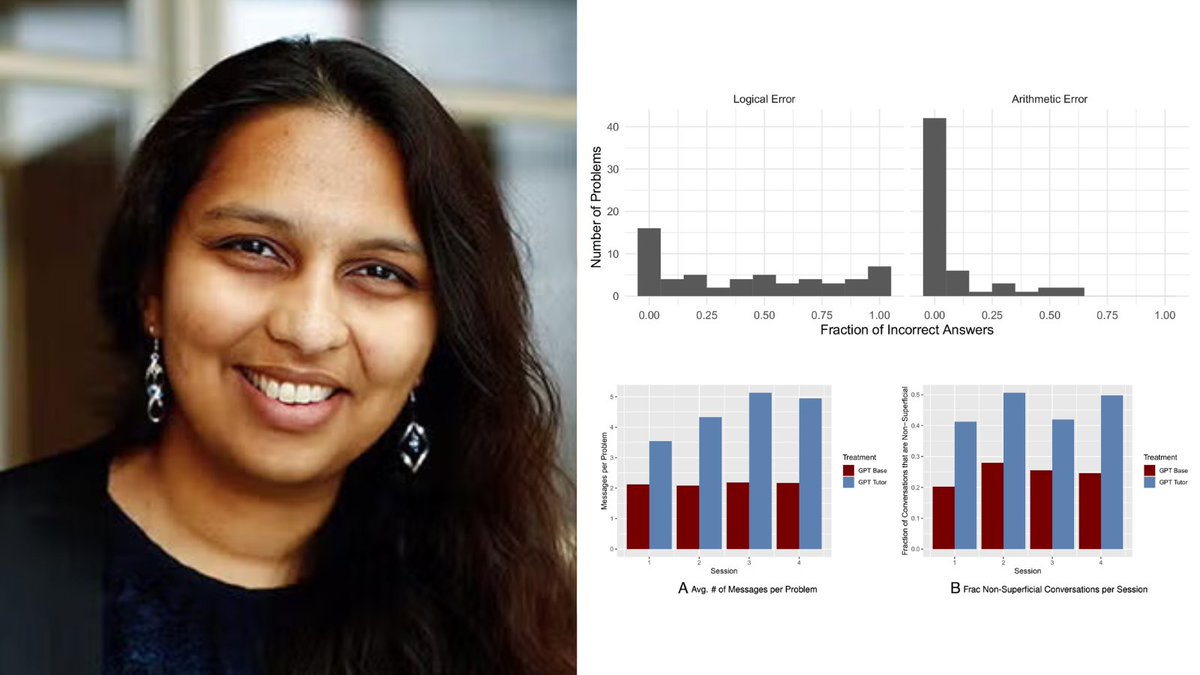
The setup was a randomized controlled trial, the same methodology used in clinical drug trials. Nearly a thousand high school math students in Turkey were split into three groups and put through four sessions of ninety minutes each. One group practiced with GPT Base, a standard ChatGPT-4 interface that could answer any question directly. One group practiced with GPT Tutor, a version of the same model that had been prompted to guide students with hints rather than hand them the answer. One group practiced with nothing but their textbook and their own head.
During the practice sessions, the AI groups looked like a miracle. The GPT Base group solved 48% more problems than the students working alone. The GPT Tutor group solved 127% more. Every administrator looking at those numbers would have written a press release about the transformative power of AI in education and moved on.
Then the actual exam came, and AI was not allowed.
The students who had practiced with GPT Base scored 17% worse than the students who had practiced alone. Seventeen percent worse, despite having solved nearly half again as many problems in the sessions leading up to it. The students who had struggled the most, who had sat with the confusion and worked through it without a tool to rescue them, were now the only ones who could actually do the math when it counted.
Bastani's team read through the chat logs to understand what had actually been happening during the practice sessions, and the answer was exactly what the exam results had already implied. The GPT Base group had not been learning. They had been extracting answers and moving on, and every moment that felt like understanding was actually the model doing the cognitive work while the student's brain waited for the next problem to arrive. The paper describes it precisely: without guardrails, students attempt to use GPT-4 as a crutch during practice, and subsequently perform worse on their own.
The detail that should follow every conversation about AI in education is the one buried in the post-test survey results. The students who had relied on AI the most during practice were also the most confident they had understood the material. The tool had not just failed to teach them. It had convinced them they had learned something they had not, which is a different kind of failure entirely and a much harder one to correct because the student has no idea it is happening.
The crutch had made them confident and weak at the same time.
88
139
903
118,445
May 22
Very insightful !!

1
30
viswaMitra007 retweeted

May 21
Kirti Azad made a remarkable and historic contribution to the 1983 World Cup.
Being the son of Bihar Chief Minister Bhagwat Jha Azad, he was forcibly included in the Indian cricket team.
He scored a total of 15 runs in three matches and took one wicket. In the final match, Kirti Azad also played a brilliant and match-changing innings of 0 runs off three balls.
Thank you for such a great performance, Kirti Azad.
May 21

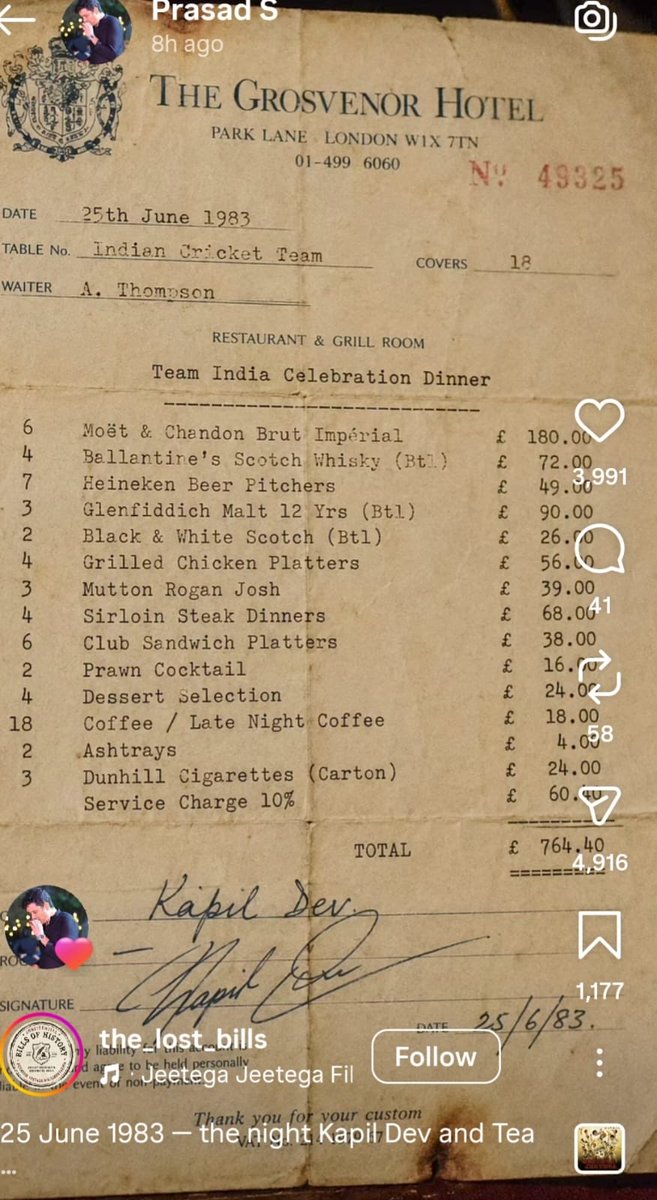
This is fake. It is all over social media. We stayed at Westmoreland Hotel, next to Lords cricket Ground, London. After the victory on 25 June 1983 celebrations took place all night till morning of 26th June. We never went to this hotel. The signature of Kapil Dev is also forged.
48
332
2,208
398,541
May 21
Currency Pair | % Change (Jan '25 - Today)
------------------------------------------
🇮🇳 INR ➡️ 🇪🇺 EUR : -20.92% 🔻
🇮🇳 INR ➡️ 🇬🇧 GBP : -17.70% 🔻
🇮🇳 INR ➡️ 🇨🇭 CHF : -15.45% 🔻
🇮🇳 INR ➡️ 🇯🇵 JPY : -14.20% 🔻
🇮🇳 INR ➡️ 🇸🇬 SGD : -12.10% 🔻
🇮🇳 INR ➡️ 🇺🇸 USD : -11.03% 🔻
🇮🇳 INR ➡️ 🇦🇪 AED : -11.03% 🔻
🇮🇳 INR ➡️ 🇨🇳 CNY : -10.50% 🔻
🇮🇳 INR ➡️ 🇨🇦 CAD : -9.85% 🔻
🇮🇳 INR ➡️ 🇦🇺 AUD : -8.40% 🔻
40
viswaMitra007 retweeted

Hindu men should proactively work to become more masculine. You are losing it over screen based visual entertainment and social media.
Three concrete recommendations
1. Make Hanuman your role model. Study his life in detail as per Ramayan. Always think what Hanuman ji would do. And emulate.
2. Stop all forms of visual stimulations. Instead of movies, read books. Do dhyana for at least 15 minutes.
3. Keep Geeta Chapter 2 - word by word - handy. Keep reading again and again. Follow to last detail.
These are bare minimum. Flout any of these and you will be a lesser man than what you could could be.
We need real solid men to save our civilization and spread it as epicenter of world.
Else, we wither away.
134
1,785
7,178
178,747
viswaMitra007 retweeted

May 19
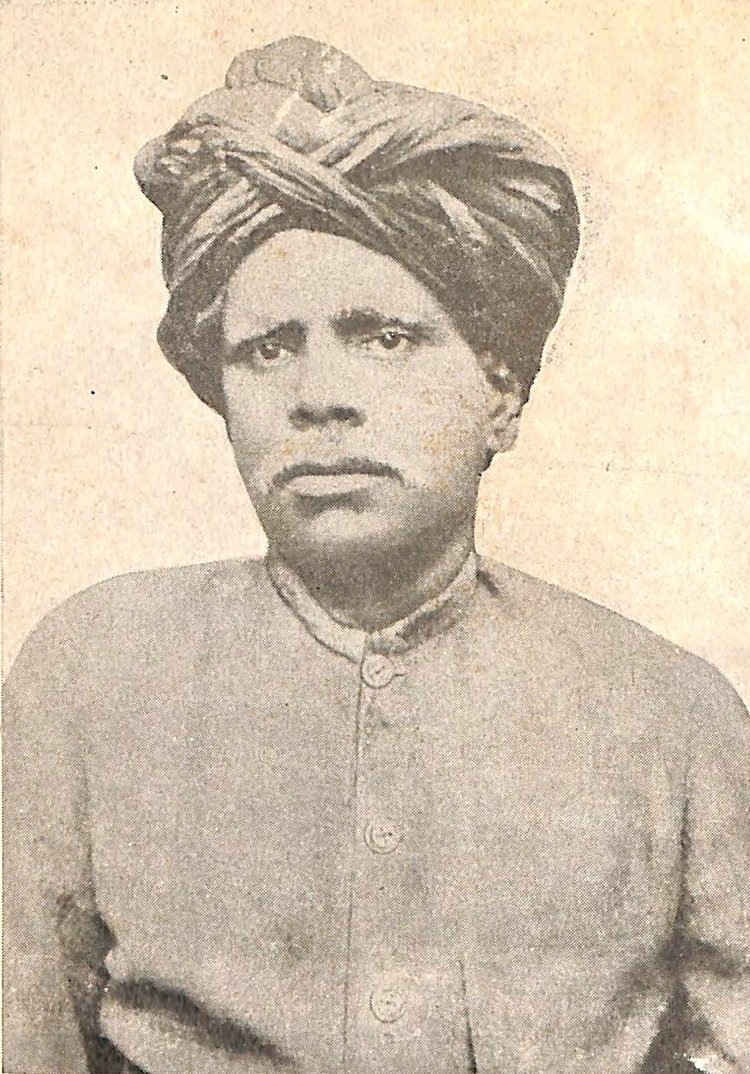
Imagine walking through the streets of Rajahmundry, Andhra Pradesh, on December 11, 1881. The town is under an unwritten state of siege. Kandukuri Veeresalingam Pantulu (commonly known as the Father of the Telugu Renaissance) is about to perform the 1st historic widow remarriage in South India. The orthodox upper-caste elite are absolutely furious. They do not just threaten Veeresalingam with physical violence; they unleash the ultimate weapon of social control: A Total Economic & Financial Boycott.
The local priesthood & elite moneylenders (shroffs) pass a decree: Any merchant who lends money to Veeresalingam/any landlord who rents him a room/any banker who holds his funds will be instantly excommunicated from society. Suddenly, Veeresalingam’s students & supporters find themselves financially ruined. No 1 will give them loans; no 1 will buy their crops. Veeresalingam, a humble school teacher with a meager salary, realizes that a revolution w/o a treasury is just a suicide pact. He needs a financial fort.
Veeresalingam quietly forms a secret financial alliance with a wealthy, deeply patriotic merchant named Pyda Ramakrishnaiah from Kakinada. Together, they set up a private, underground fund. Because they cannot trust the established, orthodox-dominated local lending networks, they run their own shadow credit system.
When young, progressive single men step forward to marry ostracized widows, Veeresalingam does not just offer them moral support; he utilizes this private treasury to provide them with direct financial security. He hands them cash stipends, secures them alternative livelihoods, & pays for their legal protection.
When orthodox goons attack Veeresalingam’s house, his students stand guard as an armed militia, funded entirely by this guerrilla social treasury.
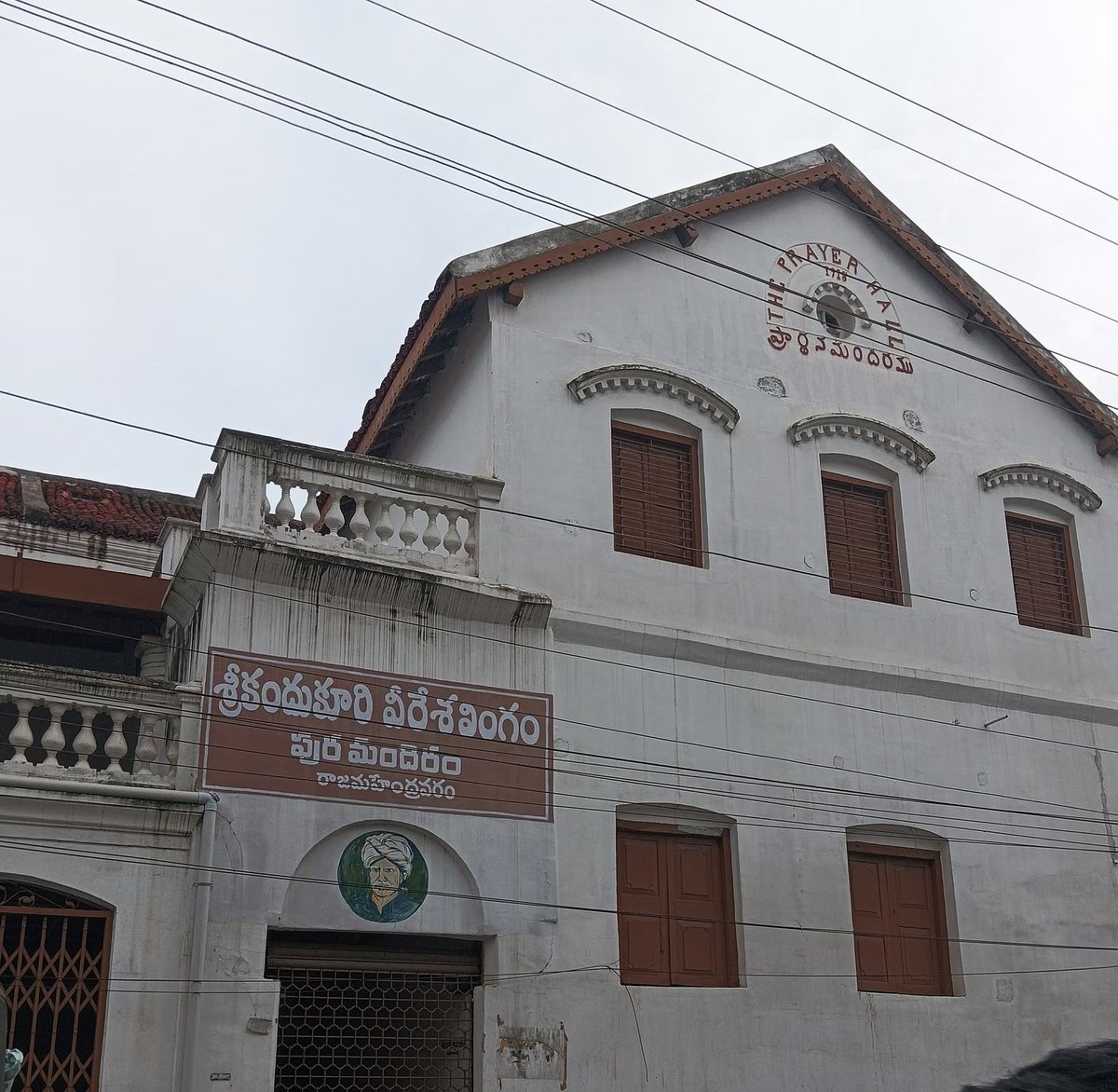
By 1908, Veeresalingam has aged, & his health is failing. He has established schools for girls, built Andhra’s 1st Brahmo Mandir, & successfully facilitated ~40 widow remarriages. But he faces a massive, looming crisis: What happens to these institutions & the vulnerable women inside them when he dies?
He decides to execute his final, most jaw-dropping financial move. He officially registers a permanent public trust called the Hitakarini Samajam (The Beneficent Society).
Veeresalingam & his fiercely loyal wife, Rajya Lakshmi, do something that leaves the entire Madras Presidency in absolute shock. They do not leave their wealth to relatives/keep a safety net for themselves. They sit down before a magistrate & donate their entire life savings, all their real estate, their printing press, & every single piece of personal property they own, permanently to the trust.
By legally locking his wealth into a public trust, Veeresalingam built an automated, self-sustaining financial engine. The trust collected rents from properties, generated revenue from the printing press, & channeled every single rupee directly into funding schools, orphanages, & shelter homes for widows.
There is a legendary, chilling lore to Veeresalingam’s life that perfectly captures his unyielding, rationalist mind. To mock the orthodox priests who claimed he was cursed by demonic spirits for breaking ancient traditions, Veeresalingam would frequently walk alone into the local cremation grounds (kadu) in the dead of night.
He would sit on the graves in the pitch black, daring the ghosts & spirits to attack him. When he walked out untouched the next morning, he would look at the terrified, superstitious townspeople & say: "The only ghosts destroying this country are the 1s living inside your own prejudiced minds."
The next time you see a historic educational institution/a public trust fund in Andhra Pradesh, remember the midnight walks of Kandukuri Veeresalingam; for he proved that the ultimate way to defeat an oppressive system is not just to argue with it, it is to take your own wealth, throw it into the fire of the cause, & build a fortress of self-respect that no amount of social boycott can ever tear down.
12
109
340
10,129
Higher US rates (or rising 10Y yields) make US Treasuries more attractive vs riskier emerging market assets like Indian equities. FIIs repatriate capital for better risk-adjusted returns, stronger USD, and safer haven flows. This triggers selling in India, rupee pressure, and market correction.
Classic parallel: 2013 Taper Tantrum. Fed signaled QE taper → US yields spiked → massive outflows from India (rupee hit record low ~69), stocks tanked, RBI had to defend with rate hikes and FX intervention. Similar dynamics played out in 2022 Fed hiking cycle.
1
1
2
143
viswaMitra007 retweeted

May 14
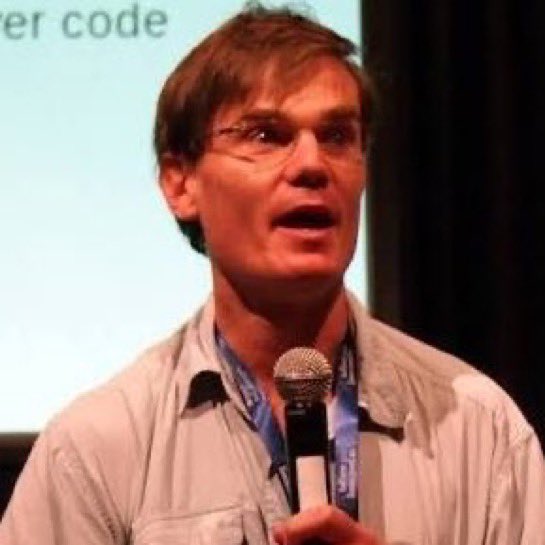
33 years ago a PhD student cracked Microsoft's secret protocol alone.
Linus Torvalds invented Git because of him. 🤯
Meet Andrew Tridgell 🇦🇺
> Australian engineer. Born 1967. Goes by "Tridge."
> 1991 ~ a PhD student in Canberra.
> Couldn't get his computers to share files with Windows.
> Microsoft's networking protocol was a black box.
> So he wrote a packet sniffer. Read raw network traffic.
> Reverse-engineered Microsoft's protocol byte by byte. Alone.
> Built Samba in 1992. Released it free.
> Today every Linux server, every NAS box, every printer, every Android backup ~ runs Samba. 🚀
> 2001 ~ Microsoft CEO called Linux "a cancer."
> Microsoft refused to share its protocols. Samba had to keep guessing.
> 2006 ~ Tridge flew to Luxembourg.
> Testified against Microsoft in EU antitrust court.
> Microsoft lost. At every level.
> Forced to publish their secrets.
> Meanwhile in 2005 ~ he reverse-engineered BitKeeper.
> The proprietary tool the Linux kernel ran on.
> BitKeeper retaliated. Revoked Linux's license overnight.
> Linus had no version control. He locked himself in for 10 days.
> Out came Git.
> Today 94% of every developer on Earth uses it.
> No Tridge ~ no Git.
He built how the world talks to Windows.
He beat Microsoft in court.
He forced the birth of Git.
One Aussie hacker. Three battles. All won.
No company. No fame. Still codes from Canberra.
Open-source GOAT. 🐐

37
225
1,275
60,079
viswaMitra007 retweeted

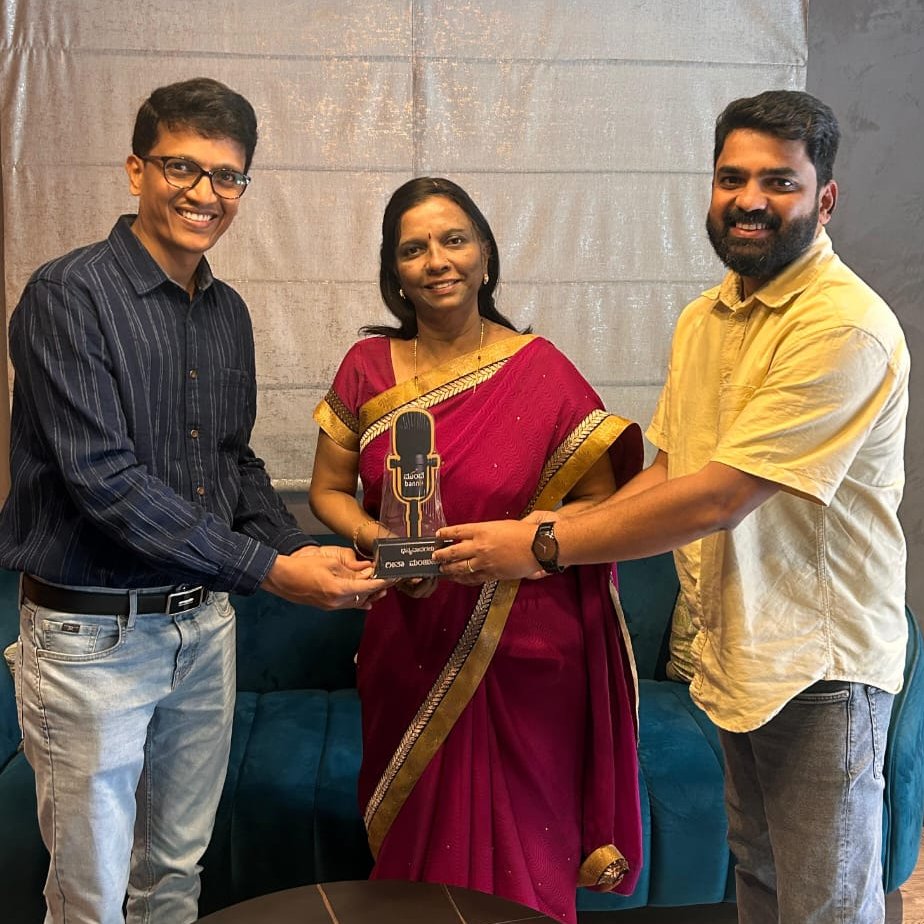
An Indian woman scientist. An IISc PhD. 39 patents. An AI driven health technology now used across 22 countries.
But this story did not begin in a lab.
It began with the pain of losing two family members to breast cancer. From being told, “If even Americans couldn’t solve this, how will you?” to building a radiation free breast cancer screening technology from India that is now deployed across 300 hospitals and diagnostic centers globally, this is an extraordinary journey of science, resilience and purpose.
This weekend on the @mundhebanni podcast, we are joined by Dr. Geeta Manjunath (@geethamhp ), founder of Niramai Health Analytix. One of our deepest conversations yet on AI, deep tech, women’s health, Indian innovation and entrepreneurship.
Trailer drops tomorrow. Full episode over the weekend.
Subscribe to Mundhe Banni YT channel:
youtube.com/@mundhebanni
@Shishir_S_U @akaranth @kodlady
8
154
726
40,193
May 14
తెలుగు ఇంజనీర్లకు ఉపయోగపడే రియల్-టైమ్ సీనారియోలు ఆధారంగా టాప్ 10 ప్రశ్నలు:
మీరు 500GB డేటాను Sparkలో ప్రాసెస్ చేస్తున్నారు. Job చాలా స్లోగా నడుస్తోంది. ఎలా ఆప్టిమైజ్ చేస్తారు?
మీ Spark jobలో Data Skew సమస్య వచ్చింది. ఎలా సాల్వ్ చేస్తారు?
మీరు real-time streaming application రాస్తున్నారు. కానీ కొన్ని డేటా late వస్తోంది. దీన్ని ఎలా హ్యాండిల్ చేస్తారు?
మీరు రెండు పెద్ద DataFrames మధ్య join చేస్తున్నారు. Job OOM ఎర్రర్ వస్తోంది. ఏమి చేస్తారు?
మీ production environmentలో Spark job randomly fail అవుతోంది. ఎలా డీబగ్ చేస్తారు?
మీరు చాలా చిన్న చిన్న ఫైల్స్ (millions of small files) ను Sparkలో చదవాలి. ఎలా ఆప్టిమైజ్ చేస్తారు?
మీరు Broadcast Join ఉపయోగించాలా లేదా Shuffle Join? ఎప్పుడు ఏది ఉపయోగిస్తారు?
మీ Spark Streaming applicationలో exactly-once processing కావాలి. ఎలా అమలు చేస్తారు?
మీరు 10TB డేటాను ప్రాసెస్ చేయాలి. కానీ clusterలో memory తక్కువగా ఉంది. ఏమి చేస్తారు?
మీ Spark job రాసిన తర్వాత performance మెరుగుపడలేదు. ఏమి చేస్తారు?
#ApacheSpark #SparkInterview #SystemDesign #TeluguEngineers #BigData
1
1
57
May 14
Bloom Filter Explained with Example
A Bloom Filter is a space-efficient probabilistic data structure used to check if an element probably exists in a set.
Simple Example:
Let’s say we have a Bloom Filter with:
10 bits (all start as 0)
3 hash functions: h1, h2, h3
Step 1: Insert "apple"
h1("apple") = 2 → set bit 2 to 1
h2("apple") = 5 → set bit 5 to 1
h3("apple") = 7 → set bit 7 to 1
Bit array now: 0 0 1 0 0 1 0 1 0 0
Step 2: Check "apple"
All 3 bits (2, 5, 7) are 1 → Probably exists ✓
Step 3: Check "banana"
h1("banana") = 3 → bit 3 is 0 → Definitely does NOT exist ✓
Key Points:
No false negatives (if it says “not present”, it’s 100% correct)
Possible false positives (might say “exists” when it doesn’t)
Uses very little memory
Cannot delete elements
Widely used in caching, databases, and spam filters.
#BloomFilter #SystemDesign #ProbabilisticDataStructures
36
May 14
డిస్ట్రిబ్యూటెడ్ సిస్టమ్స్లో తెలుగు ఇంజనీర్లు తప్పకుండా తెలుసుకోవాల్సిన 10 ముఖ్యమైన కాన్సెప్ట్స్ 🔥
సిస్టమ్ డిజైన్ ఇంటర్వ్యూలు లేదా స్కేలబుల్ సిస్టమ్స్ బిల్డ్ చేయాలనుకునే వారికి ఇవి అనివార్యం.
ఇక్కడ సింపుల్ ఎక్స్ప్లనేషన్తో లిస్ట్ ఇస్తున్నాను:
CAP Theorem ⚖️
Consistency, Availability, Partition Tolerance మధ్య ట్రేడ్-ఆఫ్
Raft Consensus 🗳️
లీడర్ ఎలక్షన్ ద్వారా డేటా కన్సిస్టెన్సీని నిర్వహించే అల్గారితం
Eventual Consistency ⏳
కొంత సమయం తర్వాత అన్ని నోడ్స్ ఒకే డేటా చూస్తాయి
Sharding 🧩
డేటాను చిన్న భాగాలుగా విభజించి స్కేలబిలిటీ పెంచడం
Replication 🔄
డేటాను బహుళ నోడ్స్లో కాపీ చేసి ఫాల్ట్ టాలరెన్స్ పెంచడం
Leader Election 👑
ఒక నోడ్ను లీడర్గా ఎన్నుకునే ప్రక్రియ
Circuit Breaker Pattern ⚡
ఫెయిల్యూర్లను డిటెక్ట్ చేసి తాత్కాలికంగా రిక్వెస్ట్లను బ్లాక్ చేయడం
Saga Pattern 🔗
డిస్ట్రిబ్యూటెడ్ ట్రాన్సాక్షన్స్ను సురక్షితంగా నిర్వహించే పద్ధతి
Idempotency 🔁
ఒకే రిక్వెస్ట్ను పలుమార్లు పంపినా ఒకే ఫలితం వచ్చేలా చేయడం
Distributed Tracing 🔍
రిక్వెస్ట్ యొక్క పూర్తి ఫ్లోను ట్రాక్ చేసి డీబగ్ చేయడం
#DistributedSystems #TeluguEngineers #SystemDesign #TeluguTech #SoftwareEngineering #CAPTheorem
1
2
53
viswaMitra007 retweeted

May 9
Asians have an abundance of skills, but a scarcity of courage.
Since moving back to Asia after living in the US, I've noticed that most people pick safe career paths, like corporate jobs or family business.
This is driven by our culture of "saving face."
There's an expectation to project an image of success, especially if your parents sent you abroad for school.
As a result, young people rarely take risks.
They don't start companies or pursue strange interests, because no one wants to fail in a gossipy Asian society.
Ironically, Asian parents pay $500k to send their kids to American universities to be free-thinkers and entrepreneurs, only to pull them home and demand they conform.
199
249
1,779
208,690