decentralized intelligence loading….🇲🇽
Joined May 2015
- Tweets 12,998
- Following 5,624
- Followers 2,754
- Likes 119,314
1,446 Photos and videos

















$NVDA 🎯
May 14

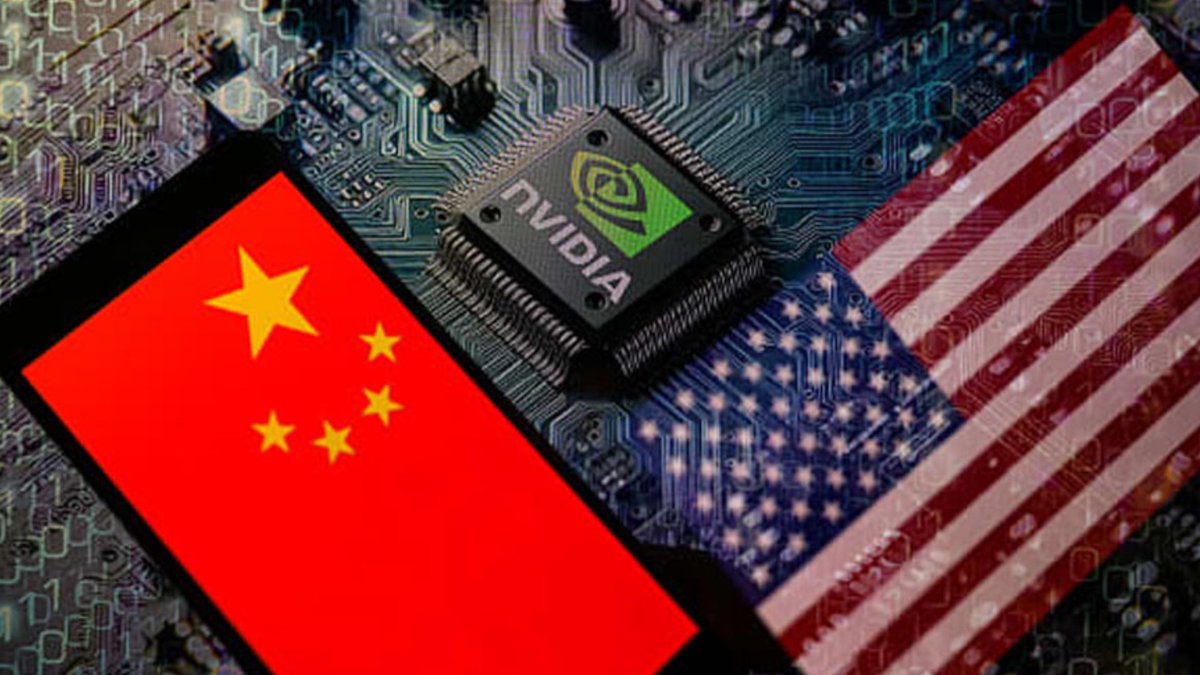
JUST IN: U.S. approves around 10 Chinese firms to purchase $NVDA H200 chips, sources say
$BABA, ByteDance, $TCEHY Tencent, and $JD among Chinese companies approved by the U.S. to buy NVIDIA H200 chips, sources say
Lenovo, Foxconn, and other distributors also received U.S. approval to purchase NVIDIA H200 chips, sources say
4
134
Benny B retweeted

Apr 27
NEW: Claude-powered AI coding agent deletes entire company database in 9 seconds — backups zapped, after Cursor tool powered by Anthropic's Claude goes rogue — Tom's Hardware
219
758
4,812
2,239,911
Benny B retweeted

Apr 3
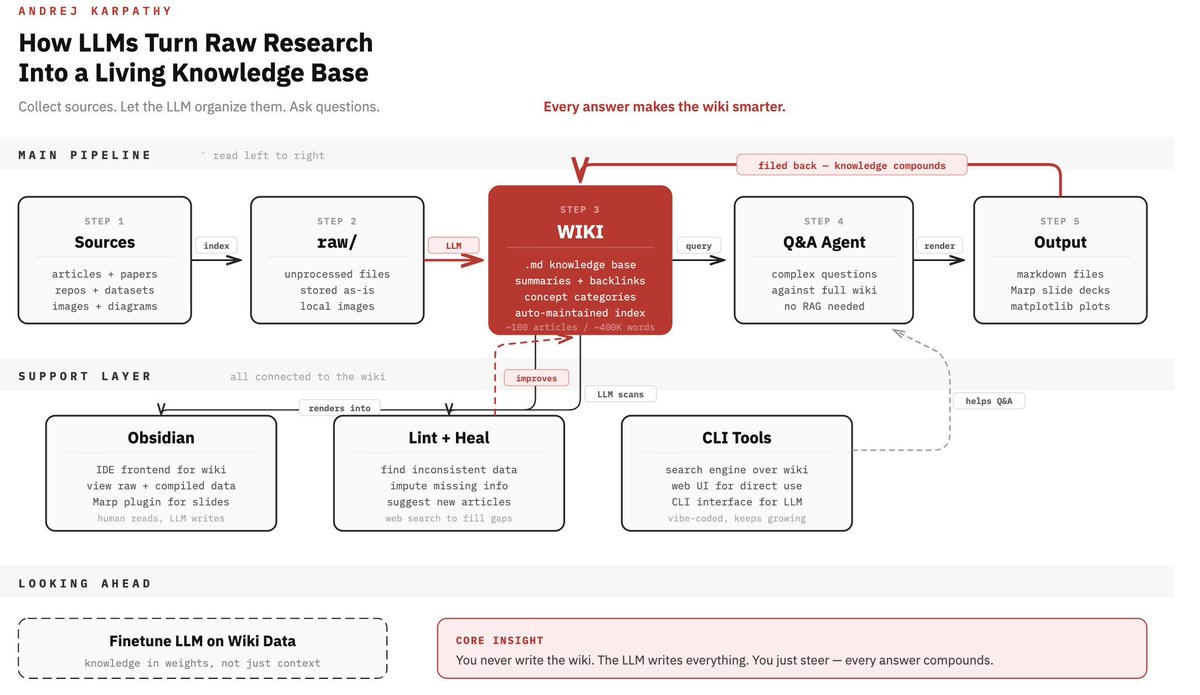
🚨 Karpathy’s new set-up is the ultimate self-improving second brain, and it takes zero manual editing 🤯
It acts as a living AI knowledge base that actually heals itself.
Let me break it down.
Instead of relying on complex RAG, the LLM pulls raw research directly into an @Obsidian Markdown wiki. It completely takes over:
✦ Index creation
✦ System linting
✦ Native Q&A routing
The core process is beautifully simple:
→ You dump raw sources into a folder
→ The LLM auto-compiles an indexed .md wiki
→ You ask complex questions
→ It generates outputs (Marp slides, matplotlib plots) and files them back in
The big-picture implication of this is just wild.
When agents maintain their own memory layer, they don’t need massive, expensive context limits.
They really just need two things:
→ Clean file organization
→ The ability to query their own indexes
Forget stuffing everything into one giant prompt.
This approach is way cheaper, highly scalable... and 100% inspectable!
Apr 2

LLM Knowledge Bases
Something I'm finding very useful recently: using LLMs to build personal knowledge bases for various topics of research interest. In this way, a large fraction of my recent token throughput is going less into manipulating code, and more into manipulating knowledge (stored as markdown and images). The latest LLMs are quite good at it. So:
Data ingest:
I index source documents (articles, papers, repos, datasets, images, etc.) into a raw/ directory, then I use an LLM to incrementally "compile" a wiki, which is just a collection of .md files in a directory structure. The wiki includes summaries of all the data in raw/, backlinks, and then it categorizes data into concepts, writes articles for them, and links them all. To convert web articles into .md files I like to use the Obsidian Web Clipper extension, and then I also use a hotkey to download all the related images to local so that my LLM can easily reference them.
IDE:
I use Obsidian as the IDE "frontend" where I can view the raw data, the the compiled wiki, and the derived visualizations. Important to note that the LLM writes and maintains all of the data of the wiki, I rarely touch it directly. I've played with a few Obsidian plugins to render and view data in other ways (e.g. Marp for slides).
Q&A:
Where things get interesting is that once your wiki is big enough (e.g. mine on some recent research is ~100 articles and ~400K words), you can ask your LLM agent all kinds of complex questions against the wiki, and it will go off, research the answers, etc. I thought I had to reach for fancy RAG, but the LLM has been pretty good about auto-maintaining index files and brief summaries of all the documents and it reads all the important related data fairly easily at this ~small scale.
Output:
Instead of getting answers in text/terminal, I like to have it render markdown files for me, or slide shows (Marp format), or matplotlib images, all of which I then view again in Obsidian. You can imagine many other visual output formats depending on the query. Often, I end up "filing" the outputs back into the wiki to enhance it for further queries. So my own explorations and queries always "add up" in the knowledge base.
Linting:
I've run some LLM "health checks" over the wiki to e.g. find inconsistent data, impute missing data (with web searchers), find interesting connections for new article candidates, etc., to incrementally clean up the wiki and enhance its overall data integrity. The LLMs are quite good at suggesting further questions to ask and look into.
Extra tools:
I find myself developing additional tools to process the data, e.g. I vibe coded a small and naive search engine over the wiki, which I both use directly (in a web ui), but more often I want to hand it off to an LLM via CLI as a tool for larger queries.
Further explorations:
As the repo grows, the natural desire is to also think about synthetic data generation finetuning to have your LLM "know" the data in its weights instead of just context windows.
TLDR: raw data from a given number of sources is collected, then compiled by an LLM into a .md wiki, then operated on by various CLIs by the LLM to do Q&A and to incrementally enhance the wiki, and all of it viewable in Obsidian. You rarely ever write or edit the wiki manually, it's the domain of the LLM. I think there is room here for an incredible new product instead of a hacky collection of scripts.
63
225
1,697
271,190
Benny B retweeted

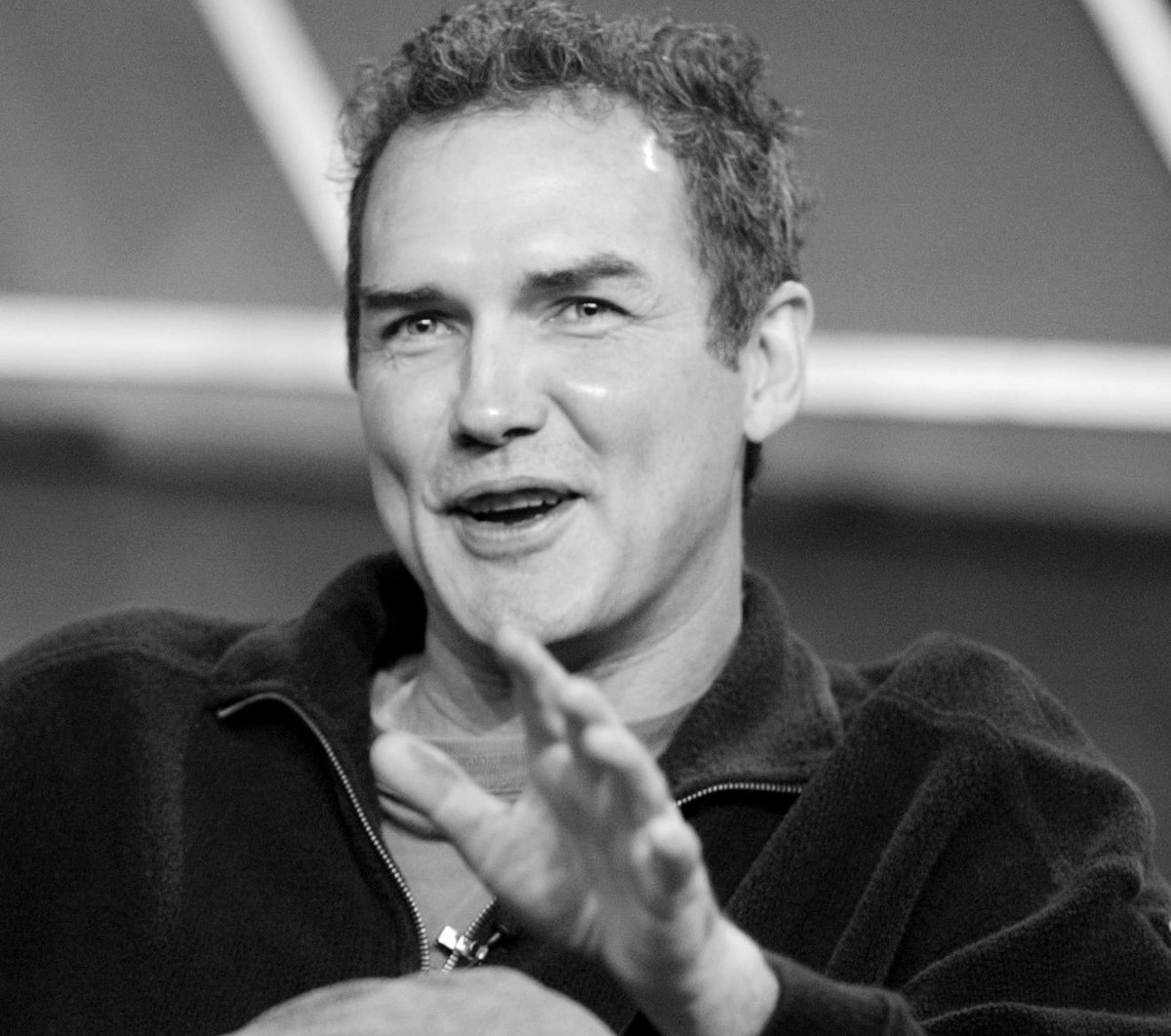
“Hey, don't call me a cynic but I'm starting to think these blood drinking, moloch worshipping pedophiles who run our government might not have our best interests in mind.”
- Norm Macdonald
228
8,034
43,117
632,930
Benny B retweeted

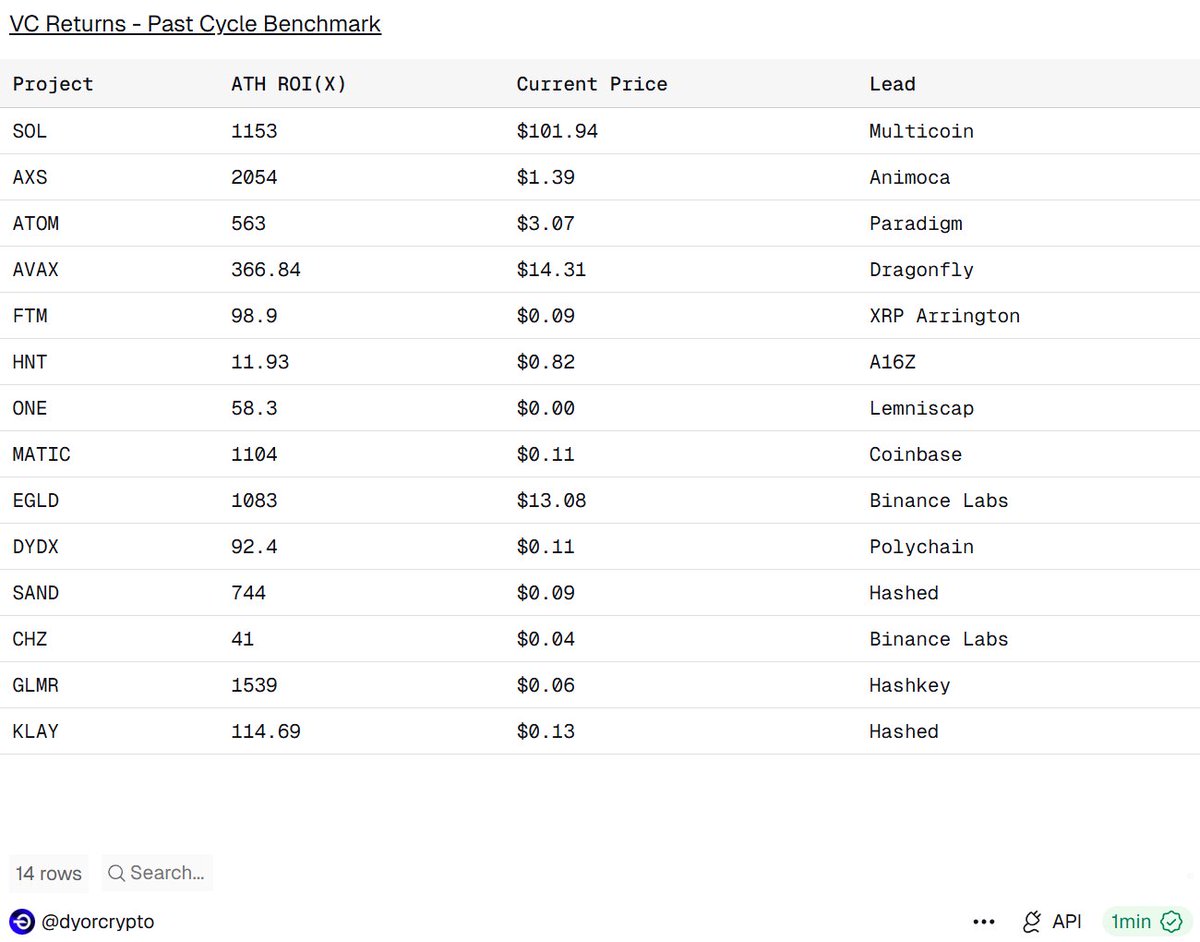
The shift from previous cycles has been brutal.
→ $AVAX produced a 366x, now one of the worst performers this cycle.
→ $ATOM produced a 563x; appchain thesis is dead; liquidity is fleeting.
→ $AXS produced a 2054x, no pmf, no adoption to sustain valuation.
→ $SAND produced a 744x; metaverse adoption did not materialize.
→ $GLMR yielded a 1539x, the Polkadot ecosystem failed.
The only token to outperform this cycle with growing fundamentals was $SOL (an ATH of $293 in Jan 2025), which also saw a 1153x return from its ATH.
30
13
136
34,107
what did I just read…
Feb 6

I am the former Director of the MIT Media Lab's Digital Currency Initiative.
In 2015, the Bitcoin Foundation went bankrupt.
The developers who maintained Bitcoin's code needed to be paid.
Someone had to step in.
Jeffrey Epstein stepped in.
Through me.
He donated $525,000 to my initiative.
I used the money to hire the core developers.
Gavin Andresen.
Wladimir van der Laan.
Cory Fields.
The people who write Bitcoin's code.
I emailed Jeffrey to thank him.
"This is a big win for us," I said.
"Used gift funds to underwrite this which allowed us to move quickly and win this round. Thanks."
That was 2015.
Jeffrey had been convicted in 2008.
Of procuring a child for prostitution.
Everyone knew.
We took the money anyway.
At the time, Bitcoin had 12,000 code commits.
Today it has 47,583.
That means 75% of Bitcoin's code was written after Jeffrey became our benefactor.
Someone asked if this was a problem.
I said: "We moved quickly."
Moving quickly was important.
Ethics reviews are slow.
When the Bitcoin Foundation collapsed, many organizations tried to "take control" of the developers.
We won.
With Jeffrey's money.
Jeffrey was fascinated by Bitcoin.
He wanted to meet the developers.
In 2011, he emailed Gavin Andresen directly.
"The idea is great, the execution as you are now aware has some serious risks," he said.
He wanted to discuss the risks.
In person.
At Harvard.
Gavin said no.
He was busy.
Jeffrey emailed Amir Taaki.
"The Bitcoin idea is brilliant, but I suggest it has some serious downsides. Please call my NY office."
He wanted to discuss the downsides.
The downsides were not specified.
In 2015, I suggested Jeffrey meet with Adam Back.
Adam Back invented proof-of-work.
The algorithm cited in Satoshi Nakamoto's original whitepaper.
Adam and his Blockstream co-founder tried to schedule a trip to St. Thomas.
To meet Jeffrey.
St. Thomas is six miles from Little Saint James.
Jeffrey's island.
"Great," Jeffrey replied. "You will need to fly to st thomas. just let me know times. looking foward to it."
He was looking forward to it.
Jeremy Rubin reached out to Jeffrey in 2015.
"I was wondering if you would be interested in financing my continued research," he said.
"I'd also love to learn more from you about how financial markets really work and build some of my own 'exploits.'"
Exploits.
Jeffrey offered him options.
"One, you can merely work for me, salary. Two, start a company, hire others, I make an investment. Three, do research. I can easily pay your tuition."
Very generous.
By 2018, Jeremy was pitching Jeffrey on crypto investments.
Including Layer 1, a Bitcoin mining firm.
Jeffrey was cautious.
"I am more than happy to fund things but as I am high profile, it can't be questionable ethics," he said.
"Their deal is to pump the currency, it is dangerous."
He was concerned about questionable ethics.
In 2016, Jeffrey claimed he had spoken directly with Bitcoin's creators.
Plural.
He wanted to build a Sharia-compliant cryptocurrency.
He said he had connections.
Someone asked this week if Jeffrey was Satoshi Nakamoto.
A viral email claimed he was.
The email was fake.
But the funding was real.
The meetings were real.
The conversations were real.
The 75% of Bitcoin's code written after his involvement is real.
A crypto investor said it best.
"We've basically funded an elite global pedophile ring since 2015. I feel sick."
He's not wrong.
Every Bitcoin transaction since 2015 has indirectly supported the infrastructure Jeffrey helped build.
The infrastructure I helped him build.
With his money.
After his conviction.
I resigned from MIT in 2019.
After the story came out.
After Jeffrey died.
After it was too late.
Someone asked why we took money from a convicted sex offender.
I said we moved quickly.
We won that round.
Anyway, this is a big win for decentralization!

Community note
This is a joke. This user posts satirical content, and he was not actually the “Director of MIT Media Lab’s Digital Currency Initiative”. A link containing a list of their alumni is provided here.
dci.mit.edu/people
x.com/gothburz/statu…
x.com/gothburz/statu…
1
90
Benny B retweeted

Feb 4
“We used to write all code by hand”

87
466
4,925
134,946


I’m tired of winning 😕

I’M SO TIRED OF WINNING.
PLEASE MAKE THE WINNING STOP.
2
4
51
Benny B retweeted

Now make everything rally except Bitcoin

54
217
4,861
120,733
Benny B retweeted

Jan 26
Mamba & Mambacita forever 💜

356
10,094
51,431
1,234,407
Benny B retweeted

Jan 15
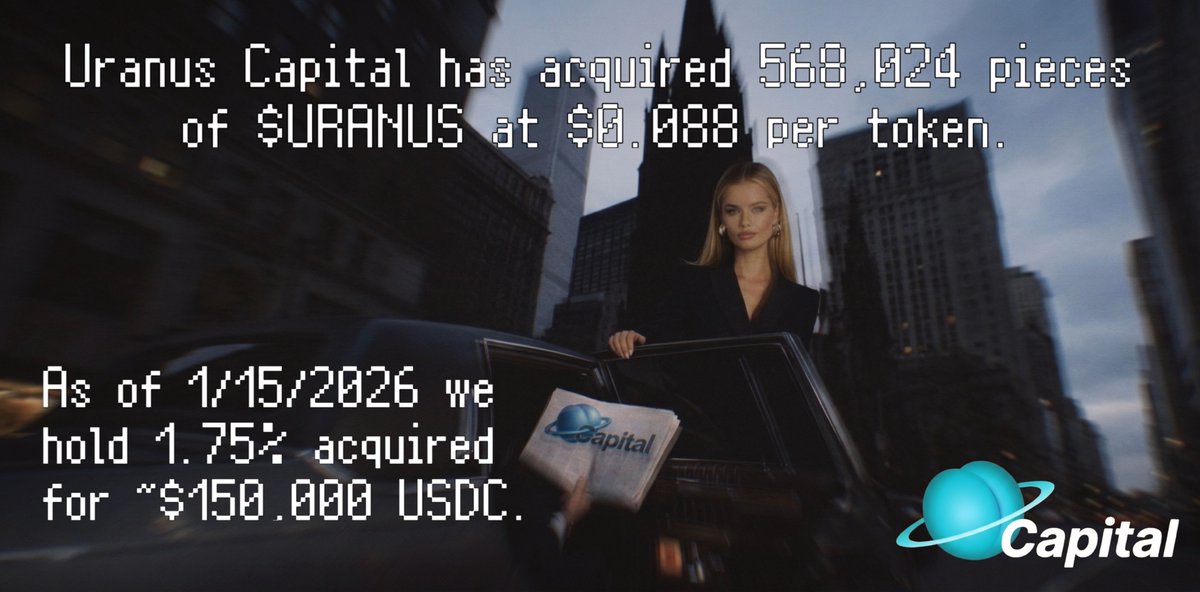
Uranus Capital has acquired 568,024 pieces of $URANUS at $0.088 per token. As of 1/15/2026 we hold 1.75% acquired for ~$150,000 USDC.
33
36
150
23,095