
Welsh Londoner. Screenwriter. Post-socialist. Post-feminist. MMT. Atheist. “Scourge of the unthinking, regardless of their political orientation.”
Joined August 2019
- Tweets 212,411
- Following 8,503
- Followers 12,319
- Likes 63,128
11,720 Photos and videos






Pinned Tweet

Jun 11
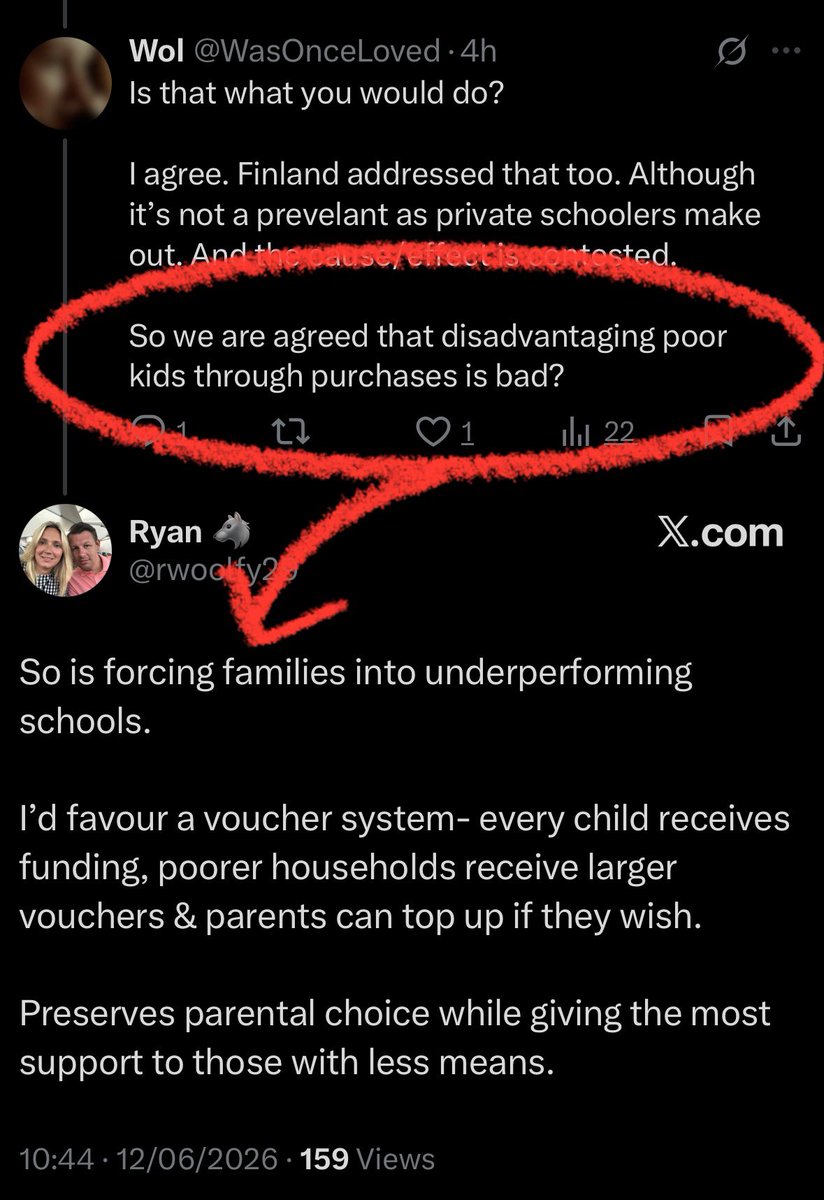
Should we remove private schooling in the UK?
Yes.
Why?
Is this ‘classist bigotry’? No
Wanting to ‘lower the bar’? Of course not
‘Hating on the rich’? No
It’s about fixing our country. Education is key; in so many ways.
🧵>>>
9
3
8
1,417
The accounts who talk of envy as a motivator, do so because they are racked with envy. It consumes them. They are daily obsessed with material goods and social status.
Hence this acolyte’s faecal flow in ‘defence’ (what!?) of Musk.

Do people actually fail to understand basic economics? Or are they blinded by envy—or maybe by hatred for someone with whom they disagree on politics? Or?
Why is it necessary to repeat the obvious, again & again, to defend @elonmusk from attacks of a long ago debunked variety?
1
70
Wol retweeted

Jun 12
A) as we’ve discussed before, you don’t need to quote tweet. B) You know as well as I do that extraordinarily concentrated wealth makes a difference to the lives of everyone in a democracy.
254
231
7,182
378,095
Notice how often those on the right and the idiot ‘Libertarians’ judge the success of a system by how it improves the lives of the 1%.
Same people who seem to think we were born to serve and work and judge human value in joules per hour. Humans are like little motors.

The “trillionaire” debate is clouded by money, which is ultimately just information. Focus on the physical:
Created wealth moves humanity forward because useful things are brought to fruition that would not otherwise exist.
Redistributed wealth is burned up and never seen again. It does little good because it competes for a fixed pie of products and services, driving up prices. The redistribution space is full of grifters who mainly enrich themselves.
When the poor are helped locally, however, they receive a wholistic gift that can actually move the needle for individuals. That, in itself, is a form of created wealth.
The key word is “creation”. We should all try to make the world better by creating goodness around us. Envying or sabotaging someone who is creating mega wealth (like Elon) is profoundly counterproductive for everyone.
58
10h
Regulations do protect. That’s why we have them.

Regulation is not the exception. Every productive enterprise is regulated.
Regulation is always sold to the voters as protecting the little guy.
Regulation always protects the incumbents.
72
12h
Today’s stupidest tweet.
Wants to replace the state with… another state.

If the state supplied all bread would you ask an anarchist why he is against people having bread. What makes you think that only a state can do things like enforce laws? For just about anyone the greatest violator of property rights is the state.
53
17h
Yup. The state in no way contributed to Musk’s fortune. He made it selling $1 lemonade on street corners.
No way did he get a $1.6 billion NASA Commercial Resupply Services contract in 2008. And it didn’t save the company from bankruptcy.
Why disregard state power and give the state more power, real power over others, if you are concerned about power? Elon Musk cannot tax the smallest town, and people voluntarily gave him what made him rich. You might not like it, but unlike the state, it was voluntary.
2
1
59
17h
Capitalists: Look at how successful our wealth making ideology is! Mr Musk is the world’s first $ trillionaire.
Also capitalists: what do you mean share it about?! He doesn’t actually have it. It’s all speculative. Don’t be so absurd. Do you know nothing of economics?
74
Wol retweeted

The idea that prosperity emerges simply by removing rules and barriers assumes that markets naturally organize themselves into efficient outcomes.
Every successful market economy relies on a framework of institutions. Property rights, contract enforcement, accounting standards, banking regulation, product standards, professional certification, and consumer protection laws all shape how markets operate. None of these arise automatically from voluntary exchange alone.
This does not mean every regulation is good. Many are outdated, inefficient, or captured by special interests. But the existence of bad regulations is not evidence against regulation itself any more than the existence of bad businesses is evidence against markets.
The relevant question is always institutional design. Which rules enhance competition, transparency, and productive activity? Which rules merely protect incumbents? Which rules create trust and reduce uncertainty?
Reducing every discussion to government versus markets misses the point. Markets are themselves institutional creations. The debate is about what kinds of institutions produce the best outcomes, not whether institutions should exist at all.
10
37
83
2,735
Wol retweeted

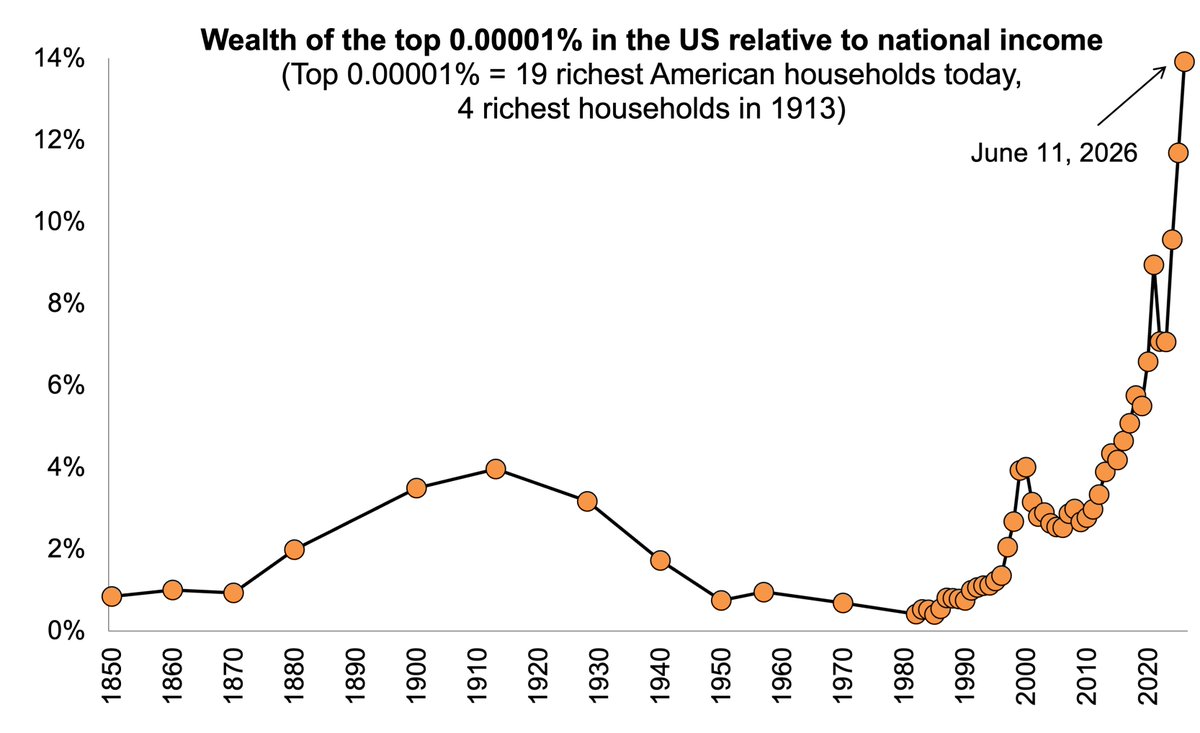
Excessively concentrated wealth leads to a small number of individuals having outsized power over the rest of us.
It is a dangerous externality, and taxing dangerous externalities is basic economics.
Jun 12

Those who celebrate @elonmusk's $1 trillion fortune need to be reminded of a simple and vital truth:
That there is a fundamental tension between extreme wealth and the very possibility of democracy.
31
38
149
17,202
Wol retweeted

Concern about wealth inequality is not about jealousy over some guy having a bigger house.
It is more about the fact that it may be a problem that one person has more economic power than entire countries.
19
49
142
6,031
Wol retweeted

30 Sep 2023
This was a fantastic lecture
I suggest @TyKeynes and @ProfSteveKeen to invite Jeremy Rudd to their show. He has been on the Fed's board of directors for years; he understands neoclassical economics; he cares about truth, nature, society,...
youtu.be/mrMr2BcHDT0?si=h2TI…

4
6
24
3,396
18h
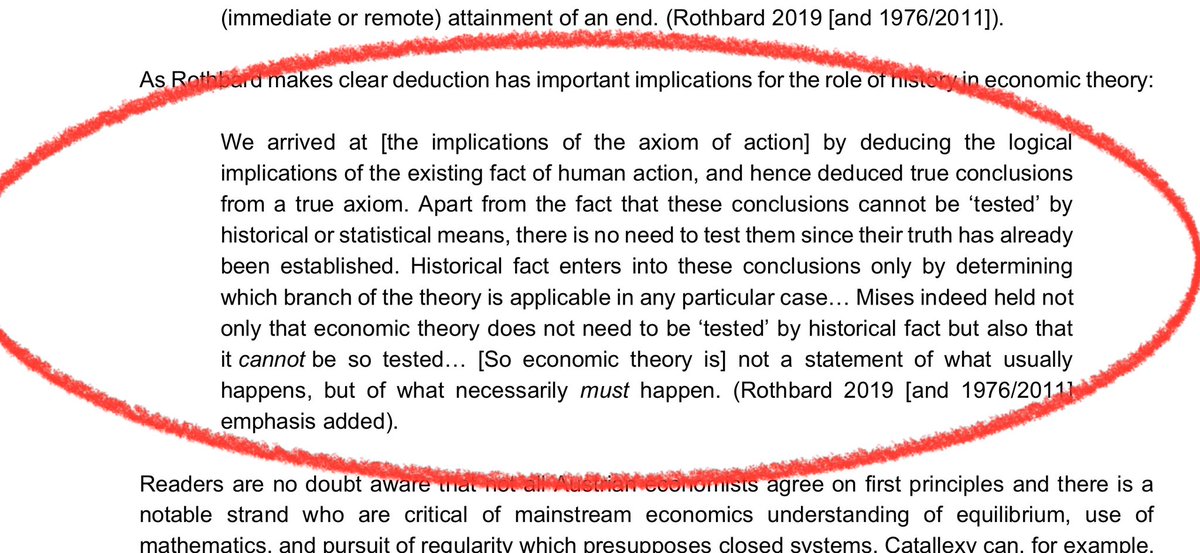
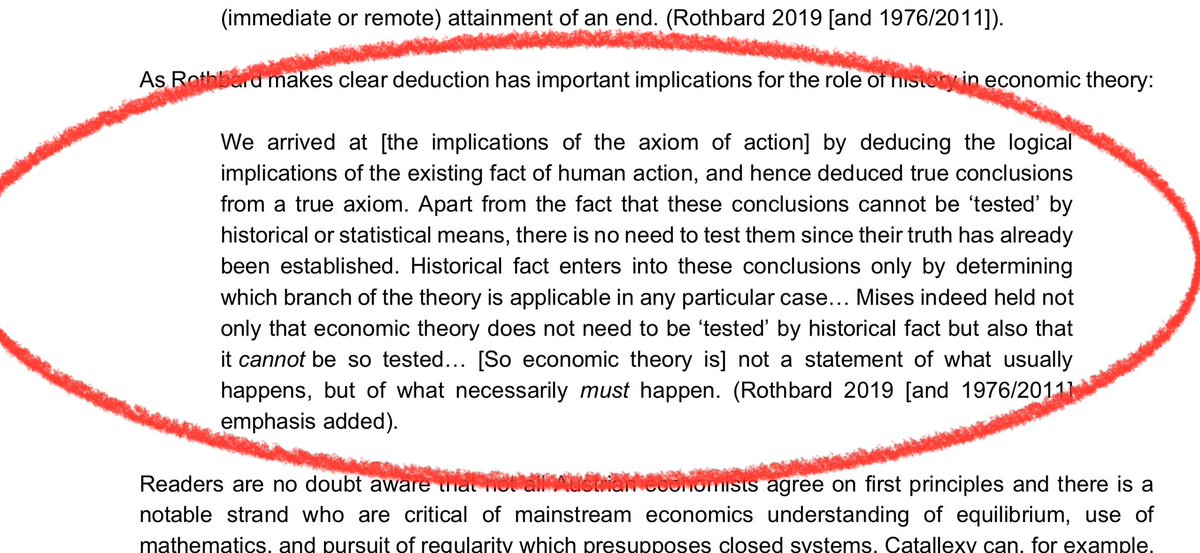
The claim that a total lack of historical evidence somehow proves a theory correct is… the most spectacular delusion. If an economy leaves zero trace across millennia, it likely didn't exist. You cannot use survival bias to validate a fantasy.

Saying his logical construction is an unsupported guess is a category error. Also the fact that they haven’t found any pure barter economies proves Menger’s prediction right… pure barter is unstable and will quickly give way to indirect exchange.
1
1
144
18h
Calling an empirical critique a ‘category error’ is my favourite Austrian School cope so far.
Deductive models that purport to explain actual human history must square with… [checks notes] actual human history. Internal consistency is not a substitute for reality.
1
1
50
18h
To argue that the non-existence of the barter economy proves its existence is… textbook unfalsifiability at best. More likely a desperate last gasp
By that logic, I could invent any absurd historical state and cite its total archeological absence is proof
Asshole.
Blocked.
1
26
20h
So often with the right, especially the Austrian School, they hark back (and so forward) to a simpler time, free of regs, red tape and governments; when simple exchange enriched all.
But I bet their model doesn’t include wealth disparities of hundreds of billions to one.
I bet.

I prefer to live in a world where Elno can become a trillionaire than a world where Thomas Piketty can make everyone poor.
My enemy isn't the world's financial elite, it's the cultural elite.
97
20h
Apparently politics is a ‘recent’ human innovation.
I mean… how do smart people end up this deluded?
Astonishing. And clearly not worth the effort.

I can opt out of economic power.
Can I opt out of political power?
And I'd reverse the burden of proof.
Politics isn't the default state of humanity.
It's a relatively recent institution.
Why should I assume political power is good until proven otherwise?
1
1
47
20h
I don’t want to misrepresent you.
It seems you insist that this is a feature of modern economies not a bug. This extraordinary, deeply immoral concentration of wealth and power is *essential* for growth.
Is it? Is this the best we can be? Answer in good faith please.
Jun 13

Je vais partir du principe que tu es de bonne foi, parce que ton raisonnement est intuitif et que 90% des gens le partagent. Mais il repose sur trois erreurs factuelles, et ça vaut le coup de les regarder calmement.
Erreur 1 : la fortune d'Elon n'est pas un tas d'argent. C'est de la propriété d'usines, de fusées et de satellites. "Prendre la moitié de sa tune", concrètement, ça veut dire forcer la vente de la moitié de SpaceX et Tesla. L'argent ne sort pas d'un coffre, il sort des entreprises elles-mêmes, qui passent sous contrôle de fonds étrangers ou d'États. Tu ne redistribues pas du cash, tu démantèles un outil de production. C'est la différence entre récolter des pommes et découper le pommier.
Erreur 2 : "ça résout énormément de problèmes dans le monde". Cette expérience a déjà été tentée, en vrai. En 2021, le directeur du Programme Alimentaire Mondial de l'ONU a affirmé que 6 milliards de Musk pouvaient "résoudre la faim dans le monde". Réponse d'Elon : décrivez-moi exactement comment, comptabilité publique à l'appui, et je vends mes actions Tesla immédiatement. Le PAM a publié son plan. Verdict : ce n'était pas "résoudre la faim", c'était nourrir 42 millions de personnes pendant un an. Un an. Puis il faut re-payer, pour toujours. Le PAM avait d'ailleurs levé 8,4 milliards l'année précédente, et la faim était toujours là. Les ONG traitent les symptômes en boucle, jamais les causes, parce que leur financement dépend de l'existence du problème.
Erreur 3, la plus importante : tu cherches ce qui sort vraiment les gens de la pauvreté. Bonne nouvelle, on a la réponse, et elle est massive. En 1990, 36% de l'humanité vivait dans l'extrême pauvreté. Aujourd'hui, moins de 9%. Plus d'un milliard de personnes sorties de la misère en 30 ans. Par quoi ? Pas par la charité ni par l'aide internationale (plus de 1 000 milliards versés à l'Afrique en 60 ans pour un résultat à peu près nul). Par l'ouverture des marchés, l'industrialisation, le commerce. La Chine seule a sorti 800 millions de personnes de la pauvreté en abandonnant le collectivisme, pas en taxant ses entrepreneurs.
Donc fais le calcul complet. Option A : tu confisques 500 milliards, tu finances quelques années de programmes, l'argent est consommé, et tu as détruit la machine qui produisait les fusées, les voitures électriques et l'internet des zones rurales. Option B : tu laisses le meilleur allocateur de capital de sa génération réinvestir 100% de sa fortune dans des industries qui baissent les coûts pour tout le monde et emploient des centaines de milliers de personnes. L'option A soulage ta morale pendant 18 mois. L'option B sort des populations entières de la pauvreté pour toujours.
La pauvreté ne se redistribue pas. Elle se résout par la création. C'est contre-intuitif, c'est frustrant, mais c'est ce que disent 200 ans de données.
1
1
66
Wol retweeted

Jun 12
It confuses me why conservatives love to gush over the New Deal era but despise the figures and policies that made it possible.
This was when the rich were taxed 70% and over a third of Americans were union workers. Without that, we would’ve never made it past the Guilded Age…

106
5
76
72,814
21h
You mean China?
Jun 13

Look at countries that lean Cochrane’s way and look at countries that lean the other way over many years. Pretty clear history thinks he is correct. Not perfection but broad prosperity with some human flaws mixed in.
47