
Music, Books, Informatics, UNIX, GNU/Linux, Nortec, Geek, Gamer, Sysadmin/DevOps, Co-founder @GeekScripting, Married to @psygi_blooQ
Joined January 2010
- Tweets 112,838
- Following 1,980
- Followers 1,483
- Likes 3,973
1,071 Photos and videos














15 Apr 2016

"If you know the system well enough, you can do things that aren't supposed to be possible." -- Linus Torvalds
#quoteoftheday
3
4
Ricardo retweeted

Jun 11
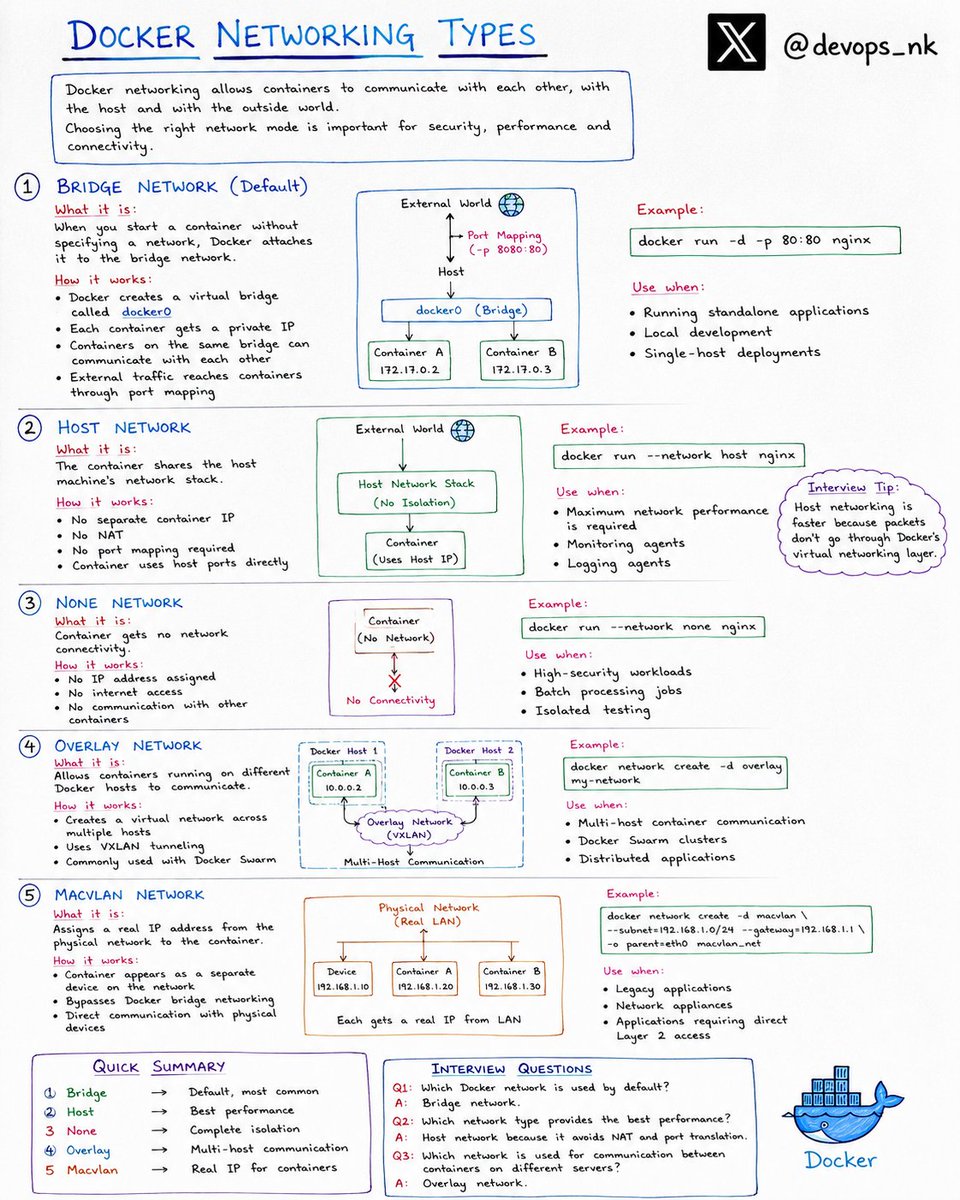
Docker Networking Types Explained 🧵
Understanding Docker networking is important for DevOps interviews because it determines how containers communicate with each other and the outside world.
1️⃣ Bridge Network (Default)
What it is:
When you start a container without specifying a network, Docker attaches it to the bridge network.
How it works:
• Docker creates a virtual bridge called docker0
• Each container gets a private IP
• Containers on the same bridge can communicate with each other
• External traffic reaches containers through port mapping
Example:
docker run -d -p 80:80 nginx
Use when:
• Running standalone applications
• Local development
• Single-host deployments
----------------------------------------------
2️⃣ Host Network
What it is:
The container shares the host machine's network stack.
How it works:
• No separate container IP
• No NAT
• No port mapping required
• Container uses host ports directly
Example:
docker run --network host nginx
Use when:
• Maximum network performance is required
• Monitoring agents
• Logging agents
Interview Tip:
Host networking is faster because packets don't go through Docker's virtual networking layer.
--------------------------------------
3️⃣ None Network
What it is:
Container gets no network connectivity.
How it works:
• No IP address assigned
• No internet access
• No communication with other containers
Example:
docker run --network none nginx
Use when:
• High-security workloads
• Batch processing jobs
• Isolated testing
-----------------------------------------
4️⃣ Overlay Network
What it is:
Allows containers running on different Docker hosts to communicate.
How it works:
• Creates a virtual network across multiple hosts
• Uses VXLAN tunneling
• Commonly used with Docker Swarm
Example:
docker network create -d overlay my-network
Use when:
• Multi-host container communication
• Docker Swarm clusters
• Distributed applications
-------------------------------------------
5️⃣ Macvlan Network
What it is:
Assigns a real IP address from the physical network to the container.
How it works:
• Container appears as a separate device on the network
• Bypasses Docker bridge networking
• Direct communication with physical devices
Use when:
• Legacy applications
• Network appliances
• Applications requiring direct Layer 2 access
Summary:
✅ Bridge → Default, most common
✅ Host → Best performance
✅ None → Complete isolation
✅ Overlay → Multi-host communication
✅ Macvlan → Real IP for containers
8
48
254
8,092
Ricardo retweeted

Jun 9
Every SOC team should read this repo before building any LLM-powered security tool
github.com/tmylla/Awesome-LL…
The failure modes of LLMs in security contexts are well documented in academic literature
They are almost completely ignored in product development
4
72
301
15,649
Ricardo retweeted
🚨OJO, múltiples avisos dan cuenta de que usuarios de #ServiceNow encontraron IPs raras accediendo a sus instancias desde el 06/jun.
Revisen sus logs.
El problema está siendo investigado.
support.servicenow.com/kb?id…
1
16
50
6,568

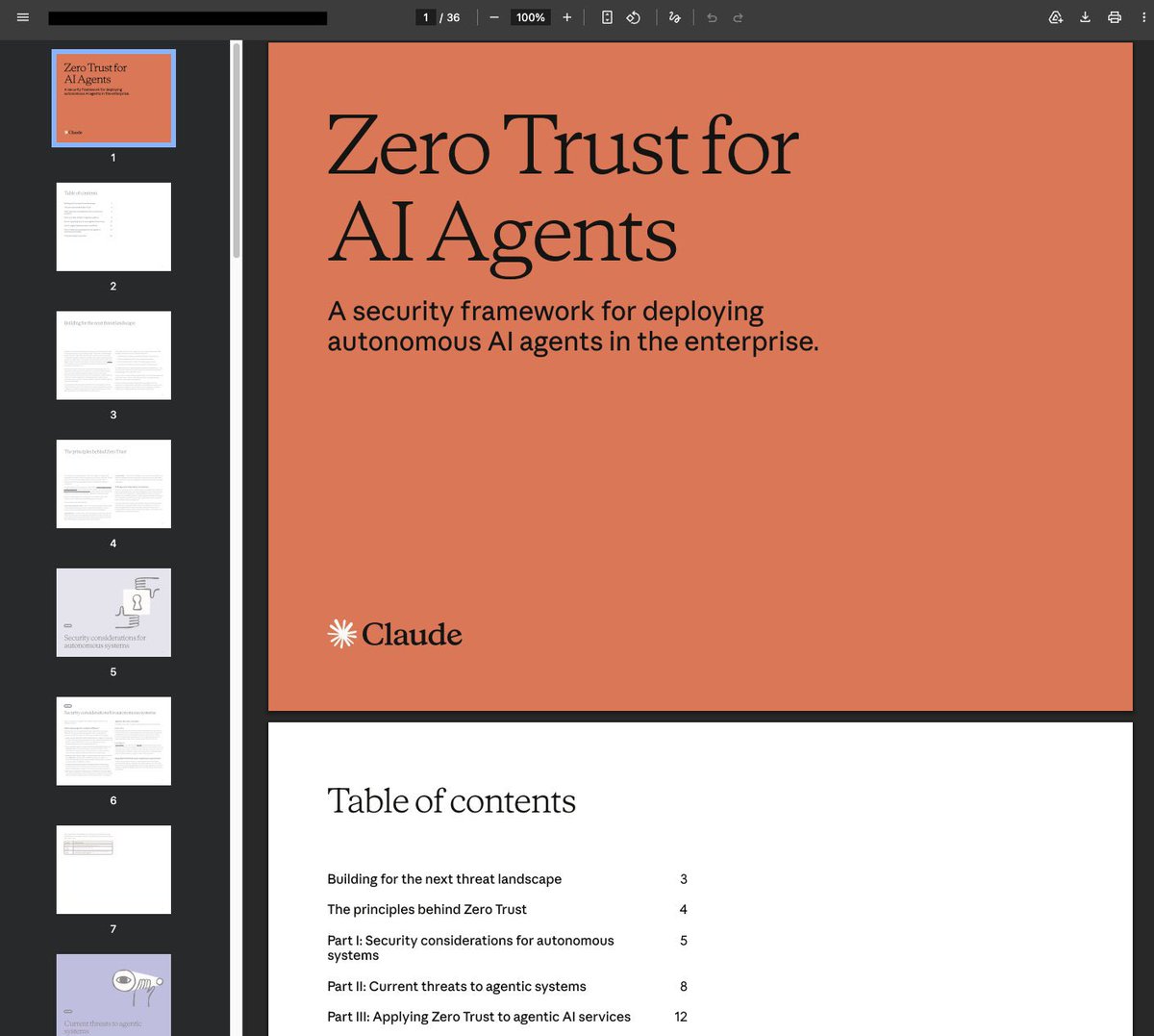
🚨ANTHROPIC ACABA DE PUBLICAR UNA GUÍA DE SEGURIDAD DE 36 PÁGINAS Y EL MENSAJE ES CLARO: DEJA DE CONFIAR EN TUS AGENTES DE IA.
Si trabajas con Claude Code, servidores MCP o cualquier herramienta de automatización, sigue leyendo.
El tiempo que tenías para reaccionar ante un ataque ya casi no existe.
Con IA, el salto de una vulnerabilidad a un exploit funcional ya no tarda meses, tarda horas. Y cuesta apenas unos dólares.
Los agentes además abren una superficie de ataque completamente nueva: desde herramientas envenenadas hasta manipulación directa de su memoria de contexto.
El concepto más valioso de toda la guía es esta pregunta:
Este control hace el ataque imposible, o simplemente más lento?
Un atacante automatizado no se cansa.
Los límites de tasa y el 2FA son obstáculos, no muros. Si quieres seguridad real a la velocidad de la IA, necesitas barreras duras y defensas que también sean automáticas.
Lo que Anthropic recomienda para proteger tus agentes:
→ Considera tus API keys estáticas como ya comprometidas. Usa tokens que expiren en minutos.
→ Limita explícitamente lo que cada herramienta puede hacer, no lo que puede ver.
→ Ejecuta en entornos aislados cualquier agente que procese emails, webs o datos externos.
→ Los permisos deben asignarse por tarea, no de forma permanente.
Enlace a la guía en el 🧵↓
Jun 5

JUST IN: Anthropic co-founder Jack Clark reportedly warned new recruits to “get hobbies that aren’t computers,” saying the company is building a “superhuman coder with nation-state hacking capabilities.”
22
141
1,009
264,177
Ricardo retweeted

Jun 8
OWASP publica reporte de seguridad de IA para profesionales
OWASP ha publicado el informe "State of Agentic AI Security and Governance v2.01", un plan técnico diseñado para ayudar a los equipos de seguridad a proteger los agentes de IA autónomos
blog.elhacker.net/2026/06/ow…
1
7
23
2,106
Ricardo retweeted

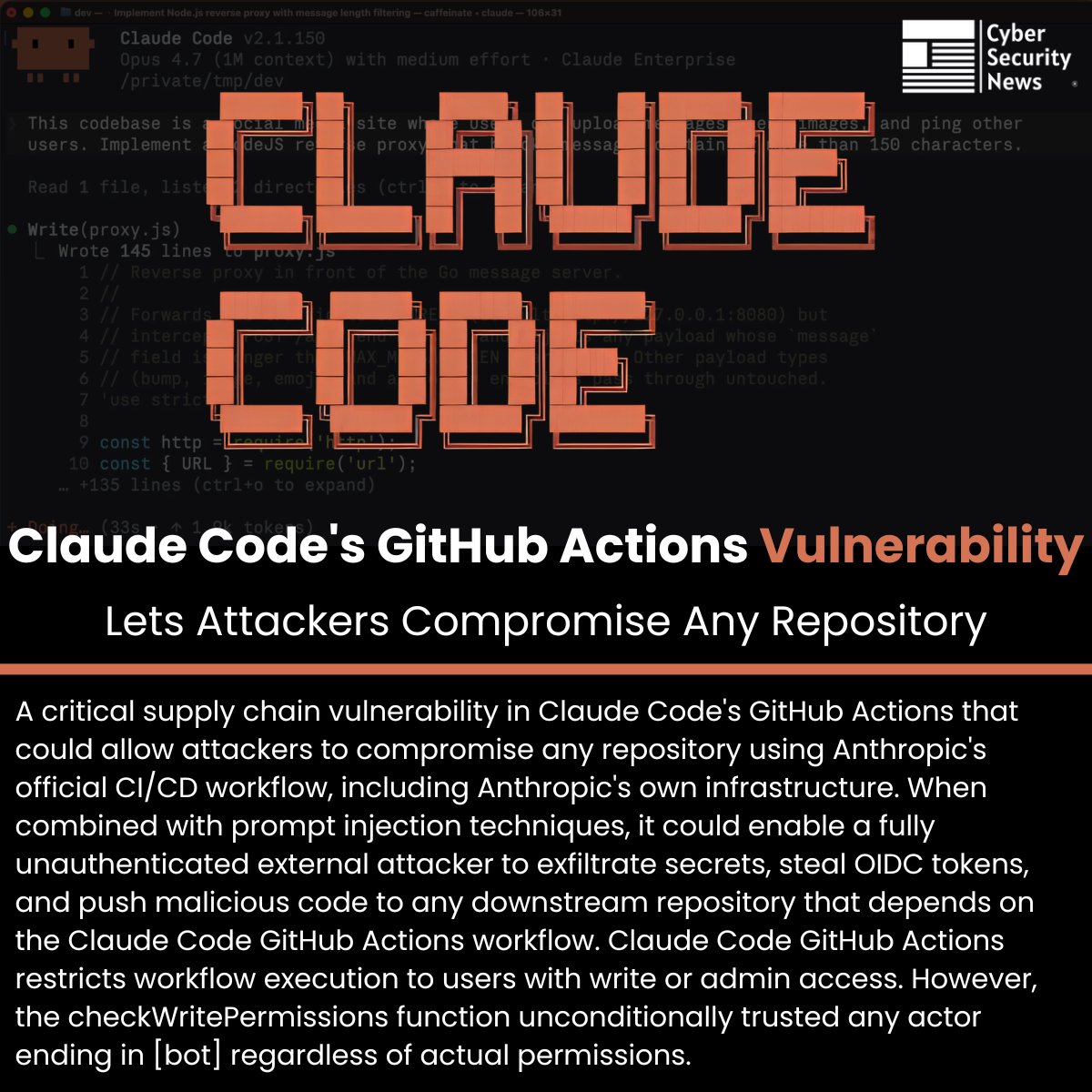
🚨 Claude Code's GitHub Actions Vulnerability Lets Attackers Compromise Any Repository
Source: cybersecuritynews.com/claude…
A critical supply chain vulnerability in Claude Code's GitHub Actions that could allow attackers to compromise any repository using Anthropic's official CI/CD workflow, including Anthropic's own infrastructure.
When combined with prompt injection techniques, it could enable a fully unauthenticated external attacker to exfiltrate secrets, steal OIDC tokens, and push malicious code to any downstream repository that depends on the Claude Code GitHub Actions workflow.
Claude Code GitHub Actions restricts workflow execution to users with write or admin access. However, the checkWritePermissions function unconditionally trusted any actor ending in [bot] regardless of actual permissions.
#cybersecuritynews
9
96
397
51,390
Ricardo retweeted
Paquetes NPM de Red Hat comprometidos para propagar un gusano de robo de credenciales
blog.segu-info.com.ar/2026/0…
3
3
785
Ricardo retweeted
Playbook de SIEM: aplicabilidad en implementaciones con #Wazuh
blog.segu-info.com.ar/2026/0…
7
29
2,010
Ricardo retweeted

May 24
NPM añade autenticación 2FA para protegerse contra ataques a la cadena de suministro
blog.segu-info.com.ar/2026/0…
1
2
10
1,007

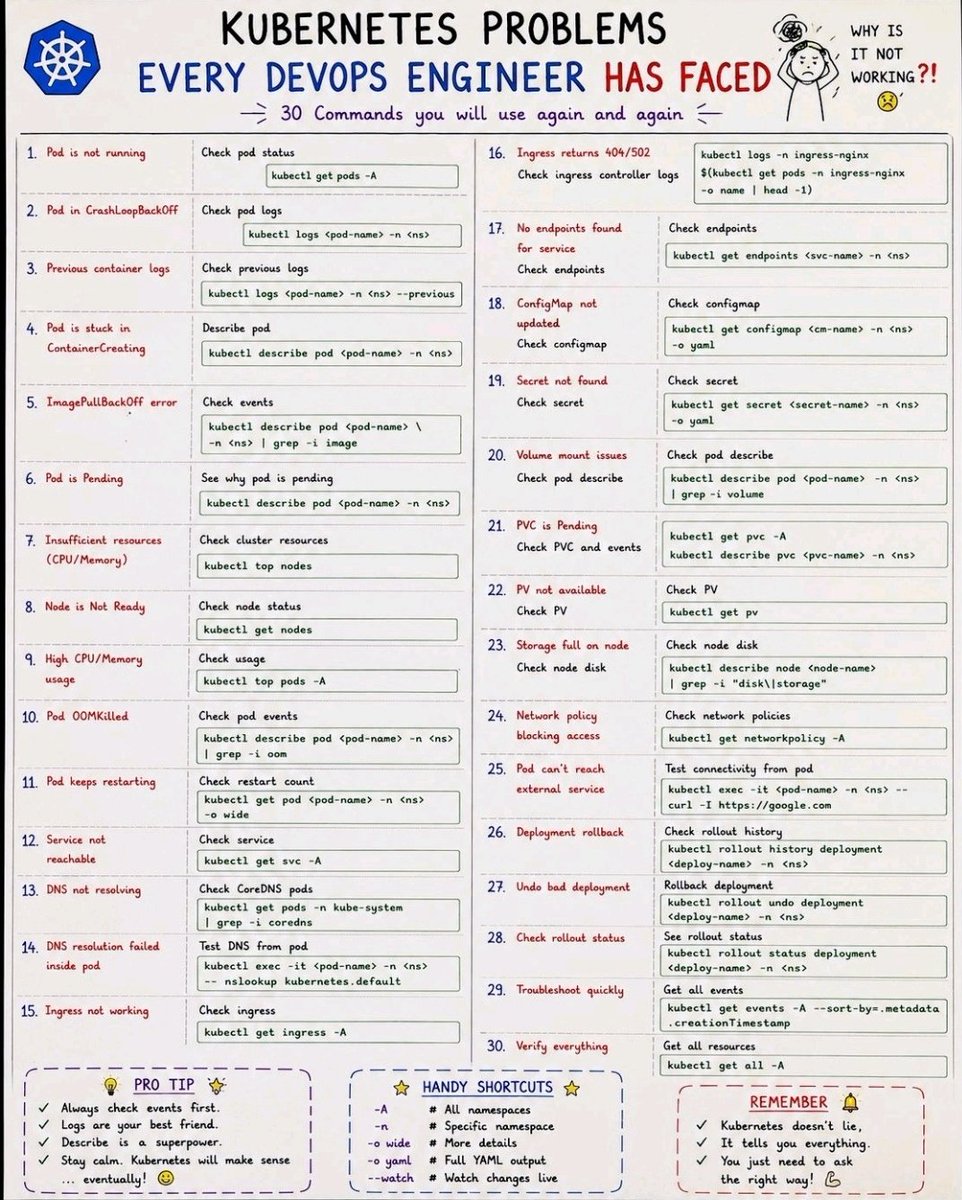
Kubernetes troubleshooting is a core skill for DevOps engineers, especially in production where issues like CrashLoopBackOff, Pending pods, ImagePullBackOff, OOMKilled errors, DNS failures, ingress issues, volume mount problems, resource pressure, restart loops & networking glitches are common
Deploying applications is often straightforward the real challenge begins when things break & diagnosing those failures quickly & effectively is what separates experienced engineers from the rest
4
52
240
7,434
GitHub acaba de solucionar el mayor problema del vibe coding.
Acaban de lanzar Spec Kit y en días ya tiene 95K estrellas.
¿La idea?
En vez de tirar prompts vagos y rezar para que el agente no rompa tu proyecto…
Spec Kit obliga a la IA a crear una especificación estructurada ANTES de tocar código.
La IA primero entiende lo que quieres construir, pregunta lo que falta, organiza el proyecto y después empieza a programar.
Eso significa menos tiempo arreglando errores absurdos, menos código inconsistente y resultados mucho más predecibles cuando trabajas con agentes.
El flujo es simple:
/constitution → reglas y estándares
/specify → qué quieres construir
/clarify → dudas antes de empezar
/plan → arquitectura y stack
/tasks → tareas ordenadas
/implement → ejecución
Compatible con Claude Code, Cursor, Copilot, Codex, Gemini CLI y 25 agentes.
95K estrellas.
8K forks.
Open source.
Publicado por GitHub.
Repositorio 👇
88
339
3,304
457,622
Ricardo retweeted
May 18
Learn how AI agents get hacked.
A deliberately vulnerable React based LLM agent built for practicing: Damn Vulnerable LLM Agent
- Prompt Injection.
- Thought/Action/Observation Hijacking.
- Agentic SQLi.
- Tool Abuse.
github.com/ReversecLabs/damn…
8
47
160
8,860
Ricardo retweeted

May 15
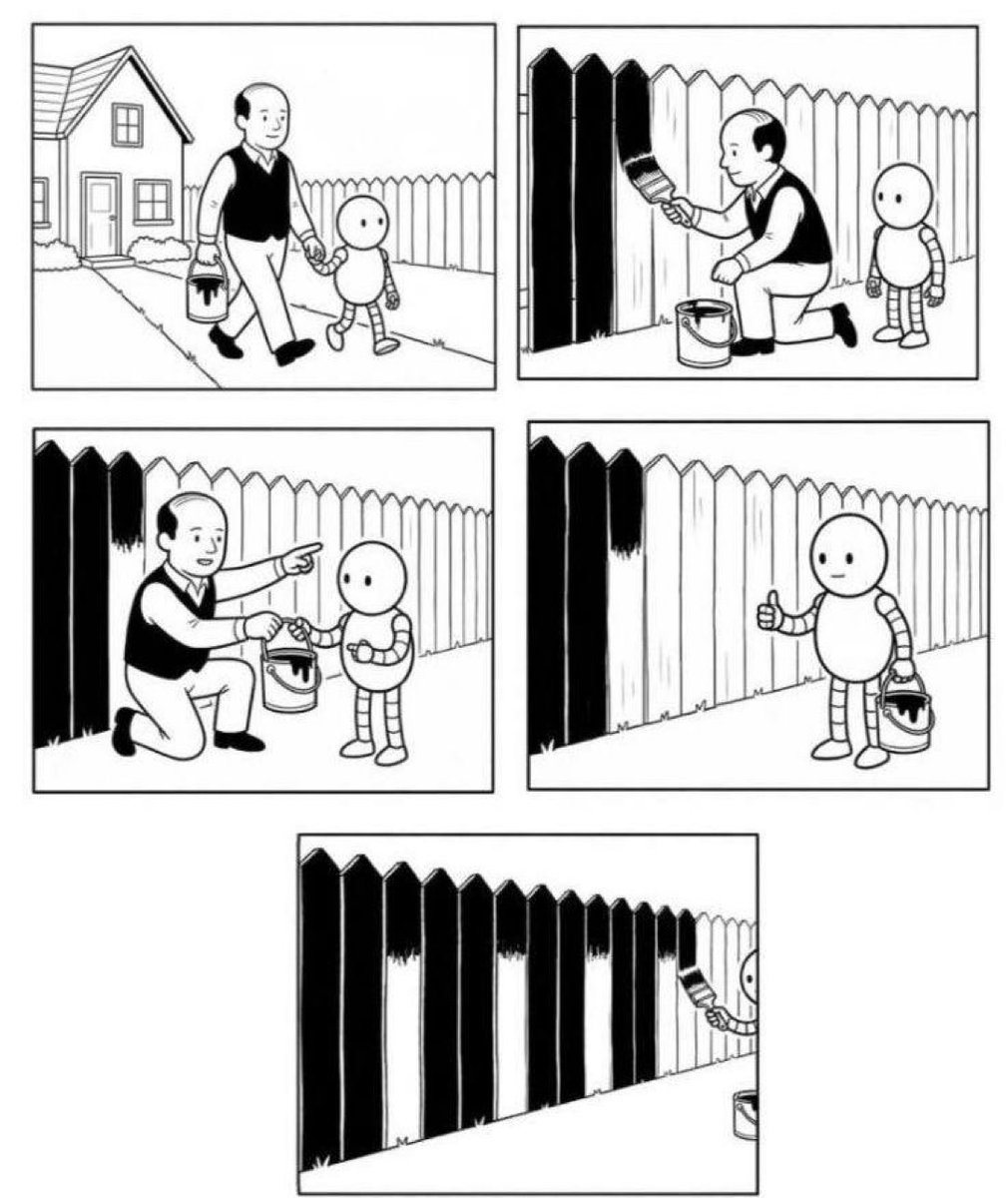
continueFromHereClaude
86
1,376
16,605
355,653

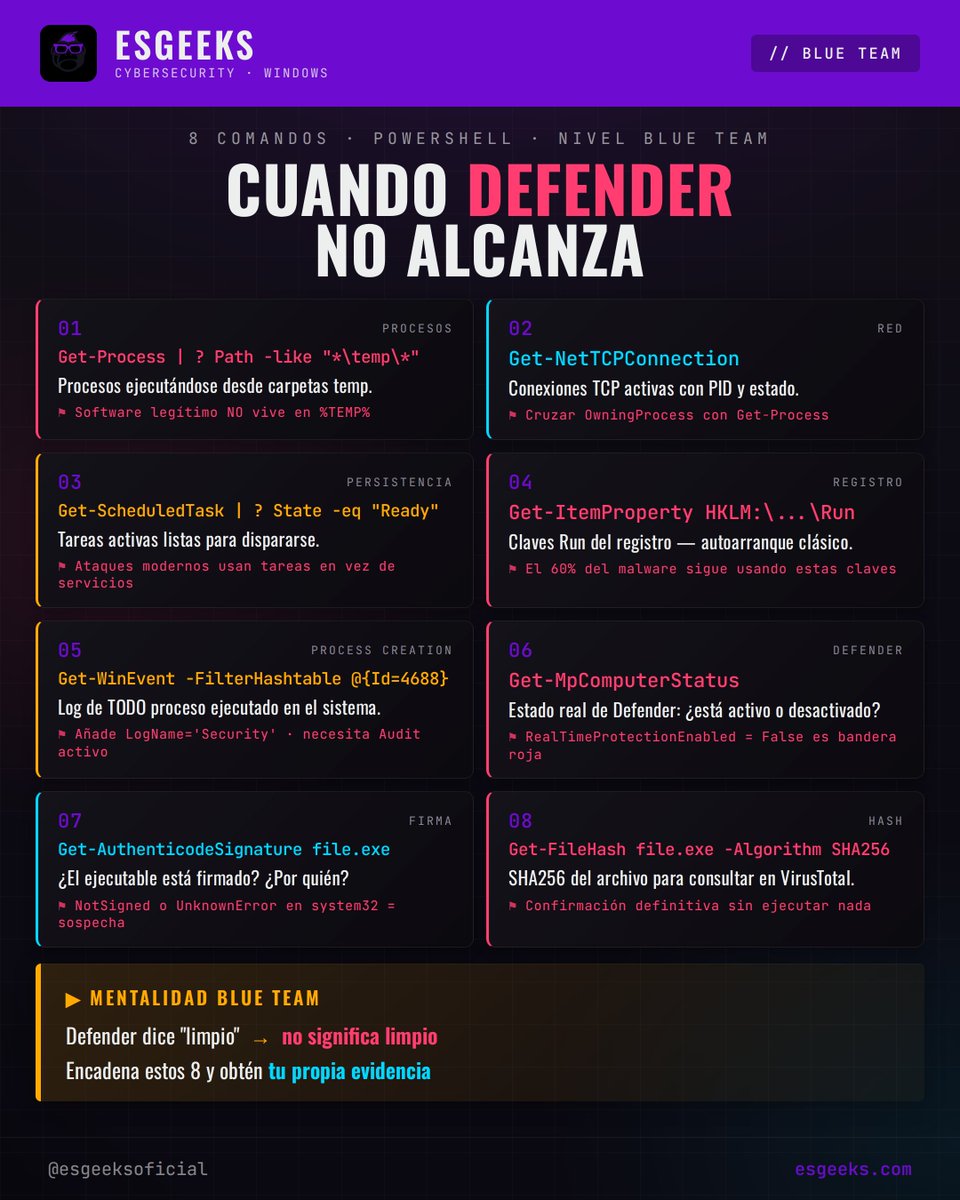
🛡️ Cuando Defender no alcanza.
8 comandos PowerShell que separan al usuario del blue teamer.
El malware moderno esquiva al antivirus. El pro genera su propia evidencia.
Hilo 🧵👇
#blueteam #ciberseguridad #powershell #forense #soc #threathunting #dfir #infosec #windows #esgeeks
2
23
100
4,318
Ricardo retweeted

May 14
This Next.js vulnerability is really bad, if you use Next.js, stop what you're doing and protect yourself.
May 14

Next.js just got its worst vulnerability ever, CVSS 8.6.
→ affects versions 13.4.13 , 14.x, 15.x, and 16.0.0–16.2.4
→ attackers can access your internal services, cloud credentials, API keys, and admin panels
→ no authentication needed
→ one crafted request is all it takes
→ roughly 79,000 instances are exploitable right now
→ vercel-hosted apps are safe, self-hosted are not
upgrade to 15.5.16 or 16.2.5 immediately.
Community note
The security fixes for these Next.js vulnerabilities were released in versions 15.5.18 and 16.2.6 on May 7, not the versions recommended here. x.com/nextjs/status/…
18
25
538
304,131
Ricardo retweeted
May 13
Nuevo ataque Shai Hulud firman paquetes NPM maliciosos
blog.segu-info.com.ar/2026/0…
3
16
1,836
Ricardo retweeted

May 9
POV : USING CLAUDE OPUS 4.7 TO JUST RENAME A VARIABLE
109
713
11,159
598,451
Ricardo retweeted
Vulnerabilidad crítica en Palo Alto Networks PAN-OS
blog.segu-info.com.ar/2026/0…
1
7
18
1,648
Ricardo retweeted

"YOUR CLAUDE CODE SESSION LIMIT HAS BEEN REACHED"
187
532
4,619
561,014
Ricardo retweeted
Apr 30
Copy Fail: vulnerabilidad crítica, secuestro de Linux con acceso root (CVE-2026-31431)
blog.segu-info.com.ar/2026/0…
4
19
1,561