Joined March 2022
- Tweets 111
- Following 134
- Followers 2,127
- Likes 308
16 Photos and videos






Jun 12
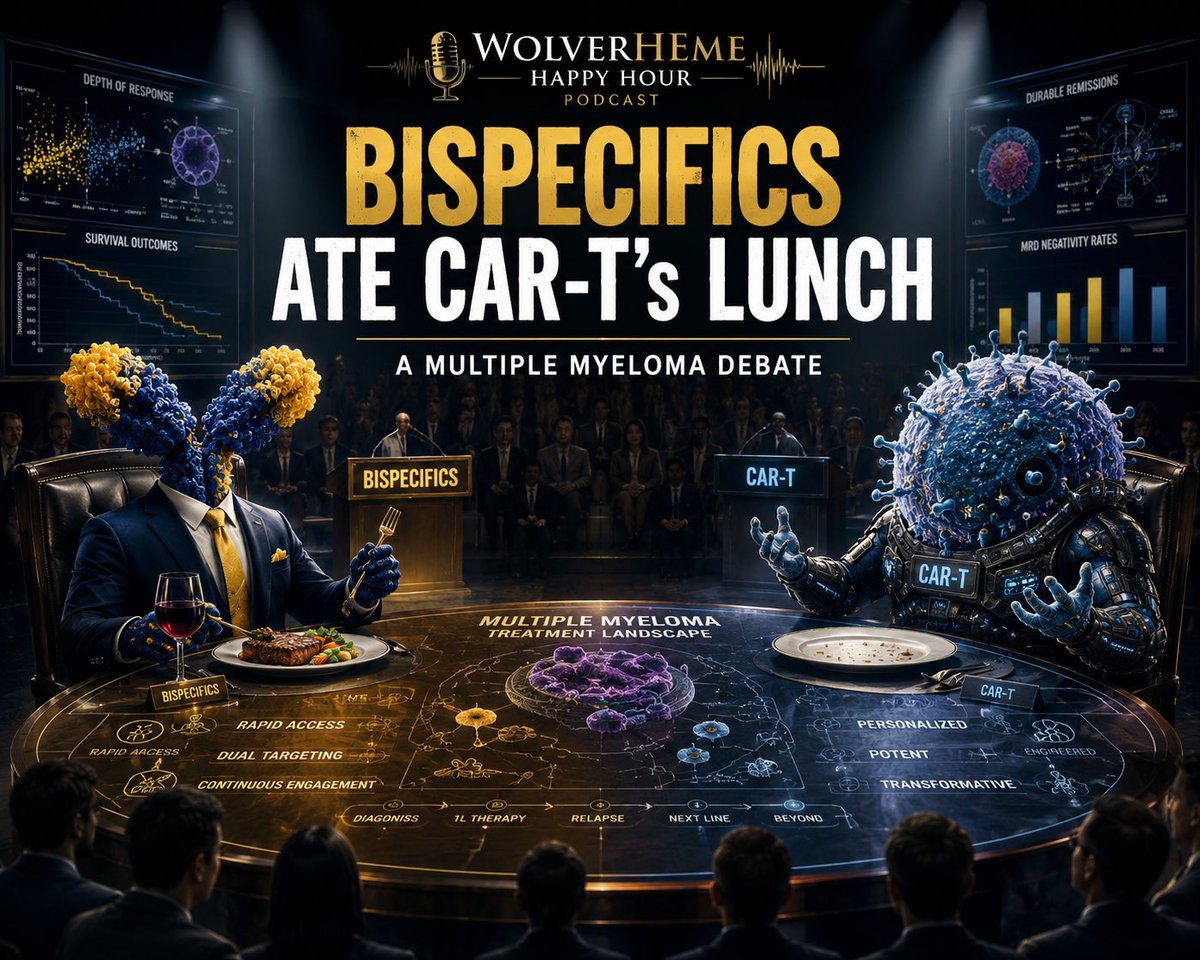
The hottest take in myeloma right now:
☠️ “Cilta-cell is dead.”
With bispecifics delivering impressive results has CAR-T lost its crown?
We brought in @ManniMD1 for a discussion that every myeloma clinician should hear.
🎧 Listen here: open.spotify.com/episode/6bu…
1
4
16
4,687
WolverHeme retweeted

Jun 10
As a die hard transplanter, I’ve always found BMT to be a rather conservative-empyric field of hematology and it was driving me crazy sometimes. Such a great podcast highlighting this!
But with so many recent novelties in BMT, I think there’s less room for cult-like practices😅
Jun 4

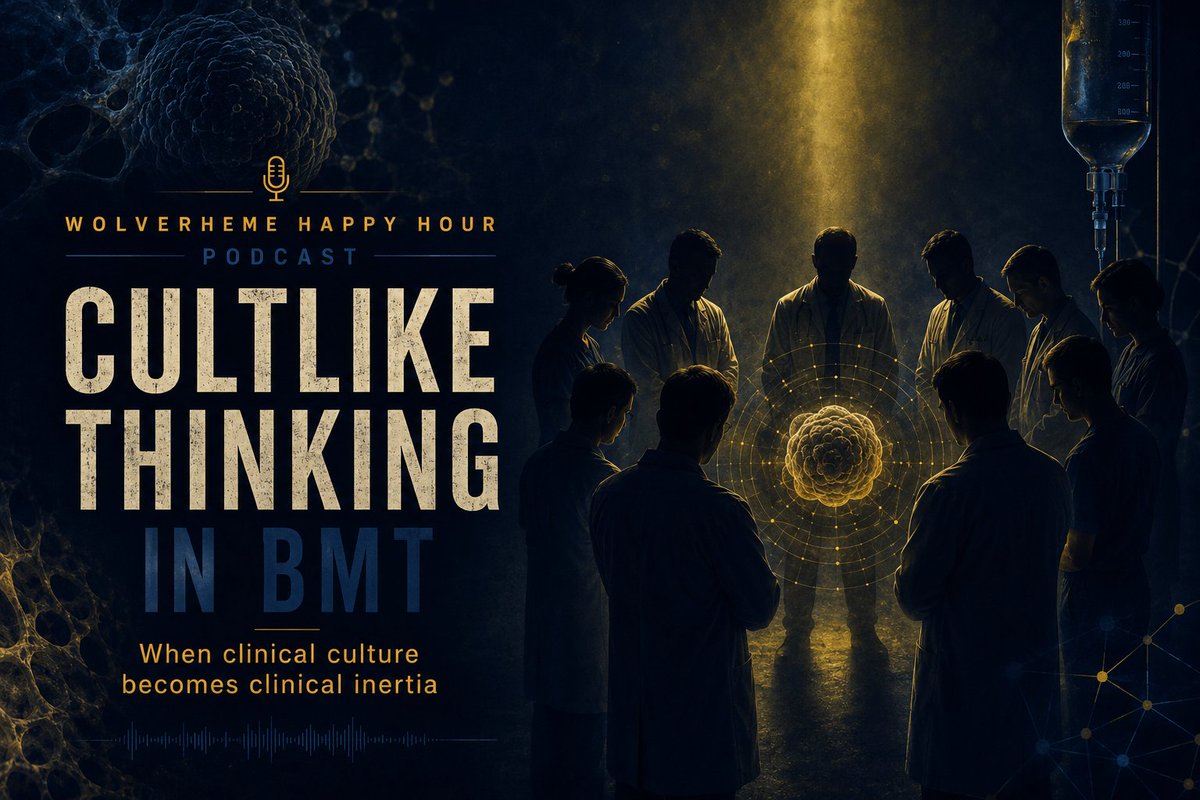
Check out our latest episode "Cult-Like Thinking in BMT" with @Papa_Heme @FeeneyTate @ajperissinotti @Berninini! Comment below 👇what "cult-like" practices you've seen in medicine! open.spotify.com/episode/2S2…
2
10
929
WolverHeme retweeted

Jun 4
Been a while since I did a podcast. Fun times as always with WolverHeme
Jun 4
Check out our latest episode "Cult-Like Thinking in BMT" with @Papa_Heme @FeeneyTate @ajperissinotti @Berninini! Comment below 👇what "cult-like" practices you've seen in medicine! open.spotify.com/episode/2S2…
1
4
12
4,716
Jun 4
Check out our latest episode "Cult-Like Thinking in BMT" with @Papa_Heme @FeeneyTate @ajperissinotti @Berninini! Comment below 👇what "cult-like" practices you've seen in medicine! open.spotify.com/episode/2S2…
3
2
12
6,434
WolverHeme retweeted

May 5
Young clinicians don’t need to make critical appraisal their primary academic focus, but it is a skill every clinician MUST learn as early as possible. No trial is perfect but understanding the implications of imperfections is 🔑.
And remember - critique trials, not people!
May 5

I know some have become experts at clinical appraisal and clinical trial critique. It’s important to have this dialogue and it helps physicians and patients understand the drawbacks of a given trial. But my advise to young investigators is to best not to make it your primary academic output.
Secondly, when critiquing it’s also worthwhile remembering that the investigators of trials may also fully aware of the issues but there are many barriers and often we have to choose between not doing a trial at all versus compromising. Perfect trials are not common; we can usually find some fault with almost all trials. So we must strive to avoid rudeness and condescension.
Third, try if possible to lead a clinical trial or at least get engaged with someone who leads trials and get a feel for the various stakeholders who have veto power during trial design, and more importantly the various competing priorities for what the trial seeks to accomplish, it will be easier to understand why a specific control arm was chosen, or a why a specific endpoint was chosen, even though you may think they are the wrong ones.
2
8
38
4,569
Apr 13
👀Special VIDEO episode is out, where we do some "Spring Cleaning" 🌞🧹of #ASH25 abstracts! Moderated by @Berninini @ajperissinotti @csoncol, with special guests @Eddie_Cliff @RobertaDemiche3 @ManniMD1 #Commonsenseoncology open.spotify.com/episode/7h5…
4
13
836
Mar 20
Want to learn about HLH? Check out our latest episode - "HLH: From Chaos to Clarity... and Back to Chaos" with @JKanerMD @maddyochs @ajperissinotti @Berninini and Cathy Johnson! open.spotify.com/episode/1N8…
1
5
15
814
Feb 11
👉 Must-listen. Full stop.
🎙️ join us with Jonathan Gluck — award-winning journalist (New York Magazine, Vogue, Medium) and author of An Exercise in Uncertainty — to talk about life with multiple myeloma and the uncertainties of modern oncology practice
🎧 open.spotify.com/episode/6fu…
1
4
10
813
17 Dec 2025
Listen to our latest episode with special guest @JKanerMD, "ASH Leukemia Review: the more we learn, the less we know!" @Berninini @ajperissinotti #twitteRx #leusm #ASH25 open.spotify.com/episode/48O…
1
5
18
3,448
10 Dec 2025
🚨It has come to our attention our podcast is censored in some countries!
Here’s a link to a free MP3 download!
drive.google.com/file/d/1lG7…
Cheers 🍻
(It’s not Canada, we are proudly 50% 🇨🇦)
1
2
9
765
9 Dec 2025
RIP 7 3 (1973-2025)? Why PARADIGM Doesn't Deliver the Eulogy. Listen to our take on the #PARADIGM #Plenary from #ASH25 @ajperissinotti @Berninini open.spotify.com/episode/5pO…
1
19
74
34,689
WolverHeme retweeted

26 Nov 2025
Only discussion to make sense of what is really important in Myeloma and what really matters to the patients.
25 Nov 2025
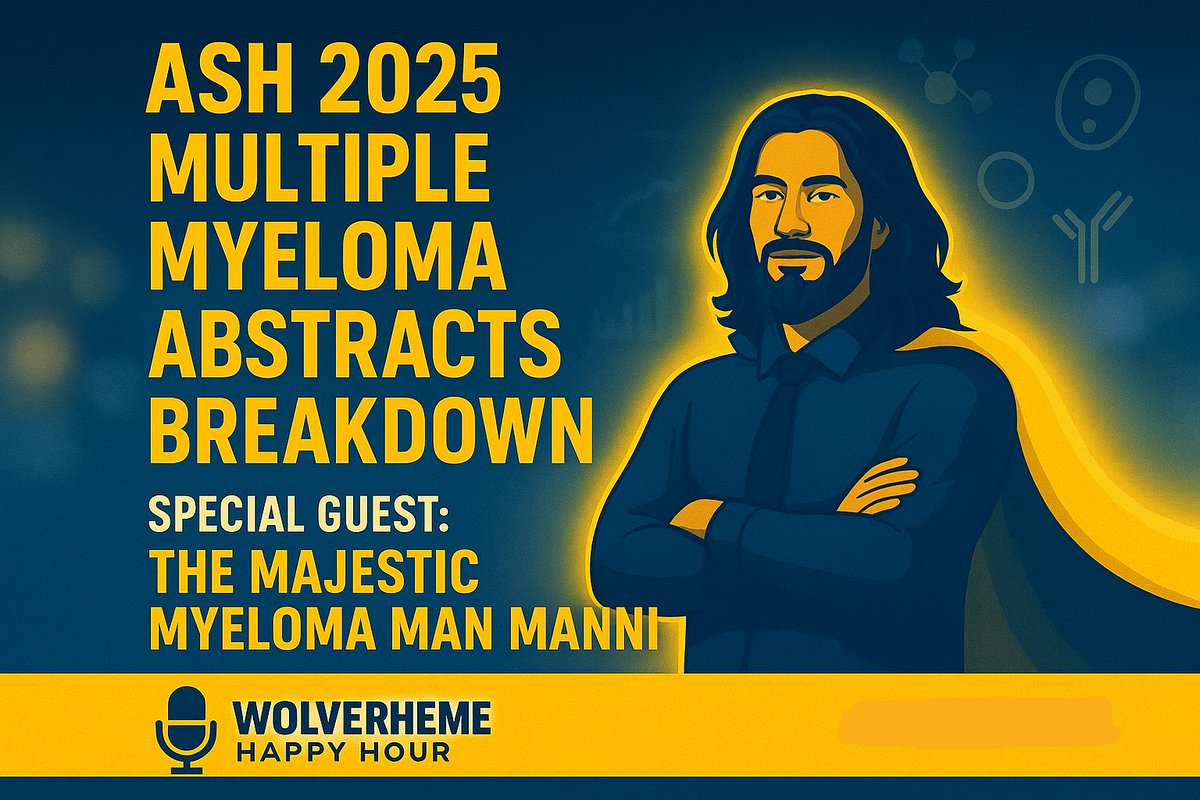
This Thanksgiving, we're thankful for the Myeloma Man Manni Mohyuddin, who came on the podcast to discuss the key #ASH25 abstracts in multiple myeloma, including the results of the #MajesTEC-3 trial! Cheers! 🍻🙏🦃 @Berninini @ajperissinotti @ManniMD1 open.spotify.com/episode/4uI…
1
5
12
2,316
WolverHeme retweeted
26 Nov 2025
If you want to hear actual critical analysis of myeloma trials instead of cheerleading listen to this. The best podcast in heme.
25 Nov 2025
This Thanksgiving, we're thankful for the Myeloma Man Manni Mohyuddin, who came on the podcast to discuss the key #ASH25 abstracts in multiple myeloma, including the results of the #MajesTEC-3 trial! Cheers! 🍻🙏🦃 @Berninini @ajperissinotti @ManniMD1 open.spotify.com/episode/4uI…
10
52
10,038
25 Nov 2025
This Thanksgiving, we're thankful for the Myeloma Man Manni Mohyuddin, who came on the podcast to discuss the key #ASH25 abstracts in multiple myeloma, including the results of the #MajesTEC-3 trial! Cheers! 🍻🙏🦃 @Berninini @ajperissinotti @ManniMD1 open.spotify.com/episode/4uI…
2
6
47
23,842
24 Oct 2025
Come have a 🍺 or ☕️ and join @ajperissinotti, @Berninini, and special guest Dr. Luke Fletcher @LFletcherMD15 in our discussion of innovations and best practices in community hematology! open.spotify.com/episode/5jl…
1
3
11
722
WolverHeme retweeted
18 Oct 2025
Great points made on the most common complication in intensively treated hem-onc pts! I wasn’t aware that up to the 1960s-1970s empirical antibiotics were not given for FN, and this may also partially explain why we have the landmark paper on success of 7 3 induction in 1973 🧫💊
9 Oct 2025
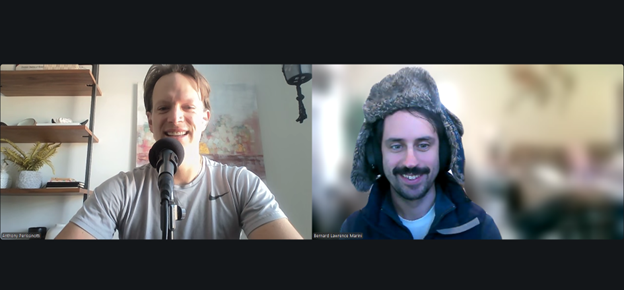
Check out our latest episode, "Chill for 5: The Febrile Neutropenia Survival Guide"! Plus find out why @ajperissinotti was laughing at @Berninini for wearing this ridiculous tuque ❄️#wolverheme #leusm open.spotify.com/episode/2py…
3
11
2,513
9 Oct 2025
Check out our latest episode, "Chill for 5: The Febrile Neutropenia Survival Guide"! Plus find out why @ajperissinotti was laughing at @Berninini for wearing this ridiculous tuque ❄️#wolverheme #leusm open.spotify.com/episode/2py…
2
5
12
3,904
WolverHeme retweeted
2 Oct 2025
Another great episode with very useful tips for antimicrobial ppx in acute leukemia patients 🔬🦠💊
10 Sep 2025
We're BACK after a summer break! Listen to our latest episode "Prophy and Pints"! Let us de-mystify antimicrobial prophylaxis and help you choose the best regimen for your patients! 🦠💊 @Berninini @ajperissinotti open.spotify.com/episode/20O…
2
4
905