Award winning Podcast hosted by @EspreeDevora celebrates Women in Tech around the world, “If She Can Do It, So Can I” | #womenintech Join us, womenintechvip.com
Joined March 2015
- Tweets 3,603
- Following 17,218
- Followers 28,146
- Likes 1,641
486 Photos and videos




Pinned Tweet

19 Dec 2016
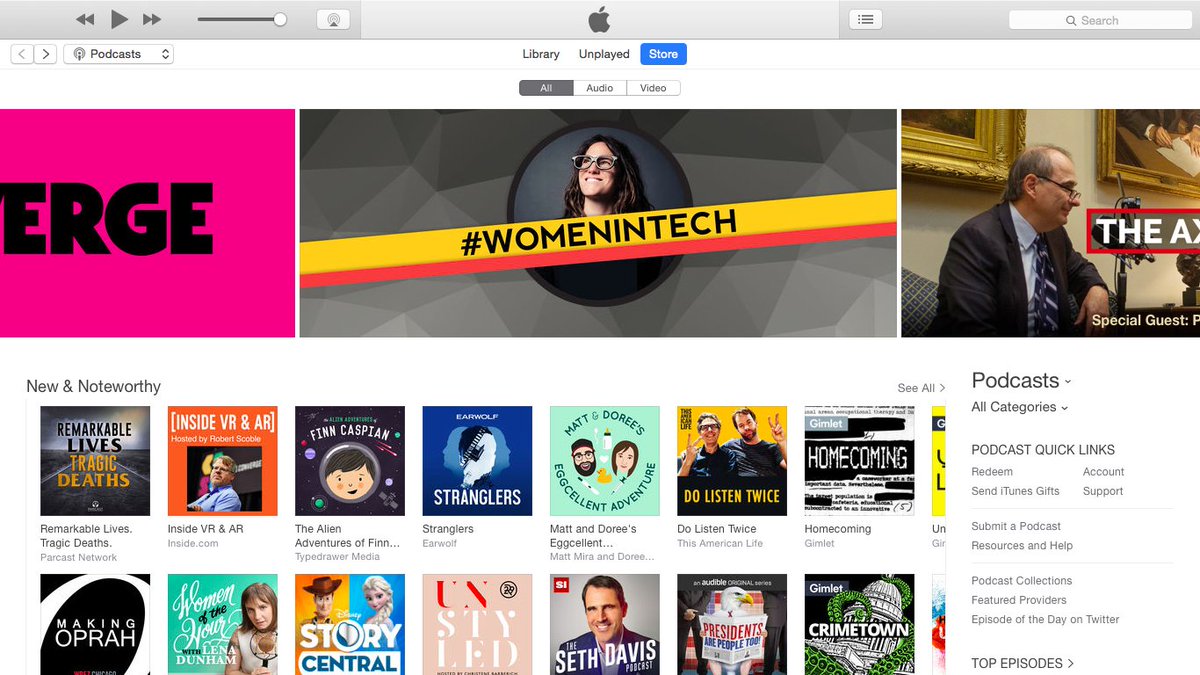
Wooooooooo hoooooooooo #womenintech Podcast is featured at the top of iTunes!!!!!!!! So exciting!!!! #tech #startups #podcasts
20
79
369
Women in Tech Podcast retweeted

19 Nov 2024
Yay! @TechCrunch just announced our $13M Seed led by @khoslaventures with @lightspeedvp, @Latitud, @lennysan, @20vcFund and friends. This is the first step toward our mission of making college education accessible and equitable. Come work with us: careers@outsmartcollege.com.
23
13
263
39,287
Women in Tech Podcast retweeted

19 Nov 2024
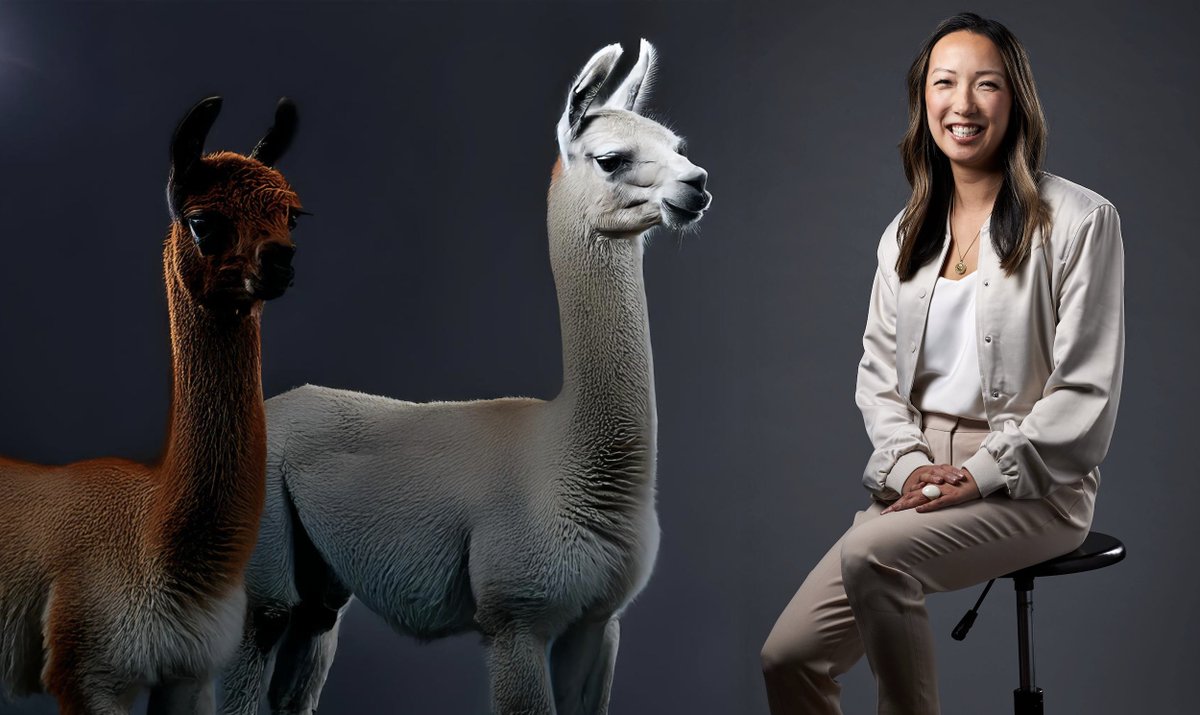
I’m thrilled to share today that I’ve joined @Meta to lead a new Business AI group. Our vision for this new product group is to make cutting-edge AI accessible to every business, empowering all to find success and own their future in the AI era.
200M businesses each month turn to @facebook @instagram @WhatsApp to connect with billions of consumers around the world. Meta’s Llama models have over 600M downloads to date, and Meta AI now has more than 500M monthly actives— not to mention the incredible ways we'll bring these AI advancements into the physical world through AR glasses and VR headsets. Meta's global reach and leadership in AI represent a generational opportunity for businesses, and I couldn’t be more excited and grateful to help take this from zero to one to scale.
Social media has been the cornerstone of my career. It was the foundation of my startup @HearsaySystems (now part of NASDAQ:@Yext), which enables sales reps to brand themselves as expert advisors on social networks, and my passion for helping business leaders in my 2009 book, The Facebook Era (Prentice Hall). Today truly feels like a full-circle moment. Now the fun begins!
133
66
1,469
247,588
2 Nov 2024
How you spend your time this weekend may just catapult EVERYTHING for you. It takes just over 30 minutes to complete the 2025 SXSW Startup Pitch application.
Approximately 60 startups selected as Finalists to pitch on stage.
Finalists receive;
• TWO complimentary SXSW badges ($1000 value)
• global marketing exposure
• access to investors
• product validation
• opportunity to “perfect your pitch”
• intensive one-on-one coaching by some of the top startup coaches
@SXSW Pitch Finalists are also invited to an exclusive "Meet the Finalists" networking event.
Deadline November 3rd, apply here: sxsw.com/pitch/
#SXSW #femalefounders #womenintech #startups
6
352
Women in Tech Podcast retweeted

25 Sep 2024
Happening Tuesday, October 15th I'm elated to be empowering female founded companies via @Techweek_ at the "Female Founder Showcase". It feels completely in flow with my life's purpose - to champion amazing builders.
🎟️ To join us RSVP here: lu.ma/femalefoundershowcase
🧡 COMPANIES: We'll have several female founded LA based companies showcasing like a mini trade show. It's VERY exciting.
🎙️ SPEAKER: And at the start of the event attend a live viewing of the @WomenInTechShow Podcast featuring tech superboss Kristin Patterson.
It's not easy to be a founder. Many days and nights are grueling. This event is about celebrating and supporting incredible founders.
🫶✨ I'm thankful for @LiveBashIsTaken , @HerWorkplace , Jolene Abbott, Jessica Goodall, @drinkbesa, Allie Dolido and Emily Gray supporting me in making this event possible.
#techweek #longla #latechweek
1
1
12
487
7 Sep 2024
2025 @SXSW Startup Pitch DEADLINE - apply by Sunday, September 8th to get the reduced "early bird" entry fee, $100 USD
Success stories out of SXSW Pitch :
• Siri (acquired by Apple for $200 million)
• TubeMogul (acquired for $540 million by Adobe)
• 3D housing printer ICON (named by TIME Magazine as one of their most innovative companies)
• Action Face (acquired for $3.5 billion by Infinite Reality)
ALL SXSW Pitch Finalists receive :
• TWO complimentary badges to SXSW ($1000 value)
• opportunity to “perfect your pitch”
• intensive one-on-one coaching
• global marketing exposure
• access to investors
• product validation
SXSW Pitch Finalists are also invited to a special "Meet the Finalists" IRL networking event
💰2024 SXSW Pitch Winners below
✍️ Apply Here: sxsw.com/pitch/
342
Women in Tech Podcast retweeted

5 Sep 2024
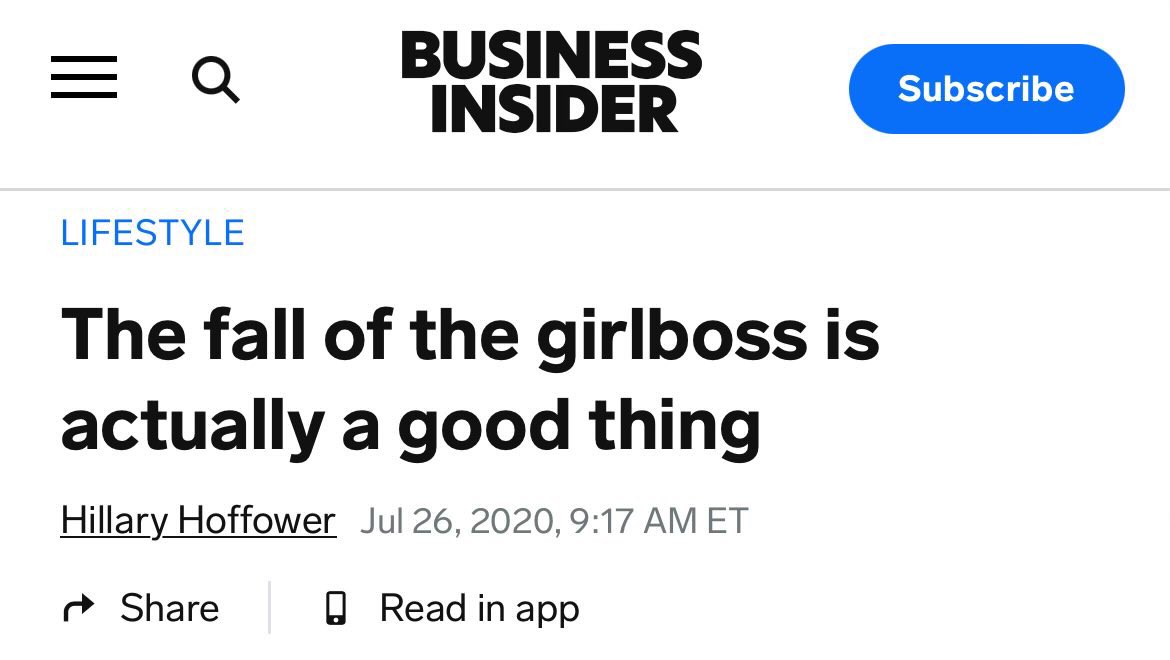
It happened to me first — headlines portraying me as a “toxic leader” when I had to make the same, often unpopular, decisions that my male peers did without critique.
For them, it’s called Founder Mode, and it’s celebrated (a proper noun! With its own merch! And trademarks being filed as I write this!).
For women, it’s called “toxic”.
After my “fall” in 2016, I watched an incredible cohort of female founders come up behind me.
I thought there was something fundamentally wrong with me and that they had it all figured out.
They were my friends, but it was hard to watch them win. I secretly muted their Instagram accounts. Why was I the only piece of shit female founder? What did they possess that I didn’t? Was it my upbringing? Maybe the media was right.
These women took big swings, raised huge rounds, and were held up as examples for countless other women who for the first time saw that their aspirations might actually be within reach.
And then, one by one, they were canceled.
Our responsibility wasn’t just to pave the way for women, but to do it perfectly — and when we weren’t examples of whatever warped mutation the word Girlboss (which is now immortalized in the Merriam-Webster dictionary) had come to symbolize, we were “toxic.”
No one expects men to build a utopian workplace that cures institutional biases, but we were expected to do just that.
This is all too complex for an X post, and I’m not making excuses for anyone.
Today, posts like this are out of character for me because, like them (as the non self-appointed consigliere for scorned Girlbosses, I know), we’ve all been told to keep gender out of the conversation.
The media’s glee surrounding the “fall of the Girlboss” has committed, at scale, more harm than any pretty, young, white (let’s call it what it is), often unrelateable female founder could ever do.
The phenomenon reminded a generation of women what we’d been told for eons: be nice and stay in your lane, or else.
4 Sep 2024

78
235
1,747
457,849
Women in Tech Podcast retweeted

4 Sep 2024
🎉 Big news! The official calendar of events for #SFTechWeek and #LATechWeek is now LIVE!
And thrilled to announce that this is officially our BIGGEST Tech Week, ever!
- 850 events 🤯
- San Francisco: Oct 7-13 🌉
- Los Angeles: Oct 14-20 🌴
Link to register below to see all events👇
50
127
286
144,091
Women in Tech Podcast retweeted

20 Jun 2024
Know anyone moving to (or just moved to) Los Angeles for tech or startups?
I'll be an "LA Tech Concierge" for just 5 people over the next few months. If anyone comes to mind that would like someone to handhold them integrating into LA tech/startup life LMK. 💜
It's an experiment I am running to see how helpful it is for the community.
If you have any questions about this shoot me a DM/comment. Happy to answer any Qs. 😊
4
4
37
8,601
Women in Tech Podcast retweeted
17 May 2024
Know an A person good with computers to be an executive assistant to an incredible female tech founder?
It’s not for me. It’s for someone in my network. Remote okay. And if they’re in Los Angeles even better.
6
6
17
2,502
Women in Tech Podcast retweeted
13 Mar 2024
🎙️My Women in Tech Podcast takes me to so many unexpected places... one of those tremendous opportunities has been getting to know Chaitra Vedullapalli of @womenincloud and producer of the documentary film #ICONS being featured at Soho House Austin today presented by @Microsoft.
🎥 Her film is about a group of women with big dreams who come together, diving into the tech world wanting to make it more accessible and welcoming for everyone. "ICONS" documentary tells their journey of creating something that could change the game, not just for themselves, but for women everywhere. It's all about overcoming challenges with creativity and determination. It's an inspiring ride, showing just how much impact you can make with a bit of innovation and a lot of heart.
🧡 I'm elated to be on a panel alongside the inspiring and impactful women who CARE. We all believe in lifting one another up and leading with compassion and kindness
Join us in person for the film screening and panel if you're in Austin and if you're in another city stay tuned into the film. #womenintech #womenincloud
🌟Panelists: Chaitra Vedullapalli, Debbie Uttecht, Monika Mital Gupta, Karen Fassio, Nancy Watt, Cristina Escobar, Tracy Bolot
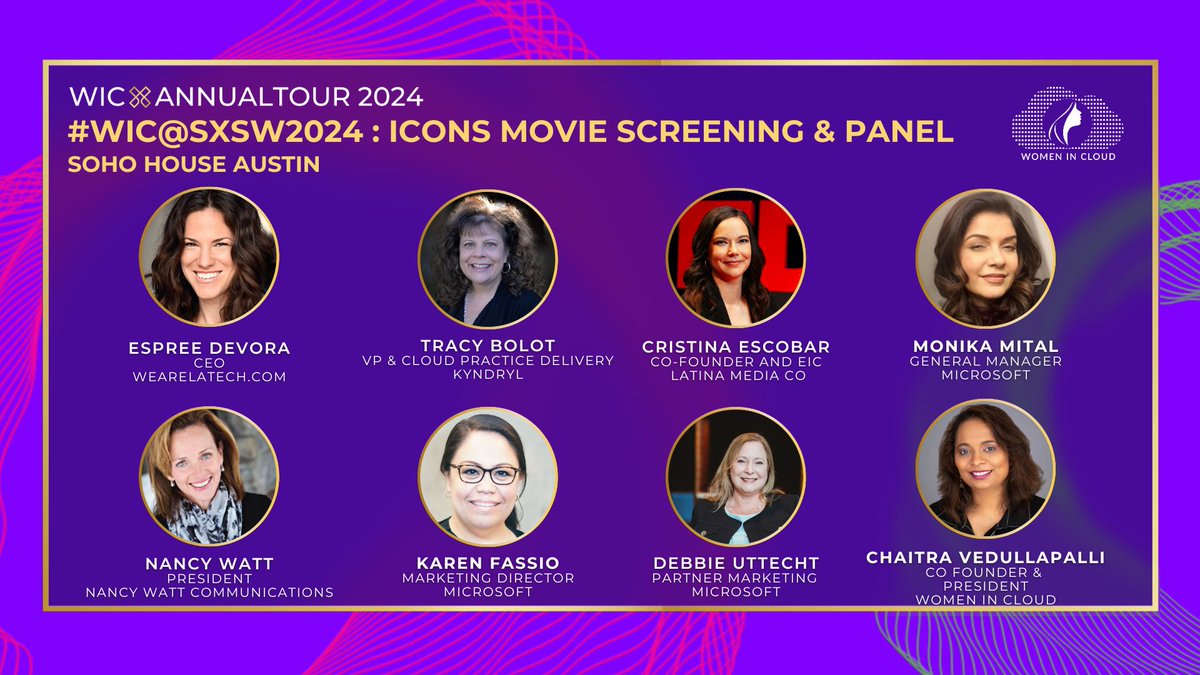
ALT panel with impactful women in tech and the screening of the documentary ICONS
2
2
16
1,054
Women in Tech Podcast retweeted
29 Feb 2024
It’s been 10 years since my NYT Bestselling book, #Girlboss, was published.
10 years later, @jessicabennett has given me one of those rare moments of feeling “seen.”
Thank you @ELLEmagazine @kaylawebley
elle.com/culture/a46716954/s…
8
21
122
12,306

Women in Tech Podcast retweeted

29 Feb 2024
3
15
2,575
Women in Tech Podcast retweeted

25 May 2021
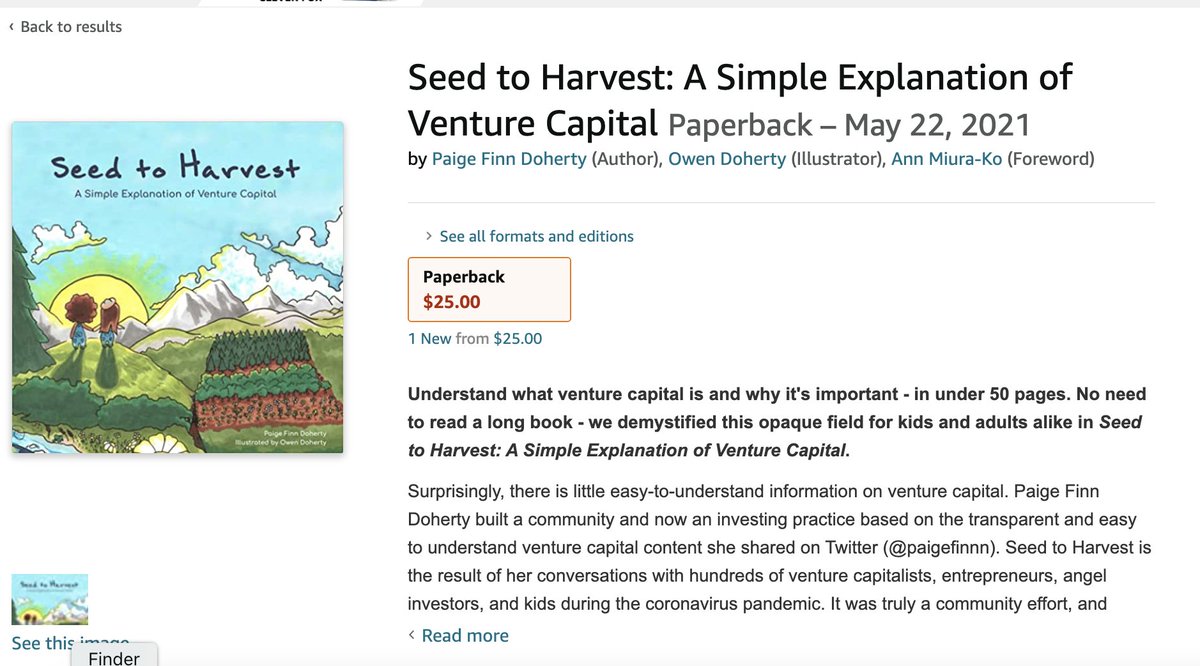
i wrote a book. we wrote a book.
an illustrated book for kids and adults on venture capital, Seed to Harvest started as a seed. And with the help of this wonderful community and my illustrator brother Owen - it's now ready for harvest...[a thread]
amazon.com/dp/0578906457
81
94
809
Women in Tech Podcast retweeted

16 Feb 2024
i really wish there were more female podcasters in tech
64
8
170
154,913
Women in Tech Podcast retweeted
17 Jan 2024
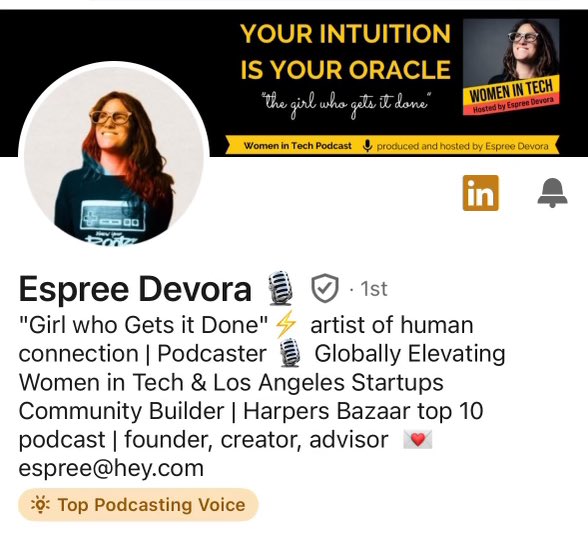
So dope!!!!! “Top Podcasting Voice” on @LinkedIn 🎙️💙😱
It is just a thrill seeing that badge knowing how hard and consistently I’ve worked. Launched my first podcast in 2013, 10ish years later here we are. It’s gonna be a good year!!!!
32
7
130
6,214
Women in Tech Podcast retweeted

14 Jan 2024
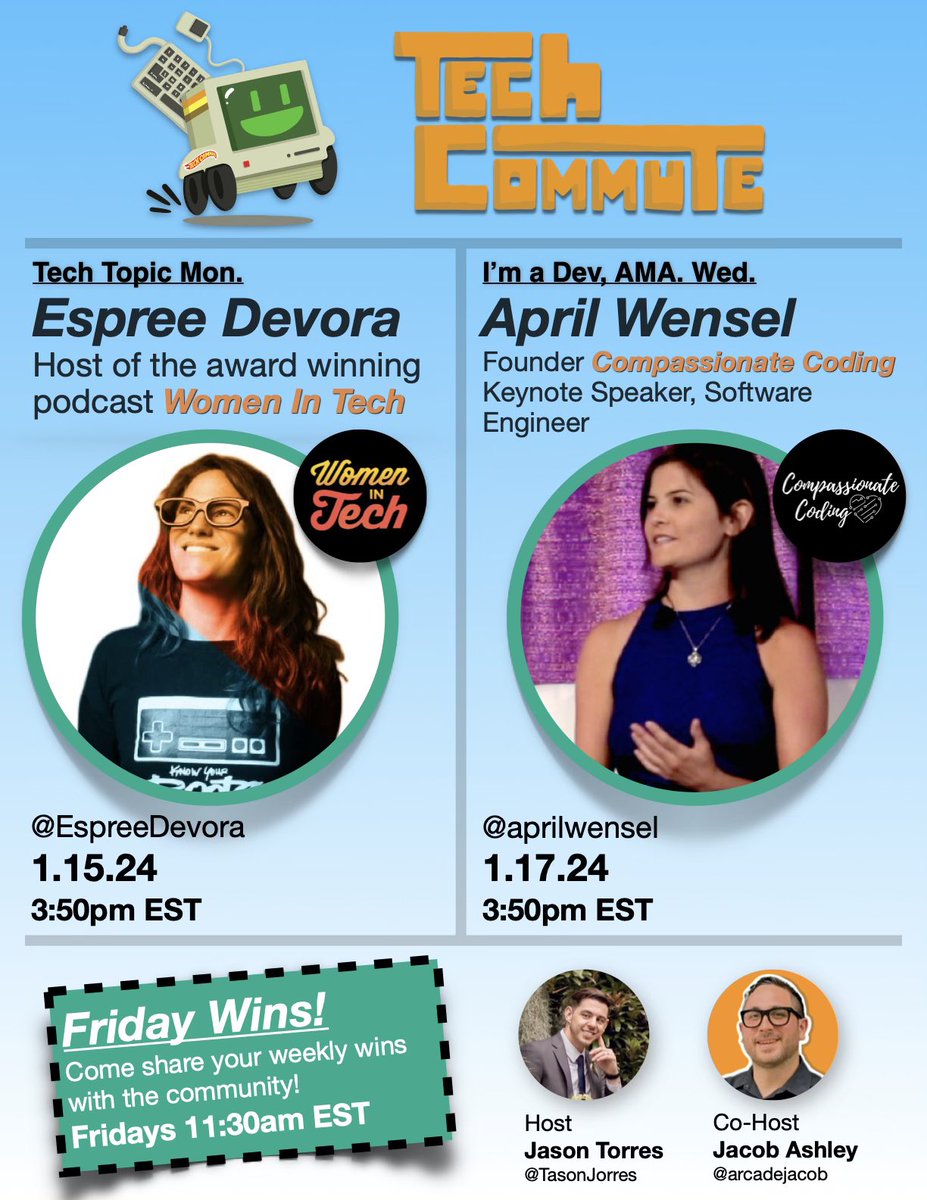
Our final full week before #techcommute finale week, and we have some amazing guests for you!
first up the host of the award winning #podcast @WomenInTechShow the amazing @EspreeDevora comes through to talk all things podcasting.
Set the reminder for Monday 👇twitter.com/i/spaces/1vOGwjD…
And on Wednesday for I’m a dev AMA, keynote speaker, gamer, and founder of @compassioncode we have the awesome @aprilwensel
And for Wednesday 👇
twitter.com/i/spaces/1vAxRvm…
And finally Friday we have wins and struggles. Come get your flowers and show support to your community!👇
twitter.com/i/spaces/1nAKEaw…
Share and set those reminders!!
4
4
17
6,324
Women in Tech Podcast retweeted

10 Jan 2024
Looking for a spicy female VC to join an X Spaces in two weeks judging 60-second founder pitches 🌶️
We will roast, toast, and promote the winner to our community of founders and investors 💵
Who’s interested?
42
12
86
17,902
Women in Tech Podcast retweeted

10 Jan 2024
My first podcast appearance is out!!
I loved sharing my story from Wall St to Founder to Product, happiness vs fulfillment, power of kindness, & being a lifelong learner! Thank you @WeAreLATech & @EspreeDevora for the feature and conversation 🙌🏽
open.spotify.com/episode/3ii…
2
1
7
383