
Founded one of the first synthetic grass & golf systems companies in the US in 1998. I consult on large golf systems projects world-wide. Avid crypto investor.
Joined January 2022
- Tweets 14,035
- Following 471
- Followers 6,677
- Likes 22,033
3,741 Photos and videos
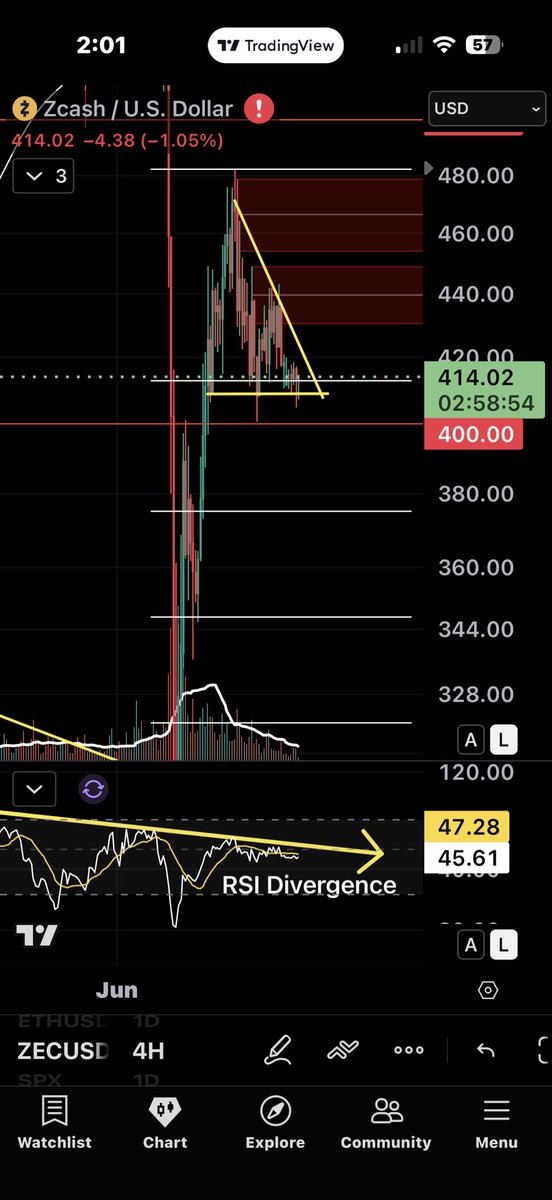



The fact that the 4H RSI continues to show bearish divergence with #ZEC is what concerns me.
14
1
56
5,792
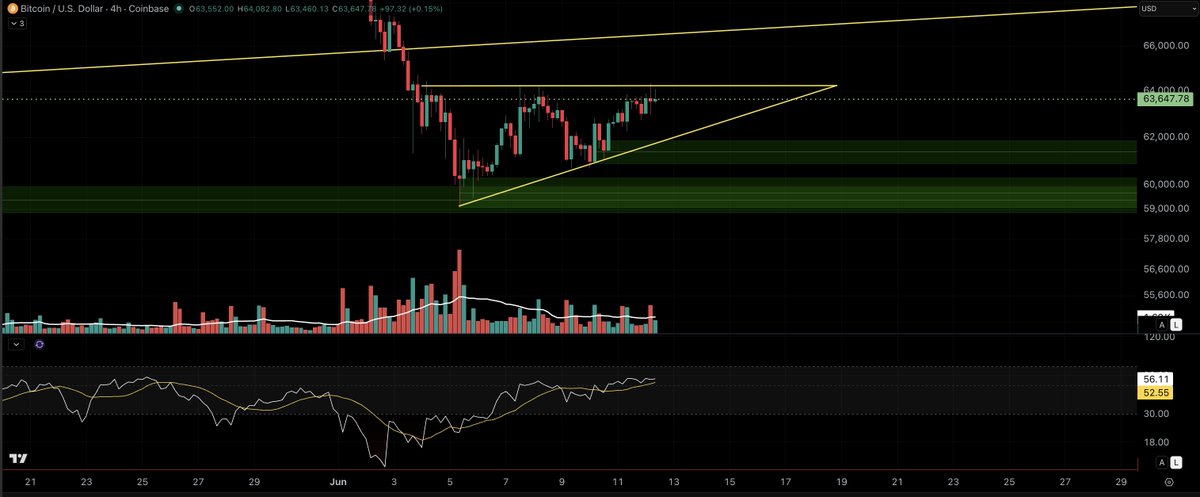
#BTC is in a ascending triangle pattern on the 4H. These can be either continuation patterns or reversal patterns when they show up after a down trend. Both RSI and volume are indicating this as well as they are midline. Where the pattern shows itself is important to understand.
1
31
1,947
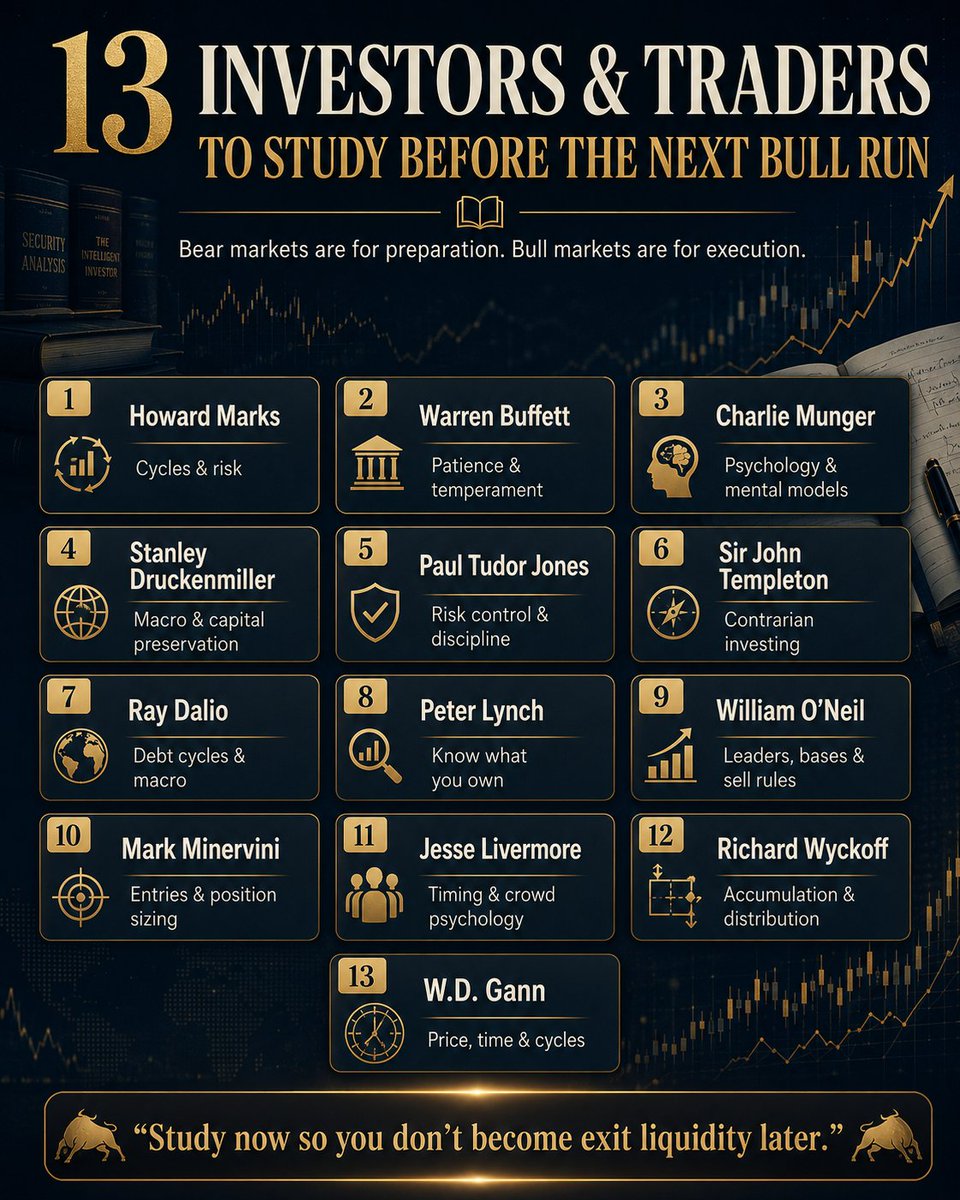
13 Investors & Traders to Study Before the Next Bull Run
Most people spend bear markets complaining.
The smart ones spend them preparing.
If you want to be ready for the next bull run, don’t just study charts.
Study the people who understood patience, risk, emotion, cycles, market structure, crowd behavior, and when to take profits.
Here are 13 investors and traders worth learning from:
1. Howard Marks
Study market cycles, risk, and second-level thinking.
oaktreecapital.com/insights
2. Warren Buffett
Study patience, temperament, and long-term conviction.
berkshirehathaway.com/letter…
3. Charlie Munger
Study psychology, mental models, and how investors fool themselves.
fs.blog/great-talks/psycholo…
4. Stanley Druckenmiller
Study capital preservation, macro timing, flexibility, and pressing your best ideas when the odds are right.
morganstanley.com/insights/v…
5. Paul Tudor Jones
Study risk control, cutting losses, patience, and protecting capital before chasing returns.
podcasts.apple.com/ky/podcas…
6. Sir John Templeton
Study contrarian investing and why the best opportunities often appear when pessimism is extreme.
franklintempleton.com.hk/en-…
7. Ray Dalio
Study debt cycles, macro cycles, and how markets repeat because human behavior repeats.
principles.com/big-debt-cris…
8. Peter Lynch
Study knowing what you own, doing the homework, and avoiding blind hype.
fidelity.com/bin-public/060_…
9. William O’Neil
Study bull-market leaders, bases, breakouts, relative strength, and disciplined sell rules.
investors.com/how-to-invest/…
10. Mark Minervini
Study precise entries, volatility contraction, position sizing, and risk management.
minervini.com/
11. Jesse Livermore
Study speculation, timing, patience, crowd psychology, and the danger of letting emotion take over.
gutenberg.org/ebooks/60979
12. Richard Wyckoff
Study accumulation, distribution, supply and demand, market phases, and how smart money operates before the crowd notices.
chartschool.stockcharts.com/…
13. W.D. Gann
Study price, time, cycles, discipline, and market structure.
archive.org/details/45yearsi…
The next bull run will create massive opportunity.
But opportunity alone is not enough.
If you don’t understand risk, emotion, position sizing, patience, and when to take profits, the market can give you a huge move and still take it all back.
Bear markets are for preparation.
Bull markets are for execution.
Study now, so you don’t become exit liquidity later.
#Investing #Crypto #Bitcoin #Altcoins #MarketPsychology #InvestorMindset #BullRun #RiskManagement #TradingPsychology #WealthBuilding #RetailInvestors #ContrarianInvesting #Wyckoff #Gann #Livermore
2
9
34
1,356
Is Crypto Waiting on the SpaceX IPO?
I don’t think crypto makes a major move until the SpaceX IPO clears.
Not because SpaceX has anything to do with Bitcoin, Ethereum, or altcoins directly.
But because markets are driven by liquidity, attention, and emotion.
Right now, SpaceX is the shiny object.
A massive IPO.
Huge retail interest.
Wall Street hype.
Everyone is watching to see what happens when it opens.
When that much speculative attention is focused on one event, it can temporarily pull oxygen away from other risk assets, including crypto.
That doesn’t mean crypto has to crash.
It also doesn’t mean it has to pump.
It may simply chop around until the market sees whether SpaceX becomes a blow-off top, a sell-the-news event, or the next place retail becomes exit liquidity.
The interesting part is what happens after.
If everyone is chasing SpaceX while crypto sentiment is weak, that may be exactly when crypto quietly finishes bottoming.
Markets love to move when the crowd is looking somewhere else.
Not financial advice. Just watching liquidity, sentiment, and where retail attention is going.
#Crypto #Bitcoin #Altcoins #SpaceX #IPO #SPCX #MarketPsychology #Liquidity #RetailInvestors #RiskAssets #InvestorMindset #FearAndGreed #CryptoMarket #TradingPsychology
7
1
39
2,469
Eric Van Tassel (Not a Financial Advisor!) retweeted

Jun 11
Cannot say it better than Dr J.
Jun 11

Trump calls off planned strikes on Iran and says a deal is near.
Broad markets surge as oil tumbles, the peace dividend is on its way. Lower energy open the door to lower rates. Street still not positioned.
AI , Bitcoin, don’t be short. Buckle up.
3
42
3,461
Top 10 Ways to Give Yourself the Best Chance to Make Money Investing
There is no guaranteed way to make money in any market.
But there are absolutely ways to stop making the same mistakes that cause most retail investors to lose.
Here are 10 of the biggest:
1. Stop chasing green candles
If everyone is already excited, you are probably late.
2. Buy when the risk/reward makes sense, not when it feels safe
The best opportunities usually feel uncomfortable.
3. Have a plan before you buy
Know why you are entering, what would prove you wrong, and where you may take profits.
4. Manage position size
Even a great investment can wreck you if you go too heavy at the wrong time.
5. Don’t let emotion make decisions
Fear sells bottoms. Greed buys tops.
6. Think in cycles
Markets move from fear to greed and back again. Learn where you are in the cycle.
7. Take profits when everyone gets euphoric
If screenshots, hype, and “this time is different” are everywhere, risk is rising.
8. Don’t marry your bags
Conviction is good. Blind loyalty is dangerous.
9. Be patient
The market rewards patience more than constant action.
10. Protect your capital
You can’t take advantage of the next opportunity if you blow yourself up on the current one.
The goal isn’t to be perfect. The goal is to survive long enough, stay disciplined enough, and think clearly enough to let the market work in your favor.
Most investors lose because they react.
The ones who win have a plan.
#Investing #Crypto #MarketPsychology #InvestorMindset #WealthBuilding #RetailInvestors #TradingPsychology #RiskManagement #BuyLowSellHigh #FinancialFreedom
3
25
1,123
Bottoms Never Feel Like Opportunities
Everyone says they want to buy low.
But when prices are actually low, it never feels easy.
The news is terrible.
Sentiment is awful.
People are scared.
Everyone is convinced it can still go lower.
That’s exactly why bottoms are so hard to buy.
At the top, risk feels invisible because everyone is making money.
At the bottom, opportunity feels impossible because everyone has already lost confidence.
Most retail investors don’t miss bottoms because they can’t see the chart.
They miss bottoms because they can’t manage the emotion that comes with buying when everything feels hopeless.
If it felt safe, it probably wouldn’t be the bottom.
#Investing #Crypto #MarketPsychology #BuyTheFear #InvestorMindset #ContrarianInvesting #FearAndGreed #RetailInvestors #WealthBuilding
3
2
26
1,067
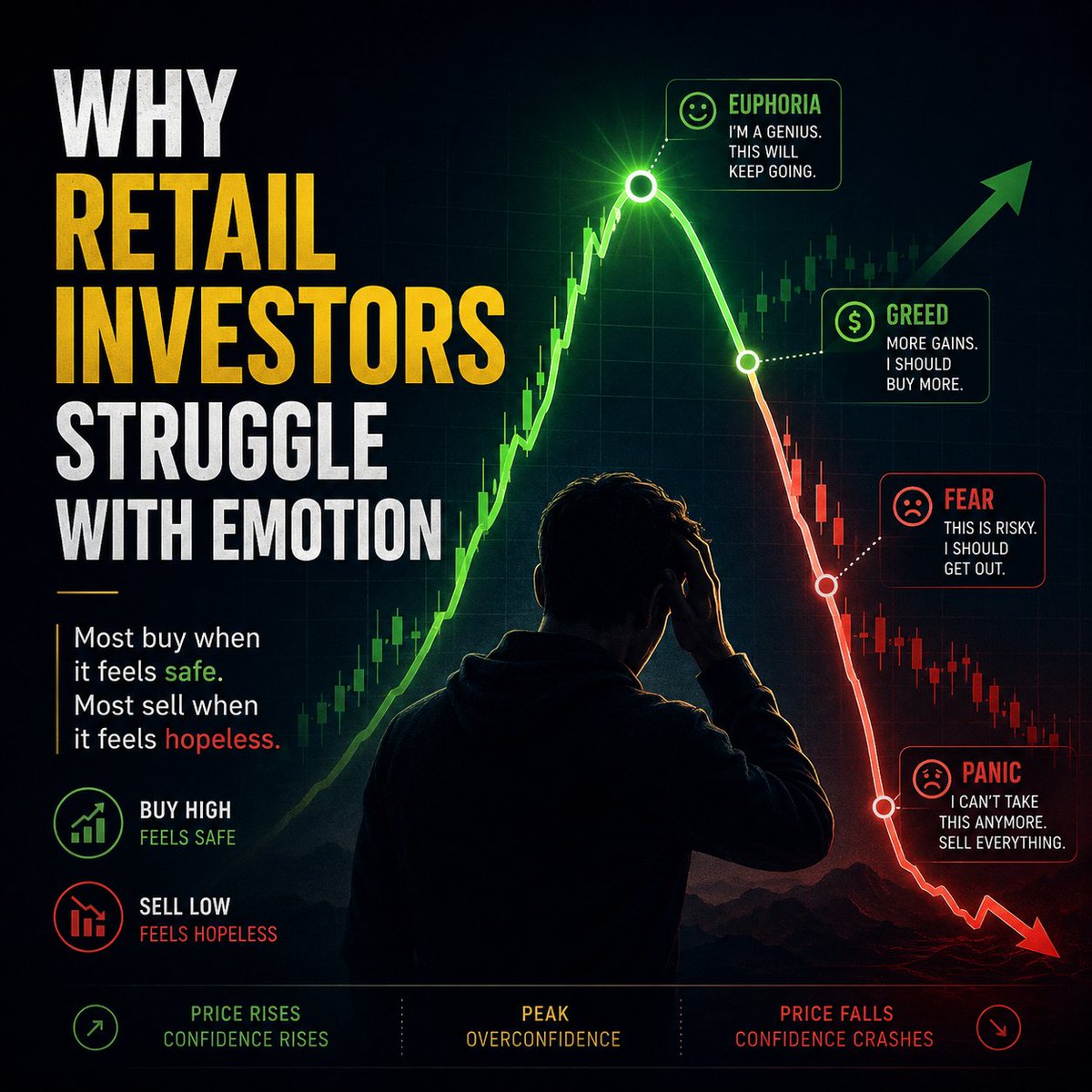
Why Most Retail Investors Struggle With Their Emotions
Most retail investors don’t lose because they’re stupid.
They lose because markets are designed to attack emotion.
When prices are running, greed takes over. Everyone wants in. Every green candle feels like confirmation that “this is it.” That’s when people chase.
When prices are falling, fear takes over. Every red candle feels like the end. That’s when people sell.
The problem is that markets usually reward the exact opposite behavior.
The best opportunities often show up when everyone is scared, exhausted, and convinced the asset is dead. The most dangerous moments often show up when everyone is euphoric, overconfident, and convinced prices can only go higher.
Retail investors struggle because they react to price instead of preparing for price.
They buy when it feels safe.
They sell when it feels hopeless.
And then they watch the market reverse without them.
The goal isn’t to eliminate emotion. That’s impossible. The goal is to recognize it, respect it, and build a plan before the emotion hits.
Because in investing, the hardest battle usually isn’t against the market.
It’s against yourself.
#Investing #Crypto #Bitcoin #Altcoins #MarketPsychology #InvestorMindset #RetailInvestors #TradingPsychology #FearAndGreed #WealthBuilding
1
21
862
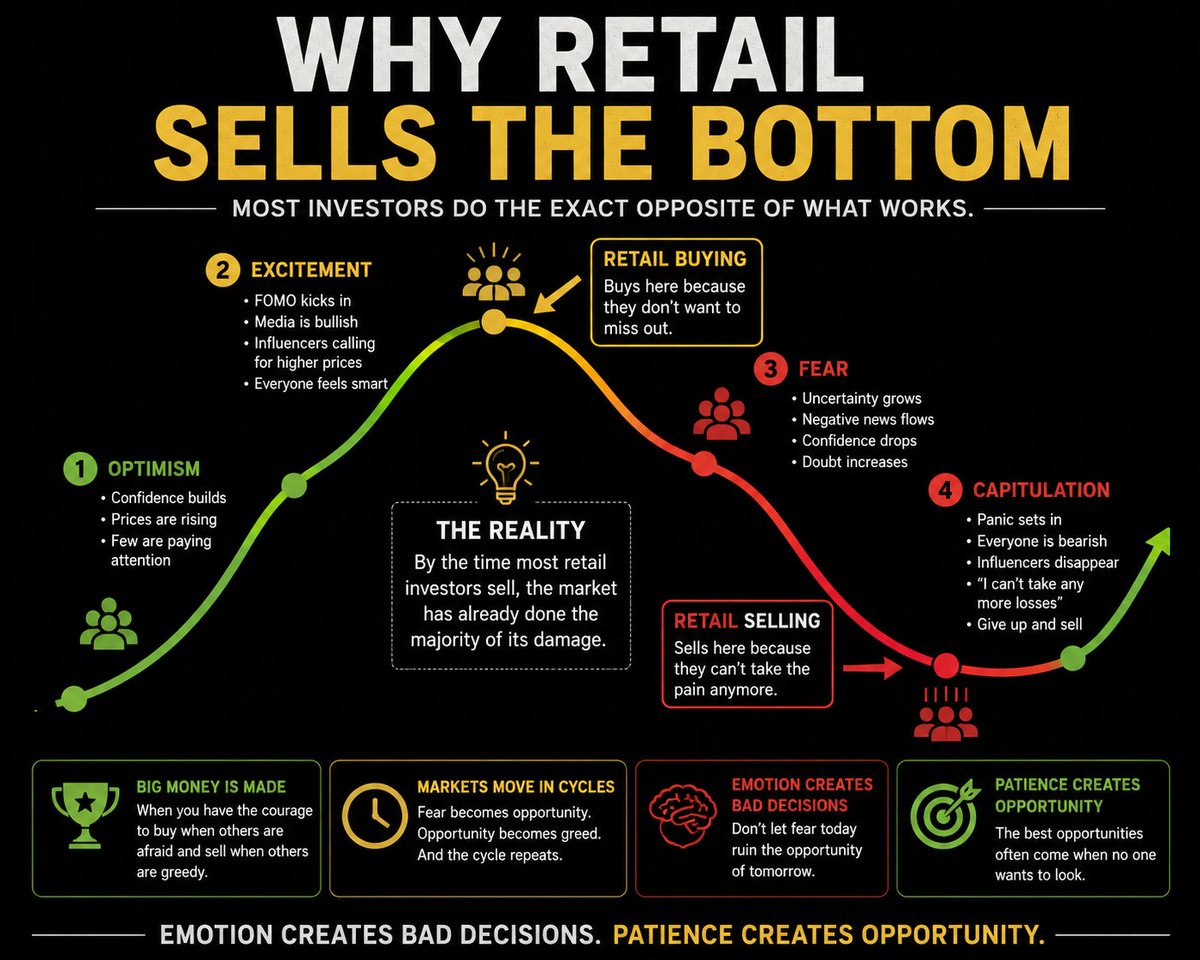
Why Retail Investors Sell the Bottom
One of the biggest misconceptions in investing is that people buy low and sell high.
In reality, most investors do the exact opposite.
They buy after price has already gone up significantly because they're afraid of missing out.
Then they sell after price has already fallen significantly because they're afraid of losing everything.
Think about what happens during a major correction:
- At the top:
Everyone is bullish
News is positive
Influencers are calling for higher prices
Investors feel smart
- Near the bottom:
Fear takes over
Negative narratives dominate
Influencers disappear
Investors begin questioning their decisions
Ironically, this is often where the best opportunities begin to emerge.
The reason retail sells bottoms is simple:
They aren't reacting to price.
They're reacting to emotion.
By the time most investors finally hit the sell button, the market has often already done the majority of its damage.
This is why patience is one of the most valuable investing skills you can develop.
The biggest money is rarely made chasing green candles.
It's made by having the discipline to buy quality assets when everyone else is convinced they're dead.
Markets move in cycles.
Fear eventually becomes opportunity.
Opportunity eventually becomes greed.
Then the cycle repeats.
The investors who understand this cycle are usually the ones buying when others are selling and selling when others are buying.
Not financial advice. Just an observation from years of watching the same cycle repeat itself.
#Investing #Crypto #Bitcoin #Altcoins #MarketCycles #WealthBuilding #FinancialEducation #TradingPsychology #Investing101 #DYOR
2
1
33
1,828
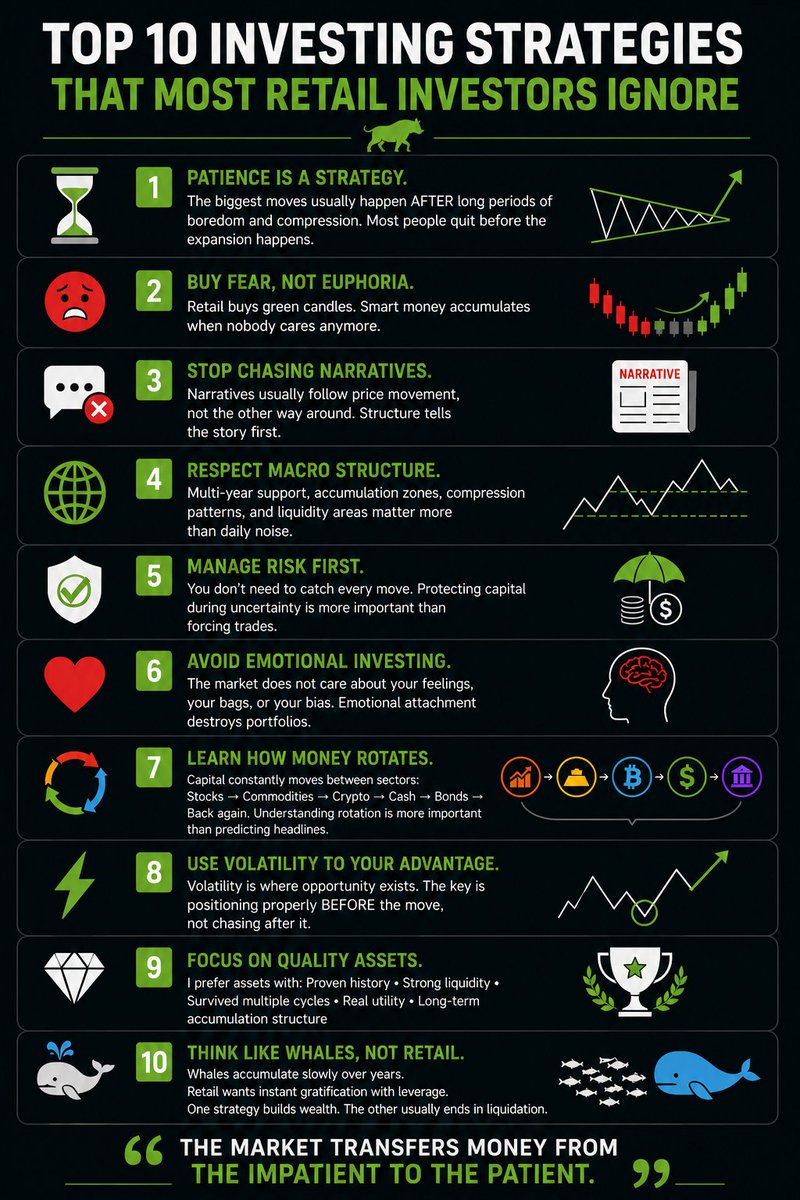
Top 10 Investing Strategies That Most Retail Investors Ignore
1.) Patience is a strategy.
The biggest moves usually happen AFTER long periods of boredom and compression. Most people quit before the expansion happens.
2.) Buy fear, not euphoria.
Retail buys green candles. Smart money accumulates when nobody cares anymore.
3.) Stop chasing narratives.
Narratives usually follow price movement, not the other way around. Structure tells the story first.
4.)Respect macro structure.
Multi-year support, accumulation zones, compression patterns, and liquidity areas matter more than daily noise.
5.) Manage risk first.
You don’t need to catch every move. Protecting capital during uncertainty is more important than forcing trades.
6.) Avoid emotional investing.
The market does not care about your feelings, your bags, or your bias. Emotional attachment destroys portfolios.
7.) Learn how money rotates.
Capital constantly moves between sectors:
Stocks to commodities to crypto to cash to bonds and back again. Understanding rotation is more important than predicting headlines.
8.) Use volatility to your advantage.
Volatility is where opportunity exists. The key is positioning properly BEFORE the move, not chasing after it.
9.) Focus on quality assets.
I prefer assets with:
• Proven history
• Strong liquidity
• Survived multiple cycles
• Real utility
• Long-term accumulation structure
10.) Think like whales, not retail.
Whales accumulate slowly over years.
Retail wants instant gratification with leverage.
One strategy builds wealth.
The other usually ends in liquidation.
The market transfers money from the impatient to the patient.
That has never changed.
#Investing #FinancialEducation #WealthBuilding #RiskManagement #MarketCycles #SmartMoney #TechnicalAnalysis #MarketStructure #Accumulation #TradingPsychology #Crypto #Bitcoin #Altcoins #LongTermInvesting #PatiencePays
3
2
28
1,469
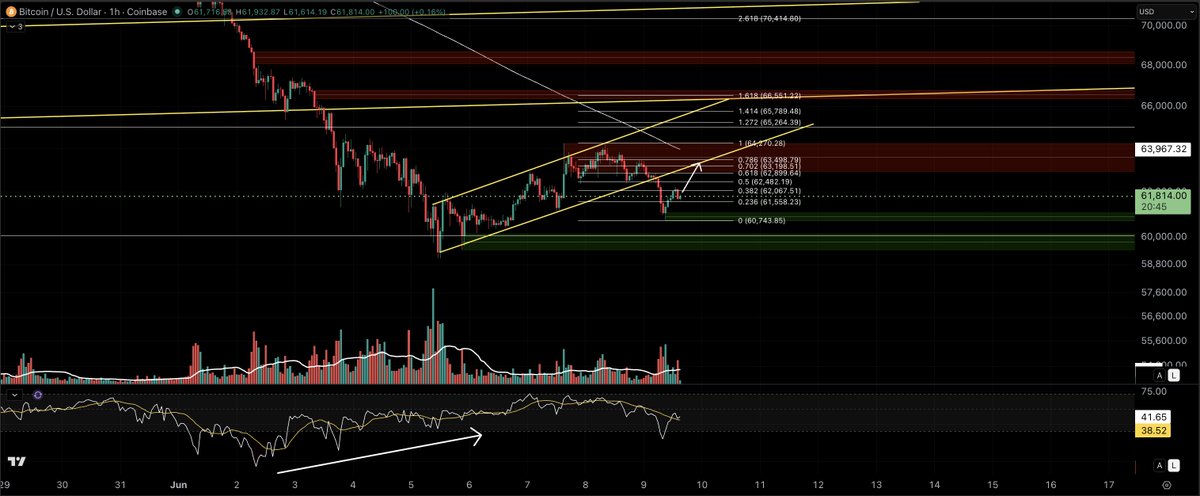
#BTC fell through the rising parallel channel it has been trading in. I'm looking to see if it pushes back up into the lower rail approximately where the 200 SMA will intersect it on the 1H chart.
That also aligns with a .702/.786 fib level. How it reacts there will determine direction, if it does push up to that point.
1
28
1,984
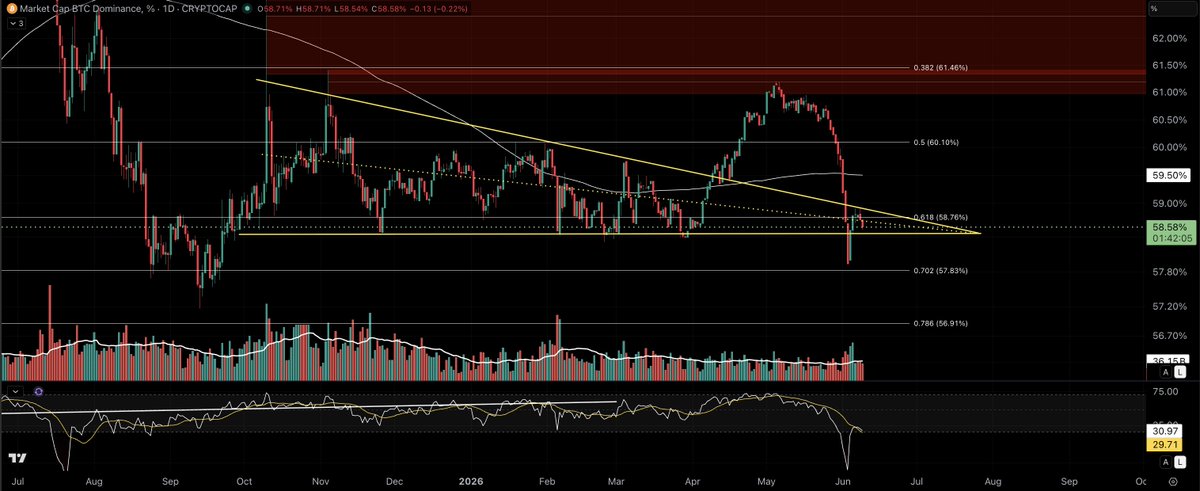
#BTC dominance looked like it was about to collapse but pulled a reversal back into structure, tapped the upper rail, and is falling again. Will it hold inside structure or fall through again? An altseason requires this metric to fall substantially!
2
1
32
2,322
This is NOT me. It’s a fake account so please block.
4
19
2,706
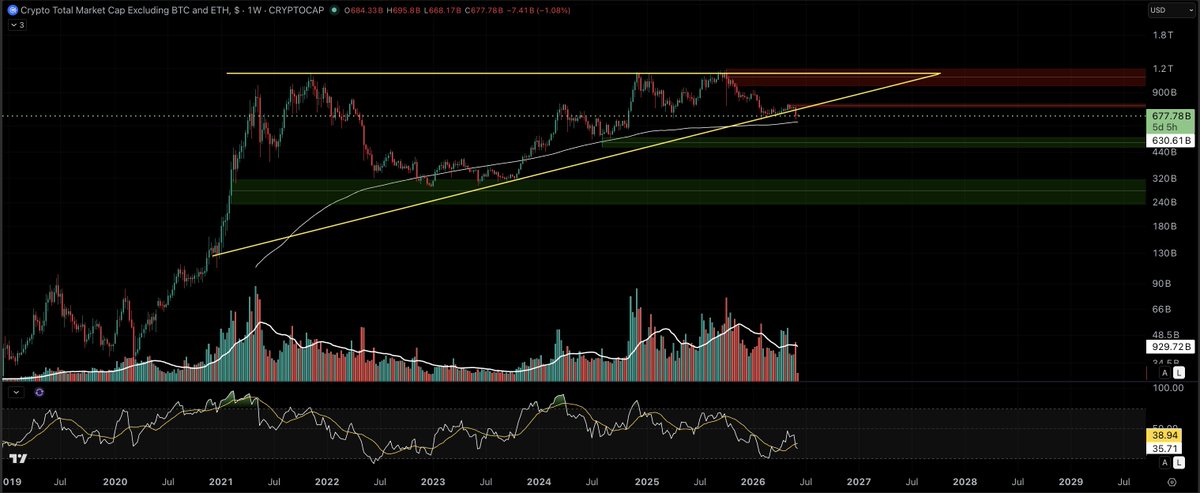
In light of what I just posted about multi-year, macro chart structures, this is #TOTAL3. This structure started forming at the end of 2020.
4
22
2,011
Picking a Winner!
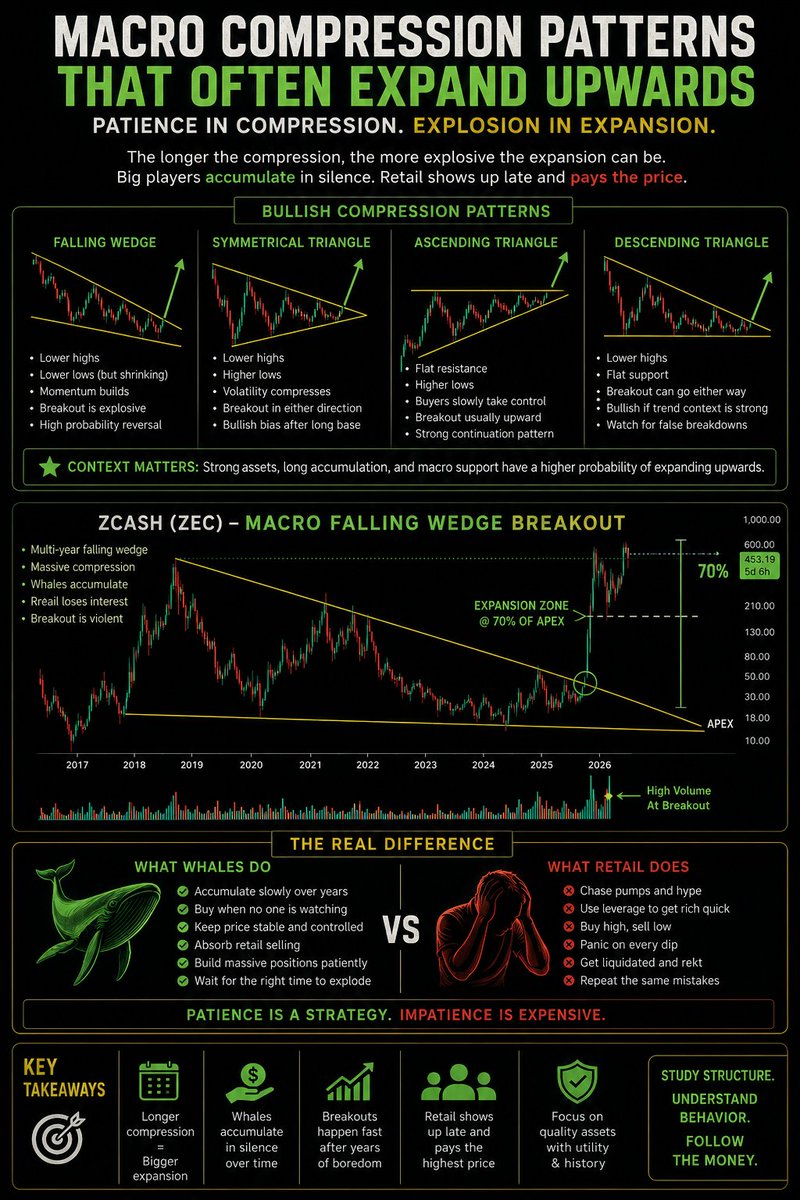
If you've followed me for a long time, you've heard me talk about this often. I thought I'd put it in a detailed synopsis so you can understand what I look for and why.
Most investors really don’t understand what charts are telling them.
They look at price going sideways or down for years and assume an asset is dead.
I look at the same chart and ask a different question:
Why is price being compressed for years instead of collapsing?
Compression structures matter.
Symmetrical triangles, ascending triangles, descending triangles, falling wedges, and long sideways ranges are all forms of compression. They show price being squeezed tighter and tighter over time.
The longer the compression, the more important the eventual expansion usually becomes.
This is especially true when you’re looking at assets that have been around for years, survived multiple market cycles, still have liquidity, still have utility, and continue being accumulated while retail has lost interest.
That’s where the opportunity often is.
Whales don’t usually accumulate the way retail does.
Retail wants to get rich quick. They throw large amounts of money into green candles, often with leverage, because they want the move to happen immediately.
That’s why retail gets wrecked so often.
They chase strength after the move is obvious, then panic sell when price corrects.
Big players think differently.
They accumulate slowly.
They buy weakness.
They absorb supply.
They keep price contained for long periods because they don’t want to push the price up before they have built a position.
If a whale wants millions of dollars of exposure, they can’t just market buy all at once, which drives price up. They need time. They need liquidity. They need bored retail sellers. They need people who have given up.
That is often what multi-year compression represents.
It’s not always “dead money.”
Sometimes it is controlled accumulation.
Price makes lower highs. Retail gets discouraged.
Price holds higher lows. Smart money quietly absorbs.
Volume dries up. Interest disappears.
The asset becomes hated, ignored, or called dead.
Then one day, when enough supply has been absorbed, price breaks the compression structure and the expansion can be violent.
Why?
***Because there is very little supply left.***
The same people who sold for years now have to chase back in.
Shorts get squeezed.
Breakout traders enter.
Momentum traders enter.
Retail finally notices.
And price can move incredibly fast.
This is why I pay attention to multi-year structures.
A falling wedge after years of downside pressure can signal seller exhaustion.
An ascending triangle can signal buyers are becoming more aggressive against a fixed resistance level.
A symmetrical triangle can signal long-term compression before expansion.
A descending triangle can be bearish in the wrong location, but after a long accumulation cycle, even those can become liquidity traps before reversal.
Context matters.
The pattern alone is not enough.
You have to ask:
Where is it forming?
How long has it been forming?
Is volume drying up?
Is price holding major macro support?
Has the asset survived multiple cycles?
Does it still have utility?
Are large players clearly spending time in the chart?
That’s why I often say the chart tells you which assets are likely to survive and thrive.
Not because charts are magic.
Because structure shows behavior.
It shows where capital is being deployed over time.
If big players spend years accumulating an asset near major support, I pay attention.
Rarely have I seen a true multi-year compression structure in a quality asset expand downward in a meaningful way after years of accumulation. Why would large players spend years acquiring at low prices just to let the asset collapse?
Could it happen? Of course.
Nothing is guaranteed.
But the highest-probability setups I look for are usually older assets with proven history, real utility, deep cycle structure, hated sentiment, and long-term compression near macro support.
That’s where patience matters.
Retail wants the move today.
Whales are willing to wait years.
That’s the difference.
The explosive part of a move usually happens after the boring part.
Most people can’t survive the boring part.
That’s why they miss the explosive part.
ALT #Crypto #Bitcoin #Altcoins #TechnicalAnalysis #MarketStructure #PriceAction #Accumulation #SmartMoney #MarketCycles #Breakout #Liquidity #TradingPsychology #Investing #ZEC #Zcash
10
4
51
2,601
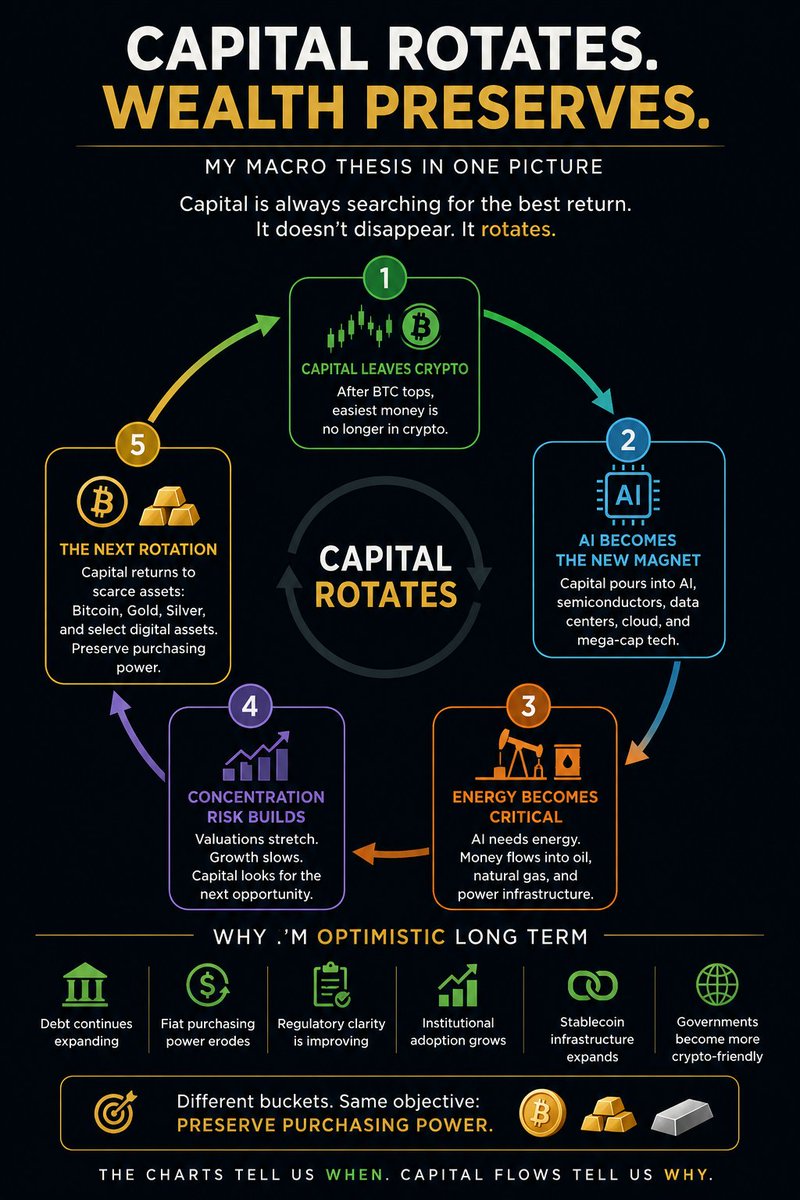
A lot of people are asking why I'm still optimistic on crypto long term despite the recent correction.
Here's my thesis.
Capital is always searching for the best return. It doesn't disappear. It rotates. Just like price follows liquidity, so does the money of investors. Money goes where there's the greatest abundance of liquidity.
For years, crypto and the stock market largely moved together. Since Bitcoin topped around 126k, that relationship has started to change.
Why?
Because capital found a hotter trade.
AI.
Money poured into semiconductors, data centers, power infrastructure, cloud computing, and a handful of mega-cap stocks that are now carrying much of the market.
Then something else happened.
Investors realized AI requires enormous amounts of energy. Whoever controls the oil, controls the future. Think Iran and why the U.S. is there. Think Venezuela and why the U.S. already went there.
Iran and the deep state has manipulated oil prices for almost 50 years via the petrol dollar, the control of the Straight of Hormuz and the control of the oil in Venezuela.
You can't power the AI revolution without electricity, natural gas, oil, and grid infrastructure.
So capital began rotating there as well. Oil prices in increased as the conflict in Iran created uncertainty.
Crypto cooled off.
AI heated up.
Energy followed.
This is how markets work.
Capital rotates.
Now ask yourself this:
What happens when the AI trade becomes crowded?
What happens when valuations get stretched?
What happens when the next major rotation begins?
What happens when the petrodollar is ended and the price of oil falls drastically?
My belief is that a portion of that capital eventually finds its way back into scarce assets.
Gold.
Silver.
Bitcoin.
And potentially select digital assets, with utility in a new financial system, that survive and thrive through the current cycle.
My thesis has never really been about crypto.
Crypto is simply where I believe capital eventually flows.
The bigger story is debt, energy, monetary policy, and capital rotation.
If the world continues moving toward assets that cannot be endlessly diluted, then scarce assets become increasingly attractive.
That's why I watch oil.
That's why I watch gold.
That's why I watch Bitcoin.
That's why I pay attention to regulatory clarity and institutional adoption.
Most people view these as separate stories.
I think they're all part of the same story.
The charts tell us when.
Capital flows tell us why.
Time will tell if I'm right.
#Bitcoin #BTC #Crypto #CapitalFlows #Macro #SoundMoney #WealthPreservation
6
3
30
1,935
Eric Van Tassel (Not a Financial Advisor!) retweeted
Jun 8
And here is the crypto video:
youtu.be/dQF6BaGAfyU?si=tCwM…
2
3
38
4,210
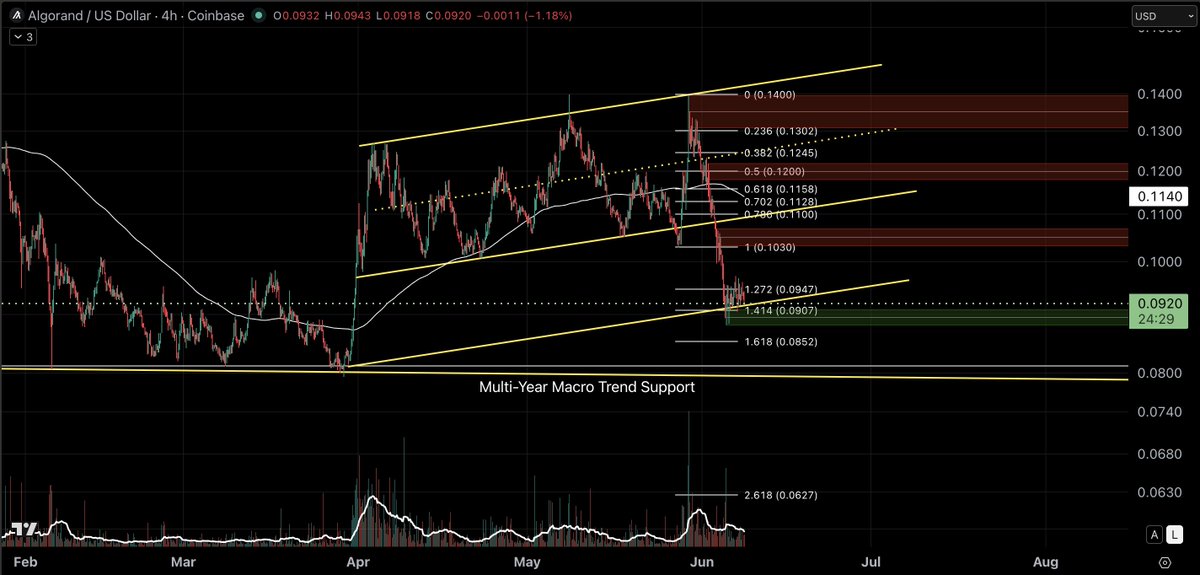
Future Altcoin Millionaire Series: Algorand (Why I am DCAing in ALGO Rig... youtu.be/FvF5znBq6uM?si=XO0x… via @YouTube
2
1
16
3,787
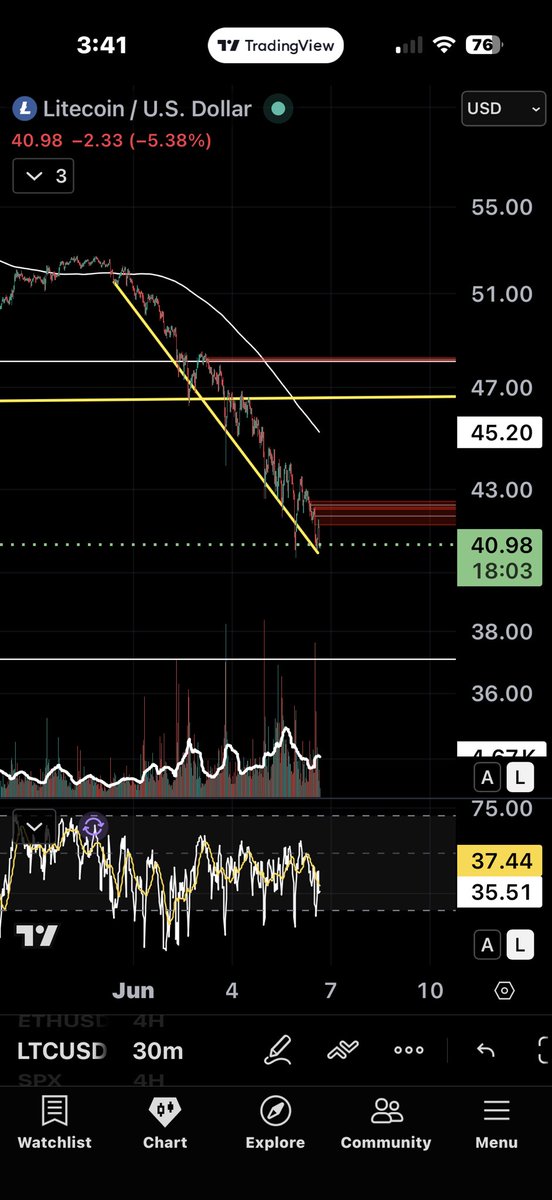
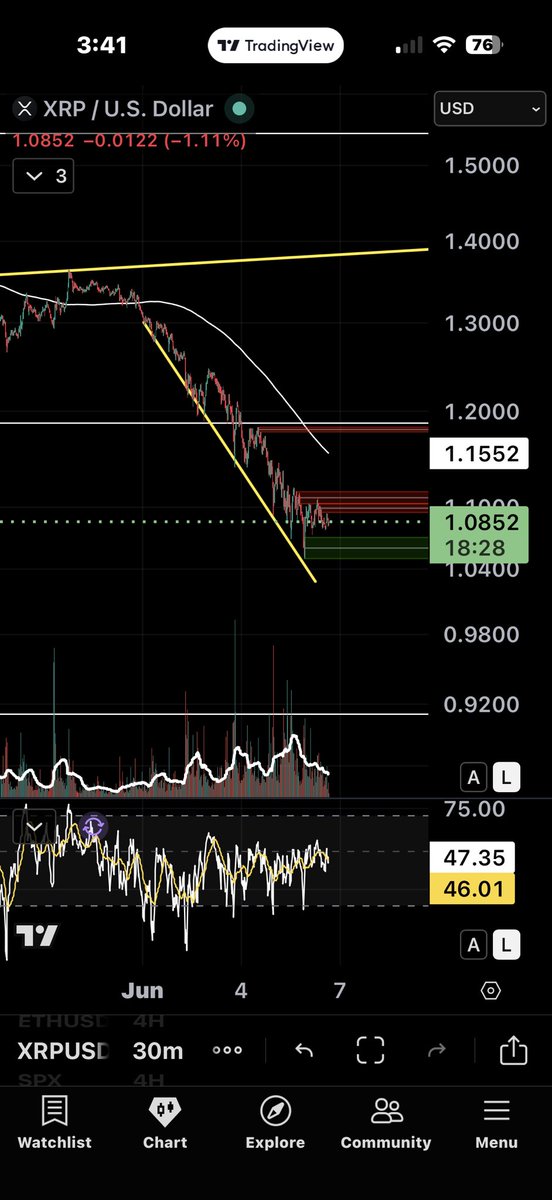
One thing I can’t ignore is how similar the #XRP and #LTC structures have become.
RSI, volume, 200 SMA and decline angle are practically identical!
Both have been declining in an extremely controlled and methodical manner.
This doesn’t look like emotional retail panic to me.
It looks like larger market participants are managing liquidity and moving price from one level to the next.
Whether this proves to be distribution or re-accumulation remains to be seen, but the similarities between these two charts are striking.
3
1
29
3,936