
Joined September 2024
- Tweets 257
- Following 31
- Followers 308
- Likes 332
193 Photos and videos





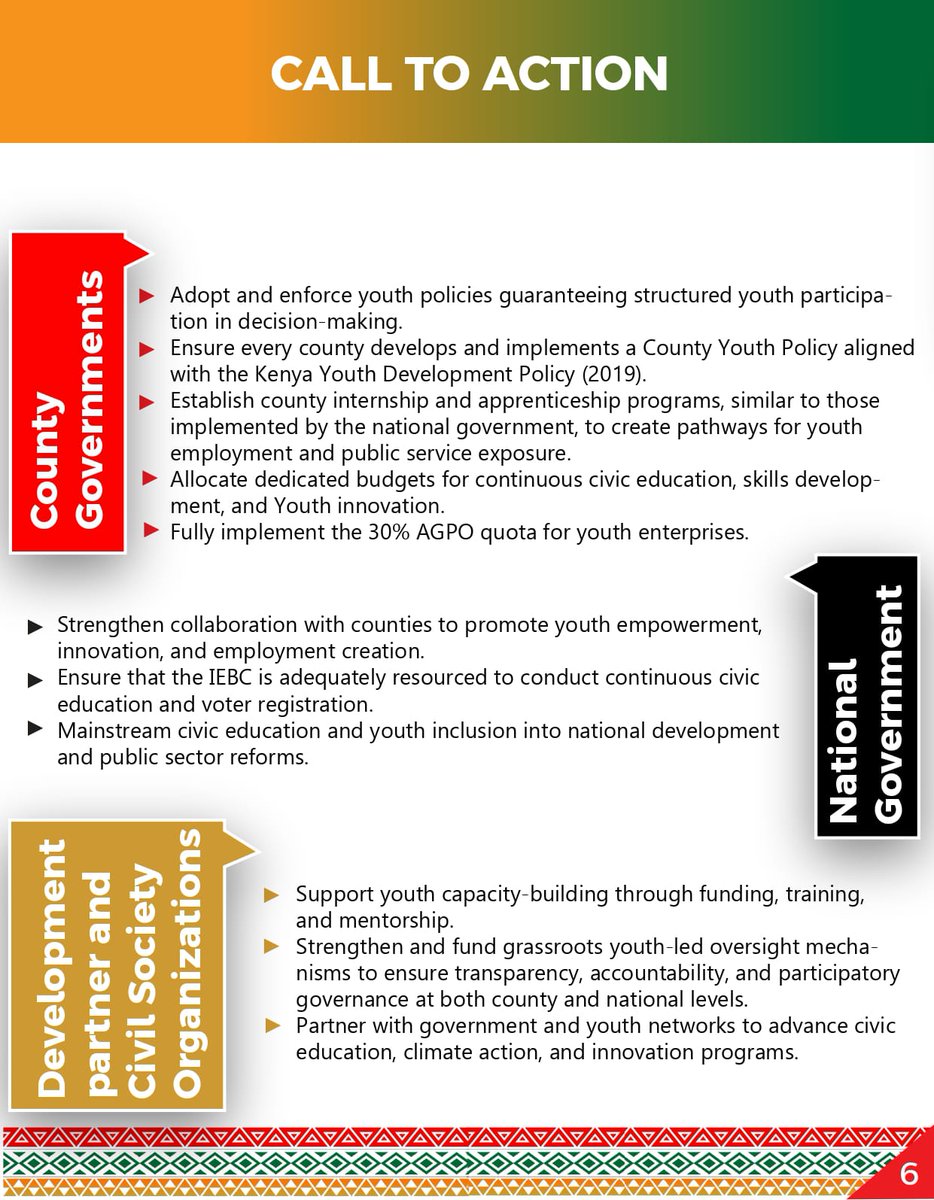
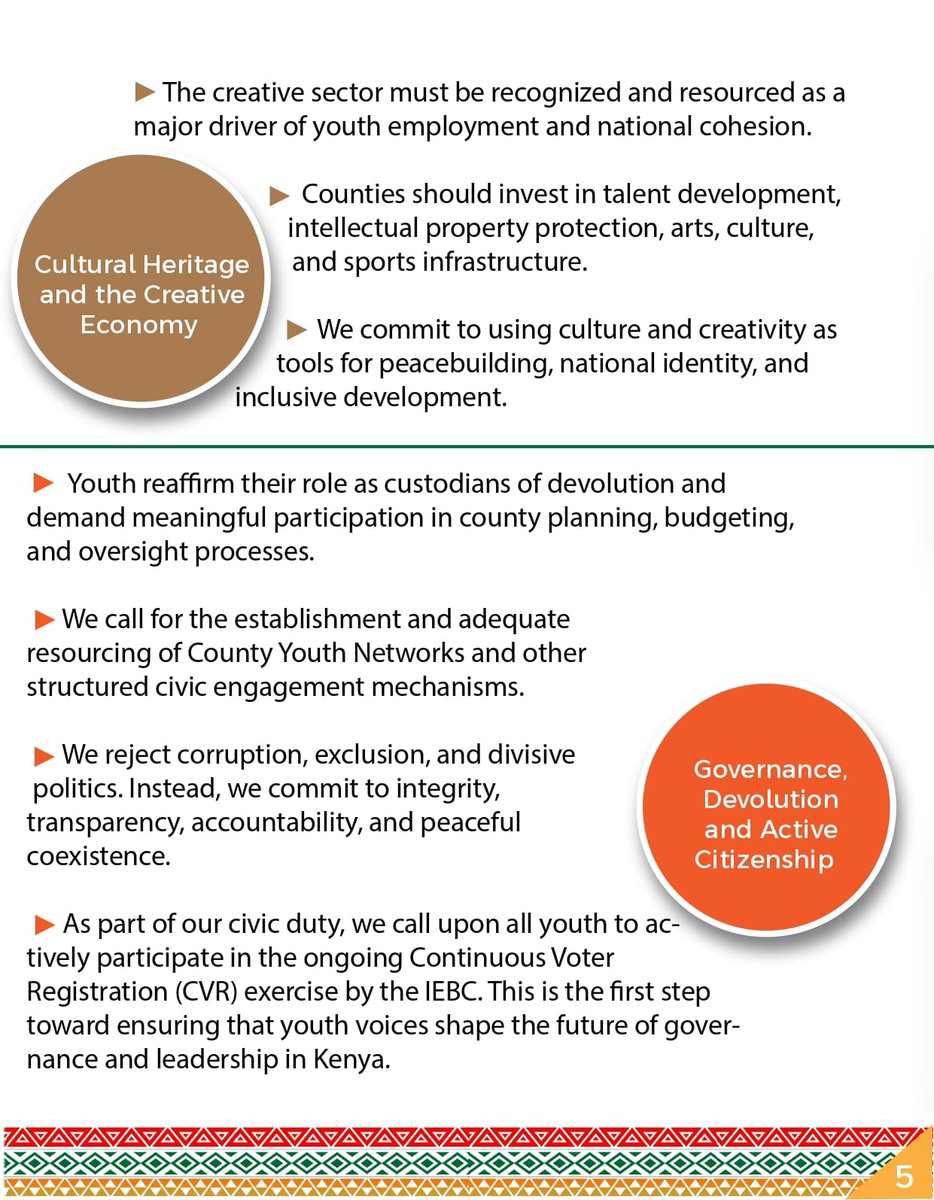
#TheKenyaWeWant:
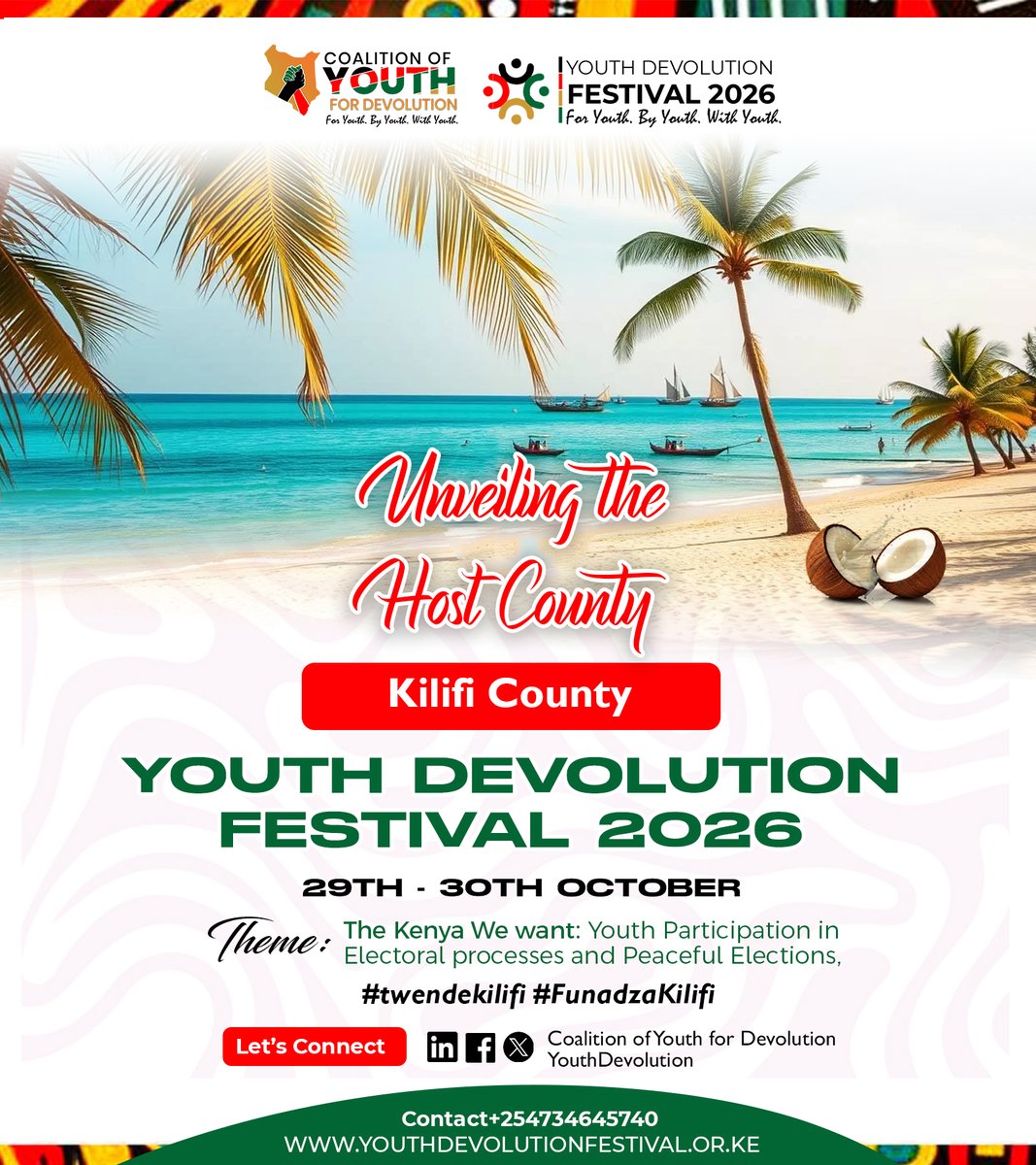
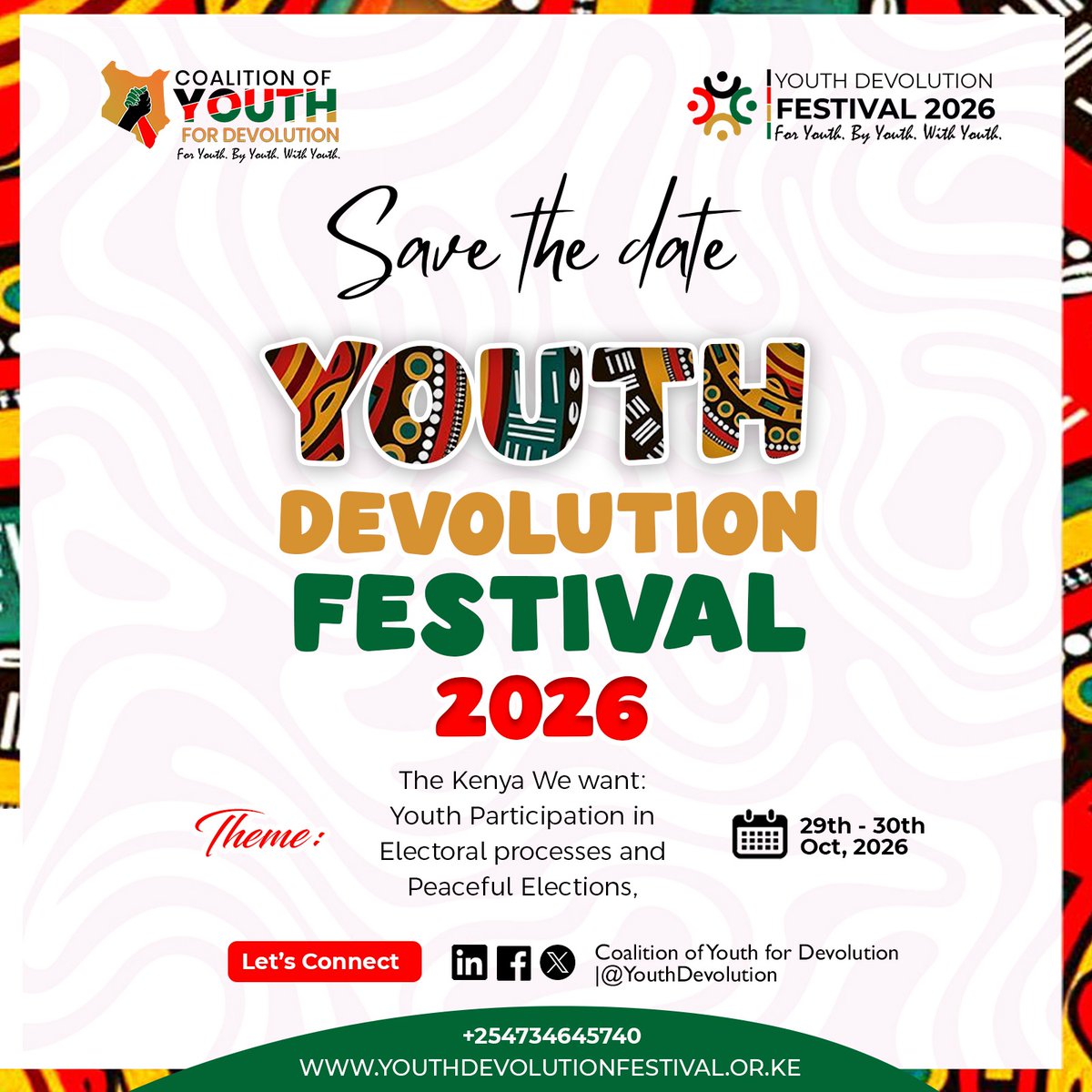
Are you an organization or institution committed to youth empowerment, governance, and peacebuilding? #YDF2026 in Kilifi County (29th-30th October) is the ultimate platform to showcase your impact and connect directly with thousands of young changemakers.
5
6
51
We are excited to unveil #KilifiCounty as the official host of the Youth Devolution Festival 2026!
#YouthDevolutionFestival2026
#FunadzaKilifi
#YouthParticipation
#PeacefulElections
#Devolution
#ForYouthByYouthWithYouth
#TheKenyaWeWant
1
5
7
92
True self-governance means every youth has a seat at the table. This #madarakadayinwajir, the Coalition of Youth for #Devolution invites you to reflect on our theme: "The Kenya We want: Youth Participation in Electoral processes and Peaceful Elections. #Madarakaday2026
2
43
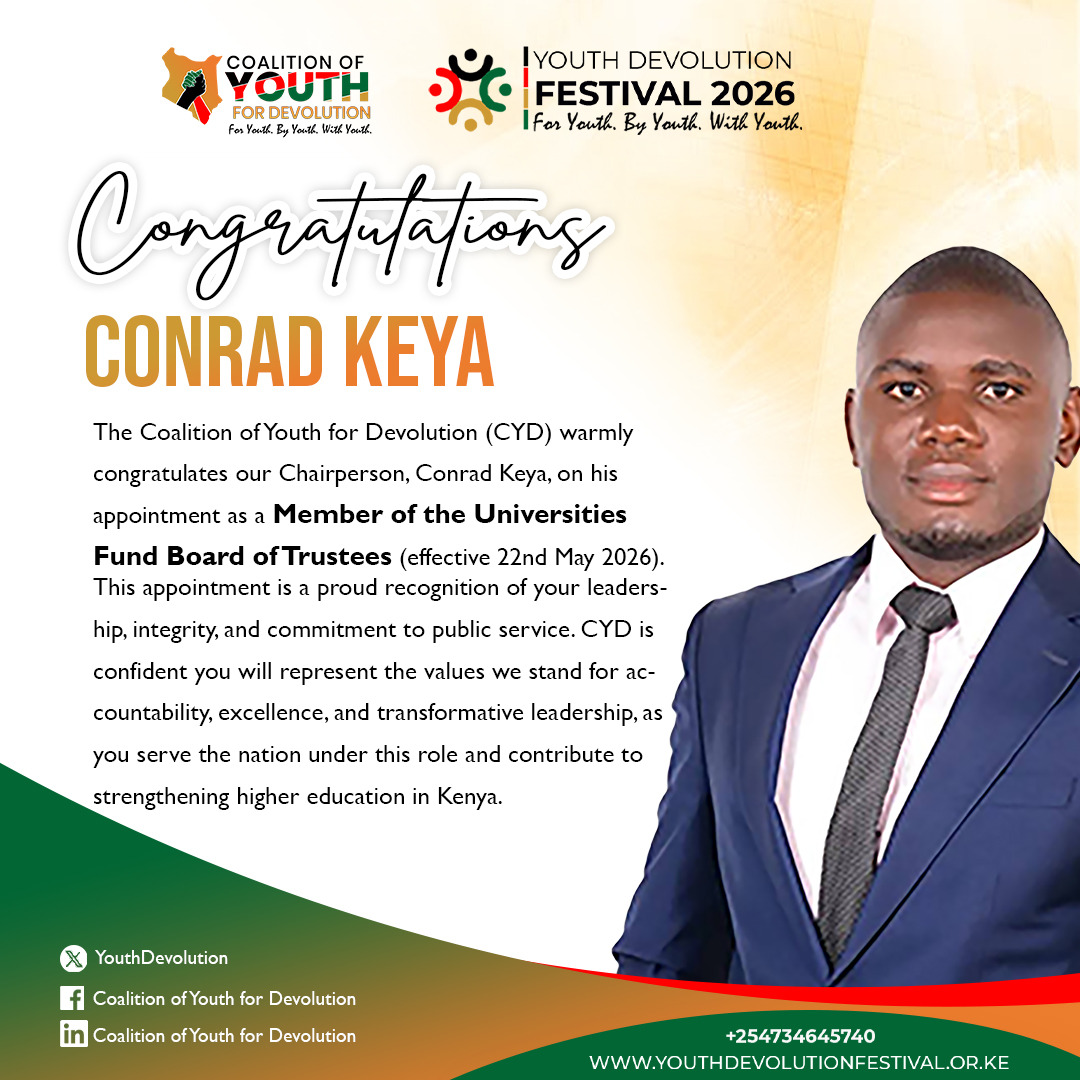
Congratulations to our Chairperson, @Conradokeya , on your appointment as a Member of the Universities Fund Board of Trustees. 🎉
Your dedication, leadership, and commitment to youth empowerment and public service continue to inspire many across Kenya. Wishing you success
5
72
The Youth Devolution Festival retweeted

Most of us are thieves given a chance.
2
3
515
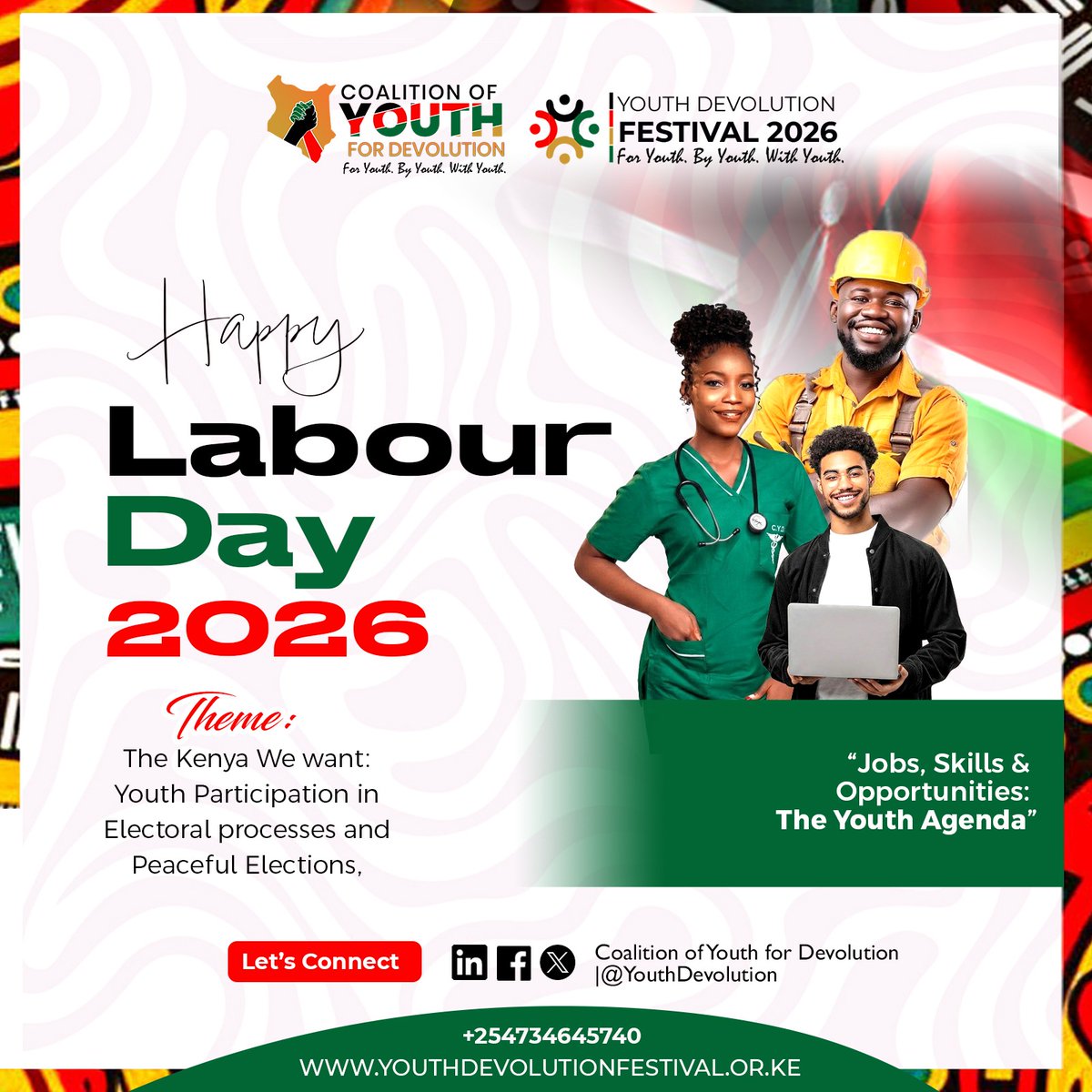
HAPPY LABOUR DAY 2026 💪🏾🇰🇪
Leo tunacelebrate nguvu ya youth! From hustlers to professionals, vijana ndio engine ya Kenya’s growth.
CYD: youth si workforce tu—ni viongozi, ni solution, ni future.
The Kenya We Want lazima ijenge nafasi ya vijana kushine! #VijanaNaUgatuzi
1
2
55
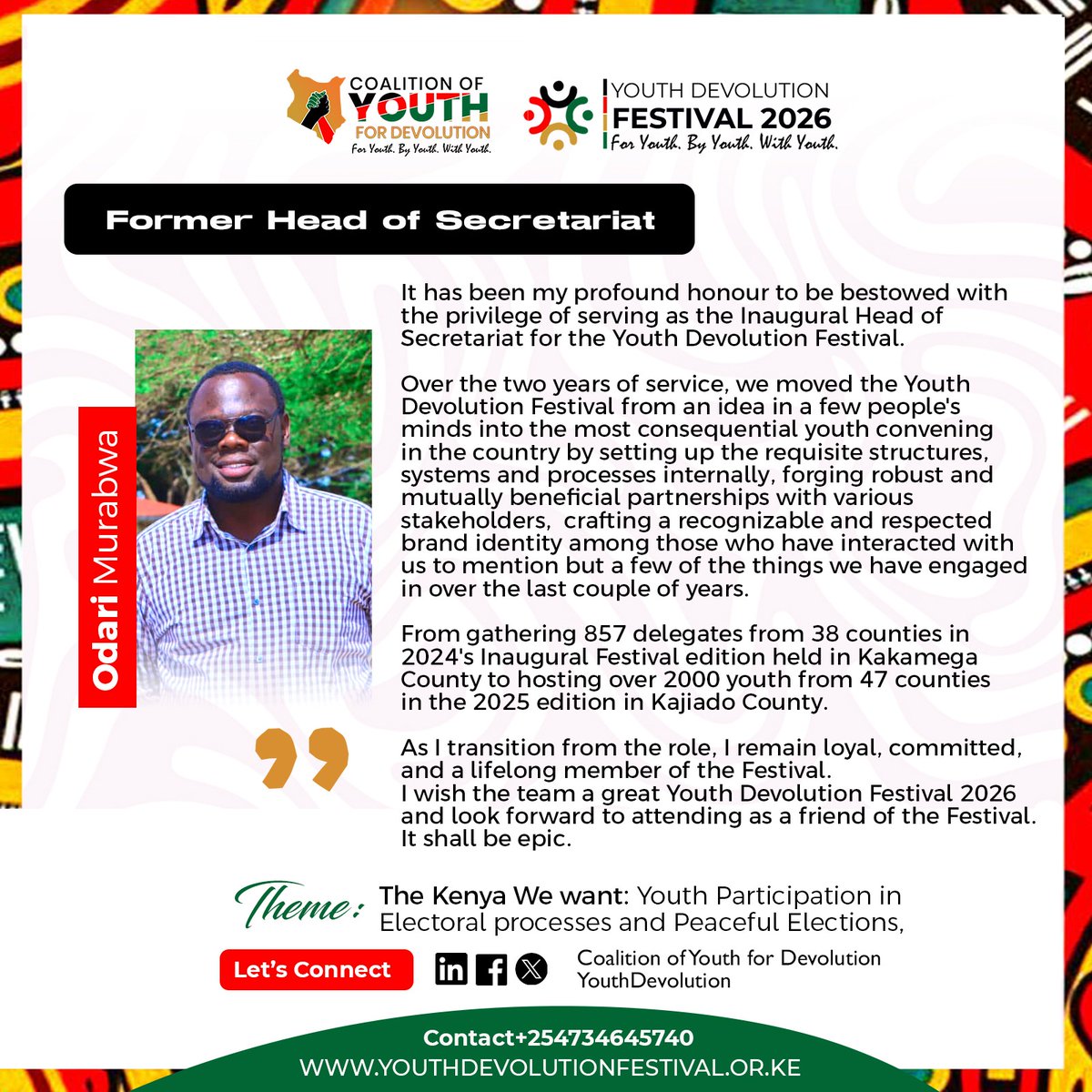
Celebrating leadership and legacy 🎉
Odari Murabwa transitions from his role as Inaugural Head of Secretariat of YDF after a transformative journey growing the Youth Devolution Festival from a bold idea into a national movement reaching all 47 counties.
From YDF 2024 in Kakamega
1
1
2
52
to scaling YDF 2025 in Kajiado, his impact has shaped youth voices in governance and devolution.
We celebrate not an exit, but an elevation. The movement continues. 👏🏾
#YDF2026 #TheKenyaWeWant #VijanaNaUgatuzi
1
1
35
Je #Ukokadi
The only best way to have the kenya we want is to responsibly participate in building.
#Chukuakadi
1
1
39
The Youth Devolution Festival retweeted

Mar 12
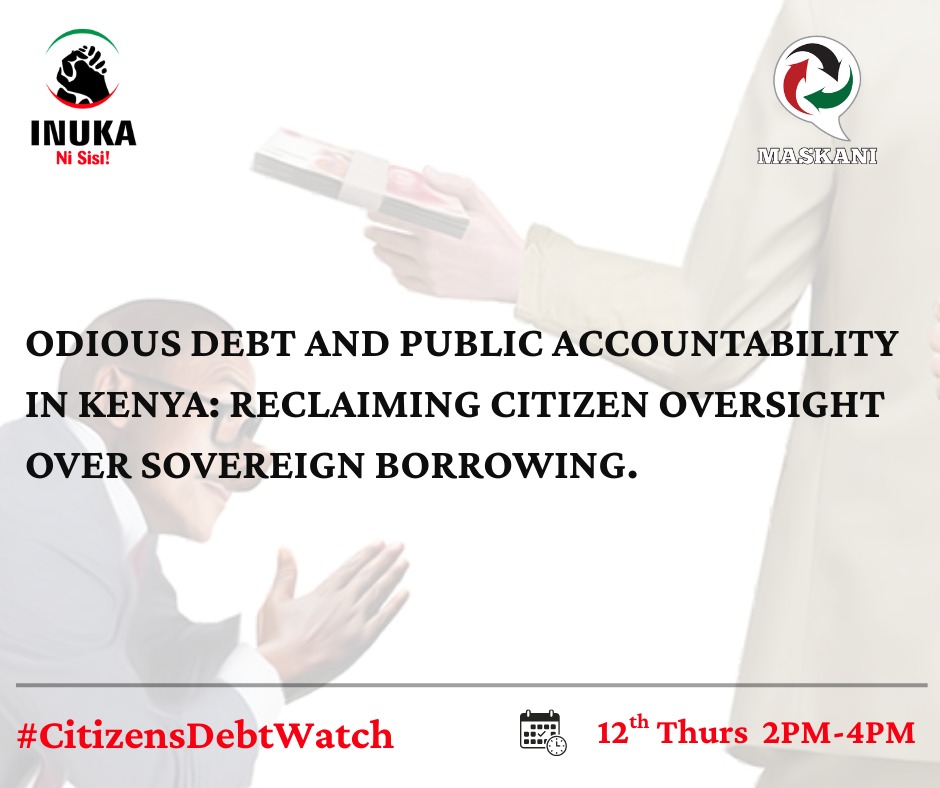
As Kenya’s public debt continues to rise, concerns about transparency, accountability, and responsible sovereign borrowing are becoming more prominent. While government borrowing can support development and infrastructure, questions remain about whether all loans are properly approved, transparently managed, and used in ways that truly benefit citizens.
These concerns have intensified public debate on odious debt, the burden of repayment on taxpayers, and the need for stronger public accountability in debt management. As part of the #CitizensDebtWatch campaign, it is important to build a shared understanding of key concepts that shape discussions around public debt and citizen oversight:
1. Odious Debt:Refers to loans taken by a government that do not benefit the public and are often contracted without the consent or knowledge of citizens. Such debts may be considered illegitimate if they were used for corrupt purposes, political gain, or projects that did not serve the public interest.
2. Public Accountability: Is the principle that government leaders and public officials must explain and take responsibility for their decisions, actions, and use of public resources to citizens. It ensures transparency and allows citizens to hold leaders responsible for how power and public funds are used.
3. Sovereign Borrowing: The process through which a national government borrows money from domestic or international lenders, such as banks, foreign governments, or international financial institutions, to finance public spending, development projects, or budget deficits.
#CitizensDebtWatch
27
29
30
440

13 Nov 2025
Looking forward to connect later in out X SPACE.
As we dive into Youths as frontliners of a sustainable future.
#YouthDevolutionFestival2025 #ClimateAction #COP30
1
5
64
The Youth Devolution Festival retweeted

25 Oct 2025
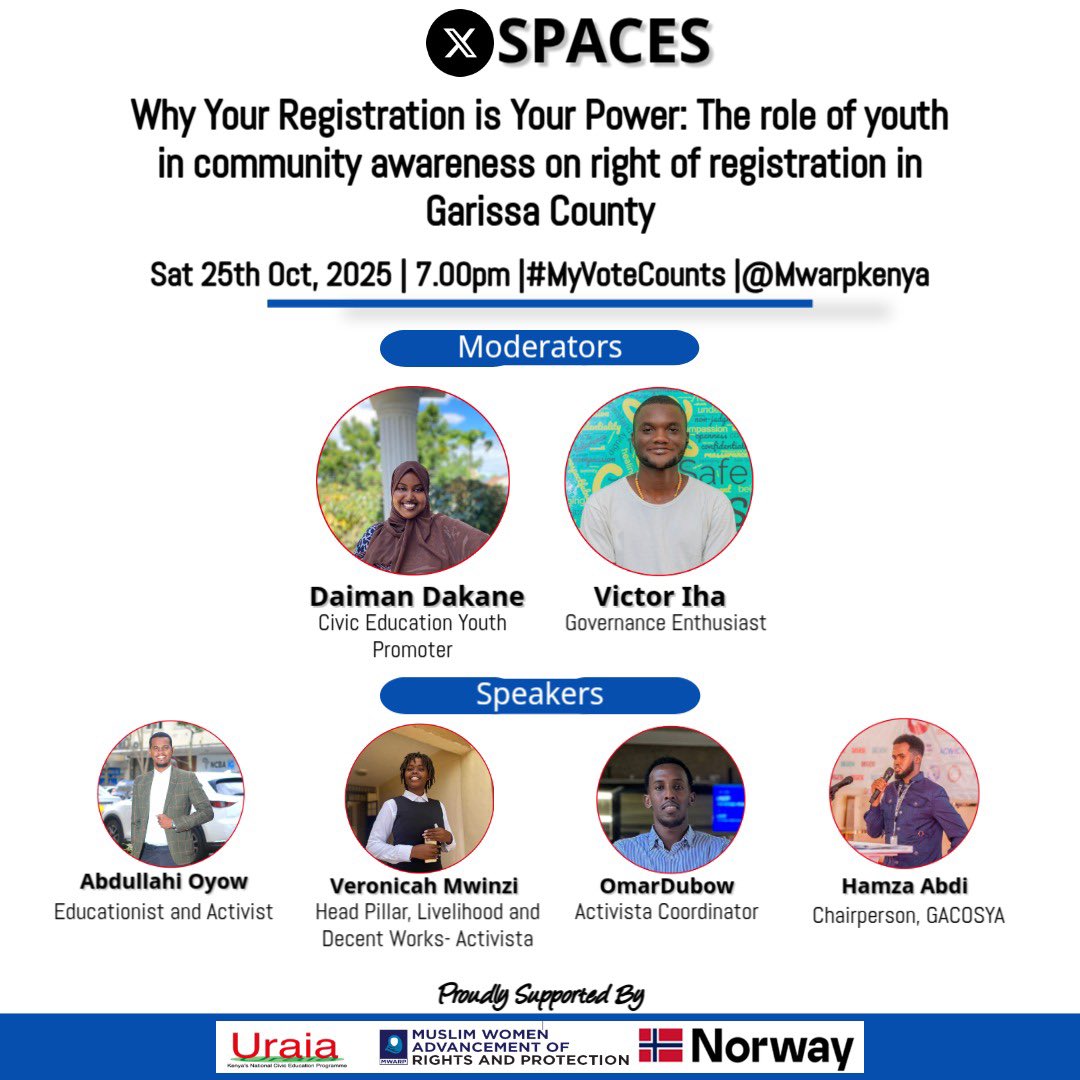
Don’t miss to tune in and join in the conversation around Voters registration today at 7pm.
#MyVoteCounts
4
11
430
14 Oct 2025
2
65
The Youth Devolution Festival retweeted

14 Oct 2025
Huduma Kenya is proud to have supported the #YouthDevolutionFestival2025. Together, we’re empowering young voices and driving change from the ground up! 🌍🙌🏾 #VijanaNaUgatuzi
1
2
1
708