
Joined April 2026
- Tweets 39
- Following 8
- Followers 3
- Likes 40
12 Photos and videos







3 agentic AI developments that actually matter for enterprises this week:
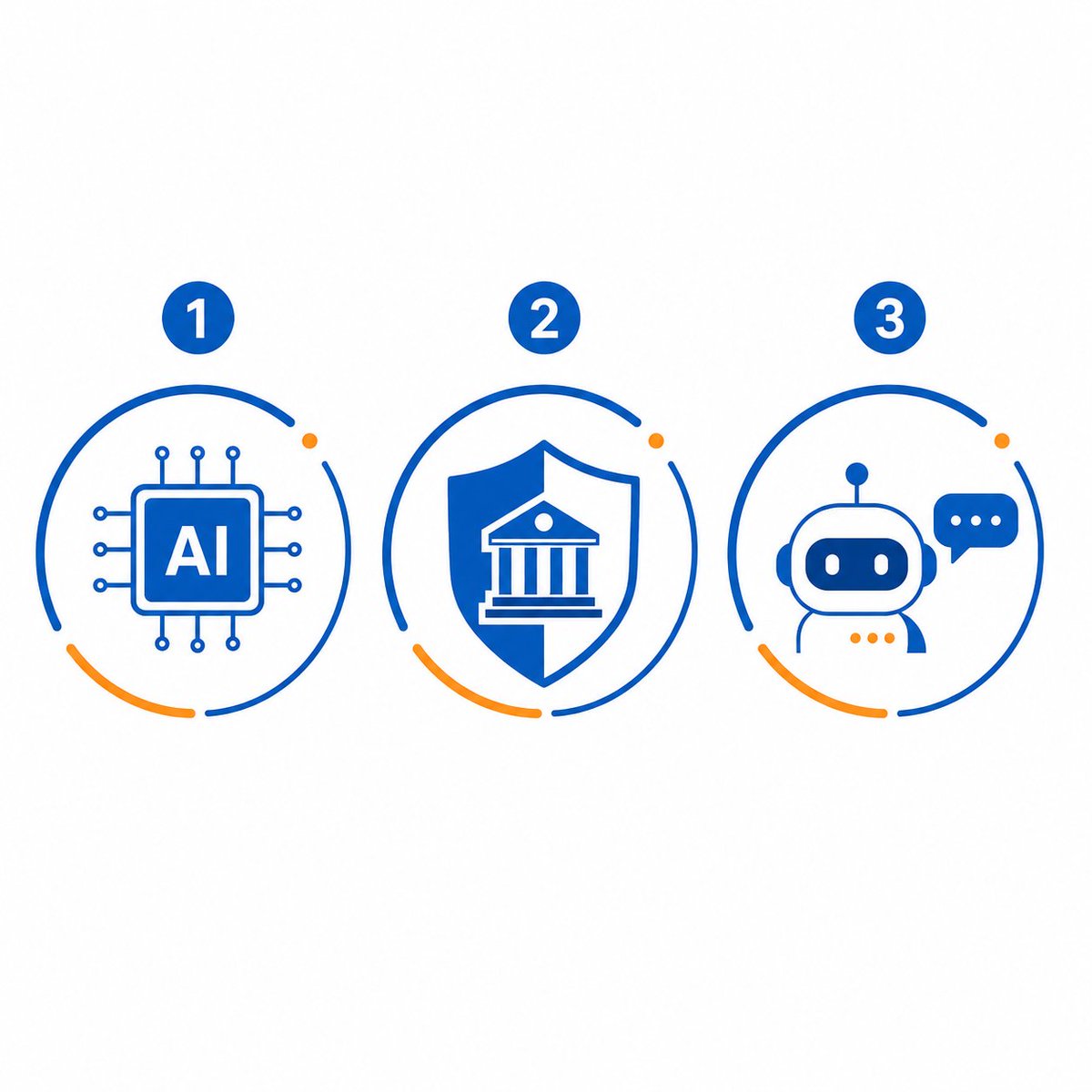
1. OpenAI is acquiring Ona, a secure runtime platform for AI agents. The real story isn't better code — it's giving agents a safe, contained environment to access tools and systems, which is the #1 barrier to production deployment right now.
2. Microsoft baked agent permission controls directly into the Windows kernel with MXC. When the OS enforces what an agent can and cannot access, governance stops being a prompt engineering problem and becomes a system-level guarantee.
3. OpenAI Oracle made enterprise AI procurement much easier. Companies can now use existing Oracle cloud credits to deploy models and Codex, removing a huge budget and procurement friction point for large organizations.
The entire industry is quietly shifting from "can agents do cool things?" to "can we deploy them safely and legally at scale?"
We build production-grade Agentic AI solutions designed for real enterprise governance. More in bio.
Which of these shifts will impact your team first?
#AgenticAI #EnterpriseAI #AIGovernance #ProductionAI
18
The biggest lie in supply chain AI right now: "Just plug in our model and it will optimize your inventory."
A new industry report released this week confirms what we've seen firsthand: 78% of supply chain AI projects fail to deliver expected ROI. And it's almost never because the model is bad.
It fails because:
• Your ERP data doesn't match your warehouse data
• Supplier updates only come via email or PDF
• Inventory counts are still entered manually at the end of each shift
• Every channel has its own separate order management system
You can't train an AI on fragmented, stale, inconsistent data and expect it to give you good answers.
The first step to successful supply chain AI isn't buying another model. It's connecting all your existing systems so they speak the same language.
We build custom integration layers that turn your siloed data into a single source of truth. Then we add AI on top that actually works.
We build production-grade Agentic AI solutions. More in bio.
How many different systems does your supply chain team use every day?
#SupplyChainAI #RetailOperations #EnterpriseAI #AgenticAI
1
10
Gartner just dropped a brutal stat: 40% of enterprise AI agents will be decommissioned by 2027.
And it's almost never because the technology didn't work.
It fails because:
1. No one built audit trails or access controls before deployment
2. Teams tried to automate 10 workflows at once instead of nailing one
3. No clear owner was assigned to monitor and update the agent over time
AI agents aren't "set it and forget it" tools. They're production systems that need the same governance, security, and maintenance as any other critical business software.
The best AI projects don't start with the model. They start with the workflow, the guardrails, and the ownership.
We build production-grade Agentic AI solutions that actually stay in production. More in bio.
What's the #1 reason your AI projects got stuck or canceled?
#AgenticAI #EnterpriseAI #AIGovernance #AIforBusiness
2
3
46
Top 3 Agentic AI news that actually matters this week (no hype):
1. NVIDIA officially declared "The Agent AI Era is here" at GTC Taipei, launching RTX Spark superchips for local AI agents and open-sourcing Nemotron 3 Ultra, the most powerful production-ready agent model to date.
2. Gartner warned that 40% of enterprise AI agents will be decommissioned by 2027 due to governance gaps — not bad technology. One-size-fits-all policies don't work for autonomous systems.
3. Cloudflare Stripe shipped the first fully autonomous AI agent that can open accounts, register domains, and deploy production apps without any human intervention.
The shift from AI that generates content to AI that executes work is happening faster than most people realize.
We build production-grade Agentic AI solutions. More in bio.
Which of these developments will have the biggest impact on your business?
#AgenticAI #EnterpriseAI #NVIDIA #AIGovernance
2
53
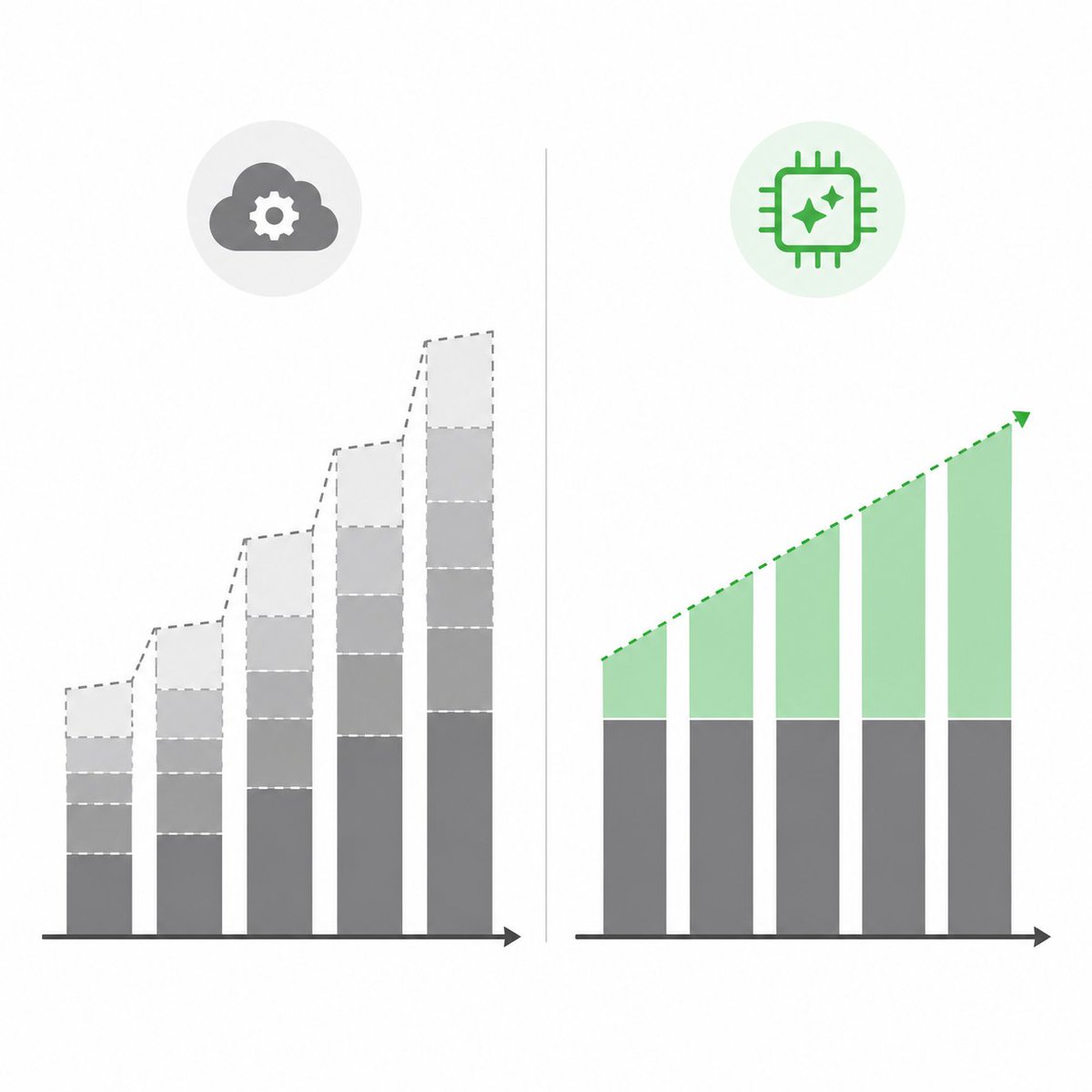
The #1 question we get: "Is custom automation more expensive than off-the-shelf SaaS?"
The short answer: It depends on how you calculate it.
Off-the-shelf SaaS has low upfront costs, but you end up paying for:
- Features you never use
- Workarounds to make it fit your business
- Employees acting as human connectors between systems
Custom automation has higher upfront costs, but:
- It solves exactly your problem, not someone else's
- It eliminates 100% of the manual work in that workflow
- It pays for itself in 2-3 years through labor savings and error reduction
The biggest mistake companies make is spending $50k on a generic ERP, then still doing 70% of the work in Excel.
We build custom AI workflows that pay for themselves. More in bio.
1
13
We've talked to hundreds of operations leaders this year.
Almost every single one is spending 20-40% of their team's time on work that could be automated.
What's the biggest manual workflow pain point in your organization right now?
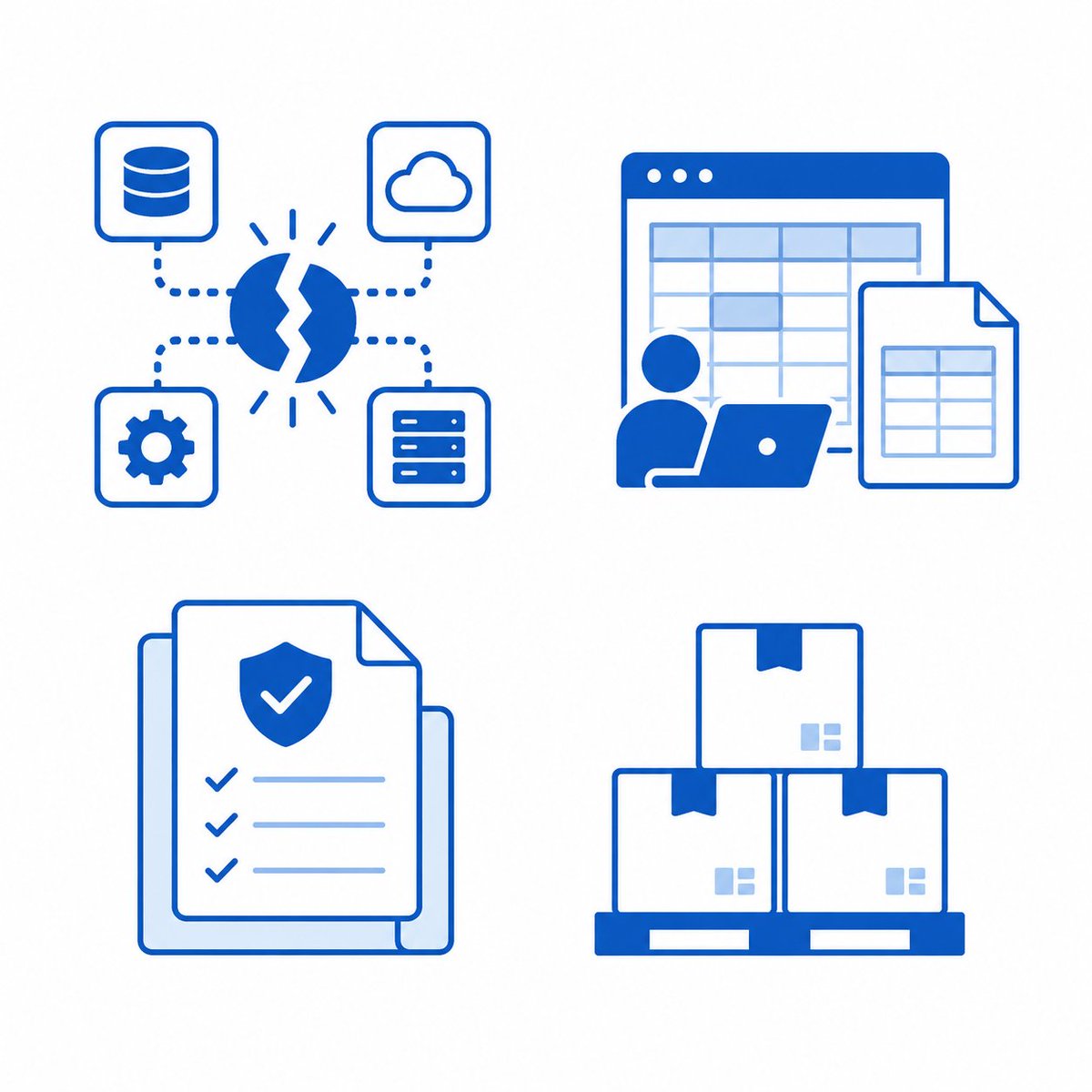
🔘 Siloed systems that don't talk to each other
🔘 Manual data entry and spreadsheet reconciliation
🔘 Compliance and regulatory documentation
🔘 Inventory and supply chain tracking
Drop a comment if your biggest pain isn't on this list.
We build production-grade Agentic AI solutions. More in bio.
#AIforBusiness #WorkflowAutomation #EnterpriseAI #AgenticAI
1
15
Why generic accounting software will never work for cross-border businesses.
It's not about missing features. It's about three structural mismatches:
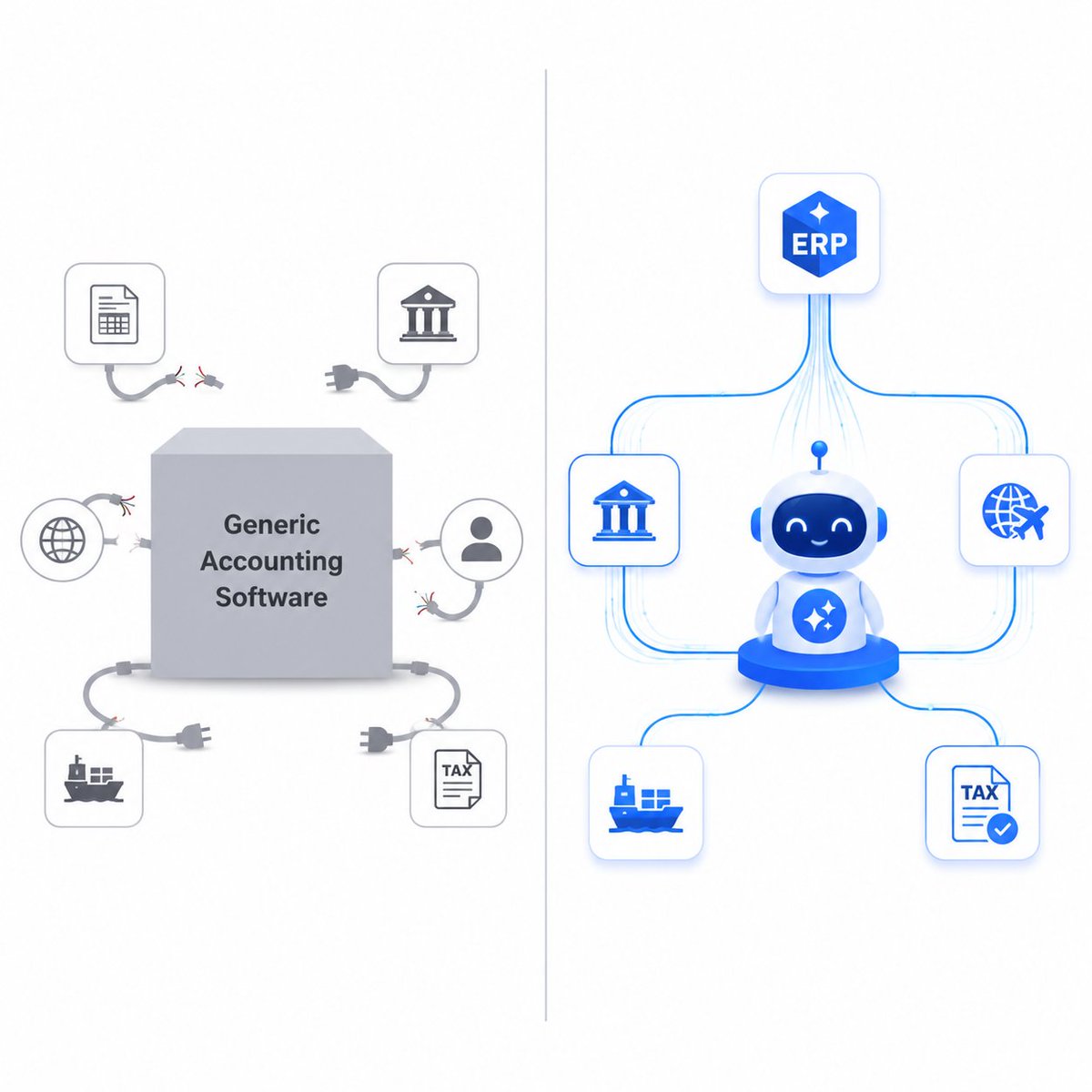
1. They are built for linear workflows. Cross-border finance is a web of interconnected systems: ERP, banks, marketplaces, freight forwarders, customs. No standard SaaS can pre-integrate all of them.
2. They assume standardized data. In reality, you get PDFs, scanned documents, handwritten notes, and Excel files in 10 different formats from suppliers around the world.
3. They treat compliance as an afterthought. VAT rules change every quarter in Europe. GST requirements are different in every Australian state. Generic tools can't keep up.
The result? You spend more time adapting your business to the software than the software adapting to your business.
Custom AI agents don't replace your existing systems. They connect them. They sit between all your tools, translate between different data formats, and automate the manual work that generic software will never do.
That's the difference between "software that works for most businesses" and "software that works for your business".
1
1
15
We've seen it dozens of times: companies spend $50k on a fancy accounting ERP, and still end up doing 70% of the work in Excel.
1
7
"We have 3 accountants, but every month during reconciliation week, they are completely burnt out."
This is what an 8-year international trade business owner told us. And it's not an exception.
Cross-border finance is fundamentally different from regular corporate finance:
- 5 payment platforms (PayPal, Stripe, Payoneer, wire transfers)
- 10 currencies with real-time exchange rate fluctuations
- Invoices and documents in 7 languages and formats
- Complex VAT/GST compliance across 20 markets
Generic accounting SaaS only solves 20% of these problems. The remaining 80% still gets done manually in Excel.
This is where custom AI workflow automation delivers real value:
✅ Intelligent document processing: Parse any invoice, bill or receipt in any language without templates
✅ Multi-platform auto-reconciliation: Match bank flows to orders with 99.8% accuracy
✅ Real-time compliance checks: Flag tax and regulatory issues before they become problems
We helped one metals trading company cut invoice processing time from 40 hours/month to 4 hours/month, and reduce error rates from 3% to 0.2%.
We build production-grade Agentic AI solutions. More in bio.
What's the most painful part of your cross-border finance workflow?
#AIforBusiness #FinanceAutomation #InternationalTrade #AgenticAI
2
1
43
The biggest hidden cost of manual cross-border finance isn't the labor — it's the errors. A single wrong exchange rate calculation can cost you tens of thousands of dollars.
1
8
June 1 hotspot recap: The Agent Economy payment layer from PayGo × X-Agent and NVIDIA's dedicated AI Agents PCs have surfaced on the same day, keeping agentic computing firmly in the spotlight.
These developments together signal a clear shift — AI Agents are moving beyond demos toward practical, autonomous operations.
The infrastructure progress is encouraging, yet it also reminds us that true scalability will depend on how well these systems handle real-world complexity like data governance, multi-agent coordination, and enterprise-grade reliability.
We build production-grade Agentic AI solutions. More in bio.
Which practical direction in Agentic AI are you most focused on right now? Drop it in the comments:
- Autonomous payments
- Local hardware execution
- Enterprise system integration
#AgenticAI #EnterpriseAI
1
1
2
46
I'm most excited about enterprise system integration — that's where the real business value comes from.
1
18
Agentic AI discussions are dominating X today: from the PayGo × X-Agent push on Agent Economy infrastructure to NVIDIA's new agentic computing PCs.
What stands out is how quickly the pieces are coming together — payment layers for autonomous transactions and local hardware for independent execution are both maturing fast.
This convergence could accelerate real adoption in 2026, but it also highlights the need for stronger focus on security, compliance, and seamless integration with current business systems if we want to avoid another wave of pilot projects that never reach production.
We build production-grade Agentic AI solutions. More in bio.
In your view, what will be the most important progress in Agentic AI this year? Feel free to comment.
#AgenticAI #AgentEconomy #EnterpriseAI
1
1
26
The pilot-to-production gap is definitely the biggest bottleneck right now. We've seen too many great AI ideas die in the lab.
1
14
We're ZenAI. We build enterprise AI that ships.
Not slide decks. Not PoCs that die in a lab. Production systems, running where your business actually operates. ↓
2
1
36
More about our production-grade Agentic AI solutions: zenaicorp.com
1
65
We open-sourced Hermes Agent. Here's why it matters:
Most AI agents are demos wrapped in marketing. They work in notebooks. Break in production.
Hermes was built differently: → Designed for manufacturing floor integration, not hackathon demos → Handles cross-border B2B workflows out of the box → Powers SME automation without enterprise budget
The thesis: agents shouldn't live in a lab. They should live where work happens.
We built Hermes because our clients needed agents that actually ship. So we made one that does.
Open source. Production-ready. Built for real workflows.
1
27
This week in AI — three things that matter for enterprises:
① Steve Wozniak told graduates they already possess "Actual Intelligence." The message for business: stop looking for AI to replace your people. Look for AI to amplify their judgment. That's where ROI lives.
② Anthropic is projecting $44 billion ARR by end of year. Zero marginal cost for knowledge work changes everything about how software gets built — and sold. The old per-seat pricing model is dying.
③ Google just changed search forever. AI Overviews aren't an add-on anymore — they ARE the search result. If your content strategy doesn't account for GEO (Generative Engine Optimization), you're already invisible.
One theme across all three: AI value has moved from "having a model" to "execution at scale."
1
24
A Bay Area auto group had a problem: Leads were pouring in. Nobody was picking up the phone.
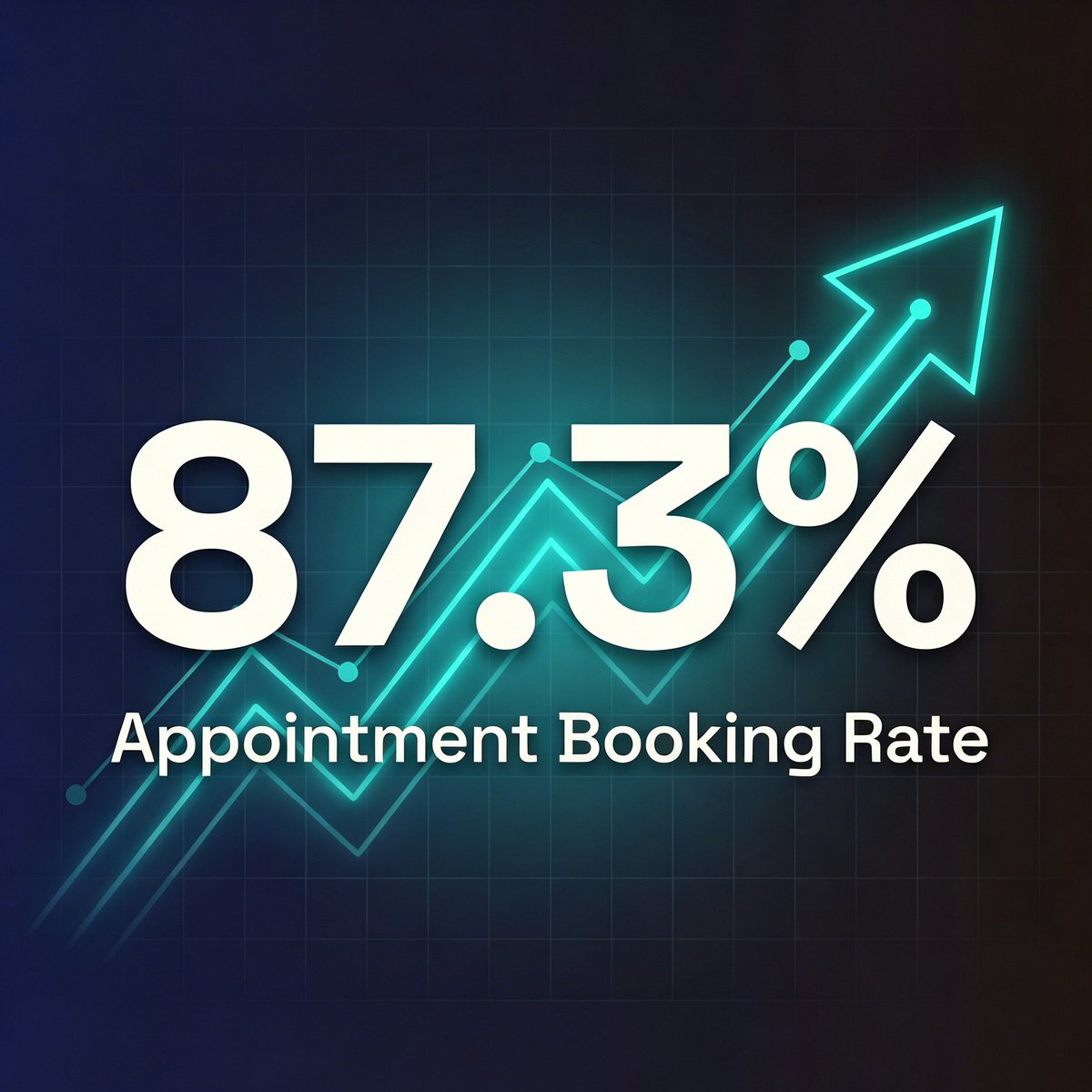
We built Carbuki — an AI voice agent that answers, negotiates, and books. Appointment rate: 87.3%. Here's what happened ↓
1
1
25
The result: → 87.3% appointment booking rate (live data) → CarBoard analytics: every call, every booking, every dollar visible → Always-on: inbound outbound. Recalls, win-backs, campaigns.
When response time goes from "sometime today" to "instantly" — conversion doesn't improve. It jumps.
1
1
28
Voice AI for auto retail isn't the future. It's happening now. The dealerships using it are quietly pulling ahead.
1
18