
One minute you’re motivating yourself like a TED Talk speaker… next minute you’re calculating how many customers you need before month end 😭
Targets will humble you fast.
#SalesLife #RetailLife #CustomerExperience #SalesTargets #RetailOperations
4

Jun 13
Ocado, the British company that started as an online supermarket, rebuilt the whole problem from the ground up.
Here is how the system works in plain terms:
A) Groceries sit in crates stacked in a dense 3D grid called "The Hive".
B) Thousands of robots, each about the size of a washing machine, race across the top of the grid at nearly 9 miles per hour, within 5 millimeters of each other.
C) An AI "air traffic control" system talks to every robot ten times a second to plan routes and prevent collisions.
D) The bots pull the right crates and bring them to picking stations, where robotic arms with machine vision now handle the final pick.
E) The same system runs on digital twins, so Ocado tests and improves a warehouse virtually before changing anything physical.
The most interesting part is the business model. Ocado does not just run its own warehouses. It licenses the entire system to grocers worldwide, including Kroger in the US, Coles in Australia, and chains across Europe. It became a robotics company that happens to sell groceries.
Three takeaways for operations leaders:
1) When the economics do not work, rebuild the process, not the price. Ocado did not cut corners. It redesigned fulfillment from scratch.
2) Specialization beats general-purpose automation. Ocado wins precisely because it solved grocery, not warehouses in general.
3) Your hardest internal problem can become your product. Ocado turned its own fulfillment headache into a global licensing business.
What is the most expensive, manual bottleneck in your operation, and could solving it become something you sell to others?
If you want, you can see the video on how Ocado works (Video credit to Business Insider):youtube.com/watch?v=4DKrcpa8…
#SupplyChain #Operations #Ocado #Robotics #WarehouseAutomation #Grocery #AI #Industry40 #Fulfillment #DigitalTwin #RetailOperations #OperationsManagement
1
1
78

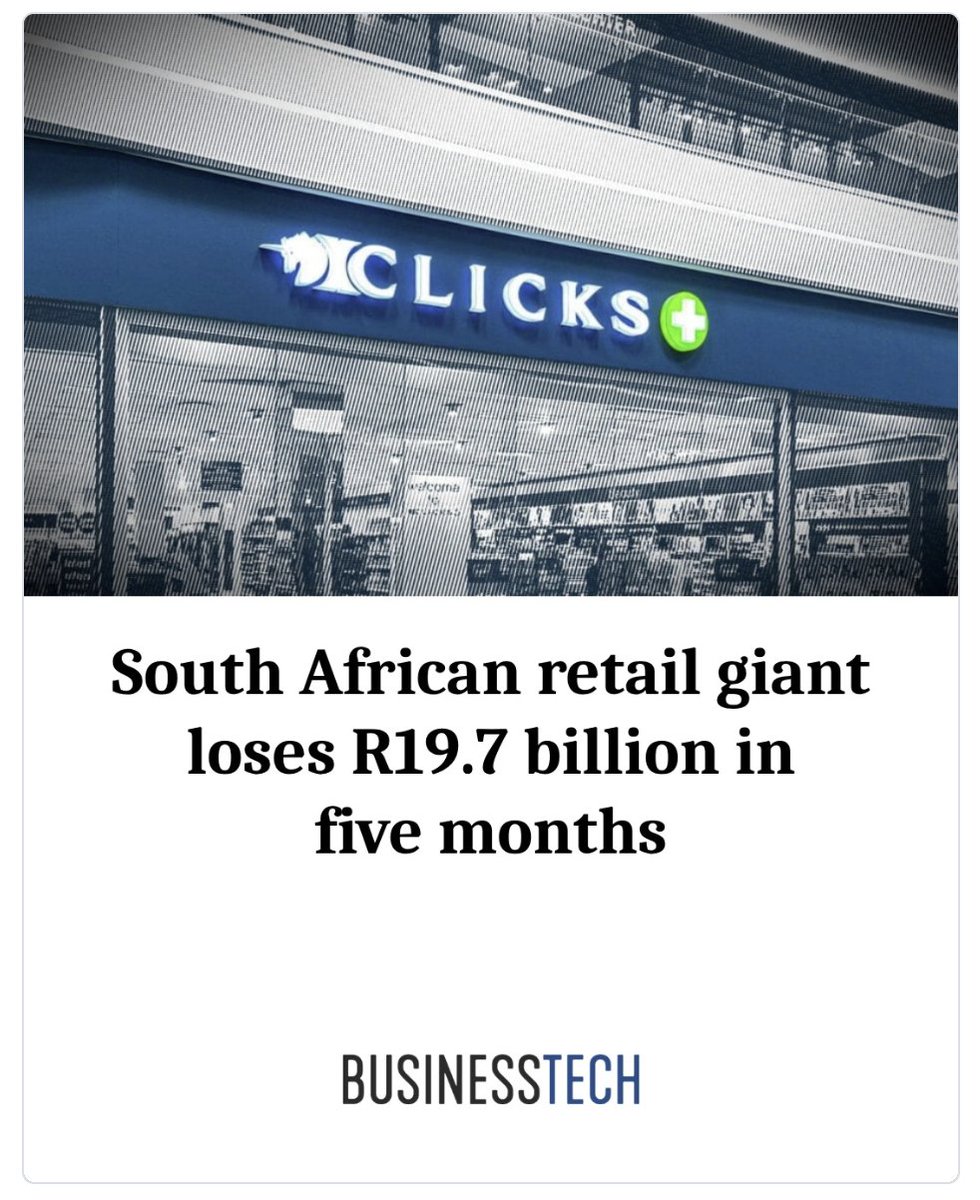
The R19.7 billion market value contraction of Clicks Group over 5 months demonstrates how quickly a premium earnings multiplier unravels when back-end operations compromise front-end brand execution.
While an 8.1% increase in interim headline earnings validates resilient baseline demand, the market capitalisation correction reflects institutional investors repricing the risk of a R175 million top-line disruption caused by warehouse system implementation delays. In a high-volume retail model, supply chain efficiency is not a back-office utility but the primary driver of customer acquisition and retention. When distribution bottlenecks result in out-of-stock scenarios during peak seasonal trading, the commercial damage extends beyond immediate missed transactions; it erodes customer lifetime value and forces consumers into the ecosystems of nearby competitors.
This operational friction becomes highly dangerous when a brand’s full-year earnings growth guidance softens to a 4% to 9% range amid aggressive competitor discounting.
Defending a dominant market position under these conditions requires abandoning broad-market promotional strategies that dilute gross margin without securing long-term customer lock-in. Instead, commercial leadership must utilize the first-party data generated by a loyalty ecosystem that captures over 80% of sales to execute precision-targeted price discrimination.
By shifting marketing spend away from defensive price-matching and toward the acceleration of higher-margin private label penetration, the business can absorb localized margin compression. True brand defensibility is achieved by transforming a massive loyalty database into a predictive mechanism that stabilizes transaction frequency, insulates gross profitability, and restores investor confidence in predictable earnings growth.
#RetailStrategy #CorporateGovernance #BrandDefensibility #SupplyChainStrategy #FirstPartyData #CapitalMarkets #SouthAfricaBusiness #CMO #RetailOperations
23

Jun 12
The order was placed.
The inventory was available.
The customer still got a cancellation email.
Why?
Because the systems were out of sync.
Most enterprise retailers run 15–20 separate platforms. The biggest revenue leaks happen between them.
#RetailTech #RetailOperations
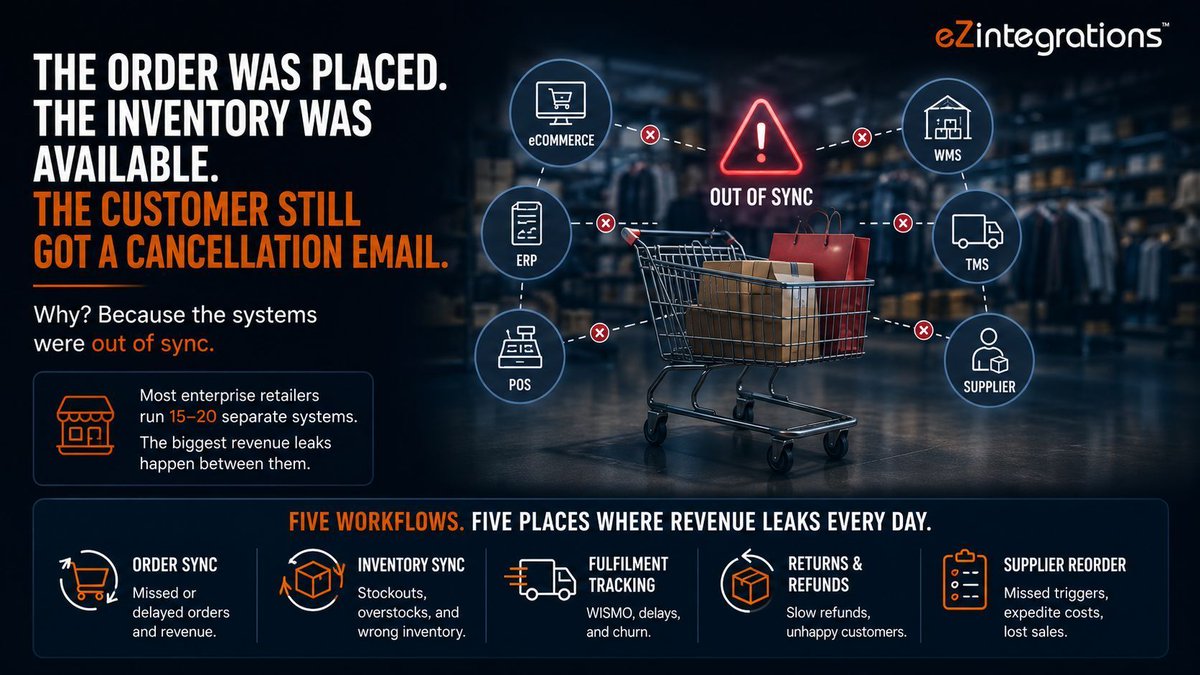
ALT Retail integration workflow infographic showing an out-of-sync enterprise retail ecosystem where eCommerce, ERP, WMS, POS, TMS, and supplier systems fail to synchronize in real time. The diagram highlights order cancellations caused by disconnected systems and visualizes five critical retail workflows: order synchronization, inventory synchronization, fulfillment tracking, returns processing, and supplier replenishment.
1
2
2
27

Jun 12
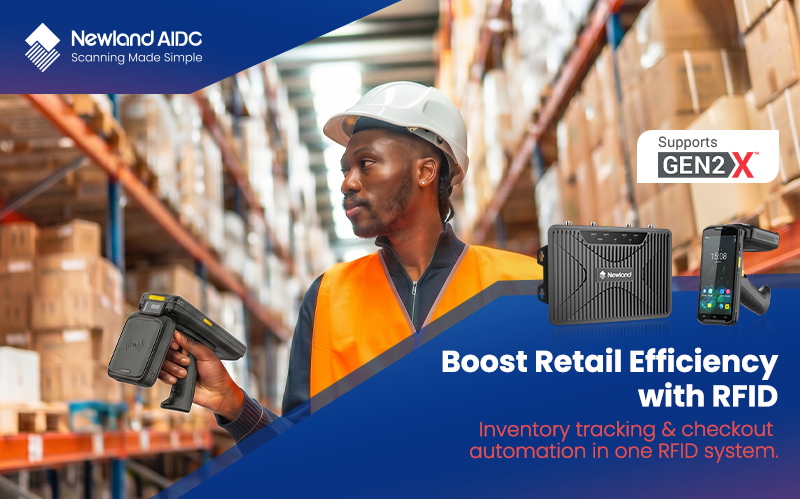
From inventory counting and RFID-enabled checkout to warehouse operations, Newland AIDC RFID solutions help retailers streamline workflows and improve inventory accuracy.
🔗newlandaidc.com/roa/products…
#RFID #RetailTechnology #InventoryManagement #RetailOperations #AssetTracking
20

Jun 11
Private label can grow margins. But store-level MOQs, limited storage, and distribution issues can kill momentum fast.
GPOPlus helps make private label practical.
Learn more: gpoplus.com/retailers/
#PrivateLabel #ConvenienceRetail #RetailOperations #SupplyChain #CStore
29

Contact IMS at sales-marketing@ims-pos.com or 1-800-882-0627 to see how RFID accuracy works in real stores.
#RFID #RetailPro #IMS #Inventory #InternationalMicroSystems #RetailOperations #POSsystems #RetailAnalytics
2
Jun 11
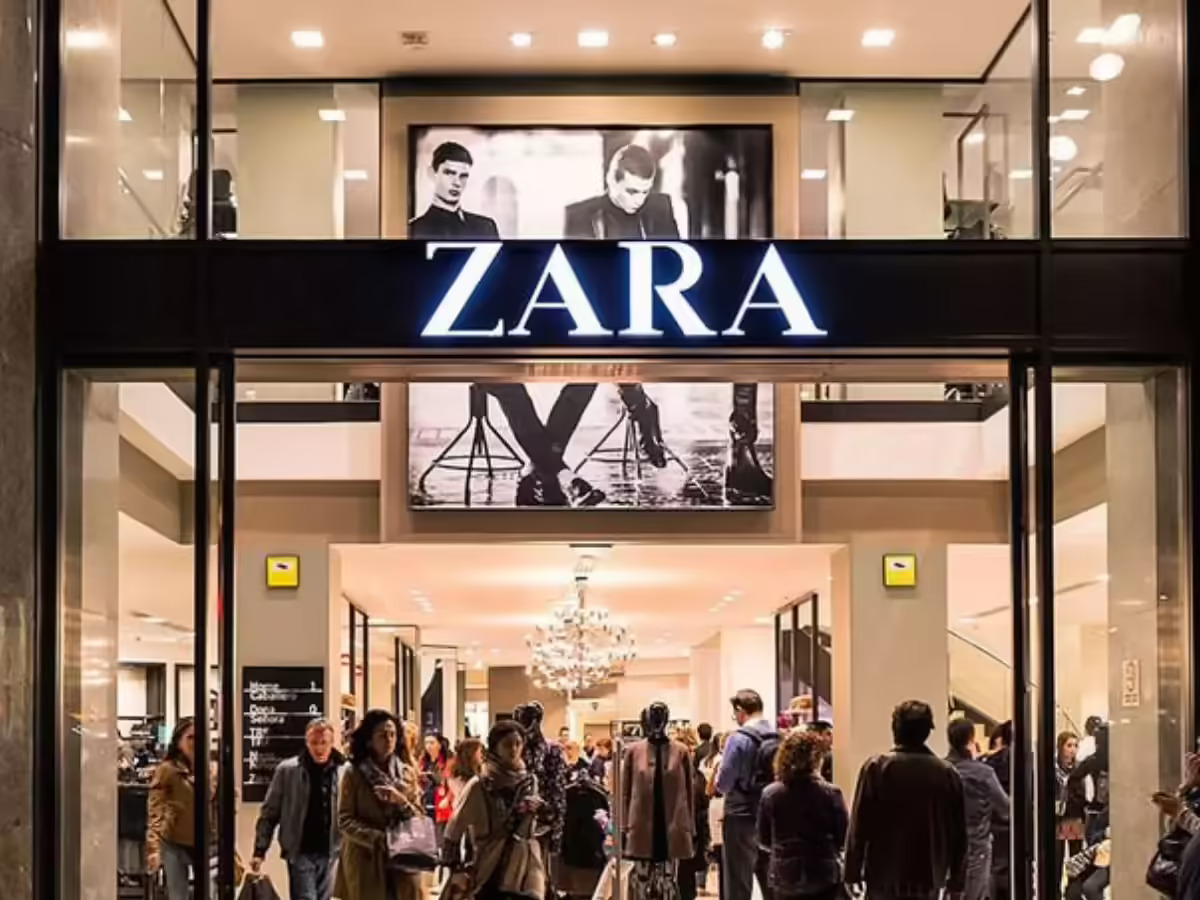
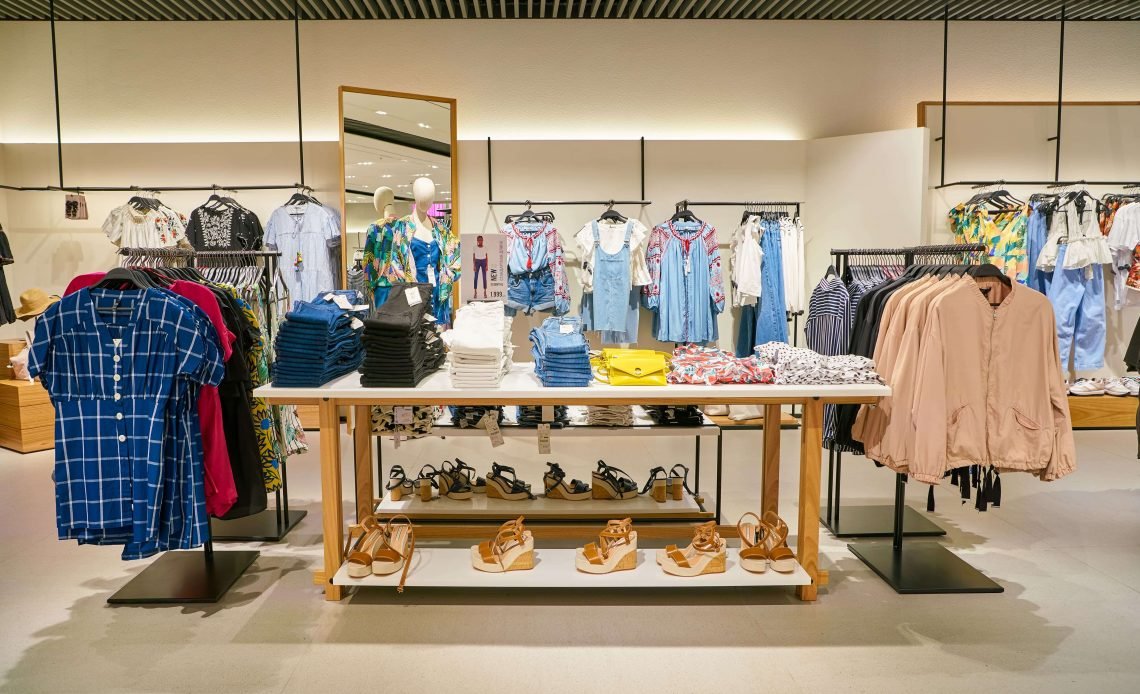
Most retailers bet on what shoppers will want a year from now. Zara stopped guessing. It reads what is selling today and restocks twice a week.
This is one of the most quietly powerful operations stories in retail, and in early 2026, it got sharper.
For decades, the fashion industry ran on long forecasts. Designers guessed a year ahead, factories in Asia produced in huge batches, and whatever did not sell ended up on the markdown rack. Big bets, long lead times, high waste.
Zara's parent company, Inditex, built the opposite system and has now wrapped it in what it calls "Quiet AI." No flashy chatbots. Just AI woven into the supply chain itself.
Here is the operations problem it solves:
A) Fashion demand is almost impossible to predict far ahead. Trends move in weeks, not seasons.
B) Before its full RFID rollout, Zara's store inventory accuracy sat around 65%. Roughly one in three items was misplaced, miscounted, or invisible to the system.
C) Forecasting harder does not fix a problem this volatile. Reacting faster does.
How Inditex solved it:
a) Item-level RFID ("soft tagging," built with Intel) now tracks 100% of garments in real time across 5,600 stores.
b) AI demand forecasting drives around 85% of initial production allocation decisions.
c) AI trend detection scans social media, runways, and street style to spot trends 3 to 4 weeks faster than traditional methods.
d) Nearshoring in Spain, Portugal, Morocco, and Turkey keeps design-to-rack time near two weeks.
e) €1.8 billion invested in tech and logistics across 2025 to 2026.
The result is a "test and react" model: make small bets, read real demand, and restock what actually sells.
Three takeaways for operations leaders:
1) When demand is volatile, speed of reaction beats accuracy of forecast. You cannot predict a trend, but you can respond to one.
2) Visibility is the foundation. You cannot react to what you cannot see. RFID fixed the 65% blind spot first, then AI made it smart.
3) Small, frequent bets beat large, infrequent ones. Lower inventory risk, less markdown, faster learning.
If your demand shifted next week, would your supply chain react in weeks, or would it still be working off last year's forecast?
Image credit: RadiusDigital, ShanghaiGarment, @ETBrandEquity
#SupplyChain #Operations #Zara #Inditex #FastFashion #RFID #AI #DemandForecasting #RetailOperations #Industry40 #InventoryManagement #Nearshoring #OperationsManagement

61

understand.
Built for the way formalwear stores actually operate.
#Suitflow #Formalwear #TuxedoShop #Menswear #SmallBusinessSoftware #RetailOperations #Tailoring #WeddingIndustry #MensFormalwear
12

The biggest lie in supply chain AI right now: "Just plug in our model and it will optimize your inventory."
A new industry report released this week confirms what we've seen firsthand: 78% of supply chain AI projects fail to deliver expected ROI. And it's almost never because the model is bad.
It fails because:
• Your ERP data doesn't match your warehouse data
• Supplier updates only come via email or PDF
• Inventory counts are still entered manually at the end of each shift
• Every channel has its own separate order management system
You can't train an AI on fragmented, stale, inconsistent data and expect it to give you good answers.
The first step to successful supply chain AI isn't buying another model. It's connecting all your existing systems so they speak the same language.
We build custom integration layers that turn your siloed data into a single source of truth. Then we add AI on top that actually works.
We build production-grade Agentic AI solutions. More in bio.
How many different systems does your supply chain team use every day?
#SupplyChainAI #RetailOperations #EnterpriseAI #AgenticAI
1
10

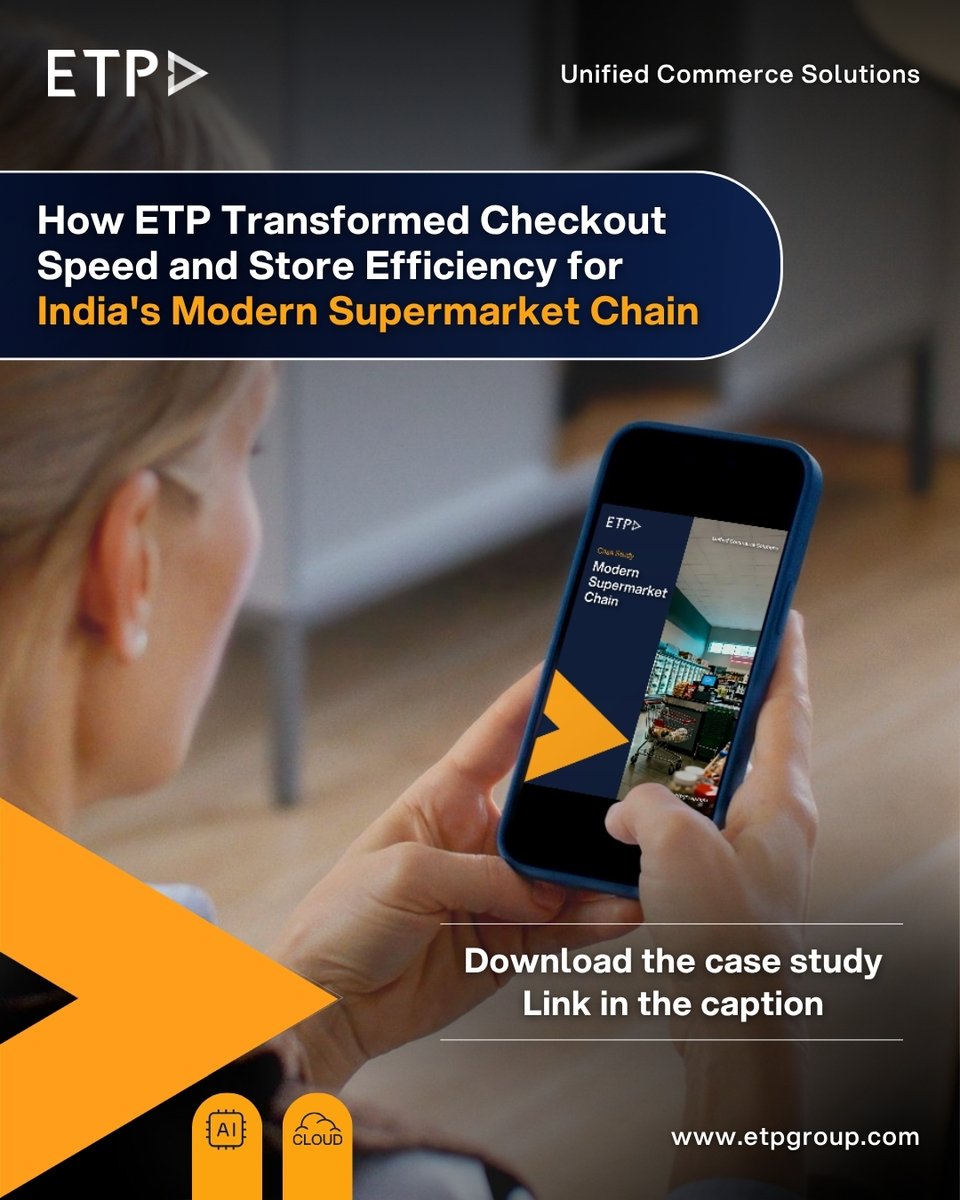
In supermarket retail, speed = experience.
Long queues, promo complexity, system delays?
They cost more than time.
Here’s how a leading Indian supermarket chain scaled POS performance and operations 👇
bit.ly/4fBZDsV
#RetailTech #POS #RetailOperations
5

Looking for our client –
Job Title – Operations Cashier
Industry – Betting & Gaming
Experience – Minimum 1 year of experience in a cashier or operator role within sports or virtual betting. Knowledge of betting terminals and odds is essential.
Education – Minimum Advanced Level in Accounting or a related field
Languages – English & French (Bilingual)
Location – Yaounde, Cameroon
Please go through the link below to apply –
📌 Apply Now: app.ismartrecruit.com/jobDes…
👉 WhatsApp Channel: shorturl.at/hPlI2
👉 Telegram Channel: t.me/JobsSAASAB2E
📩 If this role fits you, comment ‘Interested’ to move ahead.
👍 Interested | ❤️ Applied | 👎 Skip
#HiringNow #CashierJobs #OperationsJobs #AccountingJobs #CustomerService #GamingIndustry #SportsBetting #RetailOperations #YaoundeJobs #CameroonJobs #AfricaJobs #CareerOpportunity #ApplyNow #NowHiring #JobSearch #FinanceJobs #Recruitment #HiringAlert #BilingualJobs #SAASAB2E

13
Planograms lose value when shelves drift out of alignment.
GPOX helps keep c-store shelves set the way corporate intended through weekly replenishment.
Learn more: gpoplus.com/solutions/planog…
#RetailTechnology #RetailOperations #Merchandising #ShelfManagement #ConvenienceStores #RetailAnalytics
26

Stockouts don't just mean a lost sale—they often mean a lost customer. For growing retailers, keeping tabs on inventory health across multiple locations can quickly become a massive operational bottleneck.
In a recent conversation, Leland McFarland of Small Business Trends spoke with Hari Hara Prabu, Head of Product for @ZohoPOS, to discuss how automated, real-time inventory tools protect your bottom line. Hari Hara Prabu highlighted how business decision-makers can establish custom threshold limits and restocking levels per product.
When inventory dips, the system triggers automated alerts, allowing teams to immediately raise purchase orders or initiate stock transfers between locations using built-in data reports. Streamlining this workflow ensures your business stays agile, efficient, and ready to meet customer demand without the overhead of manual tracking.
Learn how to optimize your inventory strategy with Zoho POS: zoho.com/pos/
#InventoryTracking #RetailOperations #Zoho #SmallBusiness #PointOfSale @Zoho
2
5
620

Jun 8
Sajjad Ali Meno has joined LaGuardia Petroleum as Head of Sales and Retail, bringing over 10 years of experience in retail sales, network development, and petroleum business operations.
#SalesLeadership #RetailOperations #PetroleumIndustry #ClapPakistan

28

Most stock losses do not begin with theft.
They begin with delayed visibility.
Manual inventory updates.
Duplicate entries.
Dispatch confusion.
Emergency restocking.
End-of-day .....
kwetupartners.net
#InventoryManagement #SMEs #DigitalTransformation #RetailOperations
1
6
Jun 8
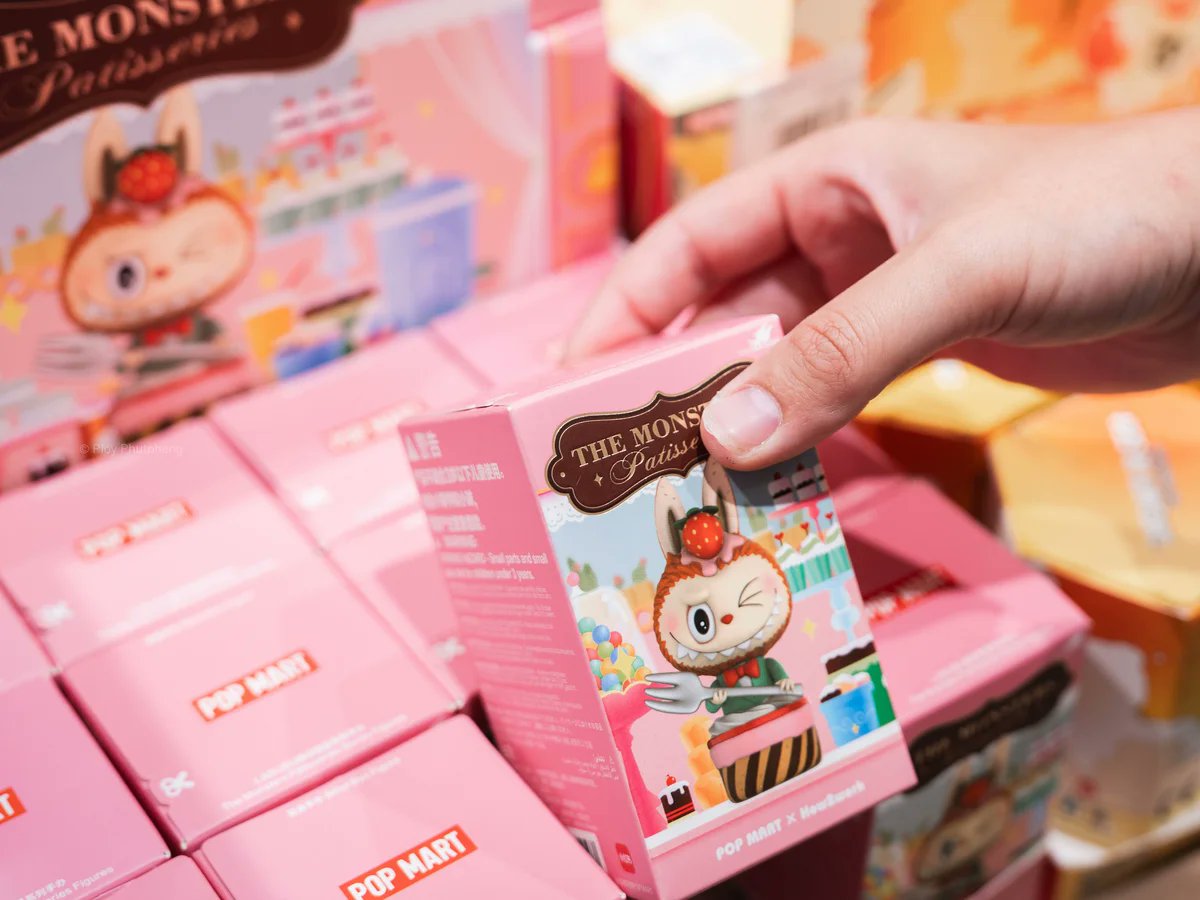
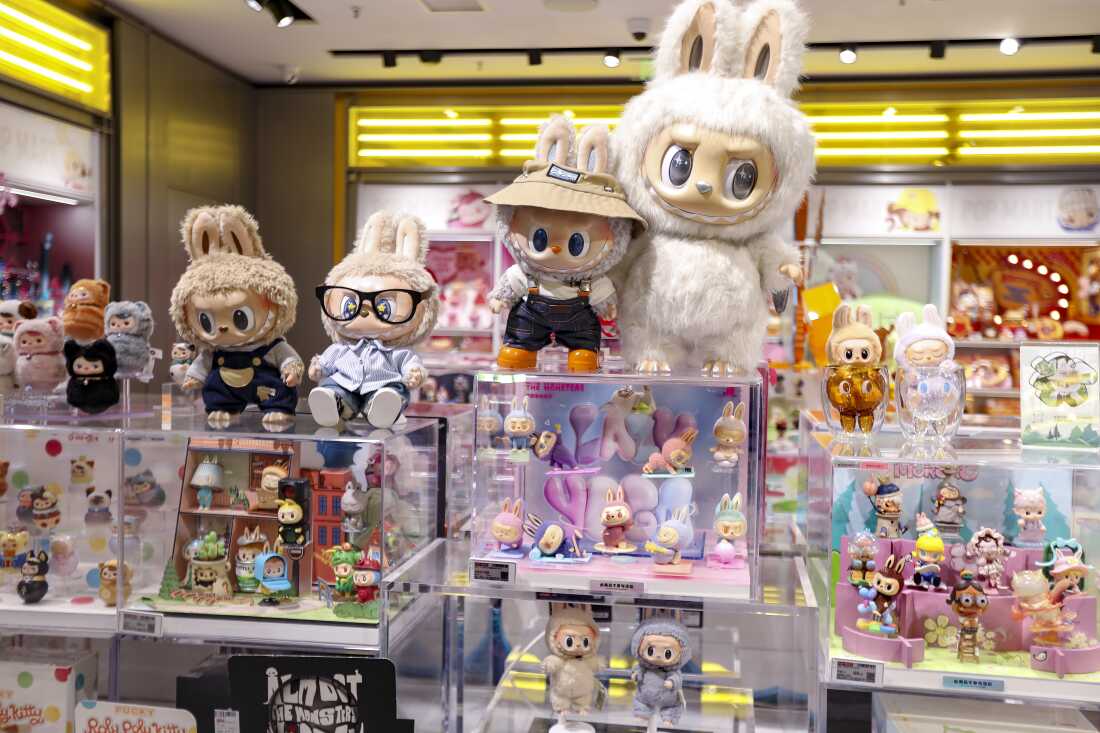
Pop Mart sold over 100 million Labubu dolls last year. Its hardest supply chain problem is not making too few. It is making too many.
This is one of the most counter-intuitive operations stories of 2026, and it breaks a rule most of us were taught.
For decades, the supply chain goal was simple: meet demand. Make enough. Avoid stock-outs. Empty shelves were a failure.
Pop Mart, the Chinese maker of the viral "blind box" Labubu collectibles, lives in the opposite world. Its entire business model runs on engineered scarcity. You do not know which figure is inside the box. Supply is deliberately limited. The hunt is the product.
That model created staggering results:
A) Labubu drove sales past 100 million units worldwide in 2025.
B) Pop Mart scaled to 30 million plush units a month by late 2025, a tenfold jump in a year.
C) Revenue up 204%, net profit up 396% in the first half of 2025.
D) The stock rose more than 200%, valuing Pop Mart above Mattel and Sanrio.
Then the paradox hit.
When Pop Mart made more to meet demand, resale prices fell over 50%, and the exclusivity that drove the hype started to fade. When it made too little, counterfeits exploded. Chinese customs seized 1.8 million fake Labubus in 2025 alone, many produced on 3D printers, some with unsafe materials.
So Pop Mart is now solving a problem most companies never face: how to make exactly the right amount.
Its response uses real Industry 4.0 tools:
a) Regional production redundancy: new partner factories in Mexico, Cambodia, and Indonesia to shorten restock cycles without flooding the market.
b) Blockchain authentication to separate real from fake.
c) Demand sensing to balance scarcity against frustration.
d) Portfolio diversification beyond Labubu (Crybaby, Skullpanda, Nyota) to reduce single-character risk
Three takeaways for operations leaders:
1) More supply is not always the goal. For some products, availability and value move in opposite directions.
2) Scarcity is a strategy until it invites counterfeits. The gap you leave in the market gets filled by someone, legally or not.
3) Matching supply to demand is harder than maximizing either one. The precise middle is the hardest place to operate.
If your product suddenly went viral tomorrow, would you know how much to make, or would you simply make as much as you could?
Image credit: @NBCNews , @NPR , @BusinessTimes , @guardiannews
#SupplyChain #Operations #PopMart #Labubu #DemandPlanning #InventoryManagement #Manufacturing #Counterfeiting #Blockchain #Industry40 #RetailOperations #OperationsManagement


175

The replication trap kills retail expansion opening stores without systems creates hidden operational leaks. Growth fails silently without structure. #RetailScaling #RetailStrategy #RetailOperations #SystemLedGrowth
8
For small business owners already operating within the @Zoho ecosystem, adding a point-of-sale system shouldn't mean adding more administrative friction.
In this insightful discussion, Leland McFarland of Small Business Trends sits down with Hari Hara Prabu, Head of Product for @ZohoPOS, to explore the value of a contextually connected software suite. Hari Hara Prabu points out that traditional third-party POS integrations require teams to manually import transactions, log journals, and handle tedious reconciliations. With Zoho POS, your data flows directly and naturally into tools like Zoho Books.
This automation ensures decision-makers don't waste time managing disjointed systems, viewing the new tool not as a disconnected application, but as a natural extension of their existing workflows.
Learn how to effortlessly unify your retail and accounting operations here: zoho.com/pos/
#SmallBusiness #FinTech #RetailOperations #Zoho #CloudAccounting #WorkflowAutomation
2
216