Deciphering circuit mechanisms of learning and action-selection at @MRC_LMB
Joined December 2020
- Tweets 58
- Following 193
- Followers 393
- Likes 132
3 Photos and videos
Pinned Tweet

10 Mar 2023
👋 It is out! Our joint effort to create a complete synaptic connectome of Drosophila larval brain came true and is published in @ScienceMagazine: science.org/doi/10.1126/scie…
Amazing work by @WindingMichael, @bpedigod colleagues from @MRC_LMB @Cambridge_Uni @HopkinsEngineer @JHUBME
6
72
242
38,231

Scientists have generated the first complete map of the brain of a small insect. The map shows all 3,016 neurons and 548,000 synapses tightly packed in a young fruit fly's brain, which is smaller than a poppy seed go.nature.com/3ZTAU8q
3
47
206
51,296
Zlatic Lab retweeted

10 Mar 2023
We’ve generated a synapse-resolution map of an insect brain, includes 3016 neurons and half a million synaptic sites! Out today in Science science.org/doi/10.1126/scie…
Summary below and in @bpedigod’s thread. @ZlaticLab, @albertcardona, @neuro_data, Carey Priebe, and many others
29
390
1,641
361,617
Zlatic Lab retweeted

10 Mar 2023
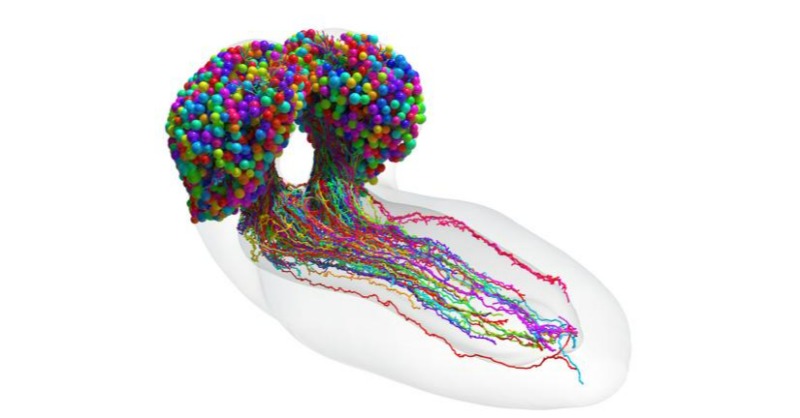
How does the brain work? 🧠
Today, scientists reveal the first complete brain wiring map in a relatively complex animal.
The map can help understand how signals travel through the brain to drive behaviour and learning 👇
@PDN_Cambridge @CamZoology @MRC_LMB
5
23
91
24,283
Zlatic Lab retweeted

10 Mar 2023
Our work studying the connectome of an insect brain, that of a Drosophila larva, is out today in Science! science.org/doi/10.1126/scie… Some highlights below and in @WindingMichael’s thread. Work with @neuro_data, Carey Priebe, @albertcardona, @ZlaticLab, and many others.
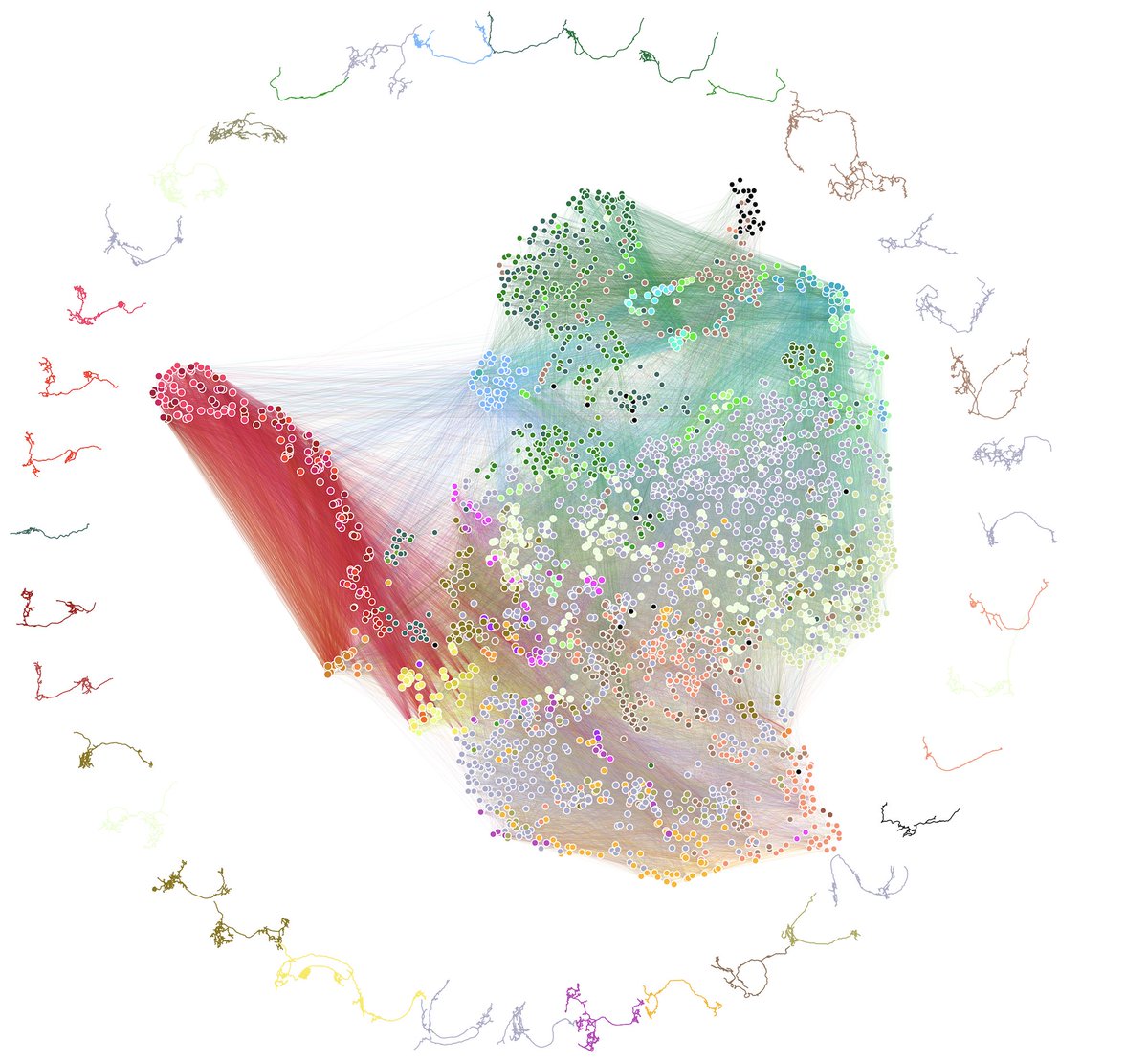
ALT Diagram of network connectivity of a maggot brain, with neuron skeletons drawn on the border
2
37
114
30,234
Zlatic Lab retweeted

10 Mar 2023
9 Mar 2023

The first wiring map of an insect's brain hints at incredible complexity npr.org/sections/health-shot…
2
7
1,609
Zlatic Lab retweeted

9 Mar 2023
ok. i've peaked. it's all downhill from here. i was interviewed as the "expert not involved in the study" by GIZMODO (!!😍!!) on the new larval connectome paper, out today in science from @albertcardona, @ZlaticLab, and colleagues. amazing work!! gizmodo.com/first-complete-m…
3
8
77
5,659
10 Mar 2023
👋 It is out! Our joint effort to create a complete synaptic connectome of Drosophila larval brain came true and is published in @ScienceMagazine: science.org/doi/10.1126/scie…
Amazing work by @WindingMichael, @bpedigod colleagues from @MRC_LMB @Cambridge_Uni @HopkinsEngineer @JHUBME
6
72
242
38,231
10 Mar 2023
We would like to cordially thank to @albertcardona, Carey Priebe, @jovo, Volker Hartenstein, Richard Fetter and their labs and @HHMIJanelia for all the support on this journey 🙏
1
1
5
782
10 Mar 2023
The complete synaptic-resolution connectome comprises 3016 neurons and 548,000 synapses. We believe that this complete brain connectome will be a lasting reference study, providing a basis for a multitude of theoretical and experimental studies of brain function in general🧠
1
5
1,295
10 Mar 2023
Good luck @WindingMichael 🥳 We'll miss you...
2 Mar 2023

I am starting my own research group at @TheCrick Institute in London! We will be investigating how neuronal circuits in the brain drive social interactions between animals.
I have an immediate opening for a PhD student, apply by 22 March!
crick.ac.uk/research/labs/mi…
3
355
9 Feb 2023
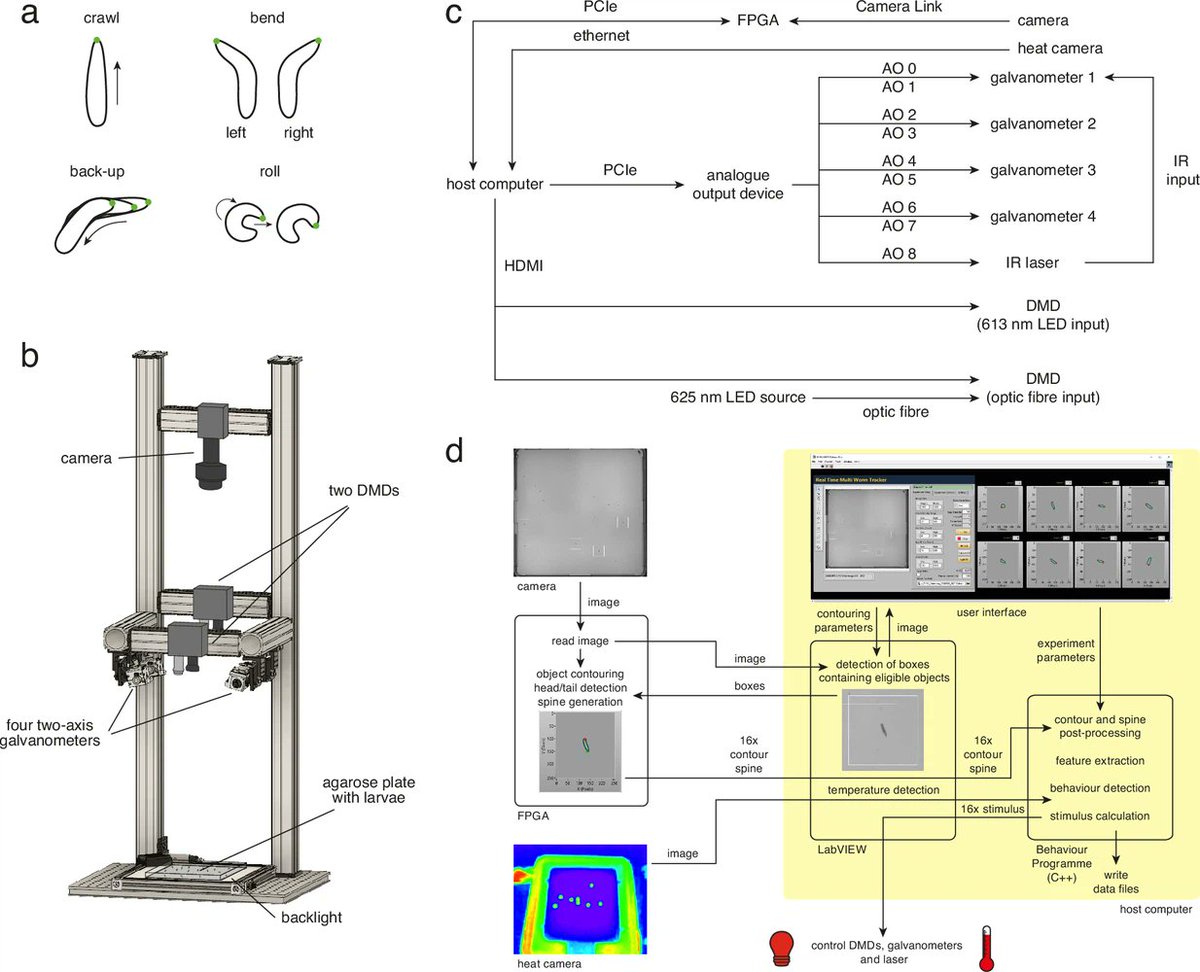
📢Did you know that we have developed a high throughput training system that allows real-time behaviour detection of freely moving larvae (up to 16) with targeted opto- and #thermogenetic stimulation of tracked animals in #Drosophila?
elifesciences.org/articles/7…
1/3🧵
2
5
17
5,936
9 Feb 2023
2/3 This stimulation is delivered automatically with high temporal precision and is controlled in either open- or closed-loop. Using this approach, we show for the first time that Drosophila larvae can perform classical #conditioning with no overlap between sensory stimuli.
1
2
276
9 Feb 2023
3/3 In addition, our system will enable rapid screening for neurons and circuits that underpin different forms of learning and also has the potential to drive future research in larval taxis, decision-making, and spatial navigation and #memory.
212
Zlatic Lab retweeted

8 Feb 2023
Over 50,000 annotations have been added to the connectome by the FlyWire community!
This APL neuron, tagged by @mwpleijzier @zhihaozheng, is 20x longer than a fly's whole body and is the longest cell in the brain.
Proofread by labs of @gsxej @MurthyLab @sebastianseung
1
18
74
12,666
Zlatic Lab retweeted
11 Oct 2021
Sneak peek:
We will soon be releasing a complete insect brain connectome! With both brain hemispheres mapped, we can study how the left and right sides of the brain communicate #Drosophila #neuroscience
16
181
821
29 Nov 2022
👉 Our new preprint is out on #BioRxiv
It is a comprehensive work between our lab, @albertcardona lab and our collaborators, with our talented postdoc @WindingMichael as a co-first author and also one of the coresponding authors 🥳
28 Nov 2022
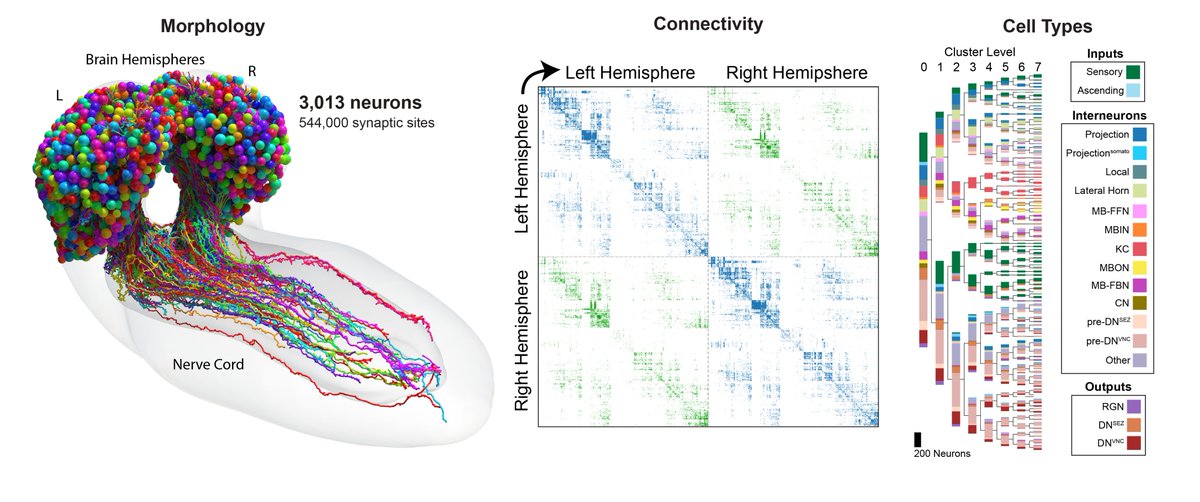
Check out our new preprint: the complete #connectome of the entire #Drosophila larval brain, with all inputs and all outputs, and a comprehensive analysis of feedforward and feedback pathways across both brain hemispheres #Neuroscience biorxiv.org/content/10.1101/…
2
13
52
Zlatic Lab retweeted
28 Nov 2022
Check out our new preprint: the complete #connectome of the entire #Drosophila larval brain, with all inputs and all outputs, and a comprehensive analysis of feedforward and feedback pathways across both brain hemispheres #Neuroscience biorxiv.org/content/10.1101/…
12
173
761
Zlatic Lab retweeted

14 Oct 2022
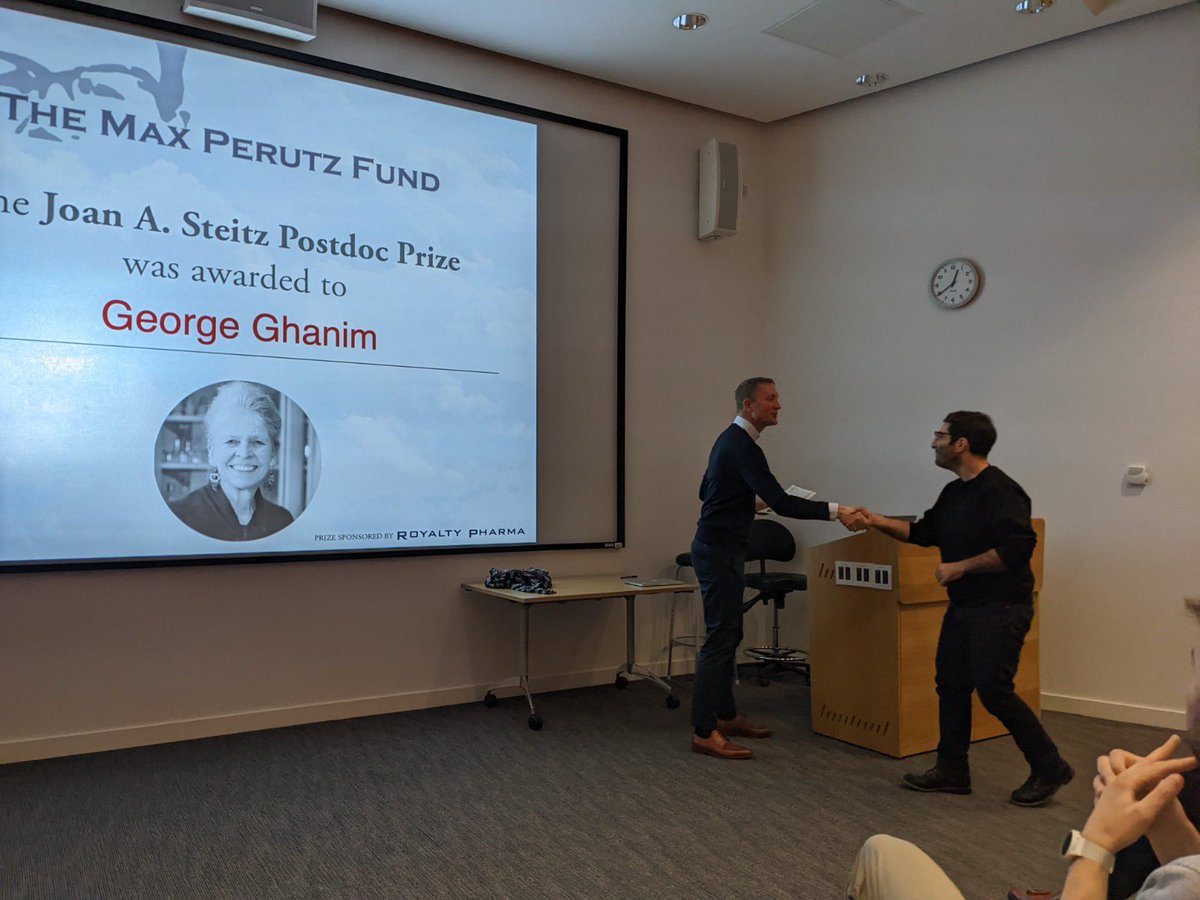
What a great week of a lot of exciting science at the first in-person @MRC_LMB symposium since 2019. Congratulations to our postdoc @AutomneNine on being awarded the Joan Steitz Prize! So well-deserved George.
4
5
56
Zlatic Lab retweeted

13 Sep 2022
@EPFL wrote a nice piece on our latest work developing tools to perform long-term / lifetime-scale recordings of ventral nerve cord motor circuits in behaving flies.
Led by @LauraHrmns and @DrMuratKaynak jointly between my and @mssakar 's laboratories:
actu.epfl.ch/news/a-window-i…
8
20