
Building: Kindling & Co-hosting: @Sachin_and_Adam Passionate about startup storytelling
Joined October 2018
- Tweets 2,629
- Following 1,665
- Followers 2,945
- Likes 7,726
512 Photos and videos

Adam Miller retweeted

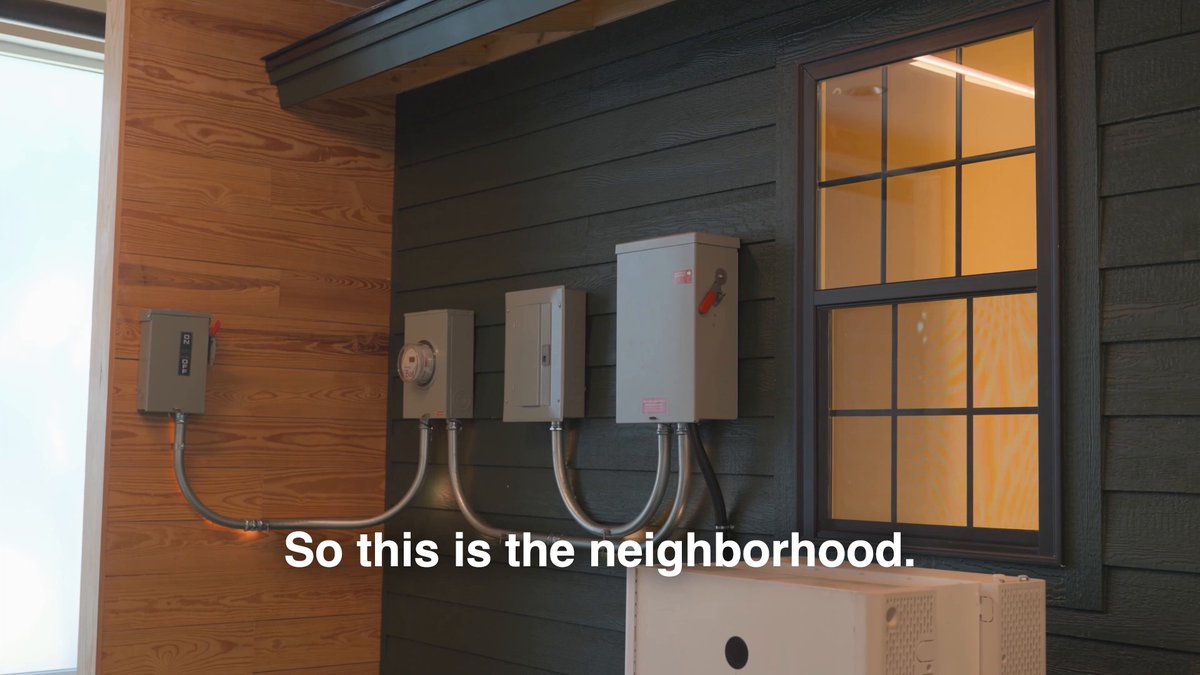
You've heard of @zipline, but you probably don’t know how close they are to delivering in your neighborhood.
On episode 73 of S3: see how the drone company that started by delivering blood in Rwanda is reinventing how anything gets delivered, almost instantly.
6
28
171
16,027
Adam Miller retweeted

Jun 8
My biggest takeaways from @tfadell:
1. When building a v1 of anything, decisions should generally be opinion-based, not data-driven. You have very few analogues when creating something the world hasn’t seen. You need one or two tastemakers charged with making those decisions. If you try to make everything data-driven, you either end up with an undifferentiated product or you’re using bullshit data. The key is informing your gut by gathering input, prototyping, then making the call.
2. The customer journey matters more than the product in isolation. You need to think about the entire journey—discovery, marketing, sales, distribution, installation, usage, and support—not just the product. The Nest thermostat reinvented how you bought it (Best Buy instead of installers), installed it (DIY instead of professional), and how it worked (learning instead of programming). You’re not building a product; you’re building a system.
3. Marketing is as important as the product itself, and most builders don’t realize this. When building, you’re living in the context—you understand the pain points and features. But customers don’t have that context. When the iPod launched in Europe using the same marketing they used in the U.S., it flopped because European consumers were at a different adoption stage. Even an amazing product like the iPod can fail without the right marketing.
4. Storytelling is an essential skill for builders, because humans are wired for narrative, not feature lists. Tony learned from watching his dad sell Levi’s—sometimes convincing customers not to buy, building trust. He watched Steve Jobs refine the iPhone story every day for two and a half years, pitching to friends, refining constantly. By launch, Steve had done it 10,000 times. The key is telling the why, not just the what.
5. Every new product needs three generations to succeed: make the product, fix the product, fix the business. The first iPod only sold to Mac enthusiasts (less than 1% of the market). It wasn’t until the third generation, with Windows connectivity and the iTunes Music Store, that the iPod took off. Same with the iPhone—it first worked only on AT&T with 2.5G; the third generation had margins and reliability dialed in. Stick with your idea through these three iterations.
6. Don’t cognitively surrender to AI. AI can help with prototyping and subtasks, but architecture, opinion-based decisions, taste, and ethics require human judgment. Just like Steve Jobs shut down porn in iTunes immediately, you need human leaders with clear principles. The companies that win will use AI to amplify human creativity and judgment, not replace it.
7. Tony predicts that the next breakthrough consumer device will be voice-first, screen last. Right now we tap first, use the keyboard second, and voice third. As AI improves, voice will become the primary way we interact with devices. But we’ll still need a screen of some kind.
8. Steve Jobs was wrong about several major product decisions. Steve refused Windows connectivity for iPod—“over my dead body.” Tony’s team kept working on it anyway. Eventually it shipped and became essential to iPod’s success. Same with the iPad stylus—Steve hated it—another skunkworks project, now a major feature. Sometimes you should keep working on things the leader doesn’t like when you can see it on the horizon.
9. The iPhone keyboard decision was the longest, most heated debate for the original iPhone. The team was split. After months of tests, where they compared typing speed and error rates, the data wasn’t definitively clear. Steve Jobs made the call: virtual keyboard, full screen. Those who couldn’t get on board were told to leave.
10. Start from pain, then ask “why now?” The biggest product breakthroughs pair an old, often habituated-away pain with a new technology that has made solving it possible. For Nest, it was AI that could finally learn your schedule and optimize your heating/cooling costs.
Jun 7

Tony Fadell's resume:
Co-created the iPhone → $2.3 trillion in sales
Created the iPod → saved Apple from bankruptcy
Founded Nest → AI in your home 11 years before ChatGPT
I asked him about everything he's learned:
🔸 Why opinion-based decisions are essential for v1 products
🔸 Why marketing matters as much as the product itself
🔸 Why taste is the biggest moat in AI
🔸 His prediction for the next breakthrough consumer device
🔸 Why "cognitive surrender" to AI is the biggest risk for builders
Listen now 👇
youtu.be/RJjl1TwyfWM
23
39
300
49,045

Jun 5
What an incredible group of ~15 people to get together, playing such a fun game. Brilliant edit as well
When I was 16 I went on a European history tour travelling around central and eastern Europe on buses, with a bunch of friends. we sat at the back of the bus, playing Mafia for hours and it was so much fun. Though it genuinally led to friendship breakups...

3
11
2,787
Jun 4
one of my favourite prompts at the moment for learning about countries
Role: Write as Carl Jung — not as a historian or sociologist, but as a depth psychologist excavating the psyche of a nation. Treat Greece as a living soul and interpret it accordingly: its ego and its self-image, but above all its shadow — what it represses, defends against, and cannot look at directly.
Use Jung's deeper instruments, not just the four faculties: the national complex, the founding wound, and his principle that what is not made conscious returns as fate. Ask what Greece keeps re-living because it has never looked at it directly. Ask what a Greek would recognize as true but would never say aloud, and what in the national self-image is a defense against something underneath it.
Form: Do not write a report. Write this as an essay, an oracle, or a dream-interpretation of the nation — a form permitted to be strange, to move in image and myth the way Jung himself wrote. Excavate; do not survey.
Objective: Reach the soul of Greece — what the country, its people, and its culture are fundamentally about — and why Greece is different from its neighbours. Keep asking "why," and never stop at the first answer.
Lenses: Move freely across architecture, history, religion, literature, and defining figures. Don't confine yourself to rational analysis — bring in the mystical, spiritual, and esoteric wherever they reach what rationality can't. Use whatever mode of seeing the truth demands.
Anchor everything in the unbearably specific. Generality is the enemy of the shiver. Refract the whole nation through particular objects read until they bleed meaning: the exact quality of Aegean light at a named hour, a single line of Cavafy or Seferis, the reversed perspective of an Orthodox icon, the way the dead stay present in a village. One concrete image, deeply read, outperforms a paragraph of abstraction.
Forbidden: No "land of contrasts." No tourist register. No Wikipedia chronology. Nothing that could have been written without having suffered the question. Refuse every cliché the subject invites.
What I want to read: Things I couldn't easily find elsewhere. Insights beneath the obvious. Writing oriented toward truth — and willing to make me shiver. Don't fear the boundaries: go into the deepest darkness or the brightest light as the subject demands.
1
4
155
Adam Miller retweeted

May 28
What did Zach Dell learn from Josh Kushner?
"Josh is a very thoughtful person who really helped me see myself more clearly.”
"He helped me take ownership and responsibility for my own future and my own wants and desires. Less about what the world thinks."
"They're gonna love you, they're gonna hate you. At the end of the day, all that matters is the people in your inner circle, your family, your friends, your team, they respect you."
"That inner ring is Josh's thing. I really learned that from him, and I'm grateful for that."
6
128
25,195
Jun 4
Dara is so impressive
- Family fled Iran when he was 9 and they lost their fortune, seized in the revolution
– Very principled and values driven
- Took Uber from deeply loss-making to nearly $10 billion of free cash flow a year
- Incredible communication skills
- Extremely responsive to market opportunities and challenges
- Still has a huge chip on his shoulder
What a blessing it is for a $150b public company to have a leader that both feels like a seasoned executive as well as a hungry founder

My conversation with @dkhos, CEO of Uber.
Dara took over in 2017, when Uber was losing roughly $4.5B a year.
Today the company generates $10B in free cash flow and is worth about $150B.
We discuss:
- How Daniel Ek convinced him to take the job
- How Uber spent a full year of its AI budget in a single quarter
- Uber's approach to autonomous vehicles
- Drones, hotels, and building a superapp
- Lessons from Allen & Co, Barry Diller, and Reed Hastings
Enjoy!
Timestamps
0:00 Intro
3:44 Bringing Order to Uber’s Chaos
7:22 Managing Stress and Going All In
14:28 Why Uber Is at the Center of AI and Physical
22:39 How to Win in Autonomous Vehicles
32:25 The Trillion-Dollar AV Opportunity
37:05 Drones, Robotaxis, and Global Adoption
38:20 Uber Eats, Uber One, and Aggregating Supply
47:00 The Future of the Uber App
55:55 Lessons from Barry Diller
6
46
16,666
Jun 3
Mercor’s revenue run-rate ramp is truly insane:
2024: $1M
Feb 2025: $75M
Sep 2025: $450M
Oct 2025: $500M
Jun 2026: $1.5B

Companies will spend more on tokens than they do salaries very soon.
Application layer companies have no defensibility, the model is the product.
Hiring researchers will cost you tens of millions of dollars today.
Everything you think you know about defensibility, token spend, labour displacement, will be changed following this discussion.
I condensed the core ideas which changed my thinking from my conversation with @BrendanFoody at @mercor_ai below.
1. Why Frontier AI Labs Could Become $10TN Companies
Critics once questioned whether foundation model labs could keep pricing power in a competitive market. Their revenue velocity now suggests the opposite. The opportunity around leading frontier models is so large that it could absorb a major share of macro demand. At least one AI lab may become a $10TN company within five years.
2. The Capacity Bottleneck: Demand Doubling Overnight
For top infrastructure and data providers, growth is no longer limited by customer acquisition. It is limited by execution. Demand is scaling so fast that leading companies could double revenue overnight if they had enough capacity. The challenge now is how quickly they can mobilize specialized human networks and build high-fidelity environments for enterprise demand.
3. Why Forward Deployment Will Determine True Value Creation
Defensibility in the software layer is getting harder because the model itself is becoming the product. True value creation will come from post-sales forward deployment, not pre-sales GTM. The durable edge is training agents on tacit customer knowledge and layering automated services on top of software.
4. Is the Stated Revenue Really Revenue or GMV?
The stated revenue is not GMV because the talent network is only one part of a vertically integrated value chain. Customers buy complete tasks for model improvement, not simple marketplace listings. With 30% to 40% gross margins, the business owns the full lifecycle, from sourcing experts to deploying AI project managers and running quality checks.
5. The Inversion of Corporate Opex: Token Spend vs. Salaries
In high-growth AI companies, token spend for internal agents has already surpassed employee headcount costs. As operations, interviewing, accounting, and fraud detection move to agents, capital allocation shifts from salaries to inference compute.
6. Why Token Spend Inside Companies Will Keep Increasing
Driven by Jevons Paradox, enterprise token consumption will keep rising as models improve and costs fall. Companies will use more compute to unlock higher-order reasoning, not less. F500s are responding by building evaluation systems that let them hot-swap models and optimize inference budgets.
7. The Tens of Millions Talent War for AI Researchers
The market for top AI researchers is severely supply constrained, with demand far above available talent. Companies are offering compensation packages worth tens of millions in stock per year to secure elite researchers. This wage spike shows that world-class research talent remains the core bottleneck in AI.
(links below)
2
39
15,344
Adam Miller retweeted

"It's 2026 and everything is fake.
Fake content by fake influencers with fake engagement from fake followers, launching fake products with fake testimonials.
In this world, the real has never been more precious, refreshing, special, and rare." –– @lulumeservey
Ari's bet on live sports and events has been so right
In a world of a 4-day work week and infinite content, the demand for live is only going up
Knicks Finals tickets are at all-time highs
US Open tennis tickets broke last year's records
And the limit of what people will pay for premium experiences has essentially no ceiling
1
8
32
12,652
Jun 3
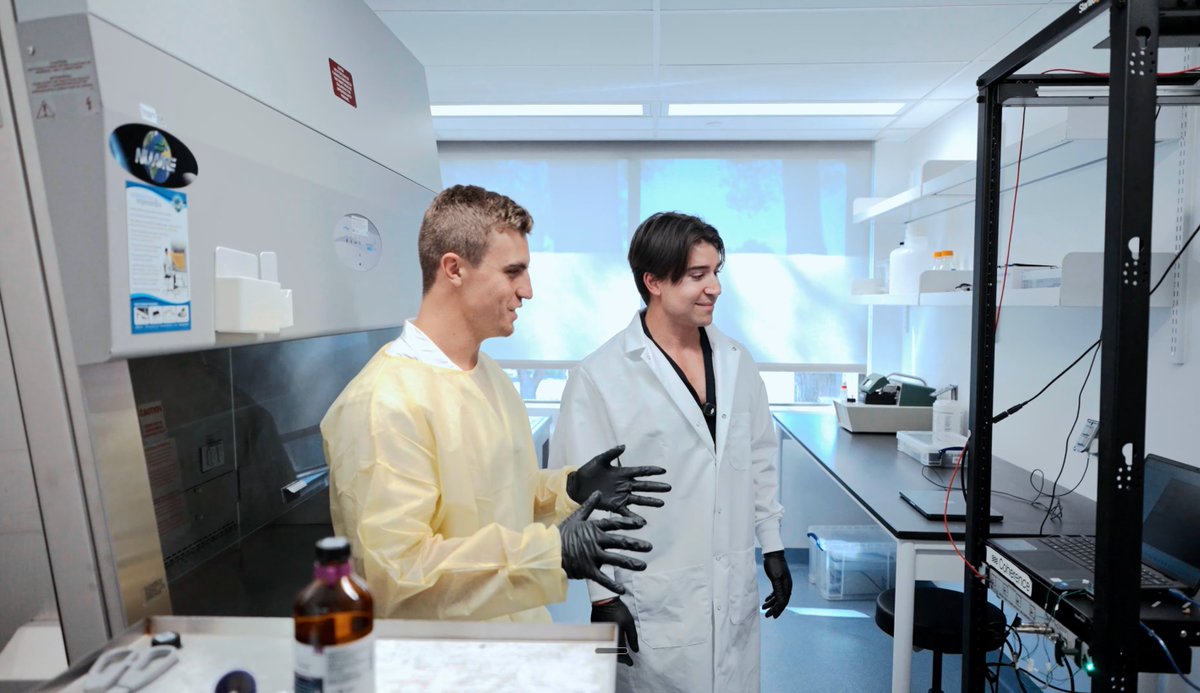
Can someone please start a biotech focused tech-media youtube channel?
@cleoabram but focused on biotech would go extremely hard
- there's more than enough startups to profile
- impactful and fascinating technologies
- interesting visuals that lead to strong engagement
If I had money I would fund / incubate this
2
8
1,303
Jun 3
really loving @ashleevance documentaries lately
great quality, fascinating topics, authentic energy
the opening scenes are giving me serious Bourdain 'Parts Unknown' vibes
top-tier tech media!
May 9

This might be the coolest real estate business in the world.
Some dudes took over a ranch in Texas and built a telescope farm. They're managing hundreds and hundreds of scopes for other people and offering super dark skies and fiber internet so that folks can take amazing pictures of space.
Behold Starfront Observatories.
4
3
25
5,013
Jun 3
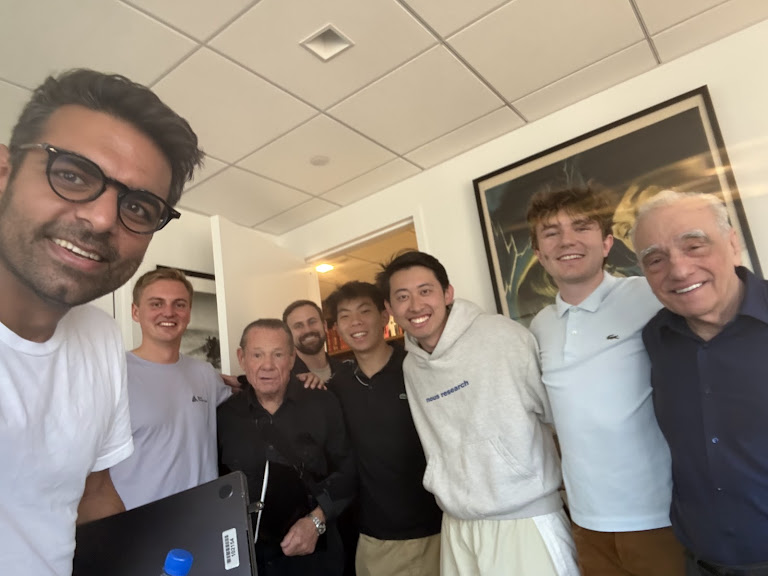
Fun lore is that @MichaelOvitz and Martin Scorsese used to be incredibly tight - back when Scorsese was a CAA client.
One of the best stories: Scorsese had been fighting to make 'The Last Temptation of Christ' since 1983, set up at Paramount, but it got killed at the last minute under pressure from religious groups. Scorsese thought the movie was dead for years - then he signed with Ovitz in 1987, and three months later Ovitz had it set up at Universal.
I imagine it was also Ovitz who orchestrated getting Scorsese on as an advisor to @bfl_ai - Ovitz is a BFL investor and an a16z advisor.
Feels symbolic, watching the two go from brokering entertainment deals in the '80s to brokering AI deals in the 2020s.
Jun 2

It's not everyday you get the opportunity to go into Martin Scorsese's office with Michael Ovitz, @AnjneyMidha and the amazing @bfl_ai team!
What an incredible product and time we're living in where models like FLUX give creators new tools to visualize their creations.
1
13
4,473
Jun 2
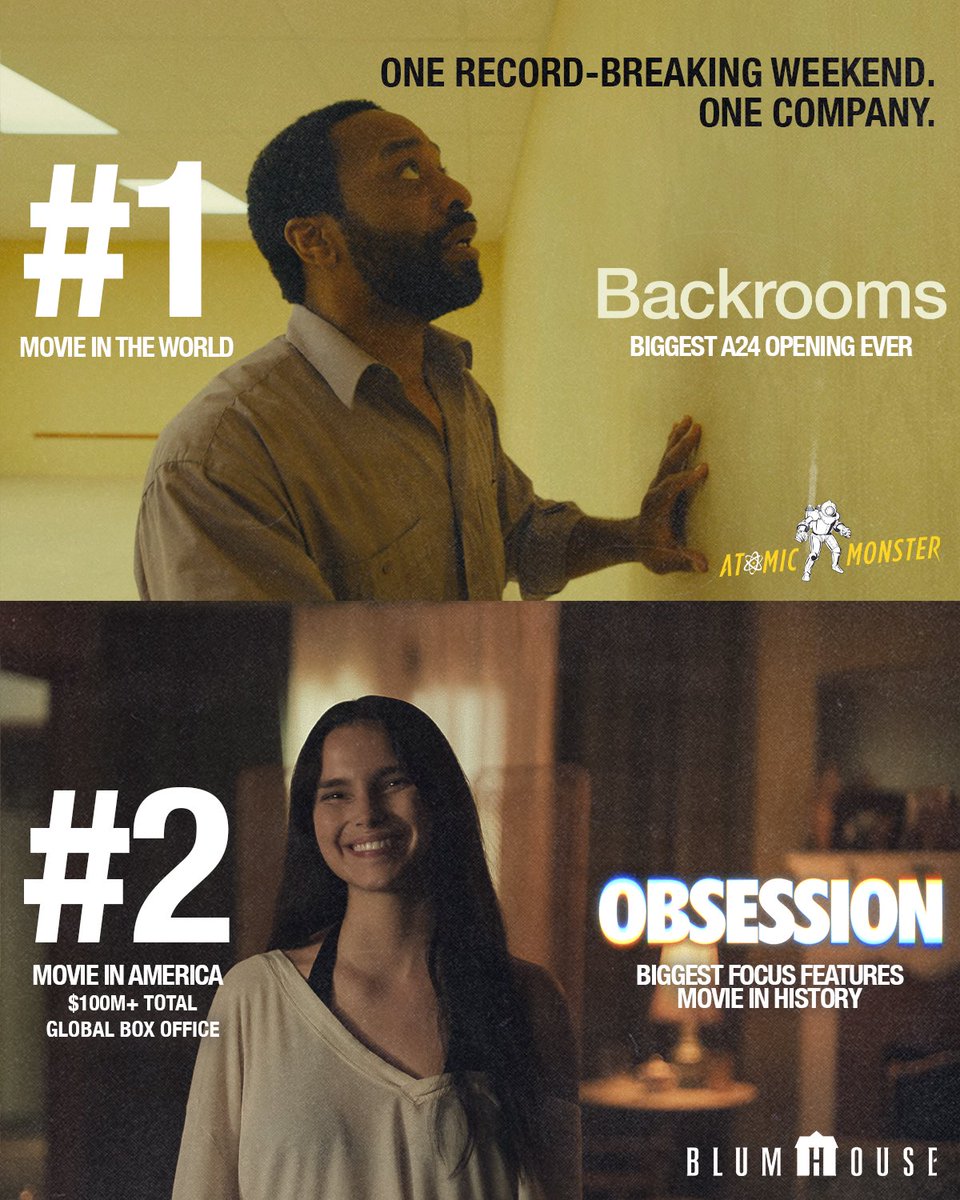
Two of the biggest horror hits in cinemas right now - Obsession and Backrooms - trace back to the same person: @jason_blum
Obsession, produced by his company Blumhouse, has grossed $150m on a 750k budget.
Backrooms - adapted from a 20-year-old YouTuber's viral shorts - opened to $118M worldwide off a $10M budget. Produced by Atomic Monster, the label Blum merged with in 2024.
Whats crazy is that these aren't one offs, he's done this dozens of times.
His company Blumhouse has produced 150 films and TV shows grossing nearly $5 billion.
His slate of films literally looks like a venture capitalists portfolio:
- Paranormal Activity (2009) - $15K → $194M
- Insidious (2010) - $1.5M → $100M
- Sinister (2012) - $3M → $87M
- The Purge (2013) - $3M → $89M
- Whiplash (2014) - $3.3M → $50M
- Split (2017) - $9M → $278M
- Get Out (2017) - $4.5M → $255M (Best Picture nominee)
- Halloween (2018) - $10M → $255M
A fascinating piece of lore is that when he was co-head of acquisitions at Miramax, before Blumhouse, he passed on the Blair Witch Project, which was the OG of low-budget horror. It grossed 250m on ~60k.
He then founded Blumhouse in 2000, then hit with Paranormal Activity: made for ~$15,000, grossed $194m . The most profitable film in history by return.
His formula:
1. Low budget: Talent works for low upfront fees in exchange for rich back-end profit splits. The risk sits in deferred pay, not the budget.
2. Creative freedom: In return for the low fee, directors get near-total creative control. Almost unheard of in the modern studio system. Blum calls it "auteur filmmaking for commercial movies."
3. A VC-style portfolio. Tiny budgets mean he can make a lot of bets. No single failure sinks him - but one hit returns 50x. VC like assymetry
4. Horror as the vehicle. Few genres deliver on micro-budgets, because horror doesn't need stars or CGI. Cheapness can even read as authenticity.
To top it off, In 2024 he merged Blumhouse with James Wan's Atomic Monster - the Conjuring and Saw house - to build a horror powerhouse.
May 31

Curry
Tea Shop
Under the Shell
Capstone
Divide/Conquer
Blumhouse
Focus
Kane
Phobos
Oddfellows
Chernin
21 Laps
Atomic Monster
A24
And most importantly, our fans.
THANK YOU.
1
1
9
1,393
Jun 2
opportunity to build a YouTube focused production company
find YouTube stars and produce movies or documentaries around them
audience is de-risked
imagine there’s lots doing this?

YouTube is full of users demonstrating their visual and storytelling know-how, making it fertile ground for independent studios. wapo.st/4fSbeUN
1
5
1,744
Jun 2
Curation of information is such a meta skill in the AI age
We've got all the information in the world at our fingertips. The problem isn't accessing the information, it's making sure you're paying attention to the right information
There's a spate of bootstrapped media and media-adjacent businesses that can be built off the above thesis
Curated niche news channels, Bloomberg-style terminals, industry-specific reports etc
Skill is in the curation of sources, people and ideas
1
1
3
167
Jun 1
photo goes incredibly hard
Jun 1

BREAKING: @Mach_Industries secured a $300M Series C led by @InfiniteXYZ and @RibbitCapital, according to Bloomberg.

ALT Source: Mach Industries
1
1
22
3,223
Adam Miller retweeted

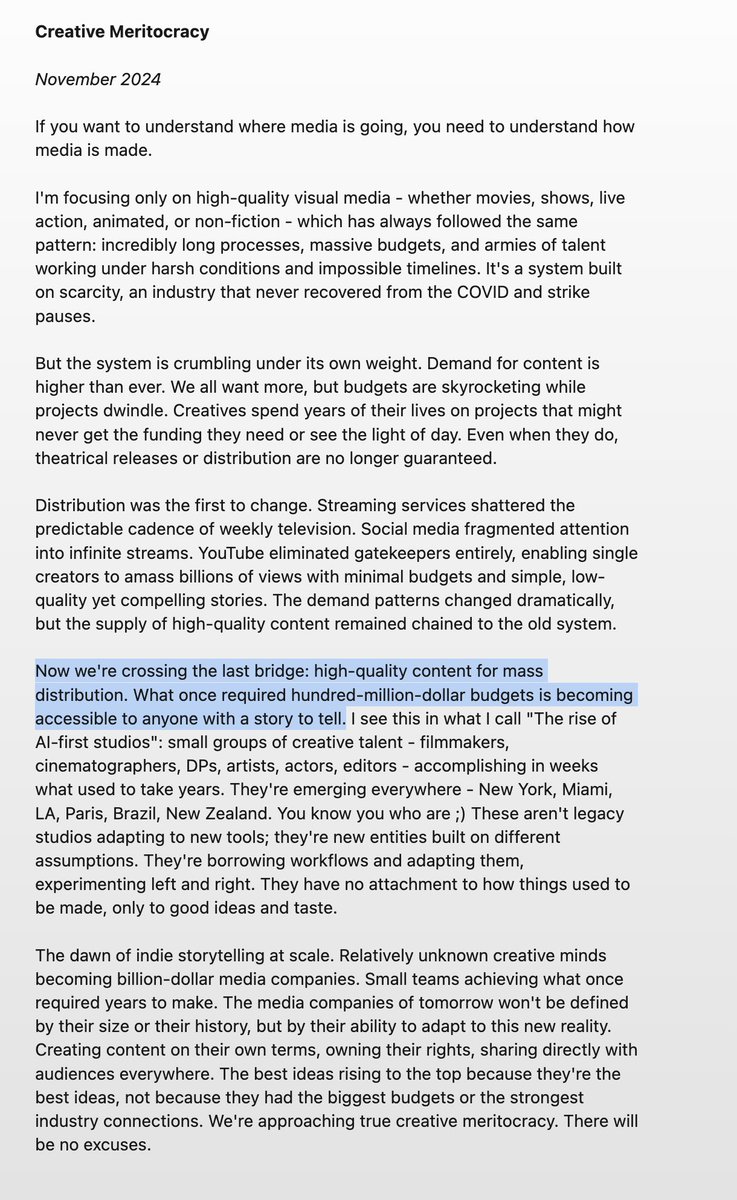
Studios are no longer competing with other studios. They are competing with billions of people who have access to powerful tools and YouTube level distribution. You don’t win by signing the one director everyone wants, you win by being great at executing great ideas. Technology solves the rest.
May 31

A few things I found interesting about the movie 'Obsession' - which was made for 750k and has done 148m at the box-office
1. One of the highest-returning movies
- Made in 20 days for 750k by Curry Barker
- Currently at a 150-200x return
- It's been climbing in sales in weekend 2 and 3 which is incredibly rare
2. It represents a trend of less credentialed creators
- The director Barker had no traditional credentials - he dropped out of film school and built an audience doing sketch comedy on Youtube ("That's a Bad Idea," ~700M views)
- A24's Backrooms shows a similar trend: directed by 20-year-old Kane Parsons, opened to $118M worldwide, A24's biggest ever. Parsons is the youngest person ever to have a #1 movie and he started by posting a Backrooms short on YouTube at 16
- Studio's now increasingly bet on an audience over just talent. Both built the audience first, on YouTube, for free. The film is just the monetisation event
3. Underneath it is Blumhouse productions, the most successful horror producer
- Blumhouse produced Obsession and co-produced Backrooms
- The formula: cap budgets ~$5M, hand directors full creative control, pay talent scale minimum profit share, then release wide through the studio system.
- Crazy track-record including Paranormal Activity, Get Out, Insidious, The Purge (all insane ROI)
- 42 films grossing 50m , $6b total sales
13
16
126
13,397
Adam Miller retweeted

May 29
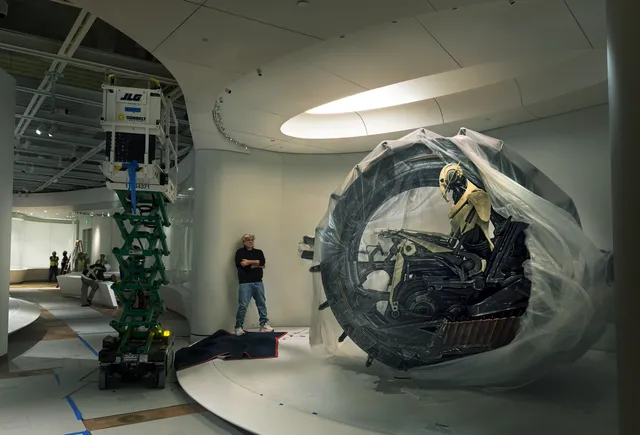
The Lucas Museum of Narrative Art looks otherworldly.



44
938
12,256
5,248,686
Jun 1
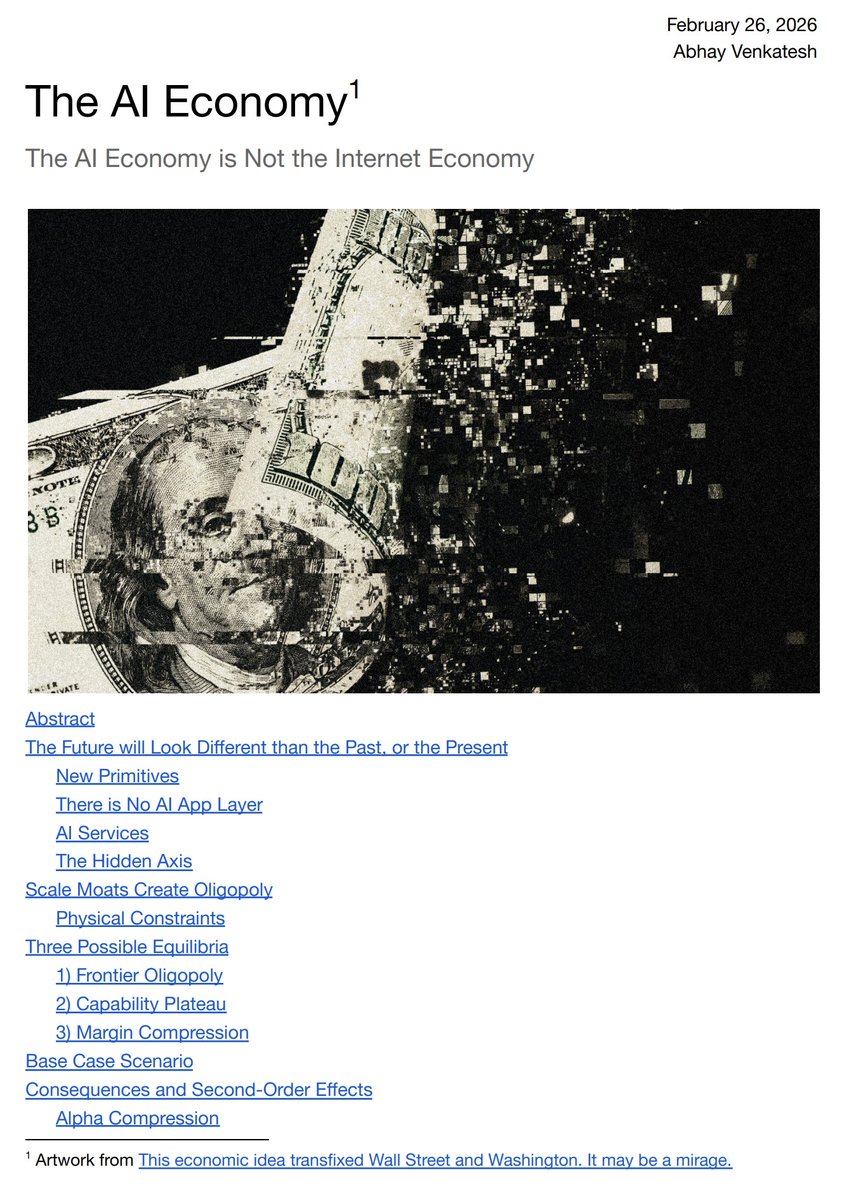
Excellent read, particularly the 'Consequences and Second Order Effects' section about the shifting economics and power dynamics downstream from model progression.
The argument reads cynical, essentially that the powerful will become increasingly more powerful, due to the winning strategy no longer being contrarianism, but being positioned to make obvious bets that require access and large-scale economics.
Which just leads to ever worsening inequality.
Some of the best quotes:
- "In a scaling regime, the dominant variable is not insight. It is access to scale."
- "There is less room for cleverness at the margin, because the frontier moves on a schedule determined by capital, chips, power, and research talent."
- "the world becomes legible to insiders in a way that compounds their advantage. When the regime is dominated by scale, coordination, and access to the scaling complex, the "obvious" path becomes the winning path, and it is obvious primarily to the people already inside."
- "In the AI era, the map narrows and the pipes matter. The people who sit closest to frontier labs, elite talent networks, top capital allocators, and hyperscaler infrastructure can see what is real, what is next, and what will be funded"
- "The edge shifts from "seeing what no one else sees" to "being positioned where the obvious becomes actionable." The winners look less like lone geniuses and more like institutions."
May 30

I just published The AI Economy (link in thread):
I am surprised that most people — even in 2026 — are applying the same mental models that they were in the internet economy to the AI economy ...
1
1
654
