Everything that matters for your optimal health that your Doctor likely hasn't told you.
Joined April 2024
- Tweets 5,790
- Following 838
- Followers 703
- Likes 10,998
19 Photos and videos

NotYourDoctor retweeted

I'm a cardiologist. I've held dying hearts in my hands in the cath lab at 3 AM. And I need to tell you something that changes everything about how we prevent heart attacks.
For decades, the entire field was built on one target: lower LDL cholesterol. Statins save lives — that's settled science. But too many of my patients did everything right — took their statins, hit their numbers, lived clean — and still ended up on my table with a ruptured artery.
We were treating the smoke while the fire kept burning.
The fire is inflammation. And the evidence is now overwhelming.
The CANTOS trial proved it first — lowering inflammation independent of cholesterol reduced cardiac events. But the newer data is what keeps me up at night.
AI-enhanced CT angiography can now detect inflamed arteries by measuring changes in the fat surrounding your coronary vessels — the perivascular fat attenuation index. Higher inflammation in the fat around even one artery independently predicts cardiac death. When multiple arteries show inflammation, the risk multiplies dramatically — even in patients whose cholesterol looks perfect.
This isn't theoretical. This is measurable. Right now. On a scan you can get this month.
Low-dose colchicine — a drug that's been around for centuries for gout — is now FDA-approved specifically for reducing cardiovascular events. It works by quieting the inflammatory cascade that destabilizes the plaque sitting in your arteries. A pill that costs pennies is saving lives the statins couldn't reach.
And the next wave is already in Phase 3 trials. Ziltivekimab — an IL-6 inhibitor — targets the central inflammatory pathway driving atherosclerosis. Phase 2 data showed a 90% reduction in hsCRP. The ZEUS cardiovascular outcomes trial is enrolling now, with results expected late 2026 into 2027. If positive, anti-inflammatory therapy will become standard in managing heart disease alongside lipid-lowering. The era of inflammation-targeted cardiology is arriving.
But it goes deeper than drugs. AI is now predicting heart failure and cardiac events 5 years before symptoms — integrating CT imaging, electronic health records, and genetic data with accuracy that jumps far beyond traditional risk calculators.
And polygenic risk scores — a simple genetic test that flags inherited cardiovascular risk — are now formally recognized as a risk-enhancing factor in the 2026 ACC/AHA guidelines. A single blood draw can reveal risk that's been silently building since birth. Decades before the first chest pain.
Here's what this means for you right now — today:
Ask your doctor for a high-sensitivity CRP test. It's cheap, routine, and measures the systemic inflammation that standard cholesterol panels completely miss. You can have perfect LDL and inflamed arteries that are quietly preparing to rupture.
If your hsCRP is elevated, discuss low-dose colchicine with your physician. It's FDA-approved for exactly this.
Push for a coronary CT angiography with AI plaque and inflammation analysis if you have risk factors. This isn't the stress test your parents got. This is 3D visualization of your actual arteries — with AI quantifying not just how much plaque you have, but what kind it is and whether the surrounding tissue is inflamed.
Consider polygenic risk score testing — especially with a family history of early heart disease. It's now guideline-supported.
And the foundation that never changes: move daily, eat real food, sleep 7-9 hours, manage stress, and know your numbers — ApoB, Lp(a), hsCRP, fasting insulin.
I left Iran as a child with nothing. I rebuilt everything in a country that gave me the freedom to become a physician. I've spent twenty years watching patients get second chances.
The ones who haunt me aren't the ones who died on my table. They're the ones who survived but never acted on what the science was telling them — years before the event that didn't have to happen.
You can have perfect cholesterol and still have a heart attack. Inflammation plus genetics can drive plaque rupture in arteries that look "fine" on a standard panel.
The myth that normal cholesterol means you're safe has cost more lives than I can count.
We now have the tools to detect the fire — not just the smoke. AI to see it. Genetics to predict it. Drugs to quiet it. And the ancient basics — movement, real food, sleep, purpose — to prevent it from starting.
Prevention is the new cure. And the science to make it real is no longer coming.
It's here.
464
2,052
11,976
4,003,714
NotYourDoctor retweeted

Your doctor was trained in a medical school funded by pharmaceutical interests, using a curriculum that has not meaningfully changed in decades, inside a system that generates revenue when you are sick and generates nothing when you are well. That is not a conspiracy. That is a business model. And your doctor…who is often a genuinely good person who went into medicine because they wanted to help people…is operating inside that model whether they know it or not. The system shaped them before you ever walked into their office.
144
241
774
100,404

May 27
Minger is a smart lady
May 26

An untrained 22-year-old took apart The China Study. The most famous nutrition book in America. Two million copies sold. She did it on a free blog in 2010.
Denise Minger. Former raw-vegan blogger. No academic training. No nutrition degree. No medical degree. By her early twenties she had stopped feeling well on her vegan diet and started reading the science her own community kept citing.
The book at the center of that science was The China Study.
Written by Cornell professor T. Colin Campbell. Published in 2005. The central claim was simple. Animal protein causes cancer. The book became scripture for the plant-based movement.
Minger did something almost nobody had bothered to do. She downloaded the original China Project data that Campbell's book was built on. Then she taught herself the statistics package needed to actually run the correlations. She did this for free, on her own time, on a blog called Raw Food SOS.
What she found.
The data did not support the central claim. Correlations Campbell highlighted were weaker than he reported. Correlations he ignored undercut his thesis. Variables he never mentioned told a different story. She published every number. Every method. Every chart. Step by step.
The post went global. Tens of thousands of shares. Then hundreds of thousands. A 22-year-old with no credentials had dismantled the statistical case for the most influential plant-based book in America.
Campbell responded publicly. Minger responded with more citations. The consensus among numerate readers was that she had the better of the argument. She later wrote her own book. Death by Food Pyramid.
The China Study is still on bestseller shelves. Plant-based advocates still quote it. The data behind it did not survive a self-taught 22-year-old with a spreadsheet.
The lesson is not about veganism.
It is about checking the data behind the diet you are told to follow.
#NSNG #NoSugarNoGrains #VinnieTortorich #DeniseMinger #TheChinaStudy #NutritionScience #RealFood #DataMatters #EatRealFood #VeganMyths #DeathByFoodPyramid
1
70
NotYourDoctor retweeted

May 21
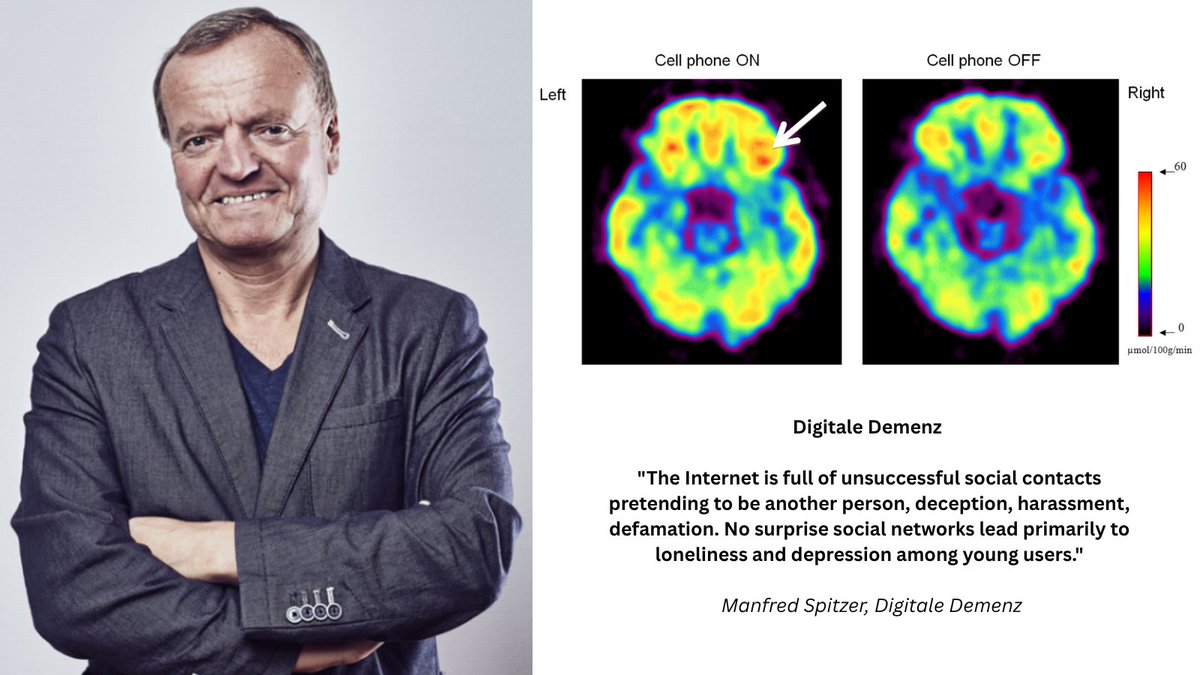
A German neuroscientist published a book in 2012 arguing that smartphones are quietly producing the first generation in human history whose brains will shrink before they turn 30, and the media spent the next decade trying to destroy him for saying it.
His name is Manfred Spitzer.
He runs the Psychiatric University Hospital in Ulm and directs Germany's largest transfer center for neuroscience and education.
The book is called Digitale Demenz, which translates as Digital Dementia, and it became one of the best-selling popular science books in German history almost the moment it was published.
The press hated him for it. He was called Germany's most controversial brain scientist, accused of being a Luddite, a moral panic merchant, and a fearmonger who hated children.
None of that stopped the book from being translated into more than a dozen languages, and almost none of it engaged with the actual neuroscience he was citing.
The phrase digital dementia did not even start with him.
It started with South Korean doctors in the late 2000s, who noticed something strange in their clinics. Patients in their twenties were arriving with memory complaints that had previously only shown up in much older adults. Forgetting numbers they used to know by heart. Losing the ability to recall directions in cities they had lived in for years. Struggling to remember conversations from earlier the same day.
The doctors connected it to the rise of smartphone use, which had hit South Korea harder and earlier than almost any other country on Earth. Spitzer picked up the phrase and built an entire book around the neuroscience that explained it.
The core thesis is brutally simple. The brain behaves like a muscle. It grows when you use it, and it atrophies when you do not. Every cognitive task you outsource to a device is a task your brain is no longer practicing, and the neural circuits responsible for that task are no longer being reinforced. Over time, they weaken in exactly the same way an unused muscle weakens.
Spitzer was not arguing that smartphones would give you Alzheimer's. He was arguing that decades of cognitive outsourcing would produce a measurable decline in the underlying machinery, long before any clinical diagnosis would catch it, and that the decline was already showing up in young adults.
The mechanism is what made him impossible to dismiss. By the early 2010s, there was already deep evidence that the brain physically remodels itself in response to use. London taxi drivers who had memorized the entire street map of the city had measurably larger hippocampi than the average person, which is the brain region responsible for spatial memory.
Musicians who practiced for thousands of hours had thicker auditory cortices. Spitzer's argument was just the dark side of the same finding. If the brain grows in response to use, then it must shrink in response to neglect. And if every cognitive task adults used to perform with their own memory, navigation, arithmetic, attention, and reading was now being handled by a glowing rectangle in their pocket, then the regions responsible for all of those tasks were quietly being underused for the first time in human evolutionary history.
Then the supporting data started landing.
A 2020 study at McGill University tracked 50 regular drivers and measured GPS use. The heavy users had weaker spatial memory than the rest, and when researchers retested a subset three years later, those users had declined the fastest. The same hippocampus London cabbies had built up by ignoring shortcuts was being slowly hollowed out in everyone else by accepting them.
A 2024 MIT study scanned the brains of people writing essays with and without ChatGPT. The AI group showed 55 percent weaker brain connectivity than the group writing on their own. 83 percent of the ChatGPT users could not recall a single line from essays they had written minutes earlier. The damage stayed even when the tool was taken away.
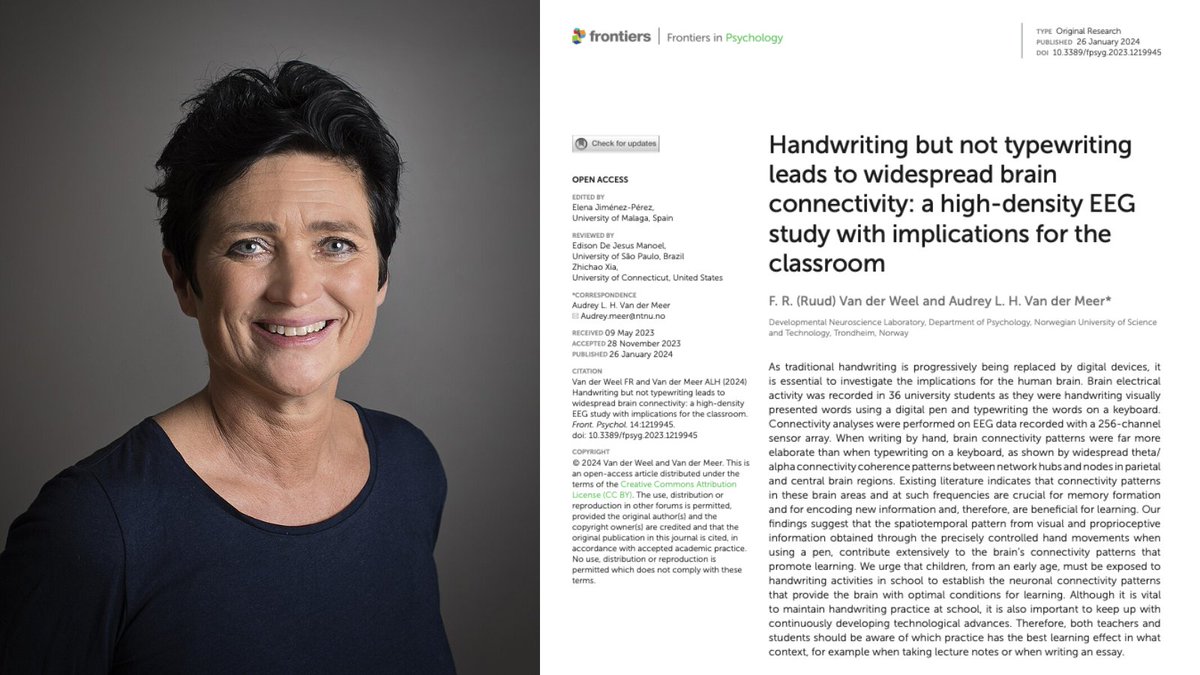
A 2024 paper out of Norway recorded EEG scans of students writing words by hand versus typing them. The handwriting condition lit up the entire learning network. The typing condition produced almost nothing.
Every one of these findings is exactly what Spitzer predicted in 2012.
The most uncomfortable line in his book is the one almost nobody in the German press wanted to print.
He pointed out that the people building these devices were not letting their own children use them. Steve Jobs did not let his kids near an iPad. Bill Gates capped his children's screen time at 30 minutes a day. The senior engineers at Google were sending their kids to Waldorf schools that banned screens entirely.
The people who knew the most about what these products were doing to the developing brain were the ones protecting their own families from them, and almost nobody on the outside was asking why.
The generation he was warning about is now in their twenties.
The first cognitive scans of what we did to them are starting to come back, and the pattern is exactly what he said it would be.
The brain you were born with is not the brain you will die with.
You are training it every day. The only question is which direction.
61
1,269
2,765
114,106
NotYourDoctor retweeted
May 18
A Norwegian neuroscientist spent 20 years proving that the act of writing by hand changes the human brain in ways typing physically cannot, and almost nobody outside her field has read the paper.
Her name is Audrey van der Meer.
She runs a brain research lab in Trondheim, and the paper that closed the argument was published in 2024 in a journal called Frontiers in Psychology. The finding is brutal enough that it should have changed every classroom on Earth.
The experiment was simple. She recruited 36 university students and put each one in a cap with 256 sensors pressed against their scalp to record brain activity. Words flashed on a screen one at a time.
Sometimes the students wrote the word by hand on a touchscreen using a digital pen, and sometimes they typed the same word on a keyboard. Every neural response was recorded for the full five seconds the word stayed on screen.
Then her team looked at the part of the data most researchers had ignored for years, which is how different parts of the brain were communicating with each other during the task.
When the students wrote by hand, the brain lit up everywhere at once.
The regions responsible for memory, sensory integration, and the encoding of new information were all firing together in a coordinated pattern that spread across the entire cortex. The whole network was awake and connected.
When the same students typed the same word, that pattern collapsed almost completely.
Most of the brain went quiet, and the connections between regions that had been alive seconds earlier were nowhere to be found on the EEG.
Same word, same brain, same person, and two completely different neurological events.
The reason turned out to be something nobody had really paid attention to before her work. Writing by hand is not one motion but a sequence of thousands of tiny micro-movements coordinated with your eyes in real time, where each letter is a different shape that requires the brain to solve a slightly different spatial problem.
Your fingers, wrist, vision, and the parts of your brain that track position in space are all working together to produce one letter, then the next, then the next.
Typing throws all of that away. Every key on a keyboard requires the exact same finger motion regardless of which letter you are pressing, which means the brain has almost nothing to integrate and almost no problem to solve.
Van der Meer said it plainly in her interviews.
Pressing the same key with the same finger over and over does not stimulate the brain in any meaningful way, and she pointed out something that should scare every parent who handed their kid an iPad.
Children who learn to read and write on tablets often cannot tell letters like b and d apart, because they have never physically felt with their bodies what it takes to actually produce those letters on a page.
A decade before her, two researchers at Princeton ran the same fight using a completely different method and ended up at the same answer. Pam Mueller and Daniel Oppenheimer tested 327 students across three experiments, where half took notes on laptops with the internet disabled and half took notes by hand, before testing everyone on what they actually understood from the lectures they had watched.
The handwriting group won by a wide margin on every question that required real understanding rather than surface recall.
The reason was hiding in the transcripts of what the two groups had actually written down.
The laptop students typed almost word for word, capturing more total content but processing almost none of it as they went, while the handwriting students physically could not write fast enough to transcribe a lecture in real time, which forced them to listen carefully, decide what actually mattered, and put it in their own words on the page.
That single act of choosing what to keep was the learning itself, and the keyboard had quietly skipped the choosing and skipped the learning along with it.
Two studies. Two countries. Same answer.
Handwriting makes the brain work. Typing lets it coast.
Every note you have ever typed instead of written went into your brain through a thinner pipe. Every meeting, every book highlight, every idea you captured on your phone instead of on paper was processed at half depth.
You did not forget those things because your memory is bad. You forgot them because typing never woke the part of the brain that would have made them stick.
The fix is the thing your grandmother already knew.
Pick up a pen. Write the thing down. The slower road is the faster one.
2,472
44,655
120,848
10,366,213
May 7
Why might this be the very stupidest tweet of the year?
May 6

Cardiologist: Instead of taking berberine which cost money and does nothing. You can actually take oil of wintergreen which is aspirin you can take rosuvastatin which is mold and you can take metformin which is the French lilac flower. Anytime a natural substance actually works
76
NotYourDoctor retweeted

Apr 30
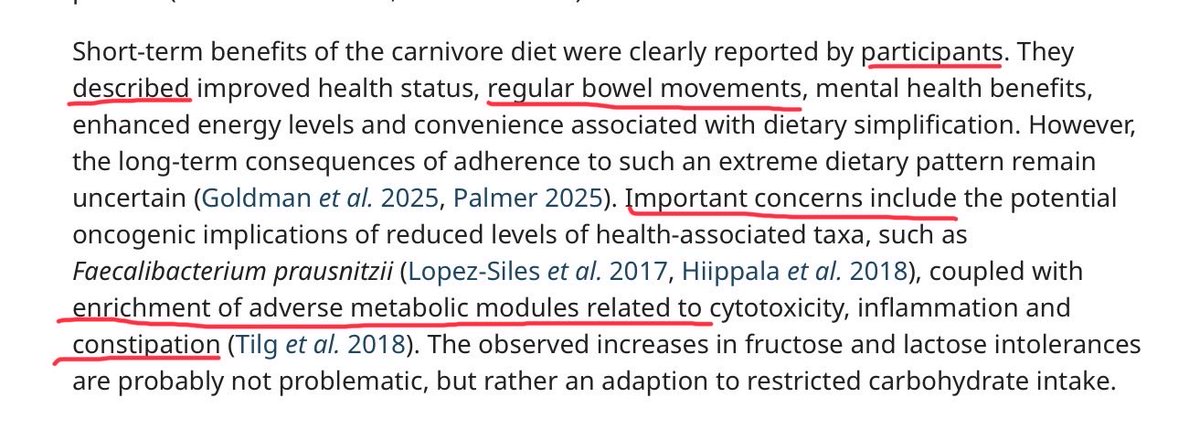
Finally a paper on Carnivore diet effect on the microbiome. Excellent. And to the surprise of no one paying attention, no significant effect on “diversity”.
But they missed an opportunity to observe something possibly important here.
Metabolic modules associate with outcomes *in the context they were found*. When you discover, as others have, that the microbiome changes swiftly and dramatically in response to major dietary changes, it strongly suggests that “functional modules” may also function differently.
mah.bioscientifica.com/view/…
12
29
207
12,704
Apr 28
Now a thing in middle class Ireland for teens to basically "buy" an ADhD diagnosis. Especially the ambitious ones. Earns you more points for Uni entry plus you get stimulant meds to turbo charge your study.
The kids know in advance which "experts" will reliably rubber stamp the "diagnosis". Assume we're just catching up with the US trend in this respect as per most things.

Dodgy diagnosis is big business for the private ADHD clinics discussed in this piece. As Joanna Moncrieff (@joannamoncrieff) points out, they are “cashing in on a social phenomenon…and, by doing that, helping to drive the whole phenomenon”.
It’s so tempting to seek relief in a diagnostic label, and there will always be an unscrupulous medical professional willing to sell you one for the right price.
dailymail.com/news/article-1…
117
Apr 28
Ready made wraps that pair perfectly with your medication choices. Innovation knows no bounds.


1
67
Apr 24
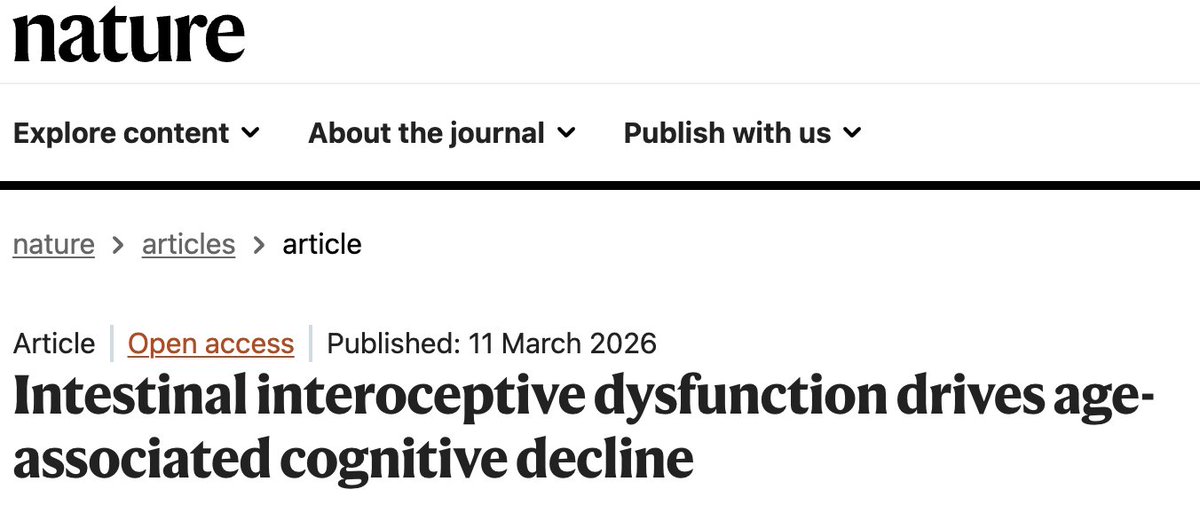
Very interesting. Memory loss may be "catchable" like a cold, just from being around someone with a severe issue. The culprit gut bacterium in mice has been identified
Apr 23

1/4) Memory loss might be… infectious.
A new Nature study found that when young mice live with older mice that have poor memory, the young mice start to lose memory too.
The question: Why?
1
90
NotYourDoctor retweeted

Apr 23
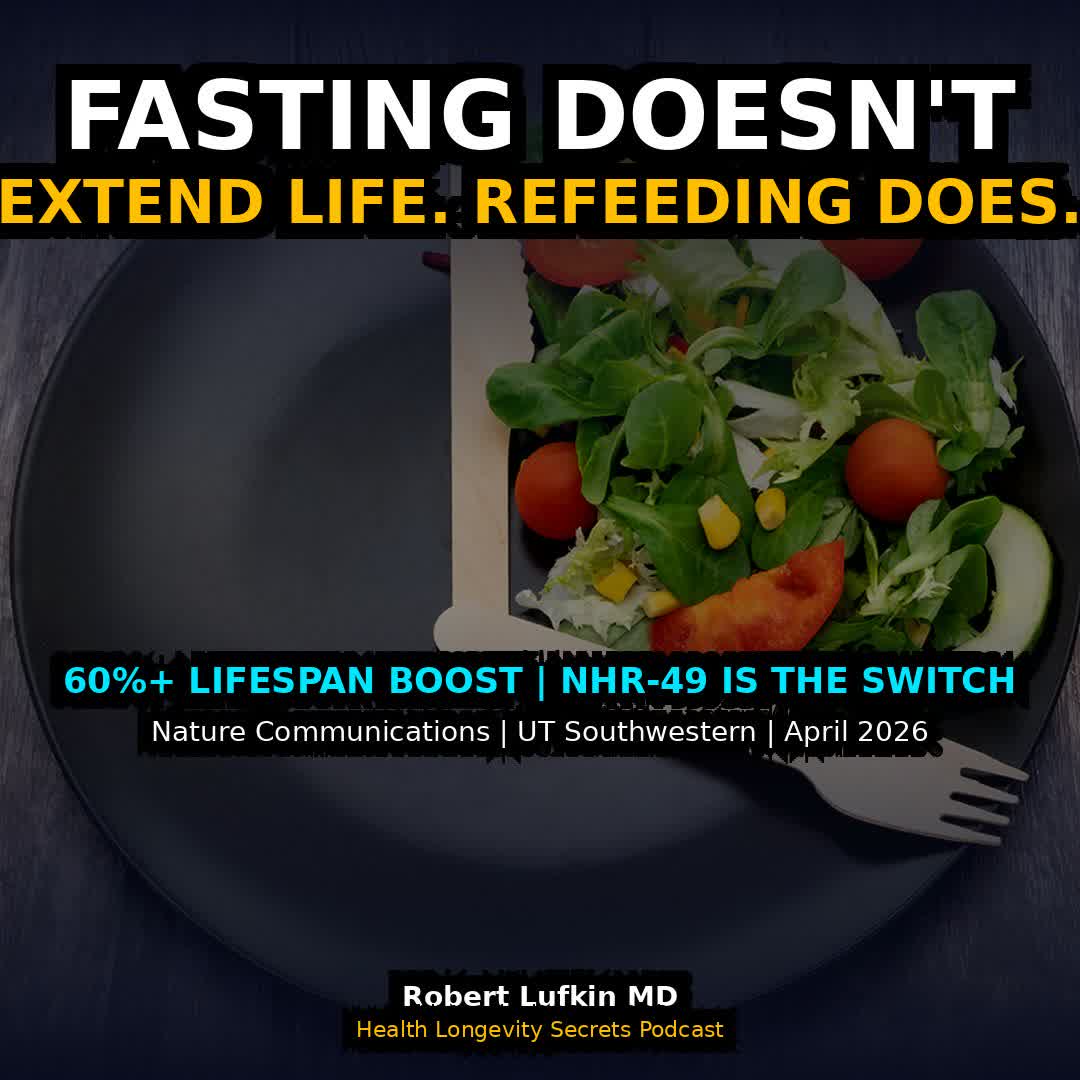
Fasting doesn't extend lifespan. Refeeding does.
That's the surprising finding from a new UT Southwestern study in Nature Communications — and it flips the intermittent fasting narrative on its head.
As a medical school professor, I tell students the best science breaks the simple story.
Researchers ran fasting-refeeding cycles in C. elegans and saw lifespan extend by more than 60%. Knock out one metabolic gene — NHR-49 — so it couldn't properly deactivate during refeeding, and the benefit collapsed.
The secret wasn't the fast. It was the metabolic pivot when food came back.
Why this matters:
- Explains why sloppy fasting regimens fail in trials
- Points at metabolic flexibility, not starvation, as the real lever
- Drugs could deliver the benefit without fasting
Metabolic flexibility may be the root cause of longevity. Metabolic dysfunction is the root cause of chronic disease.
Full breakdown coming on the Health Longevity Secrets podcast youtube.com/@RobertLufkinMD
Source: utsouthwestern.edu/newsroom/…
#IntermittentFasting #Longevity #MetabolicHealth #HealthLongevitySecrets
22
45
193
17,028
NotYourDoctor retweeted

Apr 14
Antibodies mistakenly attacking the brain are linked with conditions including schizophrenia, dementia and OCD, prompting a revolution in how we think about mental health conditions newscientist.com/article/252…
3
77
227
14,370
NotYourDoctor retweeted

Apr 15
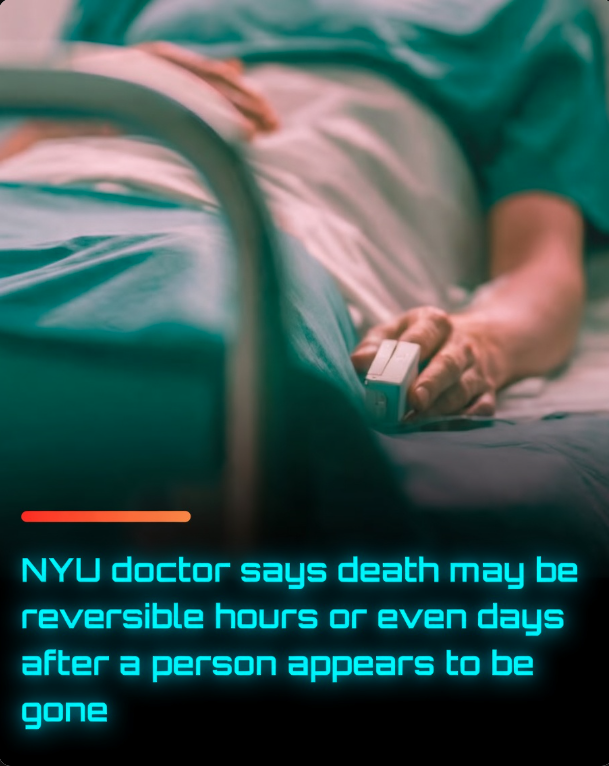
Some scientists now suggest that the human brain may remain salvageable — and potentially revivable — for hours, or even days, after what we currently consider death.
Dr. Sam Parnia, an associate professor at NYU Langone Medical Center and a leading researcher in resuscitation science, is challenging the long-held belief that death is a sudden and irreversible event. After three decades of studying cardiac arrest and near-death experiences, Parnia argues that death should be viewed not as a fixed endpoint, but as a treatable injury.
His team’s research has shown that brain activity, signs of consciousness, and even detailed memories can return in patients long after their hearts have stopped. This suggests the biological window for successful resuscitation is far wider than traditional medical guidelines assume.
To extend this window, researchers are deploying advanced tools such as ECMO (extracorporeal membrane oxygenation) machines and specialized “CPR cocktails” — drug combinations designed to protect brain cells and improve recovery chances.
These findings are gradually shifting the boundary between life and death from science fiction toward clinical reality, raising hopes for patients once considered beyond saving.
11
27
144
14,123
Apr 14
Years back so much important health related realities impacting women in midlife were missed due to "menopause blindness" (doc saying "it's depression" etc.).
Have we now swung the other way? "Menopause fixation"?
Are we pinning literally every symptom of women in their 40s & 50s on menopause? Ignoring every other possible valid explanation for what's presenting?
(Subclinical hypothyroidism being one biggie that's often mistaken as only menopause etc.).
Thoughts?
2
73
Apr 14
Sad news. Moya was unique.
Apr 14

Moya Brennan, the singer of this haunting tune has passed on.
Talents like hers live on in the music and culture of a Nation, a music and culture she's now forever embedded in.
Ar dheis Dé go raibh a hanam
89
Apr 14
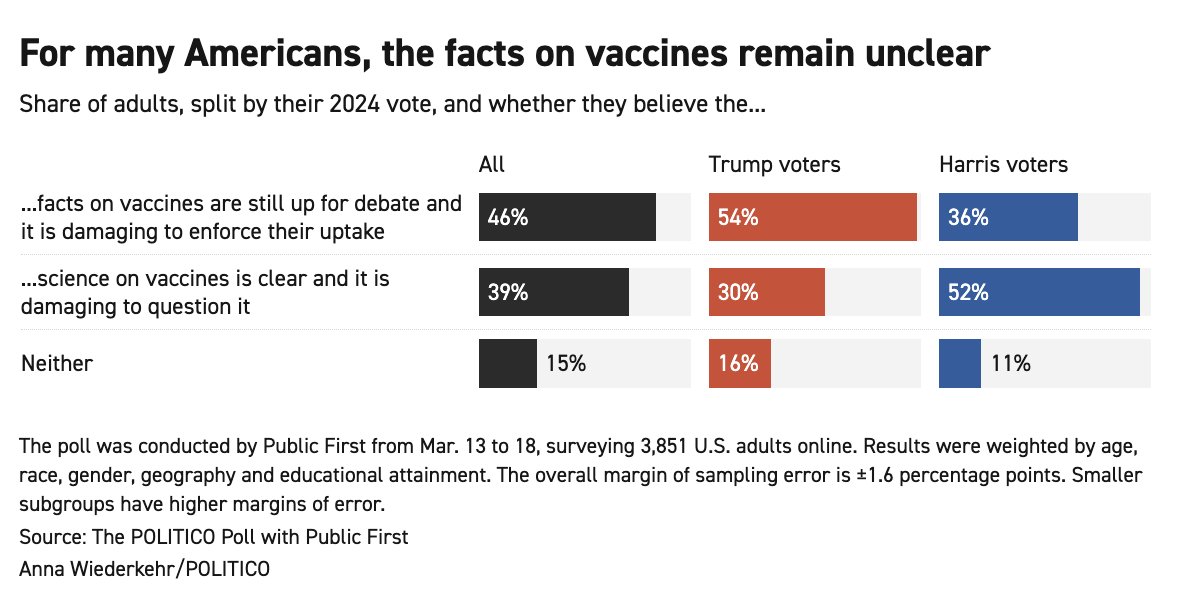
So this is quite a consistent finding fairly much everywhere: the political right are far more vax skeptic and the left markedly more provax. Anyone got any thoughts on why this is? Not so clear to me.
What happened to the left hating on everything to do with global corporate interests like Pharma? Or to the right holding with tradition and respecting Governmental advice?

Vaccine skepticism among Americans is widespread, a Politico Poll found.
Nearly half of U.S. adults surveyed in our poll signaled they think the science on vaccines remains up for debate and that it’s damaging to require people to receive them.
🔗 politi.co/4cbCPOM
49
Apr 8
"Psychosomatic": what it actually means (as per med literature; academia) is *actual, verifiable physiological* (somatic, bodily) symptoms, mediated by a core psycho-emotional root cause; what people think it means is "imaginary" or "faked" (Those would be hypochondriasis and Munchausens respectively).
Wonder what other clinicians thoughts are on dealing with an adult patient where one is quite certain that there is a major psychosomatic piece to the presentation?
Personally I feel it is necessary to gently go there. Which of course is mostly (but not always) likely to be massively resisted. So one needs to expect an initial wave of hatred coming at onself; and then if well handled, perhap you can together begin to play with the possibilitny. Then sometimes things move. But if the practitioner can't or won't go there, nothing improves.
Why is it that so few have issues acknowledging that they have psychoemotional issues affecting mood etc.; and almost no one has issues sharing their physical woes once bad enough but somehow the idea that psycho-emotional disturbance might spill over into somatic dysfunction is almost universally resisted? When both literature and attentive clincial experience makes it quite clear that a psychosomatic aspect to chronic health presentations (esp ones of murky aetiology) is not at all rare; maybe even the norm. Dysfunction in each realm (if we imagine a division; already an error) surely spills over into the other no? And yet while most are OK with saying their physical fatigue worsens their mood for example, not so many will acknowledge their mood might be driving fatigue. Just one example of course.
Thoughts please?
1
1
155
Apr 6
Vigilant Fox regurgitating MidWesternDoc regurgitating Tom Cowan regurgitating Gerry Polloack. If anyone's interested :)

There’s a term in medicine that most doctors can’t even tell you what it means.
But it’s one of the most essential things your body needs to maintain a healthy heart.
Inside your body, there is an invisible force that keeps your blood from turning into sludge.
That force is known as “zeta potential.”
We’re taught circulation is simple: the heart pumps, and blood moves.
But when you zoom in, something else is quietly doing the heavy lifting. 🧵
176
Apr 1
Which reminds me, my roses are due a pint of my rich blood about now. Therapeutic phlebotomy great for all sorts. Vital for those with ferritin stubbornly above 250 .
Mar 31

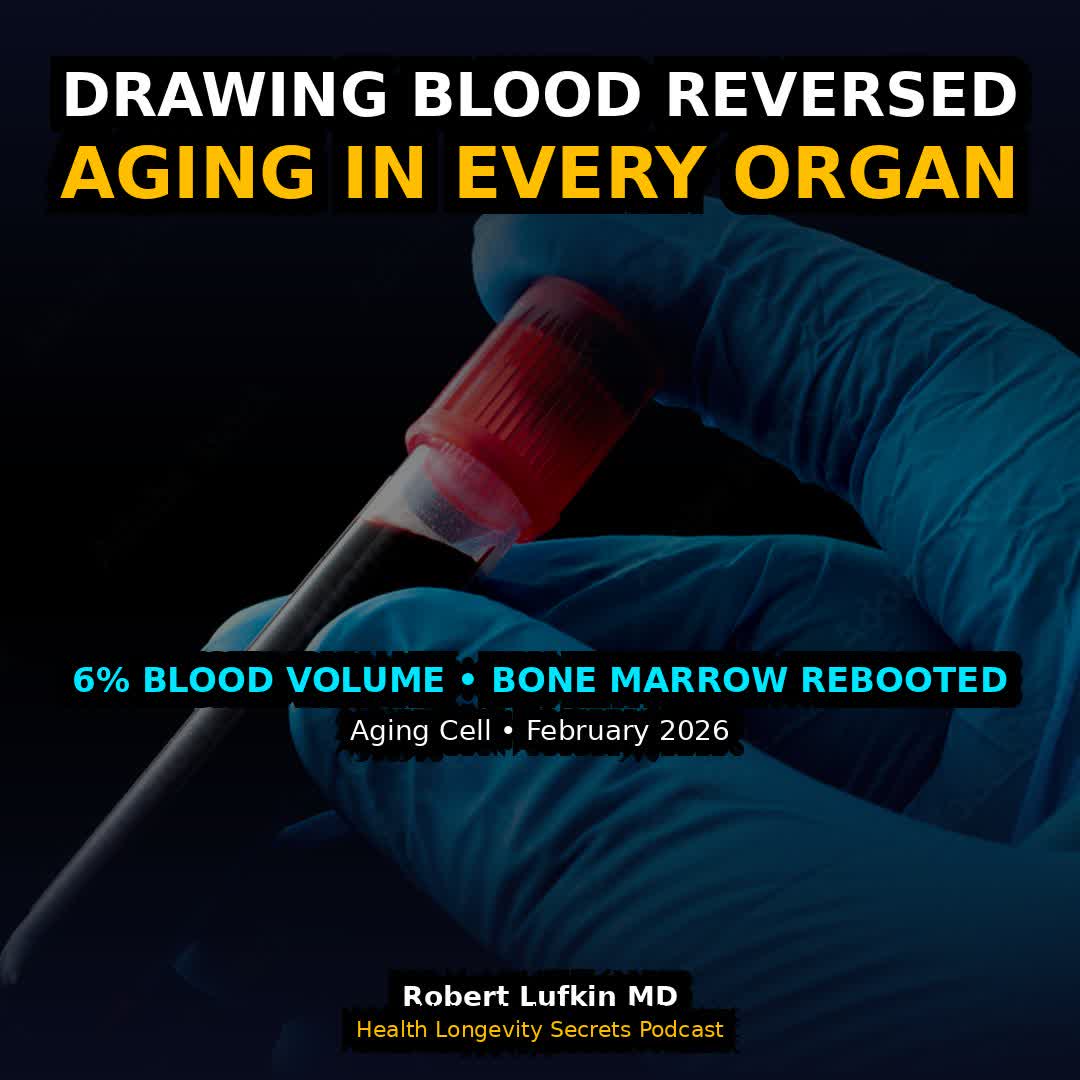
As a medical school professor, I've taught about blood transfusions for decades. But this study from Aging Cell just showed that removing blood may be even more powerful.
Researchers performed periodic phlebotomy -- drawing just 6% of blood volume every two weeks -- on aging models.
The results were staggering:
-> Memory and cognition restored to youthful levels
-> New neurons grew in the hippocampus
-> Liver, kidney, heart, skin, and bone all rejuvenated
-> Inflammatory senescence proteins (SASP) dropped dramatically
-> Klotho (the longevity protein) levels restored
The mechanism? Phlebotomy rebooted bone marrow stem cells, shifting blood production back from the inflammatory myeloid bias of aging to a youthful pattern.
This is metabolic dysfunction in reverse. Aging bone marrow floods your blood with pro-inflammatory signals. Remove some blood, and the marrow resets.
A technically simple procedure with profound anti-aging potential.
Full breakdown coming on the Health Longevity Secrets podcast.
Source: onlinelibrary.wiley.com/doi/…
#AntiAging #MetabolicHealth #Longevity #StemCells #HealthLongevitySecrets
1
202