Chief Business Officer | IonQ | ⚛️
Joined August 2012
- Tweets 343
- Following 384
- Followers 1,354
- Likes 1,662
42 Photos and videos

Scott Millard retweeted

May 11
2) Important paper on quantum-enhanced LLM fine-tuning. 24% reduction in classification error. Favorable energy scaling. One of the first measurable energy-to-solution for hybrid GPU/QPU AI workloads. Expect a truckload of this in the coming months: arxiv.org/pdf/2605.02798
4
5
47
7,922
Scott Millard retweeted
May 11
People will notice the @IonQ_Inc performance today and the last few weeks. Important, and @SkyWaterFoundry news is important. I'm heads down on execution and tech, and there are two things I would notice instead😀. Inline.
4
8
60
11,744

“As a result, we are raising our revenue expectations for the full year to $270 million at the high end, based upon the strong and growing demand for our leading quantum computers, as well as the commercial impact of our entire quantum platform.” - Chairman and CEO @NiccoloDeMasi
2
32
185
10,030
"With $64.7 million in revenue, we have once again significantly outperformed our guidance range, exceeding the midpoint by 30%." - Chairman and CEO @NiccoloDeMasi
7
23
188
12,611
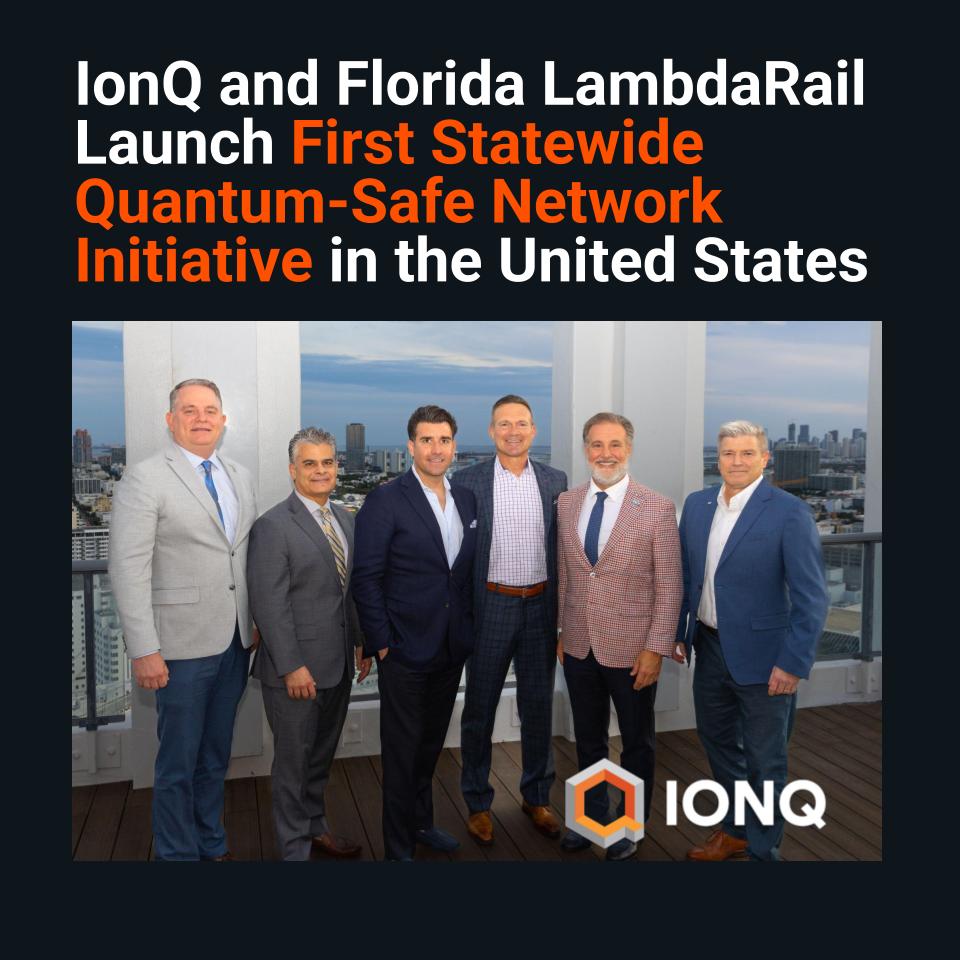
“Creating a statewide quantum network in Florida will mark another major milestone in the deployment of IonQ’s global quantum platform,” said @NiccoloDeMasi, Chairman and CEO of IonQ.
Read our full announcement with Florida LambdaRail: ionq.com/news/ionq-and-flori…
10
41
229
36,131
"Today we made a deal with IonQ to start a phase one - of quantum securitizing our Lambda Rail starting with Miami Dade College, Palm Beach State College and Florida Atlantic University to spread it from there. That physical infrastructure... that fiber optic connection, that's how our universities, colleges partner - share classified confidential research and work with military assets."
J. Alex Kelly, Florida Secretary of Commerce, announced yesterday at #eMergeAmericas a new partnership with IonQ. Stay tuned for details.

19
57
325
35,879
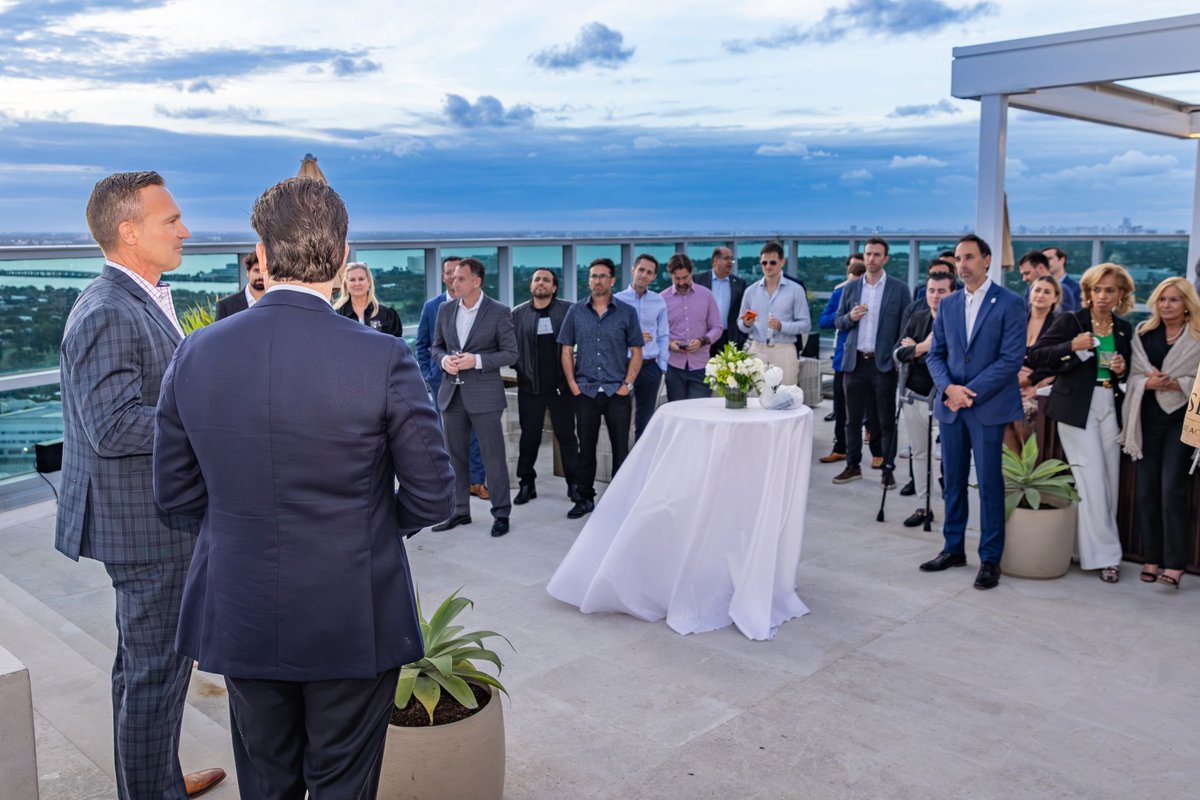
Coming to you from Miami Beach: @IonQ_Inc and @QuantumCoast brought together leaders across academia, government, and industry as part of this week's @eMergeAmericas event.
We were honored to be with pioneers from @FloridaAtlantic, @PBStateCollege, @MDCollege, @FIU, @UCF, @UF, @univmiami, and @FloridaState who are building alignment for the broader Florida Quantum initiative - where capital, research institutions, operators and policymakers are all joining together to drive momentum.
Thank you @_SMillard and @mattcimaglia for your leadership. @FLACommerce @BDBPalmBeach @QuantumDaily


7
28
179
15,099
Scott Millard retweeted
Apr 14
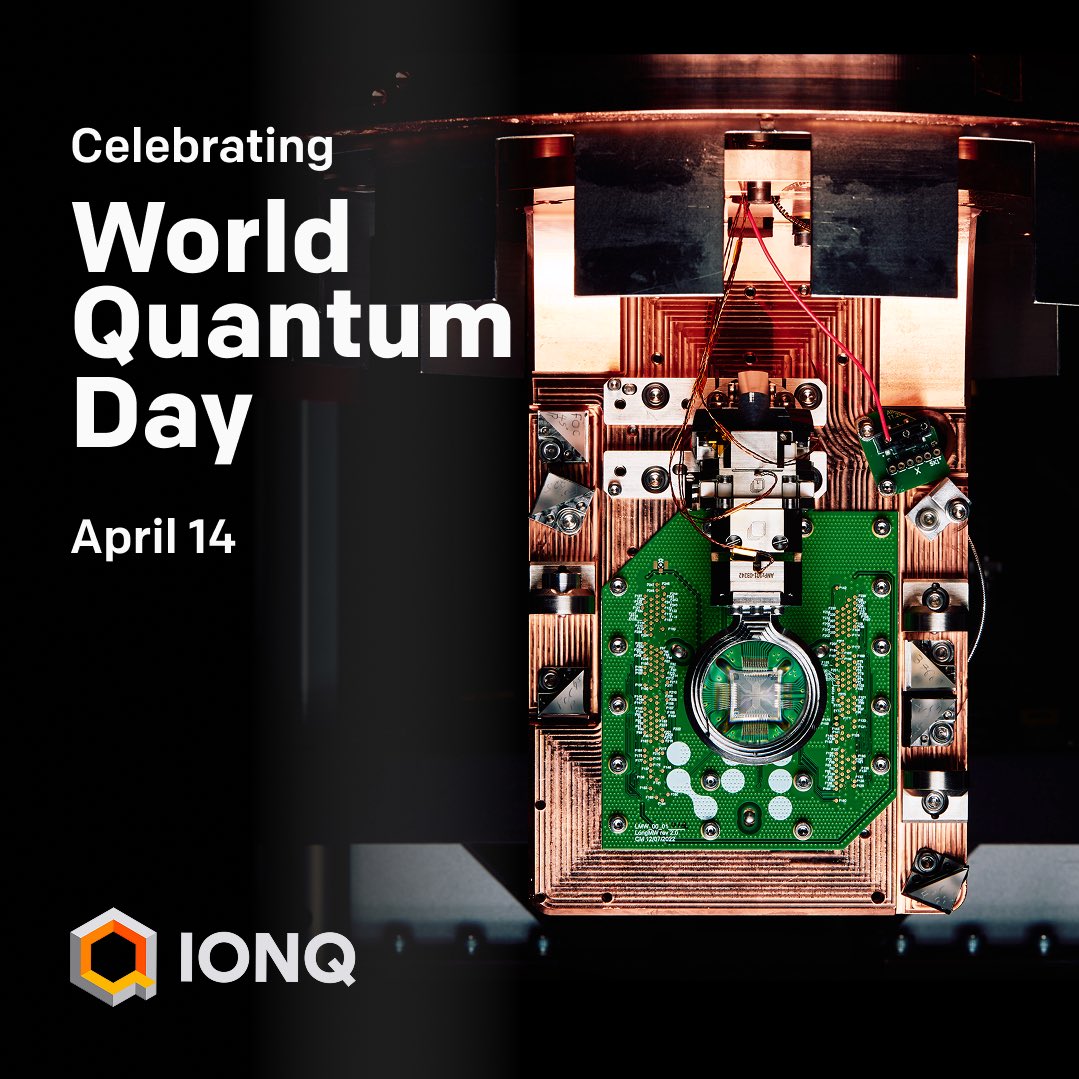
Happy #WorldQuantumDay! To my @IonQ brothers and sisters out there - I love working with you. To our customers and partners - THANK YOU. You make our world go round. Here's my take on one bit o' news: Time to Solution Part II: Revenge of the Data. medium.com/@sakacc/reality-r…
2
4
37
1,567

Apr 14
There is nothing more powerful than hearing directly from real customers solving real-world problems.
Dr. Seong-Hyok Sean Kim, VP of Quantum at LGE, recently shared the following:
"The Quantum team at LGE, aiming to tackle commercial‑grade and industry‑relevant use cases, has recently evaluated multiple quantum systems on AWS Braket and Microsoft Azure Quantum, including the IonQ Forte Enterprise. Among the systems evaluated, IonQ was one of only two that produced usable results and did so at a significant time-to-solution and cost-to-solution advantage given our needs."
I’m energized by the quality and volume of feedback we continue to receive from global enterprises, governments, and system integrators.
Quantum is no longer the future — it’s here today. @IonQ_Inc is delivering usable, practical results with quantum right now.
#WorldQuantumDay
@NiccoloDeMasi @sakacc
1
15
86
9,241
Scott Millard retweeted
Apr 13
Hey world - tomorrow is #WorldQuantumDay! To the customers and partners we will see at @NYSE tomorrow, I can't WAIT! For those that are curious and want to be part of the fun there are lots of juicy, deep, technical posts and information inbound - follow @IonQ_Inc for more!
4
34
1,509
Apr 13
Looking forward to welcoming more than 50 @IonQ_Inc customers and partners to our NYSE event tomorrow and hearing firsthand how IonQ is delivering real quantum advantage.
We’ll kick off with a customer panel led by @NiccoloDeMasi, followed by sessions on real-world applications across portfolio optimization with @marco_pistoia, AI LLM fine-tuning with Masako Yamada, and accelerating CAE through our partnership with Synopsys Inc with Martin Roetteler. We’ll also cover ultra-precise PNT, a globally secure quantum internet with Rick Muller, and quantum interconnects with Mihir Bhaskar. Ariel Braunstein will introduce our new benchmarking framework, and @sakacc will dive into Time-to-Solution.
It’s going to be an outstanding day for our quantum community. Let’s go!!! #WorldQuantumDay
8
16
112
6,075
Scott Millard retweeted

Apr 7
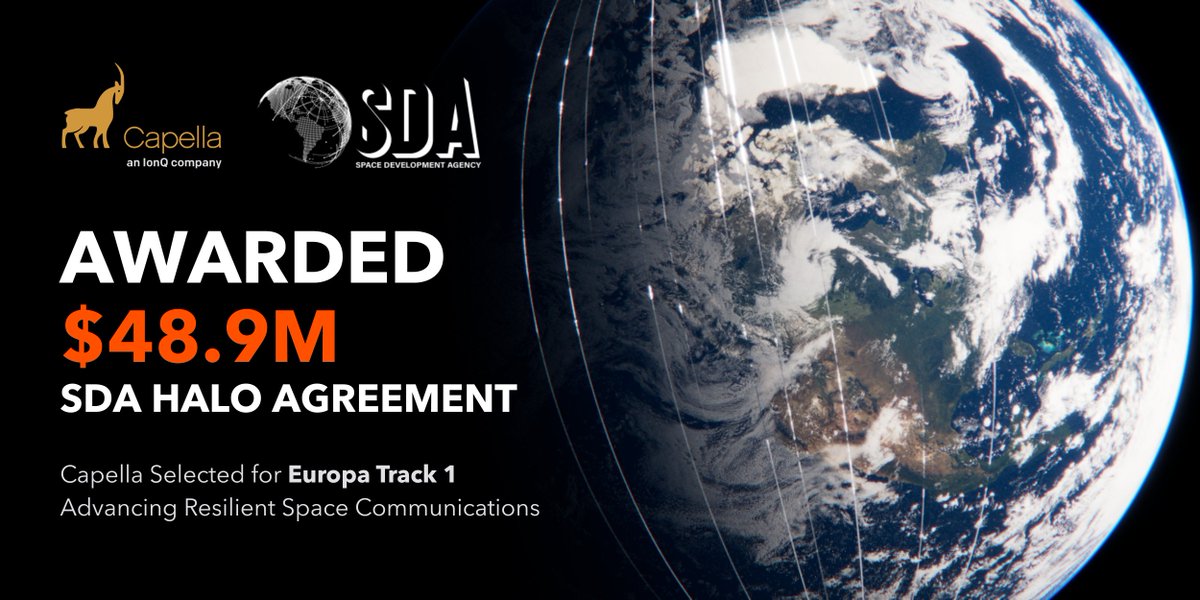
Capella is proud to be awarded a $48.9M agreement under the @SemperCitiusSDA's HALO Europa Track 1 program to demonstrate advanced tactical space communications in low Earth orbit.
Read the full press release: hubs.la/Q049X9pl0
4
30
160
54,049
Scott Millard retweeted

Apr 2
$IONQ See link below for another great lecture with IonQ Chief Scientist, Chris Monroe. Some interesting comments:
1. When describing Oxford Ionics architecture and two qubit gate fidelity, he says twice that they are actually very close to (but just under) 5 9s (99.999%). Oxford Ionics currently holds the world record at 4 9s (99.99%). So they are potentially very close to another order of magnitude improvement.
2. He confirms he is spending alot of time now in Boston and is excited to work with the Lightsynq team on photonic interconnects. He also describes it as a major collaboration with Duke, and says a number of his Duke students are with him. More importantly he describes Lightsynqs technology as "black magic" due to its ability to easily connect to fiber with no loss, and says it is potentially a 100x improvement (Ionq previously described it as up to 50x improvement).
3. Chris once again says that the large companies are making a huge mistake with their superconducting chips. Says they dont know what they are doing, and thag he thinks new big companies will lead quantum.
4. Says trapped-ions connected on distributed basis is only known way to scale with all to all connectivity. He thinks all to all connectivity and less error correction is much more important then gate speed, and can still lead to faster solution time.
youtube.com/watch?v=czJ7vp2g…
9
12
121
28,730
Mar 27
Great to see the continued momentum with @GDIT .
Proud of the partnership between IonQ and GDIT as we work together to bring quantum computing, networking and sensing capabilities into real-world government and defense applications.
Appreciate the collaboration and shared commitment to pushing the boundaries of what’s possible—this is how meaningful innovation happens.
@dAcosta @cardillogroup @IonQ_Inc

GDIT is excited to announce its business strategy VIA—Vision, Innovation, Acceleration—designed to advance technology investments and deliver next-generation mission solutions for our customers.
VIA will expand investments across GDIT's strategic market segments, mission solutions, commercial partnerships, business execution, and AI-empowered workforce development.
“Mission success in today’s dynamic geopolitical and technological environment demands agility, speed and innovation," said Amy Gilliland, GDIT’s president. “VIA reinforces our long-standing commitment to invest in proven mission solutions to meet the government’s most pressing challenges now and in the future.”
Full release: gdit.com/about-gdit/press-re…
1
3
543
Scott Millard retweeted
Mar 24
Hey. Thanks for reading that 😀. The team was proud of this (team = app team, Kipu team, and the team that built the system), and I think rightfully so. The decomposition technique has durable value also, FWIW. Net: real impact now, even more tomorrow.
Mar 23

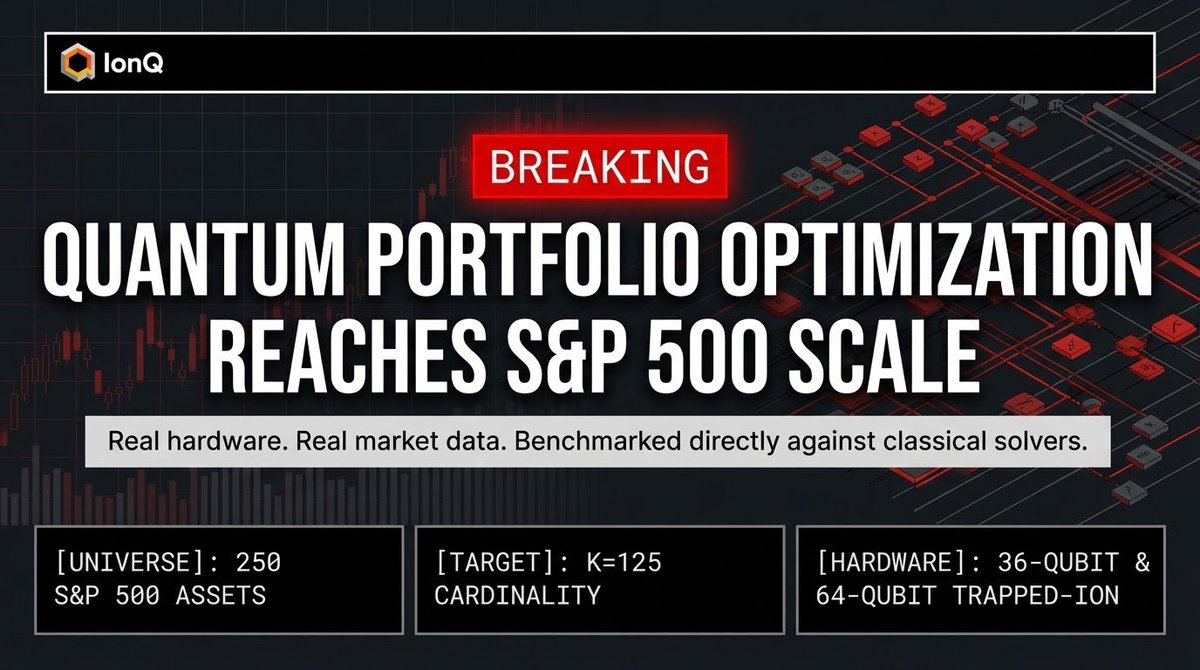
$IonQ IonQ officially publishes the portfolio optimization results on their blog today. The arxiv paper we covered weeks ago is now corporate communication. That’s a signal.
Quick recap for those who missed it:
→ 250 assets from the S&P 500, real market data (2020-2025)
→ Executed on three systems: IonQ Forte (36 qubits), Forte Enterprise (36 qubits), and a 64-qubit Barium dev system described as “similar to the forthcoming IonQ Tempo line”
→ Co-authored with @KipuQuantum same BF-DCQO algorithm from the protein folding
Results
→ Co-authors include Marco Pistoia (IonQ Italia), Enrique Solano (Kipu Co-CEO), Martin Roetteler (IonQ VP Quantum Software)
What the blog makes explicit that the paper didn’t emphasize:
→ Trapped-ion all-to-all connectivity is a structural advantage for dense financial QUBO problems. Superconducting processors need SWAP routing that multiplies circuit depth and errors. IonQ doesn’t.
→ The pipeline is hardware-generation agnostic. Each qubit count increase reduces decomposition error within the same architecture. No redesign needed.
→ Multi-QPU parallel execution is the production scaling model.
Connect this to what Inder Singh said at the Cantor conference 12 days ago: “It’s nice to have the iPhone. It’s better to have the App Store with it.” Portfolio optimization is the App Store.
And recall Cantor Fitzgerald is both hosting Singh’s presentation and advising IonQ on the $1.8B SkyWater acquisition. The S-4 filed last week confirms it. The financial world is watching.
🔗 ionq.com/blog/quantum-comput…
Full scoop 👇
$SKYT #IonQ #QuantumFinance
1
5
27
3,064
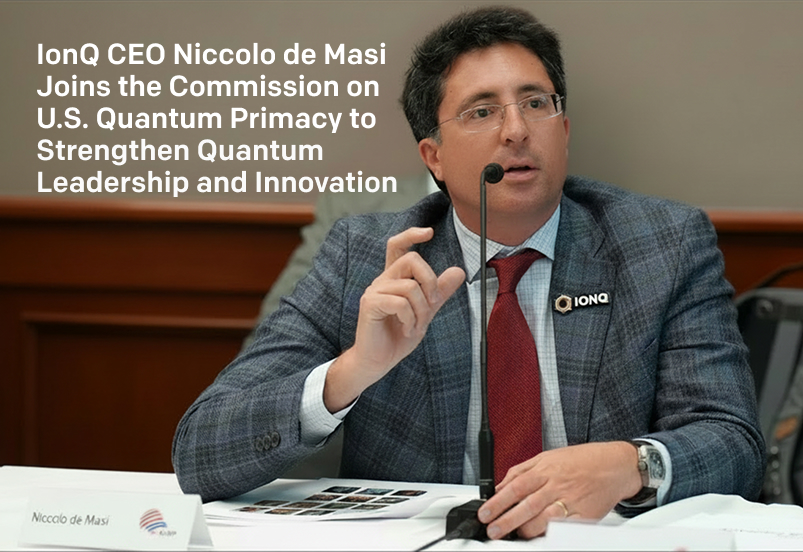
IonQ CEO @NiccoloDeMasi has been named to the Commission on U.S. Quantum Primacy (CUSP), launched by @SCSP_AI. The bipartisan commission will help shape a national strategy for leadership in quantum technology.
We’re proud to support this important effort to strengthen the quantum future.
#QuantumComputing #QuantumLeadership #Innovation
19
49
279
35,449
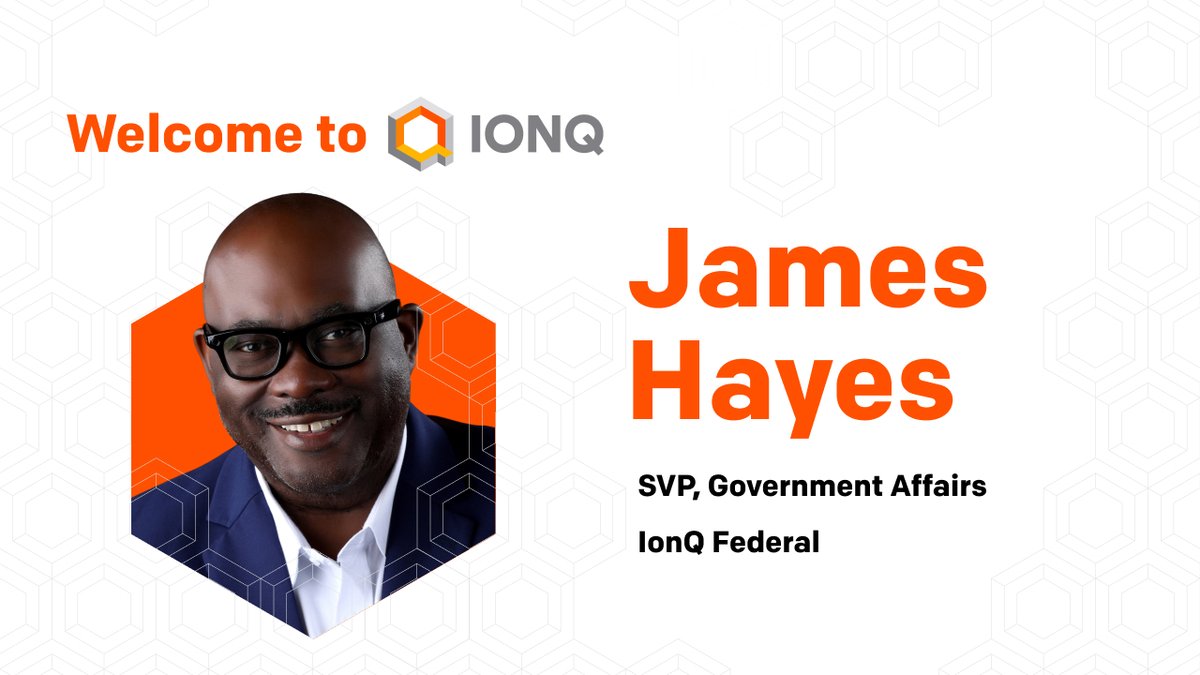
James Hayes joins @IonQ_Inc as SVP, Head of Global Government Affairs.
An accomplished policy leader with 25 years spanning Tenable, Dell EMC, and a decade in the U.S. Senate, he brings deep expertise working across government and industry.
Excited he will now lead IonQ’s global government strategy.
7
22
201
26,194
Mar 2
⬇️⬇️⬇️
Mar 2

Reality > Rhetoric. Customers Revenue = truth. Loads of hype in the #Quantum industry, but math is math. Felt like I needed to cut thru some BS. Not for the faint of heart, but for people who seek a deeper technical understanding: medium.com/@sakacc/reality-r… @IonQ_Inc
7
583
Jan 26
What a morning!
Two feet of snow in New England, the Patriots heading back to the Super Bowl… but the best news of all:
Welcome to IonQ, @SkyWaterFoundry .
This partnership is a major acceleration point for our roadmap:
Faster wafer manufacturing through reduced iteration cycles and parallelized wafer prototyping
200,000-qubit QPUs enabling ~8,000 ultra-high-fidelity logical qubits, now expected to begin functional testing in 2028 — two years ahead of our original 2030 target
The ability to pull forward our 2M-qubit chip by up to a year
This is what vertical integration enables.
IonQ is building the only vertically integrated, full-stack quantum platform, and today’s announcement is another step in turning quantum advantage into reality — faster.
Exciting times ahead ⚛️
@NiccoloDeMasi @sakacc @IonQ_Inc

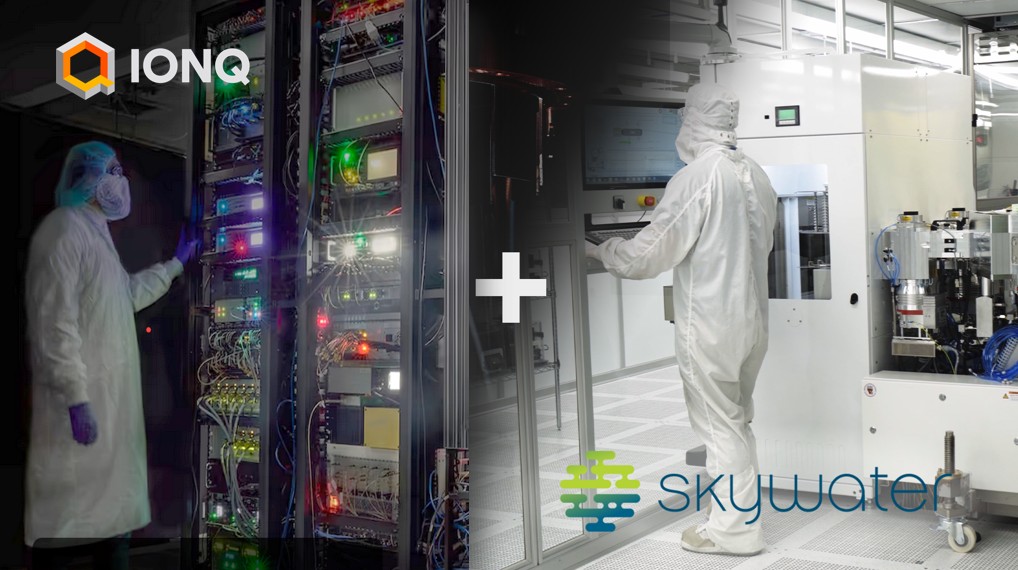
IonQ plans to acquire @SkyWaterFoundry, creating the only vertically integrated full-stack quantum platform company. This will accelerate commercialization of our fault tolerant quantum computers and benefit the broader quantum industry, enhancing national security, economic strength, and technological superiority.
Read our news here: ionq.com/news/ionq-to-acquir…
#QuantumComputing #Semiconductors
6
10
80
29,590
Scott Millard retweeted

29 Dec 2025
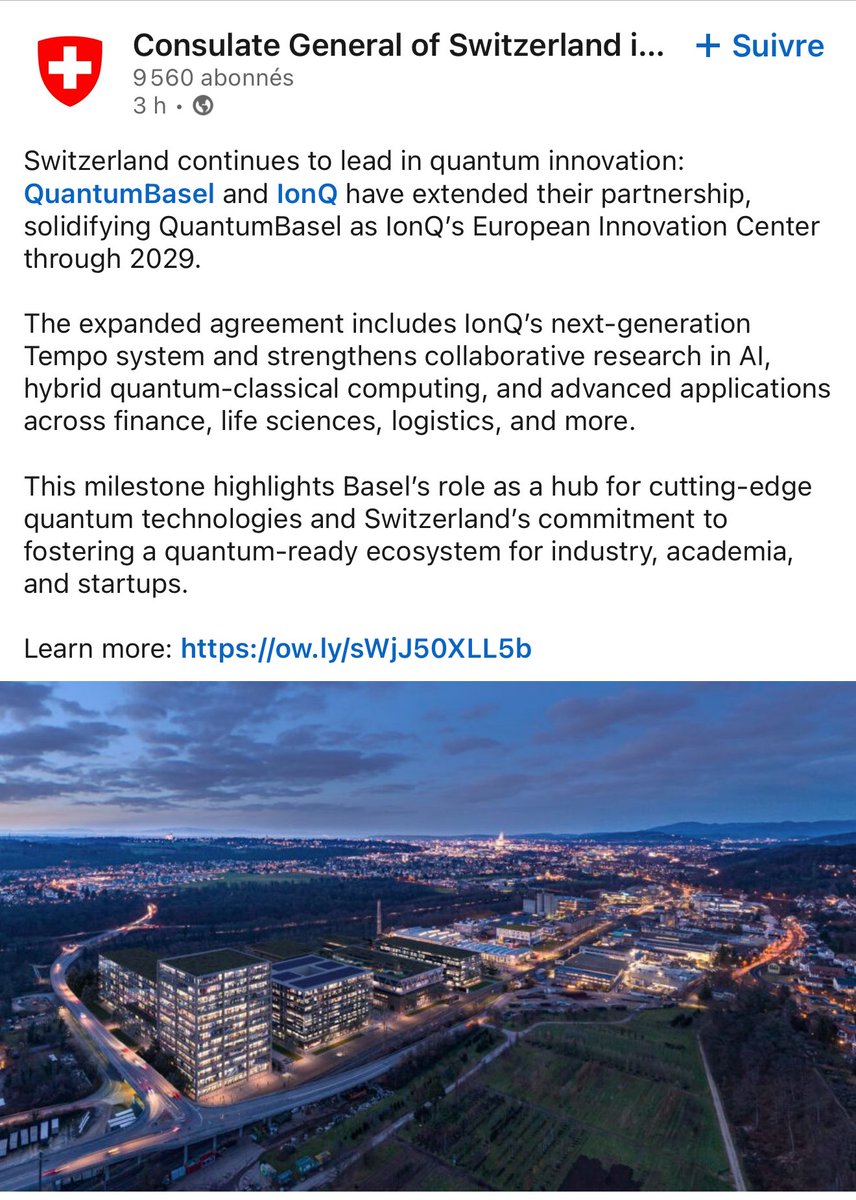
$IonQ 🇨🇭 Official Recognition: Switzerland’s Consulate General in New York highlights IonQ-QuantumBasel Partnership!
In addition to South Korea, another nation officially recognizes the strategic importance of IonQ quantum technology.
The Consulate General of Switzerland in New York has shared news of the extended partnership between QuantumBasel and IonQ, solidifying QuantumBasel as IonQ
European Innovation Center through 2029.
Key highlights of the expanded agreement:
⚛️ Deployment of IonQ next-generation Tempo system in Basel
🔬 Strengthened collaborative research in AI, hybrid quantum-classical computing
🏢 Advanced applications across finance, life sciences, logistics, and more
This milestone underscores Basel’s growing role as a European hub for cutting-edge quantum technologies and Switzerland’s commitment to fostering a quantum-ready ecosystem for industry, academia, and startups.
When official diplomatic channels from multiple nations celebrate your partnerships, it speaks volumes about IonQ position on the global quantum stage.
👏👏@NiccoloDeMasi
🔗 Learn more: linkedin.com/posts/swisscgny…
#IonQ #QuantumComputing #QuantumBasel #Switzerland #Europe #Innovation #Tempo #QuantumTechnology
2
18
102
18,165