Co-founder & CEO @OpenGraph_Labs, building multimodal data infrastructure | FFC W26 @pearvc | Zhejiang University
Joined October 2022
- Tweets 86
- Following 213
- Followers 1,025
- Likes 1,510
7 Photos and videos

Pinned Tweet

Mar 11
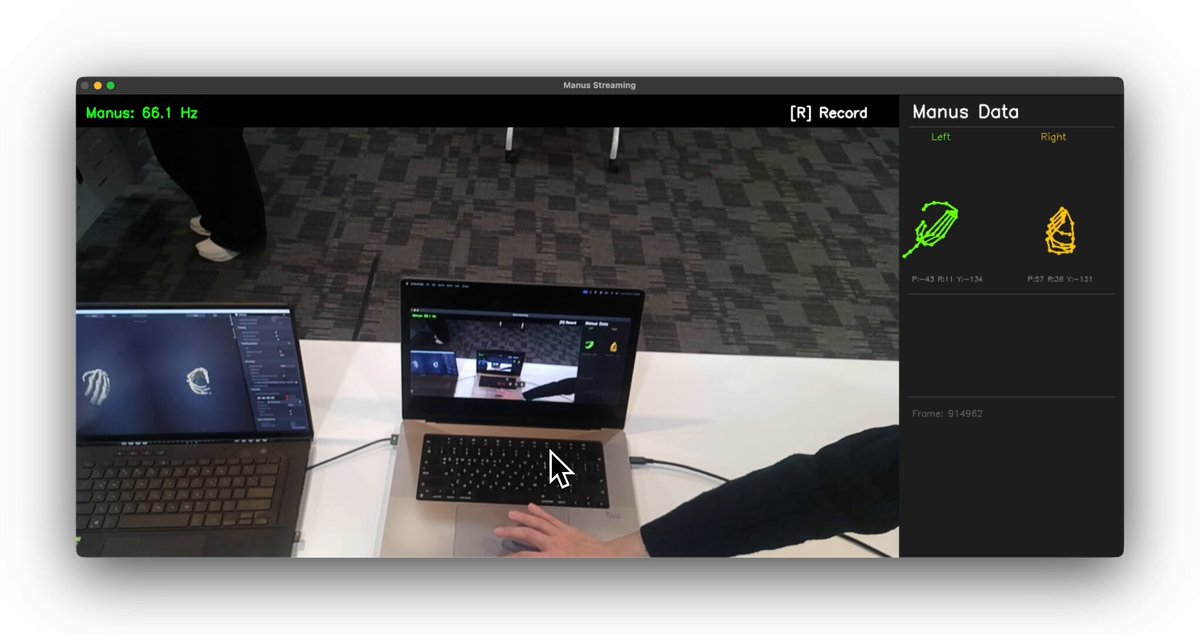
Data can’t just be outsourced🤯 To iterate fast, robotics teams must own their data infrastructure
Introducing SyncField: turnkey data infrastructure for in-the-wild data collection (Best for UMI-style & Embodied human) #Robotics #UMI #DataCollection
9
11
134
14,589
Julia Kim retweeted

May 24
TactAlign was accepted to RSS 2026! Huge thanks to the reviewers for their thoughtful feedback. See you on the other side of the world 🤓🙌
Feb 17

Dexterous hands vary widely—so do tactile modalities. 🖐️🌈
Our vision on tactile human-to-robot transfer:
🔓 Not tied to specific hardware
♻️ Reuse human tactile demos across embodiments
Presenting TactAlign, a cross-sensor tactile alignment for cross-embodiment policy transfer.
3
17
98
12,762
Julia Kim retweeted

May 6
Physical AI needs human data, but human data capture is still way too hard.
Not because pressing record is hard.
Because the moment you add cameras sensors, everything gets messy:
Every device has its own clock.
Streams can silently fail.
Recording health has to be checked.
Start / stop has to line up.
Synchronization has to be solved after.
SyncField Desktop turns it into one workflow.
Auto-discover cameras sensors.
Connect streams with aliases.
Drag, arrange, and monitor panels.
Record everything in one click.
Review synchronized playback.
Get frame-aligned data on disk.
No handclaps. No LED flashes.
No sync scripts. No file wrangling.
Just humans doing real tasks, captured cleanly.
If you're working on human data for Physical AI, reach out:
opengraphlabs.com/#contact
1
3
5
520
Julia Kim retweeted

May 5
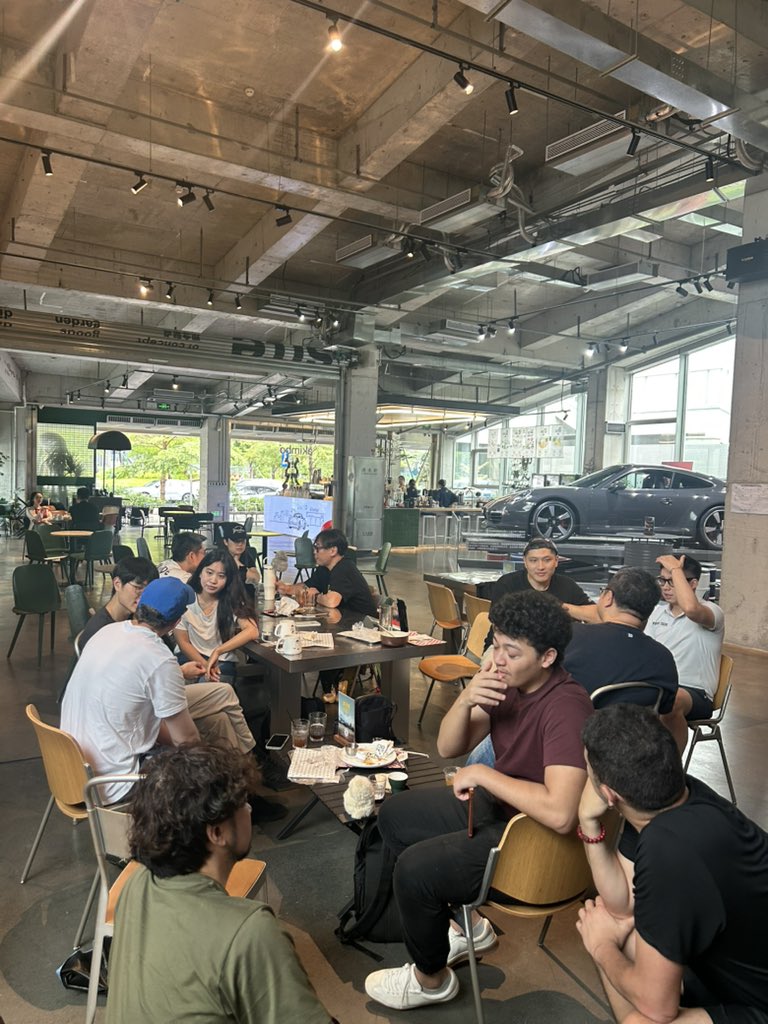
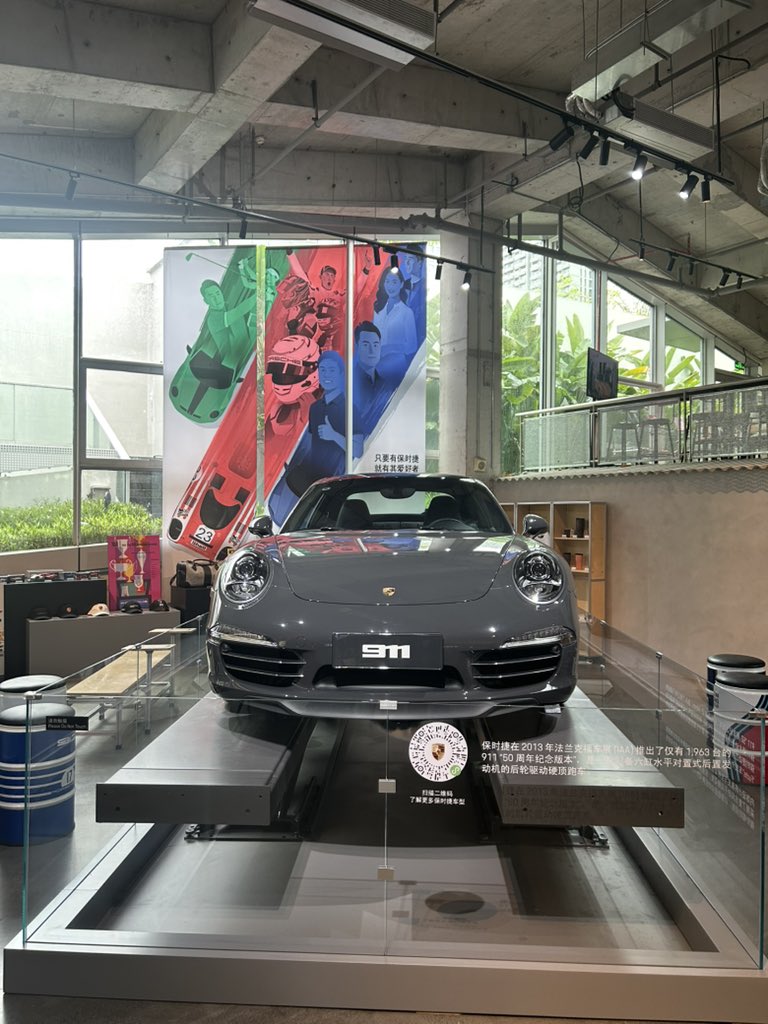
Small Shenzhen meetup hosted with @rayanboukhanifi is done
glad that some people showed up even though i know very little people in Shenzhen!
May 4

Hello Shenzhen!
Coming from Tokyo and will throw small meetup with Rayan (@rayanboukhanifi ) tomorrow at this place
If you are building something new and cracked builders, come join us!
Link: luma.com/7d5z1829
7
2
20
4,865
Apr 17
Contact-rich manipulation depends on contact information (tactile sensing and force magnitude) and its importance grows with dexterity
Apr 17

When it comes to manipulation tasks, tactile and force data are really important.
1
8
1,230
Apr 5
world models aren't just bigger video models
What we truly need: (1) multimodal environments (2) structure-based reasoning (geometry, physics, affordances, spatial & symbolic reasoning) (3) Physics-aware interactions (4) Continuous real-world data loops
Apr 3

3
11
87
10,943
Julia Kim retweeted

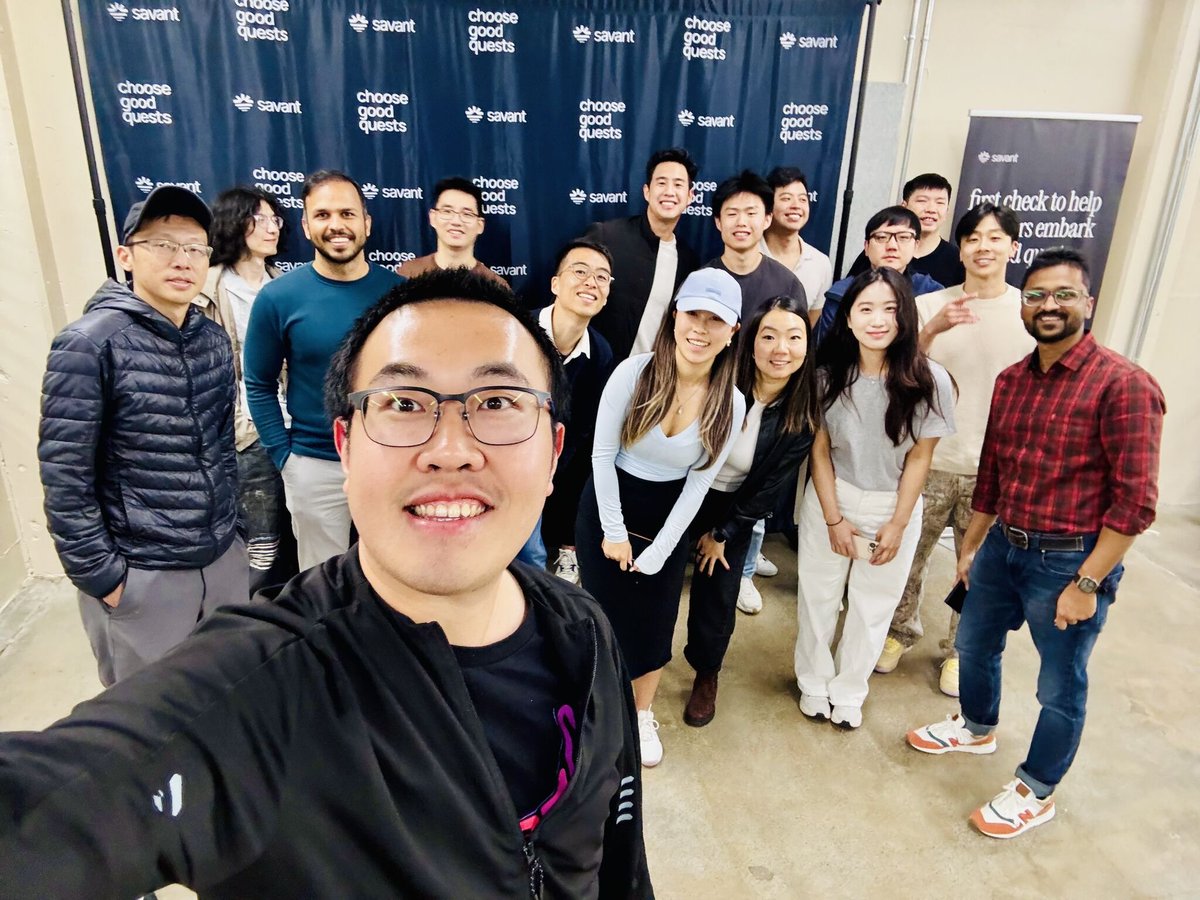
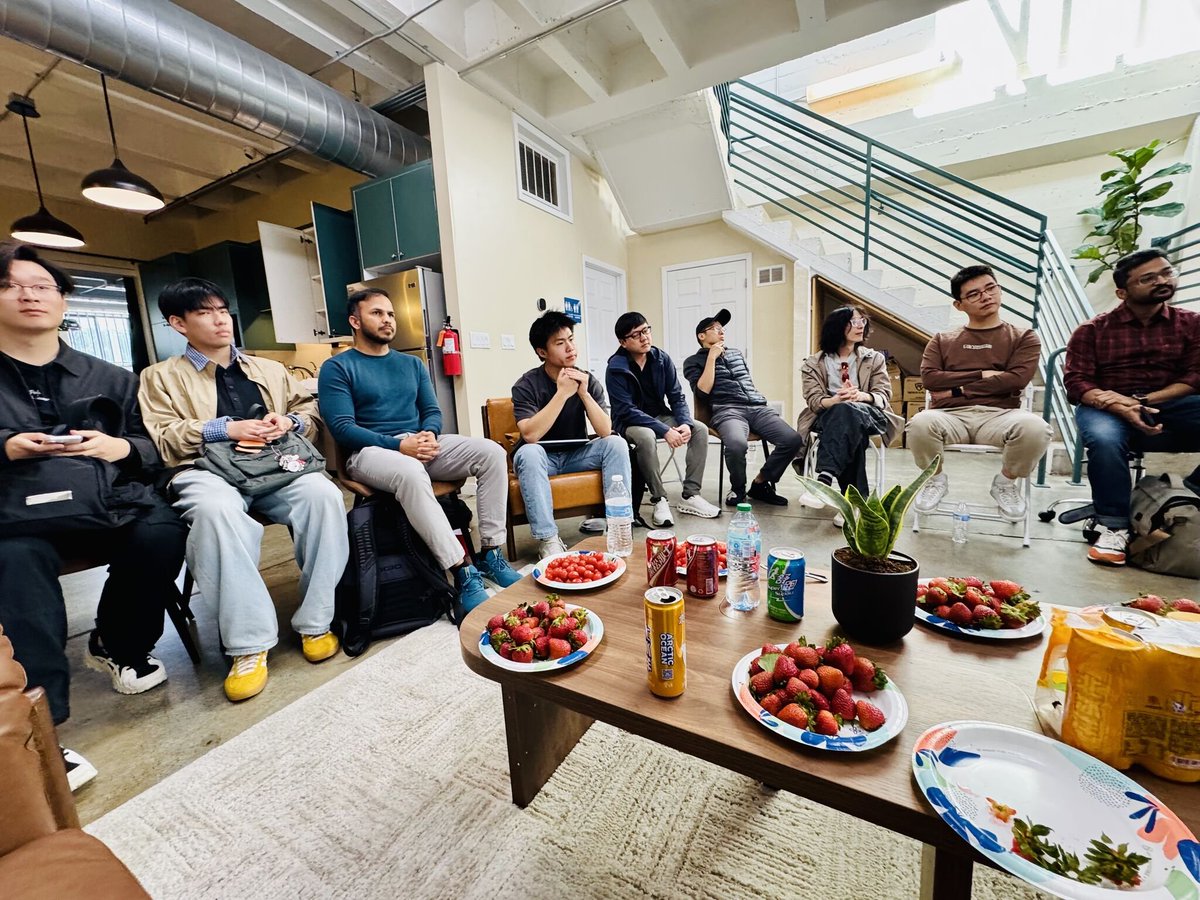
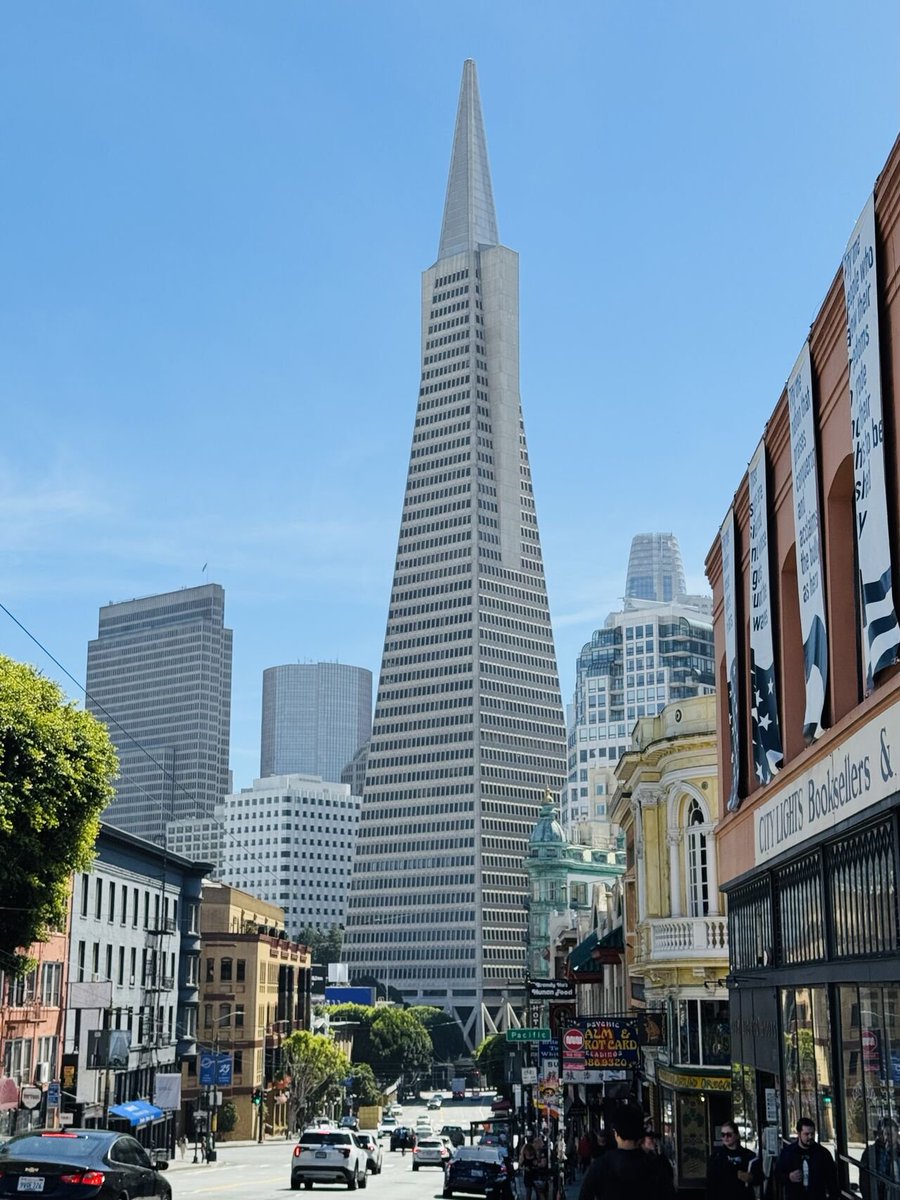
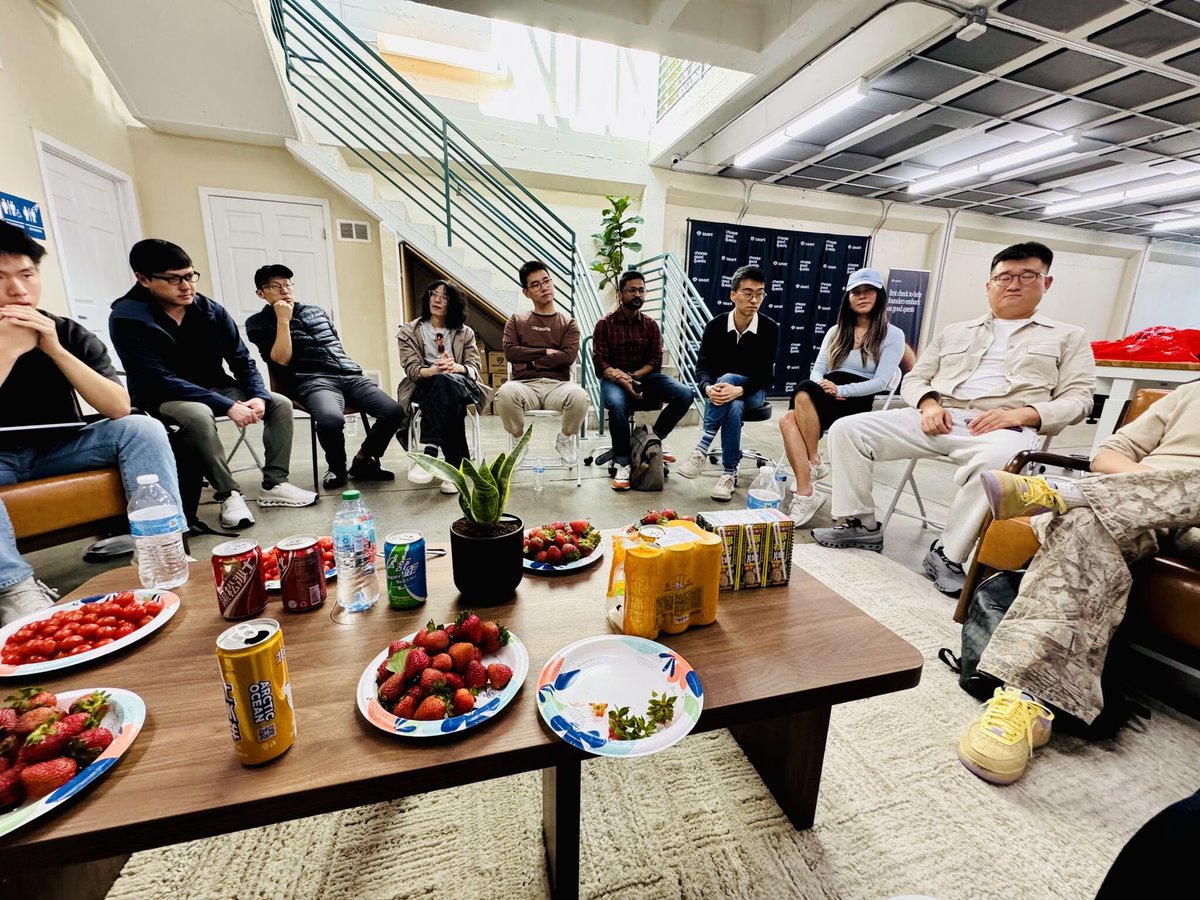
📖Robotics World Model Reading Club #01 Summary
@BostonDynamics, @Stanford, @AGIBOTofficial, @intbotai, @BytedanceTalk, @Google, @moonlake,
@Rivian, @Meta, @Samsung, @UCBerkeley, @Cruise, @encord_team, @ManycoreTech, @OpenGraph_Labs, @neuralmotion, @AMD, @nvidia, @oysterecosystem, @Zoom, @FusionFundVC, @BoostVC, @yzilabs...
policy learning→WM
VLA: observation→action
WAM: latent world→future trajectory→controllable action
→Shift=reactive mapping→controllable simulation
@nvidia Gr00t (7B, high mem efficiency on Thor)≈DreamDojo-style WAM. Bottleneck is NOT scale, but missing unified interface across perception–geometry–physics–action.
🧠 Representation
Pixel space is redundant & non-geometric.
Trend→Explicit 3D backbone:
point cloud/mesh
object sub-object representations
geometry-aware tracking (contact, affordance)
Point-flow pipeline:
detect→sample keypoint→track→dynamic graph
Core tradeoff=which points&density (motion saliency/affordance attn)
🌍 4D Reconstructi→Unified Latent
@GoogleDeepMind D4RT encodes video→temporally consistent latent field:
geometry motion visibility unified
Outputs: point clouds, 3D tracks, full reconstruct (300× faster)
❗Gap: no shared latent across:
vision/geometry/semantics/action/physics
⚙️ Physics Gap Sim2Real
Gap=physics, not vision:
discontinuous contact
deformable objects (∞ DoF)
non-differentiable friction
Engineering fails: brittle collision meshes, unstable contact
Solutions:
learned physics proxy
hybrid pipeline
convex decomposition (geometry → collision proxy, ~5× speedup)
🎥 Video Pretrain≠Interaction
Video=strong prior but no counterfactuals
Missing: force, depth, tactile, proprioception
→can't answer: what if act differently
⏱️ Control≠Inference
Real world=high-freq loop
action chunking
latent action
FastWAM (train with rollout, infer without)
KV-cache (AutoGaze)
👉control selects feasible trajectory, not full future modeling
Thor is good, but LLM scaling≠robotics scaling
📉 Data
No “robotics internet”:
sim/video/teleop/factory logs fragmented
no unified labeling or metrics
Reality:
factories use fixed primitives
generalization often unnecessary
Bitter lesson: data flywheel>pipelines (but robotics lacks one)
🦾 Embodiment Gap
manipulation→full-body intelligence
loco-manipulation gaze coordination
Need cross-embodiment align (space, action, kinematics)
🔁 Sim2Real Pipeline
human data→semantics→geometry→collision proxy→sim→fine-tuning
Unsolved: deformables, contact stability, long horizon
🧩 Paper
VQVAE (discrete latent)
VL-JEPA (predictive align)
token pruning (efficiency)
recursive models (depth reuse)
multi-path exploration (GRPO)
⚡ Infra→SLM
Real-time stack (LLM infra too slow)
→WM must compress into SLMs
Future=small, domain-specialized, grounded models
🧪Bottlenecks
no unified representation
no data flywheel
inference–control mismatch
physics
fragmented embodiment
Reality can't be scraped like internet.
It must be sensed, interacted, simulated.
👉 Goal: jointly optimize representation simulation action under physics constraints
💡minimal sufficient representation?
can video DiT become WAM?
vertical SLM inevitable?
robotics ImageNet moment?

18
34
321
61,464
Mar 25
data is being collected in regions where robots won’t be deployed anytime soon due to low labor costs, while the environments where deployment is actually viable remain largely inaccessible and require smarter, more strategic approaches to unlock
Mar 25

Robotics has spent decades optimizing for research. Deployment requires a completely different kind of person: operators, industrialists, and outsiders the field typically ignores.
There's a wave of people who want to build in robotics. The field doesn't know what to do with them.
New essay, Robotics Needs Fewer Roboticists* below 👇
5
542
Julia Kim retweeted

Excited to share that @OpenGraph_Labs has been accepted into @NVIDIA’s Inception Program 🚀
Our mission is to build reliable infrastructure for multimodal data capture, powering the next generation of robotics & world models 🌎

3
21
1,640
Julia Kim retweeted
Mar 17
World models can predict the next frame.
They can't predict the next touch.
That's the gap visuo-tactile world models will close.
Is the robot gripping hard enough?
Is the surface rigid or soft?
When exactly does contact begin and end?
Vision doesn't know. Tactile does.
We built @OpenGraph_Labs to capture what cameras miss.
Egocentric RGB × 5-finger multi-taxel tactile gloves.
Frame-synced. Calibrated. In-the-wild.
No lab setups. No scripted pick-and-place.
Just humans doing real tasks in real stores.
Watch the exact moment contact happens.
The pressure map lights up in sync. Every touch. Every frame. 👇
4
15
117
12,763
Mar 15
Robotics & world models require real-world multi-sensory data at scale.
But collecting vision, tactile, and IMU data simultaneously is much harder than it sounds. Each sensor runs at different frequencies, latencies, and clock domains. Integrating them means dealing with hardware quirks, driver inconsistencies, and constant timestamp drift.
This is fundamentally a synchronization problem. And it gets harder as more modalities are added and tasks become longer-horizon, because temporal misalignment compounds: the model loses the causal structure of what happened and when.
We learned this the hard way building our own pipelines. That experience led us to build a unified platform for multimodal capture, one that handles time alignment, hardware abstraction, and data integrity from day one.
@OpenGraph_Labs built 'SyncField - Multimodal Data Capture System " which:
▪️ Supports any hardware configuration (multiple cameras tactile IMU)
▪️ Automatic synchronization across all modalities
▪️ Output is fully time-aligned and ready to train on
It already powers humanoid robotics teams, data collection companies, and university research labs. If your team is collecting multimodal robotics data, we'd love to talk. (now onboarding teams one by one)
17
24
293
17,406

Mar 11
visuo-tactile world model
tactile sensing is critical for contact state and contact interaction dynamic
Mar 11

Robotics today looks a lot like NLP in 2005.
We hand-code physics simulations the same way linguists hand-coded grammar rules. And it doesn't scale.
A new class of models — world models — learns physics from video instead.
The early results are striking. The gaps are real.
Here's what you need to know. → bvp.com/atlas/can-world-mode…
cc: @TaliaGold, @bhavikvnagda, @gracejhma
1
10
125
24,434
Mar 11
Data can’t just be outsourced🤯 To iterate fast, robotics teams must own their data infrastructure
Introducing SyncField: turnkey data infrastructure for in-the-wild data collection (Best for UMI-style & Embodied human) #Robotics #UMI #DataCollection
9
11
134
14,589
Mar 11
With SyncField, you control your data collection from the ground up.
Own the infrastructure. Track everything from day one.
Scale data quantity on top of a unified infrastructure.
1
4
973
Julia Kim retweeted
Feb 27
VLMs see everything. Feel nothing.
VLMs annotate what looks like contact. Tactile sensors verify what actually is contact.
We ran VLM annotation on real manipulation demos. It labeled a grasp as "approach." Skipped release phases entirely. Hallucinated state transitions that never occurred.
6 out of 36 action phases wrong.
17% of your training data, corrupted.
Why? Pixels don't know when a fingertip touches a surface. Pixels don't know when grip pressure hits zero.
Tactile sensors do.
So we built a pipeline that catches every error automatically. Tactile evidence validates every contact transition. Wrong labels corrected, missing phases inserted.
Not faster labeling. Truthful labeling.
This is one of the core problems we're solving at @OpenGraph_Labs
2
5
43
4,453

Julia Kim retweeted
Feb 21
Robots can't learn if their eyes and hands are out of sync.
A 30fps camera and a 1kHz tactile sensor don't speak the same language. Multiple cameras, multiple sensors, all on different clocks at different rates. Jitter from USB and OS scheduling. Drift that compounds every second of recording.
We built a multi-modal sync pipeline that aligns all of it to ±2.5ms. Automatically. Every frame matched. Zero sensor samples lost.
No hardware triggers needed. Sensor-agnostic. Hardware-agnostic. Just plug in and record.
Physical AI needs real hand-eye coordination. Not approximate, precise.
We're building this at OpenGraph.
opengraphlabs.com/
5
39
289
20,715
Julia Kim retweeted
Tactile feedback is critical for safe and reliable real-world robot deployment 🤚🧤🤖
Really impressive work from @WiYoungsun demonstrating how a shared latent space can bridge tactile signals from wearable gloves to robot embodiments
Feb 17
Dexterous hands vary widely—so do tactile modalities. 🖐️🌈
Our vision on tactile human-to-robot transfer:
🔓 Not tied to specific hardware
♻️ Reuse human tactile demos across embodiments
Presenting TactAlign, a cross-sensor tactile alignment for cross-embodiment policy transfer.
1
6
1,062