
1 Photos and videos
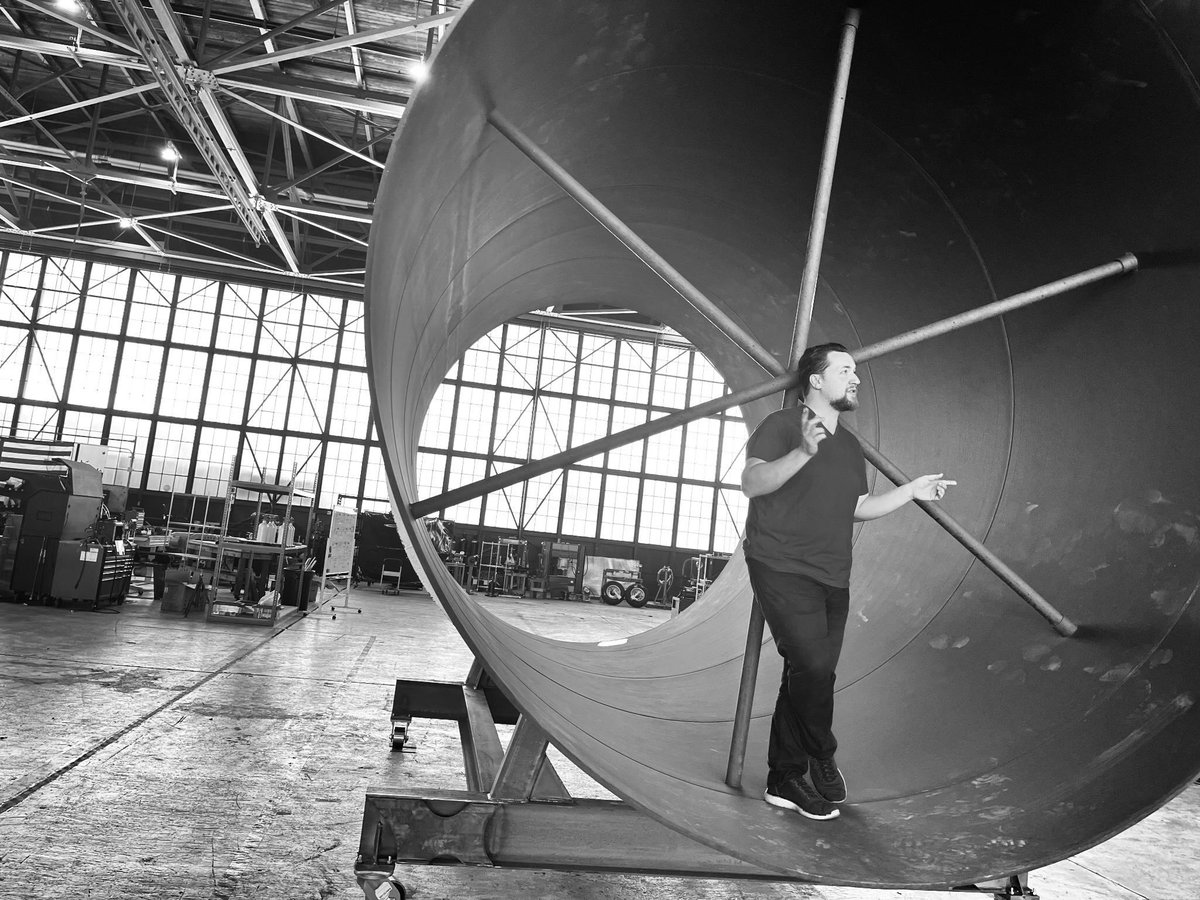
on my way to Detroit for @reindsummit
If you want to talk about space guns, let’s meet up!
4
1
50
2,465
mike grace retweeted

Jun 11
MINUS ONE TO SPACE GUN
with @natosaichek from @LongshotSpace @southpkcommons
(00:00) The 15-Kilometer Space Gun
(07:48) The History of Space Guns and Why the Idea Was Abandoned
(11:20) Why Rockets Aren’t the Best Solution (17:50) The Story of Longshot Space
(23:37) Nato On Leaving His Dream Job
(30:33) Fundraising for an Unconventional Idea
(42:22) The Perks of Having a Cofounder
3
13
35
16,143

Jun 14
Been saying for years that SpaceX can kill almost any space startup the second they decide to, until we have a new launch system.
Competing symmetrically with another rocket is suicidal.
They just killed half a dozen reentry vehicle startups with this:
satnews.com/2026/06/10/space…
1
4
122
Jun 14
Every company building a business that could make trillions in space has to reckon with the fact that right now access to space is owned by one guy who likes to make a lot of money.
A lot of well-funded businesses are predicated on Starship expanding capacity and lowering cost.
1
1
79
Jun 14
All of these companies might just be doing outsourced research and development for SpaceX's next product line. This is destroying a ton of businesses in one fell swoop.
1
48
mike grace retweeted

Jun 10
SF Deep Tech Week starts in less than two weeks.
There is 70 events on the calendar and the world's leading founders, everything from Fusion energy, Manufacturing, Defense, and the CEO's of publicly traded companies.
Folks like @aphysicist building the future of manufacturing
@bscholl creating next-generation supersonic jets
@TheaEnergy presenting Helios, their first-generation stellarator fusion plant
@EdwardMehr deploying high mix reconfigurable manufacturing
@jimbelosic gigascaling fast turnaround parts production
@jordannoone with AI accelerated CAD and CAM
@intel CEO Lip-Bu Tan, I mean, its the CEO of intel
@LongshotSpace building space cannons to LEO
@tybernstein deploying nuclear batteries for land, sea and space
and chief scientist of Pacific Fusion Will Regan, who's raised $950 million to commercialize magnetized target fusion
If you want to see the future being built today, come to SF for June 22nd-26th
Everything is free to attend.

22
18
160
13,702
Jun 4
All sympathy to Blue about recent events, but let's be clear; Bezos doesn't have enough money to subsidize Blue into competitiveness with SpaceX. The PRC is the only real rocket competitor to SpaceX on Earth.
1
4
213

First interview with Mike Grace, Co-Founder & CEO of Longshot (@LongshotSpace)
Space cannons, getting to Mach 25, history of German weapons.
0:27 Jules Verne
4:01 History of massive German weapons
7:55 Gerald Bull - Project HARP
11:01 Why isn’t Elon working on space guns
15:14 Cost of a kg to orbit over the last 30 years
18:50 Cost per kg with a space cannon
21:50 Getting to Mach 4.2
23:42 Going from Mach 5 to Mach 15
26:15 Heat shielding
31:07 Finding a 20km stretch of land for space launch
34:39 Making the space cannon rapidly reusable
37:59 Early iterations & what went horribly wrong
43:19 Old navy gun testing facility
45:20 Building the test site in the desert
55:41 Opening up the solar system
1:04:46 Almost going bankrupt three times
16
28
276
14,919
mike grace retweeted

14 Apr 2025
Mike Grace from @LongshotSpace on how a giant, freaking space gun works
Timestamps
00:00 – What Is That Giant Sewer Pipe?
01:31 – The Supergun: A Nazi Mistake, A Startup Bet 03:27 – Why Rockets Suck, Mathematically Speaking 05:09 – From Afghanistan to NASA via YouTube
07:24 – Starting Longshot in the Middle of a Plague 10:06 – Space Gun Meets Chuck E. Cheese
14:39 – Skip the Curve: Why Longshot Stays Flat
20:25 – Your Nose Melts Off at Mach 20
24:16 – Competing with Starship (at 1/10th the Cost) 34:47 – Does the World Need a Space Gun?
15
28
177
12,673
mike grace retweeted

24 Sep 2024
Here’s to the crazy ones!!!
Huge congrats to @natosaichek, Mike Grace and the team @LongshotSpace
People who are crazy enough to think they can change the world, are the ones who do.
Go Longshot! 🚀🇺🇸🚀🇺🇸
23 Sep 2024

We’re excited to be coming out of stealth mode to announce $8M in new funding to build a giant cannon that can launch raw materials needed for the orbital economy. We just secured a $2M Air Force contract and hit Mach 4.6 with our latest gas gun.
1
3
202
mike grace retweeted
16 Nov 2023
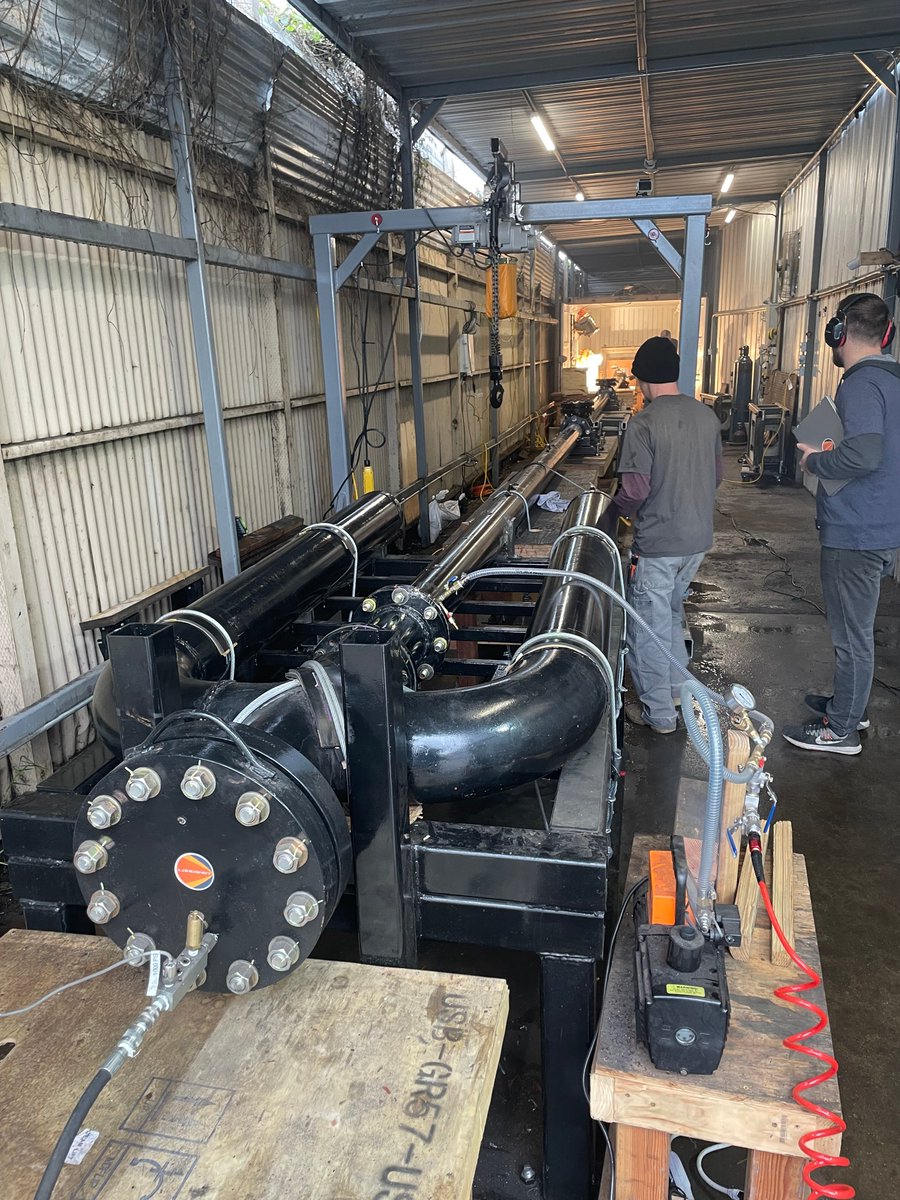
The dream of building space guns is still alive in our very own town of Alameda.
@natosaichek and Mike Grace are building Longshot, trying to achieve a Mach-25 muzzle velocity to bring the cost to orbit to $10/kg to LEO.
Their Christmas party is Dec 9th - come see a space gun.
jotform.com/app/233105849229…
16 Nov 2023

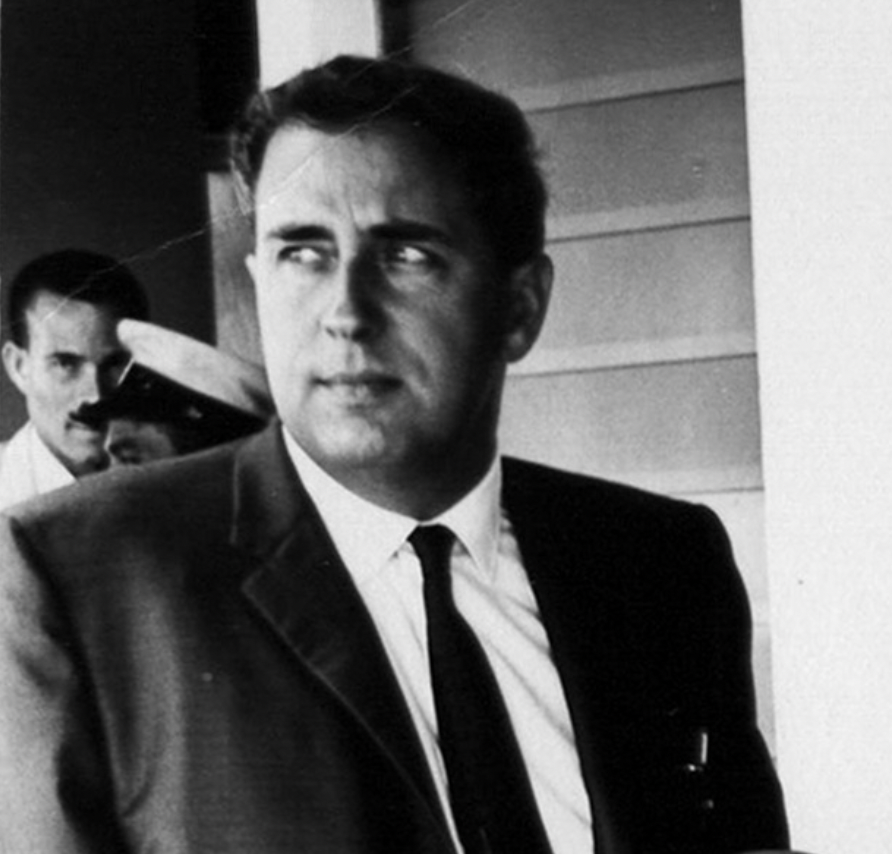
'Raging Bull' and the Quest for Space Guns
Gerald Bull was a Canadian Engineer with a singular purpose: building massive artillery pieces to shoot satellites into space.
He didn't take bullshit and didn't give up, until the Mossad assassinated him in 1990.
His Story:
Origins - Birth of a Supervillain Genius
In 1931, at age four, Gerald's mother died in childbirth and his father become an alcoholic wreck. Young Gerald was sent to live with his wealthy aunt and uncle, who had won their fortune in the lottery during the Great Depression.
After a childhood spent building model wooden airplanes, Gerald enrolled in medical school at Queen's University in Kingston, Ontario, but soon left to join the brand-new School of Aeronautical Engineering at the University of Toronto.
Bull's lack of academic prowess was made up for by his tremendous energy and initiative, and he was soon recommended to build a supersonic wind tunnel for the RAF. When he joined Canadian's equivalent of DARPA, CARDE, he was tasked with researching supersonic artillery munitions and requested to build another supersonic wind tunnel.
His idea was shot down, so instead, he started modifying artillery pieces to fire custom shells, imaging them with Schlieren photography.
He was offered directorship of CARDE before he event finished his PhD.
Then in 1951 at age 23, he became the youngest PhD Graduate in the University of Toronto's history, a record remaining to this day.
Undaunted by CADRE's lack of budget, he convinced Laval University to fund his supersonic wind tunnel, and with a team of students had it operating at Mach 4 by 1955 with a total cost of $6,000, using mostly scrap parts.
Bull just didn't quit.
Bull combined his childhood interest of model airplanes with his research program in supersonics, and pioneered a method of firing scale plane models from modified artillery pieces. He discovered a key instability in Canada's Avro Arrow fighter program, a supersonic swept delta-wing fighter which was cancelled over a political squabble with the United States.
Bull was pissed at the Arrow's cancellation.
After more bureaucratic red tape scandals, Bull quit CADRE in 1955.
Firing Rockets into Space - the HARP Project
Bull re-appeared as a Professor of Engineering at McGill University, a plan he had set in motion long in advance.
He immediately setup a Supersonic Ballistics Testing Lab on 2,000 acres of land near the Quebec-Vermont border, hired a former British Army Colonel, an bought a 16-inch battleship gun from the US Navy using proceeds from a research contract with the Office of Naval Research.
The project? Testing ICBM components for re-entry by firing them into space with the worlds largest artillery pieces.
Bull was so back.
The performance of the modified naval gun gun was so powerful Bull's 2,000 acres was too small to support it, so he moved the now-named High Altitude Research Project (HARP) to a remote meteorological station owned by McGill in Barbados.
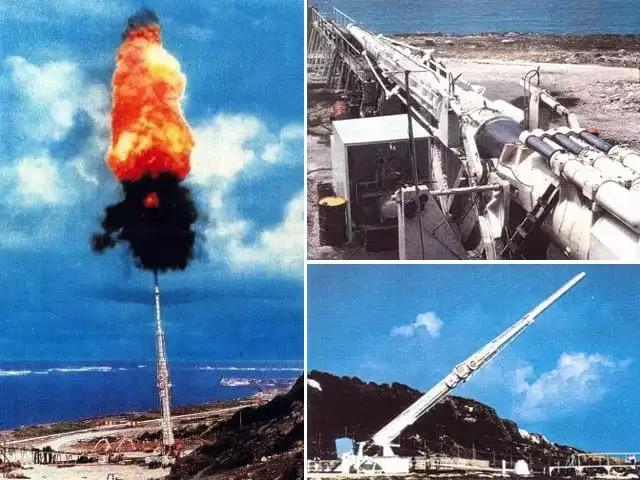
Bull was 33, overseeing a permanent workforce of 300-people in Barbados with his British Colonel as site supervisor, firing 150kg projectiles called' Martlets' at Mach 9 reaching altitudes of 66km.
Bull was just getting started.
"The cost of a launch was $5,000. We did eight a night, three nights in a row to get the data," Bull said, while championing the project as a means of educating the local workforce in STEM. The first Prime Minister of Barbados became his ardent supporter.
Martlets advanced to contain on-board avionics packages, timed-release chemical markers, and solid-fuel motors in addition to the breech charge to launch to ever-higher altitudes.
The final form was Martlet-4, a three-stage 16.4" rocket to reach orbit.
Bull needed a longer gun, so he cut the end off one 16-inch gun, and welded another in place, to make a barrel 120-feet long weighing 200 tons with reinforced scaffolding so it could be raised from horizontal.
It was the largest operational artillery piece in the world.
On November 18th 1966, the HARP gun launched an 84-kg Martlet-2 at a speed of 2,100 meters per second (Mach 6.3), reaching 180 km altitude and setting a world altitude record for any fired projectile.
Bull's record remains to this day.
By the late 1960's Bull had built more than a dozen guns, ranging from 5-inch, 7-inch, to the behemoth 120-ft long 16-inch battleship guns, and half a dozen varieties of Martlet projectiles, reaching muzzle velocities of Mach 9, altitudes of 180km, and projectile accelerations of 15,000 g's. Bull had testing grounds in Arizona, Ontario, Barbados, Alaska, New Mexico, Virginia, and Maryland, a staff of hundreds, and was the world expert on supersonic munitions design.
But, funding was running out. Bull had completed 1000 launches from which half of all high-altitude weather data originates to this day, however without continued support from the Canadian and American militaries, HARP came to a close in 1968.
Going Solo - Bull Becomes an Arms Dealer
Bull convinced McGill to sell him the title to his Ontario ballistics testing facility by invoking an obscure clause in the original research contract, and split to form his own company.
Space Research Corporation designed and manufactured the GC-45 howitzer and specialized ammunition that would double the range and accuracy over existing artillery pieces. Bull could land shells in a 10m radius at 30km of range - twice the range of large guns in the form-factor of a medium gun.
His first sale was 50,000 high-performance shells to Israel in 1973 to be used in American-supplied howitzers.
This earned him a Congressional Bill by Senator Barry Goldwater making him eligible for a decade of American Citizenship and high-level nuclear security clearance.
In 1977 Bull orchestrated the illegal sale of 30,000 155m artillery shells, guns, and plans for his custom GC-45 Howitzer to the South African state arms corporation though proxies in Antigua and Spain. The SA Defense Forces had been outperformed by Soviet BM-32 Grads during Operation Savannah in 1975, and sought longer-ranged weapons against SRC Armor.
When the UN uncovered this shipments Bull was arrested for illegal arms dealing and spent six months in Federal Prison in Pennsylvania.
Then when he was released, the Canadian government fined him $55,000 for international arms dealing.
Going Rogue - Bull Builds a Doomsday Weapon
More pissed than ever, in 1980 Bull left Canada to Brussels and continued designing high-performance artillery but now with customers like the People's Republic of China and Iraq.
The Iraqis made Bull an offer he couldn't refuse - $25 million in funding to build the worlds largest artillery piece, The Babylon Gun, in exchange for research assistance on their SCUD missile program.
Bull accepted, and from here his fate was sealed.
Work began on Project Babylon, a gun that was 150 meters long, 1,500 tonnes, a 39-inch barrel bore that would fire multi-stage rocket-assisted shells with a range of over 5,000 miles, or, to Bull's delight, launch 1,200 lb satellites into orbit.
The project was to eventually provide Iraq with three 350mm Baby Babylon guns and two 1000mm Big Babylon guns.
Over the course of several months Bull's apartment was broken into, he was harassed, threatened, all to deter him from working on the Iraqi superweapon project.
A lesser man may have given up, But Gerald Bull was Gerald Bull, and he was all out of fucks to give.
He'd build his space gun or die trying.
On March 22, 1990, three Mossad agents shot Bull five times in the head while he opened the door of his apartment in Brussels. Police found the key still in his door and a suitcase ready to go just inside containing $20,000 cash.
The remaining supergun parts were seized by customs in the UK, with some of the barrel sections now residing in museums. UN Inspectors destroyed the rest of Project Babylon infrastructure after the 1991 Persian Gulf War.
~~~~~~~~~~~~~~~~~~~~~~~~~
Geralds Bull died for his dream of building space guns to launch satellites into orbit, for the simple crime of developing Doomsday weapons for the tyrannical mass-murderer that was Saddam Hussein.
Nonetheless, he still holds world records:
- Highest g-forces survived by an avionics package : 100,00 g's, made when a projectile at CADRE collided with a steel support beam and was recovered still functioning.
- Highest altitude fired projectile of 180km
- Largest operable artillery piece, 110ft barrel weighing 200 tons.
- Youngest ever PhD Graduate from the University of Toronto.
I'd also nominate him for the biggest prairie oysters in Aeronautics to ever come out of Canada, too.
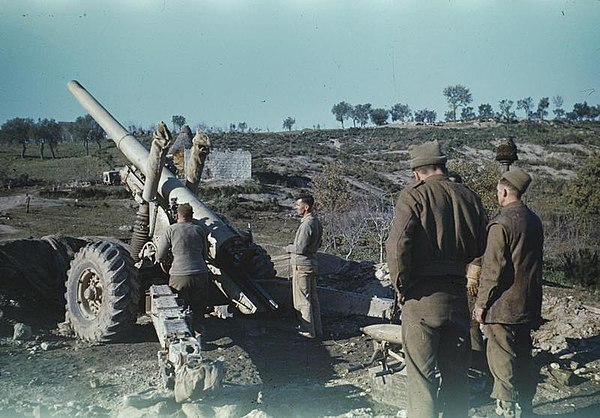
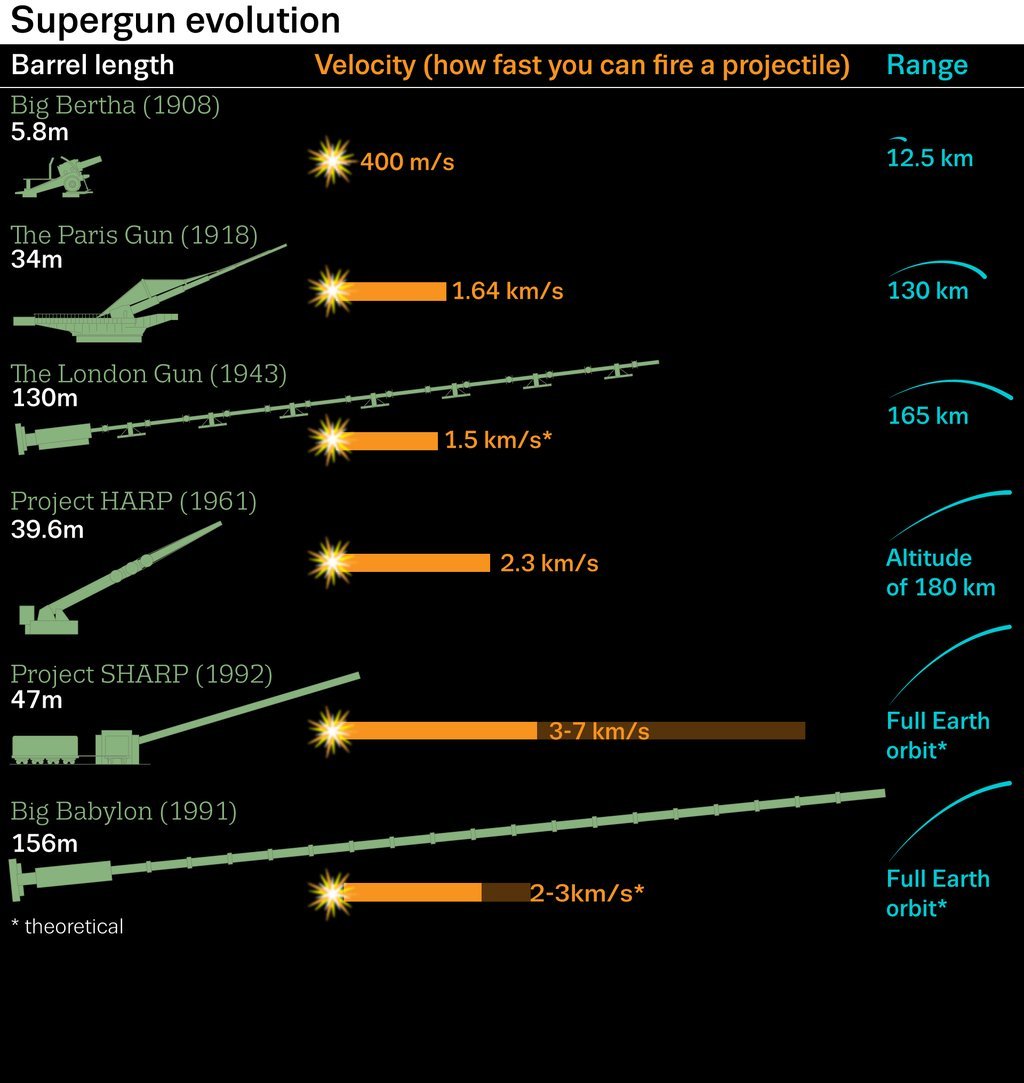
13
14
160
28,581
mike grace retweeted

10 Jul 2023
Longshot CEO Mike Grace thinks rockets are an "overly exquisite" solution for sending tons of mass to orbit.
The company's system "is designed to be dumb as hell," he said.
"Make it bigger. Don’t make it smarter. That’s expensive."
techcrunch.com/2023/07/10/lo…
2
6
24
4,742
mike grace retweeted

9 Jun 2023
~Space Workshop final hurrah~
Mike Grace and friends not only showed us around Longshot HQ, but also introduced us to their 75 foot long space gun!!
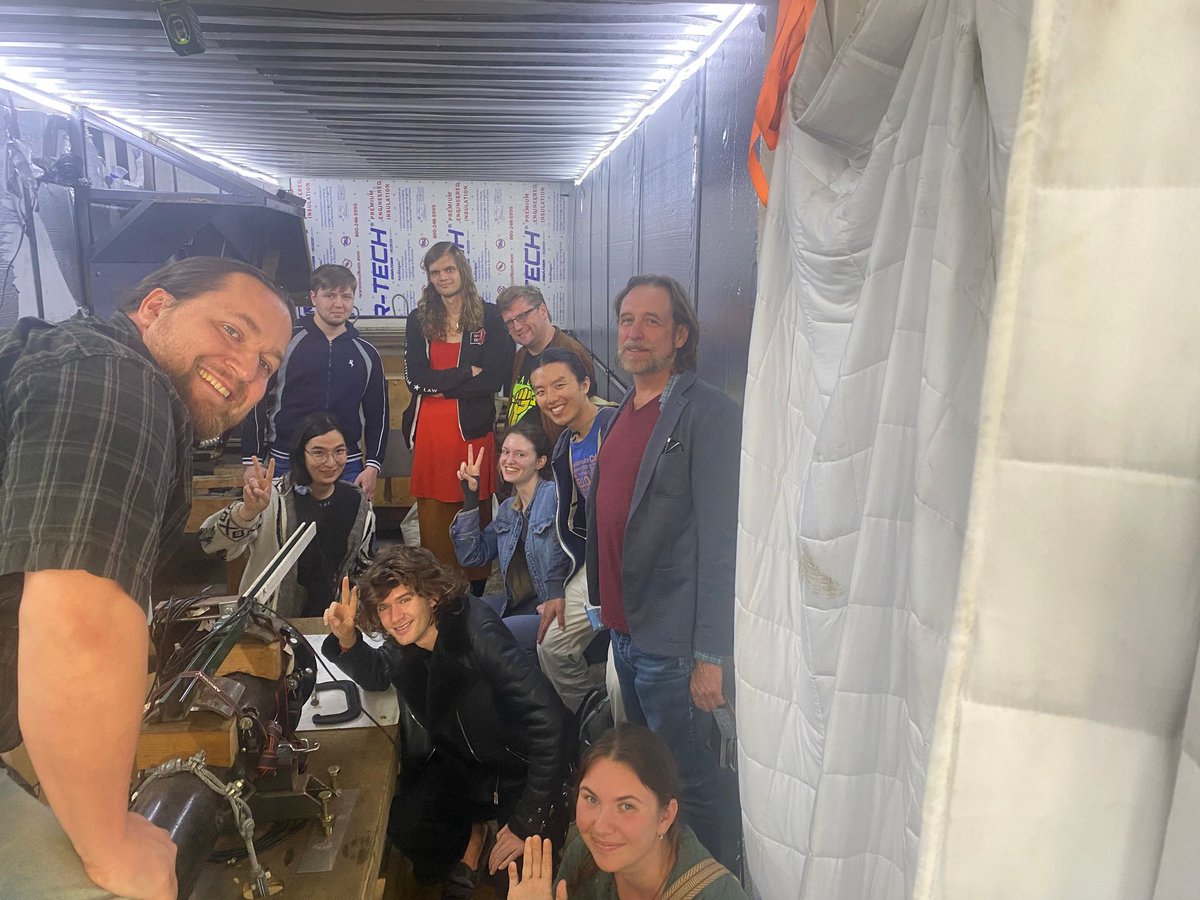
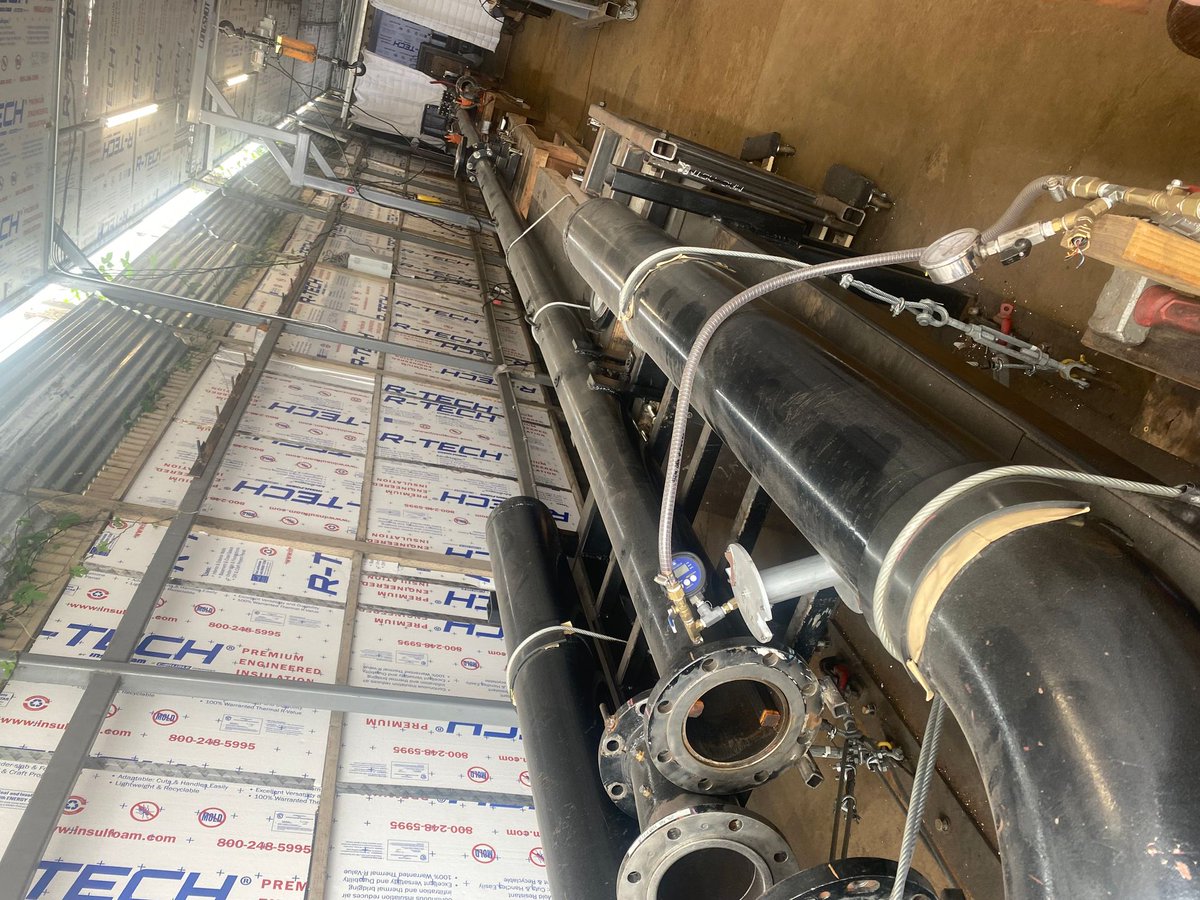
1
2
6
498