@RadxChange & @combinationsmag 🖖⿻ 🇧🇷
Joined May 2016
- Tweets 2,096
- Following 1,168
- Followers 1,691
- Likes 4,103
142 Photos and videos



paula berman 🇧🇷🦋 paulaberman.bsky.social retweeted

11 Nov 2025
🎙️NEW POD: FIXING BUGS IN DEMOCRACY
What if democracy worked more like open-source software?
@jessaroo speaks with @takahiroanno, an AI engineer and sci-fi writer who just won a seat in Japan's parliament. youtu.be/A_S6GP5-lBQ
2
6
24
4,477

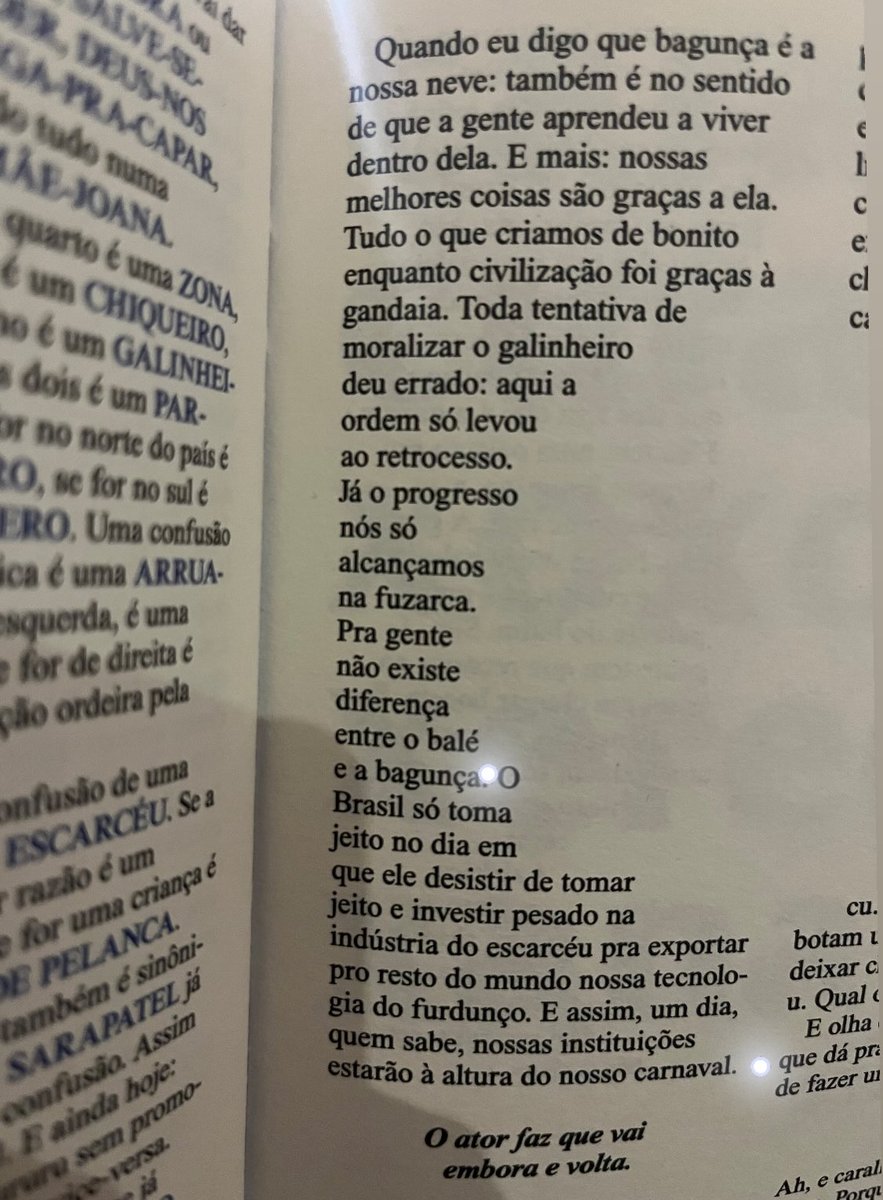
"O Brasil só toma jeito no dia em que desistir de tomar jeito e investir pesado na indústria do escarcéu pra exportar pro resto do mundo nossa tecnologia do furdunço. E assim, um dia, quem sabe, nossas instituições estarão à altura do nosso carnaval"
1
114
Que privilégio que é falar Português Brasileiro--obrigada Céu das Línguas--e estar viva em um momento onde nossa cultura é tão enaltecida.
69
paula berman 🇧🇷🦋 paulaberman.bsky.social retweeted
7 Nov 2025
Next Friday, on Nov 14 we'll be gathering for Learning with Ukraine 🇺🇦, a global conversation on democratic resilience & frontline innovation:
👉 luma.com/0iyrzr14
Why? Because even in the darkest of times, Ukraine is showing the world what 21st-century democracy can look like. Watch @jessaroo dive into this remarkable story with @maxsemenchuk of @Web3InstituteUA.
Full RadicalxChange(s) episode:
📺YouTube | youtu.be/U0XH8WhVFlU
🎧 Spotify | sptfy.bio/rxcsukraine
Apple | bit.ly/43l8kRw
6
7
1,500
paula berman 🇧🇷🦋 paulaberman.bsky.social retweeted

21 Sep 2025
🚨ÉPICO: Chico Buarque e Gilberto Gil cantam ‘Cálice’ no ato contra a PEC da BANDIDAGEM!
📹 Mídia NINJA
37
617
4,025
57,890
Led by the extraordinary @hourly_radio . Amazing news!
17 Sep 2025

Washington (once again) has a dedicated think tank program focused exclusively on #Brazil.
1
2
242
paula berman 🇧🇷🦋 paulaberman.bsky.social retweeted

21 Sep 2025
This is how people in Brazil are responding to unaccountable congress members who want to change the law to be completely unaccountable for crimes and along the way pardon those who tried a Coup D’etat back in early 2023
21 Sep 2025

Milhares de manifestantes se reúnem na orla de Copacabana em manifestação contra PEC da Blindagem.
Reprodução Redes Sociais
109
2,975
50,501
1,286,518
paula berman 🇧🇷🦋 paulaberman.bsky.social retweeted

18 Sep 2025
Was a real pleasure to discuss my work on community currencies and the future of governance in the age of AI with @gov_futures.
Many thanks @Bbeats1 & @Jamilya_eth!
18 Sep 2025

1/ 🔥New episode of Governance Futures is out! 🎙️🔥
We sat down with @pujaohlhaver to dive into her latest work on community currencies and the PCARE model.
ssrn.com/abstract=5136037
👉 Rethinking how money, votes, attention & influence interact in governance.
2
9
31
3,546
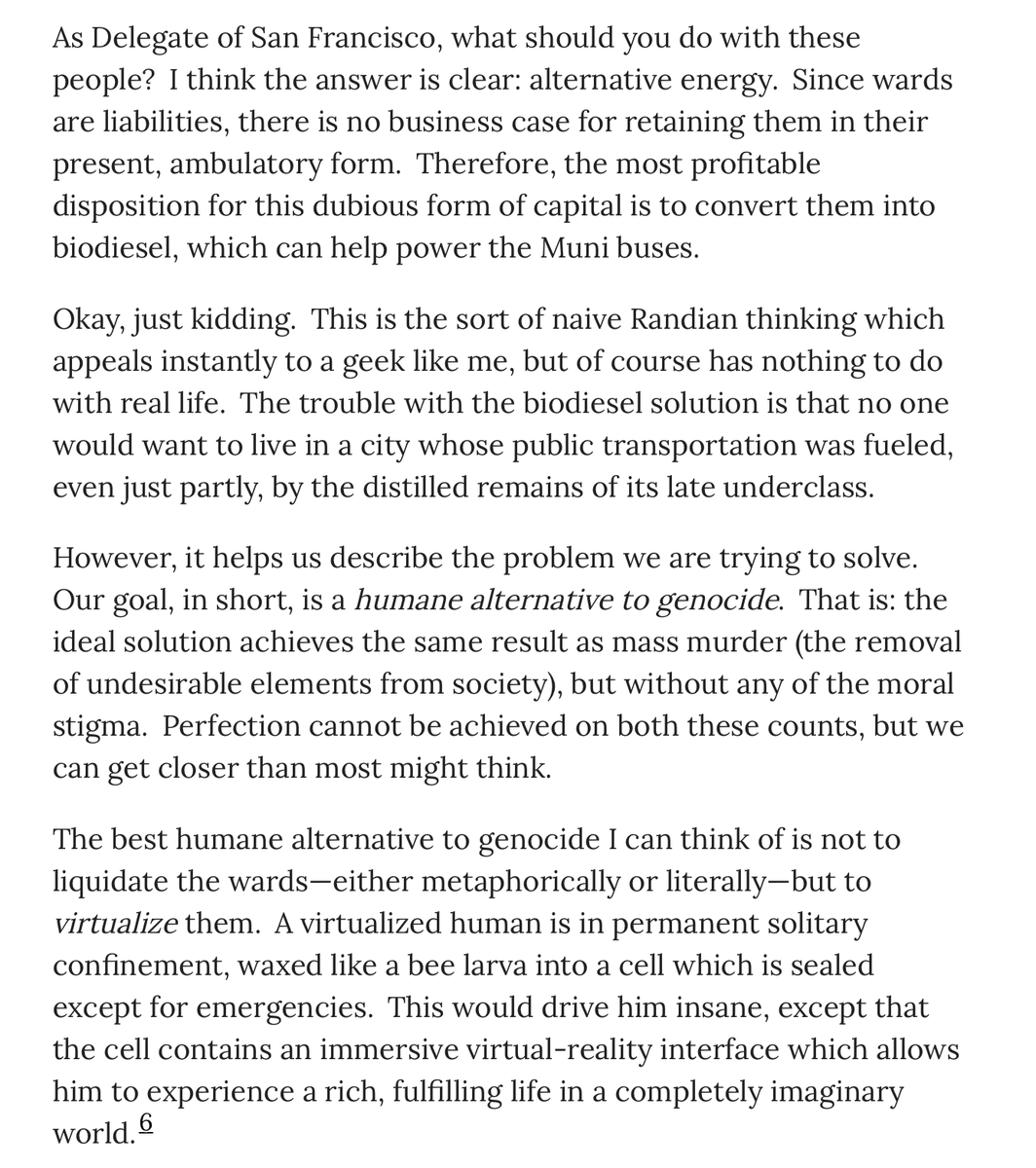
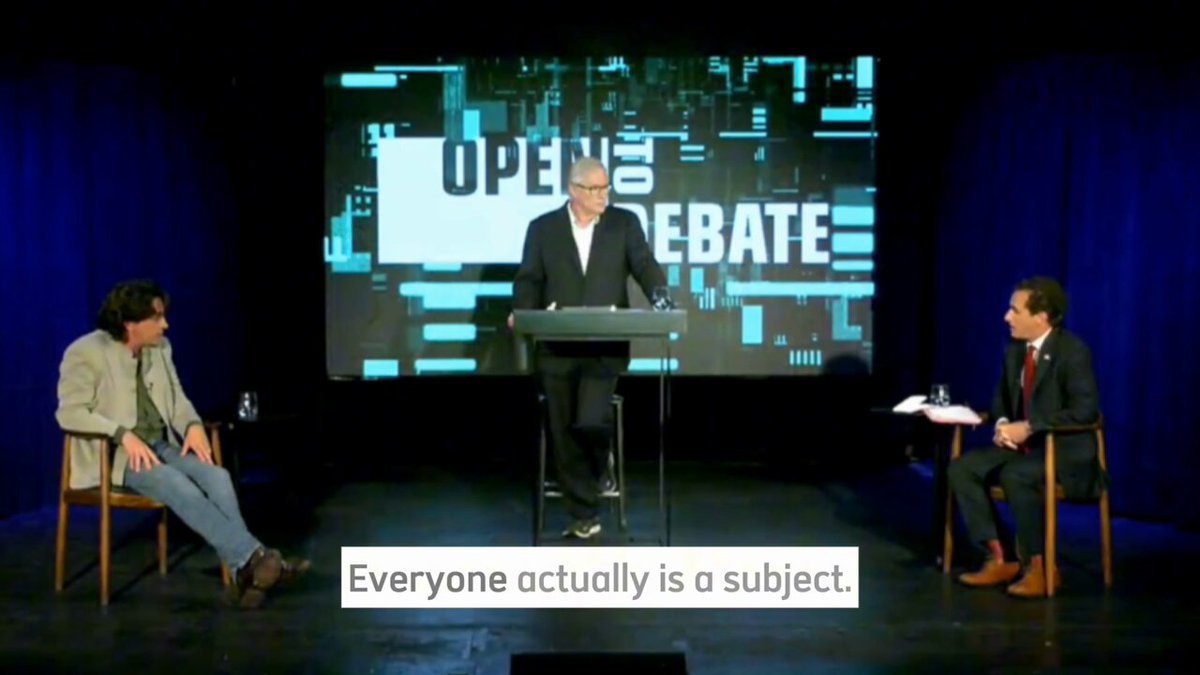
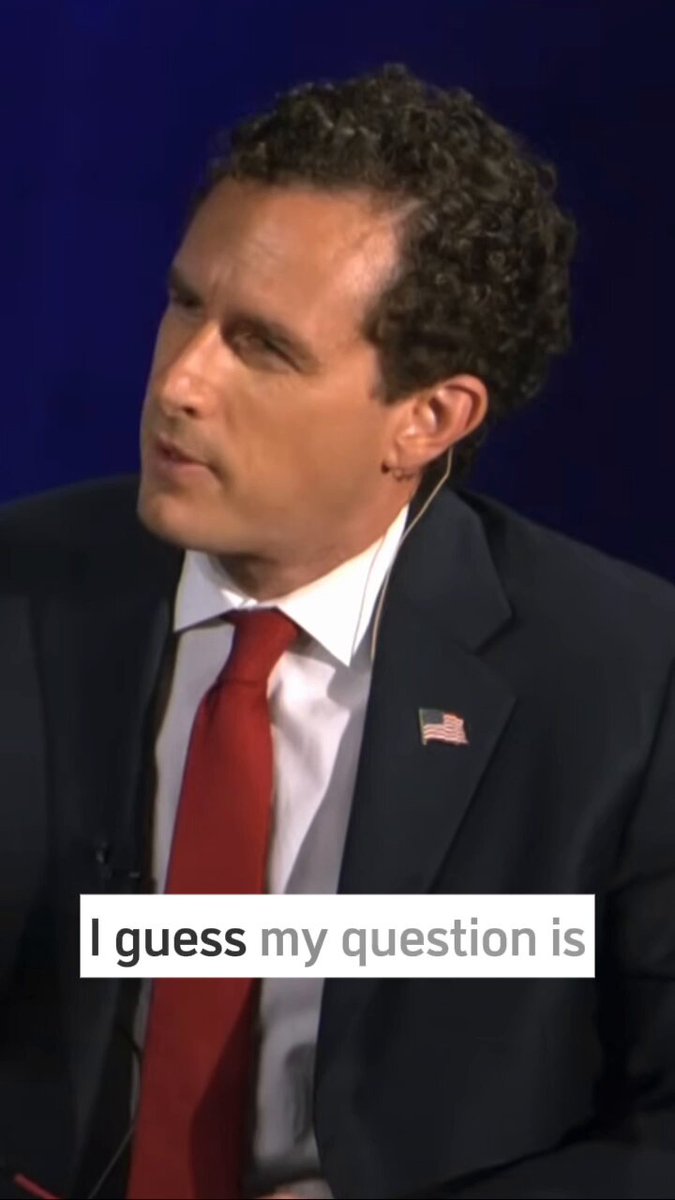
When confronted by @glenweyl on past writings advocating that welfare recipients be placed in solitary confinement with only screen-based interaction, @curtis_yarvin defended it as a humane policy for the large number of ‘zero marginal product humans’.
2
1
4
9,603
Another piece of writing by Curtis Yarvin, similar to the one read by Glen during the debate unqualified-reservations.org…
1
185
Looking forward to this!
15 Sep 2025
1/ Have you seen "Community Currencies: The Price Of Attention And Cost Of Influence In A Networked Age -or-The Price Of Entry And Cost Of Exit In A Networked Age" paper ?
We have - and we even had the chance to discuss it directly with @pujaohlhaver!
1
7
234
When pressed by @glenweyl on how free and fair elections would function under his “accountable monarchy” (where dissent is eliminated), @curtis_yarvin admits that his view of "free and fair" is similar to Putin’s elections.
2
4
11
5,008
paula berman 🇧🇷🦋 paulaberman.bsky.social retweeted

8 Sep 2025
Glen did a great job of making arguments backed up by empirical evidence.
Curtis tried to do the same, but imo his examples were more distant and so less effective. There's big differences between the peacetime political, wartime political and corporate settings that make examples from one scenario difficult to translate to the others (namely, the type of goal of the entity and the selection function that produces them). A little too close to "concentration is efficient, it's why bees huddle together in nests and why we have cities and yimbyism, therefore it's contradictory to oppose concentration camps as a tool of government"
Glen did a good job of pointing out "you want X? Well let me tell you about actually-existing X in our current society". The critique that these examples don't count because they are a byproduct of our democratic status quo strikes me as weak; all political systems everywhere are born in a pool of inconvenient slop, your thing has to be robust to that.
Curtis was at his strongest when critiquing the status quo. The argument that NYT depends on gov info leaks which can be viewed as a (decisive) unfair subsidy was novel, at least to me, and it's compelling. Democratic politics does need to have a more honest account of the role of elites; "they're all a bug in the system" is not it, and "they're there and if you don't trust them you're a bad conspiracy theorist and a danger to public health" is also not it.
Glen's closing speech was amazing, though I think to a skeptic "I agree the US isn't a democracy, but I think we should actually become one" would not be convincing without specific compelling ideas for how that would happen. I would love to see Glen continue to flesh that out in more detail, perhaps more object-level than Plurality (eg. "how would my system decide how to solve urban crime and execute on the solution?")
41
13
143
24,907
paula berman 🇧🇷🦋 paulaberman.bsky.social retweeted

4 Sep 2025
LIVE Debate Happening Now: Should the U.S. Be Ruled by a CEO Dictator? featuring @curtis_yarvin and @glenweyl. Moderated by @JohnDonvan. x.com/i/broadcasts/1BdGYZpNo…
5
15
2,323
paula berman 🇧🇷🦋 paulaberman.bsky.social retweeted
4 Sep 2025
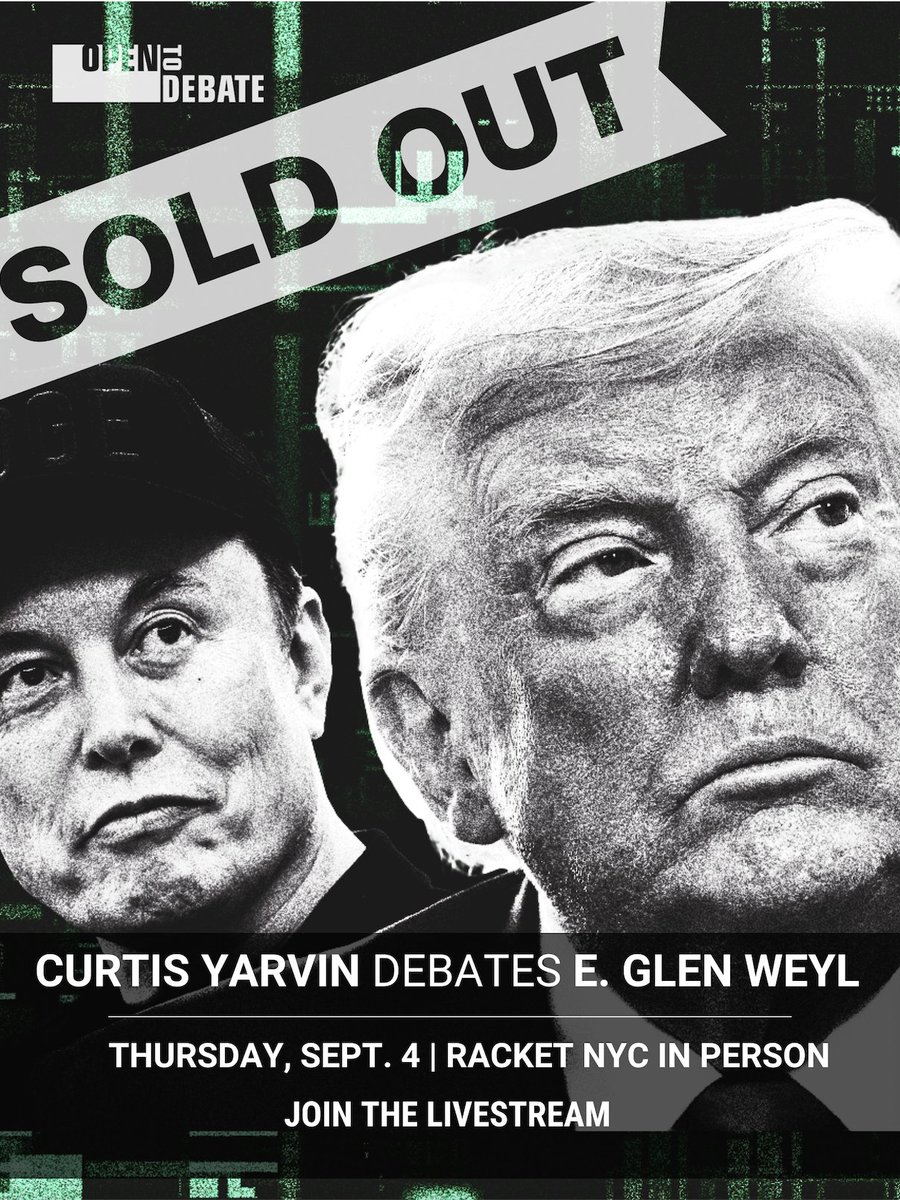
Tonight's LIVE DEBATE with @CurtisYarvin and @glenweyl is SOLD OUT, but you can still tune in via our FREE LIVESTREAM, starting at 7PM ET. Register here: bit.ly/3Vw7zR9
1
2
3
2,001
paula berman 🇧🇷🦋 paulaberman.bsky.social retweeted

4 Sep 2025
Direct link for tonight's debate with @curtis_yarvin @OpentoDebateOrg: workcast.com/register?cpak=1…
2
10
2,186
paula berman 🇧🇷🦋 paulaberman.bsky.social retweeted
1 Aug 2025
It will be an honor to finally engage someone who I have long held out as one of the leading intellectual influences on our time. @curtis_yarvin's mistaken ideas cannot be defeated with outrage alone; they must be answered with logic and fact.
1 Aug 2025

Debating Glen Weyl in NYC, Sep 4.
See reply for link and tickets
9
12
109
19,000
paula berman 🇧🇷🦋 paulaberman.bsky.social retweeted

13 Jun 2025
Delighted to share my paper with @nickmvincent and @hanlinliii
Once you see it, you can’t unsee it. Information markets fail. They break everything. Here’s what to do about it.
If there’s one thing I could yell from the mountaintops, it might be this.
arxiv.org/abs/2506.10272
2
6
22
1,385
paula berman 🇧🇷🦋 paulaberman.bsky.social retweeted
28 Jun 2025
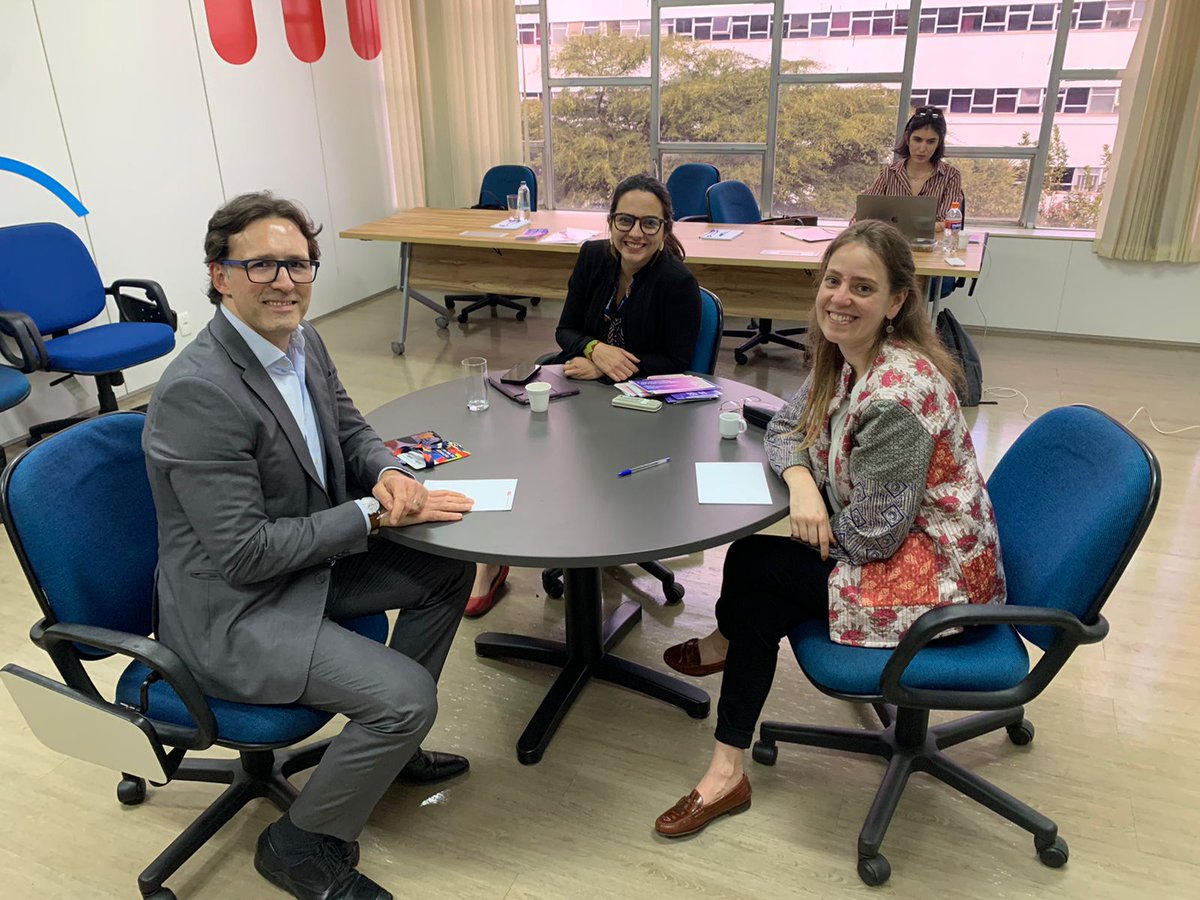
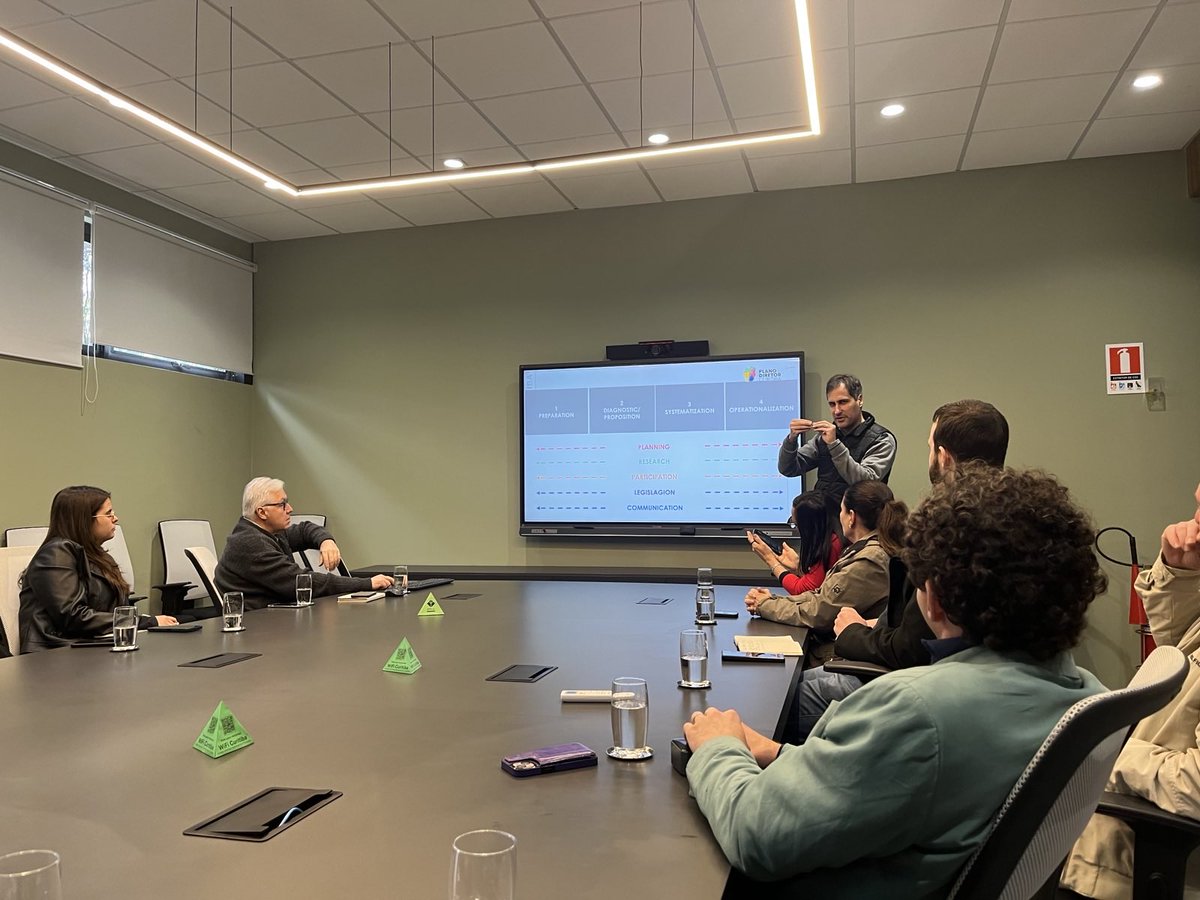
Obrigado to @_paulaberman, @IPPUC1, IMAP @_epimentel and @curitiba more broadly for a wonderful visit yesterday. For half a century, @curitiba has been one of the most innovative cities in Latin America. I am honored they are investing so much in continuing that innovation
1
3
6
1,322