
Devices and Sensing @AmazonLab126, Grad @IllinoisCS, CS @IIITDelhi
Joined August 2008
- Tweets 15,911
- Following 561
- Followers 487
- Likes 36,529
824 Photos and videos






Amod Agrawal retweeted

Jun 15
She proved that the best horror comes from performance, not with CGI or other special effects
75
891
18,051
552,493
Amod Agrawal retweeted

Jun 14
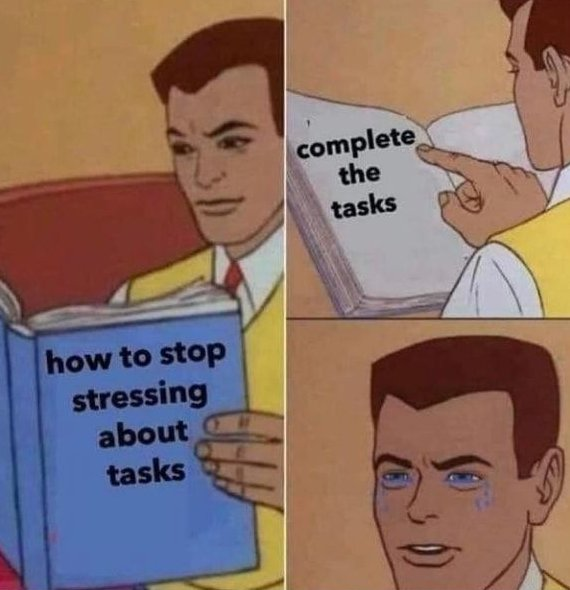
My doctor saying “avoid stress” as if stress is a neighborhood I can stop driving through.

102
15,516
98,773
989,924
Amod Agrawal retweeted

Jun 14
i feel like there is a sleep in me that needs to be slept but each time i sleep i don't sleep that sleep.

716
42,570
181,220
2,195,033
Amod Agrawal retweeted

Jun 15
Installed macOS 27 beta on my main Mac just to feel alive.
19
7
274
27,746


Jun 15
I can’t believe there are educated people at work who pee over toilet seats
13
Jun 10
The worst thing AI normalized is writing huge blocks of text with emojis like ✅ and 🚀
17
Amod Agrawal retweeted

Turns out that uninstalling instagram and not knowing what everyone is upto 24/7, is indeed good for your mental health.
431
13,747
111,781
1,834,548

Amod Agrawal retweeted

Jun 2
i don't care how you were raised. you're an adult, unlearn that nonsense.
336
49,609
201,693
3,007,683

Humans have an average of 200-250 ms of latency when speaking to each other.
This voice model is even faster: only 110 ms of latency!
Open-weights ←You don't need to pay anyone to use it.
8B parameters ← Small and cheap to host and run.
You can run it locally by cloning the Github repository. They published the instructions in the repository below.
Open models keep getting stronger!
Jun 3

Today, we’re excited to introduce Miso One, the most emotive voice model in the world.
Miso One is an 8-billion-parameter text-to-speech model for highly expressive speech generation. It emotes like a human and responds faster than a human, with just 110 milliseconds of latency.
We’ve open-sourced the model weights, with API access coming soon.
Hear how Miso One sounds in the thread below.
17
55
908
212,158
Amod Agrawal retweeted

this is huge for local deployment, we're talking about running sophisticated AI completely offline
running full multimodal agentic reasoning on 16GB changes everything for developers and privacy-conscious users who've been locked out of cutting-edge AI
this means a $500 laptop can now do what required cloud infrastructure just 6 months ago, democratizing access to the most powerful AI capabilities
1
22
2,457
Amod Agrawal retweeted

Jun 3
I think genuine people often assume everyone else is genuine too.
458
8,122
36,783
937,306
Jun 3
A weird sense of productivity comes from using tokens to reorganize all old projects’ code and data, and restoring repos to what they should have always been. I guess it’s like cleaning your garage.
10

Amod Agrawal retweeted

Jun 1
twitter is the only app that purposely shows you shit that pisses you off
530
18,415
138,519
1,651,614
Amod Agrawal retweeted

Jun 1
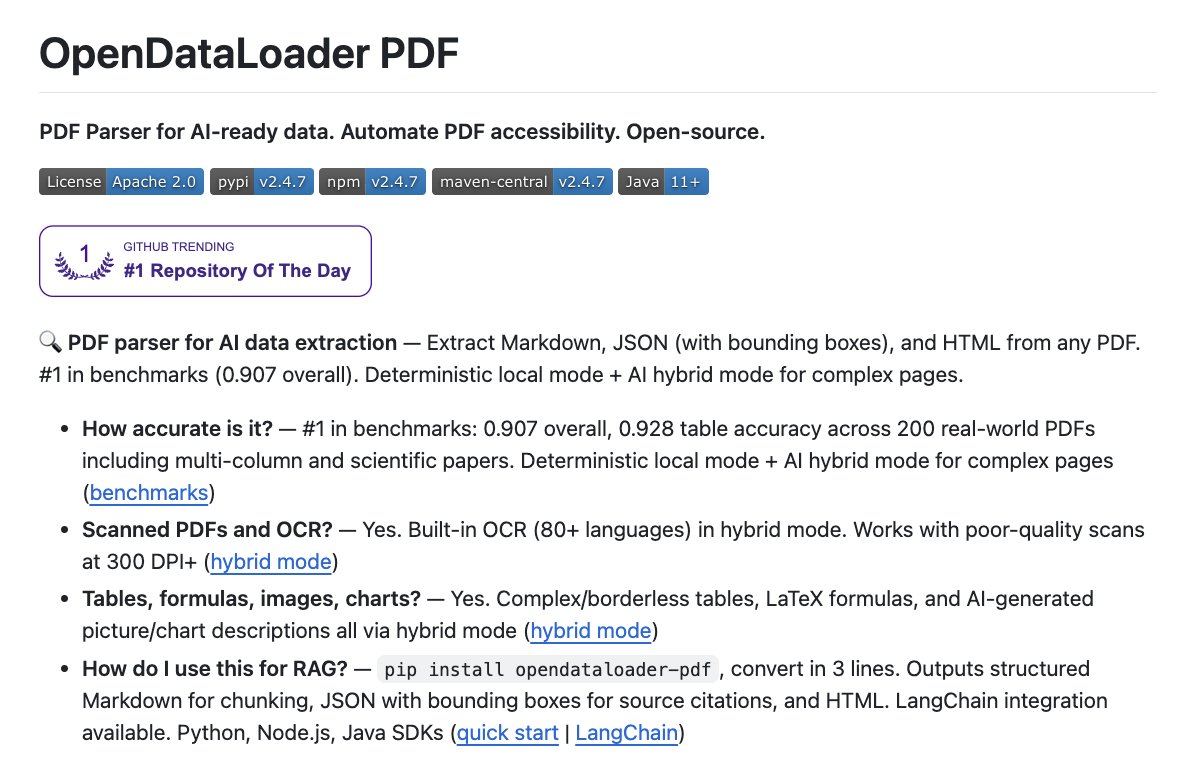
Someone open-sourced a PDF parser that converts 100 pages per second to Markdown.
100% free. on a CPU. no GPU. no cloud. no API key.
→ 100 pages per second.
→ handles tables, nested layouts, complex docs.
→ built-in OCR for 80 languages via hybrid mode.
→ official LangChain integration.
It's called OpenDataLoader and it just took the #1 spot in every PDF-to-Markdown benchmark.
The wildest part is that docling scores 0.86 and is 15x slower. marker needs a GPU and is 1,000x slower. Pymupdf4llm is fast but scores 0.40 on tables.
This thing beats every one of them. on a CPU.
Built with the PDF Association and the veraPDF team the people who literally write the PDF standards.
8.6k stars. Apache 2.0. zero proprietary dependencies.
10
177
1,215
86,851
Jun 3
Built a simpler version of this for myself a few months ago to make kiro-cli and claude collaborate, while I supervise.

Someone just made Claude instances talk to each other.
Not APIs.
Not agents.
Not orchestrators.
Just multiple Claude Code sessions… messaging each other like coworkers.
It’s called claude-peers — and it turns one Claude into a team.
Here’s what’s happening:
Run 5 Claude Code sessions across different projects
Each one auto-discovers the others
They send messages instantly
Ask questions
Share context
Coordinate work
Your AI tools literally collaborate.
Example:
Claude A (poker-engine):
"what files are you editing?"
Claude B (frontend):
"working on auth.ts UI state"
Claude A:
"ok I'll avoid touching auth logic"
No conflicts. No manual coordination. Just AI syncing itself.
Under the hood:
• Local broker daemon (localhost)
• SQLite peer registry
• MCP servers per session
• Instant channel push messaging
• Auto peer discovery
• Cross-project communication
Everything runs locally. No cloud. No latency.
What it unlocks:
• Multi-agent coding without frameworks
• One Claude writes backend, another frontend
• One debugs while another refactors
• Research Claude feeds builder Claude
• Large projects split across AI workers
This is basically:
"spawn 5 Claudes and let them coordinate themselves"
Even crazier:
Each instance auto-summarizes what it's doing
Other Claudes can see:
• working directory
• git repo
• current task
• active files
They know what the others are working on.
Commands:
• list_peers → find all Claude sessions
• send_message → talk to another Claude
• set_summary → describe your task
• check_messages → manual fallback
So you can literally say:
"message peer 3: what are you working on?"
…and it responds instantly.
No orchestration layer.
No agent framework.
Just Claudes… talking.
This is the cleanest multi-agent system I've seen.
We're moving from:
1 AI assistant →
to
AI teams that coordinate themselves.
And it's all running on your machine.
Wild.
44
Amod Agrawal retweeted

May 29
today someone in office said that “worrying is the worst way to use your imagination” and that’s easily the best thing Ive heard all week
115
18,095
111,414
1,364,651
Amod Agrawal retweeted

May 27
pre-ai, bad ideas were just bad ideas, now bad ideas are bad ideas with charts and tables
171
650
7,812
219,906