
Official twitter feed of the Association of Independent School Librarians.
Joined May 2013
- Tweets 4,300
- Following 695
- Followers 798
- Likes 4,720
216 Photos and videos






AISL retweeted

May 28
Thousands of students & educators are in the midst of digital detox this week in Upper Manhhattan.
“We all have seen it, the omnipresence of devices and screens in everybody's life,” said P.S. 187 parent @OlympiaKazi. “And we can totally change it.” gothamist.com/news/washingto…
6
13
1,074

As schools become increasingly dominated by screens, a growing number of parents are moving in the opposite direction, embracing “classical” schools built around books, discussion, handwriting and face-to-face debate.
bit.ly/4f95RjY
4
14
42
2,486
AISL retweeted

Pope Leo writes, “The speed and ease with which answers or summaries can be obtained risk extinguishing the desire to ask questions.” Curiosity and the human hunger to learn are under attack. They are trying to build a world in which no one *wants* to know anything.

68
1,807
6,837
77,546


AISL retweeted

May 14
NYC teachers say phone ban in classrooms has caused 'jaw dropping' change in students' attention trib.al/k3WkN2u

21
36
201
17,361

College commencements season comes at a sobering moment. Students are facing steep costs and dicey job prospects, especially in the AI era. That's led many to question whether a degree is worth it anymore. to.pbs.org/3R4at0G
10
7
21
5,272

Researchers warn that the U.S. is experiencing a reading recession — a slide predating the COVID-19 pandemic’s disruptions in schooling. abcnews.link/7vSCG2b
33
93
151
94,945
AISL retweeted

May 13
It gets a lot harder to judge parents who send their kids to private school when public schools are introducing kindergartners to AI "teachers." I suspect that one of the biggest future divides will be kids who were taught to think and those who weren't.
nymag.com/intelligencer/arti…
28
43
191
28,391
AISL retweeted

May 12
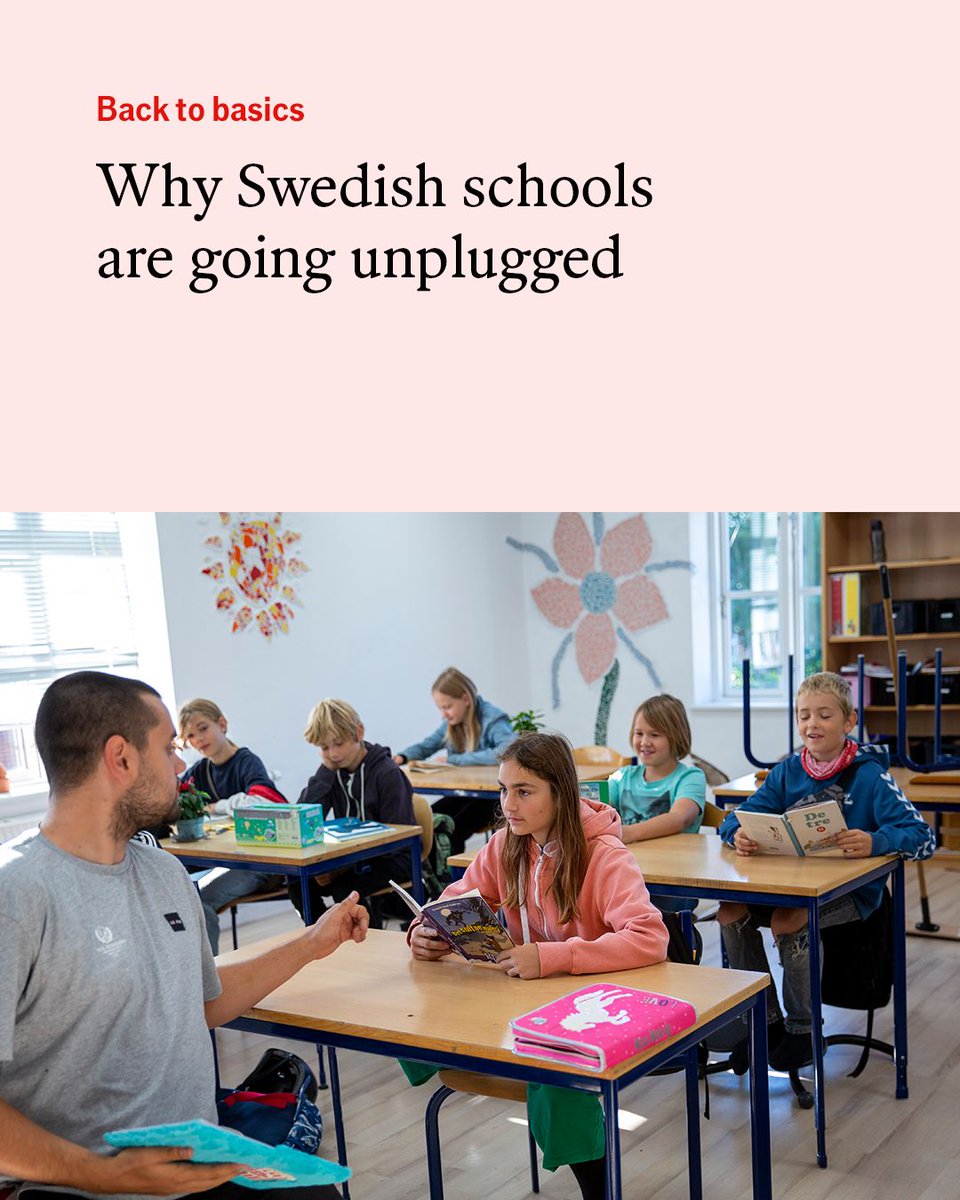
Once the country with the world’s highest literacy rate, Sweden’s reading standards have declined of late. The government is now determined to dial down digital education in response econ.st/4fa7w8F
Photo: Getty Images
15
108
209
33,310
AISL retweeted

May 10
Stories do more than engage.
They build knowledge, they deepen vocabulary, and they give pupils access to worlds, people, places and ideas they might not otherwise meet.
That is why story-rich curriculum work matters.
3
41
92
5,403
AISL retweeted

“As Cory Doctorow, author of Enshittification, is fond of observing: you won’t be replaced because an AI can do your job, you’ll be replaced because an AI salesman convinces your boss that it can”
Conned by a chatbot ft.com/content/eb6f5398-6635…
14
514
2,070
50,418
AISL retweeted
USING AI CHATBOTS for even just for 10 minutes may have a shockingly negative impact on people’s ability to think and problem-solve, according to a new study from researchers at Carnegie Mellon, MIT, Oxford, and UCLA wired.com/story/using-ai-neg…
26
90
9,232

Your brain does not read the same way online as it does with printed text. Your brains focuses better with printed text and you retain more information.
There is a place for digital devices in school. But students still need printed text. Period.
May 5

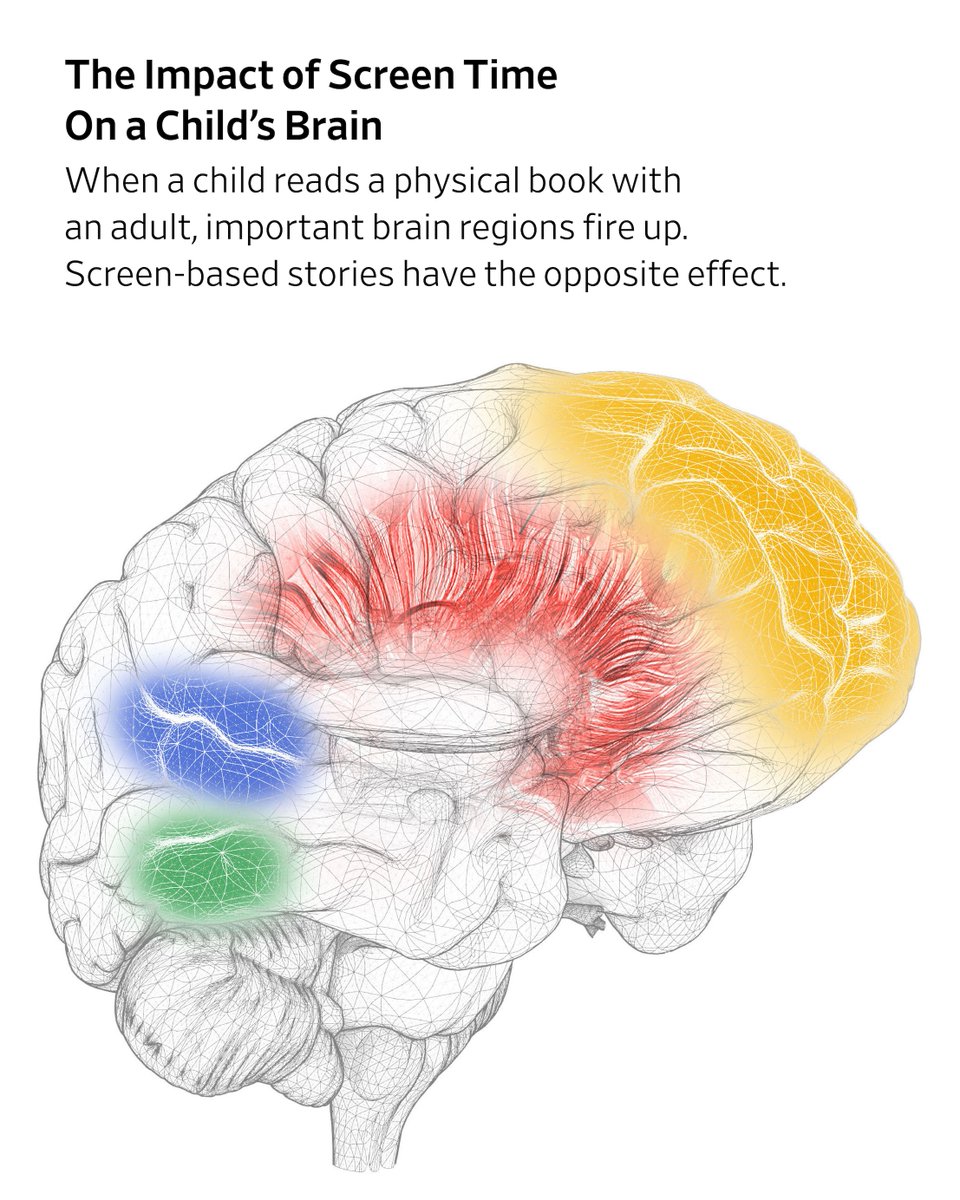
American public schools’ overreliance on YouTube for educational content runs counter to what is clear in several scientific studies: Learning analog is better than digital. on.wsj.com/3Rmrrat 🧵
3
15
82
2,470

"People are tired of AI slop and misinformation. They were told the internet would connect them, inform them, and empower them. Instead, many feel manipulated, polarized, and desensitized," writes Hank Green time.com/article/2026/05/07/…
43
247
520
32,138
AISL retweeted

May 6
One in five student interactions with generative A.I. “involved cheating, self-harm, bullying, and other problematic behaviors,” according to a report published by Education Week. Why is the technology being adopted by schools? newyorker.com/culture/progre…
7
63
102
17,057
AISL retweeted

Apr 30
I'm shocked anyone can be shocked this is the result. The pro-AI people would be better off arguing the cognitive decline is fine, that a new AI future will require less intelligence, etc. than pretending that offloading your thinking to machines won't degrade your thinking.
Apr 29

A 2025 study out of M.I.T. cautioned that “the integration of LLMs into learning environments may inadvertently contribute to cognitive atrophy.” This danger hasn’t slowed the advancement of A.I. in schools. newyorker.com/culture/progre…
18
176
1,107
33,557
AISL retweeted

Apr 30
When I met an attorney for families whose kids had been died or been significantly harmed by social media and AI apps, she said "it almost always starts on YouTube..."
Apr 30
Parents are finding their kids captive to YouTube on their school-issued devices. on.wsj.com/3RbxyOM

6
18
956
AISL retweeted

Apr 30
Teachers modeling the lost and found at school 😂
39
252
2,021
149,280
AISL retweeted

Apr 30
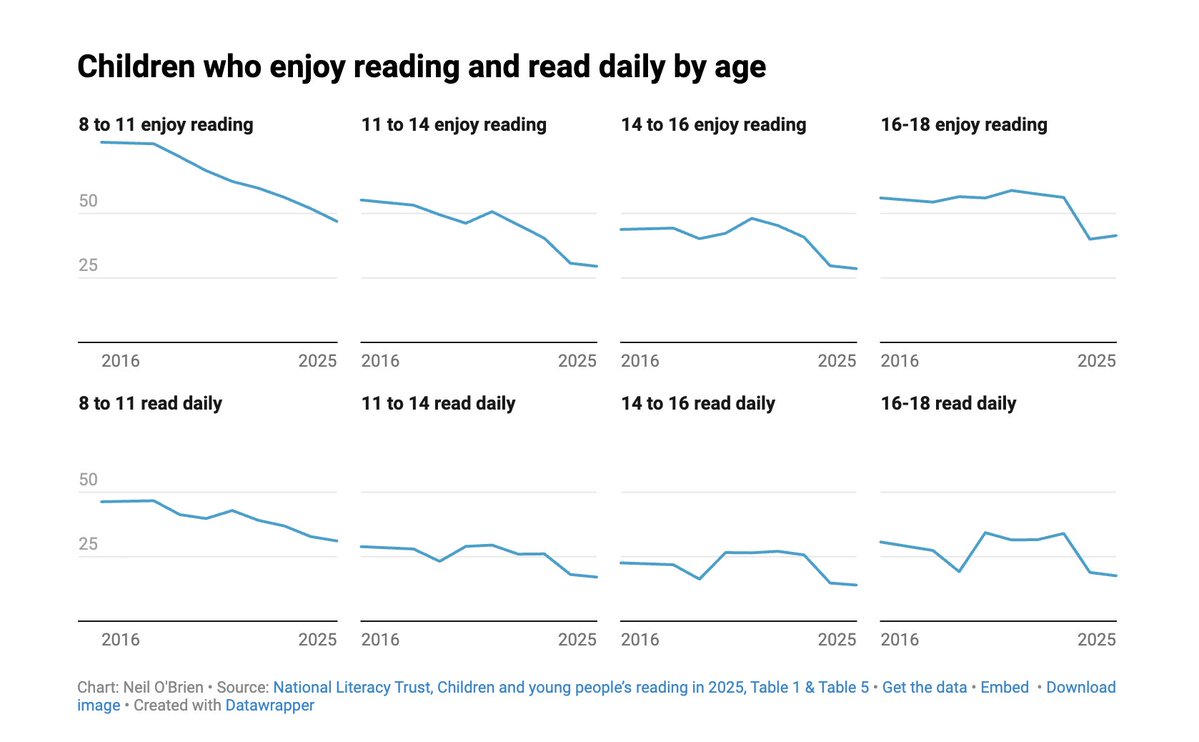
We are officially in a reading crisis.
Kids of all ages are reading less and enjoying it less.
Kids who said they enjoyed reading:
• In 2005: 51%
• In 2025: 32%
Kids who said they read daily:
• In 2005: 38%
• In 2025: 18%
This is concerning.
21
49
121
32,160
AISL retweeted

Apr 30
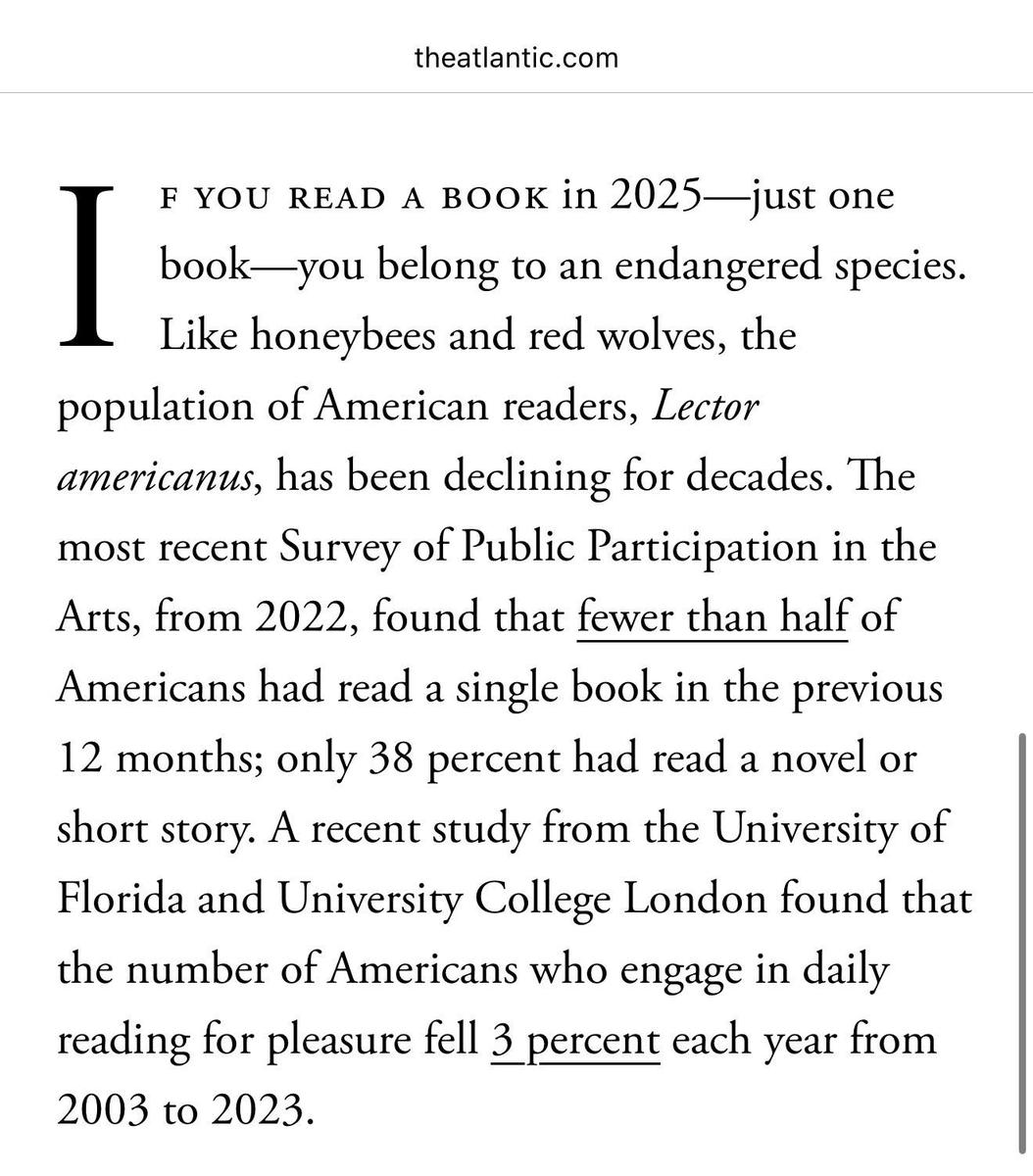
Fewer than half of US adults read a book last year.
Even fewer read an actual novel, and the trend is looking worse still for teenagers.
Why is nobody talking about this??
256
604
2,472
935,817