
Bestselling author, #CorporateinCollege, #MakeSchoolWork, Fortune 500 consultant, global futurist. TEDx/keynote speaker, @Thinkers50, @WSJ.
Joined December 2008
- Tweets 12,731
- Following 16,311
- Followers 105,284
- Likes 2,279
246 Photos and videos




Alexandra Levit retweeted

Jun 13
What happened when 40 leading minds huddled to envision U.S. society in 2030 and how artificial intelligence will shake up the economy and jobs. on.wsj.com/4vfAvNM
7
16
39
34,752
Alexandra Levit retweeted

Jun 10
In 2009, 70 per cent of high-school graduates—an all-time high—went on to pursue some form of higher education. Today, only 61 per cent are doing so. Jay Caspian Kang predicts this number will continue to decline.
newyorker.com/news/fault-lin…
6
12
27
10,892
Alexandra Levit retweeted

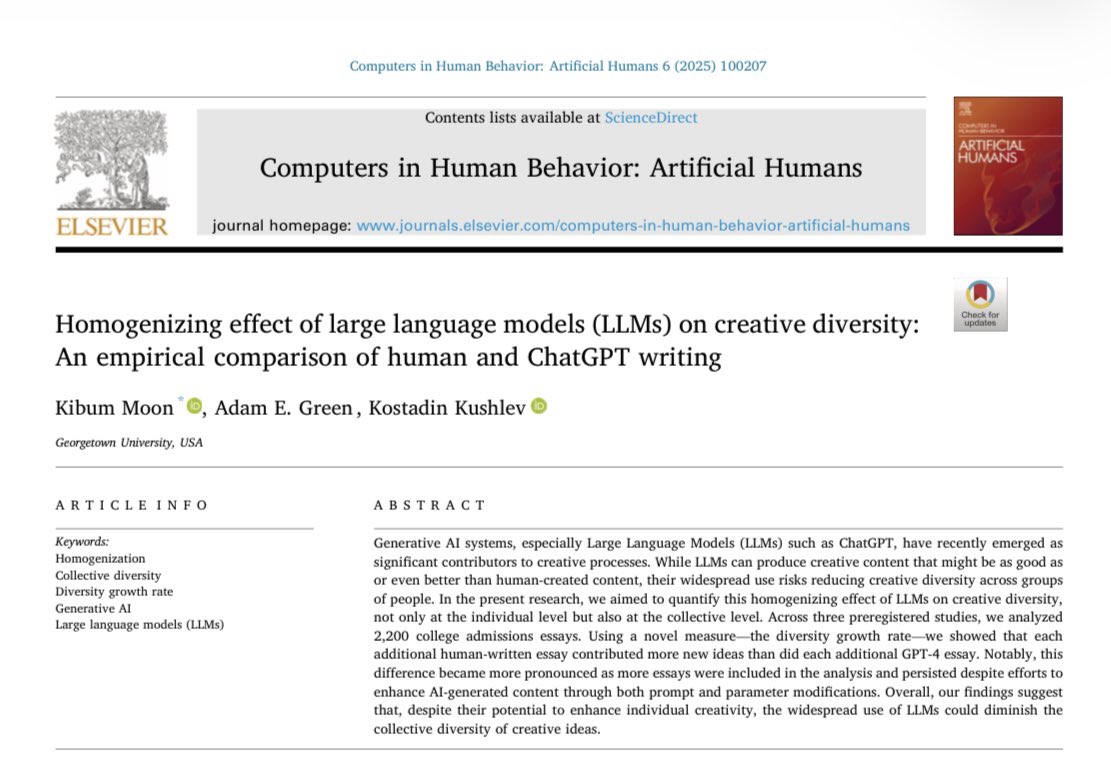
Students without access to LLMs are 2 to 8 times more creative than students with access.
That is the finding of a new paper comparing 2,200 college admissions essays written by humans before ChatGPT with essays generated by GPT-4.
The key point is not individual creativity. GPT-4 can write well, sometimes better than individual students. The problem is collective creativity.
Each new human essay added new semantic territory. New ideas. New angles. New experiences. New combinations.
Each new GPT-4 essay added much less.
The authors call this the diversity growth rate: how much novelty each additional text contributes to the collective pool of ideas.
Humans kept expanding the pool. GPT-4 made the pool converge.
Even when the authors pushed GPT-4 to be more creative, changed parameters, or used chain-of-thought prompting, the homogenizing effect remained.
This is the real danger of AI in education.
Not that students will write worse.
That everyone will write the same.
*
Full paper in the first reply
86
668
1,960
219,777
Alexandra Levit retweeted
May 19
Employers are clamoring for workers who can do doctor-like work but who are trained faster and can cost them less. on.wsj.com/4ujP4iR

33
52
177
116,302
Alexandra Levit retweeted

May 18
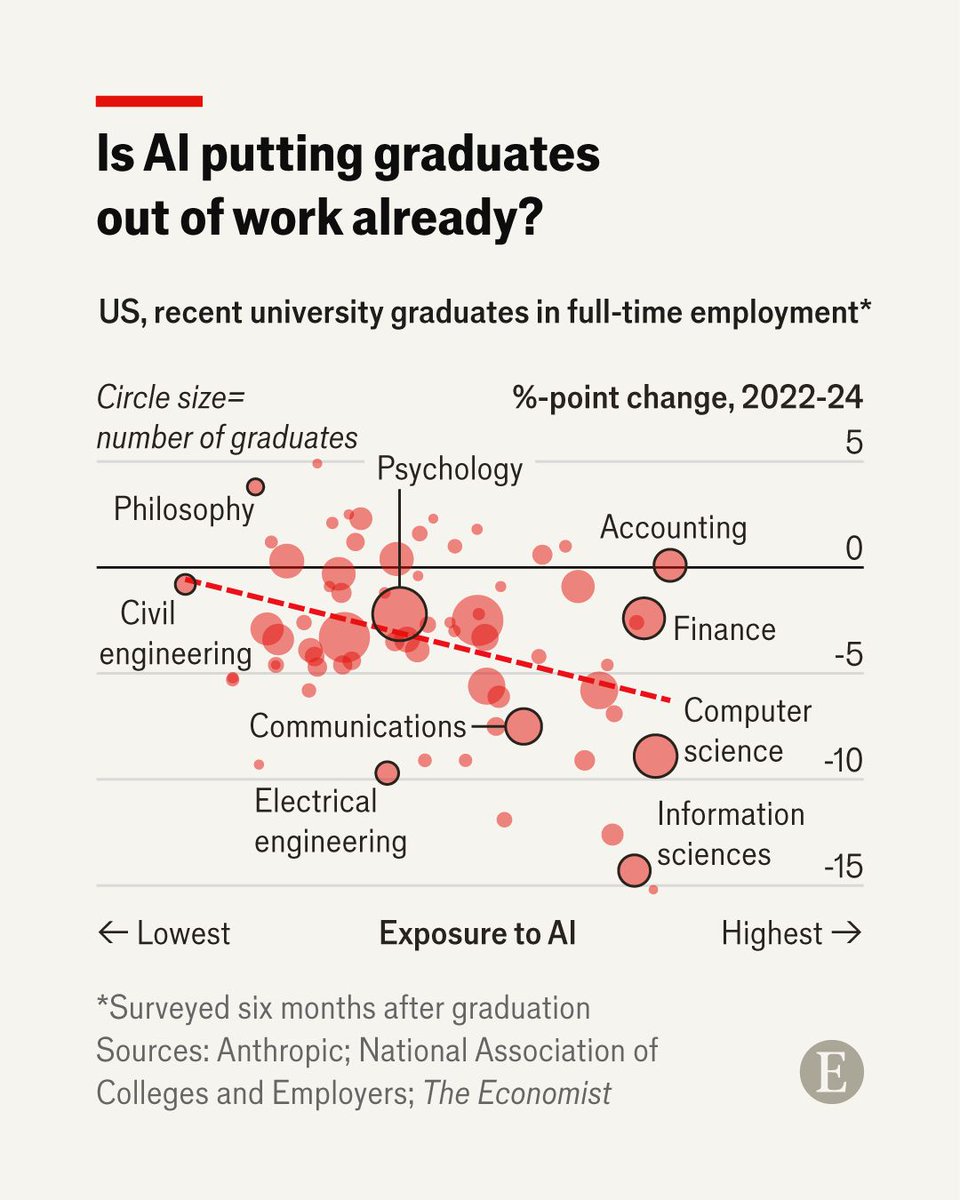
Many suspect AI is to blame for growing unemployment among graduates in America. To find out whether this is the case, we compared labour-market outcomes before and after the arrival of large language models. Register for free to discover our findings econ.st/49CWDbS
18
162
428
84,032
Alexandra Levit retweeted

May 11
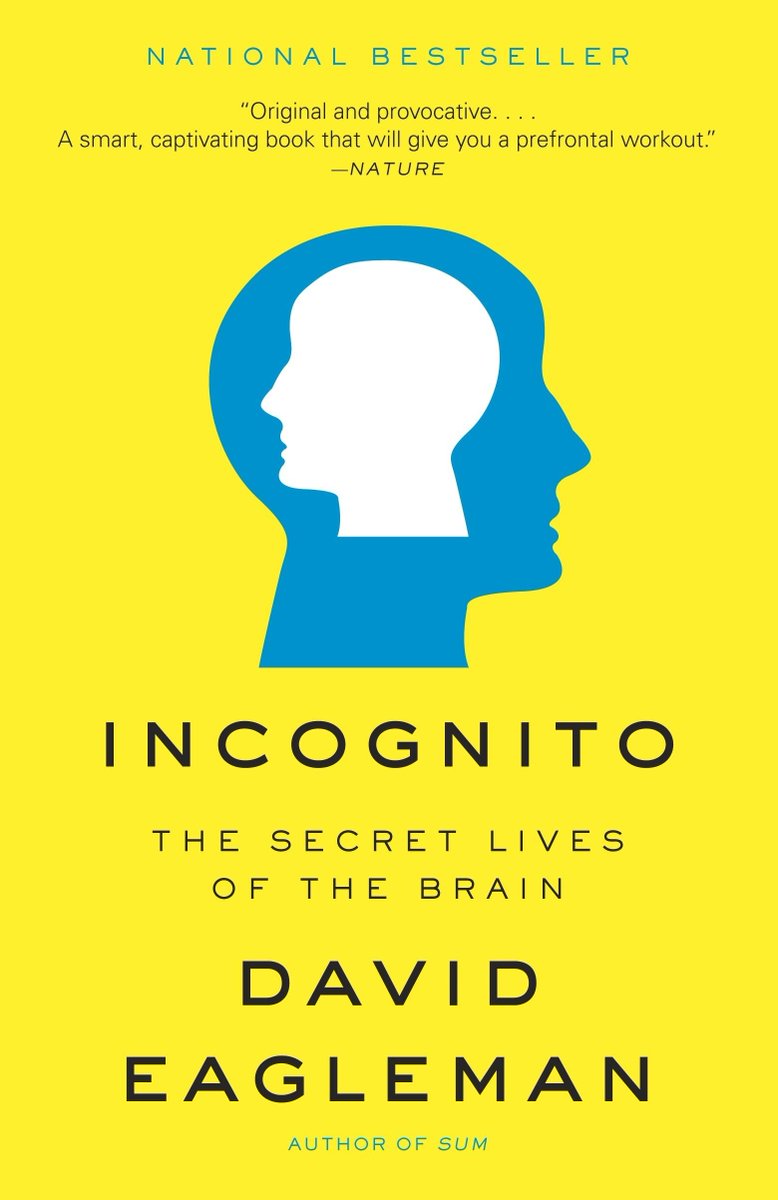
"It's easy to spot a hallucination only when it's bizarre. For all we know, we hallucinate all the time." - Incognito: The Secret Lives of the Brain
amazn.so/n7qtJAB
11
28
140
12,389
Alexandra Levit retweeted

Labor Department data from March showed that 1 in 3 men across the U.S. are not working or looking for a job. wapo.st/4whGItb
124
355
970
247,937

May 8
RT @sapinker: Suicide is the ultimate existential decision ("To be or not to be"), and one would think that it would engage the deepest ref…
121
Alexandra Levit retweeted
May 6
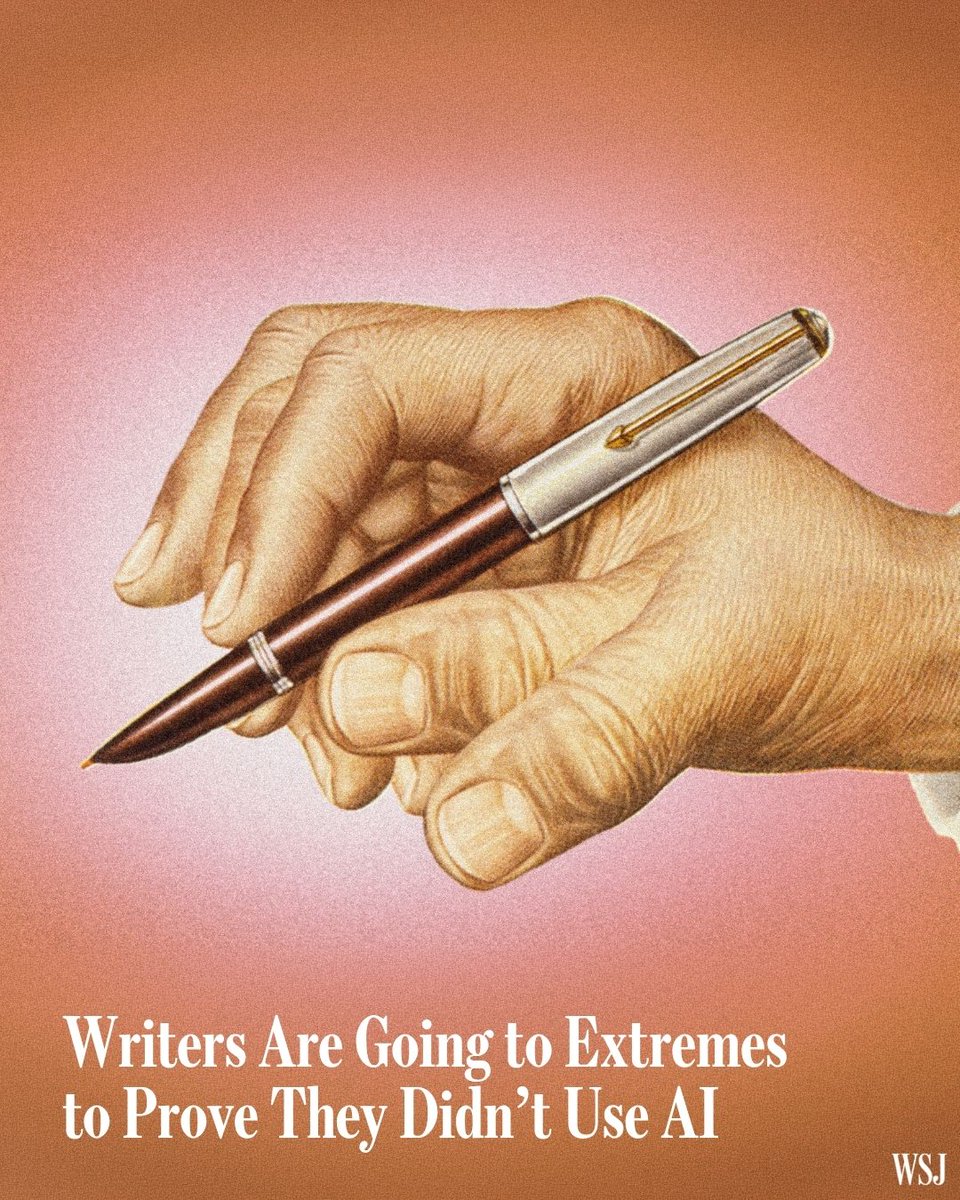
Writers are going all out to stay off the radar of armchair AI detectors. “It’s like the new McCarthyism.” 🔗 on.wsj.com/4wf2i1q
25
107
293
69,493
Alexandra Levit retweeted
May 5
A 2025 study out of M.I.T. cautioned that “the integration of LLMs into learning environments may inadvertently contribute to cognitive atrophy.” This danger hasn’t slowed the advancement of A.I. in schools. newyorker.com/culture/progre…
9
41
89
13,699
Alexandra Levit retweeted

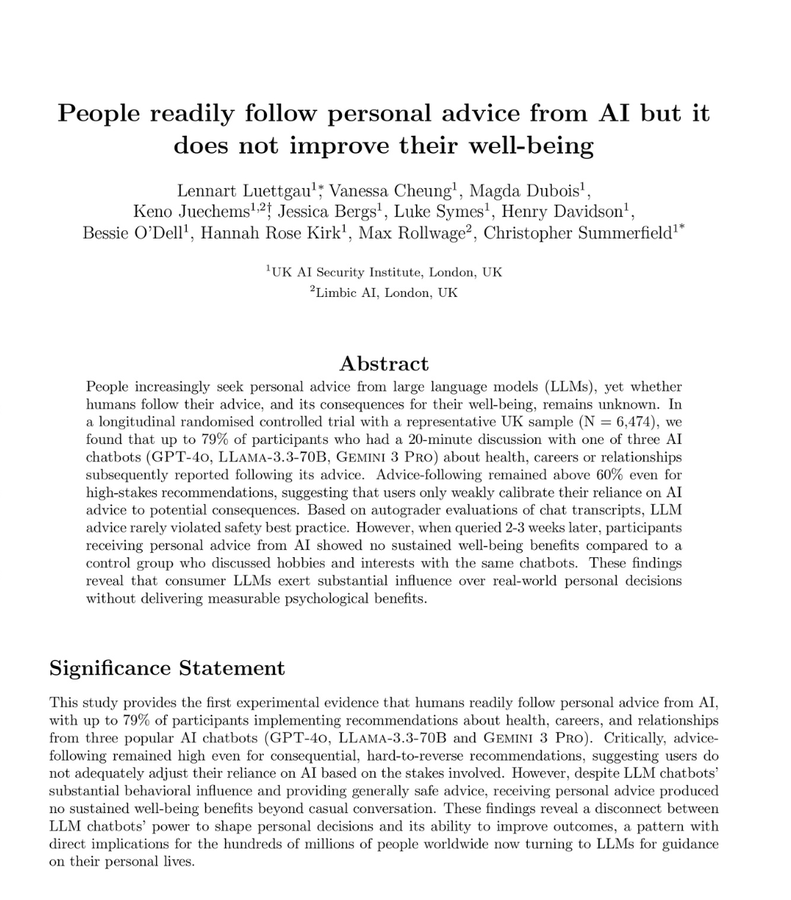
Most participants who had a 20-minute discussion with AI chatbots about health, careers or relationships followed its advice.
However, 2-3 weeks later, participants receiving advice from AI showed no sustained well-being.
These findings reveal that LLMs exert substantial influence over real-world personal decisions without delivering measurable psychological benefits.
arxiv.org/abs/2511.15352
21
28
85
37,770
Alexandra Levit retweeted

The ‘manosphere’ has already infiltrated the workplace. We’re only just noticing
As conversations about gender and DEI recede in some workplaces, language from the ‘manosphere’—from ‘alpha leadership’ to ‘high-value employees’—is becoming more visible.
fastcompany.com/91523017/the…
7
63
190
10,585
Alexandra Levit retweeted

Apr 30
With student A.I. use/abuse now ubiquitous, professors and teachers are killing off take-home essays and papers. Students are writing inside the classroom, often by hand.
It's part of the big rethink happening on tech and learning. My new report here:
nytimes.com/2026/04/30/us/ai…
105
778
2,393
432,370
Alexandra Levit retweeted
Apr 23
One in five student interactions with generative A.I. “involved cheating, self-harm, bullying, and other problematic behaviors,” according to a report published by Education Week. Why is the technology being adopted by schools? newyorker.com/culture/progre…
23
205
438
106,443
Alexandra Levit retweeted
Apr 21
Societies urgently need to confront the ethics of prediction, writes Carissa Véliz economist.com/by-invitation/…
9
21
61
23,461
Apr 21
Leveraging work-based learning to solve the entry-level career crisis: with @GPSEdPartners, @successfactors, @CSendraIO, @joeyvpriceHR, @kylejforrest, @calimorrison, and @bazzell.
ceoworld.biz/2026/04/19/earl…
80
Alexandra Levit retweeted

Apr 12
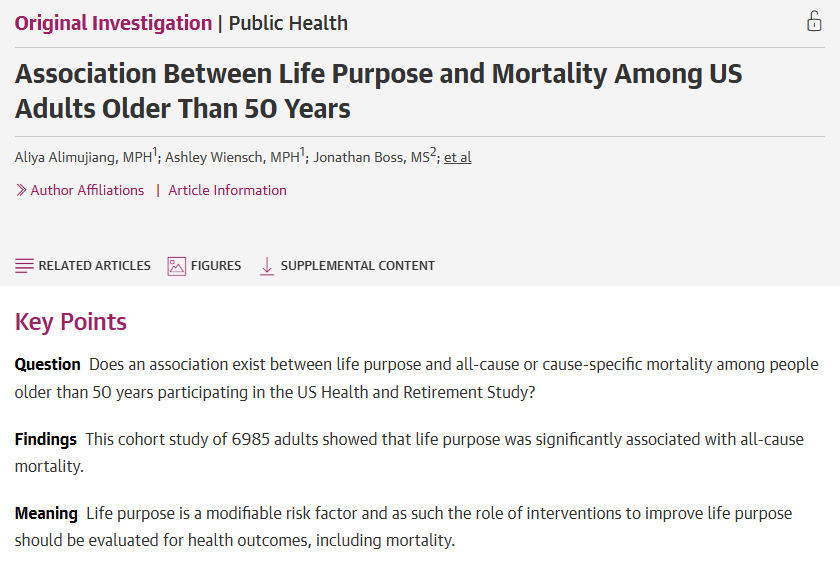
A stronger sense of purpose is associated with a longer life.
40
291
2,110
147,679
Alexandra Levit retweeted
Mar 31
Neuroscience Confirms Your Subconscious Shapes Your Reality -- via @bigthink
bigthink.com/ideafeed/neuros…
5
28
151
8,522