Neuroscience, Machine Learning, Computer Vision. Scientist @uniGoettingen, @mpids and co-founder of @maddox_ai | @aecker.bsky.social
Joined July 2017
- Tweets 403
- Following 451
- Followers 2,223
- Likes 392
28 Photos and videos

Pinned Tweet

17 Jan 2025
Like many friends and fellow scientists, I am leaving this place and will move over to @bluesky. I realized around 2/3 of the people I’m following are already there. If you’re interested in our work, follow me and find me there at @aecker.bsky.social — bsky.app/profile/aecker.bsky…
2
541
Alexander Ecker retweeted

14 Apr 2025
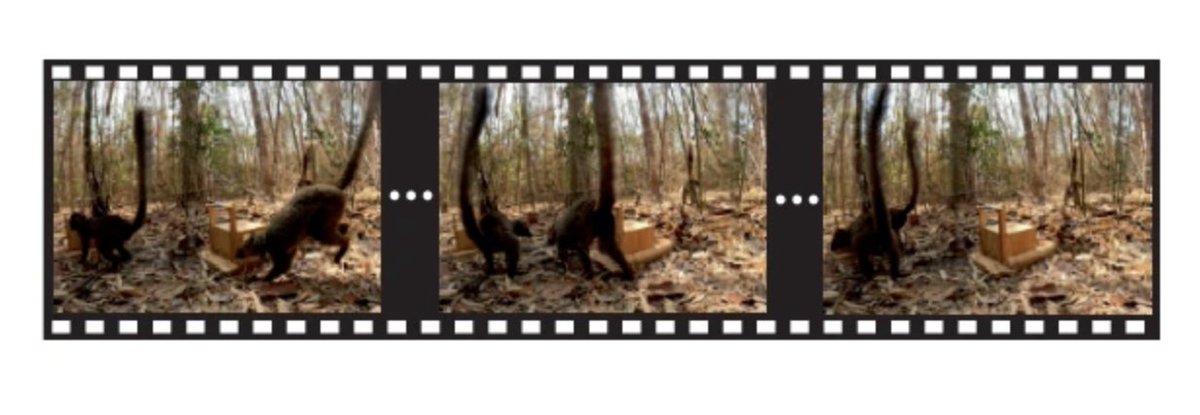
A Perspective from the Ecker lab discusses the progress and challenges of using computer vision approaches for behavior studies of primates in natural environments.
nature.com/articles/s41592-0…
2
2
3,247
11 Apr 2025
It's been so much fun to be part of this journey!
11 Apr 2025

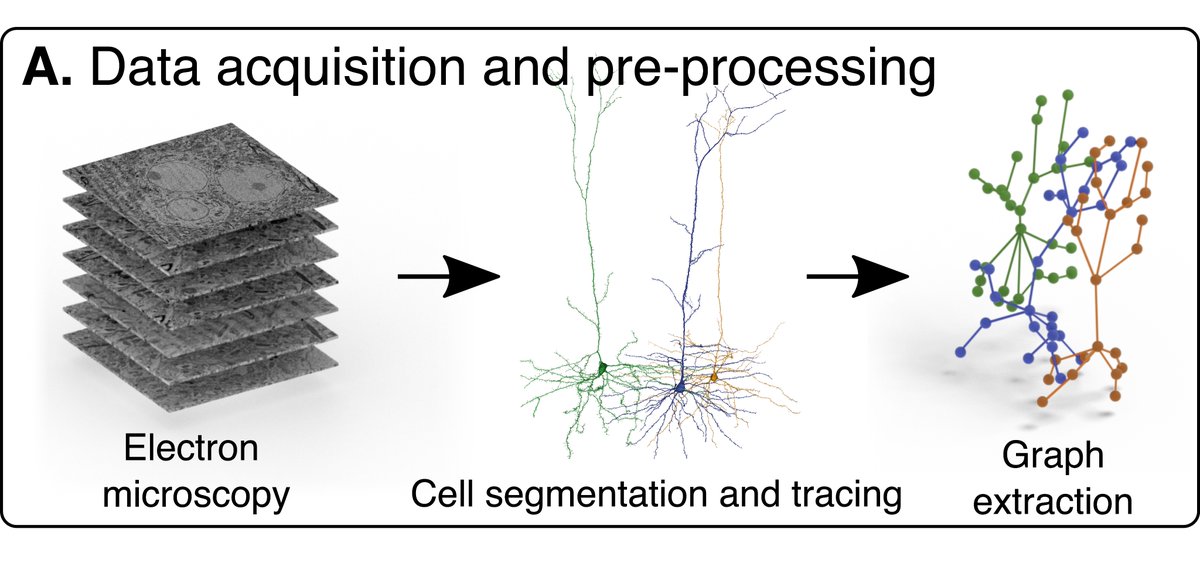
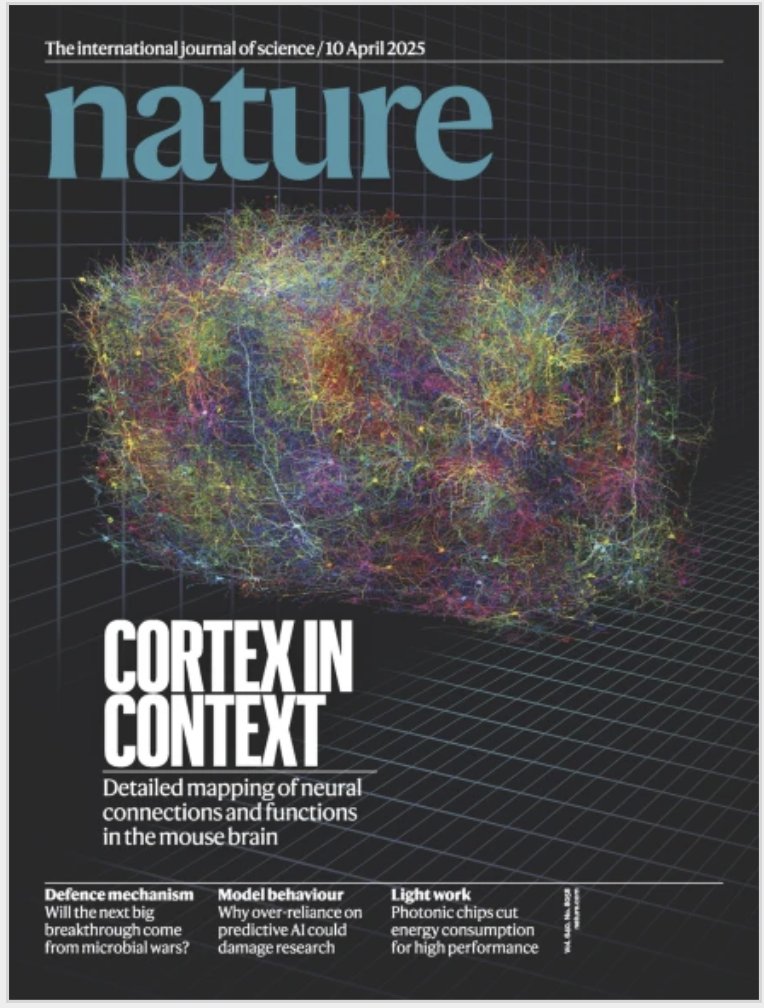
After 7 years, thrilled to finally share our #MICrONS functional connectomics results!
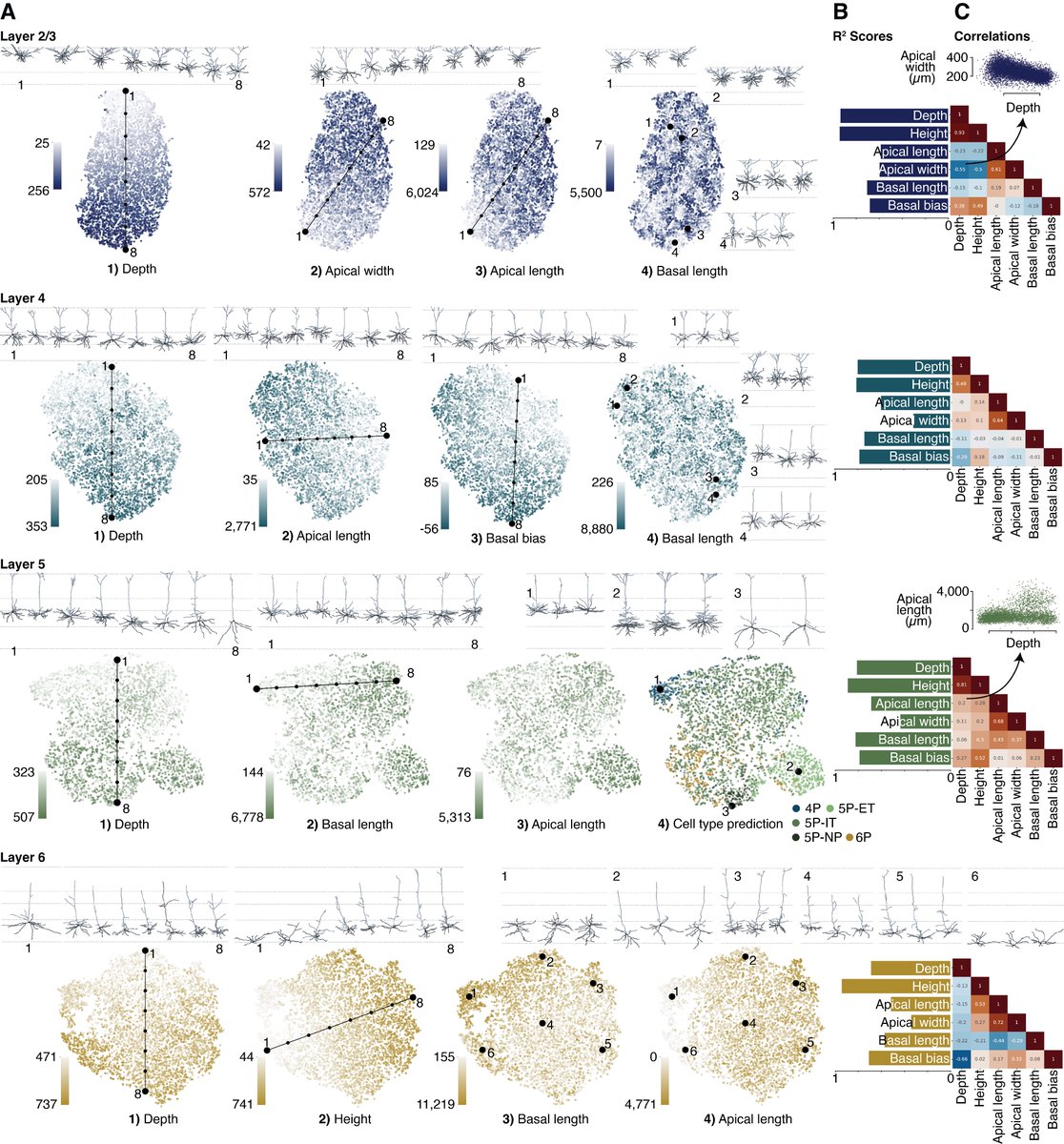
We recorded activity from ~75K neurons in visual cortex in a single mouse, then mapped its wiring using electron microscopy. To systematically characterize neuron function, we built the first foundation model of the mouse visual cortex—trained via deep learning on data pooled from multiple mice and visual cortical areas.
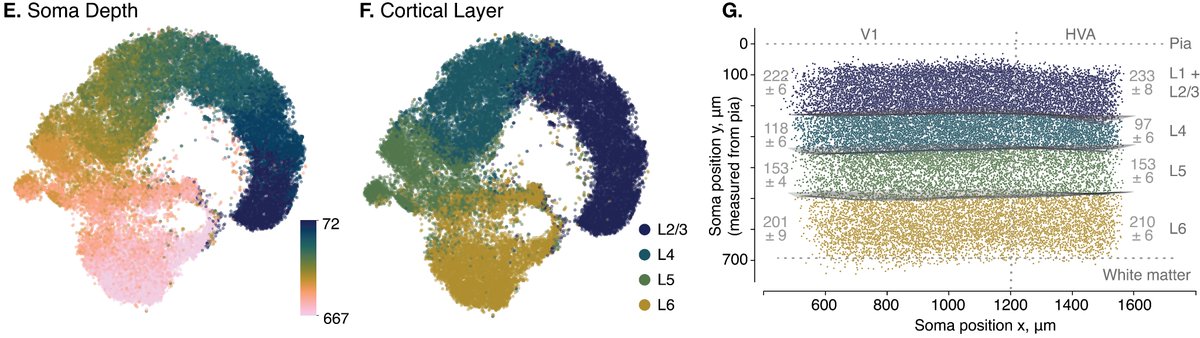
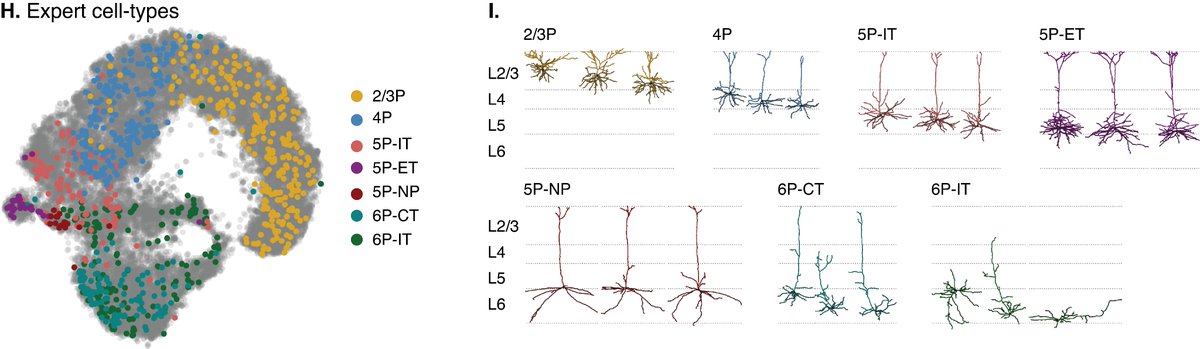
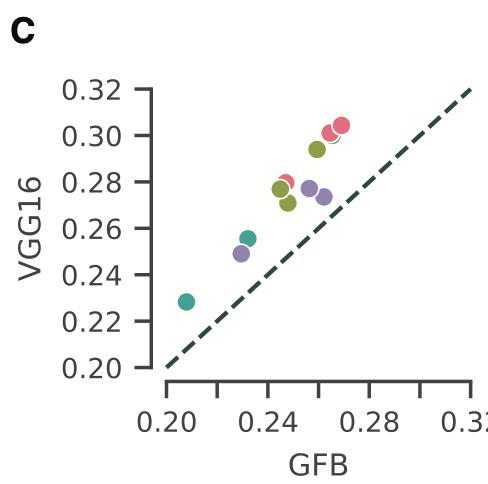
Our foundation model generalized to new neurons, animals, and even unseen stimulus domains. It also accurately predicted entirely new modalities, such as anatomically defined cell types. Importantly, this robust generalization enabled us to create accurate functional digital twins of individual mouse brains.
Using the digital twin of the MICrONS mouse—where we knew the exact neuronal wiring—we discovered that neurons don’t connect randomly, even when anatomically positioned to do so. Instead, given multiple potential partners (axons near dendrites), neurons preferentially choose partners with similar feature selectivity (“what”) rather than receptive field overlap (“where”).
Foundation models offer a powerful approach to systematically decode the neural code of intelligence.
Huge thanks to @IARPAnews for funding this groundbreaking effort through the @BRAINinitiative, and to our amazing team at @Stanford @StanfordMed @bcmhouston, @Allen, @Princeton, @uniGoettingen and others!
#Neuroscience #MICrONS #NeuroAI #Connectomics #FoundationModels #AI
nature.com/immersive/d42859-…
7
788
11 Dec 2024
Just arrived in Vancouver for #NeurIPS2024. Let's meet up if you're there. If you're looking for postdoc opportunities in #NeuroAI, touch base! We're always looking for talented postdocs.
2
1
22
2,333
11 Dec 2024
Also check out some our posters by the amazing @pollytur1 and many others from our collaborators @sinzlab and @AToliasLab:
Spotlight Poster – Wed 11 Dec 4:30 p.m. Reproducibility of predictive networks for mouse visual cortex
neurips.cc/virtual/2024/post…
1
3
306
11 Dec 2024
Poster – Fri 13 Dec 11 a.m.
Retrospective for the Dynamic Sensorium Competition for predicting large-scale mouse primary visual cortex activity from videos
neurips.cc/virtual/2024/post…
1
248
27 Nov 2024
Forestry and computer vision researchers, meet TreeLearn🌲, a deep learning method for segmenting individual trees from forest point clouds.
⚙️It projects points toward tree bases & groups them via density-based clustering.
📂Paper: doi.org/10.1016/j.ecoinf.202…
1
1
9
552
27 Nov 2024
🛠️We release the TreeLearn code, model weights, and a benchmark dataset with evaluation code.
📊The benchmark dataset enables training and systematic comparison of existing tree segmentation algorithms.
📂Code: github.com/ecker-lab/TreeLea…
1
264
27 Nov 2024
🔍Why TreeLearn is important:
• Supports precision forestry for forest management & climate research🌍.
• Highlights an interesting CV problem 👁: Trees are complex, posing a challenge to current 3D instance segmentation methods that are usually evaluated on simpler scenes.
235
21 Nov 2024
I love it. Thanks eLife for taking a stance, continuing to move forward towards proper academic publishing and not getting distracted by antiquated business models that should have no place in science anyway. Way to go!
20 Nov 2024

Following the news that eLife will not receive an Impact Factor in 2025, we’ve shared an update on how our model is doing since we were first placed “on hold” by Web of Science, and what we’re up to now. Find out more.
elifesciences.org/inside-eli…
11
833
25 Oct 2024
If you want to work with us on the interface of machine learning and neuroscience, consider applying through the ELLIS PhD Program.
29 Sep 2023

The portal is open: Our #ELLISPhD Program is now accepting applications! Apply by November 15 to work with leading #AI labs across Europe and choose your advisors among 200 top #machinelearning researchers!
#JoinELLISforEurope #PhD #PhDProgram #ML ellis.eu/news/ellis-phd-prog…
5
19
2,458
29 Sep 2024
On my way to Frankfurt for the #BernsteinConference. Let's meet up if you're there. If you're looking for postdoc opportunities in #NeuroAI, touch base. We're hiring!
1
5
39
4,647
Alexander Ecker retweeted

28 Aug 2024
To ask how similar the brain is to a neural network we need a similarity metric. In a new paper I asked how much the metric matters to downstream conclusions, and, upshot, it matters a great deal. biorxiv.org/content/10.1101/… (1/7)
2
53
209
48,292
26 Aug 2024
We're hiring postdocs and PhD students in ML for neuroscience. Join our lab in Göttingen, Germany, and be part of an exciting international network!
eckerlab.org/applications/
4
109
309
58,589
26 Aug 2024
We develop large-scale predictive models of the visual system in mice and monkeys. We use these models to understand the functional organization of the visual cortex and how function relates to other modalities such as morphology and connectivity.
1
16
2,381
26 Aug 2024
We're also excited to collaborate with the Enigma project – @AToliasLab @naturecomputes @kfrankelab @KonstantinWille @paulgfahey and many others – on foundation models of the brain
x.com/naturecomputes/status/…
6 Aug 2024

New project: enigmaproject.ai
Engineers, ML researchers, mech interp community: Reach out if you're interested in getting involved
2
6
26
12,133
Alexander Ecker retweeted

23 Aug 2024
I think mouse V1 should not be called primary visual cortex, it does look more like an association area. Does it my fellow neuroscientists?
cell.com/cell-reports/fullte…
6
7
47
5,627
Alexander Ecker retweeted

19 Aug 2024
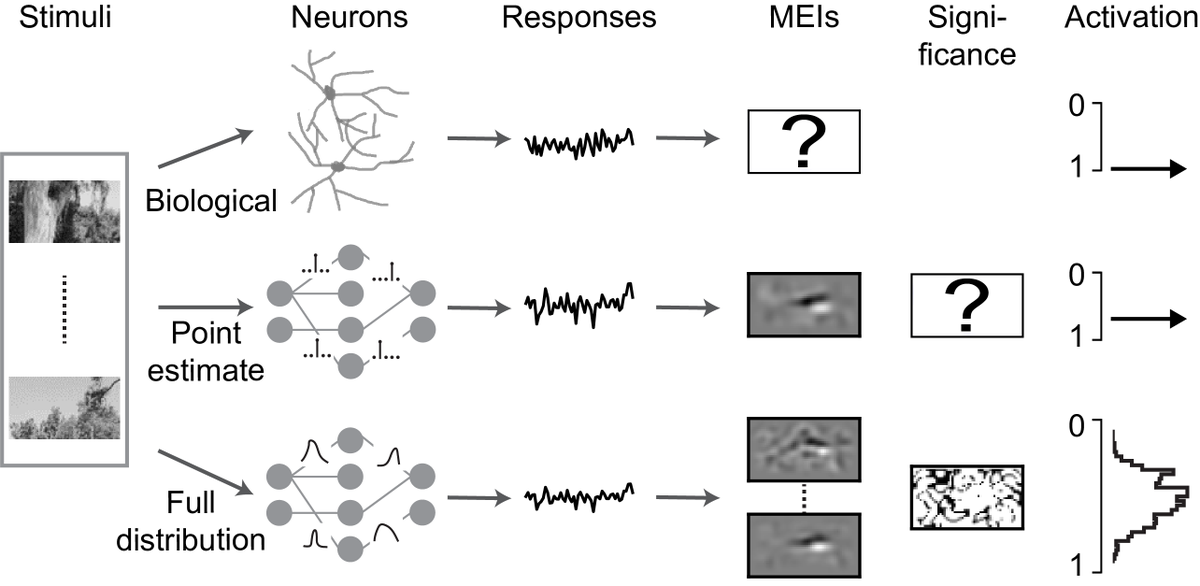
Having limited data to build a neural predictive model? Try Bayes, and you can get the uncertainty of the derived neuronal preference. See our work on #PLOSCompBio: doi.org/10.1371/journal.pcbi…. Thank you so much for the great team!! Nan Wu @IValeraM @sinzlab @alxecker @teulerlab
12
32
2,593
Alexander Ecker retweeted

6 Jun 2024
New preprint @biorxiv_neursci w/ @AToliasLab & more
Our data-driven deep learning approach in🐭🐒identifies a new rule of contextual modulation in visual cortex
Pattern completion/disruption wrt natural image stats = surround facilitation/suppression🧵👇
biorxiv.org/content/10.1101/…
2
35
111
13,961
Alexander Ecker retweeted

28 May 2024
Now published in PlosCB with multiple updates 🎉: tinyurl.com/3bamhw3h
Access the data of V1 and V4 recordings: tinyurl.com/yc3sc6yx
And code to load the data and train task-driven models:
github.com/sacadena/neurovis…
Work with @AToliasLab @bethgelab @sinzlab and @alxecker
22 May 2022

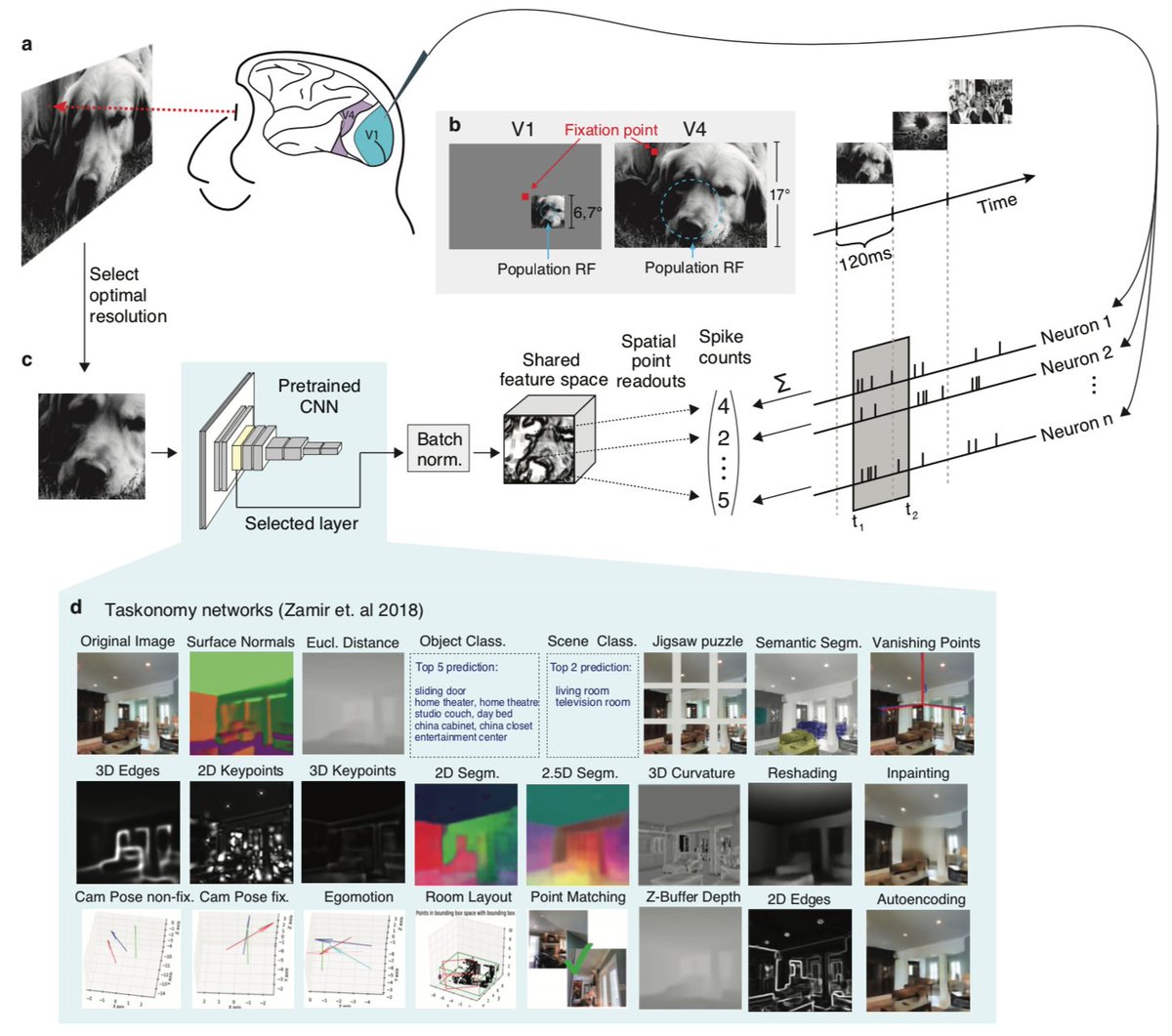
Happy to share our work on modeling V4 and V1 single-cell responses to natural images with CNNs trained on multiple computer vision tasks.
biorxiv.org/content/10.1101/…
Work with @KonstantinWille, @kelli_restivo, @DenfieldGeorge, @sinzlab, @bethgelab, @AToliasLab, @alxecker.
9
33
4,406