to understand intelligence and develop technologies by combining neuroscience and AI
Joined May 2017
- Tweets 1,172
- Following 818
- Followers 4,981
- Likes 3,846
60 Photos and videos
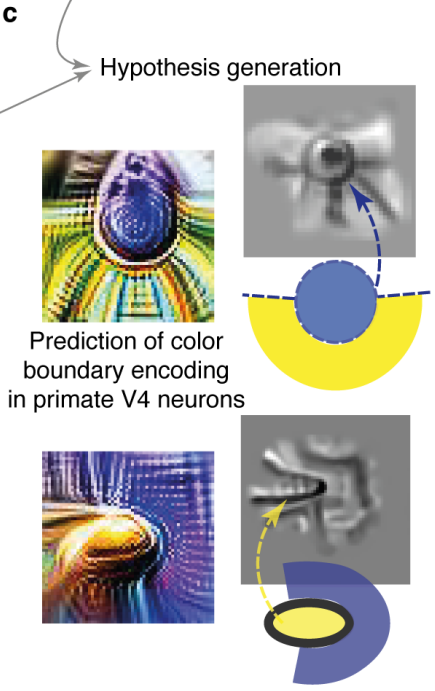
Andreas Tolias Lab @ Stanford University retweeted

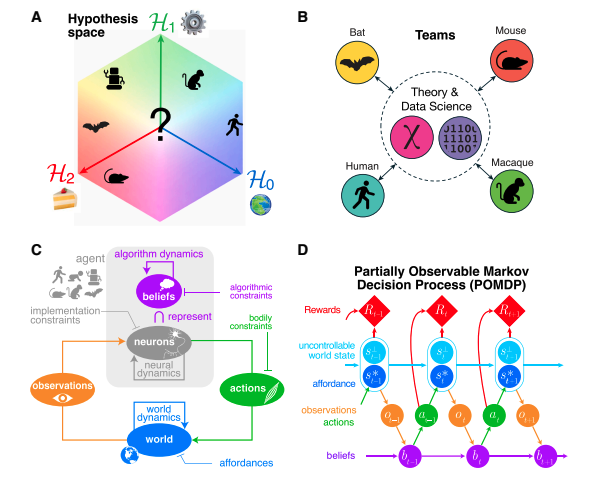
🥳 Excited that our Perspective about our new @SimonsFdn Collaboration: SCENE is out in @NeuroCellPress !
A great team effort across all the PIs, championed by @lengyel_m and @JP__NOEL 🙏
➡️ cell.com/neuron/fulltext/S08…
3
16
76
5,918

If you're at @CVPR this week, come meet the Metamorphic team. We're hosting a happy hour tomorrow evening with @SpiralDB on NeuroAI, AI for Science, and multimodal modeling — and we're hiring. Find @KonstantinWille and @AdrianoCardace
there. 👇 metamorphic.com

Metamorphic is at @CVPR this week.
Join us tomorrow evening for a kick-off happy hour co-hosted with @SpiralDB to talk AI for Science, multimodal modeling, and what comes next.
We’re growing the team - find @KonstantinWille
and @AdrianoCardace there if you’re curious.
luma.com/i4wjq5lu
2
8
1,577
Andreas Tolias Lab @ Stanford University retweeted

May 26
INSTEAD OF WATCHING AN HOUR OF NETFLIX TONIGHT.
This 60-minute Cambridge lecture by Demis Hassabis will teach you more about the future of AI than most people will learn in the next 5 years.
Bookmark it and give it an hour, no matter what.
21
468
2,639
495,375
Andreas Tolias Lab @ Stanford University retweeted

May 25
Finally, a big name has the courage to tell it: we are nowhere near AGI.
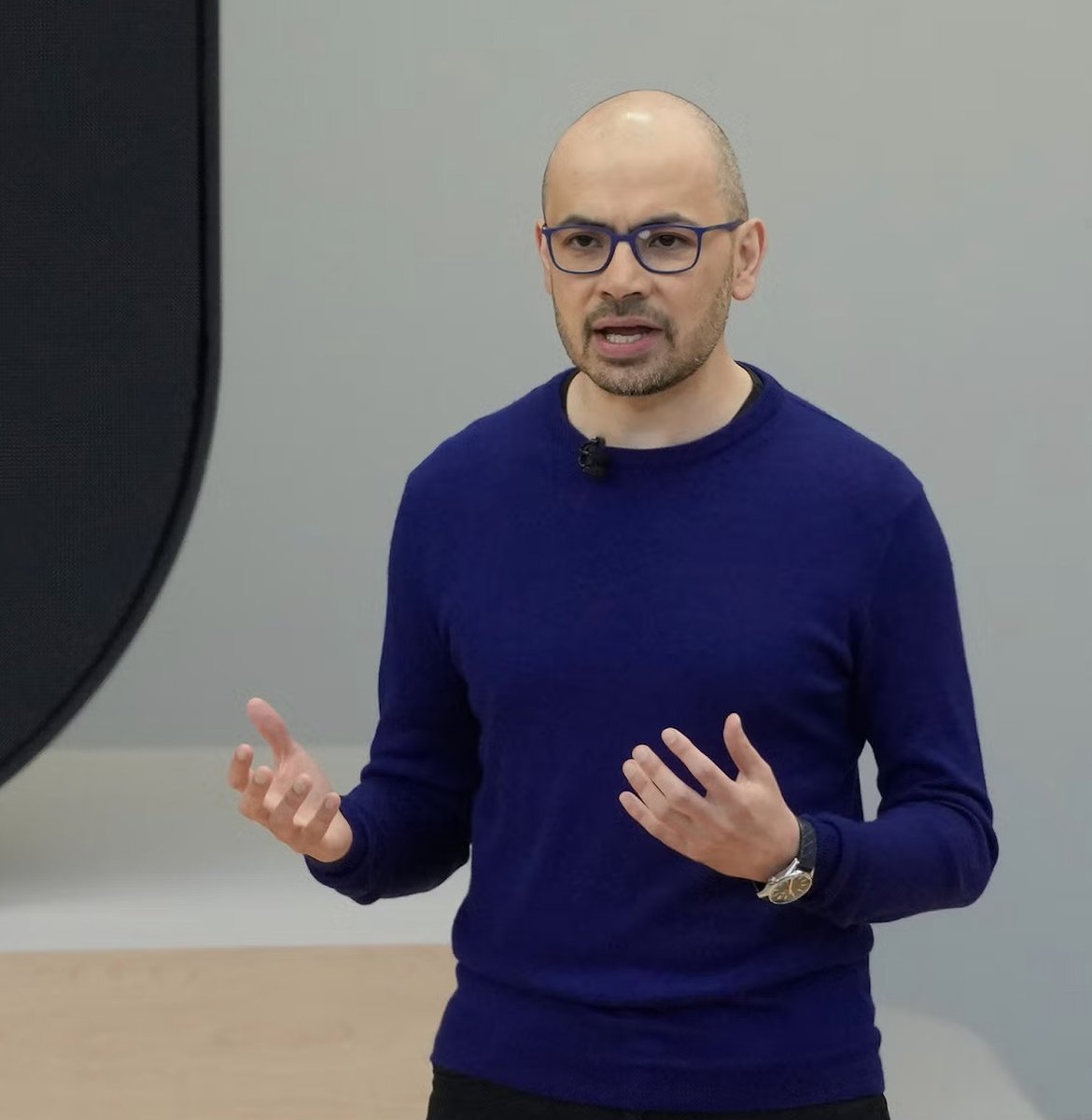
Demis Hassabis, CEO of Google DeepMind and Nobel laureate for AlphaFold, put it neat and clear:
"Today's systems are nowhere near [AGI]. Doesn't matter how many Erdős problems you solve… I think it's far, far from what a true invention, or someone like Ramanujan, would have been able to do."
This is the elephant in the room that many AI enthusiasts prefer not to see, or are actively trying to hide.
Erdős problems are well defined, often combinatorial, on finite spaces. They are exactly the kind of problems on which current AI can achieve spectacular performance with a lot of compute and knowledge.
A neural network can search a huge graph of possibilities. It can recombine existing knowledge at unprecedented scale. It can discover surprising solutions inside an already defined conceptual space.
But true invention is something else.
True invention is not only solving a problem.
It is inventing new objects, new dimensions, new connections. It is inventing new problems.
From resolving to inventing there is a discontinuity that we don't know how to bridge.
We are making extraordinary tools.
But we are nowhere close to AGI.
288
433
2,225
434,505
Andreas Tolias Lab @ Stanford University retweeted

May 12
I’ve always believed the No.1 application of AI should be to improve human health.
That work started with AlphaFold, and now at @IsomorphicLabs with the mission to reimagine drug discovery and one day solve all disease!
We are turbocharging that goal with $2.1B in new funding.
715
2,642
21,260
3,151,039
Andreas Tolias Lab @ Stanford University retweeted

May 7
Neural networks might speak English, but they think in shapes.
Understanding their rich *neural geometry* is key to understanding how they work – and to debugging and controlling them with precision.
Starting today, we’re releasing a series of posts on this research agenda. 🧵
306
1,674
11,185
3,157,731
Andreas Tolias Lab @ Stanford University retweeted
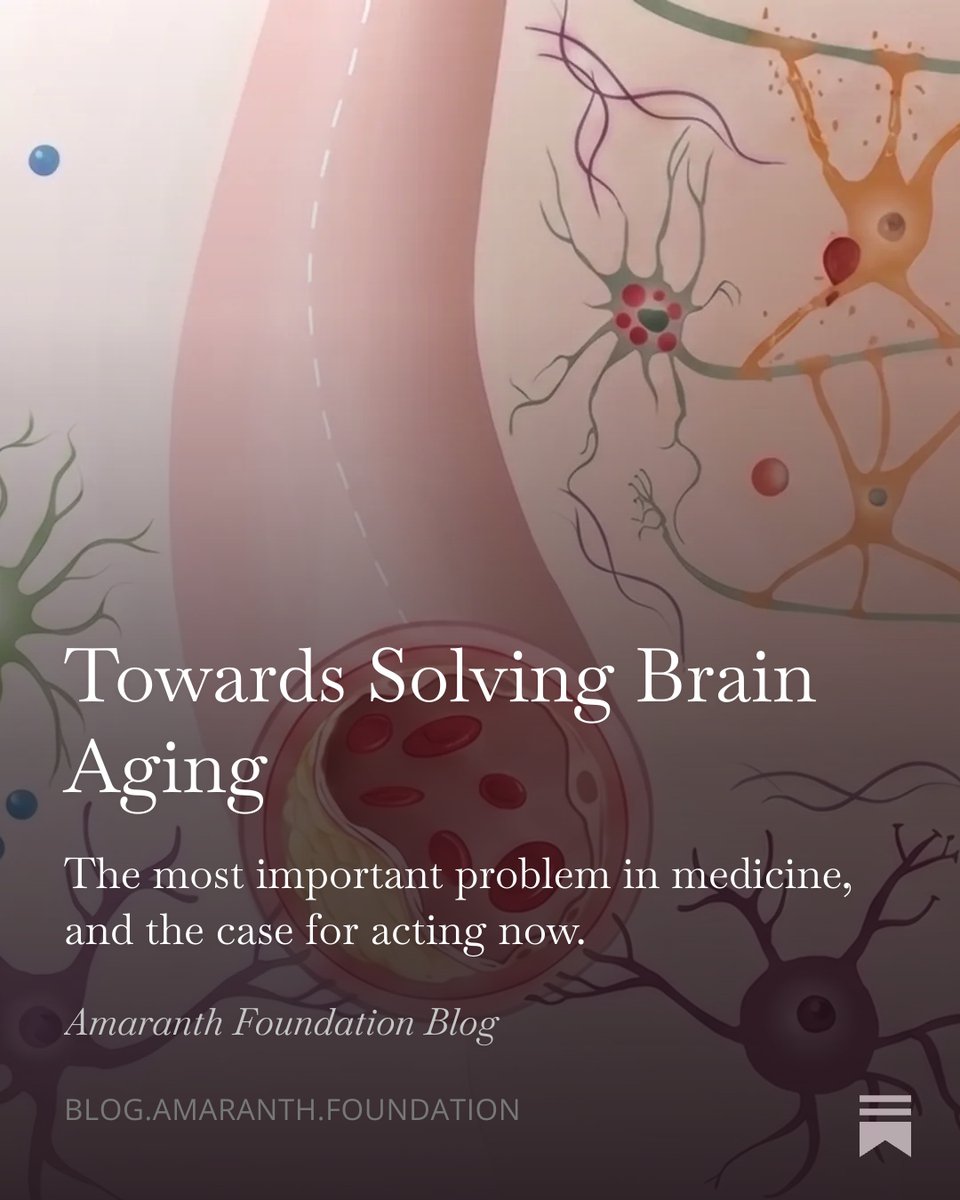
Underlying all neurogenerative diseases is the general process of aging. We must strike at the root! In the short term, we should restore the health of the support systems of the brain. In the long term, we must build discovery platforms that fully capture human biology.
6
16
92
5,482
Andreas Tolias Lab @ Stanford University retweeted

May 3
Anthropic pays $750,000 a year for engineers who can build LLM architectures from scratch. Stanford taught the entire thing in 1 hour lecture & released it for free.
Bookmark & watch this today before someone takes it down.
Community note
The video is Lecture 3 on architectures and hyperparameters from Stanford's 19-lecture CS336 course "Language Modeling from Scratch," which covers the full process including data, training, and evaluation; one lecture does not teach building LLMs from scratch. youtube.com/watch?v=ptFiH_… stanford-cs336.github.io/spring2025/
116
1,580
10,451
2,559,914
Excited to participate in this @StanfordHAI and @StanfordData AI Science conference organized by @SuryaGanguli and @RisaWechsler. I’ll bring a #NeuroAI perspective: how #AI can accelerate our understanding of the brain and mind and ultimately help treat and cure brain disorders.
Apr 30

Excited to co-organize with @RisaWechsler this @StanfordHAI and @StanfordData conference on AI Science: Accelerating Scientific Discovery on Tuesday May 5th
Anyone can register for the livestream:
hai.stanford.edu/events/ai-s…
We have world-leading speakers talking about:
AI for Life: molecular biology to brains
AI for Earth: weather, climate, geophysics and oceans
AI for Universe: particle physics, cosmology & math
Additionally we will have @dariogila give a keynote about America's Genesis Mission to accelerate AI for Science.
And interestingly we will have a panel discussion on the nature and role of human understanding in the future of AI for Science, informed by scientists, AI researchers and sociologists of science and AI.
Excited to develop a highly interdisciplinary and global view of all the opportunities and challenges of accelerating science with AI.
2
21
3,491
Andreas Tolias Lab @ Stanford University retweeted

Apr 28
Super excited to see OmniMouse 🐭 released 🎉
A single model of mouse visual cortex — queryable for many different questions:
• Predicting neural activity from video 📹 👉 🧠
• Predicting neural activity in one population from activity in another 🧠 👉 🧠
• Forecasting neural activity forward in time, given video, past activity, or both 📹 &🧠 👉 🧠
• Decoding behavior (gaze, pupil size, running speed) from neural activity 🧠 👉 🐁
• Predicting neural responses conditioned on behavior 📹 & 🐁 👉 🧠
This kind of multi-modal & multi-task flexibility is an exciting approach for systems neuroscience, enabling systematic in silico exploration of hypotheses about single neuron and population coding
The dataset comprises >2 million neurons across 78 mice and 328 sessions of mouse visual cortex, with naturalistic and parametric stimuli alongside behavior. Both the dataset and the pretrained models are available on @huggingface 🙌
Congratulations to @KonstantinWille @pollytur1
@alexrgil14, and the wider team across the @AToliasLab, @alxecker, and @sinzlab labs and the Enigma Project /w @naturecomputes. Paper, code, data, and models in the original post 👇

🧠Introducing OmniMouse: One of the largest datasets in neuroscience ever assembled along with a systematic study of scaling properties of brain models
Co-led with🤩@pollytur1 @alexrgil14
3M neurons, >150B tokens from @AToliasLab @stanford, @alxecker @sinzlab @uniGoettingen
🧵
9
44
5,375
Andreas Tolias Lab @ Stanford University retweeted
Apr 28
Every experimental neuroscientist knows the feeling: you have a hypothesis, but running the experiment takes months👩🔬
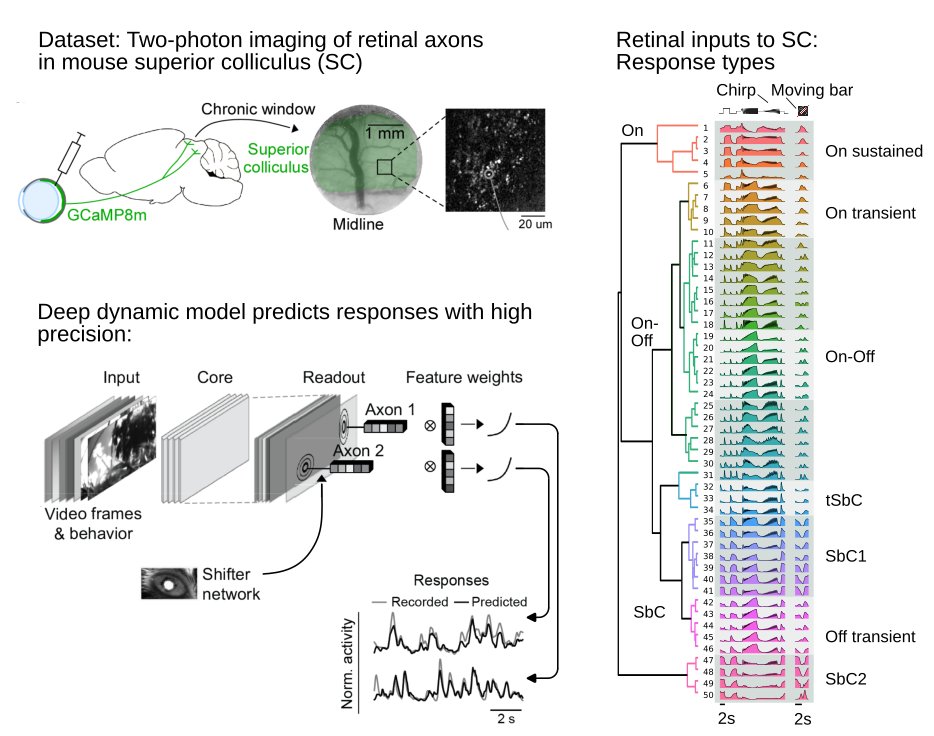
In our new preprint @biorxiv_neursci , we present an openly available functional ''digital twin'' of the retinal input to the mouse superior colliculus that lets you test hypotheses in the model first — try it out yourself using the link below 🧠
We combined chronic two-photon imaging of >200k retinal ganglion cell axonal boutons in the mouse superior colliculus (SC) with deep dynamic models that predict neural responses to parametric light stimuli and natural movies.
Key findings⚡️
▸ Retinal inputs to the SC form functionally distinct, laminar-organized response types, identified via Gaussian mixture model clustering
▸ The functional diversity of retinal output matches that of retinal input to the SC. We show this by aligning our dataset with a retinal reference dataset using a variational autoencoder with adversarial training
▸ Our deep dynamic digital twin learns stimulus–response transformations and generalizes to stimuli it was never trained on, including parametric stimuli used for cell type identification
The model functions as a virtual lab bench: feed in any stimulus you're curious about and generate predicted neural responses. As a proof of concept, we fed in a looming stimulus — known to trigger defensive behavior in mice — and identified putative response types selective for this stimulus
Try it in our Colab notebook with your own stimulus and see what the model predicts
📄 Preprint: biorxiv.org/content/10.64898…💻
Colab: colab.research.google.com/dr…📂
Code: github.com/yongrong-qiu/reti…
Huge thanks to an incredible cross-institutional team spanning @StanfordMed , @uktuebingen , @uniGoettingen , @bcm_neurosci & many more
@YongrongQ, @lisa_schmors, Na Zhou, Mels Akhmetali, Dominic Gonschorek, Cameron Smith, Anton Sumser, Marie Vallens, @crcadwell, Fabrizio Gabbiani, Maximilian Joesch, @AToliasLab, Philipp Berens, Thomas Euler, @sinzlab, @viajake 🙌
30
148
8,953
Andreas Tolias Lab @ Stanford University retweeted

Apr 3
Tracey Burns and I were recently interviewed by @sarojacoelho at @CBCRadioCanada. We had a fun conversation about AI, brains and education:
cbc.ca/listen/live-radio/1-1…
My take: AI for eduction is a dual-use technology: it has the immense potential to deliver powerful educational experiences at scale across the globe if done correctly, but it also has the capacity to dull the human mind if used incorrectly.
The key to powering education with AI is the development of human-AI interfaces that encourage human exploration, provide only targeted hints, automatically generate related challenges, but never just gives the answer. Giving the answer too early is detrimental. Using AI to do directly solve your homework is as pointless as using a robot to lift your weights at the gym. The human struggle is where the growth lies, in both mind and body.
To prevent students from using AI to do their homework, the second key, ironically, is that we should evaluate younger students without AI, through closed book in class written exams, especially for fundamental subjects like writing, mathematics and the sciences. Knowing they will be evaluated this way will ensure they can solve problems on their own as they first encounter new concepts. For older students once they have mastered concepts, we can teach them how to use AI to superpower their creativity and productivity with those concepts.
We have already been following such a best practice for years: for example when we teach 1st graders arithmetic, we do not immediately hand them a superhuman calculator; we make sure they master it and only years later do they use calculators.
In any case, excited about how education can transform for the better with AI, but not all old school approaches should be abandoned. In the age of AI, we should not take away the gift of struggle from the next generation.
2
6
23
5,407
Andreas Tolias Lab @ Stanford University retweeted
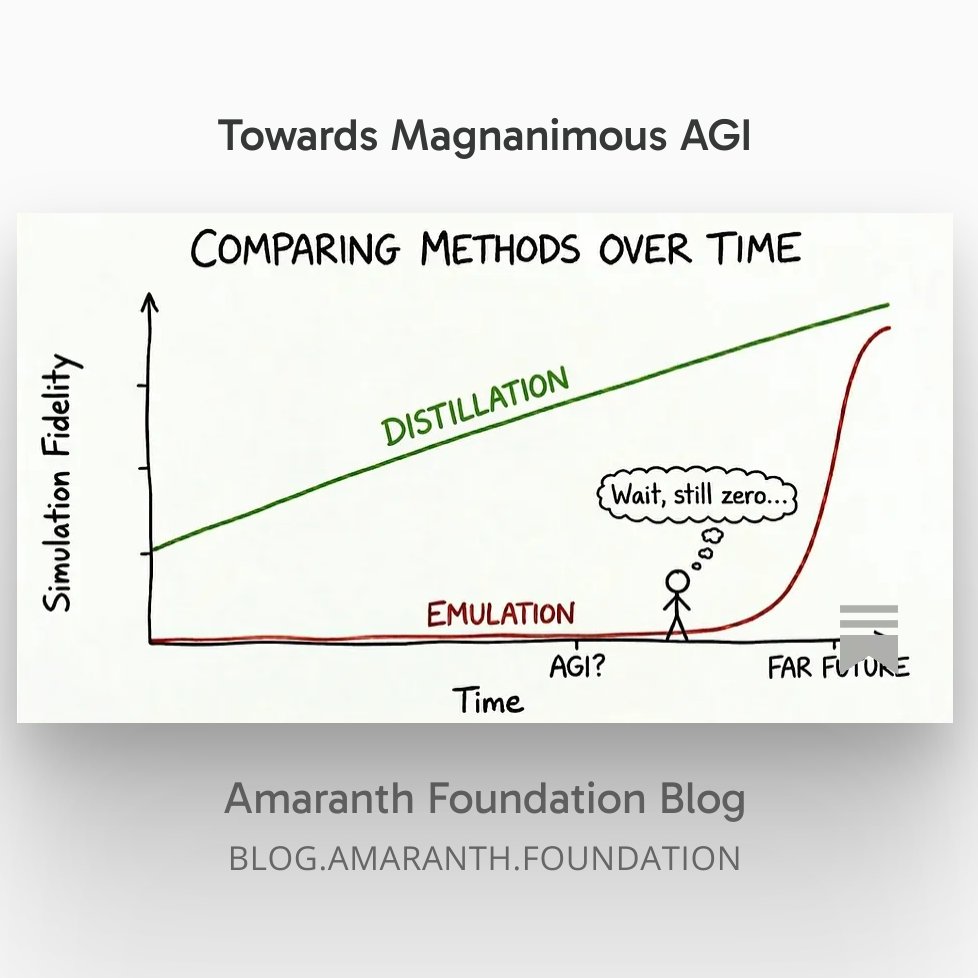
How can neuroscience help AI safety? Neuroscience is so slow! We have a plan: 1) accelerate neuroscience, 2) work on neuroscience that drives toward AI safety within AI timelines. We explain why data-driven representational approaches ("distillation") are the way.
Mar 31

Towards Magnanimous AGI
Before we build extremely powerful alien minds, we must understand our own minds and the mechanisms behind prosocial behavior. After years of investigating brain-based AI safety, here’s what we found and the teams we're backing:
blog.amaranth.foundation/p/t…
2
3
58
6,926
Andreas Tolias Lab @ Stanford University retweeted

Mar 31
Towards Magnanimous AGI
Before we build extremely powerful alien minds, we must understand our own minds and the mechanisms behind prosocial behavior. After years of investigating brain-based AI safety, here’s what we found and the teams we're backing:
blog.amaranth.foundation/p/t…
5
20
71
23,285
What are deep neural predictive models actually good for?
We use them as digital twins of visual cortex.
In our inception loop paradigm: large-scale natural data → data-driven #DeepLearning predictive models → in silico experiments → in vivo verification—we characterize center-surround interactions in a fully non-parametric way.
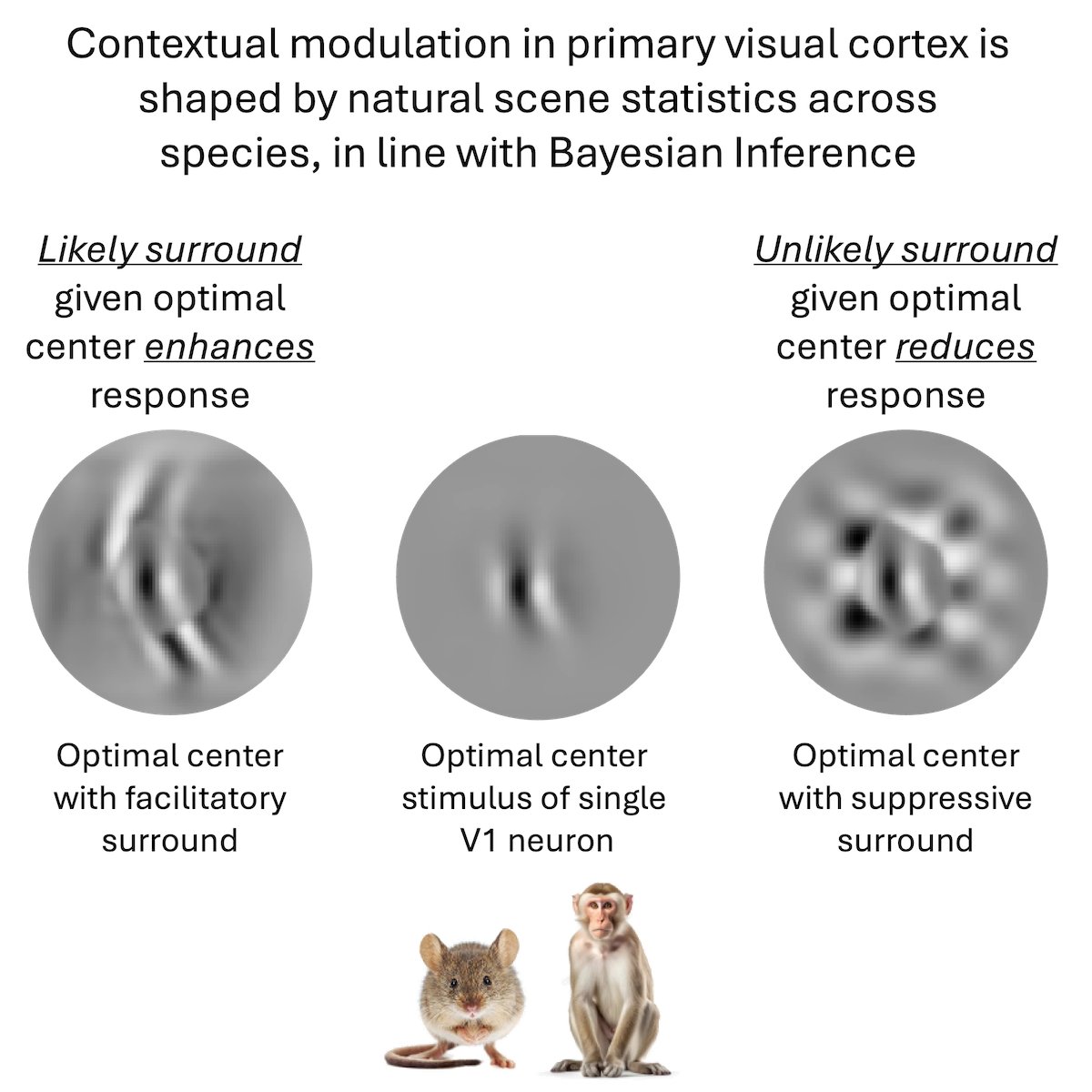
Key result: surrounds can be excitatory when they complete the center in ways consistent with natural scene statistics, and suppressive when they disrupt it.
These results generalize across mouse and macaque V1
We then formalize this as a Bayesian normative model where neuronal activity for preferred center features reflects posterior beliefs about likely center-surround configurations.
A step toward using #AI large-scale neural data not just to predict the brain, but to discover its principles.
Mar 31

New paper out in @NeuroCellPress 🎉
What determines contextual modulation in primary visual cortex (V1)?
The key result ⚡ V1 neurons are facilitated by surrounds that complete their optimal center feature according to natural scene statistics, and suppressed by surrounds that disrupt it — a principle explained by hierarchical Bayesian inference and conserved across mouse and macaque.
These results converge with Deveau et al. in @NeuroCellPress (cell.com/neuron/fulltext/S08…) from the lab of @HistedLab, who show that recurrent circuits in V1 filter temporal input sequences to selectively boost natural dynamics, and Lange et al. in @ScienceMagazine (science.org/doi/10.1126/scie…) from the lab of @haefnerlab, who show that perceptual learning increases population redundancy as predicted by generative inference. A consistent picture is emerging: (early) visual cortex actively infers the statistical structure of the natural world.
Amazing collaboration with @AToliasLab @haefnerlab @sinzlab Antolik Lab & many more — led by @jiakunfu, with co-authors @suhas_shrinivas & @LuchinoBaroni & many more
The paper is open-access and available here: doi.org/10.1016/j.neuron.202…
More detailed approach:
We trained CNN digital twins on large-scale two-photon recordings from mouse V1 and used them to synthesize, for each neuron individually, the surrounds that most strongly facilitate or suppress its response to its optimal center stimulus. Closed-loop in vivo inception loop experiments confirmed the predictions.
Key qualitative finding:
Surrounds that complete the optimal center feature under natural scene statistics → facilitation
Surrounds that disrupt it → suppression
We verified this with an independent generative diffusion model (blind to our CNN): statistically likely continuations of the optimal center feature were significantly more similar to facilitatory surrounds in V1 representational space. The same principle holds in macaque V1 despite major differences in receptive field organization.
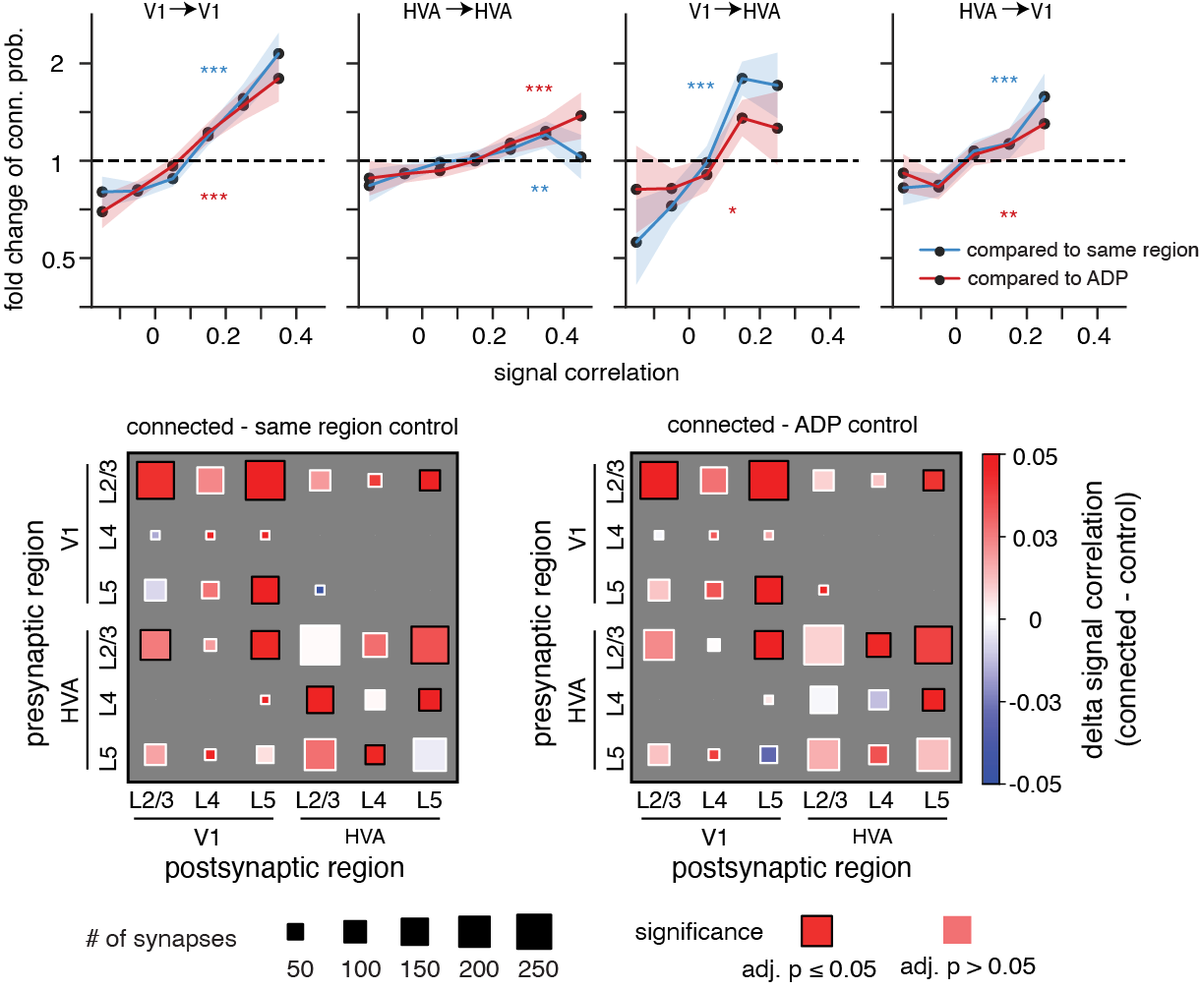
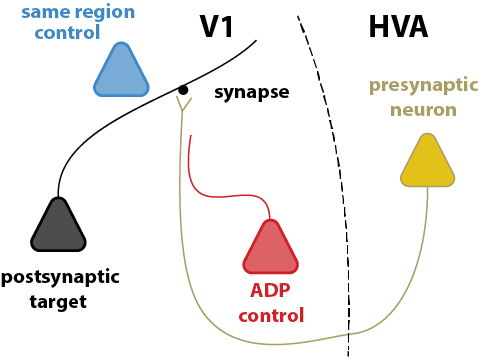
We formalize these results in a hierarchical Bayesian inference model — V1 neurons represent posterior beliefs about local features, with feedback from higher areas encoding global scene structure — and find like-to-like excitatory connectivity in the MICrONS dataset as a candidate circuit mechanism.
5
45
5,066
Andreas Tolias Lab @ Stanford University retweeted

Mar 24
.@bingbrunton presenting a worm connectome controlling a fly body was a top three conference moment for me. The point: it's pretty easy to fool yourself into thinking that plausible-looking behavior is a meaningful sim youtube.com/clip/Ugkxr8N0ZGB…
2
31
96
25,650
Andreas Tolias Lab @ Stanford University retweeted

Mar 20
Nice work V-JEPA 2.1 from Meta. Our team has also been exploring for a long time on dense and hierarchical video SSL (e.g. FlowE, PooDLe, and Midway). Glad to see it works on a larger scale.
Mar 20

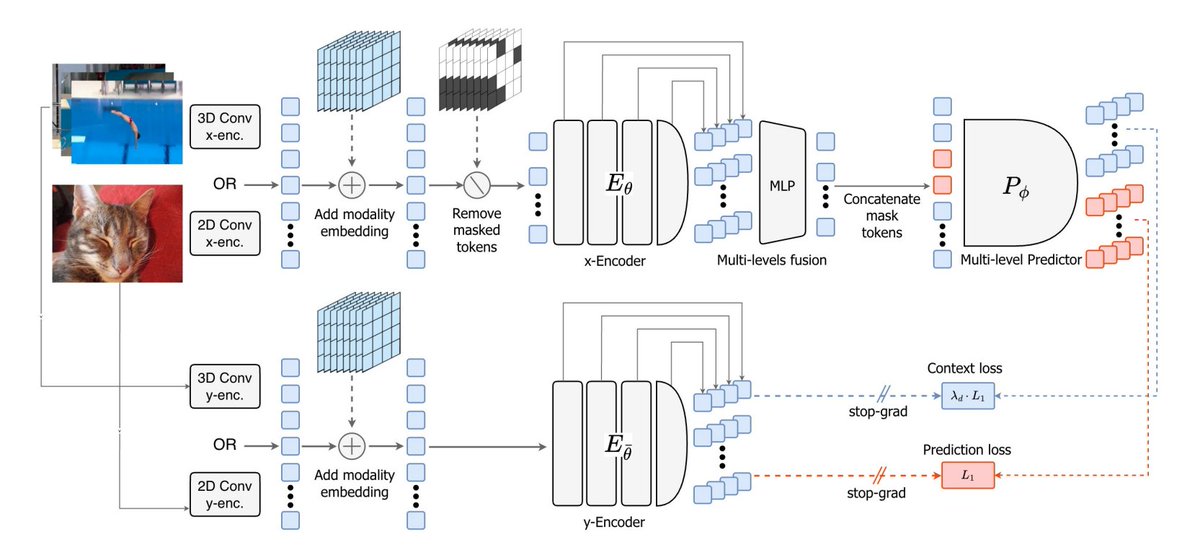
A new paper from @ylecun and others – V-JEPA 2.1
It changes the recipe of V-JEPA so the model learns both:
• Global semantics – what is happening in the scene
• Dense spatio-temporal structure – where things are and how they move
The idea is to supervise not just masked tokens but the visible ones too
There are 4 key ingredients for V-JEPA 2.1:
- Dense prediction loss on both masked and visible tokens
- Deep self-supervision across intermediate layers
- Modality-specific tokenizers (2D for images, 3D for videos) within a shared encoder
- Model data scaling
The workflow turns into: masked image/video → encode visible tokens → predict latent representations for both masked and visible tokens → supervise at multiple layers
Here are the details:
1
12
104
28,777
Excited that to we have contributed to this work !

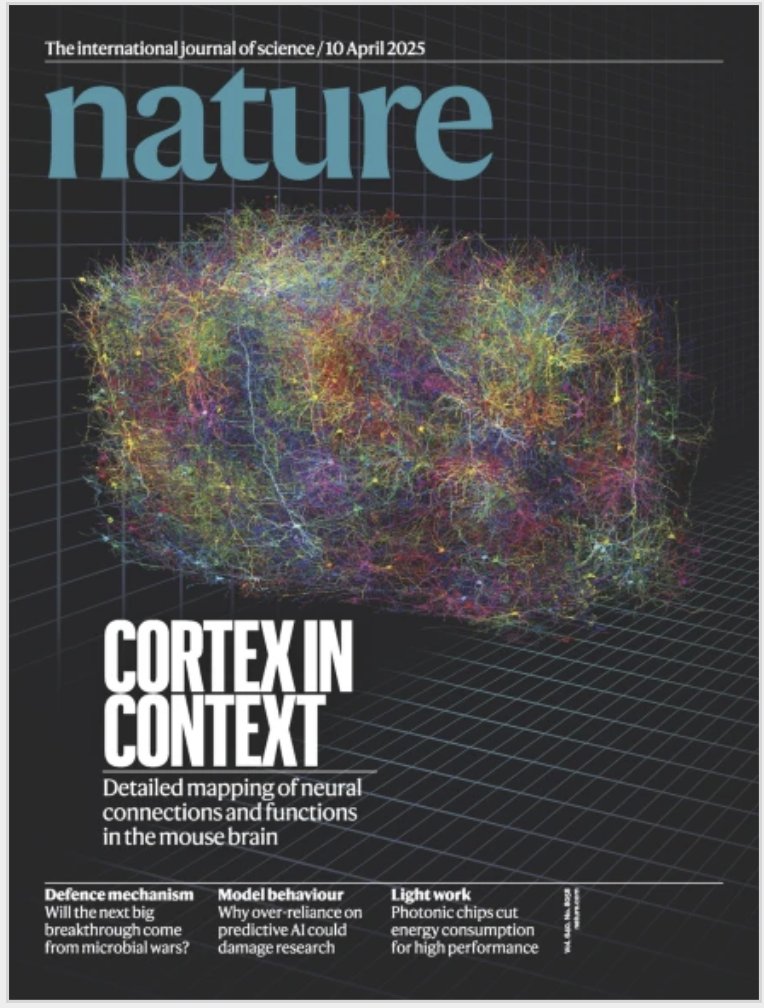
The brain as it's never been seen before.
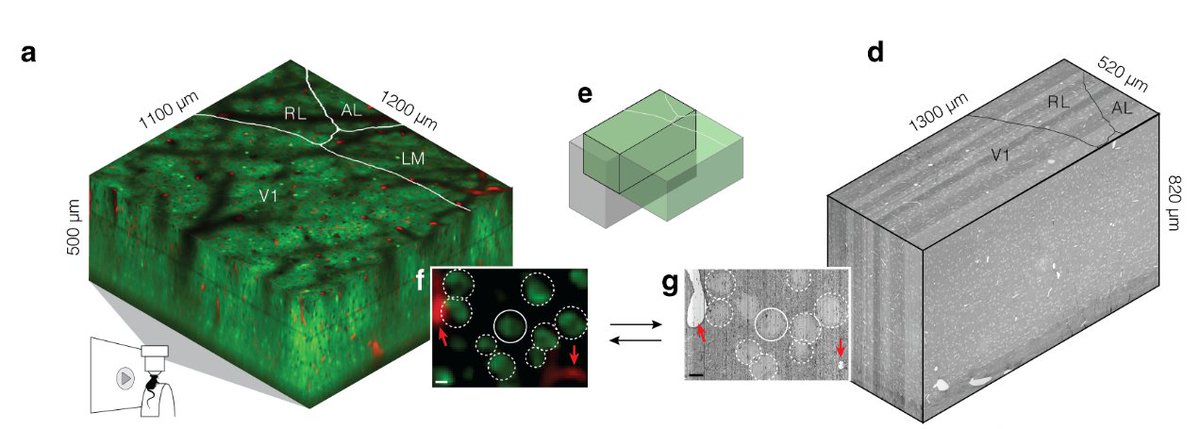
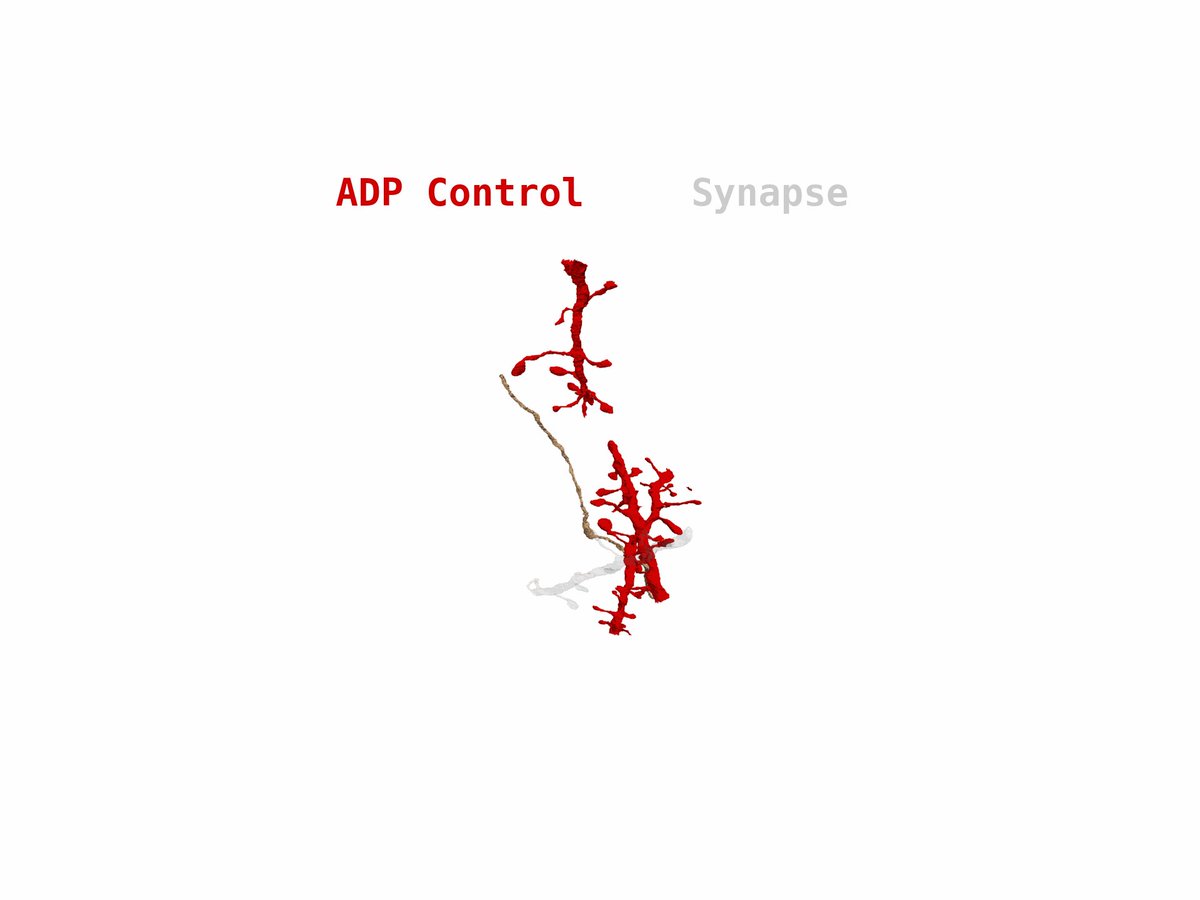
Last year, scientists created the largest wiring diagram and functional map of a mammal brain to date.
#BrainAwarenessWeek @dana_fdn
2
40
3,658
Andreas Tolias Lab @ Stanford University retweeted

Excited to be speaking at the @thought_channel Conference on the Mathematics of Neuroscience and AI in Rome! neuromonster.org
With @RMBattleday, @jcrwhittington, and others!
2
9
69
3,893
Andreas Tolias Lab @ Stanford University retweeted
Mar 17
Our new paper: "Solving adversarial examples requires solving exponential misalignment", expertly lead by @AleSalvatore00 w/ @stanislavfort arxiv.org/abs/2603.03507
Key idea: We all want to align AI systems to human values and intentions. We connect adversarial examples to AI alignment by showing they are a prototypical but exponentially severe form of misalignment at the level of perception.
The fact that adversarial examples remain unsolved for over a decade thus serves as a cautionary tale for AI alignment, and provides new impetus for revisiting them.
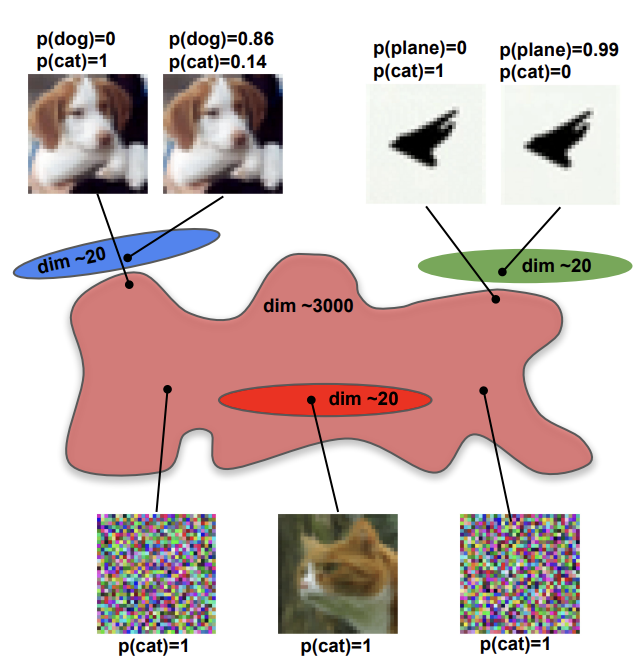
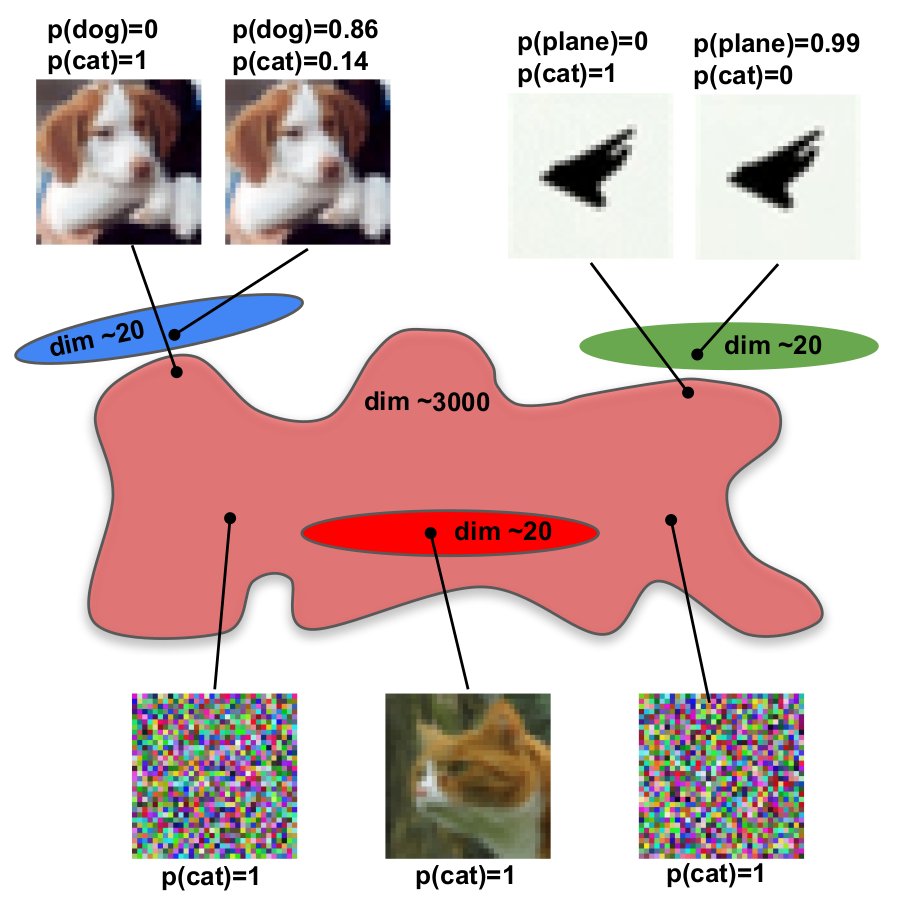
We shed light on why adversarial examples exist and why they are so hard to remove by asking a basic question: what is the dimensionality of neural network concepts in image space? For ResNets, and CLIP models, we show that neural network concepts (the space of images the network confidently labels as a concept) fill up almost the ENTIRE space of images (~135,000 dimensions out of ~150,000 for ImageNet & ~3000 out of 3072 for CIFAR10). In contrast natural image concepts are only ~20 dimensional.
This indicates exponential misalignment between brain and machine perception (neural networks perceive exponentially many images as belonging to a concept that humans never would). This also explains why adversarial examples exist: if a concept fills up almost all of image space, ANY image will be close to that concept manifold.
We further do experiments across > 20 networks showing that adversarial robustness inversely relates to concept dimensionality, though the most robust networks do not completely align machine and human perception.
Overall the curse of dimensionality raises its ugly head as an impediment to both adversarial examples and alignment: if can be difficult to get AI systems to behave in accordance with human intentions, values, or perceptions over an exponentially large space of inputs.
See @AleSalvatore00's excellent thread for more details:
x.com/AleSalvatore00/status/…

Why can't we solve adversarial examples? After a decade of work, neural nets still get fooled by imperceptible noise. We think we finally know the geometric reason why — and it connects to AI alignment. 🧵
11
24
185
16,370