


🫡

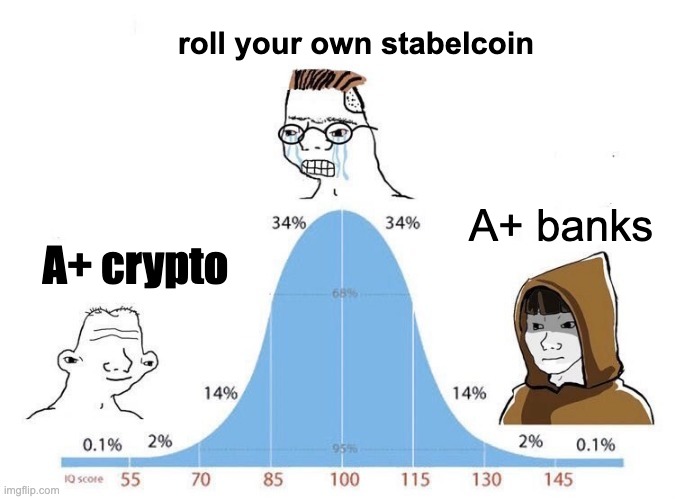
193. @aplus is a stablecoin project plus the infrastructure that makes it possible for many issuers to join the project.
New issuers (i.e. banks) benefit from pre-existing compliance, liquidity, and yield opportunities instead of launching their own whitelabel stablecoin.
1
1
5
1,218
A retweeted

18 Dec 2025
Read the full report here. ⬇️
17 Dec 2025

We are excited to share our new report on stablecoin ramps – published under a grant from @EthereumFndn.
Stablecoins move money faster & cheaper than traditional channels. But the real bottleneck to adoption is the cost & quality of on/off ramps.
Read the report below. ⬇️
2
5
1,489
A retweeted

17 Dec 2025
Stablecoin on-ramps are broken in four fundamental ways.
New report by @bluechip_org
The Geography Tax
> US/EU on-ramping: 0-0.3%
> Central Africa: 15-20%
Same dollar. Same stablecoin. 50x price difference.
Why: Licensing is fragmented across jurisdictions. Local liquidity is thin. Banks treat these markets as afterthoughts. Operators must maintain exotic currency inventory in uncertain regulatory environments. No direct issuer relationships exist, so users rely on informal networks and local telco agents who set their own spreads.
The Broken Funnel:
Global card on-ramp completion: 21%
Africa: 6%
Asia: 7%
Why: Failed KYC from document verification issues. Card declines from banks blocking crypto purchases. Session timeouts from complex multi-step flows. Poor localization. Lack of local payment method support. The journey was designed for crypto-native users, not first-time buyers.
Cards Are Structurally Incompatible
Emerging market card on-ramping: 7-10%
US/EU: 3-5%
Bank transfers: 0-0.3%
Why: Card networks charge 1-3% MDR on every transaction. In e-commerce, merchants hide this in product margins. Stablecoins are pegged 1:1. There's no margin. You can't inflate the price of a dollar. Ramps must also price in chargeback risk and fraud losses. The cost has nowhere to go except to the user. This gap will not close.
Remittance Corridors Are Broken
Tanzania to Kenya traditional: 59.7%
Stablecoin: 5-6%
South Africa to China traditional: 22.8%
Stablecoin: 1.2%
Why: Correspondent banking adds layers of intermediaries. Each one takes a cut. Limited competition in smaller corridors. Weak FX liquidity. Cash-heavy payout networks. Settlement takes 1-5 days because every leg requires reconciliation.
Stablecoins bypass all of this.
Settlement in under an hour.
But without accessible on-ramps, the technology sits behind a wall most users can't climb.
26
15
143
12,142
The #1 most important thing to understand about stablecoins in 2026
enterpriseonchain.substack.c…
Courtesy of @enteronchain research
4
8
507
A is proud to partner with the good folks at Enterprise Onchain.
@enteronchain keeps you up to date without having to be plugged in to every new media announcement and market update. So you can spend more time building and less time scrolling. 🏆
4
10
629
A retweeted
23 Nov 2025
Wall Street demands neutrality.
They need infrastructure no one can capture.
They need infrastructure no one can own.
31
43
319
23,742