
EU correspondent for Athens News Agency @amna_newseng and for @opentvgr Greece @OpenNewsGr.
Joined February 2009
- Tweets 6,562
- Following 890
- Followers 2,792
- Likes 2,177
Photos and videos
Maria Aroni retweeted

Jun 12
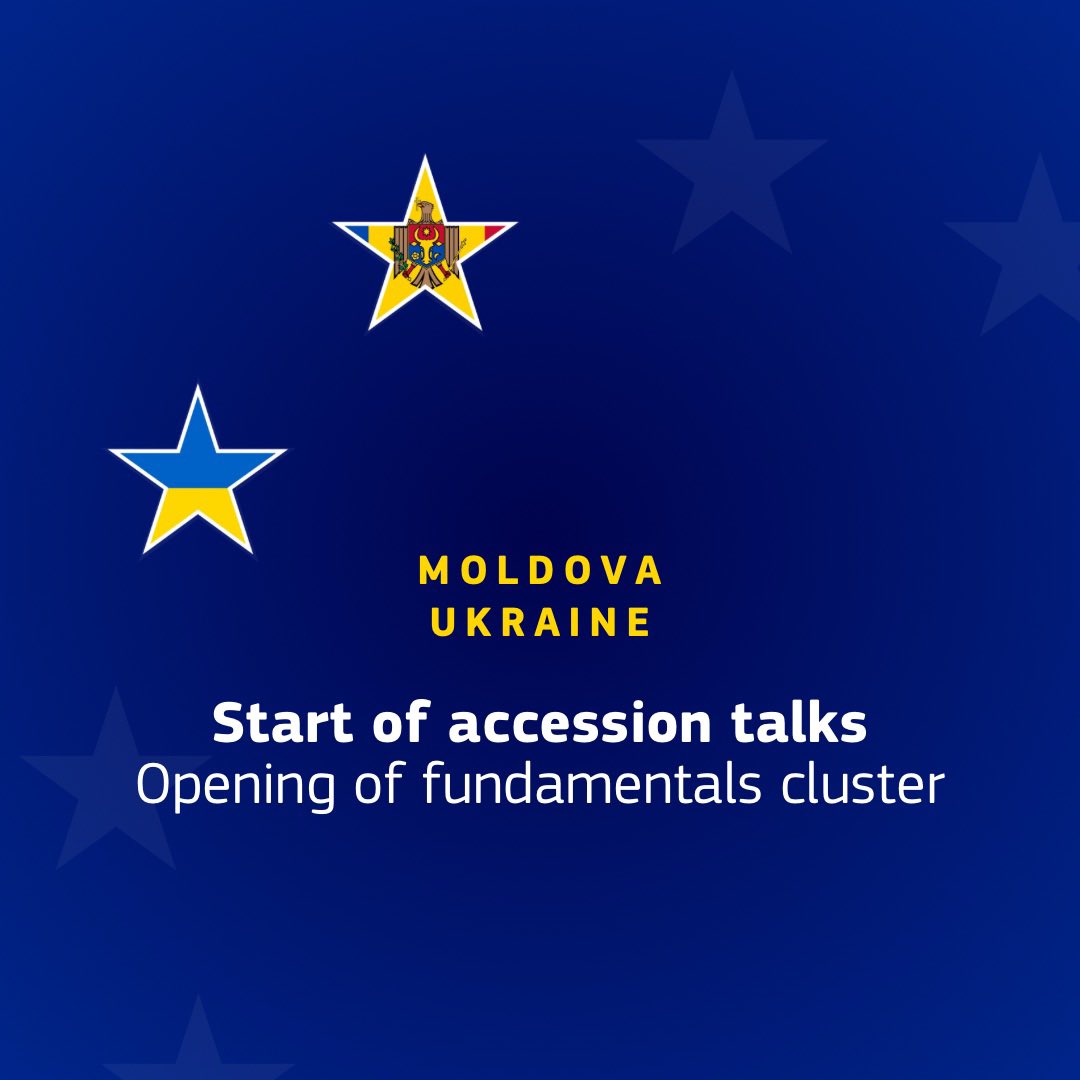
Today, the European Union took a major step forward.
All Member States agreed to open the first accession negotiations cluster with Ukraine and Moldova.
At the first Intergovernmental Conference on Monday, we will open the cluster on fundamentals; the backbone of the accession process.
It covers the core values and principles on which the EU is built, from the rule of law to strong democratic institutions.
This is a recognition of the determination, courage and hard work shown by both countries in advancing reforms, even in the face of immense challenges.
And a signal that the EU’s offer of peace, stability and opportunity is unmatchable.
Enlargement is a strategic choice.
By bringing our nations closer together, we strengthen peace, security and prosperity across our continent.
In a world marked by growing uncertainty, a larger European Union is in our common interest.
Enlargement remains one of the EU’s greatest success stories and our best investment in our shared future.
3,804
3,987
18,539
1,148,589

Jun 10
Many thanks to @NachoSAmor for an insightful interview on EU–Turkey relations, including good neighbourly relations, ahead of next week’s debate in the @Europarl_EN. First segment from the interview, aired on @OpenNewsGR #StatusQuo #EU #Turkey #Greece #Cyprus
Jun 10

Αποκλειστική συνέντευξη στο OPEN του Νάτσο Σάνσεθ Αμόρ, εισηγητή της έκθεσης του Ευρωπαϊκού Κοινοβουλίου για την Τουρκία #StatusQuo #OPENnews
2
3
11
3,941
Maria Aroni retweeted

NATO Secretary General Mark Rutte:
Europe, with the UK and Turkey and Norway, is over 500 million people. We are facing an adversary in Russia of about 120 to 140 million people.
And we are now overly dependent on one ally with about 350 million people, making sure that we can defend ourselves against Russia. That's not sustainable long term. And that one ally cannot keep explaining this to its own public.

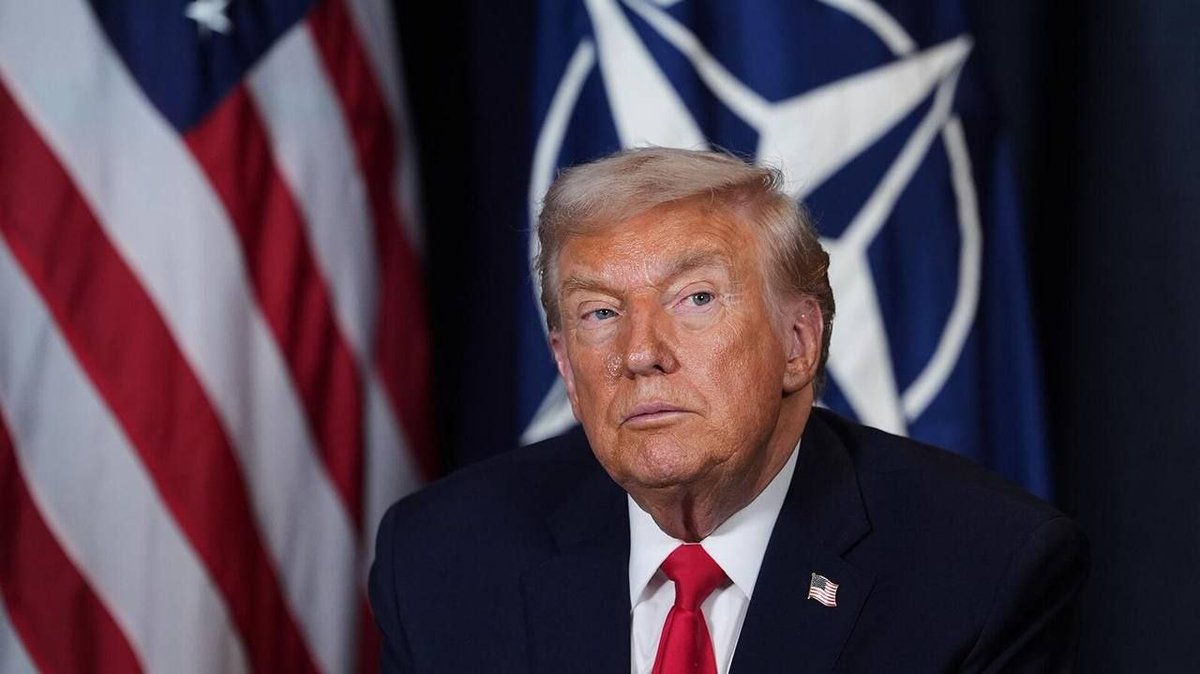
President Trump’s administration does not appear to be planning a formal U.S. withdrawal from NATO, as such a move would face strong resistance from Congress, the Pentagon, allies, and a number of Republicans. Instead, it is gradually reducing America’s security presence in Europe.
Recent decisions point to a consistent trend. The Pentagon has canceled the rotation of around 4,000 U.S. troops to Poland. Earlier, the United States announced reductions to its presence in Germany. Washington has also revised plans for deploying certain long-range systems in Europe, including Tomahawk missiles and hypersonic weapons.
Specific elements of America’s security presence are being reduced: the speed of force deployment, logistics, forward positioning of weapons, strike capabilities, and the predictability of the U.S. response in a crisis. NATO formally remains, but confidence in the automatic nature of American support is weakening.
The Trump administration explains this as a "redistribution of burdens." The United States no longer wants to carry the main conventional burden simultaneously in Europe, Asia, and the Middle East. China has become President Trump’s primary strategic priority, while Israel’s security remains an unconditional strategic interest.
So, current policy increasingly resembles not isolationism, but selective retrenchment - a selective reduction of American commitments where Washington sees fit.
‼️ The effects of this policy benefit Russia even without any formal "rapprochement." The Kremlin does not necessarily need NATO to collapse. It is enough for doubts to emerge among allies about the effectiveness and reliability of the Alliance.
Europe is already responding: Poland is sharply increasing military spending, Germany is accelerating rearmament, and France is pushing for strategic autonomy. But there is a timing problem. The United States can reduce its involvement quickly. Europe builds capabilities slowly. It is precisely this gap in timing that now creates the main strategic risk for European security.
192
395
2,112
531,826
Maria Aroni retweeted

May 9
🇬🇷 💃The Lyceum Club of Greek Women of #Brussels took the stage at the #JustusLipsius building earlier today for a performance of traditional #Greek dances!
✨Thank you for bringing the spirit of #Greece and the joy of #Greek tradition to the #EuropeDay celebrations! 🇪🇺
1
9
39
1,002
Maria Aroni retweeted
For Orthodox Easter, Russia proposed a ceasefire. Only to intensify its brutal attacks on Ukraine - almost 8,000 violations of the ceasefire they proposed.
Now, a ceasefire proposed only to guarantee a pause for their Red Square celebrations.
Today’s air strikes on Ukraine once again show Russia is not serious when it talks of ceasefire or peace.
The only way to stop human suffering and allow space for meaningful peace talks is to stop the killing immediately and agree a long-term ceasefire.
1,257
1,400
7,979
436,821
Maria Aroni retweeted
Today, our partner, the UAE, was once again the target of a vicious missiles and drone attacks originating from Iran.
I extend my full solidarity to @MohamedBinZayed, the people of the UAE, and our partners across the Middle East.
These attacks are unacceptable and constitute a clear violation of sovereignty and international law.
Security in the region has direct consequences for Europe.
So we will keep working closely with our partners on de-escalation and diplomatic resolution, to bring an end to the Iranian regime’s brutal actions.
Both against its neighbors and its own people.
2,699
607
2,994
722,475
Maria Aroni retweeted

NATO 3.0’s value proposition is about Allies stepping up and turning commitments into capabilities. That means frigates, submarines, airplanes, and more. And not just for the Alliance–for the United States of America.
81
94
353
24,633
Maria Aroni retweeted

Apr 29
To #OPENnews τιμά τη θυσία των 200 πατριωτών κομμουνιστών στην #Καισαριανή. Παρασκευή 9 το βράδι @opentvgr #Σκοπευτήριο #Ναζί
Apr 29
«200 ΛΕΒΕΝΤΕΣ ΩΣ ΤΟ ΘΑΝΑΤΟ»
Παρασκευή 1 Μαϊου 2026 στις 21:00 στο ΟΡΕΝ.
Το ΟΡΕΝ τιμά τη μνήμη των 200 πατριωτών Κομμουνιστών που εκτελέστηκαν από τους Ναζί στο Σκοπευτήριο της Καισαριανής, την Πρωτομαγιά του 1944.
ΟΡΕΝ ανεξάρτητη και αξιόπιστη ενημέρωση
3
5
341
Maria Aroni retweeted

Service agents evacuated President Trump from his table at the White House Correspondents’ Association dinner. Cabinet secretaries also left the ballroom, according to witnesses.
Live updates: wapo.st/4t0DkjR
370
962
1,840
270,138

Maria Aroni retweeted

Apr 21
EU foreign ministers have rejected a push to suspend the bloc’s association agreement with Israel following a debate that exposed the bloc's deep divisions regarding the Middle East.
politico.eu/article/eu-rejec…
72
112
204
130,767

France and Greece to renew defence pact for another five years reut.rs/3Q9X7zD reut.rs/3Q9X7zD
21
182
572
72,678
Maria Aroni retweeted

Apr 15
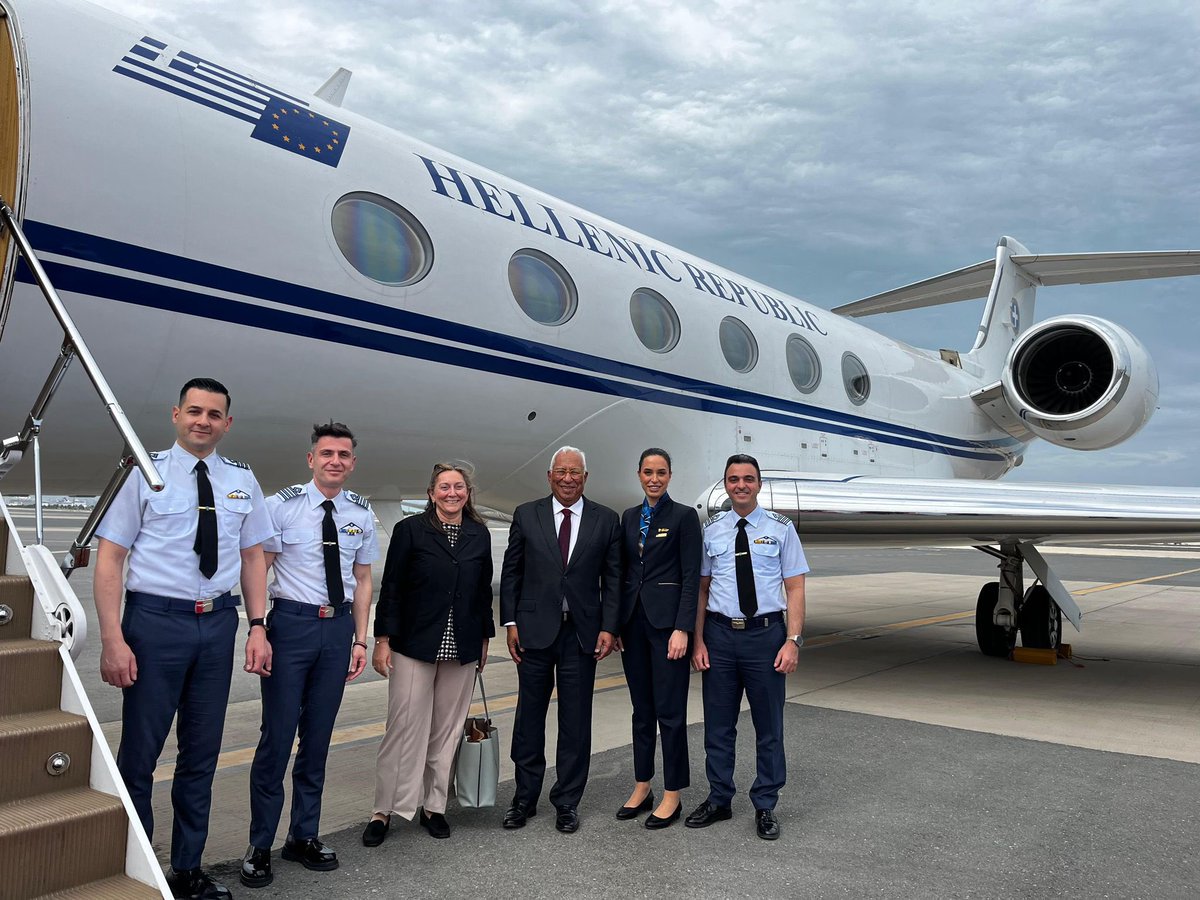
A special thank you to Prime Minister @kmitsotakis and the Hellenic Air Force 🇬🇷 for facilitating my trip to the Gulf. True Team Europe spirit!
Σας ευχαριστώ πολύ!
50
144
976
46,311
Maria Aroni retweeted

Apr 13
Ανακούφιση στις Βρυξέλλες μετά την ήττα Όρμπαν – Ουκρανία και κυρώσεις: Προσεκτική αλλά πιο ομαλή στάση αναμένεται από τον Μαγιάρ | Το ρεπορτάζ της ανταποκρίτριας του OPEN στις Βρυξέλλες, @aronimar #OPENnews
tvopen.gr/watch/267227/danei…
1
1
229
Maria Aroni retweeted

Apr 13
The ongoing closure of the Strait of Hormuz is deeply damaging. Getting global shipping moving is vital to ease cost of living pressures.
The UK has convened more than 40 nations who share our aim to restore freedom of navigation.
This week the UK and France will co-host a summit to advance work on a coordinated, independent, multinational plan to safeguard international shipping when the conflict ends.
12,329
2,224
13,270
2,702,628
Maria Aroni retweeted
Apr 12
#BreakingNews Ουγγαρία: Ιστορική νίκη Μάγιαρ στις εκλογές – Τον συνεχάρη ο Όρμπαν #OPENnews
4
2
10
2,079
Maria Aroni retweeted

Apr 12
NOW: Viktor Orbán:
The election result, although not yet complete, is understandable and clear.
The responsibility and opportunity of governance were not given to us. I congratulated the winning party.
101
385
2,267
654,435
Maria Aroni retweeted
Apr 12
Record turnout shows the democratic spirit of the Hungarian people. They have spoken—and their will is clear.
I look forward to working closely with @magyarpeterMP to make Europe stronger and more prosperous.
57
171
918
31,446