I never tried for anything, but I have everything.
Joined June 2009
- Tweets 28,191
- Following 346
- Followers 405
- Likes 7,304
426 Photos and videos





amit kulkarni retweeted

Jun 15
According to Feng Shui, the mess in your home isn't random.
It's a reflection of where energy may be stuck in your life.
Bedroom clutter =
291
3,752
43,074
6,252,540
amit kulkarni retweeted

Jun 14
Monsoon worries...
Step into immediate actions pl

8
58
139
7,133
amit kulkarni retweeted

Jun 14
@DGCAIndia & @IndiGo6E A really nice man called Ram Kushal, who was manning the Gate, after repeated calls requesting wheelchair attendants finally brought me down himself. Asst Manager Ganesh at Delhi T1 was most apologetic & has promised strict action for humiliating passengers
3
287

Jun 13
All small parties should join/merge with #congress and create a formidable opposition. That's the only way Bharat's democracy can be kept alive and healthy. Here congress 's maturity matters a lot.
90
Jun 11
At least now onwards stop comparing with previous govts..and start your own innings where you are solely responsible. Best wishes, Jai Hind 🙏 @narendramodi #PMModiRecord #India #Bharat
5

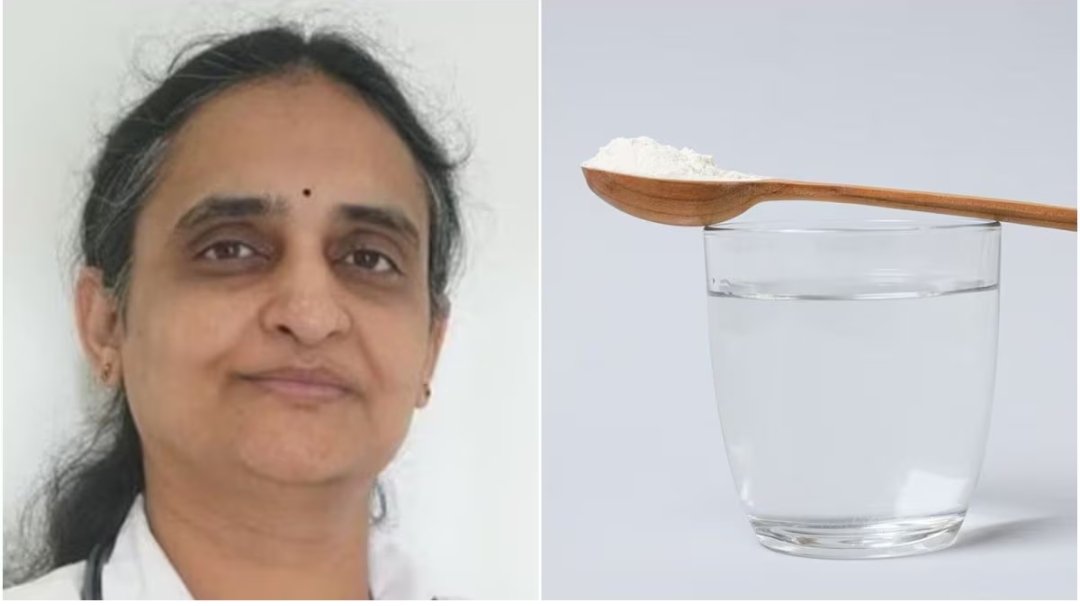
It's a huge to loss to every Indian young parent, and their child.
Dr Sivaranjani Santosh had resigned from the Indian Academy of Paediatrics (IAP) ater an eight-year long fight against fruit-based, non-carbonated beverages marketing themselves as Oral Rehydration Solution
60
1,788
8,235
368,516
Jun 1
#Netflix is not interesting anymore. Or am I missing something?
Revisited the account after may be an year or so ? Has it really changed ?
14
amit kulkarni retweeted

May 30
All superheroes don't wear capes, some wear uniforms.
Amid heavy rains in Bengaluru last night, a differently-abled youth was struggling to cross a road with gushing water. Police Constable Anil stepped in, stopped traffic and then carried him across to safety.
103
939
4,167
83,675
amit kulkarni retweeted

May 28
Late S.M.Krishna was a visionary. Read how much effort he put to build Bengaluru Kempegowda International Airport. It has been operational for nearly last 2 decades. One of the best airports in the world. It has even overtaken Mumbai to be the second airport in the country in terms of passengers handled. This airport has changed the fortunes of Bengaluru.
Chennai is already way behind in building a new airport. And media reports that Tamil Nadu government is even cancelling that.
46
94
1,094
126,820
amit kulkarni retweeted

CEOs are quietly realizing the AI replacement plan has a problem.
Two problems, actually.
One: the token costs for running AI agents are now exceeding what they were paying the employees they fired.
Two: when the tokens run out, the AI stops. Just stops. No continuity. No workaround. Just a spinning wheel where your workforce used to be.
You fired humans to save money and bought a subscription that bills you into a corner.
The employees you let go knew what to do when things broke.
The AI just invoices you for the outage.
And then there’s the permission problem nobody wants to talk about.
To do its job, the AI agent needs access. Full access. Your systems, your patents, your contracts, your future plans. Everything you spent years building, handed over to a process that has no loyalty, no discretion, and no skin in the game.
You didn’t hire a replacement.
You gave a stranger with no soul the keys to everything you own.
Enjoy.
1,397
13,713
53,460
3,303,649
amit kulkarni retweeted

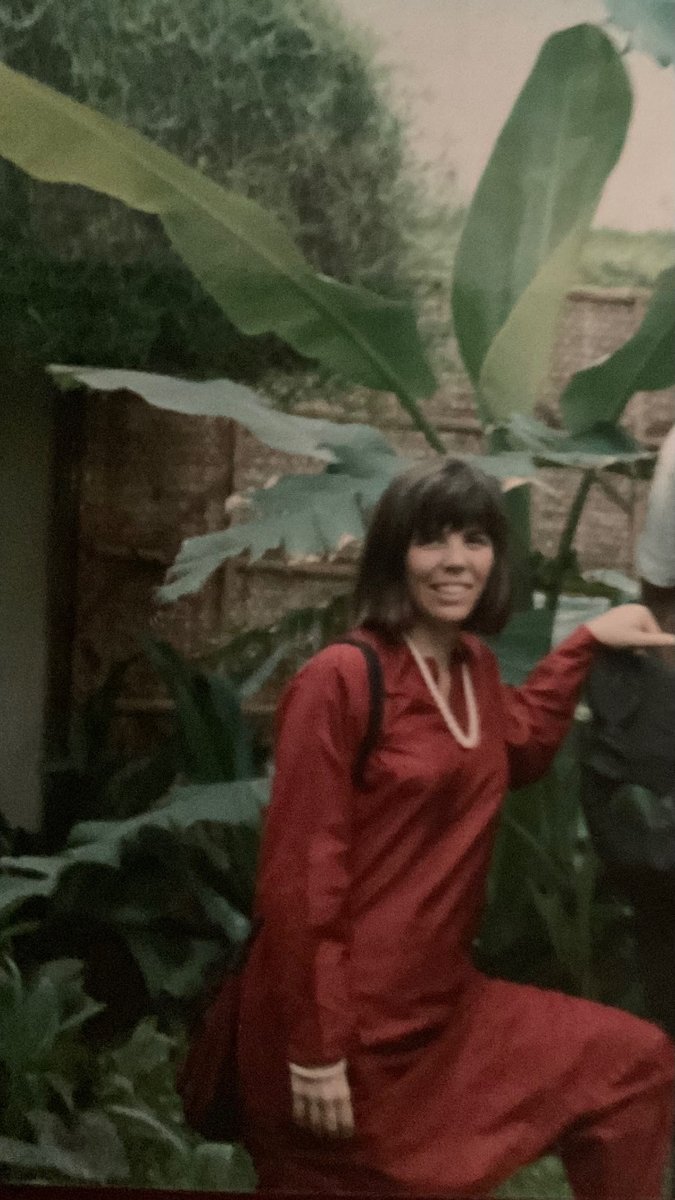
I’m American.
After my PhD, I went to India.
What I experienced dismantled my Western worldview.
Here are 8 lessons that permanently rewired how I see life:👇
1. Death is not hidden from life.
62
223
1,344
316,262
amit kulkarni retweeted

May 20
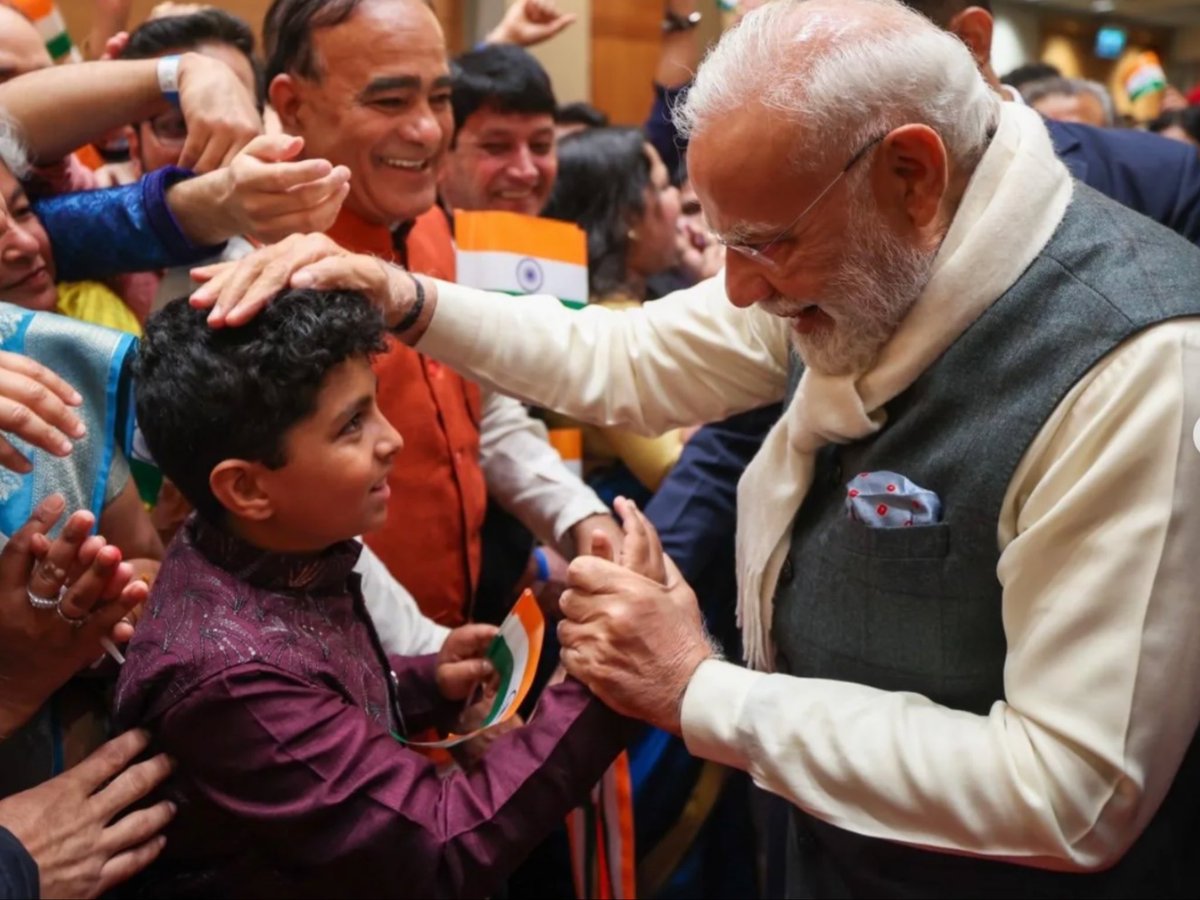
In defense of Indian 🇮🇳 democracy!
During Prime Minister Narendra Modi most successful visit to Norway a minor incident happened. A Norwegian journalist demanded that the prime minister starts holding press conferences. She claimed that Indian democracy is in bad shape.
May be its time to pause? May be its time to be a bit curious to the world’s largest democracy?
Two weeks ago five Indian states and territories held elections. The turn out in the battlefield state of West Bengal was 94%. In the last local election in Norway it was 62%, in many European local elections turn out is below 50%. Can voting in massive numbers be a signal Indians trust their democratic process?
In the same election BJP won big in Assam and West Bengal. It lost even bigger in Kerala and Tamil Nadu. Can this diversity be a signal that Indian democracy is reflecting the will of the people?
The journalist referred to a democracy ranking putting India at 157 in the world, behind many dictatorships and deeply troubled states. When a ranking is so obviously contrary to common sense, why not ask critical questions to those making the ranking rather than demand that leaders shall comment on nonsense? I recommend Salvatore Babones book “Dharma democracy”. The book debunks convincingly the flawed methodology of these rankings.
It was referred to a ranking claiming it’s very dangerous to be a journalist in India. Reality is that it is more dangerous to be journalist in the US and far more dangerous in the vast majority of other nations in the world.
Let’s be real. India is not perfect. Of course there are incidents. India has a population the size of North America, South America and Europe combined. But India is much more peaceful than Europe or the Americas. That’s remarkable - given the ethnic, language and religious diversity of India and the many development challenges.
Unless we consider democracy a form of government only suited for some very small, peaceful and homogeneous Western European nations, may be we should commend Indian democracy?
India is the only major former UK colony which became and has remained a democracy. Its sometimes claimed that the Brits taught India democracy. If that was the case why isn’t Myanmar or Pakistan or the Gulf kingdoms democracies??? Reality is that Indian democracy is both homegrown and extraordinary successful.
786
5,553
16,690
519,450
amit kulkarni retweeted

May 18
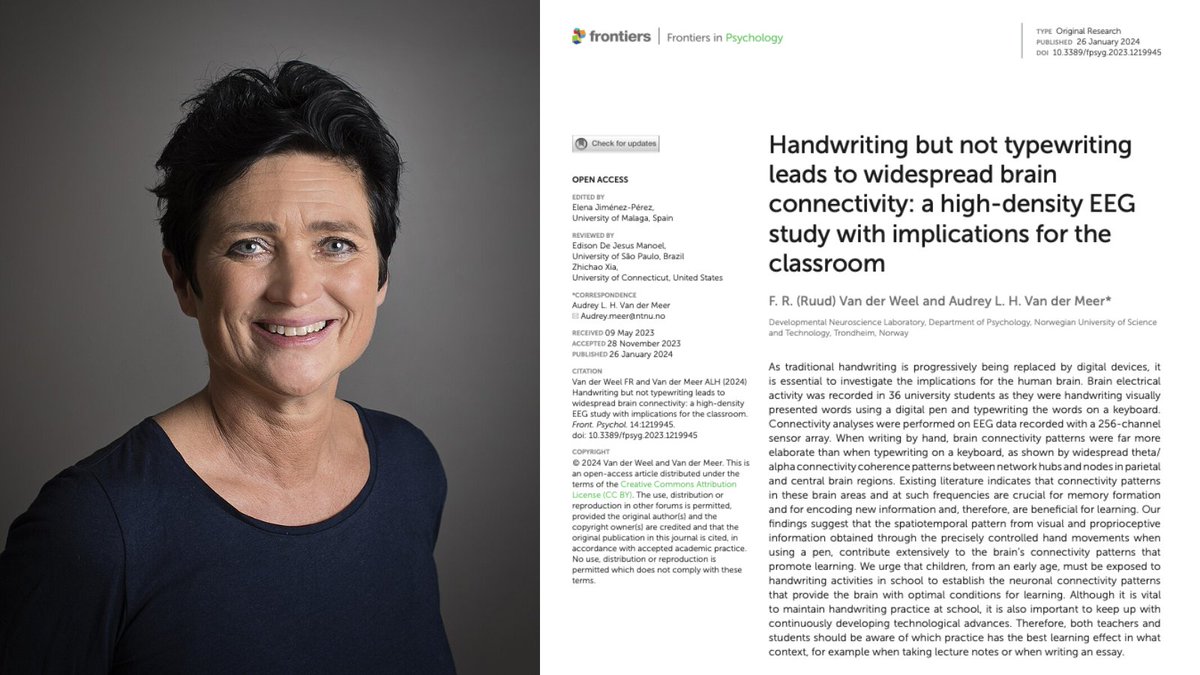
A Norwegian neuroscientist spent 20 years proving that the act of writing by hand changes the human brain in ways typing physically cannot, and almost nobody outside her field has read the paper.
Her name is Audrey van der Meer.
She runs a brain research lab in Trondheim, and the paper that closed the argument was published in 2024 in a journal called Frontiers in Psychology. The finding is brutal enough that it should have changed every classroom on Earth.
The experiment was simple. She recruited 36 university students and put each one in a cap with 256 sensors pressed against their scalp to record brain activity. Words flashed on a screen one at a time.
Sometimes the students wrote the word by hand on a touchscreen using a digital pen, and sometimes they typed the same word on a keyboard. Every neural response was recorded for the full five seconds the word stayed on screen.
Then her team looked at the part of the data most researchers had ignored for years, which is how different parts of the brain were communicating with each other during the task.
When the students wrote by hand, the brain lit up everywhere at once.
The regions responsible for memory, sensory integration, and the encoding of new information were all firing together in a coordinated pattern that spread across the entire cortex. The whole network was awake and connected.
When the same students typed the same word, that pattern collapsed almost completely.
Most of the brain went quiet, and the connections between regions that had been alive seconds earlier were nowhere to be found on the EEG.
Same word, same brain, same person, and two completely different neurological events.
The reason turned out to be something nobody had really paid attention to before her work. Writing by hand is not one motion but a sequence of thousands of tiny micro-movements coordinated with your eyes in real time, where each letter is a different shape that requires the brain to solve a slightly different spatial problem.
Your fingers, wrist, vision, and the parts of your brain that track position in space are all working together to produce one letter, then the next, then the next.
Typing throws all of that away. Every key on a keyboard requires the exact same finger motion regardless of which letter you are pressing, which means the brain has almost nothing to integrate and almost no problem to solve.
Van der Meer said it plainly in her interviews.
Pressing the same key with the same finger over and over does not stimulate the brain in any meaningful way, and she pointed out something that should scare every parent who handed their kid an iPad.
Children who learn to read and write on tablets often cannot tell letters like b and d apart, because they have never physically felt with their bodies what it takes to actually produce those letters on a page.
A decade before her, two researchers at Princeton ran the same fight using a completely different method and ended up at the same answer. Pam Mueller and Daniel Oppenheimer tested 327 students across three experiments, where half took notes on laptops with the internet disabled and half took notes by hand, before testing everyone on what they actually understood from the lectures they had watched.
The handwriting group won by a wide margin on every question that required real understanding rather than surface recall.
The reason was hiding in the transcripts of what the two groups had actually written down.
The laptop students typed almost word for word, capturing more total content but processing almost none of it as they went, while the handwriting students physically could not write fast enough to transcribe a lecture in real time, which forced them to listen carefully, decide what actually mattered, and put it in their own words on the page.
That single act of choosing what to keep was the learning itself, and the keyboard had quietly skipped the choosing and skipped the learning along with it.
Two studies. Two countries. Same answer.
Handwriting makes the brain work. Typing lets it coast.
Every note you have ever typed instead of written went into your brain through a thinner pipe. Every meeting, every book highlight, every idea you captured on your phone instead of on paper was processed at half depth.
You did not forget those things because your memory is bad. You forgot them because typing never woke the part of the brain that would have made them stick.
The fix is the thing your grandmother already knew.
Pick up a pen. Write the thing down. The slower road is the faster one.
2,473
44,646
120,848
10,373,066
amit kulkarni retweeted

May 18
#Pohe manufactured at traditional factories all over kokan but more so around Pen or Roha have a fan following for its distinctive taste and is the raw material for so many simple recipies in Maharashtra:
1) Phodniche pohe variants - kande pohe, batata pohe, vangi pohe
2) Dahi pohe - plain, kharachi mirchi, fried sandgi mirchi flavoured, metkut flavoured
3) Dadpe pohe - with essential ingrediants, with oil/phodni/tadka
4) Tel tikhat pohe - with raw unheated oil and red chilli powder.
5) Kolache pohe - kokan speciality with tamarind/kokum juice
Am not including various types of chiwda that can be made using nylon, dagdi pohe nor 'mirgunda' or pohe papad either!
Any more pohe prep that can be added....pl do
@nitinwelde
16
20
154
12,690


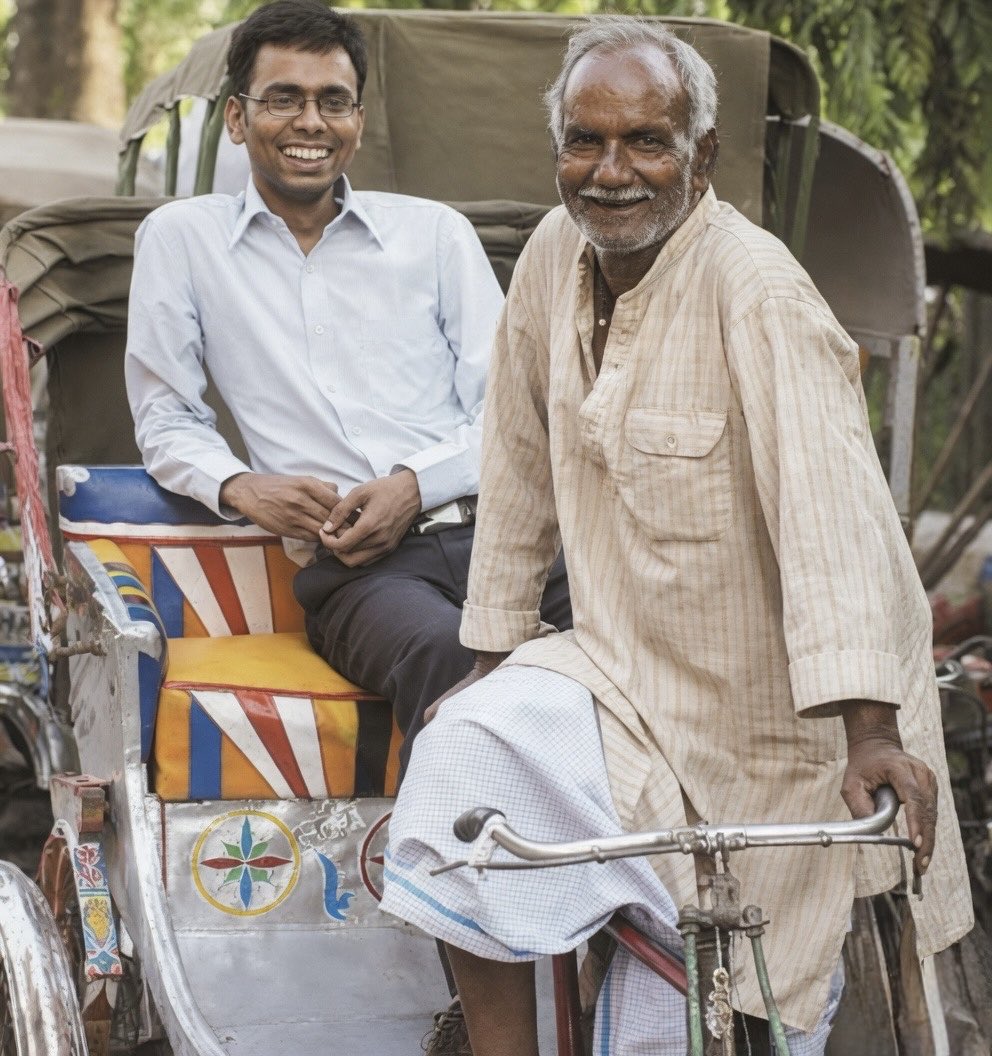
His name is Govind Jaiswal.
He was born in Varanasi, Uttar Pradesh. His father, Narayan, had once owned 35 rickshaws.
Then his wife fell gravely ill. Narayan sold 20 of them to pay for her treatment. She died in 1995.
He sold 14 more to send Govind to Delhi to prepare for UPSC.
By the time Govind reached Delhi, his father was down to one rickshaw, which he pulled himself every day.
The family lived in a single room near the railway station in Varanasi. Electricity was unreliable.
Govind had studied at a government school and a modest college in the city.
When he was 11 years old, he went to play at a wealthy friend’s house.
He was insulted and thrown out because his father was a rickshaw puller.
An older friend explained to him how the world works and told him that unless his circumstances changed, he could expect this treatment his entire life.
That day, he decided he would become an IAS officer.
In Delhi, he taught mathematics to junior students to earn money. On some days, he skipped meals to save what little he had.
He studied in public libraries. He prepared entirely in Hindi medium.
He told himself he could not afford a second attempt. His father had sold everything. There was no plan B.
In 2006, Govind Jaiswal cleared the UPSC Civil Services Examination in his first attempt.
He was 22 years old. All India Rank 48.
The first thing he did with his first salary was pay for his father’s medical treatment for a leg injury sustained from years of pulling rickshaws.
He said this, “Anyone who understands my circumstances will know I had no other option. I chose the only path I was left with. I worked hard on my studies.”
Follow for stories India deserves to remember.
174
1,426
5,835
154,186
May 10
What ? So much ? How are you guys living ?
May 10

Just in: Massive heat & humidity in Mumbai shoots up (feels-like) temperatures exceeding 60°C in MMR 🥵
Thane 62°C
Borivali 47.1°C
Santacruz 45.1°C
Chembur 55.7°C
Navi Mumbai 53°C
11


amit kulkarni retweeted

May 10
Stone sculpted Bharat Mata Murthi — carved with devotion, pride, and reverence for the motherland.” 🇮🇳
156
1,615
9,195
88,382
amit kulkarni retweeted

16 Oct 2013
माँ उसकी घंटो तक, घर पर इंतज़ार करती है .... जो देर रात, आधे घंटे में ... पिज़्ज़ा तुम्हारे घर पहुँचाता है .... #mbaria
2
32
17