Joined December 2024
- Tweets 87
- Following 37
- Followers 23
- Likes 146
17 Photos and videos








Pinned Tweet

May 13
It has been my great honor to be part of this amazing UCF community.
linkedin.com/posts/ucfcecs_p…
4
1
29
132,920
May 17
The AI Index 2026: Stanford’s AI Report Deserves Our Urgent Attention
I’ve just explored the “AI Index Report 2026,” published by Stanford’s Institute for Human-Centered AI. The report addresses a broad spectrum: Research, Technical Performance, Responsible AI, Economy, Science, Medicine, Education, Policy, and Public Opinion.
The education findings are striking. U.S. undergraduate computer science enrollment declined by 11%, while AI-focused master’s graduates grew 17%. Today, nearly 80% of U.S. students use AI tools for schoolwork, yet only half of schools have formal policies, and a mere 6% of teachers find them clear. Globally, while over 90% of nations offer computer science, few have mandated AI curricula—with China and the UAE leading that charge. One standout response: Ohio State University now requires AI literacy for all undergraduates—a forward-thinking model that democratizes AI understanding.
The report’s conclusion is clear: AI is no longer a distant disruptor—it’s already an active collaborator. Institutions must move from reactive policies to proactive collaboration. Embracing AI is no longer optional if we intend to keep pace with rapid change.
From my vantage point, what is truly concerning is that only 6% of U.S. faculty understand these policies. Institutions that merely create protective barriers around AI, treating ethics or disclosure as sufficient, are missing the core transformation. AI is not just a tool; it’s a partner. The content we teach is less critical than how we engage learners. Students increasingly seek personalized learning—“teach me, not everyone.” AI, in collaboration with faculty and students, can deliver that. If we fail to embrace this triadic collaboration, we risk irrelevance. The future of education isn’t about online courses; it’s about “me-learning” not eLearning, customized, dynamic, and personal. Without AI in that equation, we risk failing the students of tomorrow.
hai.stanford.edu/ai-index/20…
62
May 13
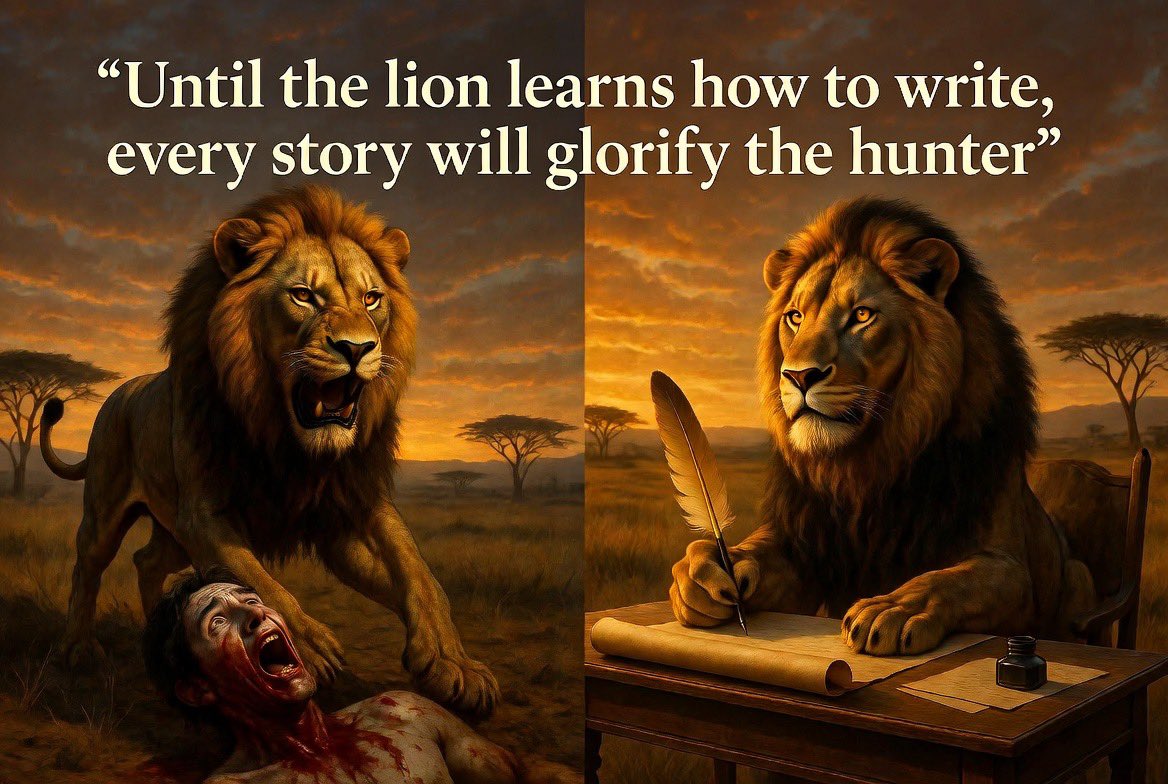
“Until the lion learns how to write, every story will glorify the hunter.”
— African Proverb
3
290
Apr 26
Excellent summary for one of the greatest scientists of the 9th Century.
Apr 26

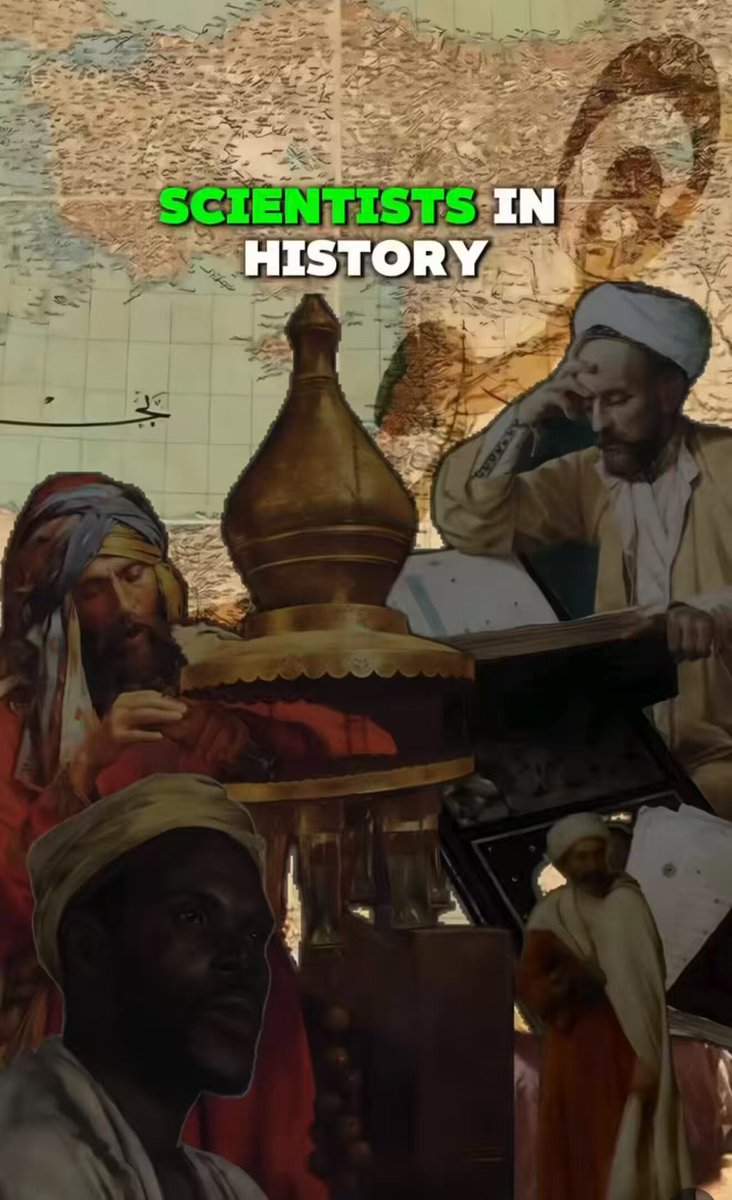
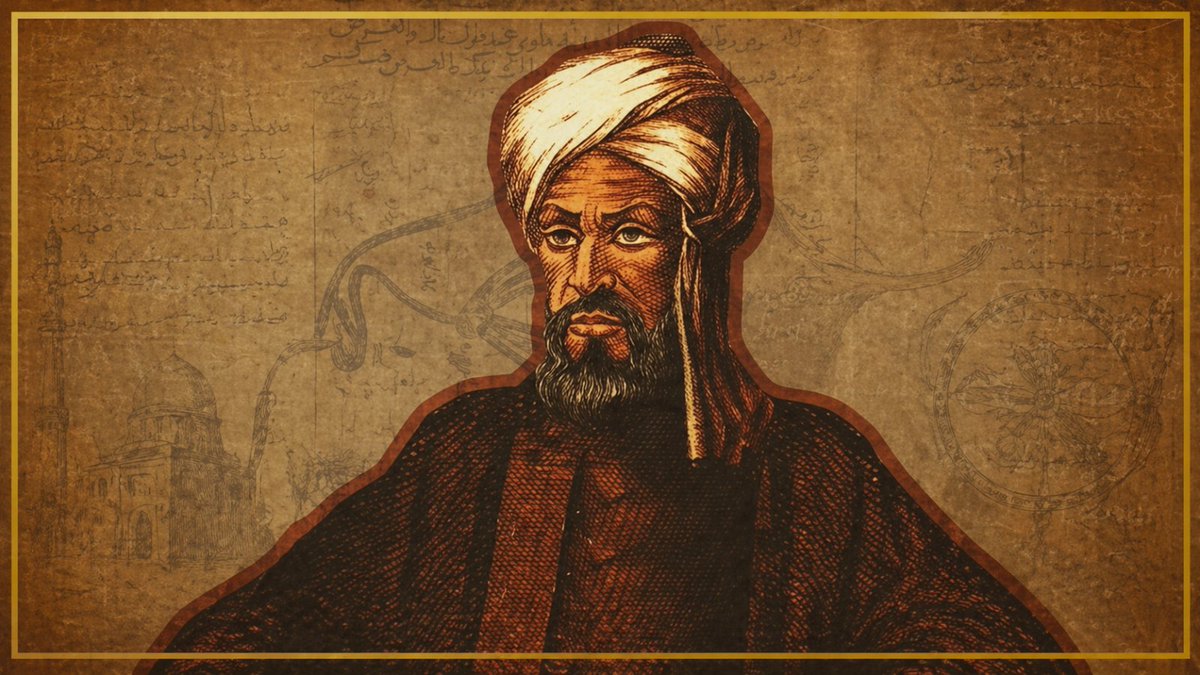
A Persian scholar finished a single math book in 9th century Baghdad that quietly became the foundation for every line of code running on Earth today.
I started reading about him at midnight and could not believe how many things in my daily life trace back to one man.
His name was Muhammad ibn Musa al-Khwarizmi. The book is called The Compendious Book on Calculation by Completion and Balancing.
Every time you say the word algebra, you are saying his book title. Every time someone says the word algorithm, they are saying his name. Both English words come from him. Both are Latin transliterations of Arabic and of his own identity. The man did not just contribute to mathematics. He named it.
Here is the part almost nobody tells you.
Al-Khwarizmi was born around 780 CE in Khwarazm, in what is now Uzbekistan. He moved to Baghdad and worked at a research institution called the House of Wisdom, which during the Islamic Golden Age was the single most important center of learning on the planet. The caliph al-Mamun hired the best mathematicians, astronomers, and philosophers from across three continents and put them in one building with one job. Translate, study, and produce new knowledge.
Al-Khwarizmi finished his book on algebra around 820 CE. The Arabic title contained the word al-jabr, which referred to one of the two operations he used to solve equations. When the book was translated into Latin in the 12th century, the Latin world did not have a word for what he had built. So they kept his Arabic word. Al-jabr became algebra. The discipline was named after a single Arabic word in the title of a single book by a single man.
The deeper insight is what he actually changed about how humans think.
Before al-Khwarizmi, mathematical problems were solved geometrically. You drew shapes. You measured them. You compared areas. The Greeks had built an entire mathematical tradition on visual proofs and physical constructions. It was beautiful and limited. You could not solve a problem you could not draw.
Al-Khwarizmi did something nobody had done before him at this scale. He said you could solve any problem using abstract symbols and rules. You did not need a shape. You needed a procedure. You moved terms across the equation. You cancelled like terms on both sides. You isolated the unknown. He invented the idea that mathematics is a manipulation of symbols according to rules, not a study of physical figures.
That single shift made everything that came afterward possible. Calculus. Differential equations. Linear algebra. Quantum mechanics. None of it works if math is locked inside geometry. He pulled it out.
The second thing he did is the one that changed how the world counted forever. He took the Hindu numeral system from Indian mathematics, refined it, and wrote a book introducing it to the Arab world. That system included the concept of zero as a placeholder, and a positional notation where the value of a digit depends on its location. Roman numerals could not do complex calculation. Hindu-Arabic numerals could.
When his book on numerals was translated into Latin as Algoritmi de numero Indorum, the word Algoritmi was just the Latin spelling of his own name. Europeans started calling the new method "doing algorism," then "running an algorithm." The word for the most important concept in computer science is literally his name in Latin.
The third thing he did is the part that should haunt anyone who works in tech.
His method of solving problems was systematic. Step one, do this. Step two, check that. Step three, if condition A, then do X, otherwise do Y. He wrote down procedures that could be followed by anyone, anywhere, who knew how to read. The procedure did not depend on intuition or genius. It worked because the steps worked.
That is exactly what an algorithm is. A finite, deterministic procedure for solving a problem. He did not just give us the word. He gave us the entire concept of programming a thousand years before there was anything to program.
When Alan Turing built the first abstract model of computation in 1936, when John von Neumann designed the first stored-program computer in 1945, when every engineer at Google, OpenAI, Anthropic, and DeepMind writes code in 2026, they are working in a paradigm that started with one man in Baghdad twelve centuries ago.
The strangest part is what happens when you walk into any tech office in San Francisco or Bangalore or Lahore today. Engineers say the words algebra and algorithm hundreds of times a day. They do not know whose name they are saying. Almost nobody can spell al-Khwarizmi correctly on the first try.
His original Arabic manuscript is preserved at Oxford. His book on Hindu numerals survives only in Latin translation. The Latin version was the textbook that taught medieval Europe how to count.
The man who built the foundation of the AI revolution did not live to see a calculator. He died around 850 CE, a thousand years before the first electric current was sent through a wire. The civilization he built mathematics for collapsed. The library he wrote in burned. His own grave is unmarked.
But every algorithm running on every machine on Earth right now still answers to his name.
1
5
469
Apr 25
Very interesting and scary !!
Apr 24

Eric Schmidt, former CEO of Google, offers a sobering view: The biggest technological shift in human history is happening, and almost no one is talking about it.
Schmidt opens with a startling industry prediction:
"We believe as an industry that in the next one year the vast majority of programmers will be replaced by AI programmers. We also believe that within one year you will have graduate level mathematicians that are at the tippy top of graduate math programs."
He explains why this matters so much. Programming and math aren't just two fields among many:
"Programming plus math are the basis of sort of our whole digital world."
And the AI labs are already using AI to build better AI:
"The research groups in OpenAI and anthropic and so forth… around 10 or 20% of the code that they're developing in their research programs is being generated by the computer. That's called recursive self-improvement."
@ericschmidt then lays out the timeline most people haven't grasped:
"Within 3 to 5 years we'll have what is called general intelligence AGI which can be defined as a system that is as smart as the smartest mathematician physicist artist writer thinker politician."
He gives this belief system a name:
"I call this by the way the San Francisco consensus because everyone who believes this is in San Francisco it may be the water."
But the truly unsettling part comes next.
Once AI starts improving itself, humans become optional to the process:
"The computers are now doing self-improvement… they don't have to listen to us anymore. We call that super intelligence or ASI… computers that are smarter than the sum of humans. The San Francisco consensus is this occurs within six years."
And here's where Schmidt sounds the alarm. The conversation isn't keeping pace with the technology:
"This path is not understood in our society. There's no language for what happens with the arrival of this. This is happening faster than our human that our society, our democracy, our laws will address."
His closing thought captures why this matters:
"That's why it's underhyped. People do not understand what happens when you have intelligence at this level which is largely free."
117
Apr 24
Excellent interview, Amjad. You should do more with Haya…all the best
Apr 24

One of the rare times Haya and I appear together in an interview. Enjoy!
72
Apr 15
Jordanian doctors in the U.S. are ranked second among physicians from the Arab world. Very proud of our Jordanian-American doctors.
الأطباء الأردنيون في الولايات المتحدة يحتلون المرتبة الثانية بين أطباء العالم العربي. فخورون جداً بأطبائنا الأردنيين الأمريكيين.
1
1
75
Apr 4
The death of billionaire Steve Jobs, with a fortune estimated at $7 billion, at the age of 56 from pancreatic cancer. Here are some of his last words:
“I reached the pinnacle of success in the business world. In others’ eyes, my life is the essence of success. However, aside from work, I have little joy. In the end, wealth is only a fact of life that I am accustomed to.
At this moment, lying on my sick bed and recalling my whole life, I realize that all the recognition and wealth that I took so much pride in have paled and become meaningless in the face of imminent death.
You can hire someone to drive your car for you and make money for you, but you cannot hire someone to bear the illness for you. Material things lost can be found again. But there is one thing that can never be found when it is lost—life.
Whether we drive a $150,000 car or a $30,000 car, the road is the same and the destination is the same.
If the house we live in is 300 square meters or 3,000 square meters, the loneliness is the same.
Your true inner happiness does not come from material things. Whether you travel first class or in the last seat of economy—if the plane crashes, it crashes with you.
So enjoy your life and take care of your health. Before you remember the things you’ve lost, remember the blessings that God has bestowed upon you.”
37
Issa Batarseh retweeted

Mar 25
Excellent report. The future is energy resiliency through embracing exponential technologies and renewable sources.
Mar 25

Just six countries control the majority of the world’s oil and gas reserves. What was true after Russia's invasion of Ukraine is true for the war in Iran: Leaders must help reduce the acute dependencies that often fuel tensions, annexations and wars.
Read Sapienship’s new brief on Energy Security - sapienship.co/energy-securit…
1
2
114
Mar 12
Proud of Jordan’s Princess Sumaya Univeristy for Technology (#PSUT) alumnus @amasad on his great success. Read the Forbes daily cover in today’s issue where Replit was valued at $9 billion.
We all are proud of you.
forbes.com/sites/richardniev…
2
106
Feb 22
In a recent interview, Sam Altman, OpenAI’s founder and CEO, said:
“People talk about how much energy it takes to train an AI model … But it also takes a lot of energy to train a human. It takes like 20 years of life and all of the food you eat during that time before you get smart.”
I think the analogy is clever on the surface, equating AI training energy to a human’s 20-year “upbringing”. But it misses the real engineering reality. It’s like being asked to deliver 20 years of 401(k) savings in a single day: same total amount, completely different system stress and feasibility.
Human energy use is gradual, biological (sun and food), with no sudden strain on the electric source. AI energy use, by contrast, is a massive spike, weeks of 20–25 MW draw in hyperscale data centers, equivalent to powering around 20,000 homes nonstop. That’s not “sustainable investment”; it’s a shock to already fragile infrastructure, from generation to transmission to consumption.
For example, daily ChatGPT-scale workloads could demand on the order of ~12.5 MW continuously, plus enormous amounts of water for cooling. A 50 GWh AI training run may roughly match the food-energy equivalent for about 2,400 humans over two decades. But how that energy is delivered matters far more than the total. Soon it is estimated that AI could consume the equivalent of 22%-25% of U.S. household electricity. Without major grid upgrades, breakthrough energy sources, or radically more efficient architectures, this energy thirst could become the real bottleneck, and turn today’s AI boom into a bubble.
Major AI leaders should be talking about real solutions, not just clever soundbites.
1
1
3
407
Feb 19
Civilizations Don’t Clash—They Carry Each Other Forward
When I first learned about the greatest Muslim scientists, I felt a deep sense of pride. Here were scholars from our part of the world—Arabs and Muslims—who had shaped medicine, mathematics, physics, and chemistry in ways that still define modern science. Their names were not footnotes in history; they were pillars of it.
But not long after that pride, another question started to bother me: if this region once led the world in knowledge, discovery, and innovation, why is the Middle East today so far behind? How did we go from leading civilization to following it?
The answer that slowly became clear to me is both simple and humbling: history is a function of time. Civilizations do not rise because they are “better” and fall because they are “worse.” They rise, lead for a while, pass the torch, and eventually fade—while others take their place. And crucially, no civilization starts from zero. Each one builds on what came before it.
Today, we hear many voices warning that Western civilization will “die” if it does not protect itself—voices from influential figures, tech leaders, and cultural commentators. Arguments like these miss the deeper point. Preserving culture matters, and every civilization should value and protect what makes it unique. But history shows that social dynamics will keep shifting whether we like it or not. No civilization can freeze time, and no culture can remain permanently dominant. The movement of ideas, people, and power is not a threat—it is the normal rhythm of human history.
This is why the idea of a “clash of civilizations” is so misleading. When civilizations truly clash—when they destroy rather than inherit, erase rather than preserve—we all lose. Knowledge is lost. Progress slows. Humanity steps backward. Real advancement happens when civilizations carry each other forward.
The Muslim Golden Age is a perfect example of this relay of knowledge.
Take ابن سينا (Ibn Sina / Avicenna), whose Canon of Medicine became a standard medical textbook in both the Islamic world and Europe for centuries.
Consider الخوارزمي (Al-Khwarizmi), who pioneered algebra and gave us the very concept of the algorithm. His work, based in part on earlier Greek and Indian mathematics, became the backbone of modern math and, centuries later, computer science.
Then there is الرازي (Al-Razi / Rhazes), a giant of clinical medicine who distinguished smallpox from measles and advanced careful medical observation, pharmacy, and chemistry.
ابن الهيثم (Ibn al-Haytham / Alhazen) revolutionized our understanding of light and vision and helped establish the experimental scientific method.
And جابر بن حيان (Jabir ibn Hayyan) laid the foundations of chemistry, developing experimental methods and helping transform alchemy into a true science.
None of these figures worked in isolation from history. They inherited knowledge from Greek, Roman, Persian, and Indian sources, expanded it, refined it, and passed it on. Later, Europe did not rise from nothing either—it translated these works, studied them, and built on them. The Renaissance and the scientific revolution were not miracles out of thin air; they were the next stage in a long human story.
Today, Western civilization leads much of global science and technology. Tomorrow, it may be another region. That is not a failure of one culture or a victory of another—it is simply how history works. Civilizations take turns carrying the torch.
The real tragedy is not when leadership shifts. The real tragedy is when civilizations choose to collide instead of connect—when they destroy instead of inherit. Because when civilizations crash, we all lose. But when they complement and support each other, humanity as a whole moves forward.
This is not the story of a clash of civilizations. It is the story of a continuum—of knowledge passed, expanded, and carried forward across centuries. And it belongs to all of us.
1
28
Feb 17
I had the honor of meeting a few times during my studies in Chicago. RIP , Jesse Jackson.
Feb 17

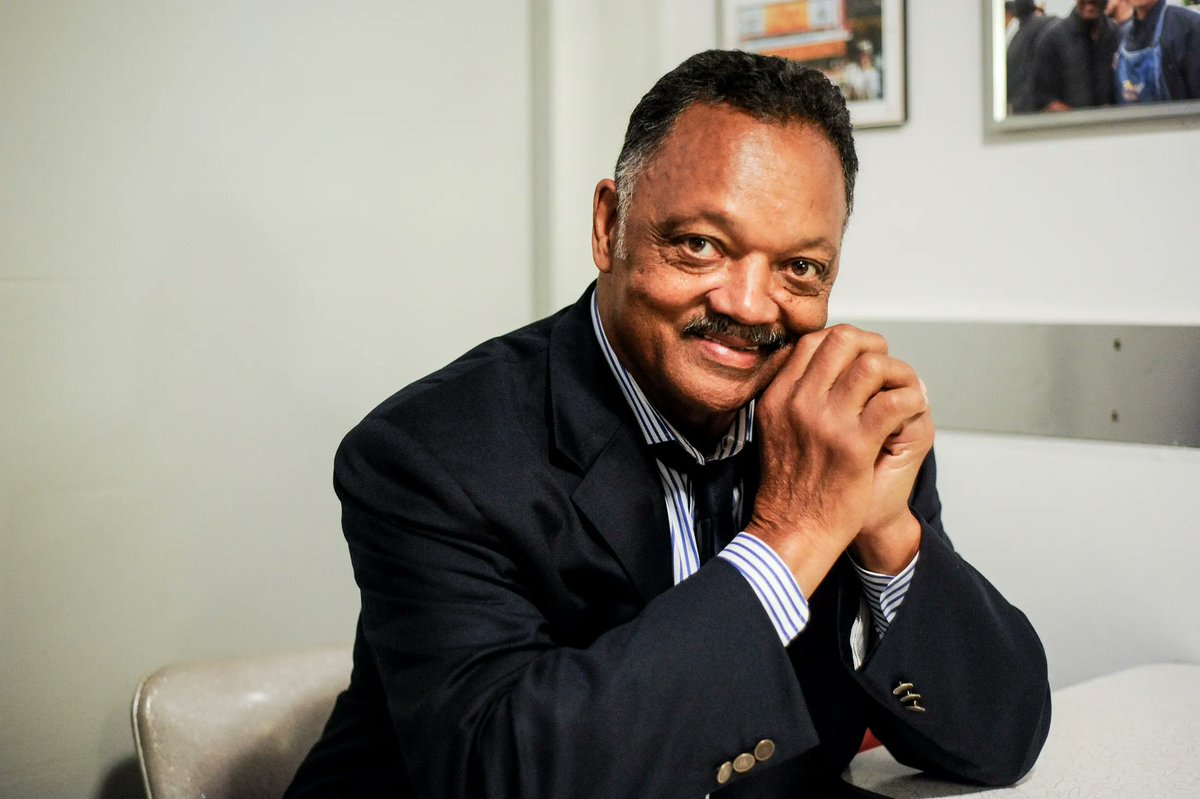
🚨🇺🇸 Jesse Jackson has died at 84
2-time presidential candidate, civil rights legend, confidant to Martin Luther King Jr., and one of the most consequential Black political figures in American history.
He marched at Selma. He was standing next to King when he was assassinated. He ran for president twice and changed who gets to run in America.
Love him or hate him, Jackson spent 60 years refusing to let America forget its promises to Black people.
He outlived almost everyone who stood beside him in the movement.
Rest in peace.
1
54
Feb 17
I agree with Elon Musk’s argument that AI will replace digital, desk-based jobs first, not physical ones. That’s why so many students in computing sciences are nervous today!
Any job that mainly touches a screen, where the output is files, code, or documents, is vulnerable because AI already works natively in the digital world and can do that work faster and at scale. In contrast, jobs that “move atoms”—like welding, electrical work, plumbing, construction, and other hands-on trades—will last much longer because they require physical presence, real-world adaptation, and manual skill. The old assumption that office jobs and degrees are safer is backwards: the more digital your work, the easier it is to automate; the more physical and real-world it is, the more resistant it is to AI.
1
29